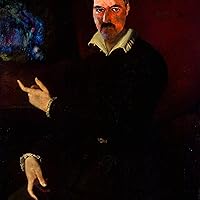
Авторът на тази история, чието ново издание на български език е в ръцете на читателите, е добре познат както на специалистите по антична история, така и на по-възрастното поколение на българската интелигенция. Роден на 28 октомври 1870 г. в Киев, той се оформя като специалист по класическа филология и стара история в родния си град и в Петербург. Следва продължителна академична кариера в Русия, прекъсната от преврата през 1917 г. Принуден да емигрира, М. Ростовцев е поканен през 1920 г. да оглави катедрата по Стара история на Уискънсинския университет в Медисън, САЩ. През 1925 г. се премества в престижния Йейлски университет.
През дългия си и плодотворен жизнен и творчески път (той почива през 1952 г.), проф. Ростовцев развива активна академична, проучвателска и научна дейност. Ръководи археологически разкопки, чете лекции и води семинари в различни области на науката за Древността, обявен е за почетен член на редила престижни академии на науките: Британската, Българската, Норвежката, Полската, Понтификалната, Пруската, Руската, Френската. Научните му занимания не е възможно да бъдат дори бегло проследени в един такъв предговор и са обект на специални проучвания и публикации, залегнали в основата на всички световни специализирани справочни издания.
"Историята на Стария свят" на М. Ростовцев излиза през 1924 г. и оттогава претърпява множество издания и преводи на много езици. Първото издание на български се появява през 1932 (Историята на Изтока и Гърция) и 1937 г. (Историята на Рим) в превод от руски на И. Раев, под редакцията на едни от най-големите български специалисти в тази област — проф. Г. Кацаров и проф. Я. Тодоров.
Mikhail Ivanovich Rostovtzeff, or Rostovtsev (Russian: Михаи́л Ива́нович Росто́вцев; November 10 [O.S. October 29] 1870 – October 20, 1952) was a Russian historian whose career straddled the 19th and 20th centuries and who produced important works on Ancient Roman and Greek history. He was a member of the Russian Academy of Science.
Rostovtzeff was the son of a Latin teacher. Upon completing his studies at the universities of Kiev and St. Petersburg, Rostovtsev served as an assistant and then as a full Professor of Latin at the University of St. Petersburg 1898–1918. In 1918, following the Russian Revolution, he emigrated first to Sweden, then to England, and finally in 1920 to the United States. There he accepted a chair at the University of Wisconsin–Madison before moving to Yale University in 1925 where he taught until his retirement in 1944. He oversaw all archaeological activities of the latter institution in general and the excavations of Dura-Europos in particular. He is believed to have coined the term "caravan city".
While working in Russia, Rostovtzeff became an authority on the ancient history of South Russia and Ukraine. He summed up his knowledge on the subject in Iranians and Greeks in South Russia (1922) and Skythien und der Bosporus (1925). His most important archaeological findings at Yale were described in Dura-Europos and Its Art (1938).
Glen Bowersock described Rostovtzeff's views as having been largely formed by the age of thirty, developing mainly only in the quality of execution in later life, and making him "the last of the nineteenth-century ancient historians". Rostovtzeff was known as a proud and slightly overpowering man who did not fit in easily. In later life, he suffered from depression.
The Social and Economic History of the Roman Empire:
Rostovtzeff was notable for his theories of the cause of the collapse of the Roman Empire which he expounded in detail in his magisterial The Social and Economic History of the Roman Empire (1926). Scarred by his experience of fleeing from the Russian Revolution, he attributed the collapse of the Roman Empire to an alliance between the rural proletariat and the military in the third century A.D. Despite not being a Marxist himself, Rostovtzeff used terms such as proletariat, bourgeoisie and capitalism freely in his work and the importation of those terms into a description of the ancient world, where they did not necessarily apply, caused criticism.
Rostovtzeff's theory was quickly understood as one based on the author's own experiences and equally quickly rejected by the academic community. Bowersock later described the book as "the marriage of pre-1918 scholarly training and taste with post-1918 personal experience and reflection." At the same time, however, the detailed scholarship involved in the production of the work impressed his contemporaries and he was one of the first to merge archaeological evidence with literary sources.
Rostovtzeff's histories were often required reading in upper-division undergraduate classes, before the antediluvian-wave, from the 1980s up to the present. R's breath of knowledge is still widely appreciated among serious historians. GROK's ability translate is INVARIABLY 100% better than google translate!! Here's a translation of the blurb above on Rostovzeff:
The author of this history, whose new edition in Bulgarian is now in the hands of readers, is well known both to specialists in ancient history and to the older generation of the Bulgarian intelligentsia. Born on October 28, 1870, in Kyiv, he trained as a specialist in classical philology and ancient history in his native city and in St. Petersburg. He pursued a long academic career in Russia, interrupted by the coup of 1917. Forced to emigrate, M. Rostovtzeff was invited in 1920 to head the Department of Ancient History at the University of Wisconsin in Madison, USA. In 1925, he moved to the prestigious Yale University.Throughout his long and fruitful life and creative path (he passed away in 1952), Professor Rostovtzeff conducted active academic, research, and scholarly work. He led archaeological excavations, delivered lectures and seminars in various fields of ancient studies, and was elected an honorary member of numerous prestigious academies of sciences: the British, Bulgarian, Norwegian, Polish, Pontifical, Prussian, Russian, and French. His scholarly pursuits cannot even be briefly traced in a preface such as this; they are the subject of special studies and publications that form the foundation of all major specialized reference works worldwide.M. Rostovtzeff's History of the Ancient World was published in 1924 and has since undergone numerous editions and translations into many languages. The first Bulgarian edition appeared in 1932 (History of the East and Greece) and 1937 (History of Rome), translated from Russian by I. Raev, under the editorship of some of the greatest Bulgarian specialists in the field—Prof. G. Katsarov and Prof. Ya. Todorov.