

What do you think?

La búsqueda en sueños de la ignota Kadath y otras aventuras oníricas de Randolph Carter
«Cuando tenía treinta años, Randolph Carter perdió la llave de la puerta de los sueños. Antes de eso había suplidoel prosaísmo de la vida cotidiana con excursiones a extrañasciudades antiguas situadas más allá del espacio, y a preciosase increíbles tierras fértiles al otro lado de mares etéreos».Así comienza La llave de plata (1929), uno de los cinco relatos reunidos en este volumen que nos sumergenen las lisérgicas aventuras del anticuario Randolph Carterpor el mundo de los sueños, una suerte de dimensión paralelade misteriosa geografía, con sus leyes, sus criaturas fantásticasy sus propios dioses. Abre la colección El testimonio de Randolph Carter (1920), un relato de horror de impactantefinal inspirado en un sueño del propio Lovecraft. Le sigueLo innominable (1925), que describe una inquietanteconversación sobre hechos sobrenaturales. A continuación,el relato largo La búsqueda en sueños de la ignota Kadath,escrito en 1926 y nunca publicado en vida del autor,nos cuenta los fantásticos viajes nocturnos de Randolph Carter por la región de los sueños en uno de los trabajos más dunsanianos de Lovecraft. Finalmente, A través de las puertas de la llavede plata (1934), escrita en origen por E. Hoffman Price, amigo y seguidor del genio de Providence, como una secuela de La llave de plata, el relato fue reescrito posteriormente por Lovecrafty pertenece por ello con pleno derecho al ciclo.
299 pages, Paperback
First published January 1, 2012
About the author
H.P. Lovecraft
7,057 books19.9k followersHoward Phillips Lovecraft, of Providence, Rhode Island, was an American author of horror, fantasy and science fiction.
Lovecraft's major inspiration and invention was cosmic horror: life is incomprehensible to human minds and the universe is fundamentally alien. Those who genuinely reason, like his protagonists, gamble with sanity. Lovecraft has developed a cult following for his Cthulhu Mythos, a series of loosely interconnected fictions featuring a pantheon of human-nullifying entities, as well as the Necronomicon, a fictional grimoire of magical rites and forbidden lore. His works were deeply pessimistic and cynical, challenging the values of the Enlightenment, Romanticism and Christianity. Lovecraft's protagonists usually achieve the mirror-opposite of traditional gnosis and mysticism by momentarily glimpsing the horror of ultimate reality.
Although Lovecraft's readership was limited during his life, his reputation has grown over the decades. He is now commonly regarded as one of the most influential horror writers of the 20th Century, exerting widespread and indirect influence, and frequently compared to Edgar Allan Poe.
See also Howard Phillips Lovecraft.
— Wikipedia
Lovecraft's major inspiration and invention was cosmic horror: life is incomprehensible to human minds and the universe is fundamentally alien. Those who genuinely reason, like his protagonists, gamble with sanity. Lovecraft has developed a cult following for his Cthulhu Mythos, a series of loosely interconnected fictions featuring a pantheon of human-nullifying entities, as well as the Necronomicon, a fictional grimoire of magical rites and forbidden lore. His works were deeply pessimistic and cynical, challenging the values of the Enlightenment, Romanticism and Christianity. Lovecraft's protagonists usually achieve the mirror-opposite of traditional gnosis and mysticism by momentarily glimpsing the horror of ultimate reality.
Although Lovecraft's readership was limited during his life, his reputation has grown over the decades. He is now commonly regarded as one of the most influential horror writers of the 20th Century, exerting widespread and indirect influence, and frequently compared to Edgar Allan Poe.
See also Howard Phillips Lovecraft.
— Wikipedia
Ratings & Reviews
Friends & Following
Create a free account to discover what your friends think of this book!
Community Reviews
Displaying 1 - 30 of 50 reviews

July 31, 2014
I first encountered the artwork of Jason Thompson through a poster he created for the Lamentations of the Flame Princess role-playing game. I was immediately struck by the simplicity of his central figure, the "mock man," set against the finely-honed detail work one sees in his settings, costume, and creatures. His work is truly unique, cartoonish, but compelling. So when I first saw the cover of his hardbound The Dream-Quest of Unknown Kadath & Other Stories, I knew it wouldn't be long before I procured a copy. I was filled with that sort of book-lust that only true book lovers know. I obsessed a bit.
And I am not disappointed.
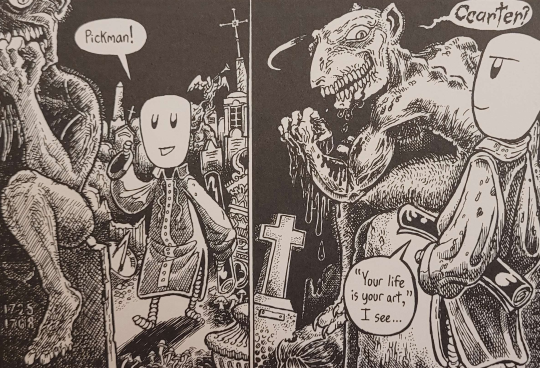
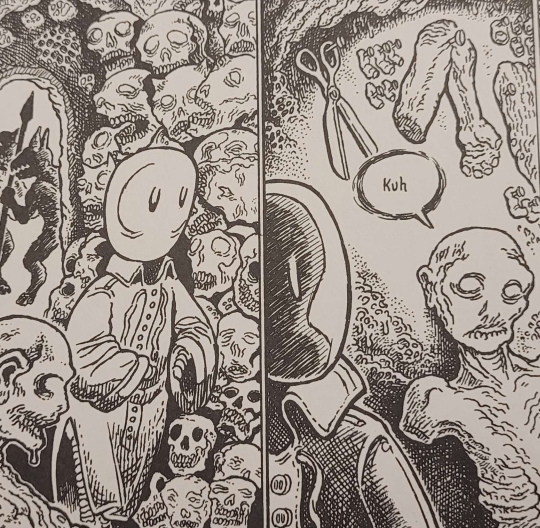
This volume contains stories from what has come to be known as Lovecraft's "Dreamlands" cycle: "The White ship," "Celephais," "The Strange High House in the Mist," and the eponymous novella "The Dream-Quest of Unknown Kadath," as well as a series of drawings from Thompson's sketch book. Thompson stays faithful to the original stories, but adds an easter egg or two in a touch of whimsy, such as a moment when Randolph Carter is telling Pickman's ghouls that he must take his leave of them to continue his search for Kadath: the ghoul to his left says "Oh, Carter, please don't go!" and the one to his right says "We'll eat you up, we love you so!"
If you don't get that reference, it's time for you to hit the children's books again.
Despite this and a couple of other dalliances, Thompson stays true to Lovecraft's plots, characters and, for the most part, rich descriptions. Unlike many illustrated versions of Lovecraft's work, Thompson's artwork actually does reflect the very words that Lovecraft used. The work is bound together aurally and visually; a rare thing, indeed. The lush illustrations are sometimes only evocative of the wonders and horrors Lovecraft created, allowing the reader's imagination to fill in details that are out of sight just beyond the frame of the picture itself. This leads to a sense of anticipation and sometimes dread that pulls the reader in. It is as much what is not seen, but hinted at, that provides enticement to the intellect. Or, as it is said, "It's not the kill, it's the thrill of the chase".
A thrilling chase, indeed. I cannot recommend this book highly enough. Buy a copy here and support Thompson so he can continue to produce such wonderful art and books. He's just whetted my appetite with this volume. I want more, and more, and more.
And I am not disappointed.
This volume contains stories from what has come to be known as Lovecraft's "Dreamlands" cycle: "The White ship," "Celephais," "The Strange High House in the Mist," and the eponymous novella "The Dream-Quest of Unknown Kadath," as well as a series of drawings from Thompson's sketch book. Thompson stays faithful to the original stories, but adds an easter egg or two in a touch of whimsy, such as a moment when Randolph Carter is telling Pickman's ghouls that he must take his leave of them to continue his search for Kadath: the ghoul to his left says "Oh, Carter, please don't go!" and the one to his right says "We'll eat you up, we love you so!"
If you don't get that reference, it's time for you to hit the children's books again.
Despite this and a couple of other dalliances, Thompson stays true to Lovecraft's plots, characters and, for the most part, rich descriptions. Unlike many illustrated versions of Lovecraft's work, Thompson's artwork actually does reflect the very words that Lovecraft used. The work is bound together aurally and visually; a rare thing, indeed. The lush illustrations are sometimes only evocative of the wonders and horrors Lovecraft created, allowing the reader's imagination to fill in details that are out of sight just beyond the frame of the picture itself. This leads to a sense of anticipation and sometimes dread that pulls the reader in. It is as much what is not seen, but hinted at, that provides enticement to the intellect. Or, as it is said, "It's not the kill, it's the thrill of the chase".
A thrilling chase, indeed. I cannot recommend this book highly enough. Buy a copy here and support Thompson so he can continue to produce such wonderful art and books. He's just whetted my appetite with this volume. I want more, and more, and more.

February 5, 2015
Relectura 22/01/2018: Comentarios superfluos
En general me ha gustado más que la primera vez. En parte, porque he leído más cosas desde 2015 que me han permitido apreciar las historias de otra manera y con otra mirada. Antes me sentía fascinada por la prosa de este hombre. Me preguntaba cómo alguien podía escribir tan bien y llegarme tan hondo; este hombre tocó mi alma, ciertamente. Ahora, esa sensación ha madurado y es más compleja e íntima. La fascinación por sus palabras sigue estando ahí, pero ya no siento que me habla un «ser superior» del que solo puedo aprender. Soy capaz de sentir a un ser humano escuchando mis pensamientos. Aquí ya no hay una relación unilateral; entre nosotros existe intercambio continuo de ideas, opiniones y vivencias.
Jamás tendré esta relación con la prosa de ningún otro escritor. Eso lo supe antes siquiera de leerle.
---------------------------------------------------
4.6
El testimonio de Randolph Carter 4/5
Lo innombrable 5/5 - *RELECTURA*
La búsqueda en sueños de la ignota Kadath 5/5 - FAVORITO.
La llave de plata 5/5
A través de las puertas de la llave de plata 4/5
No sé como voy a empezar esta reseña porque en verdad lo que quiero decir es que debéis leer a Lovecraft. Aunque solo sea una vez y no os guste; probarlo porque para bien o para mal, leerlo trastoca una parte de ti, irremediablemente.
Bueno, lo primero que creo que tengo que decir es que la antología comienza con un relato ya de entrada bastante intenso, El testimonio de Randolph Carter.
Le sigue Lo innombrable, relato que no conseguí entender del todo en mi lectura de Dagón y otros cuentos macabros. No sé si será por la traducción o por mi, pero en esta relectura he entendido cada punto de la historia y me ha, cuanto menos, encantado. Además me he dado cuenta de que el relato "camufla", algunas opiniones de Lovecrafty siempre me saca una sonrisa cuando hace eso.
Luego está el relato que le da nombre a la antología, La búsqueda en sueños de la ignota Kadath. Creo que siempre he querido leer algo así y nunca lo había hallado.
1) Ambientación con un potencial INCREÍBLE y aprovechado.✔
2) Trama interesante hasta el punto de que no puede soltar el libro hasta terminarlo.✔
3) Hecho que no te ves venir casi al final del relato que me dejó con la boca abierta.✔✔
El relato es simplemente una obra maestra y pocas veces leeré algo tan hermoso como esto, ya lo vaticino.
Y si yo pensaba que el siguiente relato, La llave de plata, sería un relato de una calidad más baja- comparado con el de Kadath-...bueno, pues me equivocaba.
No voy a decir a nivel personal lo mucho que me ha gustado, ya que eso me lo guardo únicamente para mi, pero como lectora solo puedo decir : lo has hecho otra vez y me ha encantado.
Y por último, relato reescrito por Lovecraft (original de E. Hoffman Price) y secuela de La llave de plataque también me ha gustado muchísimo.
Concluyendo ya, solo destacar la MAGNÍFICA traducción de esta antología. Voy a tener que comprar más ediciones de Valdemar porque se nota bastante el cariño y esfuerzo que le ponen en traducir a Lovecraft - que es vamos, lo mínimo que se merece este hombre.
Pd: Ya he comprado otro libro de Lovecraft, paso de hacer comentarios a estas alturas.
En general me ha gustado más que la primera vez. En parte, porque he leído más cosas desde 2015 que me han permitido apreciar las historias de otra manera y con otra mirada. Antes me sentía fascinada por la prosa de este hombre. Me preguntaba cómo alguien podía escribir tan bien y llegarme tan hondo; este hombre tocó mi alma, ciertamente. Ahora, esa sensación ha madurado y es más compleja e íntima. La fascinación por sus palabras sigue estando ahí, pero ya no siento que me habla un «ser superior» del que solo puedo aprender. Soy capaz de sentir a un ser humano escuchando mis pensamientos. Aquí ya no hay una relación unilateral; entre nosotros existe intercambio continuo de ideas, opiniones y vivencias.
Jamás tendré esta relación con la prosa de ningún otro escritor. Eso lo supe antes siquiera de leerle.
---------------------------------------------------
4.6
"Carter había decidido llegar con audaz empeño hasta donde ningún otro ser humano había llegado antes, y desafiar los glaciales desiertos atravesando la oscuridad hasta donde la ignota Kadath, cubierta de nubes y coronada de estrellas inimaginables, mantiene escondido y en la perenne nocturnidad el castillo de ónice de los Grandes"
El testimonio de Randolph Carter 4/5
Lo innombrable 5/5 - *RELECTURA*
La búsqueda en sueños de la ignota Kadath 5/5 - FAVORITO.
La llave de plata 5/5
A través de las puertas de la llave de plata 4/5
No sé como voy a empezar esta reseña porque en verdad lo que quiero decir es que debéis leer a Lovecraft. Aunque solo sea una vez y no os guste; probarlo porque para bien o para mal, leerlo trastoca una parte de ti, irremediablemente.
Bueno, lo primero que creo que tengo que decir es que la antología comienza con un relato ya de entrada bastante intenso, El testimonio de Randolph Carter.
"Reclúyanme o ejecútenme, si necesitan aplacar esa ficción que ustedes llaman justicia..."
Le sigue Lo innombrable, relato que no conseguí entender del todo en mi lectura de Dagón y otros cuentos macabros. No sé si será por la traducción o por mi, pero en esta relectura he entendido cada punto de la historia y me ha, cuanto menos, encantado. Además me he dado cuenta de que el relato "camufla", algunas opiniones de Lovecraft
Luego está el relato que le da nombre a la antología, La búsqueda en sueños de la ignota Kadath. Creo que siempre he querido leer algo así y nunca lo había hallado.
1) Ambientación con un potencial INCREÍBLE y aprovechado.✔
2) Trama interesante hasta el punto de que no puede soltar el libro hasta terminarlo.✔
3) Hecho que no te ves venir casi al final del relato que me dejó con la boca abierta.✔✔
"Salieron las estrellas, pero aparte de ellas no se veía más que un negro vacío, un vacío ligado a la muerte, contra cuya atracción no podía hacer nada más que agarrarse a las rocas y recostarse en ellas"
"Ningún hombre había encontrado Kadath en el pasado y podría ser también que nadie la encontrara en el futuro"
"...aquella antigua y amada Inglaterra que había modelado su ser y de la que siempre sería parte inmutable[...] Nueva Inglaterra te ha dado la vida y ha vertido en tu espíritu un límpido encanto que no puede extinguirse"
"Trascurrieron eones, murieron y volvieron a nacer universos, estrellas se convirtieron en nebulosas y nebulosas se convirtieron en estrell y Randolph Carter seguía cayendo por aquellos interminables vacios de tinieblas sensitivas [...] Las estrellas se trocaron amaneceres, los amaneceres estallaron en surtidores de oro, carmín y purpura y el soñador seguía cayendo"
El relato es simplemente una obra maestra y pocas veces leeré algo tan hermoso como esto, ya lo vaticino.
Y si yo pensaba que el siguiente relato, La llave de plata, sería un relato de una calidad más baja- comparado con el de Kadath-...bueno, pues me equivocaba.
No voy a decir a nivel personal lo mucho que me ha gustado, ya que eso me lo guardo únicamente para mi, pero como lectora solo puedo decir : lo has hecho otra vez y me ha encantado.
"De cuando en cuando no podía evitar darse cuenta de lo superficiales, volubles y carentes de sentido que eran las aspiraciones humanas y la vacuidad con la que nuestros impulsos reales contrastan con los pomposos ideales que manifestamos defender"
Y por último, relato reescrito por Lovecraft (original de E. Hoffman Price) y secuela de La llave de plataque también me ha gustado muchísimo.
"El hombre sincero está más allá del bien y el mal-entonaba una voz que no era tal-. El hombre sincero ha ignorado al Todo-es-Uno.El hombre sincero ha aprendido que la Ilusión es la única realidad y que la sustancia es una impostura"
Concluyendo ya, solo destacar la MAGNÍFICA traducción de esta antología. Voy a tener que comprar más ediciones de Valdemar porque se nota bastante el cariño y esfuerzo que le ponen en traducir a Lovecraft - que es vamos, lo mínimo que se merece este hombre.
Pd: Ya he comprado otro libro de Lovecraft, paso de hacer comentarios a estas alturas.

March 6, 2013
In all the flurry of attention that Lovecraft gets these days, no one ever talks about his Dreamlands stories enough. They're very different from his other stuff, in their way, but they show a window into his imagination in a way that his "straighter" stories couldn't match.
Jason Bradley Thompson's art is perfect for adapting them to sequential form. His style is simultaneously cartoony and Byzantine, with an underground aesthetic that gives the whole thing the feeling of some forgotten treasure unearthed from a Lovecraft fanzine. The book is oversize and beautiful, and there are many, many panels that would reward poring over for hours. For my money, this is the way to read these stories. (Also feature's Thompson's adaptations of "The White Ship," "Celephais," and "The Strange High House in the Mist.")
The version I got is the one that comes with a map poster of the Dreamlands, which is going to get framed and hung in my living room.
Jason Bradley Thompson's art is perfect for adapting them to sequential form. His style is simultaneously cartoony and Byzantine, with an underground aesthetic that gives the whole thing the feeling of some forgotten treasure unearthed from a Lovecraft fanzine. The book is oversize and beautiful, and there are many, many panels that would reward poring over for hours. For my money, this is the way to read these stories. (Also feature's Thompson's adaptations of "The White Ship," "Celephais," and "The Strange High House in the Mist.")
The version I got is the one that comes with a map poster of the Dreamlands, which is going to get framed and hung in my living room.

September 4, 2018
La imaginación de este hombre no tenía límites. Maravilloso como siempre :)

July 2, 2020
2020-07-01: I finished reading The Dream-Quest of Unknown Kadath; now starting on the other stories in this volume. Here are some thoughts before I read any further.
The first thing to note is that this book is *not scary*. I'd heard that Lovecraft wrote cosmic horror, so I was expecting to encounter some cosmic horror. But there wasn't any, or at least not any that scared me. So I started to wonder: is cosmic horror from the 1920s just powerless against me, a reader from 2020, who is accustomed to reading things like Jeff VanderMeer's Southern Reach Trilogy? But after talking to some friends, it seems like there might be a more mundane explanation: this just isn't one of Lovecraft's scary stories.
Yet there were so many things in this story which seemed to me like the *opposite* of cosmic horror. In fact, I found this story very calm and relaxing, and found it very pleasant to read just before bed. Below, I give an explanation of what "cosmic horror" means to me, and why this story isn't it.
But first, some misc. observations:
* This story is light on plot, and very heavy on descriptions. If you are the kind of reader who skims over visual descriptions, you will probably not find much of substance in this book.
* Yet despite the emphasis on description, Lovecraft consistently violates the maxim of "show, don't tell". He frequently describes things as "monstrous", "horrible", "unpleasant", etc., relying on these negative terms to explain why things are scary, without ever describing what's so monstrous, horrible, or unpleasant about them. At first, I found this descriptive style silly. But as the book went on, I started to find its repetition kind of rhythmic and hypnotic, and I came to really enjoy it.
* I don't think there are any women mentioned anywhere in the book. It is unclear to me whether women exist in dreamland.
* Carter, the protagonist, encounters many horrors in dreamland, but interestingly, all of them are macroscopic. They're all big, scary monsters rather than, say, small insects or diseases. I don't think Carter encounters any bugs during the entire story.
* I received this book as a gift from a friend. I can't remember why he bought it for me, but I remember that he and I had a lot of trouble recommending books for each other, because he liked flawed, often asshole-ish protagonists, and I liked protagonists that I could admire. I never minded when books had excessively perfect protagonists, who were able to overcome all the obstacles they were confronted with, whereas my friend found them insufferable. So maybe that's why he gave me this book? Carter is definitely the "overly perfect" kind of protagonist. He wanders all over the place with very little difficulty, seeming to know the way to every city in dreamland. He is also adept at mountain climbing, and seems to speak dozens of languages. Also, he seems pretty unfazed by all the horrors he encounters. I think this is part of why I found his adventure calming to read about.
Ok, now for some excessively wordy thoughts on the nature of cosmic horror.
From what I understand, cosmic horror deals with the fact that the universe was not designed for mankind, and may not be especially suited for us.
One aspect of this is simply that there's no benevolent god, watching like a father figure over mankind. Instead there's just... space. Lots and lots of space. And I will grant that The Dream-Quest of Unknown Kadath definitely dealt with this theme. It talked a lot about the cosmic void out beyond earth's dreamland, and how anyone who dares to go there will become insane. And it talked about the gods of Earth's dreamland, who are formidable and capricious like the gods of pagan mythologies. And it talked about the Other Gods, compared to whom earth's gods are mild and gentle; Carter is constantly warned about how bad it would be to encounter them. I didn't find any of this stuff scary, but it was definitely part of the story.
But there's a lot of other themes which I associate with cosmic horror, which didn't appear in this story at all:
* One is the idea that we can't trust our own intuitive sense of what is good or bad, or appealing or repulsive. If you're traveling out in space, and you encounter something that seems horrifying and alien and terrible and wrong, that doesn't actually mean it's bad and should be avoided. Our aesthetic senses evolved here on earth, and they're calibrated to earth; there is no reason to expect them to apply anywhere else in the cosmos. Indeed, I'd actually be more afraid to meet something in space which seems appealing to human aesthetics; if you land on a planet and it's covered in perfumed gardens of earthly beauty, it's probably a trap.
This is not a theme that appeared in this book. As Carter travels through dreamland, he encounters a lot of things which are beautiful and good (simple country towns, cities full of marble, cats, etc.) and a lot of things which are repulsive and bad (the men of Leng, the amorphous moon-beasts, the creatures of the abyss, etc.). In general, Carter's aesthetic sense seems to guide him incredible well, and he puts full trust in it. He does end up allying himself with some of the more repulsive inhabitants of dreamland (zoogs, ghouls, and night-ghasts) despite his aversion to them, but nowhere does he think to question his aesthetic sense. Lovecraft gives the sense that the ghouls and night-ghasts really are repulsive, and it's only Carter's bravery and strength of character that allows him to interact with such unpleasant creatures.
I found the aesthetic simplicity of this book surprising, and it's part of why the book seemed so calm and comforting to me. It almost reminded me of Tolkein or Lewis in its aesthetic straightforwardness.
And it's such a contrast with modern cosmic horror, such as Jeff VanderMeer's Southern Reach Trilogy, where Area X is both beautiful and horrifying, and the lack of separation between the two aspects is part of what makes it so disturbing.
But honestly, it's not just modern cosmic horror which has this aesthetic ambiguity; sometimes it feels like all of modern literature does this. We have stories told from the perspective of the Wicked Witch of the West and Grendel; we have a widespread trope that monsters aren't really monstrous, but are really just exaggerations of ordinary human enemies; and we have a general sense of narrative relativism which says that everyone is the protagonist of their own story, and so all reversals of good guy and bad guy are possible.
Compared with these modern tendencies, the aesthetic simplicity of this story made it seem quaint and old-fashioned.
* A second theme is the breakdown of our conceptual system. The concepts we use are part of the map, not part of the territory; that is, they're part of our mental representations, not part of the world. This is true of concrete concepts like "table" or "dog", but it's also true of more fundamental concepts like "the self", and "alive" vs. "dead". Our concepts are models that we build of the world, and just like our aesthetic senses, they are calibrated for dealing with human life here on earth. There is no reason to expect things out there in the cosmos to fit neatly into our human categories.
So in a cosmic horror novel, I would expect to encounter things which cannot easily be categorized or defined. And I'll give Lovecraft credit for this one; his Other Gods seem to fit that description.
But I would also expect to see a breakdown of familiar concepts. I would expect to see things that are not quite alive and not quite dead; and I would expect to see things that challenge our conceptions of the self. This is definitely true of VanderMeer's Southern Reach Trilogy, with its weird doppelgangers that are sort of, but not quite, the original person they were copied from, and with its myriad invasive forces that enter people and change them into something new.
(Also, I think I read somewhere that horror in general tends to involve a breakdown of categories? Like, zombies are scary because they are neither alive nor dead but exist in some liminal zone between the two?)
Anyway, I don't think this Lovecraft book contained any breakdowns of familiar concepts.
* Another theme, which relates to the things that cannot be categorized or described, are the things which defy our human senses altogether. Things which are too vast to be perceived in full; or which simply slip past our perceptions undetected; or things which evoke in us some sensory experience that just utterly fails to resolve into meaning or form.
And I guess Lovecraft's Other Gods fit this description? But none of his discussions of the Other Gods filled me with the confusion or awe that I would haved expected to feel.
(The best example I can think of, for this theme, is Twin Peaks: The Return, but that's probably not even considered cosmic horror.)
* I guess a last theme is a breakdown in the laws of physics as we know them; this can be seen in stories like House of Leaves.
Anyway, I'm told that, if I keep reading Lovecraft, I will encounter more horror-y stories than this. I'm especially looking forward to the ones where people go mad from reading infohazards. I'll confess I'm a little skeptical that any of them will actually scare or disturb me, but I'm very open to being proven wrong!
2020-09-14: Ok, I finished reading the rest of the stories in this volume. I really enjoyed a bunch of them! But none of them were scary. (The last story, "Through the Gates of the Silver Key", which was co-written with another author, did contain some more of the cosmic horror elements I mentioned above, and I really liked that story.)
I was hoping for more worldbuilding of the dreamland, which would resolve some of the ambiguities from The Dream-Quest of Unknown Kadath. And there was a bit more worldbuilding for dreamland, but I felt that it actually increased the ambiguity; it felt like the details different from story to story, and the whole place followed more of a dream-logic than a real-world logic. In The Dream-Quest of Unknown Kadath, I had gotten the sense that dreamland was a real place; in the other stories I got the sense that it was less real, and more of a collective imagining shaped by the dreamers that went there.
The first thing to note is that this book is *not scary*. I'd heard that Lovecraft wrote cosmic horror, so I was expecting to encounter some cosmic horror. But there wasn't any, or at least not any that scared me. So I started to wonder: is cosmic horror from the 1920s just powerless against me, a reader from 2020, who is accustomed to reading things like Jeff VanderMeer's Southern Reach Trilogy? But after talking to some friends, it seems like there might be a more mundane explanation: this just isn't one of Lovecraft's scary stories.
Yet there were so many things in this story which seemed to me like the *opposite* of cosmic horror. In fact, I found this story very calm and relaxing, and found it very pleasant to read just before bed. Below, I give an explanation of what "cosmic horror" means to me, and why this story isn't it.
But first, some misc. observations:
* This story is light on plot, and very heavy on descriptions. If you are the kind of reader who skims over visual descriptions, you will probably not find much of substance in this book.
* Yet despite the emphasis on description, Lovecraft consistently violates the maxim of "show, don't tell". He frequently describes things as "monstrous", "horrible", "unpleasant", etc., relying on these negative terms to explain why things are scary, without ever describing what's so monstrous, horrible, or unpleasant about them. At first, I found this descriptive style silly. But as the book went on, I started to find its repetition kind of rhythmic and hypnotic, and I came to really enjoy it.
* I don't think there are any women mentioned anywhere in the book. It is unclear to me whether women exist in dreamland.
* Carter, the protagonist, encounters many horrors in dreamland, but interestingly, all of them are macroscopic. They're all big, scary monsters rather than, say, small insects or diseases. I don't think Carter encounters any bugs during the entire story.
* I received this book as a gift from a friend. I can't remember why he bought it for me, but I remember that he and I had a lot of trouble recommending books for each other, because he liked flawed, often asshole-ish protagonists, and I liked protagonists that I could admire. I never minded when books had excessively perfect protagonists, who were able to overcome all the obstacles they were confronted with, whereas my friend found them insufferable. So maybe that's why he gave me this book? Carter is definitely the "overly perfect" kind of protagonist. He wanders all over the place with very little difficulty, seeming to know the way to every city in dreamland. He is also adept at mountain climbing, and seems to speak dozens of languages. Also, he seems pretty unfazed by all the horrors he encounters. I think this is part of why I found his adventure calming to read about.
Ok, now for some excessively wordy thoughts on the nature of cosmic horror.
From what I understand, cosmic horror deals with the fact that the universe was not designed for mankind, and may not be especially suited for us.
One aspect of this is simply that there's no benevolent god, watching like a father figure over mankind. Instead there's just... space. Lots and lots of space. And I will grant that The Dream-Quest of Unknown Kadath definitely dealt with this theme. It talked a lot about the cosmic void out beyond earth's dreamland, and how anyone who dares to go there will become insane. And it talked about the gods of Earth's dreamland, who are formidable and capricious like the gods of pagan mythologies. And it talked about the Other Gods, compared to whom earth's gods are mild and gentle; Carter is constantly warned about how bad it would be to encounter them. I didn't find any of this stuff scary, but it was definitely part of the story.
But there's a lot of other themes which I associate with cosmic horror, which didn't appear in this story at all:
* One is the idea that we can't trust our own intuitive sense of what is good or bad, or appealing or repulsive. If you're traveling out in space, and you encounter something that seems horrifying and alien and terrible and wrong, that doesn't actually mean it's bad and should be avoided. Our aesthetic senses evolved here on earth, and they're calibrated to earth; there is no reason to expect them to apply anywhere else in the cosmos. Indeed, I'd actually be more afraid to meet something in space which seems appealing to human aesthetics; if you land on a planet and it's covered in perfumed gardens of earthly beauty, it's probably a trap.
This is not a theme that appeared in this book. As Carter travels through dreamland, he encounters a lot of things which are beautiful and good (simple country towns, cities full of marble, cats, etc.) and a lot of things which are repulsive and bad (the men of Leng, the amorphous moon-beasts, the creatures of the abyss, etc.). In general, Carter's aesthetic sense seems to guide him incredible well, and he puts full trust in it. He does end up allying himself with some of the more repulsive inhabitants of dreamland (zoogs, ghouls, and night-ghasts) despite his aversion to them, but nowhere does he think to question his aesthetic sense. Lovecraft gives the sense that the ghouls and night-ghasts really are repulsive, and it's only Carter's bravery and strength of character that allows him to interact with such unpleasant creatures.
I found the aesthetic simplicity of this book surprising, and it's part of why the book seemed so calm and comforting to me. It almost reminded me of Tolkein or Lewis in its aesthetic straightforwardness.
And it's such a contrast with modern cosmic horror, such as Jeff VanderMeer's Southern Reach Trilogy, where Area X is both beautiful and horrifying, and the lack of separation between the two aspects is part of what makes it so disturbing.
But honestly, it's not just modern cosmic horror which has this aesthetic ambiguity; sometimes it feels like all of modern literature does this. We have stories told from the perspective of the Wicked Witch of the West and Grendel; we have a widespread trope that monsters aren't really monstrous, but are really just exaggerations of ordinary human enemies; and we have a general sense of narrative relativism which says that everyone is the protagonist of their own story, and so all reversals of good guy and bad guy are possible.
Compared with these modern tendencies, the aesthetic simplicity of this story made it seem quaint and old-fashioned.
* A second theme is the breakdown of our conceptual system. The concepts we use are part of the map, not part of the territory; that is, they're part of our mental representations, not part of the world. This is true of concrete concepts like "table" or "dog", but it's also true of more fundamental concepts like "the self", and "alive" vs. "dead". Our concepts are models that we build of the world, and just like our aesthetic senses, they are calibrated for dealing with human life here on earth. There is no reason to expect things out there in the cosmos to fit neatly into our human categories.
So in a cosmic horror novel, I would expect to encounter things which cannot easily be categorized or defined. And I'll give Lovecraft credit for this one; his Other Gods seem to fit that description.
But I would also expect to see a breakdown of familiar concepts. I would expect to see things that are not quite alive and not quite dead; and I would expect to see things that challenge our conceptions of the self. This is definitely true of VanderMeer's Southern Reach Trilogy, with its weird doppelgangers that are sort of, but not quite, the original person they were copied from, and with its myriad invasive forces that enter people and change them into something new.
(Also, I think I read somewhere that horror in general tends to involve a breakdown of categories? Like, zombies are scary because they are neither alive nor dead but exist in some liminal zone between the two?)
Anyway, I don't think this Lovecraft book contained any breakdowns of familiar concepts.
* Another theme, which relates to the things that cannot be categorized or described, are the things which defy our human senses altogether. Things which are too vast to be perceived in full; or which simply slip past our perceptions undetected; or things which evoke in us some sensory experience that just utterly fails to resolve into meaning or form.
And I guess Lovecraft's Other Gods fit this description? But none of his discussions of the Other Gods filled me with the confusion or awe that I would haved expected to feel.
(The best example I can think of, for this theme, is Twin Peaks: The Return, but that's probably not even considered cosmic horror.)
* I guess a last theme is a breakdown in the laws of physics as we know them; this can be seen in stories like House of Leaves.
Anyway, I'm told that, if I keep reading Lovecraft, I will encounter more horror-y stories than this. I'm especially looking forward to the ones where people go mad from reading infohazards. I'll confess I'm a little skeptical that any of them will actually scare or disturb me, but I'm very open to being proven wrong!
2020-09-14: Ok, I finished reading the rest of the stories in this volume. I really enjoyed a bunch of them! But none of them were scary. (The last story, "Through the Gates of the Silver Key", which was co-written with another author, did contain some more of the cosmic horror elements I mentioned above, and I really liked that story.)
I was hoping for more worldbuilding of the dreamland, which would resolve some of the ambiguities from The Dream-Quest of Unknown Kadath. And there was a bit more worldbuilding for dreamland, but I felt that it actually increased the ambiguity; it felt like the details different from story to story, and the whole place followed more of a dream-logic than a real-world logic. In The Dream-Quest of Unknown Kadath, I had gotten the sense that dreamland was a real place; in the other stories I got the sense that it was less real, and more of a collective imagining shaped by the dreamers that went there.

March 14, 2025
A delightful comic adaptation of four of Lovecraft's Dunsanian dream-stories, "The White Ship", "Celephaïs", "The Strange High House in the Mist", and of course The Dream-Quest of Unknown Kadath. The first three are short fables, while the last is a long quest story taking up the majority of the book. In it, one Randolph Carter of Boston, Massachusetts, makes an epic journey across the phantasmagoric world of dream-land in search of the hidden city of the gods. Along the way, he employs his knowledge of cattish, is kidnapped to the moon, meets a painter from one of Lovecraft's more famous stories, and much more.
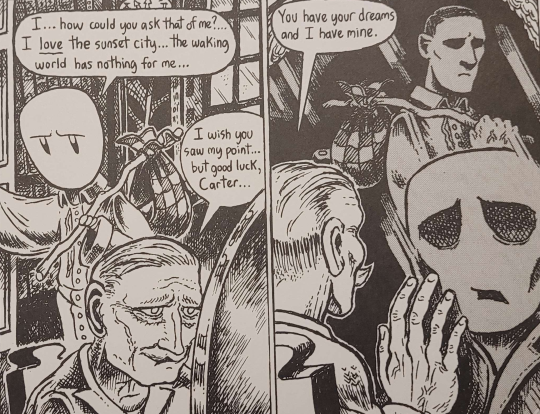
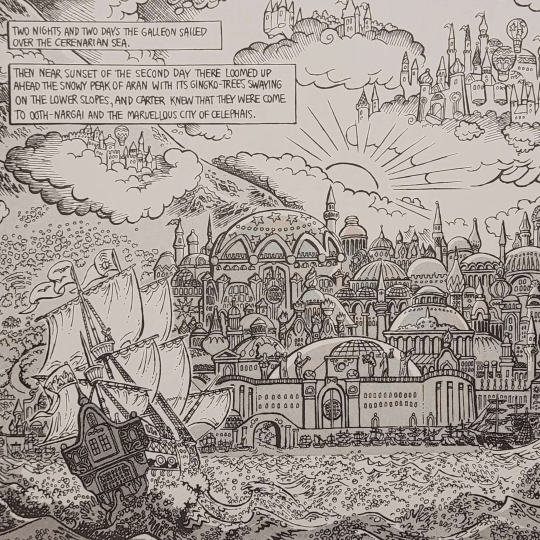
The art is exquisite. Crammed full of detail, this is a comic to pore over, absorbing every panel at leisure. Every location has unique architectural motifs, leaning to the Orientalist. There is adventure, beauty, and horror at every turn. In a strange choice, each dreamer is represented as a small man with a mostly featureless face and rope-limbs. But only within dream-land. This is apparently a non-diegetic depiction, since the dreamer Kuranes of "Celephaïs" is shown to resemble his waking self when he appears in Kadath, and he sees Carter as a human. It largely works, probably because it helps Carter stand out from the visual tangle surrounding him, and because it's not used for humour. The whole thing is a massive labour of love that's simply fun to look at and get lost in.
The story itself is a rip-roaring adventure, full of strange incidents, places and people. Danger, daring, discoveries, setbacks, companions, travel far and wide, a lofty and seemingly unattainable goal, every ingredient of a great adventure is there, and it all plays out to perfection. Having not read the original, I don't know how it compares, but it seems to mostly follow the same story.
In addition to a plethora of references to the works of Lovecraft and Dunsany, there are shoutouts to contemporary dreamworlds like Eddison's Zimiamvia and Lindsay's Voyage to Arcturus, and more modern works of dream like "Where the Wild Things Are" and Gorey's "The Doubtful Guest". Thompson has written a guide to his adaptational choices and sources of inspiration. To give an example of how small and specific they can get:
The strange design in the village square of Ulthar is based on the design from the Centaurus Festival in the 1985 anime version of Kenji Miyazawa’s 1927 allegory NIGHT ON THE GALACTIC RAILROAD. The story of two friends who ride a ghostly train through the cosmos (no relation to the much later manga/anime GALAXY EXPRESS 999), the original novel is good, and the anime is an amazing and dreamlike production. As for why a mandala in a Japanese village in NIGHT ON THE GALACTIC RAILROAD might be found village of Ulthar, there’s this: in the anime (though not the novel), all the human characters are drawn as bipedal cats, due to quirky character designs based on a manga adaptation of the novel by cat lover Hiroshi Masamura.


June 19, 2016
Este relato, el más extenso que escribió Lovecraft (a menos que lo consideremos una novela corta), pertenece al ciclo de historias de terror onírico protagonizadas por Randolph Carter. Antes que en “La búsqueda en sueños de la ignota Kadath”, Carter ya había aparecido, con mayor o menor protagonismo, en “La declaración de Randolph Carter” (1919), “El innombrable” (1923) y “La llave de plata” (1926). En este primer grupo, Lovecraft ponía las bases de esta dimensión paralela a la nuestra en la que hay unas leyes, una geografía y unos dioses que viven en los sueños. Después vendrían “El caso de Charles Dexter Ward” (1927), “A través de las puertas de la llave de plata” (1933) y “Más allá de los eones” (1933). A través de todos estos relatos, Lovecraft construye una biografía ficticia más o menos exacta de Randolph Carter y un retrato del mundo de la luna y los sueños en el que muchos han querido ver rasgos de la propia vida interior del autor.
La reseña completa en español en http://elbiblionauta.com/es/2015/05/0...
La ressenya completa en català a http://elbiblionauta.com/ca/2015/05/0...
La reseña completa en español en http://elbiblionauta.com/es/2015/05/0...
La ressenya completa en català a http://elbiblionauta.com/ca/2015/05/0...

March 25, 2020
My absolute favorite Lovecraft story.
Lusciously adapted with all the detail, horrific and wonderous, that you'd expect Lovecraft's epic journey. Wow. I have very little space on my office bookshelves. This hardcover is on it.
Lusciously adapted with all the detail, horrific and wonderous, that you'd expect Lovecraft's epic journey. Wow. I have very little space on my office bookshelves. This hardcover is on it.

May 29, 2019
Make no mistake, this is not Lovecraft's Dream-Quest. Yes, Thompson's script follows Lovecraft closely, far more closely than anyone had a right to expect. Yes, both men draw from a common pool of wonder and exoticism, grotesquery and terror. But the end result is very different. Where Lovecraft is shadowy and delicate, Thompson is harder-edged. Where Lovecraft is suggestive, Thompson is intricately, almost hallucinogenically detailed. The book is very much Thompson's own.
That is by no means a bad thing. Another reviewer has suggested that Thompson's characters are cartoony. They are that. But their cartooniness does not denote a lack of skill. Realism is simply not Thompson's aim. What is his aim? I suspect it is to fill his page, to fill it with as many strange, wonderful and terrible visions as he and Lovecraft can conceive of. He seems to have a primitive love of intricacy for its own sake, and a primitive hatred of vacancy. White space exists only to be filled, and Thompson fills it. He fills it with imagination and beauty, with strangeness and terror, with everything one could reasonably hope for in a graphic adaptation of this weird and wonderful source.
The novel is preceded by several short stories. The ordering of the stories reflects the order in which Lovecraft wrote them, but I think it is a mistake. These earlier Lovecraft stories are clearly Thompson's later work, and they should have been presented as such. This is where the artist shows us what he can really do, with levels of skill and assurance and ambition that the novel only suggests.
That is by no means a bad thing. Another reviewer has suggested that Thompson's characters are cartoony. They are that. But their cartooniness does not denote a lack of skill. Realism is simply not Thompson's aim. What is his aim? I suspect it is to fill his page, to fill it with as many strange, wonderful and terrible visions as he and Lovecraft can conceive of. He seems to have a primitive love of intricacy for its own sake, and a primitive hatred of vacancy. White space exists only to be filled, and Thompson fills it. He fills it with imagination and beauty, with strangeness and terror, with everything one could reasonably hope for in a graphic adaptation of this weird and wonderful source.
The novel is preceded by several short stories. The ordering of the stories reflects the order in which Lovecraft wrote them, but I think it is a mistake. These earlier Lovecraft stories are clearly Thompson's later work, and they should have been presented as such. This is where the artist shows us what he can really do, with levels of skill and assurance and ambition that the novel only suggests.

September 9, 2012
Once upon a time, Jason Thompson adapted HP Lovecraft's The Dream Quest of Unknown Kadath as a comic book... He also illustrated some other HPL stories: The Strange High House in the Mists, Celephais, and The White Ship. I don't know whether the latter was ever published anywhere besides his website, but the former went out of print fairly quickly.
Thompson launched a Kickstarter to print all of these stories in one hardcover edition with updated art. The result is a beautiful, beautiful book that any HPL fan would be happy to add to eir collection. Thompson's art is more manga-style than western. The "mock man" he uses as the main character allows readers to focus on the fantastic dream setting instead of the main character. The stories are from Lovecraft's dream cycle, not the Cthluhu mythos, and they stand alone. This means the book can be passed around to non-fans (cat fanciers, etc) to enjoy without sending them into an impossible spiral of gibbering madness.
Thompson launched a Kickstarter to print all of these stories in one hardcover edition with updated art. The result is a beautiful, beautiful book that any HPL fan would be happy to add to eir collection. Thompson's art is more manga-style than western. The "mock man" he uses as the main character allows readers to focus on the fantastic dream setting instead of the main character. The stories are from Lovecraft's dream cycle, not the Cthluhu mythos, and they stand alone. This means the book can be passed around to non-fans (cat fanciers, etc) to enjoy without sending them into an impossible spiral of gibbering madness.

May 10, 2025
Ufff, tarde meses en acabar el libro, por varios factores: falta de tiempo, luego falta de interés y finalmente porque me quedaba leyendo otros libros.
En fin, más allá de esto, el relato que da título al libro era uno de mis favoritos de Lovecraft, pero siento que ahora no conecté tanto con el, probablemente porque en ese entonces, tenía el universo de Lovecraft mucho más fresco en mi cabeza y entendía y recordaba fácilmente cada mención de personajes, ciudades y acontecimientos de otros relatos del autor en éste cuento.
Esta edición de Valdemar contiene en total cinco relatos protagonizados por Randolph Carter:
-El testimonio de Randolph Carter.
-Lo innominable.
-La búsqueda en sueños de la ignota Kadath.
-La llave de plata.
-A través de las puertas de la llave de plata.
En fin, más allá de esto, el relato que da título al libro era uno de mis favoritos de Lovecraft, pero siento que ahora no conecté tanto con el, probablemente porque en ese entonces, tenía el universo de Lovecraft mucho más fresco en mi cabeza y entendía y recordaba fácilmente cada mención de personajes, ciudades y acontecimientos de otros relatos del autor en éste cuento.
Esta edición de Valdemar contiene en total cinco relatos protagonizados por Randolph Carter:
-El testimonio de Randolph Carter.
-Lo innominable.
-La búsqueda en sueños de la ignota Kadath.
-La llave de plata.
-A través de las puertas de la llave de plata.
July 8, 2012
Transcendently beautiful, Jason Bradley Thompson's extraordinary graphic renditions of four H.P. Lovecraft classics (The White Ship, Celephais, The Strange High House in the Mist, and the eponymous The Dream-Quest of Unknown Kadath) is an absolute must-have, must-read, and must-cherish book. The stories are rendered in stunning detail, but eschew realism in favor of a welcoming, dare I say it, DREAMLIKE quality that breathes new life into old stories and showcases the timeless nature of the source material. Just get this--NOW!
March 11, 2018
Un libro que en verdad te hace volar. Los viajes oníricos de Randolph Carter reúne los relatos de aventuras alucinantes a otros planos de las realidades. La pluma de Lovecraft te envuelve en estos relatos y eres testigo con el protagonista de parajes, personajes y situaciones que son una delicia.

April 7, 2012
I read this as individual issues, back in the day, and am OMG SO EXCITED I'M PEEING MY PANTS!!! to see this collected in hardcover. YES YES YES!
[Homer Simpson drooling sound, unto death...]
[Homer Simpson drooling sound, unto death...]
August 23, 2026
Randolph Carter es un personaje de H.P. Lovecraft que el autor utilizó en más de una historia. Tiene un poco más de personalidad que otros protagonistas del autor (aunque eso no es decir mucho), ya que en algunos aspectos el personaje funciona como un avatar del autor. En particular, Carter es un caminante de sueños, y muchos de los sueños en los que se encuentra están basados en sueños reales del autor.
La colección tiene cinco historias de Carter. Las primeras dos, “El testimonio de Randolph Carter” y “Lo innominable” están directamente basados en sueños de Lovecraft. Escritos sencillos, breves, en realidad no tan buenos.
La tercera historia, La búsqueda en sueños de la ignota Kadath es la más larga del grupo, en efecto una novela corta. Muy atípico del estilo usual de Lovecraft, esta historia más bien canaliza el estilo narrativo de Lord Dunsany. Es bastante interesante, si bien a veces se hace demasiado largo. En cualquier caso, se aprecia el esfuerzo del autor por intentar y aspirar a más.
El cuarto cuento, “La llave de plata”, podría funcionar como un cierre a las historias de Randolph Carter, con un final ambiguo que insinúa que no podría haber más historias sobre éste. Al menos, hasta la llegada del quinto cuento “A través de las puertas de la llave de plata”, coescrita por E. Hoffman Price, parte del círculo de amigos literarios de Lovecraft (aunque más correcto sería decir que la idea de la trama es de Hoffman y la escritura es de Lovecraft, aunque éste incluyó varias referencias a términos que Hoffman usaba en sus cuentos, para mantener consistente la mitología).
La colección tiene cinco historias de Carter. Las primeras dos, “El testimonio de Randolph Carter” y “Lo innominable” están directamente basados en sueños de Lovecraft. Escritos sencillos, breves, en realidad no tan buenos.
La tercera historia, La búsqueda en sueños de la ignota Kadath es la más larga del grupo, en efecto una novela corta. Muy atípico del estilo usual de Lovecraft, esta historia más bien canaliza el estilo narrativo de Lord Dunsany. Es bastante interesante, si bien a veces se hace demasiado largo. En cualquier caso, se aprecia el esfuerzo del autor por intentar y aspirar a más.
El cuarto cuento, “La llave de plata”, podría funcionar como un cierre a las historias de Randolph Carter, con un final ambiguo que insinúa que no podría haber más historias sobre éste. Al menos, hasta la llegada del quinto cuento “A través de las puertas de la llave de plata”, coescrita por E. Hoffman Price, parte del círculo de amigos literarios de Lovecraft (aunque más correcto sería decir que la idea de la trama es de Hoffman y la escritura es de Lovecraft, aunque éste incluyó varias referencias a términos que Hoffman usaba en sus cuentos, para mantener consistente la mitología).

January 15, 2021
I was introduced to this via a few issues when it was coming out at the turn of the century, but until this year didn't have a chance to read the whole thing. It's wonderful. The central visual conceit of the dreamers appearing to themselves as the Mockman lets Randolph Carter be immediately identified and incredibly expressive in every panel. Jason Bradley Thompson does phenomenal work in translating the original to the comic page. Highly recommended.

February 29, 2020
Absolutely amazing! The art is detailled, complex, and the adaptation of Lovecraft's story is integral. Any fan of Lovecraft or comics need this in their collection! Now I hope Jason will release a 2nd volume in the future, collecting his other stories available on his website. I would absolutely buy it too!
March 20, 2026
There were some stories that were too difficult and not that interesting. But overall it was ok and difficult haha.

October 22, 2023
3,5/5⭐️
July 19, 2014
While I'm a sucker for virtually all things H.P. Lovecraft, The Dream Quest of Unknown Kadath was that one story I couldn't see through to the end. Lovecraft's addiction to detail and adjectives worked with so many things, and I couldn't swallow them for a setting of a wistful chaos in Dreamland.
Enter this book, which my graphic novel-loving girlfriend picked up for me. There are no words. Well, there are fewer words than I can usually muster anyway. What's most important to say is that with the artist's technique and ability to give life to Howie Philips' poetic jargon, I handily finished this wondrous story and feel all the more enriched for it. Who knew Lovecraft was such a sentimental? Starting now, this guy. (points at self)
Enter this book, which my graphic novel-loving girlfriend picked up for me. There are no words. Well, there are fewer words than I can usually muster anyway. What's most important to say is that with the artist's technique and ability to give life to Howie Philips' poetic jargon, I handily finished this wondrous story and feel all the more enriched for it. Who knew Lovecraft was such a sentimental? Starting now, this guy. (points at self)

May 7, 2012
This book deserves a lot more recognition!
It is a collection of short stories and the long tale "The Dream-Quest of Unknown Kadath".
Thompson has produced a labour of love and it shows. The detailed map on the end boards is almost worth the price of admission. Thompson has made one of my favorite Lovecraft tales come to life in a way I didn't think possible. His ink drawings are amazingly detailed and accurate to the words of the original text.
I thoroughly enjoyed this and can't wait for more Thompson/Lovecraft output.
It is a collection of short stories and the long tale "The Dream-Quest of Unknown Kadath".
Thompson has produced a labour of love and it shows. The detailed map on the end boards is almost worth the price of admission. Thompson has made one of my favorite Lovecraft tales come to life in a way I didn't think possible. His ink drawings are amazingly detailed and accurate to the words of the original text.
I thoroughly enjoyed this and can't wait for more Thompson/Lovecraft output.
Read
November 20, 2022Terrific and very detailed illustrated re-tellings of Dream Quest, the White Ship and the Strange High House in the Mist. There are nice stylistic touches throughout, particularly in the dreamlands, where the dreamer from Earth is a highly stylized cartoon-figure even though everyone around him seems more or less "normal" (e.g. humanoidish at least.) Having just re-read the original, I found this a great accompaniment, though there's something so poetic and stirring about the last monologue at the end that doesn't totally come through in this version of Dream Quest to me. Perhaps I need to re-read it when I'm further from the text. Overall, I feel that this is one of HPL's most literary works, dealing with nostalgia, childhood, and the nature of desire in a far deeper and more engaged way than most of his great "weird tales." JBT has a great eye for detail and how to add details to the environs that feel inspired by the admittedly sparse original and he clearly loves the inspirational material.

August 24, 2019
This book comes highly recommended.
I am a devoted Lovecraft reader and scholar. While I adore the man's work, these dreamland stories are not exactly my favorites. I feel like they're more vignettes. I like William Randolph Carter as a character and stand in for the author, but, the story is loose and kinda boring. I've always felt like reading Kaddath is akin to listening to a bus full of tourists coming back from a lavish vacation that you happened to miss out on. "We went here, did this, did that..."
Blah, blah.
While this book won't change that view, I appreciate the artistic depictions of those places. While the black and white style left something to the imagination, I felt as though this was a story made more for a graphic novel than the harsh linearity of print.
If you are diving into Lovecraft and want these stories, or you're going back and want to find a new point of access to the Dreamlands stuff, this is a good volume.
I am a devoted Lovecraft reader and scholar. While I adore the man's work, these dreamland stories are not exactly my favorites. I feel like they're more vignettes. I like William Randolph Carter as a character and stand in for the author, but, the story is loose and kinda boring. I've always felt like reading Kaddath is akin to listening to a bus full of tourists coming back from a lavish vacation that you happened to miss out on. "We went here, did this, did that..."
Blah, blah.
While this book won't change that view, I appreciate the artistic depictions of those places. While the black and white style left something to the imagination, I felt as though this was a story made more for a graphic novel than the harsh linearity of print.
If you are diving into Lovecraft and want these stories, or you're going back and want to find a new point of access to the Dreamlands stuff, this is a good volume.

May 26, 2025
¿El esqueleto y guion de la historia? Un 10.
¿Que le de mas importancia a describirme la geografía del mundo de sueños y a contarme medio bestiario de su mundo que a que el protagonista no sea un espectador en su propia historia? Un 3.
Que no haya una sola línea de diálogo en 150 páginas se me ha hecho muy duro, especialmente mezclado con que me hable de 85727 sitios y bichos distintos.
¿Que le de mas importancia a describirme la geografía del mundo de sueños y a contarme medio bestiario de su mundo que a que el protagonista no sea un espectador en su propia historia? Un 3.
Que no haya una sola línea de diálogo en 150 páginas se me ha hecho muy duro, especialmente mezclado con que me hable de 85727 sitios y bichos distintos.
December 31, 2025
Para mi este es un relato que destaca en la obra de Lovecraft, por su carácter más aventurero, de acción, y variado en cuanto a vivencias del protagonista; sin perder la esencia de su universo y, aún más, presentando gran parte de su mitología y bestiario.
Sigue siendo mi preferido de su literatura, sin menospreciar con ello el resto de su obra.
Sigue siendo mi preferido de su literatura, sin menospreciar con ello el resto de su obra.
May 21, 2024
Es uno de esos libros donde cuanto más lees menos entiendes, hasta que llegas prácticamente al final de la historia y por fin cuadra todo.
Eso es algo que me gusta mucho pero no le doy la quinta estrella porque me costaba engancharme al principio
Eso es algo que me gusta mucho pero no le doy la quinta estrella porque me costaba engancharme al principio

August 21, 2024
Es un viaje en todo sentido de la palabra.
Cómo ya es costumbre, Lovecraft nos ofrece un mundo en el que las criaturas extrañas son la orden del día; sin embargo más que terror cósmico también encontramos esa sensación onirica que envuelve todo en una nube surreal.
Me encanta Nyarlathotep ❤️
Cómo ya es costumbre, Lovecraft nos ofrece un mundo en el que las criaturas extrañas son la orden del día; sin embargo más que terror cósmico también encontramos esa sensación onirica que envuelve todo en una nube surreal.
Me encanta Nyarlathotep ❤️

August 5, 2025
la verdad es que el intermedio se me hizo bastante pesado, y eso de que no tenga diálogos me lo hizo más pesado aún, solo me lo termine porque me quedaba poco pero no me ha gustado
February 12, 2026
Mi historia favorita de Lovecraft!!! la aventura, los personajes! una escena me sigue causando miedo años después!
Displaying 1 - 30 of 50 reviews