

What do you think?

The Loved One
A riotous caper in the graveyards of southern California.
Southern California, as readers of Jessica Mitford's "The American Way of Death" will know, is unique in the splendid elaboration of its graveyards and funeral customs.
Set against a background of embalming rooms and crematoria and the unforgettable Whispering Glades Memorial Park, "The Loved One" is as ludicrous as "Decline and Fall", as incisively shocking as "Vile Bodies" and - underneath the laughs - as moving as death itself.
A triumph of barbed flippancy.
Southern California, as readers of Jessica Mitford's "The American Way of Death" will know, is unique in the splendid elaboration of its graveyards and funeral customs.
Set against a background of embalming rooms and crematoria and the unforgettable Whispering Glades Memorial Park, "The Loved One" is as ludicrous as "Decline and Fall", as incisively shocking as "Vile Bodies" and - underneath the laughs - as moving as death itself.
A triumph of barbed flippancy.
146 pages, Paperback
First published February 1, 1948
About the author
Evelyn Waugh
326 books3,129 followersEvelyn Waugh's father Arthur was a noted editor and publisher. His only sibling Alec also became a writer of note. In fact, his book “The Loom of Youth” (1917) a novel about his old boarding school Sherborne caused Evelyn to be expelled from there and placed at Lancing College. He said of his time there, “…the whole of English education when I was brought up was to produce prose writers; it was all we were taught, really.” He went on to Hertford College, Oxford, where he read History. When asked if he took up any sports there he quipped, “I drank for Hertford.”
In 1924 Waugh left Oxford without taking his degree. After inglorious stints as a school teacher (he was dismissed for trying to seduce a school matron and/or inebriation), an apprentice cabinet maker and journalist, he wrote and had published his first novel, “Decline and Fall” in 1928.
In 1928 he married Evelyn Gardiner. She proved unfaithful, and the marriage ended in divorce in 1930. Waugh would derive parts of “A Handful of Dust” from this unhappy time. His second marriage to Audrey Herbert lasted the rest of his life and begat seven children. It was during this time that he converted to Catholicism.
During the thirties Waugh produced one gem after another. From this decade come: “Vile Bodies” (1930), “Black Mischief” (1932), the incomparable “A Handful of Dust” (1934) and “Scoop” (1938). After the Second World War he published what is for many his masterpiece, “Brideshead Revisited,” in which his Catholicism took centre stage. “The Loved One” a scathing satire of the American death industry followed in 1947. After publishing his “Sword of Honour Trilogy” about his experiences in World War II - “Men at Arms” (1952), “Officers and Gentlemen” (1955), “Unconditional Surrender" (1961) - his career was seen to be on the wane. In fact, “Basil Seal Rides Again” (1963) - his last published novel - received little critical or commercial attention.
Evelyn Waugh, considered by many to be the greatest satirical novelist of his day, died on 10 April 1966 at the age of 62.
See http://en.wikipedia.org/wiki/Evelyn_W...
In 1924 Waugh left Oxford without taking his degree. After inglorious stints as a school teacher (he was dismissed for trying to seduce a school matron and/or inebriation), an apprentice cabinet maker and journalist, he wrote and had published his first novel, “Decline and Fall” in 1928.
In 1928 he married Evelyn Gardiner. She proved unfaithful, and the marriage ended in divorce in 1930. Waugh would derive parts of “A Handful of Dust” from this unhappy time. His second marriage to Audrey Herbert lasted the rest of his life and begat seven children. It was during this time that he converted to Catholicism.
During the thirties Waugh produced one gem after another. From this decade come: “Vile Bodies” (1930), “Black Mischief” (1932), the incomparable “A Handful of Dust” (1934) and “Scoop” (1938). After the Second World War he published what is for many his masterpiece, “Brideshead Revisited,” in which his Catholicism took centre stage. “The Loved One” a scathing satire of the American death industry followed in 1947. After publishing his “Sword of Honour Trilogy” about his experiences in World War II - “Men at Arms” (1952), “Officers and Gentlemen” (1955), “Unconditional Surrender" (1961) - his career was seen to be on the wane. In fact, “Basil Seal Rides Again” (1963) - his last published novel - received little critical or commercial attention.
Evelyn Waugh, considered by many to be the greatest satirical novelist of his day, died on 10 April 1966 at the age of 62.
See http://en.wikipedia.org/wiki/Evelyn_W...
Ratings & Reviews
Friends & Following
Create a free account to discover what your friends think of this book!
Community Reviews
Displaying 1 - 30 of 1,512 reviews

July 10, 2012
SIX FEET UNDER
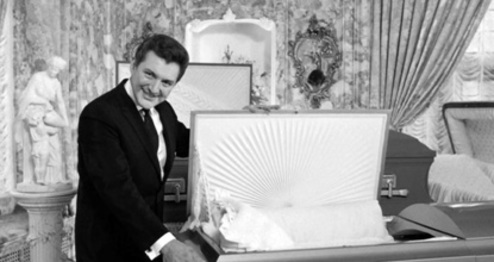
Sarebbe un errore scambiare questo breve romanzo del 1948 per una riflessione sulla morte: non ha intenti così alti, e spirituali.
E anche se il sottotiolo recita “una tragedia anglo-americana”, ché i due paesi, Inghilterra e Stati Uniti sono protagonisti, è piuttosto una commedia, o meglio, una satira à la Waugh, che può essere davvero tagliente, come in questo caso: più che sulla morte, si irride, e a suo modo ragiona, sugli affari a essa connessi. Nello specifico, il business dei funerali.
Noi che viviamo a Roma sappiamo bene che la questione è sul tappeto, la trappola scatta dal letto d’ospedale e prosegue fino a seppellimento incluso, quando si riesce ad arrivarci.
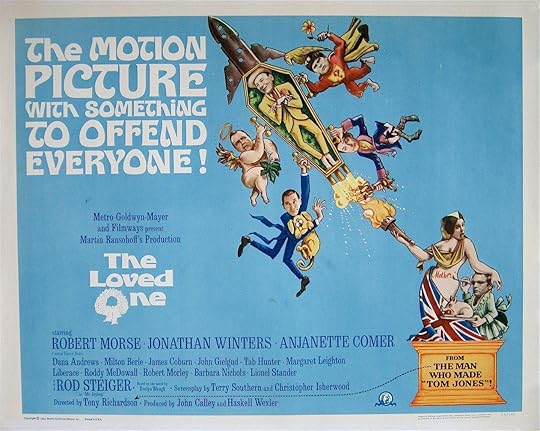
I protagonisti sono espatriati inglesi in California, nella mecca del cinema, Hollywood,
Un giovane poeta inglese raggiunge lo zio che lavora a Hollywood: quando viene licenziato, il Sir inglese zio del giovane poeta si suicida.
Da qui si entra nel mondo dei funerali.
Dennis, il giovane poeta, contatta una funeral home, un’impresa funebre, dal nome che vorrebbe essere tranquillizzante e invece…: Whispering Glades – Boschi Sussurranti. La Disneyland dell’aldilà, capace di organizzare perfino picnic per coppiette di innamorati accanto alle tombe denominate “Nido d’Aquila” o “Angolo dei Poeti”, tra cinguettii di usignoli e canti d’amore indù (entrambi registrati).
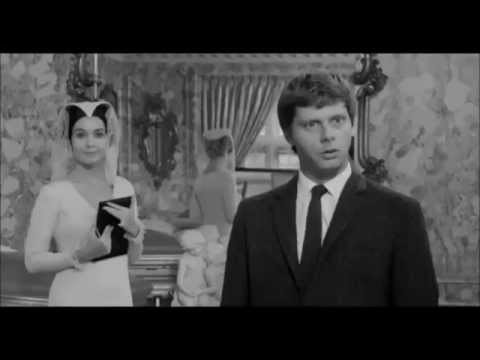
Nella ditta di funerali lavora una giovane estetista di cui il poeta s’innamora. La ragazza si chiama Aimée Thanatogenos (nomen omen). Il sarcasmo di Waugh non si ferma: ai Whispering Glades – Boschi Sussurranti lavora un imbalsamatore di nome Joyboy che contende le grazie della ragazza al poeta.
Per non farsi mancare nulla, Waugh mette il giovane poeta a guadagnarsi il pane in una funeral home per animali domestici, il Campo della Beata Caccia, che accoglie cani gatti pappagalli e caprette: la poesia si sa non impingua il conto in banca, mentre Hollywood è piena di creature a quattro zampe.
Ai morti si finisce col prestare un’attenzione e una cura che ci si guardava bene dal riservare alle stesse persone vive. Certo, sono attenzioni che costano, i cari rimasti piangono a caro prezzo i loro cari estinti, però alla fine i defunti sono più belli e radiosi che in vita.
Col procedere del racconto, il suicidio si ripete, prima lo zio e poi la giovane bella e in qualche modo amata truccatrice di cari estinti.
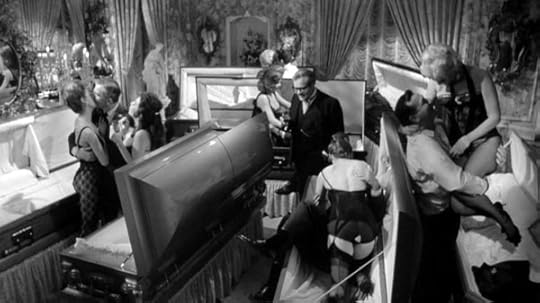
Ma entrambi i suicidi lasciano il lettore scarsamente compassionevole perché la satira di Waugh investe anche questi due personaggi, che non sono ‘innocenti’ come non lo è nessun altro in questo romanzo, tutti conniventi e partecipi, gli americani dediti al consacrare il kitsch e professare un consumistico spiritualismo, gli inglesi snob e illusi di una superiorità culturale che non esiste più.
I cadaveri son ben conservati e perfettamente fotogenici, probabilmente perché hanno venduto l’anima al denaro e al potere. Ecco cos’è diventata la società occidentale.
È una farsa, la psicologia dei personaggi latita. Ma si legge con piacere.
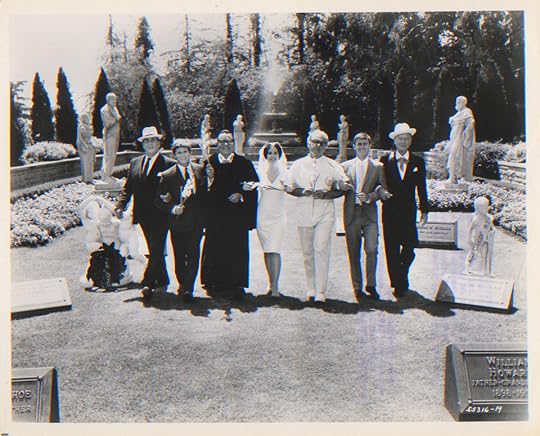
Il film è apparso quasi vent’anni dopo (1965), si discosta dal romanzo, ne perde la leggerezza, nonostante Tony Richardson alla regia e Christopher Isherwood alla sceneggiatura. Risultato non memorabile.
Due parole sulla mia edizione del 1956.
Ora che se s’investe su una pre o post fazione, lo si fa in direzione dell’approfondimento, di breve saggio, colpisce, e intenerisce, quella che trovo qui, tutta meno che studio, sorta di quarta di copertina con intento di marketing.
Ma colpisce ancor più l’immagine sulla copertina, un Grant Wood, quello celebre per American Gothic che è finito su mille libri e poster e citato perfino nel Rocky Horror Picture Show: qui si tratta di Le figlie della rivoluzione, che ha una certa qual aria da famiglia Addams e fa passare ogni voglia di rivoluzione.
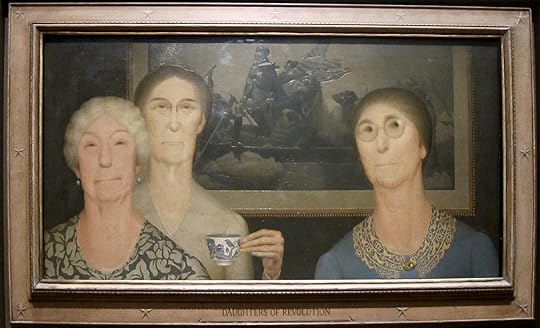
Grant Wood: Figlie della rivoluzione (1932), Cincinnati Art Museum.
Sarebbe un errore scambiare questo breve romanzo del 1948 per una riflessione sulla morte: non ha intenti così alti, e spirituali.
E anche se il sottotiolo recita “una tragedia anglo-americana”, ché i due paesi, Inghilterra e Stati Uniti sono protagonisti, è piuttosto una commedia, o meglio, una satira à la Waugh, che può essere davvero tagliente, come in questo caso: più che sulla morte, si irride, e a suo modo ragiona, sugli affari a essa connessi. Nello specifico, il business dei funerali.
Noi che viviamo a Roma sappiamo bene che la questione è sul tappeto, la trappola scatta dal letto d’ospedale e prosegue fino a seppellimento incluso, quando si riesce ad arrivarci.
I protagonisti sono espatriati inglesi in California, nella mecca del cinema, Hollywood,
Un giovane poeta inglese raggiunge lo zio che lavora a Hollywood: quando viene licenziato, il Sir inglese zio del giovane poeta si suicida.
Da qui si entra nel mondo dei funerali.
Dennis, il giovane poeta, contatta una funeral home, un’impresa funebre, dal nome che vorrebbe essere tranquillizzante e invece…: Whispering Glades – Boschi Sussurranti. La Disneyland dell’aldilà, capace di organizzare perfino picnic per coppiette di innamorati accanto alle tombe denominate “Nido d’Aquila” o “Angolo dei Poeti”, tra cinguettii di usignoli e canti d’amore indù (entrambi registrati).
Nella ditta di funerali lavora una giovane estetista di cui il poeta s’innamora. La ragazza si chiama Aimée Thanatogenos (nomen omen). Il sarcasmo di Waugh non si ferma: ai Whispering Glades – Boschi Sussurranti lavora un imbalsamatore di nome Joyboy che contende le grazie della ragazza al poeta.
Per non farsi mancare nulla, Waugh mette il giovane poeta a guadagnarsi il pane in una funeral home per animali domestici, il Campo della Beata Caccia, che accoglie cani gatti pappagalli e caprette: la poesia si sa non impingua il conto in banca, mentre Hollywood è piena di creature a quattro zampe.
Ai morti si finisce col prestare un’attenzione e una cura che ci si guardava bene dal riservare alle stesse persone vive. Certo, sono attenzioni che costano, i cari rimasti piangono a caro prezzo i loro cari estinti, però alla fine i defunti sono più belli e radiosi che in vita.
Col procedere del racconto, il suicidio si ripete, prima lo zio e poi la giovane bella e in qualche modo amata truccatrice di cari estinti.
Ma entrambi i suicidi lasciano il lettore scarsamente compassionevole perché la satira di Waugh investe anche questi due personaggi, che non sono ‘innocenti’ come non lo è nessun altro in questo romanzo, tutti conniventi e partecipi, gli americani dediti al consacrare il kitsch e professare un consumistico spiritualismo, gli inglesi snob e illusi di una superiorità culturale che non esiste più.
I cadaveri son ben conservati e perfettamente fotogenici, probabilmente perché hanno venduto l’anima al denaro e al potere. Ecco cos’è diventata la società occidentale.
È una farsa, la psicologia dei personaggi latita. Ma si legge con piacere.
Il film è apparso quasi vent’anni dopo (1965), si discosta dal romanzo, ne perde la leggerezza, nonostante Tony Richardson alla regia e Christopher Isherwood alla sceneggiatura. Risultato non memorabile.
Due parole sulla mia edizione del 1956.
Ora che se s’investe su una pre o post fazione, lo si fa in direzione dell’approfondimento, di breve saggio, colpisce, e intenerisce, quella che trovo qui, tutta meno che studio, sorta di quarta di copertina con intento di marketing.
Ma colpisce ancor più l’immagine sulla copertina, un Grant Wood, quello celebre per American Gothic che è finito su mille libri e poster e citato perfino nel Rocky Horror Picture Show: qui si tratta di Le figlie della rivoluzione, che ha una certa qual aria da famiglia Addams e fa passare ogni voglia di rivoluzione.
Grant Wood: Figlie della rivoluzione (1932), Cincinnati Art Museum.

July 24, 2007
The copy I had of this was used, and had underlines where the previous reader would note in the margin "funny," and "ha." This reader stopped doing this by the third or fourth page, either because s/he no longer found it funny, or it became absurd to underline all passages and mark them as "ha." I think most readers will fall into either of these categories. I am in "ha."

November 1, 2017
This is my first experience of reading Waugh, thanks to the Reading the 20th Century group. This is a savage and very funny dark comedy, subtitled "An Anglo-American Tragedy". According to Waugh's preface, it was inspired by a trip to Hollywood to meet a producer who wanted to film Brideshead Revisited, a trip on which Waugh spent much of his time in the cemetery he dubs "Whispering Glades". Much of it is about misunderstandings and cultural differences between Britain and America, and some of this seems as relevant as ever.
The story centres on Dennis Barlow, a young British writer who is earning his keep by working at a pet cemetery. He is lodging with an older writer, who is fired by his studio and reacts by hanging himself. Barlow is asked by the British community as represented by the Cricket Club to arrange an appropriate funeral, and much of the first part of the book centres on his introduction to the cemetery and its bizarre, lavish and tasteless rituals. He meets and falls for the aptly named Aimée Thanatogenos a beautician who works there, who is also being pursued by the embalmer Mr Joyboy, who sends her smiling corpses. To say much more would spoil the book for anyone new to it, but Waugh doesn't spare much sympathy for any of the characters, all of whom are rather one-dimensional.
The book is full of very funny moments and a pleasure to read.
The story centres on Dennis Barlow, a young British writer who is earning his keep by working at a pet cemetery. He is lodging with an older writer, who is fired by his studio and reacts by hanging himself. Barlow is asked by the British community as represented by the Cricket Club to arrange an appropriate funeral, and much of the first part of the book centres on his introduction to the cemetery and its bizarre, lavish and tasteless rituals. He meets and falls for the aptly named Aimée Thanatogenos a beautician who works there, who is also being pursued by the embalmer Mr Joyboy, who sends her smiling corpses. To say much more would spoil the book for anyone new to it, but Waugh doesn't spare much sympathy for any of the characters, all of whom are rather one-dimensional.
The book is full of very funny moments and a pleasure to read.

June 22, 2022
This story takes a very sardonic look at love, the death care industry, and both British and American sensibilities.
Though the characters are exclusively one-note, Waugh nevertheless succeeds plot-wise in his takes on damn near everything he encounters.
The biting wit and sarcasm continue through til the darkly-fitting ending.
Not a challenging read, but an endearing one--if dark comedy is your thing.
Though the characters are exclusively one-note, Waugh nevertheless succeeds plot-wise in his takes on damn near everything he encounters.
The biting wit and sarcasm continue through til the darkly-fitting ending.
Not a challenging read, but an endearing one--if dark comedy is your thing.

February 18, 2020
You heard of the phrase “shooting fish in a barrel” – that’s what Evelyn Waugh does here. There are two barrels, but both are of solid oak and the fish are glittery and plump so there is still a lot of fun to be had.
The story I get from Wikipedia which got it from his biographer is that Hollywood wanted to film Brideshead and Waugh didn’t want them to because he didn’t think Americans understood the theological implications of Brideshead – that’s some classic grumpiness, you have to sneakingly admire it. While in Hollywood sneering at the producers he discovered the vast city of the dead that is the Forest Lawn cemetery in LA and immediately realised there was a ton of comedy gold to be picked up for free.
No doubt, he has a pleasantly poisonous tongue does our Evelyn. Here he describes one young lady’s work with the loved ones :
Fortunately there was little of importance on hand. She helped the girl in the next cubicle glue a toupe to a more than slippery scalp; she hastily brushed over a male baby with flesh tint
So this is moderately vicious satire of a) the British in Hollywood and much more obviously b) the tacky grotesqueries of rich dead Americans. There are three sideswipes also – c) the ridiculous-even-for-Californians business of pet funerals, d) a spiritual advisor called Guru Brahmin, he turns out to be two guys who aren’t that spiritual at all, and e) the old favourite, the advertising business. Here’s the Waugh version of a 1940s ad for a new perfume :
From the depth of the fever-ridden swamp where juju drums throb for the human sacrifice, Jeanette’s latest exclusive creation Jungle Venom comes to you with the remorseless stealth of the hunting cannibal.
And here he is on the beneficient properties of smoking :
The cigarettes Mr Slump smoked were prepared by doctors, so the advertisements declared, with the sole purpose of protecting the respiratory system. Yet Mr Slump suffered and the young secretary suffered with him, hideously. For the first hours of every day he was possessed by a cough which arose from tartarean depths and was relieved only by whisky.
Well, this tiny novel was okay, kind of shambolic and lacksadaisical and not too taxing for a writer of Waugh’s powers, but if you want something after you read Brideshead, I suggest either Scoop or Decline and Fall.
2.5 stars generously rounded up to 3 because I’m in a good mood tonight.
The story I get from Wikipedia which got it from his biographer is that Hollywood wanted to film Brideshead and Waugh didn’t want them to because he didn’t think Americans understood the theological implications of Brideshead – that’s some classic grumpiness, you have to sneakingly admire it. While in Hollywood sneering at the producers he discovered the vast city of the dead that is the Forest Lawn cemetery in LA and immediately realised there was a ton of comedy gold to be picked up for free.
No doubt, he has a pleasantly poisonous tongue does our Evelyn. Here he describes one young lady’s work with the loved ones :
Fortunately there was little of importance on hand. She helped the girl in the next cubicle glue a toupe to a more than slippery scalp; she hastily brushed over a male baby with flesh tint
So this is moderately vicious satire of a) the British in Hollywood and much more obviously b) the tacky grotesqueries of rich dead Americans. There are three sideswipes also – c) the ridiculous-even-for-Californians business of pet funerals, d) a spiritual advisor called Guru Brahmin, he turns out to be two guys who aren’t that spiritual at all, and e) the old favourite, the advertising business. Here’s the Waugh version of a 1940s ad for a new perfume :
From the depth of the fever-ridden swamp where juju drums throb for the human sacrifice, Jeanette’s latest exclusive creation Jungle Venom comes to you with the remorseless stealth of the hunting cannibal.
And here he is on the beneficient properties of smoking :
The cigarettes Mr Slump smoked were prepared by doctors, so the advertisements declared, with the sole purpose of protecting the respiratory system. Yet Mr Slump suffered and the young secretary suffered with him, hideously. For the first hours of every day he was possessed by a cough which arose from tartarean depths and was relieved only by whisky.
Well, this tiny novel was okay, kind of shambolic and lacksadaisical and not too taxing for a writer of Waugh’s powers, but if you want something after you read Brideshead, I suggest either Scoop or Decline and Fall.
2.5 stars generously rounded up to 3 because I’m in a good mood tonight.

October 29, 2017
Evelyn Waugh wrote this novel while visiting the US, shortly before WWII. While there, he became fascinated by the ‘unsurpassed glories,’ of a cemetery, which is renamed here as, “Whispering Glades.” The book was published in 1948 and is set in Hollywood; among the British expat community. Dennis Barlow is a young poet, who is staying with Sir Francis Hinsley. Dennis is currently working at a pet cemetery, prosaically named, “The Happier Hunting Ground,” much to the disapproval of many fellow expats. At the beginning of the book, the two men are visited by the rather bossy, Sir Ambrose Abercrombie, who points out, “There are jobs that an Englishman just doesn’t take. Yours, dear boy, is pre-eminently one of those.”
This is a novel about the clash of cultures, British snobbishness and the satirising of a garish funeral industry. When Dennis has to organise a funeral, he visits “Whispering Glades,” which his own pet funeral parlour is modelled on. There he comes across the young Aimee Thanatogenos, a junior cosmetician, with a bad memory for, “live faces.” Dennis begins to woo her, by sending love poems, not necessarily written by himself. Meanwhile, Aimee, who was a hair stylist before discovering the joy of clients who were unable to speak back, admires Mr Joyboy, the embalmer, who shows his own affection in the expressions he creates on the corpses he sends on to her.
I have always loved Evelyn Waugh’s wicked sense of humour and he is at his best here – sly, satirical and utterly snobbish. While the British attempt to keep up appearances, playing cricket in the Californian sunshine and putting their hands in their pockets to cover up their countrymen’s mistakes, Aimee is torn between her two suitors and full of self doubt. Like all satire, this is cruel in places and you can just imagine the delight Waugh had presenting this to his publisher. Surely as much delight as I had in reading it – including the preface, in which the author is keen to point out that he is not obsessed by morticians and that readers should refrain from sending him any more information about the subject. I hear the weary sigh, and I smile…
This is a novel about the clash of cultures, British snobbishness and the satirising of a garish funeral industry. When Dennis has to organise a funeral, he visits “Whispering Glades,” which his own pet funeral parlour is modelled on. There he comes across the young Aimee Thanatogenos, a junior cosmetician, with a bad memory for, “live faces.” Dennis begins to woo her, by sending love poems, not necessarily written by himself. Meanwhile, Aimee, who was a hair stylist before discovering the joy of clients who were unable to speak back, admires Mr Joyboy, the embalmer, who shows his own affection in the expressions he creates on the corpses he sends on to her.
I have always loved Evelyn Waugh’s wicked sense of humour and he is at his best here – sly, satirical and utterly snobbish. While the British attempt to keep up appearances, playing cricket in the Californian sunshine and putting their hands in their pockets to cover up their countrymen’s mistakes, Aimee is torn between her two suitors and full of self doubt. Like all satire, this is cruel in places and you can just imagine the delight Waugh had presenting this to his publisher. Surely as much delight as I had in reading it – including the preface, in which the author is keen to point out that he is not obsessed by morticians and that readers should refrain from sending him any more information about the subject. I hear the weary sigh, and I smile…

February 17, 2026
The Happier Hunting Ground...
THE LOVED ONE
by Evelyn Waugh
4 stars. Sir Francis (Frank) Hinsley, British expat now living in the US, was dead. The victim of suicide by hanging...
That same night...
Frank's housemate, Dennis Barlow, came home from a long shift as a pet mortician at The Happier Hunting Ground Pet Cemetery...
And found Sir Francis hanging there...
Dennis had never seen a human corpse...
It fell to Barlow, with the help of several expat Brits living in the L.A. area, to arrange for Hinsley's funeral...
So...
On his way to Whispering Glades, the local splashy, glitzy mortuary/cemetery, Dennis was curious about every aspect of...
Preparation and burial of the dead...
Since moving to Hollywood, Barlow had heard many people talk of that great necropolis burying many famous people with splendid honors...
He drove through its vast golden gates...
There, he saw exotic trees, plants, marble statues, and donated works of art. The masterpiece was a massive marble book, listing the dead within the grounds...
The Mortuary looked like a grand Edwardian old English manor. The dead within were called Loved Ones, the living, Waiting Ones...
After choosing a burial shroud and casket...
Barlow met with cosmetologist Aimee Thanatogenos and immediately fell in love...
The other Brits assigned the task of writing the ode to Sir Francis to Barlow. He wrote:
They told me, Francis Hinsley,
They told me you were hung
With red protruding eyes
And black protruding tongue.
I wept as I remembered how often you and I
Had laughed about Los Angeles,
And now tis here you lie;
Pickled in formaldehyde,
And painted like a whore,
Shrimp pink incorruptable,
Not lost nor gone before.
Later on...
Dennis had a rival in embalmer Mr. Joyboy for the affections of Aimee Thanatogenos, leading to unforseen events...
This novel is a black comedy about the funeral business and the people that do the work. Before WWII, while in Los Angeles, the author was invited to visit a grand and elaborate Mortuary/Cemetery (believed to be Forest Lawn Hollywood Hills). It became the inspiration for this book.
The 1965 movie, The Loved One, Starring Robert Morse, Rod Steiger, Anjanette Comer, and 20-plus other well-known stars was very good and stayed fairly close to the book.
I removed a star due to the amount of archaic English words, stopping the flow to look up definations.
In conclusion, I really enjoyed this book. If old English words bother you, this book may not be for you. If you're planning to read this excellent novel, I strongly advise watching the movie first because you'll better understand what's happening in the book.
THE LOVED ONE
by Evelyn Waugh
4 stars. Sir Francis (Frank) Hinsley, British expat now living in the US, was dead. The victim of suicide by hanging...
That same night...
Frank's housemate, Dennis Barlow, came home from a long shift as a pet mortician at The Happier Hunting Ground Pet Cemetery...
And found Sir Francis hanging there...
Dennis had never seen a human corpse...
It fell to Barlow, with the help of several expat Brits living in the L.A. area, to arrange for Hinsley's funeral...
So...
On his way to Whispering Glades, the local splashy, glitzy mortuary/cemetery, Dennis was curious about every aspect of...
Preparation and burial of the dead...
Since moving to Hollywood, Barlow had heard many people talk of that great necropolis burying many famous people with splendid honors...
He drove through its vast golden gates...
There, he saw exotic trees, plants, marble statues, and donated works of art. The masterpiece was a massive marble book, listing the dead within the grounds...
The Mortuary looked like a grand Edwardian old English manor. The dead within were called Loved Ones, the living, Waiting Ones...
After choosing a burial shroud and casket...
Barlow met with cosmetologist Aimee Thanatogenos and immediately fell in love...
The other Brits assigned the task of writing the ode to Sir Francis to Barlow. He wrote:
They told me, Francis Hinsley,
They told me you were hung
With red protruding eyes
And black protruding tongue.
I wept as I remembered how often you and I
Had laughed about Los Angeles,
And now tis here you lie;
Pickled in formaldehyde,
And painted like a whore,
Shrimp pink incorruptable,
Not lost nor gone before.
Later on...
Dennis had a rival in embalmer Mr. Joyboy for the affections of Aimee Thanatogenos, leading to unforseen events...
This novel is a black comedy about the funeral business and the people that do the work. Before WWII, while in Los Angeles, the author was invited to visit a grand and elaborate Mortuary/Cemetery (believed to be Forest Lawn Hollywood Hills). It became the inspiration for this book.
The 1965 movie, The Loved One, Starring Robert Morse, Rod Steiger, Anjanette Comer, and 20-plus other well-known stars was very good and stayed fairly close to the book.
I removed a star due to the amount of archaic English words, stopping the flow to look up definations.
In conclusion, I really enjoyed this book. If old English words bother you, this book may not be for you. If you're planning to read this excellent novel, I strongly advise watching the movie first because you'll better understand what's happening in the book.

April 7, 2010
My appreciation of Evelyn Waugh's The Loved One is authentic, sure, but at the same time a little reserved because, try as I might, I can't convincingly revise my initial impression of it as a cheap shot at American life and values -- which isn't to say that it isn't funny or compelling or entertaining, but rather that in the considerable chunk of time separating us from the initial publication of The Loved One (this time marking the ascendancy of the United States on the global stage both politically and culturally) these satiric portrayals of the American ethos -- and particularly that of 'Hollywood'/Southern California -- have become somewhat rote and reflexive.
True, it isn't Waugh's fault that he belonged to an early generation of such satirists, but likewise it isn't my fault that I was born too late to appreciate The Loved One for the freshness of its satirical takes on American life (specifically, golden age 'Hollywood life').
But never mind all that. I'm quite prepared to commit a grave sin of literary criticism; I am going to medically separate the conjoined twins of content and style and chuck my minor qualms with the content of The Loved One into an incubator while I maternally coo over the very much healthy and appealing style of Evelyn Waugh's prose. I realize I have birthed an atrocious natal analogy here, but it's too early in the morning and my self-criticism is too insufficiently roused to correct it. Live with it. Please.
Back to the point. Waugh's writing is so graceful and entertaining that I'll very likely forgive him anything -- even his characterization of Americans as cultureless semi-morons.
In discussing this book with a friend, it was brought to my attention that umbrage at Waugh's treatment of Americans might be inappropriate when one considers that his main character Dennis Barlow, an Englishman, is a fairly loathsome human being. This led me to recall a previous discussion I had many years ago (and have repeated with alterations many times since) about the nature of men and women. Before anyone rises up in wrathful indignation at what I am about to say, please also read the clarification which follows the initial statement. Thank you.
In my late teens and early twenties, I was fond of saying that men were evil and that women were stupid. Of course, this was only a shorthand (and foolish) way of expressing a more complex idea. In the politics of gender, that is, men obviously still enjoy greater power (socially), and power, as we know, corrupts. Thus, there is a tendency for men at their weakest to approach 'evil' in their relationships with women because they retain some semblance of power. Meanwhile, there is a tendency among women at their weakest to 'put up with' the evil of men -- sometimes even to encourage it. If we were to characterize this behavior glibly and overly simplistically, we might call it stupidity.
Of course this evil/stupid dichotomy isn't limited to gender politics. It can be reasserted in almost any dual-variable relationship in which one term exerts power or precedence over the other. In other words, Israelis are evil, and Palestinians are stupid. The Catholic leadership is evil, and the Catholic rank-and-file is stupid. Heterosexuals are evil, and homosexuals are stupid.
Written in black-and-white, these statements may seem unfortunately provocative and categorical, but if set aside our desire to be outraged, we will easily comprehend their meaning.
In Waugh's The Loved One, I think it's pretty clear that the British are evil and the Americans are stupid. Realizing this then, we might be tempted so say, 'Well... that's good then. There's no (or at least less) moral culpability in being stupid, and being evil is most definitely a far worse judgment.' Yes, but... evil, since it concerns morality, is a choice, and stupidity may not be. Or if stupidity is a choice (and is more correctly understood as ignorance), it's a far more difficult choice to decipher. (Can one be too stupid to realize that one chooses stupidity?) Therefore, while the moral judgment might be in favor of the Americans, the British retain their superior understanding of the world and their ability to 'choose' other than what they are.
Am I overstating this? Yes, very much so. Am I inventing the terms of debate (evil/stupid) and then arriving at conclusions on that basis, as if the terms were already universally conceded? Oh, yeah, definitely. Am I making unfair intimations about Waugh's intentions? Yup, yup, yup. I make no claims for fairness or validity... I just wanted to follow this line of thought wherever it might lead me.
But yes. Read this book. If you have qualms about the satirical 'content' (and you probably don't), compartmentalize them and just enjoy the wry prose. The story itself concerns an Englishman living in Hollywood with little success (in the sense of 'success' usually defined by Hollywood). He works at a pet funeral home but becomes involved with a cosmetician at a cultish, new-agey (human) funeral home -- which, in its bombastic artifice, seems to represent everything peculiar about the local culture and spirit. Aimee (the cosmetician) is torn, romantically, between the cynical, duplicitous Englishman and an earnest, masterful mortician (Mr. Joyboy) she works with. And thereafter, as they say, hijinks ensue.
True, it isn't Waugh's fault that he belonged to an early generation of such satirists, but likewise it isn't my fault that I was born too late to appreciate The Loved One for the freshness of its satirical takes on American life (specifically, golden age 'Hollywood life').
But never mind all that. I'm quite prepared to commit a grave sin of literary criticism; I am going to medically separate the conjoined twins of content and style and chuck my minor qualms with the content of The Loved One into an incubator while I maternally coo over the very much healthy and appealing style of Evelyn Waugh's prose. I realize I have birthed an atrocious natal analogy here, but it's too early in the morning and my self-criticism is too insufficiently roused to correct it. Live with it. Please.
Back to the point. Waugh's writing is so graceful and entertaining that I'll very likely forgive him anything -- even his characterization of Americans as cultureless semi-morons.
In discussing this book with a friend, it was brought to my attention that umbrage at Waugh's treatment of Americans might be inappropriate when one considers that his main character Dennis Barlow, an Englishman, is a fairly loathsome human being. This led me to recall a previous discussion I had many years ago (and have repeated with alterations many times since) about the nature of men and women. Before anyone rises up in wrathful indignation at what I am about to say, please also read the clarification which follows the initial statement. Thank you.
In my late teens and early twenties, I was fond of saying that men were evil and that women were stupid. Of course, this was only a shorthand (and foolish) way of expressing a more complex idea. In the politics of gender, that is, men obviously still enjoy greater power (socially), and power, as we know, corrupts. Thus, there is a tendency for men at their weakest to approach 'evil' in their relationships with women because they retain some semblance of power. Meanwhile, there is a tendency among women at their weakest to 'put up with' the evil of men -- sometimes even to encourage it. If we were to characterize this behavior glibly and overly simplistically, we might call it stupidity.
Of course this evil/stupid dichotomy isn't limited to gender politics. It can be reasserted in almost any dual-variable relationship in which one term exerts power or precedence over the other. In other words, Israelis are evil, and Palestinians are stupid. The Catholic leadership is evil, and the Catholic rank-and-file is stupid. Heterosexuals are evil, and homosexuals are stupid.
Written in black-and-white, these statements may seem unfortunately provocative and categorical, but if set aside our desire to be outraged, we will easily comprehend their meaning.
In Waugh's The Loved One, I think it's pretty clear that the British are evil and the Americans are stupid. Realizing this then, we might be tempted so say, 'Well... that's good then. There's no (or at least less) moral culpability in being stupid, and being evil is most definitely a far worse judgment.' Yes, but... evil, since it concerns morality, is a choice, and stupidity may not be. Or if stupidity is a choice (and is more correctly understood as ignorance), it's a far more difficult choice to decipher. (Can one be too stupid to realize that one chooses stupidity?) Therefore, while the moral judgment might be in favor of the Americans, the British retain their superior understanding of the world and their ability to 'choose' other than what they are.
Am I overstating this? Yes, very much so. Am I inventing the terms of debate (evil/stupid) and then arriving at conclusions on that basis, as if the terms were already universally conceded? Oh, yeah, definitely. Am I making unfair intimations about Waugh's intentions? Yup, yup, yup. I make no claims for fairness or validity... I just wanted to follow this line of thought wherever it might lead me.
But yes. Read this book. If you have qualms about the satirical 'content' (and you probably don't), compartmentalize them and just enjoy the wry prose. The story itself concerns an Englishman living in Hollywood with little success (in the sense of 'success' usually defined by Hollywood). He works at a pet funeral home but becomes involved with a cosmetician at a cultish, new-agey (human) funeral home -- which, in its bombastic artifice, seems to represent everything peculiar about the local culture and spirit. Aimee (the cosmetician) is torn, romantically, between the cynical, duplicitous Englishman and an earnest, masterful mortician (Mr. Joyboy) she works with. And thereafter, as they say, hijinks ensue.

March 2, 2019
Before the outbreak of WW2 the quintessentially British writer Evelyn Waugh briefly visited New York and Washington, before being invited with his wife to Hollywood where a producer expressed interest in filming Brideshead Revisited. In the end that came to nothing. At the time he was glad to escape England but found the sprawling, uninspiring features of Tinseltown not really to his liking. Of all things, it was a Cemetery there that obviously left an impression on him, thus leading to this Anglo-American Tragicomedy set in L.A.
He clearly felt adrift in the machinations of the commercial film industry at the time, and this short novel reads like a perfectly formed assault on the spiritual emptiness of post-war Los Angeles. Dennis Barlow is a British a poet, and throws in the towel at a film studio he works for to take a job at a pet cemetery, The Happier Hunting Ground. His mentor, Sir Francis Hinsley, takes his own life after being fired from the same studio. And it's when Barlow arranges his burial at the vast funeral park 'Whispering Glades', where he meets Aimée Thanatogenos, a mortuary cosmetician, whom he woos by sending her poems culled from an anthology. Aimée is also being courted by the head embalmer, Mr Joyboy. Torn between these two men, who she feels have both let her down, she takes drastic measures after writing to a guru asking for advice.
The Loved One I would describe as a dark satire aimed at multiple targets. These include the funeral industry, expatriate Englishmen in Hollywood, and the popular culture of the 1940s. In particular, he portraits Whispering Glades as a kind of funerary theme park, where death is sentimentalized and cosmeticized beyond recognition—together with its ghastly counterpart, the nearby pet cemetery. The tip-off to the book’s deeper, darker meaning comes early on, when an elderly Englishman whose Hollywood career takes a terminal nosedive makes passing reference to a magazine piece about Soviet scientists who are said to be keeping a severed dog’s head alive.
Waugh could be riotously funny when he set his mind to it, and even though there are some amusing aspects to The Loved One, it came across as a far more serious work that I thought it would be. Even though at first, you don't really notice it. It's well written certainly, but his characters lack the spark from other novels, and are generally characters that lack any sort of true character, also it features a genuinely horrific ending, but one that does carry a profoundly significant message.

April 17, 2013
What is this thing necrophilia? According to Evelyn Waugh it is a truly megalomaniac obsession with burying the dead. And The Loved One is a cynically murderous and hilarious… obituary.
“Our Grade A service includes several unique features. At the moment of committal, a white dove, symbolizing the deceased’s soul, is liberated over the crematorium.”
An authentic talent, applied properly, allows even death to become a cosmic triumphal event.
“Hair, skin and nails and I brief the embalmers for expression and pose. Have you brought any photographs of your Loved One? They are the greatest help in re-creating personality. Was he a very cheerful old gentleman?”
And death needs many gifted artists at its service…
“Our Grade A service includes several unique features. At the moment of committal, a white dove, symbolizing the deceased’s soul, is liberated over the crematorium.”
An authentic talent, applied properly, allows even death to become a cosmic triumphal event.
“Hair, skin and nails and I brief the embalmers for expression and pose. Have you brought any photographs of your Loved One? They are the greatest help in re-creating personality. Was he a very cheerful old gentleman?”
And death needs many gifted artists at its service…
April 24, 2018
What an excellent book! It definitely kept my interest and had I not had other things to do I would have read the book in one sitting! Funny, in spots especially when Dennis Barlow is planning the funeral with Miss Thanatogenos! I nearly split a gut! I would highly recommend this book to all! Enjoy!

January 3, 2023
Ah, sweet love among the corpses. In which Evelyn Waugh skewers the American approach to deaths both human and animal, as well the thriving industry surrounding it. Set in Los Angeles, land of excess and superficiality (whose British expat community Waugh doesn't spare), The Loved One variously calls to mind Sunset Boulevard, Six Feet Under, Harold and Maude, and Hail, Caesar. Waugh tosses in and stirs together a suicide (or two), a love story (of sorts), an advice column, an embalmer with a knack for making corpses smile, and a Disneyland for the Deceased—the result of which is wickedly delectable. I can only blame my recent reading of Helena for expecting any kind poignancy from Waugh—in this he takes the hearse and drives it right off the cliff (not in the Harold and Maude-Cat Stevens-Bud Cort playing the banjo sense), as he's been known to do. Dorothy Parker once had a subscription to The Casket and I like to think she might have enjoyed this one. There is apparently a loose film adaptation, for which Christopher Isherwood co-wrote the script. For related nonfiction, try Smoke Gets in Your Eyes & Other Lessons from the Crematory.

May 1, 2018
An amusing black comedic read. This novella captures the American dream in all its silliness. The story about a poet working in an animal cemetery who falls in love with a mortuary beautician. The story is funny even with the dark theme of sanitized love.
Amilee is a truly silly girl who is engaged with two men relies on a fake guru named Slump and gets some really bad advice. Laugh out loud and I see there is a movie which I plan to watch.
Just reread this story about Joyboy the weird mortician and Dennis and English poet working at a pet cemetery. The craziness of Aimee and her courtship with Dennis and Joyboy doesn’t end well. Although Dennis does well out of it thanks to his access to the pet cemetery crematorium.
Amilee is a truly silly girl who is engaged with two men relies on a fake guru named Slump and gets some really bad advice. Laugh out loud and I see there is a movie which I plan to watch.
Just reread this story about Joyboy the weird mortician and Dennis and English poet working at a pet cemetery. The craziness of Aimee and her courtship with Dennis and Joyboy doesn’t end well. Although Dennis does well out of it thanks to his access to the pet cemetery crematorium.

November 6, 2019
With Caitlin Doughty working to make death practices more natural by founding The Order of the Good Death, and via her three books, including "Smoke Gets in Your Eyes and Other Lessons From the Crematory" and her new bestseller, "Will My Cat Eat My Eyeballs: Big Questions from Tiny Mortals," Evelyn Waugh's satire seems more relevant than ever and is even more delightful to read and re-read.
In "Smoke" Caitlin writes about Forest Lawn, the famous Hollywood cemetery where so many celebrities are buried or entombed, every inch of which was carefully designed to distract from the fact that it's full of rotting corpses and piles of bones. She refers to it as a "theme park" of death. This same cemetery, which Waugh here calls "Whispering Glades," is a target of "The Loved One," which Waugh wrote n 1948. It's short and though shallow on the surface, it's devious in its depths. It's been a favorite book of mine since the first time I read it, probably as a teen. Now I'm struck by Doughty's and Waugh's similarly astute and snarky observations, separated by almost seventy years.
This is nothing like the Evelyn Waugh of Brideshead Revisited." But it was MGM's desire to adapt "Brideshead" that brought Waugh to Hollywood, which he mostly detested. "The Loved One" is Waugh unleashed on Hollywood culture: the film studios, British ex-pats living there, even the hotels and cuisine -- and Forest Lawn, which inspired him as the ultimate symbol of vapid American culture. At the time Forest Lawn was considered the creme de la creme of American cemeteries. As an American, it's easy to see why Forest Lawn shocked and offended his sensibilities and even though some of "The Loved One" stems from Waugh's snobbery, he's so often spot-on we get to play along too. His send-up of morticians and death practices is hilarious. There's even a pet cemetery called "The Happier Hunting Ground."
Waugh makes his points broadly and although for almost all of his life he was not known to be a fun guy, this is the one book he wrote which reads like he had a lot of fun writing it (even if he didn't). The story is twisted with a twist of romantic rivalry and the end is delightfully weird. I love it and those who haven't read it and will also love it, you know who you are.
In "Smoke" Caitlin writes about Forest Lawn, the famous Hollywood cemetery where so many celebrities are buried or entombed, every inch of which was carefully designed to distract from the fact that it's full of rotting corpses and piles of bones. She refers to it as a "theme park" of death. This same cemetery, which Waugh here calls "Whispering Glades," is a target of "The Loved One," which Waugh wrote n 1948. It's short and though shallow on the surface, it's devious in its depths. It's been a favorite book of mine since the first time I read it, probably as a teen. Now I'm struck by Doughty's and Waugh's similarly astute and snarky observations, separated by almost seventy years.
This is nothing like the Evelyn Waugh of Brideshead Revisited." But it was MGM's desire to adapt "Brideshead" that brought Waugh to Hollywood, which he mostly detested. "The Loved One" is Waugh unleashed on Hollywood culture: the film studios, British ex-pats living there, even the hotels and cuisine -- and Forest Lawn, which inspired him as the ultimate symbol of vapid American culture. At the time Forest Lawn was considered the creme de la creme of American cemeteries. As an American, it's easy to see why Forest Lawn shocked and offended his sensibilities and even though some of "The Loved One" stems from Waugh's snobbery, he's so often spot-on we get to play along too. His send-up of morticians and death practices is hilarious. There's even a pet cemetery called "The Happier Hunting Ground."
Waugh makes his points broadly and although for almost all of his life he was not known to be a fun guy, this is the one book he wrote which reads like he had a lot of fun writing it (even if he didn't). The story is twisted with a twist of romantic rivalry and the end is delightfully weird. I love it and those who haven't read it and will also love it, you know who you are.

April 20, 2021
I don't know why this book was in my library, but now that it is read, it will leave this library. I do not want to keep it. I had doubtless relied on the back cover, which promises us an irresistible satire on American funeral rites. Still, if it is true, one or two passages that make you smile, it is far from a compelling comedy.
The characters are, however, colourful, and I think a comic could be lovely.
The characters are, however, colourful, and I think a comic could be lovely.

June 9, 2024
an English author visits California to discuss the adaptation of his novel and is rather appalled. such a trying experience. what have they done with this place? and why is everyone so casual in their style of dress and in their mode of conversation? these Americans are simply absurd. but the brave little lord makes do. per this gentleman's journal: "We have trained the waiters in the dining-room not to give us iced water and our chauffeur not to ask us questions. There is here the exact opposite of the English custom by which the upper classes are expected to ask personal questions of the lower."* egads, this place sounds barbaric. but the English are justly famous for stiff upper lips, and so an Englishman must soldier on.
the author does find "a deep mine of literary gold in the cemetery of Forest Lawn and the work of the morticians" and proceeds to pen a satiric novel once he returns to the damp and chilly embrace of Mother England. the novel is competently written and scores some light points in its spoofery, particularly when its barbs are aimed at the community of English expats ensconced in Hollywood. the book's worth rises or falls on its reader's willingness to see all Americans as ugly or ignorant or perhaps both. as well as the ability of a reader to find amusement in the wacky suicide of its most sympathetic character, during the novel's closing. unfortunately, this provincial American found that plot twist to be rather tasteless and even worse, distinctly unfunny. this is an occasionally droll novel but also quite a cheap and shallow one. and such pat nihilism. one expects better of the sophisticated English upper crust! I assumed the least I could hope for from such a class-conscious subset of the human race would be... a little class. well, I suppose that is what I found: little class. and little humanity.
* italicized lines from The Diaries of Evelyn Waugh
the author does find "a deep mine of literary gold in the cemetery of Forest Lawn and the work of the morticians" and proceeds to pen a satiric novel once he returns to the damp and chilly embrace of Mother England. the novel is competently written and scores some light points in its spoofery, particularly when its barbs are aimed at the community of English expats ensconced in Hollywood. the book's worth rises or falls on its reader's willingness to see all Americans as ugly or ignorant or perhaps both. as well as the ability of a reader to find amusement in the wacky suicide of its most sympathetic character, during the novel's closing. unfortunately, this provincial American found that plot twist to be rather tasteless and even worse, distinctly unfunny. this is an occasionally droll novel but also quite a cheap and shallow one. and such pat nihilism. one expects better of the sophisticated English upper crust! I assumed the least I could hope for from such a class-conscious subset of the human race would be... a little class. well, I suppose that is what I found: little class. and little humanity.
* italicized lines from The Diaries of Evelyn Waugh

January 23, 2022
"We limeys have a peculiar position to keep up, you know, Barlow. They may laugh at us a bit—the way we talk and the way we dress; our monocles—they may think us cliquey and stand-offish, but, by God, they respect us. Your five-to-two is a judge of quality. He knows what he’s buying and it’s only the finest type of Englishman that you meet out here. I often feel like an ambassador, Barlow. It’s a responsibility, I can tell you, and in various degrees every Englishman out here shares it. We can’t all be at the top of the tree but we are all men of responsibility. You never find an Englishman among the underdogs—except in England of course. That’s understood out here, thanks to the example we’ve set. There are jobs that an Englishman just doesn’t take."
Conservative Brit from a declining Britain takes an eschatological dump on a rising America.
The Loved One is a book about British expatriate attitudes and experiences in 1940s Hollywood. Francis Hinsley is a script-writer in decline. After he loses his office at Megalopolitan Pictures and suffers bureaucratic humiliation, Hinsley commits suicide. It is left to Dennis Barlow, a young British poet, mentored by Hinsley to take care of his last rites at the “Whispering Glades” cemetery. Barlow, who works at an animal funeral service himself, becomes involved in a love triangle with two embalming specialists at the Whispering Glades.
Britain's declining influence in the newly emergent America is emphasized through Dennis Barlow's character. He tries to impress Aimee, the female employee at the Whispering Glades by passing off classic British poems as his own. He came across as one of those old rich folk who have nothing else to show except the books and poetry which they have consumed. The British characters are totally at sea with the ways of post-World War 2 America.
Barlow lamenting to Aimee after getting caught peddling classic poems as his own:
“There, Aimée, you misjudge me. It is I who should be disillusioned when I think that I have been squandering my affections on a girl ignorant of the commonest treasures of literature. But I realize that you have different educational standards from those I am used to. No doubt you know more than I about psychology and Chinese. But in the dying world I come from quotation is a national vice. It used to be the classics, now it’s lyric verse.”
Barlow explaining his moral and cultural superiority over his sexual rival, Joyboy, to Aimee:
“My dear, you as an American should be the last to despise a man for starting at the bottom of the ladder. I can’t claim to be as high in the mortuary world as your Mr. Joyboy, but I am younger, very much better-looking, and I wear my own teeth. I have a future in the Non-sectarian Church. I expect to be head chaplain at Whispering Glades when Mr. Joyboy is still swilling out corpses. I have the makings of a great preacher—something in the metaphysical seventeenth-century manner, appealing to the intellect rather than to crude emotion.”
Much of the novel takes place at the Whispering Glades cemetery. There are long descriptions of the cemetery trade - the various options available for interment or incineration. The descriptions of the cemetery and its labyrinthine interiors went on and on. I felt like a lot of it was simply facile criticism. The inherent fakeness in this luxuriant celebration of death is too evident to spin it as satire. Though I cannot really claim to completely understand Waugh's point of view. I know nothing about the guy. This book was inspired by his trip to Hollywood to make a movie based on Brideshead Revisited.
Conservative Brit from a declining Britain takes an eschatological dump on a rising America.
The Loved One is a book about British expatriate attitudes and experiences in 1940s Hollywood. Francis Hinsley is a script-writer in decline. After he loses his office at Megalopolitan Pictures and suffers bureaucratic humiliation, Hinsley commits suicide. It is left to Dennis Barlow, a young British poet, mentored by Hinsley to take care of his last rites at the “Whispering Glades” cemetery. Barlow, who works at an animal funeral service himself, becomes involved in a love triangle with two embalming specialists at the Whispering Glades.
Britain's declining influence in the newly emergent America is emphasized through Dennis Barlow's character. He tries to impress Aimee, the female employee at the Whispering Glades by passing off classic British poems as his own. He came across as one of those old rich folk who have nothing else to show except the books and poetry which they have consumed. The British characters are totally at sea with the ways of post-World War 2 America.
Barlow lamenting to Aimee after getting caught peddling classic poems as his own:
“There, Aimée, you misjudge me. It is I who should be disillusioned when I think that I have been squandering my affections on a girl ignorant of the commonest treasures of literature. But I realize that you have different educational standards from those I am used to. No doubt you know more than I about psychology and Chinese. But in the dying world I come from quotation is a national vice. It used to be the classics, now it’s lyric verse.”
Barlow explaining his moral and cultural superiority over his sexual rival, Joyboy, to Aimee:
“My dear, you as an American should be the last to despise a man for starting at the bottom of the ladder. I can’t claim to be as high in the mortuary world as your Mr. Joyboy, but I am younger, very much better-looking, and I wear my own teeth. I have a future in the Non-sectarian Church. I expect to be head chaplain at Whispering Glades when Mr. Joyboy is still swilling out corpses. I have the makings of a great preacher—something in the metaphysical seventeenth-century manner, appealing to the intellect rather than to crude emotion.”
Much of the novel takes place at the Whispering Glades cemetery. There are long descriptions of the cemetery trade - the various options available for interment or incineration. The descriptions of the cemetery and its labyrinthine interiors went on and on. I felt like a lot of it was simply facile criticism. The inherent fakeness in this luxuriant celebration of death is too evident to spin it as satire. Though I cannot really claim to completely understand Waugh's point of view. I know nothing about the guy. This book was inspired by his trip to Hollywood to make a movie based on Brideshead Revisited.

March 24, 2007
Evelyn Waugh is my guilty pleasure. His books are like candy, they are so easy to read. But if they are candy, they are lemon drops coated with arsenic. Waugh's bitter, sarcastic, and completely devastating portraits of humanity warm my heart. His characters destroy each other's lives so casually, and I love it.
In The Loved One, Waugh takes on L.A. British neocolonial snobbery in post-war Southern California, set in a Disneyesque funeral home (actually a "memorial park") and a much less classy pet cemetery ("The Happier Hunting Ground"): how much better can life be?
In The Loved One, Waugh takes on L.A. British neocolonial snobbery in post-war Southern California, set in a Disneyesque funeral home (actually a "memorial park") and a much less classy pet cemetery ("The Happier Hunting Ground"): how much better can life be?

November 3, 2016
I found this book slightly disturbing...it seemed to me that the point being made was that a life 'lived well' is often hidden behind a veil of conformity - that veil often being more important than happiness. My fist reading of Waugh, but I do not think it will be my last.

October 30, 2017
A supremely enjoyable, blackly comic satire of certain traits of American culture which, despite being first published in 1948, still feels remarkably contemporary in 2017. The characters are cyphers for what Evelyn Waugh (and sane people everywhere) perceive as the ridiculousness of some aspects of contemporary culture specifically film studios and cemeteries. Most of the action takes place in a Los Angeles-based film studio, a pet cemetery, and Whispering Glades (based on Forest Lawn Memorial Park in Glendale) and all of these, according to Waugh, are branches of show business and places of illusion. Illusion masquerading as truth.
Waugh also satirises the British ex-pats who reside in Hollywood, and who feel compelled to pretend to be upper class and to accentuate their Britishness. Woe betide anyone who resists this expectation. Like a colonial civil servant gone native, he or she must be quietly packed off.
Behind the allusions, so beautifully deconstructed, Waugh reveals only cruelty, exploitation and absurdities.
I am conscious that I might have made 'The Loved One' sound quite serious and heavy going but therein lies its genius, it's wonderfully readable, frequently amusing and occasionally laugh out loud funny.
It's also a very concise 125 pages, so a quick and easy read.
4/5

Waugh also satirises the British ex-pats who reside in Hollywood, and who feel compelled to pretend to be upper class and to accentuate their Britishness. Woe betide anyone who resists this expectation. Like a colonial civil servant gone native, he or she must be quietly packed off.
Behind the allusions, so beautifully deconstructed, Waugh reveals only cruelty, exploitation and absurdities.
I am conscious that I might have made 'The Loved One' sound quite serious and heavy going but therein lies its genius, it's wonderfully readable, frequently amusing and occasionally laugh out loud funny.
It's also a very concise 125 pages, so a quick and easy read.
4/5

November 5, 2017
Macabre and funny both at the same time. Dennis Barlow, a British poet who finds himself out of the Hollywood studio that hired him takes up work at Happier Hunting Ground, a cemetery for pets. When a fellow Briton, in a similar predicament, doesn’t end up taking it as “well” as Dennis, Dennis finds himself navigating the (rather complicated) world of the Whispering Glades, which gives human loved ones their last farewell, which he finds is as concerned with images and appearances as Hollywood itself. In this absurd world, he also finds love in the somewhat morbid Aimee Thanatogenous, beautician for the loved ones at Whispering Glades, and has competition in Mr Joyboy the embalmer.
The book takes us to not one but perhaps three crazy worlds, that of death and funerals, of Hollywood and its glamour, and of British expats living and working in California. All of them seem ultimately to be concerned with images, appearances, and artifice, what must an actress look like and what would a perfect backstory be (that people would “buy”), what must a loved one look like when he is sent off to the next world (no sign seems to remain sometimes of what they were like in this world), and what the expat must look like to the country he is working in (certain lines of work are a complete no no). In fact, Dennis’ wooing of Aimee is also somewhat on the same lines, he not using his own poetic skills but relying on more popular, “classic” poems instead. very much enjoyed the humour in this satire but this isn’t really the kind of book one could really “love”, is it? Still a very good read.
The book takes us to not one but perhaps three crazy worlds, that of death and funerals, of Hollywood and its glamour, and of British expats living and working in California. All of them seem ultimately to be concerned with images, appearances, and artifice, what must an actress look like and what would a perfect backstory be (that people would “buy”), what must a loved one look like when he is sent off to the next world (no sign seems to remain sometimes of what they were like in this world), and what the expat must look like to the country he is working in (certain lines of work are a complete no no). In fact, Dennis’ wooing of Aimee is also somewhat on the same lines, he not using his own poetic skills but relying on more popular, “classic” poems instead. very much enjoyed the humour in this satire but this isn’t really the kind of book one could really “love”, is it? Still a very good read.

April 4, 2013
Brief, satirical and rather funny novel about the American funeral industry. Waugh visited California in 1947; he didn't like it, finding the tendency of the "lower orders" to ask personal questions rather irritating. Waugh was a snob and it shows.
It is funny in parts. The love triangle is very amusing; this isn't the intense YA/vampire type. It involves Aimee Thanatogenos, who works at Whispering Glades, a funeral emporium. She does cosmetic work on the corpses. One of her beaus is the wonderfully named Mr Joyboy, a mortician. The other is Dennis Barlow an English "poet" and trickster who works at a crematorium for pets (watch out for the funeral of the parrot). It's all joyfully barmy and Aimee's vacillations are marvellous. The descriptions of the services provided all add to the fun. The satire is directed as much at the British in Hollywood as at the American way of death; all the characters are pretty awful.
There were some notes that grated. When asked what Hogmanay was, Dennis replies "People being sick on the pavement in Glasgow".
I think Nancy Mitford did the subject more effectively, but Waugh is funny, if flimsy
It is funny in parts. The love triangle is very amusing; this isn't the intense YA/vampire type. It involves Aimee Thanatogenos, who works at Whispering Glades, a funeral emporium. She does cosmetic work on the corpses. One of her beaus is the wonderfully named Mr Joyboy, a mortician. The other is Dennis Barlow an English "poet" and trickster who works at a crematorium for pets (watch out for the funeral of the parrot). It's all joyfully barmy and Aimee's vacillations are marvellous. The descriptions of the services provided all add to the fun. The satire is directed as much at the British in Hollywood as at the American way of death; all the characters are pretty awful.
There were some notes that grated. When asked what Hogmanay was, Dennis replies "People being sick on the pavement in Glasgow".
I think Nancy Mitford did the subject more effectively, but Waugh is funny, if flimsy

June 10, 2014
What a peculiar book. I hadn't read an Evelyn Waugh for the first time since I was at school: was his humour usually quite this dark, sick even? Bits of Decline and Fall would have been distinctly dubious these days, I remember thinking, (schoolmasters and schoolboys) but it was par for the course of class and time etc, rather than bizarre (morticians in LA isn't usual Waugh-world). Though in my late teens the delicacy of my reading sensibilities was at an all-time low, so perhaps I missed things before.
Anyway, I found a lot of The Loved One very funny, including at least one comment which another GR reviewer objected to. The ridiculousness of the names tops his other work too: Aimee Thanatogenos, Mr Joyboy - and these people are as weird as they sound.
Those who might be upset by the mere idea of callousness or poor practice at pet crematoria probably shouldn't read this. (Really, I do know what it's like to be very upset by the death of a pet, and I wouldn't conscion simply binning a deceased animal, but I've always found the idea of pet undertakers quite absurd. A fine way to satirize the fixed-grin plastic decadence of nearly-1950s America.)
Nor should those who might mind characters' blase attitude and one-liners about other characters' deaths, including those self-inflicted. We shouldn't think too ill of them, after all, they have been hardened by recent service in the war: Others in gentler ages had had their lives changed by such a revelation; to Dennis it was the kind of thing he expected in the world he knew.
There's undoubtedly something here about the demise of the Empire, and it's very amusing to see tweedy old colonial gentlemen talking about the U.S. (and the standards expected of Brits out here) much as they would about India in other books. Most characters were sympathetic some of the time, and not at all at others, and needless to say, everyone is skewered at some point. Even the sort of character one absently thinks of as his own kind: Sir Ambrose Abercrombie wore tweeds, cape and deerstalker cap, the costume in which he had portrayed many travesties of English rural life. I particularly liked the way he makes embalmers and corpse-beauticians creepy; that whole related business of ceremonially viewing corpses is so undignified and medieval.
I considered docking half a star for a plot device copied from a very well-known source (there's also a rather less-hackneyed reference to Nathanael West's Miss Lonelyhearts), and the ending was a tad unsatisfying* and may or may not veer off the trajectory of the rest of the book. But I was so pleased with the weirdness of it all - weird in a way I'd never expected from Waugh, and very welcome after becoming exasperated with serious realist fiction in general - that I haven't.
*
Anyway, I found a lot of The Loved One very funny, including at least one comment which another GR reviewer objected to. The ridiculousness of the names tops his other work too: Aimee Thanatogenos, Mr Joyboy - and these people are as weird as they sound.
Those who might be upset by the mere idea of callousness or poor practice at pet crematoria probably shouldn't read this. (Really, I do know what it's like to be very upset by the death of a pet, and I wouldn't conscion simply binning a deceased animal, but I've always found the idea of pet undertakers quite absurd. A fine way to satirize the fixed-grin plastic decadence of nearly-1950s America.)
Nor should those who might mind characters' blase attitude and one-liners about other characters' deaths, including those self-inflicted. We shouldn't think too ill of them, after all, they have been hardened by recent service in the war: Others in gentler ages had had their lives changed by such a revelation; to Dennis it was the kind of thing he expected in the world he knew.
There's undoubtedly something here about the demise of the Empire, and it's very amusing to see tweedy old colonial gentlemen talking about the U.S. (and the standards expected of Brits out here) much as they would about India in other books. Most characters were sympathetic some of the time, and not at all at others, and needless to say, everyone is skewered at some point. Even the sort of character one absently thinks of as his own kind: Sir Ambrose Abercrombie wore tweeds, cape and deerstalker cap, the costume in which he had portrayed many travesties of English rural life. I particularly liked the way he makes embalmers and corpse-beauticians creepy; that whole related business of ceremonially viewing corpses is so undignified and medieval.
I considered docking half a star for a plot device copied from a very well-known source (there's also a rather less-hackneyed reference to Nathanael West's Miss Lonelyhearts), and the ending was a tad unsatisfying* and may or may not veer off the trajectory of the rest of the book. But I was so pleased with the weirdness of it all - weird in a way I'd never expected from Waugh, and very welcome after becoming exasperated with serious realist fiction in general - that I haven't.
*

February 9, 2025
Very enjoyable read. Lots of humour but also poetry. Read it.

November 15, 2017
They are a very decent generous lot of people out here and they don't expect you to listen. Always remember that, dear boy. It's the secret of social ease in this country. They talk entirely for their own pleasure. Nothing they say is designed to be heard.
After dishing out this critique of American society, self-appointed leader of the British ex-pat community Sir Ambrose Abercrombie continues his discussion with Sir Francis Hinsley, neither, of course, listening to the other. On the receiving end of this advice, and the specific reason for Ambrose's visit, is Dennis Barlow, sometime poet and pet cremator at Happier Hunting Grounds, who is in danger of becoming persona non grata for letting the side down- that job is just not what the British should be doing old boy, we have a reputation to uphold, don't you know etc etc. Waugh has crafted such a gorgeous opening scene, full of dark comedy and scathing commentary, with this concept of British identity exaggerated to the level of the ridiculous.
And if you think British snobbery is in for a bashing, the Americans are primed for an even more withering attack. Here Waugh chooses Hollywood and the funeral industry, both determined to put on the best production, both machines of fakery and dazzlement. The primary focus is Whispering Grounds funeral home, full of the hushed reverence and blind devotion more like a cult than anything else. The language is scripted and jargonistic: the founder is the Dreamer, the dead are Loved Ones, and the family/friends, Waiting Ones. You can even organise your own perfect death pantomime with the Before Need Provision Arrangements, so that your fear of death doesn't overwhelm you into letting your 'vital energy lag prematurely'. Even to modern sensibilities this is risible. This faux spirituality is underlined when instead of writing to an old-fashioned agony aunt, the young lady in need of help appeals to Guru Brahmin.
It's cruel and clever and funny, a brilliant piece of satire. Though published in 1948, the book still feels contemporary. Certainly much of the mocking criticism of Hollywood and the funeral industry is now appropriate for an even wider application in modern society: what is there left that isn't all about the show?
And this Scottish joke hasn't aged at all...
What is a 'canty day', Dennis?
-I've never troubled to ask. Something like a hogmanay I expect.
What is that?
-People being sick on the pavement in Glasgow.
Oh.
After dishing out this critique of American society, self-appointed leader of the British ex-pat community Sir Ambrose Abercrombie continues his discussion with Sir Francis Hinsley, neither, of course, listening to the other. On the receiving end of this advice, and the specific reason for Ambrose's visit, is Dennis Barlow, sometime poet and pet cremator at Happier Hunting Grounds, who is in danger of becoming persona non grata for letting the side down- that job is just not what the British should be doing old boy, we have a reputation to uphold, don't you know etc etc. Waugh has crafted such a gorgeous opening scene, full of dark comedy and scathing commentary, with this concept of British identity exaggerated to the level of the ridiculous.
And if you think British snobbery is in for a bashing, the Americans are primed for an even more withering attack. Here Waugh chooses Hollywood and the funeral industry, both determined to put on the best production, both machines of fakery and dazzlement. The primary focus is Whispering Grounds funeral home, full of the hushed reverence and blind devotion more like a cult than anything else. The language is scripted and jargonistic: the founder is the Dreamer, the dead are Loved Ones, and the family/friends, Waiting Ones. You can even organise your own perfect death pantomime with the Before Need Provision Arrangements, so that your fear of death doesn't overwhelm you into letting your 'vital energy lag prematurely'. Even to modern sensibilities this is risible. This faux spirituality is underlined when instead of writing to an old-fashioned agony aunt, the young lady in need of help appeals to Guru Brahmin.
It's cruel and clever and funny, a brilliant piece of satire. Though published in 1948, the book still feels contemporary. Certainly much of the mocking criticism of Hollywood and the funeral industry is now appropriate for an even wider application in modern society: what is there left that isn't all about the show?
And this Scottish joke hasn't aged at all...
What is a 'canty day', Dennis?
-I've never troubled to ask. Something like a hogmanay I expect.
What is that?
-People being sick on the pavement in Glasgow.
Oh.

February 10, 2013
The last couple of pages of this book made me chuckle. It's not everyday that you read a book about a cosmetician for the dead, an embalmer, and a pet cemetery employee with a poetic bent. The Hollywood Forever cemetery holds new meaning for me now.

April 22, 2017
The Loved One: An Anglo-American Tragedy by Evelyn Waugh is in every way a hoot, though somewhat nasty withal. I cannot help but think that Waugh did not think much of Southern California. The nastiness creeps in where the two main Californians, Aimee Thanatogenos and Mr. Joyboy, are concerned. When the latter conspires with Dennis Barlow to have the former, who had committed suicide by swallowing cyanide, to be cremated sub rosa in a pet cemetery. Dennis takes the crown when he arranges to have the following card sent to the inconsolable Joyboy every year at the anniversary of Aimee's death:"Your little Aimee is wagging her tail in heaven tonight, thinking of you."
There is a certain savagery in Waugh's sense of humor, but it makes for an excellent read. I just would never recommend it to my girlfriend, especially if she works at a mortuary.
`
There is a certain savagery in Waugh's sense of humor, but it makes for an excellent read. I just would never recommend it to my girlfriend, especially if she works at a mortuary.
`

October 4, 2023
I love satire, and jokes about death, so I loved the idea of this. A British ex-pat poet who came to California for work in the film industry gets fired, ends up working at a Hollywood pet cemetery, finds himself visiting the Whispering Glades Memorial Park (for humans), and sets out to woo away a corpse beautician from the embalmer she idealizes.
It was fun, pitting staid British versus laid-back California lifestyles. There was a lot of truth here.
“No one in Southern California, as you know, ever inquires what goes on beyond the mountains.”
The storytelling seemed odd to me, making little leaps ahead in time. This was fine except there were some threads left hanging I wanted to know about.
Having only read Brideshead, I wasn’t sure what to expect, but was a little disappointed. It was funny, just not as funny as I had hoped.
It was fun, pitting staid British versus laid-back California lifestyles. There was a lot of truth here.
“No one in Southern California, as you know, ever inquires what goes on beyond the mountains.”
The storytelling seemed odd to me, making little leaps ahead in time. This was fine except there were some threads left hanging I wanted to know about.
Having only read Brideshead, I wasn’t sure what to expect, but was a little disappointed. It was funny, just not as funny as I had hoped.

March 30, 2015
Waugh lends a satirical glance at a funeral home for pets in Los Angeles.
A deft and droll little book. Understated, dry humour. Waugh skewers obsessions of all types, including the madness for what are now known as "fur babies." Pet morticians pampering their clientele is truly the American way.
Some reviewers feel Waugh is making fun of the Americans here; but I feel his barbs are also aimed as the "Britishers". And best of all, this slim volume is the perfect length!
A deft and droll little book. Understated, dry humour. Waugh skewers obsessions of all types, including the madness for what are now known as "fur babies." Pet morticians pampering their clientele is truly the American way.
Some reviewers feel Waugh is making fun of the Americans here; but I feel his barbs are also aimed as the "Britishers". And best of all, this slim volume is the perfect length!

May 11, 2020
I haven't been to a library for eight weeks, undoubtedly the longest period since I learned to read. Not to sound antisocial, but I miss seeing books face-to-face more than seeing people face-to-face. While I can video call my loved ones, there is no webcam that lets me check on the library books! I hope they're doing OK. Anyway, a couple of lovely friends basically let me browse their bookshelves like a library via video call, then we had a carefully distanced outdoor exchange of items. I swapped flour and yeast (which I'm clearly not going to use) plus Gideon the Ninth for seven books, two face masks, and some bananas. This is one of those library-of-friendship books, an acerbic novella that Evelyn Waugh wrote after visiting America. It seems not unreasonable to infer that he didn't like what he saw of it. The tone of the writing is arch and satirical, the settings two funeral parlours. One is for pets, the other for people. The two main characters each work in one of these establishments, in Los Angeles. Waugh displays a distinct lack of sympathy for his characters, which somehow feels sharper than the distant observation of Muriel Spark.
I found the dialogue in 'The Loved One' very funny, especially the darkly hilarious corporate patter used by Whispering Glades employees. Upon arrival at the funeral parlour, it begins like this,
The detailed portrait of an establishment that attempts to extract as much profit as possible from death is a very witty and apt one. The characters, however, exhibit an unsettling level of cruelty. There are two suicides in the book's 144 pages, both provoked by the behaviour of others. I would therefore not characterise this as very suitable lockdown reading, given it is pessimistic to the point of nihilism in places. As a social satire it works so well that LA is left with some pretty savage wounds. While I enjoyed the style, witty byplay, and imagery, it left me feeling sad. 'The Loved One' was published in 1948 and seems to depict a society numbed to the impact of death by the horrors of the Second World War. I also felt that the name Aimée Thanatogenos was a little too on the nose.
I found the dialogue in 'The Loved One' very funny, especially the darkly hilarious corporate patter used by Whispering Glades employees. Upon arrival at the funeral parlour, it begins like this,
"Can I help you in any way?"
"I came to arrange about a funeral."
"Is it for yourself?"
"Certainly not. Do I look so moribund?"
"Pardon me?"
"Do I look as if I were about to die?"
"Why, no. Only many of our friends like to make Before Needs Arrangements. Will you come this way?"
The detailed portrait of an establishment that attempts to extract as much profit as possible from death is a very witty and apt one. The characters, however, exhibit an unsettling level of cruelty. There are two suicides in the book's 144 pages, both provoked by the behaviour of others. I would therefore not characterise this as very suitable lockdown reading, given it is pessimistic to the point of nihilism in places. As a social satire it works so well that LA is left with some pretty savage wounds. While I enjoyed the style, witty byplay, and imagery, it left me feeling sad. 'The Loved One' was published in 1948 and seems to depict a society numbed to the impact of death by the horrors of the Second World War. I also felt that the name Aimée Thanatogenos was a little too on the nose.
Displaying 1 - 30 of 1,512 reviews