Any place you have experienced first-hand is a museum of memory, one whose exhibits conjure up, in widening ripples of association, a whole a red paddle-boat, a photograph of three children on a hot day, a marble Venus fetchingly half-naked in the shade. Kerryn Goldsworthy's acclaimed Adelaide is a museum of sorts, a personal guide to the city through a collection of objects, iconic and everyday. Goldsworthy navigates her southern home, discovering its identifying curios and passing them to the reader to touch, inspect, and marvel at. These objects explore the beautiful, commonplace, dark, and contradictory history of the heat, the wine, the weirdness, the progressive politics, and the rigid colonial formality, the sinister horrors and the homey friendliness. They paint a lively portrait of her home city—as remembered, lived in, thought about, missed, loved, hated, laughed at, seen from afar and close up by assorted writers, citizens, and visitors—as it exists in her memory and imagination. In a new afterword, Goldsworthy ponders changes and revelations since Adelaide was first published in 2011 including, inevitably, the record-breaking heat of a 46.6-degree day.
‘The story of Adelaide is ornamented with ambiguities and ironies small and large …’
I have never lived in Adelaide and while I have not been there for over twenty years, I felt right at home when I visited. Why? The centre of Adelaide, where I have spent nearly all my time, reminded me of Launceston where I spent most of my childhood. It is the buildings, and the parks. And, while I know a little of Adelaide’s history, I do not really have any sense of the city beyond the public spaces. This book took me into Adelaide: I learned about frog cakes and was reminded of Don Dunstan’s pink shorts. I learned about the rotunda, and the chapter entitles ‘The Bucket of Peaches’ took me back to family orchards in Tasmania, and the fruit trees that adorned the backyards of my childhood. The similarities engaged me; the differences expanded my knowledge.
I kept reading. I remember some of the events referred to and learned more about the context in which they occurred. I kept reading and resolved to visit Adelaide again to explore the city and its surroundings properly.
Ms Goldsworthy has written a unique guide to Adelaide: a view of the city through an eclectic selection of objects. As I write this, I can hear Paul Kelly singing ‘Adelaide’.
‘You have to go away and have adventures in order to come home enriched; quite apart from anything else, what knows she of Adelaide who only Adelaide knows?’
I'm not sure how much this book would mean to someone not familiar with the city of Adelaide. For its citizens, I suspect, it is like a comfortable shoe, something that slips on easily. For a visitor like me, it provides a feel for the place from the perspective of an insider. I read the work rapidly, with interest. Of particular interest to me, reading at this time, was the chapter on "The Painting," since just a week or so ago I was standing alongside the Old Gum Tree. I like the author's familiarity (as in, part of the family) with the city and affection for it. Whereas most of what Goldsworthy writes would be familiar to Adelaideans, I never heard of Premier Dunstan's pink pants, or ate a frog cake. This book makes me look forward all the more to my next journey to Adelaide. I would have rated it 5, except that certain chapter openings sounded a little tinny to me.
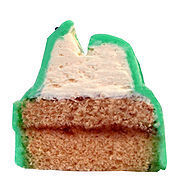
I haven't read this yet, my mother-in-law just gave it to me tonight. But it has chapters on both Don Dunstan (my hero) AND Balfour's frog cakes! For the uninitiated, these are Balfour's frog cakes.
They're an Adelaide institution. Utterly, disgustingly, eye-bleedingly sweet and what every mother has used to bribe their little darlings with, from 1922 until today. They're also what every Adelaidean expat misses. :(
One of my favourite things about reading people’s stories of the places they know and love is how someone else’s memories can weave into my idea of that place. It’s like being invited to enter an imposing old house to marvel not at the exquisite portraits of its owners or the stained glass ornaments but at the sun flecks dancing on the dusty floor: a snapshot of time and light and presence in the world.
Until recently, South Australia wasn’t really somewhere I desperately wanted to see, even though a part of its landscape is forever etched in my teenage brain that couldn’t get enough of the early seasons of ‘McLeod’s Daughters’. Years later in London, I would bond with Aussie colleagues over the show, without really remembering or even caring what part of the country Drovers Run was supposed to be in. In the meantime, quite separately from that, and without necessarily reading about it extensively, I must have run into the idea of ‘Weird Adelaide’, a tumbleweed sort of place known for high profile murders and disappearances. Salman Rushdie, visiting in 1984, wrote this about the city: “Adelaide seems more eerie by the minute…Adelaide is an ideal setting for a Stephen King novel, or horror film. You know why those films and books are always set in sleepy, conservative towns? Because sleepy, conservative towns are where those things happen. Exorcisms, omens, shinings, poltergeists. Adelaide is Amityville, or Salem, and things here go bump in the night.” Goldsworthy rightly criticises him for equating the gruesome with the supernatural; she herself doesn’t shy away from talking about the infamous and shocking cases, devoting a whole chapter to them, but points out that Adelaide doesn’t actually have a crime rate that is higher than other Australian cities, and its reputation may have more to do with the stark contrast between those crimes and the image of itself it projects.
The first chapters are about Adelaide’s history but it’s the latter ones that are full of stories that will stick with me: the author’s grandfather taking buckets of soft summer fruit around the neighbourhood, giving it away after months of taking care of the trees that bore that fruit (“Or perhaps after a lifetime of annual wheat and barley harvests in hot Decembers, interrupted only by the three years he spent trundling back and forth with the 10th Battalion between the mud of Ypres and the mud of the Somme, it was simply that he couldn’t imagine not growing things that turned gold when summer came. Perhaps by then the gold was in the blood.”), the time Leonard Cohen, at that point in his 70s, came to remote and thus often ignored Adelaide to perform in the McLaren Vale wine district, and the author’s account of the experience which makes me equal parts envious and vicariously ecstatic (“The songs reminded us how good they were and churned us up as they had always done, and when interval came as the sun was going down and relief set in at last from the liquefying heat, the audience got up and stretched and milled around, dishevelled, summer-clad, silhouettes rimmed in gold as the sun set behind us and looking like a bigger and even more laid-back antipodean version of Renoir’s ‘The Luncheon of the Boating Party’, all summer hats and singlets and glasses of wine.”), and then she won me once and for all by setting a scene that feels personally tailored to my midday reveries (“But if you go past [the Salopian Inn] and keep heading south towards Willunga, there’s a turnoff to the right just before you reach the town; the road lures you down an avenue of delicate, shivery, green-gold trees like something out of Rivendell, and delivers you at the door of Fox Creek Winery, where there really is a creek, and foxes, and they make beautiful crisp whites and a glamorous sparkling red called Vixen and a modest table red called Shadow’s Run in memory of Shadow, their late Border Collie, who in his prime used to run up and down the rows of vines whenever anybody twanged the wire of the supporting fence.”)
Some of the stories of Adelaide:
- There is a feel of modern-day conservatism and (some) past progressiveness: South Australia was the only Australian state to be colonised by free settlers rather than convicts. It was also the second place in the world to allow women to vote (after New Zealand). - The story of the city’s name goes like this: it was named after Queen Adelaide, consort of King William IV. She was German, so the actual spelling was Adelheid, but when she got married, she ordered from the English lacemakers a lace gown embroidered round the hem with flowers spelling the anglicised version of her name, Adelaide: Amaranth, Daphne, Eglantine, Lilac, Auricula, Ivy, Dahlia, and Eglantine again (the author notes there are very few sources for this particular story, however). And yet the queen’s actual first name was Amalie, and so Goldsworthy writes: “The story of Adelaide is ornamented with ambiguities and ironies small and large, even its name is not quite what it seems, and we could easily have been called Amalie instead.” - One of the things that surprised me when I visited the country were Australia’s drinking laws, with designated dry zones (especially the CBD) where public consumption of alcohol is not allowed. What I wasn’t aware of is the additional impact that these laws have: in Adelaide, the establishment of one particular dry zone, in Victoria Square, has effectively pushed out Aboriginal people from one of their most important meeting places. - Goldsworthy refers to the expression ‘the body in the city’ which seems to come from studies on lived experience in urban areas, but the context she mentions it in is this: In 2008, the remains of Charles Cameron Kingston, Premier of South Australia and Minister for Trade and Customs in the first Federal Cabinet, were exhumed at the request of a brother and a sister, who claimed to be the grandchildren of one of Kingston’s illegitimate children. A DNA test confirmed their claim. That child, their grandmother, had been ostracised because of her illegitimacy and sent to an orphanage, all the while knowing exactly who her parents are. - The stories of Robert Gouger, Charles Hill and Colonel William Light - A stone sculpture at the entrance of Festival Theatre is mentioned, bearing the following inscription in Kaurna: Yertarra padnima taingiwiltanendadlu (If we travel the land then we become strong). - The Somerton Man story, which I came across a few years ago, is also briefly mentioned in the Afterword
Places/things to see:
- The Museum of South Australia, which has the world's largest collection of Australian Aboriginal cultural material - North Terrace - The Adelaide Hills (Goldsworthy collects several peons to the beautiful landscape and writes this about them herself: “But The Hills do not have a monopoly on blue and gold. To me, this combination is the essence of South Australia: brazen sun in hot skies of virginal blue, beachside layering of colour from creamy pale-gold sand through sea to sky in two or more different blues, and in the hinterlands of city and coast the endless fields of wheat and barley, the light and the landscape a mashup of ‘The Song of Australia’ with ‘On First Looking Into Chapman’s Homer’: Much have I travelled in the realms of gold, and all above is azure bright.’” And then she continues, writing how the same can happen even in boring, commonplace CBD: “And the clashing pastels resolve themselves into gentle, harmonious, pre-dusk variations on the theme of blue and gold: ice-blue and russet, violet and terracotta, powder-blue and buttermilk, lavender and silver-gilt, lilac and amber.” - The painting ‘The Proclamation of South Australia 1836’ in the Art Gallery of South Australia (a painting almost fictionalising a historical event and which is fascinating because of its size and level of detail) - The South African War Memorial and the War Horse Memorial - Canova’s Venus statue and the statue of Dame Roma Mitchell (Australia’s first female QC and later judge), both in Prince Henry Gardens - The Rotunda in Elder Park, especially at night
Misc: Paul Kelly’s ‘Adelaide’ song, standout lyric: ‘I own this town, I spilled my wine at the bottom of the statue of Colonel Light’ Keith P. Phillips’ Pyrotechny photograph is now one of my all time favourites; it was taken in 1945 at the celebration after the end of World War II, at the statue of Colonel Light
Food and drink: Central Market Frog cakes The Barossa Valley and McLaren Vale wine regions (country road from McLaren Vale to Willunga: Fox Creek Winery and The Salopian Inn)
Reading list: Barbara Hanrahan’s essay ‘Weird Adelaide’ Don Dunstan: The visionary politician who changed Australia, by Angela Woollacott Blackout, by Tracy Crisp (upcoming) And The Clock Struck Thirteen: The Life And Thoughts Of Kaurna Elder Uncle Lewis Yerloburka O'Brien
I was delighted to find this small volume that enlightened me a good deal about some of the history, landmarks and myths of my recently adopted city. I have been visiting Adelaide regularly for more than 40 years but had skimmed the surface of much of its colonial and more recent history. Goldsworthy's book is a well-judged mixture of the historical, the cultural and the personal, written in an accessible style that I enjoyed. The only addition I would have appreciated was some photographs.
I see this is part of a series about Australia's capitals. I'd like to read those for Melbourne (my birth city) and Canberra (where I lived for nearly 40 years). Thanks be to Goodreads TBR and the library reservation systems!
I loved this book. The writing was enjoyable and there was so much history that I knew a little about but was very glad to learn more. It made me wish I had grown up a few decades earlier than I had - they sounded like interesting times!
Four and a half stars, although I'm biased and sentimental. History is important, although my preference was by far to the second half of the book, once the narrative had passed the grim colonial history. A worthy read for Adelaidians or otherwise.
Only a few pages in to this lovely memoir (typical of the whole series) and I thought, 'I'm definitely in the hands of a good writer.' Wonderful stories, history and insight. For the visitor...or non!
I loved this. It made me proud to be a person living in Adelaide, and it told me things I never knew about my home. Plus, it's gorgeous writing. Brilliant!
I was born in Adelaide. Even though I left there when I was still too young to walk I have always considered myself, at my core, a South Australian. My father was born on the Eyre Peninsula, my mother in Broken Hill. I was brought up on fritz and Yo Yo biscuits. I carried a port to school. The first bottle of beer I can remember drinking was a stubby f Southwark that my Dad and my Uncle Roly let me have. When I got older I was converted to Coopers Sparkling. Mettwurst and Storm Boy, the Barrier Highway and tales of Cleve and Cowell were the reference points that kept me aligned with my home state.
To read Kerryn Goldsworthy's 'Adelaide' is to be immersed in that world of being South Australian, of finding again how one part of Australia has such a distinct and intriguing personality. Perhaps provincial, certainly smaller in population and world importance than other cities like Sydney, Melbourne or Brisbane, Adelaide possesses an identity that is compelling. Through her narrative, her prose, the subjects for her exploration of Adelaide Goldsworthy brilliantly recreates that sense of place. Neither hagiography or take-down, this is a personal perspective that will connect with anyone from 'the Athens of the South'.
The author hits so many right notes as she writes of Adelaide. There are the icons such as Don Dunstan, the Frog Cake, Colonel Light and the Rotunda. Beehive Corner, Montefiore Hill, the Torrens, Port Adelaide, Gouger Street. The conflicted story of SA's founding, a state free of the convict stain yet dreamt of my criminals. The mythos of Adelaide as some kind of Gothic haven for homicidal maniacs. A conservative, prim and proper provincial capital with a strong libertarian, multicultural streak. The clear brutal Adelaide sunlight smashing into your windscreen as you drive towards through the city West Terrace on a summer's afternoon.
It's hard for a book to convey an evocative emotional connection with a place however 'Adelaide' does this. I've been back 'home' several times in recent years and with each visit my connection strengthens. As I read this book I kept finding myself saying "Yes, this is what Adelaide means to me." However this book is not just a reaffirmation of a homesick Croweater's reminiscences. There are some provocative points made about the history of Adelaide, about what has gone wrong there as well as what has gone right. For example, the discussion of the supposed father of South Australia, Colonel William Light, and the man who arguably was the real parent, Robert Gouger is a a fascinating one. The irony of Victoria Square/Tarntanyangga being given such importance as a place of respect for indigenous peoples yet being effectively declared off limits if a First Nations' person was drinking is highlighted. Goldsworthy is not afraid to talk about trouble in this 'paradise'.
The author's prose is picturesque, personal, purposeful. As noted previously Goldsworthy frequently brings environmental imagery into her text, presenting the reader with word pictures of the air, the light, the heat, the beach, the Adelaide Hills. She writes of the buildings, the streets and the riversides of Adelaide with a broad brush, then brings in her own personal memories and experiences. It's possibly hyperbole but there is a Proustian quality to Goldsworthy's use of memory and the figurative to create meaning.
So who will enjoy reading this book? Obviously anyone with a close association with Adelaide, whether living there now or perhaps an expat who can't get their hands on a decent meal of King George Whiting or a Kitchener Bun. Hopefully non-South Australians would read 'Adelaide' because it does give the kind of insights into the city that can't be digested in a few days of trawling the Maclaren Vale wineries or visiting for the Festival. It should be read by anyone who wants to contemplate how they fit in with their own home, no matter the size of the city, town, village, and also how that place helps create them. It's the best kind of writing; evocative, informative, connected, contemplative.
Before I close this review, one small note of displeasure. For whatever reason my copy of 'Adelaide' was published with some of the worst page cutting I've seen in a hardback book. New South Press hopefully avoided the irregular page edging in their print run of other copies of Goldsworthy's book.
Good little memoir of the city. Second highest rated in the series after Perth. Maybe this is a barometer for city/state parochialism rather than a book’s quality.
The history was heaps good, and the author did well to weave bits of her own story in without making it all about her. I still don’t get the Don Dunstan obsession though. But maybe that’s because I’m an old school Adelaide Baptist at heart, who likes modesty and not theatrics!
The addendum at the end wasn’t necessary because even though things have changed, the essence of Adelaide remains the same: beautiful, quiet, orderly, dignified, ordinary, fun, and a little bit weird. No update required.
Some good research and historical information. There is a romantic tendency in the style which gets nauseating. As a local I couldn't relate to some cultural references as diluted by the author's experience. Plus Paul Kelly makes me cringe and is not really culturally significant to Adelaide. Minus one star for quoting him.
Some information added to my collection of historical facts but were not presented in a way that captivated my attention. I found myself skipping pages but it wasn't a bad read, just not one that held me.
I love cities and cities with good space is always my favorite! When I visited Adelaide , I wanted to know what happened there and how the city was built. And this book makes a lot of sense.
After renewing this book three times I reluctantly returned it to the library today (thanks Boroondara library service!). The book is composed of self-contained chapters each exploring a different aspect of Adelaide life. I must admit I skimmed over the historical sections and concentrated on more 'contemporary' social history. I only know Adelaide through associations with friends and family and trips to the cricket and football and have never actually lived there, so I can only imagine that the book must speak even more intimately to those who call Adelaide home.
I loved the Pink shorts and Frog cake chapters, but my favourite was The concert ticket, which wove the magical Leonard Cohen tour of a couple of years ago into the fabric of Adelaide life and experience. Having been privileged to attend Leonard's superlative performance at a winery in Victoria's Yarra Valley just prior to the Adelaide event; having some familiarity with the McLaren Vale region; and being born in the same year as the author of this book, I found the shared experience almost too close for comfort.
If you have any affinity with Adelaide at all, and even if you don't, I recommend this book to you.
Part personal reflection, part history book, part rambling love letter to Adelaide. Maybe it was just because I started this on my way to an Australia Day meet up in San Francisco but I loved it. I thought she hit a lot of things dead on about Adelaide & Adelaidians. She covered the bad as well as the good. If I hadn't grown up there I probably would think it was overly sentimental.