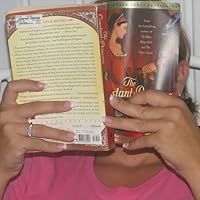
Vivien Leigh won international acclaim at the age of twenty-six when she crossed the Atlantic and walked off with the coveted part of Scarlett O'Hara in Gone with the Wind under the noses of some of Hollywood's most famous stars. For this part alone she has earned a lasting place in film history. She was hardly ever in a bad film or a bad play and she tried a wide range of parts - scoring notable triumphs in A Streetcar Named Desire, as a convincing Lady Macbeth and as Sabina in The Skin of our Teeth.There have been many biographies of Vivien Leigh, invariably Hollywood filmographies, most of which have been inaccurate and incomplete. Hugo Vickers approached his subject as a human being, according her the same detailed research that the readers of his Cecil Beaton and Gladys, Duchess of Marlborough have come to expect of him. He examined the previously uncharted story of Vivien Leigh's antecedents, making surprising new discoveries. He was able to bring Vivien's parents to life as real people with the help of a great number of family documents, letters and diaries, made available by Vivien's daughter for the first time. These give the first clear account of the atmosphere in which Vivien was raised.He traced the progress of her relationship with Leigh Holman, from their first meeting through the period of their engagement, marriage and divorce, and showed how they formed an important, lasting friendship, helped by the complete set of letters Vivien wrote to him between 1932 and 1967. He made extensive use of the Oswald Frewen diaries, an essential source not only on that marriage but on Vivien's elopement with Laurence Olivier and their subsequent adventures.Hugo Vickers also examined Vivien's film and stage career, writing of her as a person and not as the 'property' of a film company or a name on a contract. He examined her films and drawing on a great number of interviews with famous figures of the stage, he recreated her part in the life of English theatre in the 1940s and 1950s. An important feature of the book is, of course, her love for Laurence Olivier and their twenty year marriage, so much of it made difficult by recurring bouts of tuberculosis and manic depression. Hugo Vickers, drawing on many hours of conversation with her devoted friend, the actor John Merivale, explained how Vivien re-established her life after the divorce.Vivien Leigh emerges as a more real and more intelligent person than in previous accounts, a spirited and courageous actress brought down by ill-health.
Hugo Vickers is a writer and broadcaster, who has written biographies of many twentieth century figures, including the Queen Mother, Gladys, Duchess of Marlborough, Cecil Beaton, Vivien Leigh, a study of Greta Garbo, Alice, Princess Andrew of Greece, and his book, The Private World of The Duke and Duchess of Windsor was illustrated with pictures from their own collection. Mr Vickers’s book, The Kiss: The Story of an Obsession won the 1996 Stern Silver Pen Award for Non-Fiction.
This is my second VL biography. It far surpassed the first biography I read (Anne Edwards') in detail and diction. The pictures are lovely, and many are rare! Even with the powers of Google, many images of the old favorites can only be found in books. There are so many letters included written by Vivien, you get a wonderful sense of who she was as a person.
The word choice in this book is FANTASTIC! I keep a running list of vocab as I read, and this book taught me so many words I hadn’t heard before, which made it very fun to read outside of the subject matter.
There were several typos and (what I understand to be) fact discrepancies, along with poor punctuation which made it clunky and confusing to read at times. Those were minor didn't interfere much with my reading experience. However, especially towards the end of the book, I couldn’t shake the sense that this author really dislikes Vivien Leigh and favors Laurence Olivier. So many of the quotes were lifted straight out of Olivier’s autobiography, and he clearly sides with LO in the divorce, without much compassion for VL's disease. I found it odd that he would choose to write about Vivien rather than Olivier, since much of his content came directly from him.
In my opinion, it's impossible to read about Vivien Leigh and be bored. Even when I was reading chunks of history I already knew, it was highly entertaining. VL was one tough and witty cookie who dealt with so many personal struggles with shocking courage and dignity. My next VL biography is Vivien Leigh: An Intimate Portrait and I have very high hopes for that in comparison to this and Anne Edwards' version.
Recently seeing A Streetcar Named Desire for the first time in years, I was bowled over by this breathtakingly beautiful woman who was also putting on such a wonderful performance as an actress. Where did she come up with the combination of lostness, spunk, deep hurt and pathos that she poured out into Brando's and Kim Hunter's dysfunctional hovel, while also wreaking such havoc on poor Karl Malden as her hypnotized accidental suitor? How could she inject such a depth of hard-won passion and tragic loss into a movie role? This was no typical melodramatic performance. Was it perhaps her whole life that had prepared her for it?
After choosing and ordering one from over a dozen available Vivien Leigh biographies, I set about trying to find an answer.
Vivien Hartley came from a respectable family without huge amounts of money or status. Educated in a nunnery, followed by finishing school, she was prepared to join the elite by virtue of early competency in theatricals augmented by amazing good looks. From a very early age, nearly everyone who encountered her considered her the most beautiful girl/woman they'd ever seen. She could soon get any man to fall over himself for her or fall in love with her. She thrived on attention and loved having great times among society, the higher and more in the crowd the better.
She married young, too young at nineteen, to a kind gentleman named Herbert Leigh Holman, and soon found herself pregnant. Her acting career was getting going, though, and when she gave birth to a daughter named Suzanne, whom she soon handed over to her mother Gertrude to raise as her granddaughter.
Propelled by talent, but even more by looks, her career soon took off. Now Vivien Leigh, she attracted Laurence Olivier's attention and both became instantly and totally smitten with each other. At the same time, word of her reached Hollywood, she was added to a shortlist of Scarlett O'Haras for Gone With The Wind, one of the most eagerly anticipated movies ever. A screen test identified her as the perfect Scarlett. She was off and running.
But she had health problems. A bout of tuberculosis weakened her stamina. Her affair with Olivier added terrible stresses to her public life. Her husband would not consider divorce. She had trouble saying no to hordes of friends and admirers. Between acting, partying, fretting about Olivier and trying to have some kind of a domestic life with him, she constantly courted exhaustion. Bipolar symptoms emerged that made her life impossible to manage well.
Gone With the Wind was a total triumph. Vivien won the Academy Award. Her life only got more frenetic from there. Finally she and Olivier both got divorces and were able to marry. As the perfect couple, they occupied the spotlight as never before. It all got progressively more unreal. Vivien suffered a breakdown. Olivier described them both as walking corpses.
Now the plot thickens a little. In 1949, Vivien signed up to play Blanche Dubois in the West End, London, production of A Streetcar Named Desire, which like the later film co-starred Marlon Brando and Kim Hunter. Vivien's was to be a demanding role, including a rape scene. The production was a huge hit and ran for 339 performances. It was a grueling run, following which she was almost immediately involved in production for the film version. She clearly needed to slow down, but didn't, or couldn't.
Mr. Vickers, author of this biography that I read, speculates that the length and intensity of the theatrical role of Blanche effected a change within Vivien, causing her to identify with a lost, mentally ill version of herself. He cites authorities to the effect that actors playing roles involving mental illness run risks of internalizing and actually developing features and aspects, if not full blown instances of the illnesses they play. It's an interesting theory, and one that for me seems to chime with the Vivien of Streetcar vs. that of Gone With the Wind twelve years earlier. It's possible that she arrived at her depth of performance in the movie of Streetcar by a process of becoming infected by Blanche the character's mental illness during the long theatrical run.
Nor did the transformation, if that's what it was, end after Streetcar. The remaining sixteen years of her life were plagued by manias and deep depressions. She strayed into Hollywood affairs. Her marriage to Olivier fell apart. She alienated her friends. Finally, she re-contracted TB and died at fifty-three. Her mental illness progressed, perhaps matching or even exceeding Blanche's. But until her dying day Vivien never lost the extraordinary beauty that had been her blessing, but also -- because she never reached her longed-for highest heights as an actor, alongside Olivier -- a kind of curse.
Great book about vivien leigh. I love Gone with the Wind its one of my favourite films. Her life is so interesting and interesting to know she did not get along well with leslie howard (who played ashley). Her battle with bipolar disorder is briefly recorded although not in much detail. Worth a read. Alexandra walker's biography about her is also very good and more readily available than this book.
I fell in love with Vivien Leigh when I was a teenager. I'm a "child" of the 90's, so I could only talk about my admiration for her with older people (my grandmothers, for example). I fell in love with her in "Gone With the Wind". Scarlett's character has always been one of my favorite main characters because she's so different from the typical good-natured heroines. To this day, I don't think there's a biography as complete as this one. It's full of documentation and quotes, and sometimes it's hard to follow the reasoning because so many names are mentioned, but Hugo Vickers did an incredible job and it's absolutely essential for any Vivien Leigh fan to read this detailed biography. I think that in some parts the author was a little bit on Lawrence Olivier's side and I can't tell if the author is a Vivien fan or not, but that's not important. The important thing is that he doesn't ruin her image and goes straight to the point on a very very profisional way. I highly recommend this book as "the mother" of all other biographies about 'Vivling' that followed.
I didn't know much about Vivien Leigh until I read this book. Its full of snippets from letters written to Vivien and by Vivien as well as interrviews and reviews about her films. it covers from her childhood, her first marriage to her epic love affair with Olivier to her death. Its overwelming at times but if you are a true Vivien fan it is a must read.
An in-depth biography of perhaps my country's greatest actress, who appeared more on stage than on screen. Triumphant and tragic, her most difficult part was that of her own life, enduring a long struggle against mental illness and tuberculosis, which eventually claimed her.
Not an easy read some parts drag a bit but it’s always fun to read about old Hollywood. People worked hard on their craft and had to fight for what they got. Vivian certainly did. Now all you have to do to become famous is make a sex tape or be the undeserving child of a famous person.