Jump to ratings and reviews
Rate this book

A Family Trilogy #1

The Family Chronicle

Rate this book
This masterpiece of creative autobiography, which has been universally recognized as a classic of Russian literature, describes the opening of Russia's eastern frontier in the steppes of Bashkiria.

Paperback

First published January 1, 1856

24 people are currently reading
602 people want to read

About the author

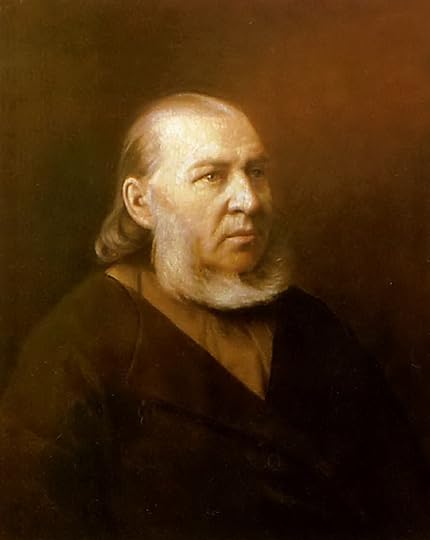
Sergei Aksakov

52 books13 followers
Acclaimed for his realistic prose, Sergei Timofeyevich Aksakov (Russian: Сергей Аксаков) captured the essence of Russian life in his trilogy of reminiscences—A Russian Gentleman, Years of Childhood, and A Russian Schoolboy. He also wrote literary sketches, and appreciations of hunting and fishing. Nikolai Gogol, a friend and correspondent, once wrote to Aksakov: "Your birds and fishes are more real than my men and women."

Ratings & Reviews

What do you think?
Rate this book

Friends & Following

Create a free account to discover what your friends think of this book!

Community Reviews

5 stars
81 (30%)
4 stars
92 (34%)
3 stars
66 (25%)
2 stars
20 (7%)
1 star
5 (1%)
Displaying 1 - 30 of 34 reviews
Profile Image for Vit Babenco.
1,787 reviews5,800 followers
December 6, 2024
The story begins when the author’s grandfather decides to move his family to a new place where he will feel freer…
Three generations of the Bagrov family in succession had had but one son and several daughters. Certain of these daughters had married, receiving serfs and estates as dowries. The latter, it is true, only represented a small part of the whole property; but the ownership was to a certain extent mutual; and, now, besides my grandfather, there were four other masters. My grandfather found this intolerable, for he was a straightforward, impulsive, passionate man, and could endure no intriguing in his household.

Grandfather is a smart and experienced master so he makes his new estate prosperous in no time… But he is a man of the mood – today he is a severe despot and the next day he is a kind altruist… And his mood swings often make those who surround him suffer… He hates deception of any kind… Once when he was deceived by his close relatives his punitive measures knew no limits…
Even thirty years later my aunts could not recall that day without a shudder. Enough that the guilty women confessed everything… that the older daughters were ill for a very long time, that my grandmother lost most of her hair and was compelled to wear a plaster on her head for a year afterwards.

Many years elapsed… The grandfather is already old… And his son is an adult man… And his son falls in love with an unreachable object of the universal adoration… She’s irresistibly bewitching…
He was not able to appreciate every side of her lofty character; but her lovely person and kind and charming disposition were more than enough to enchant the young man, and make the spell complete.

The entire town was laughing at his hopeless love… There is a lot of seemingly insurmountable obstacles but eventually all the obstacles are surmounted… A bridegroom is a naive and uncultured weakling and his bride is a highly educated young woman of the strong willpower… They are married…
Dinner took its usual course. The bridal couple sat side by side between the father and mother. The dishes were numerous, each richer and more substantial than the last. Stepan the cook had spared neither cinnamon, pepper, cloves, nor butter. The kindly father-in-law in the most amiable way urged his new little daughter to eat; and the little daughter ate, while praying Heaven that she might not expire the next day from the effects of the meal.

And the author is their son…
Are marriages made in heaven? 
Profile Image for Paul Gaya Ochieng Simeon Juma.
617 reviews46 followers
June 21, 2023
I have unintentionally become a book collector. I collect rare gems and this is my latest. When reading this book, I felt a surge in my heart, before realising that it was joy. I was so happy, it was difficult for me to articulate my thoughts. I have always enjoyed books by Russian authors. However, I had never heard of Sergei Aksakov until now. Apparently, he lived in the era of other great writers such as Tolstoy, Dostoevsky, Gogol, and Turgenev. His works, though few and obscure are just as outstanding as other great Russian literature.

A Family Chronicle is a novel about family principles and values among both the landed gentry and the peasants. We learn of how and who was in charge of setting the moral code of the family in rural Russia at the time. A great family has to grow. With handed down traditions. With one generation teaching another. With young men coming in and and working their way up despite the challenges. Families don't have to be loveable and the ones depicted here were not loveable. They all had their weaknesses, some were on their deathbeds. Despite these challenges, they found a way of staying together. The plot may be very 'moody' at times, but that does not take away anything from the novel.

What I don't understand is whether this is fiction or non-fiction. The plot and narration seems to depict the actual life of the author. I think I should ask other readers what they think about this book. Although I have read it, I still cannot claim to know what the author intended. I suppose it has elements of both fiction and non-fiction. After all, they say that no novel is purely nonfiction and vise-versa.
Profile Image for Rebecca.
289 reviews16 followers
February 6, 2016
I liked this book a lot more than I was expecting. I originally picked up Pushkin, but I wasn't in the mood for verse. This was a random pick (not even on my classics list!) just based on the fact that it was Russian.

Setting:
I've never tried to figure out why I love Russian literature so much, but it may have something to do with the similarity of the Russian landscape to the Canadian. Both are immense, unknowable, and barren. I, like the characters live in a remote location, and feel far from civilization in a way more similar to Sofya Nikolaevna than Stepan Mikhailovich.

Character:
Stepan Mikhailovitch - I have his feeling for honesty, but not his discernment. I also appreciate his feelings on order and the sameness of days.

Sofya Nikolaevna - Some of the ways in which she is described are dated ie. "delicate nerves". But, like Sofya, I am given to flights of fancy.

Marriage:
I loved Aksakov's take on marriage. That a successful marriage requires respect between both parties. That horrid life events can push you closer together or pull you apart. And that a good marriage requires understanding the other person, so that you don't take their treatment of you personally.

Style:
This books reads like your grandfather telling you about his parents and grandparents. It may be truth, and it may be grossly exaggerated (you did not walk uphill both ways to school, Poppa!) but it gives you a feeling of warmth. Also, I thought the numerous footnotes reminding you that the author is indeed a character were so cute!

Favourite Quote:
…or perhaps Stephan Mikhailovitch was like so many other people, who deliberately prophesy calamities with a secret hope that fortune will belie their prognostications
Profile Image for Marc Gerstein.
601 reviews203 followers
July 13, 2018
I’d never heard of Aksakov before and having read this, I’m sorry there isn’t more of his work readily available in English. This is a very straightforward family history culminating, as it turns out, with the birth of the author. This sort of fiction from real life could easily have been a whinny mess, but actually, it was very well done, so much so, it felt like the characters were invented. The grandfather was especially intriguing — a hot tempered landowner whose behavior today would often not be considered acceptable but he had a good heart and although lacking in formal education, a lot of what we’d call street smarts. The contrast between and the evolving nature of the relationship between the author’s parents felt very real. I know Aksakov followed up with later biographical novels and I hope they get translated.
Profile Image for Malacorda.
601 reviews289 followers
August 9, 2017
Credo che per molti lettori questo libro potrebbe risultare noioso e inutilmente ampolloso; io che amo i mattoni, invece, l’ho trovato gustosamente romantico: non nel senso di sdolcinato, ma in quanto colmo di spiritualità, di emotività e affascinate/affascinanti descrizioni della natura, di un raccontare sé stesso e la propria famiglia come una favola-verità.
Sarebbe da leggere prima di ‘Adolescenza a Kazan’, che io ho invece letto alcuni anni fa e di cui il ricordo si è fatto un poco sfuocato, nel quale l’autore racconta appunto della propria infanzia e adolescenza, con le vicende, le paure e gli entusiasmi di un ragazzo sensibile.
Qui invece è la storia della famiglia dell’autore a fare da protagonista, a partire dalla singolare figura del nonno paterno: da lui si snodano tutti gli sviluppi in senso temporale attraverso il XVIII e XIX secolo, ed in senso geografico attraverso una splendida Russia dalle steppe ancora incontaminate con gli sperduti villaggi agricoli dei primi coloni. Le atmosfere, i paesaggi e i dettagli di vita familiare nella sua quotidianità ricordano in tutto e per tutto Tolstoj; il modo in cui si dipana la storia della famiglia mi ha ricordato ‘Care Memorie’ della Yourcenar; ed è azzeccato anche il paragone di chi ha assimilato il nonno Bagrov al principe di Salina. Con le similitudini potrei andare avanti parecchio, ma è più utile rilevare che Aksakov ha una semplicità e una modestia tutte sue, un calore e una vitalità nei confronti della storia della sua famiglia ed anche nel modo di raccontare la sua Russia, sia i suoi luoghi che la sua gente, tali da rappresentare la sua unicità e al tempo stesso tali da metterlo allo stesso livello degli altri grandi autori che rappresentano i grandi classici della letteratura russa.
Profile Image for Illiterate.
2,785 reviews56 followers
August 17, 2022
Family history in rural Russia. Plain prose meets poetic charm. Brutal truths meet pastoral romance.
Profile Image for Dan.
151 reviews32 followers
December 6, 2015
It takes an enormous amount of skill to end a book with the birth of its author and not come off as pretentious or, worse yet, sentimental. However, Sergei manages to pull this feat off so effortlessly I'm at a loss to find enough words to praise this amazing book.

"The Family Chronicle' is a simple enough book - the grandparents and parents of the author, Sergei Aksakov, a remembered and immortalized through a series of sketches that read more like short stories connected with a common theme. But this is no normal memoir because while many of the events he writes about probably did happen (one way or another), there is honestly no way he could have had the insight to all these characters fears, flaws, desires, and other innermost thoughts. The book, though a memoir, is really a novel and a work of fiction.

Take, for example, this passage (from a footnote, no less!):

"I knew the worthy man well (Yevseyitsch). It is now some fifteen years since I last saw him. It was at the estate of one Stepan Michailovitsch's grandsons in the Government of Pensa, where he, a blind, old man, was spending the last years of his life. That summer I spent a whole month at the place, and every day I went to fish in the early morning, in the lake formed by the mouth of of the rivulet Kakarma where it joins the charming Insa. The hut, where Yevseyitsch lived, was built close to the water's edge, and each day as I approached the lake, I perceived the bent, white-haired old man leaning against the wall of his cottage, facing the rising sun; his withered hands clasped round a staff which he pressed against his breast; while his sightless eyes were raised towards the Eastern sky. He could not see the light, but he enjoyed the warmth, which comforted him in the chilly dawn; and his countenance was at once both serene and melancholy."

I have no doubt Sergei knew this man, that the man was blind, and that all the details are true. What sets this above just mere telling is the artfulness of the telling. You can smell the forest, hear the river, clearly see the contrast of green trees, the white beard, and the silver, pearling water. The image is frozen in time like a painting and while the exact image may have been far less dramatic in real life, Sergei gives us his memory by making it better than reality. I will always remember this Yevseyitsch because he has been given to me. I will always have an image of a crooked old man standing half in shadow as the rising sun comes up over the immense forest; birds chirping, the wind rustling through the trees, the sound of footsteps as Sergei comes up the path to greet the blind, old man. This moment will love forever long as there is someone to read this book!

And there are far more blatant examples of the author liberally borrowing literary technique to tell his story.

The grandfather, Stepan, who's figure shadows over the entire book like a god, is a wise, but fierce old man with a temper so terrible it would cause grown men to flee the house and send them hiding in a nearby orchard where they would strike branches of the tress in fits of frustrated rage. At one point Sergei parallels one of these rages with the intense thunderstorms of the area. Anyone who has read King Lear can immediately recognize what's going on here.

Sergei is also not ashamed to play favorites with his family. For his mother, Sofia, the other dominating character in the book, he is not shy of getting so far into her character that only a true mind-reader could know here thoughts but as for his aunts and grandmother, Sergei turns them into a gossipy gang of malicious malcontents barely worthy of being called 'family'. In no way does he sympathize with them and they become the closest thing to a villain in the book.

Yet Sergei is fair, too. For as much as he loves his mother and grandfather, and the place he grew up, he does not hide their flaws, either. His mother is proud, impatient, and controlling. His grandfather is demanding, simple (but not at all stupid), and capable of terrible wrath. Sergei does not hide these traits and goes to lengths to show us how that affected everyone in his family - especially his impressionable, but devoted father.

Still, this is a work influenced by nostalgia, but a nostalgia so beautiful and so recognizable to each of us, that you can't help but fall in love with every scene, every character, every word in the book. Above all else, this is a book of supreme artfulness and is a work of genius and beauty. I can easily see how Turgenev and Tolstoy were influenced by Aksakov (especially Turgenev) and it's no wonder this book marked the beginning of the flowering of Russian literature of the 19th century.

This book is the first great work of art that would eventually see War And Peace, Crime And Punishment, Father And Sons, Dead Souls, and all the great works of Russian literature. And as those books were so concerned with 'Russianness', with the identity of the Russian people and character, this book is the cornerstone that with one hand holds the actual past of Russian history and all her struggles, and with the other hand holds onto the great works that tried to explain those struggles through art.

In some way this is THE Russian book; the key to all Russian literature is in these pages.

This is a wonderful book and is easily one of the best books I have ever read and has immediately become one of my favorite books, too.
Profile Image for Fatma Abo Elnasr.
33 reviews273 followers
April 12, 2025
مش من مُحبي الأدب الروسي وأشباهه من أدب الشمال البارد مش ذوقي خالص ومش بقدر أكمل فيه صفحتين على بعض.
لكن الحق يتقال، الترجمة كانت ممتازة جدًا وسلسة بشكل يخليك تكمل وانت مستريح.
هقرأ تاني للمترجمة أكيد، بس أعتقد ده كان آخر محاولة ليّ مع الأدب الروسي 😅
Profile Image for EsraaHesham.
23 reviews4 followers
April 8, 2025
٤.٥. نجوم. للكتاب الذى أصبح من الكتب الأقرب لقلبى 🥰🥰🥰🥰🥰🥰
( مع اعتراض وحيد طبعا غ فكرة تشجيع الفتاة التحول من الديانة الإسلامية إلى ديانة أخرى **)
غير كدا استمتعت بيها جدا وخلصتها بأسرع ما يمكن على غير عادتى ف القراءة ....لا داعى لحرق اى أحداث..استمتعوا وشكرا ♥️
309 reviews1 follower
March 14, 2014
This is a strange book. It's not a single story, but more like a series of vignettes based on events in the lives of the author's parents and grandparents. The first section isn't a narrative at all, but an extended "sketch" of the type of man the author's grandfather was. Like real life, there is not an obvious beginning, middle, or end and a lot of elements of the story just kind of peter out or get dropped.

So while the events in the book are, at least in principle, true, most of the book is about the psychology of the major characters. The author cites some family stories to base some of this on, but obviously a lot of this is speculative. So it's a book based on true events in which the most significant parts are fictionalized accounts of the thought processes of the characters.

I like this, but to a certain degree the psychology feels a little forced. Many of the characters have almost magical abilities, like the ability to tell whether someone is trustworthy, that I don't think exist in real life. There is also a lot of stuff that's far more subtle than this, but the big stuff creates a little doubt about the validity of the little points.
Profile Image for Sven Deroose.
143 reviews
August 26, 2022
Aksakov, het gepassioneerde kind dat men tracht in te tomen, vormt belangrijkste thema volgens me.

In het eerste hoodstuk wordt het ongelukkige kind op kostschool belicht, dat door de moeder beschermd wordt en naar het dorp teruggebracht wordt.

In het tweede hoofdstuk wordt de tijd in het dorp beschreven. Met het ontwikkelen van passie. Het conflict met zijn leraar rond passie die zijn focus wegneemt van zijn opleiding.

In het derde hoofdstuk, terug naar de kostschool. Hallucinante beschrijving van een interventie van het leger om een uit de hand gelopen conflict op school op te lossen. De overgang van school naar universiteit.

Uit het vierde hoofdstuk blijft conflict met zijn leraar, met stopzetting van de begeleidng en de passie voor het acteren me vooral bij.

Het laatste hoofdstuk beschrijft zijn passie voor het opbouwen van een collectie vlinders. Uiteindelijk gaat deze over in een passie voor de literatuur.
Profile Image for Clair Belmonte.
62 reviews3 followers
February 8, 2014
This book is beautifully done, and I would recommend it to any fan of Russian literature. The narrator's storytelling is nuanced and sprinkled with beautiful, seemingly superfluous details. This is certainly not your average autobiography; the character sketches that Aksakov develops reels the reader in to the worlds of Bagrovo and Ufa.
Truly astonishing and a gorgeous piece of work. It is a damn shame it is so underappreciated.
Profile Image for Rex.
58 reviews6 followers
May 9, 2021
I confess that this was a coup de foudre for me with Sergei Aksakov. Up until very recently, I had no prior notion of Sergei Aksakov, until I casually landed on a reference in a foreword on another writer’s (Valentin Rasputin) book, about Aksakov’s limpid sketches on provincial, rural life on the Russian steppes, which had won the admiration and laurels from the likes of Nikolai Gogol. So, I thought, I would just cast an eye on A Russian Gentleman, sufficient enough to be added to my TBR list.

Sergei Aksakov

Boy, what a surprising find this one was! I could barely put the book down, once I started reading. I read not merely to entertain myself, but, to understand, appreciate, and know more about cultures, lands, and times that I have not experienced – just as many of the readers do as well. In a sense, I would want to be teleported to the scene where it all happens. Sergei Aksakov just made that happen to me, with this brilliant book.

There is something inexplicable and surreal that makes this centuries’ old text, speak to me, like a grandpa narrating his own childhood tales. If Aksakov could manage to put it in writing, all those folklore of his family that he may have heard from his folks firsthand, one cannot stop marveling as to how much finesse he holds in tightly retaining an uninitiated reader – such as me – even in this early 21st century. There is so much of soul, life and idyll in his writing.

It is in part a memoir. Aksakov reminisces about his predecessors, most importantly the Patriarch of the family – his grandfather Stepan Mihailovitch – his aunts, parents, servants of the family, his grandfather’s cousin and so forth. But, the way, it is presented, makes it read like an interesting novel. The setting is late 18th and early 19th centuries. The first part of the novel-memoir takes us into the distant world of settlement into new distant lands, followed-by a peek into the heart of the rough-on-the-exterior-soft-on-the-interior grandpa of Aksakov, his churlish outbursts at times, his demeanor as a martinet with ruthless predisposition for truth and probity that terrorizes the folks in the house on the one side, gamboling servants in his home on the other side, etc. before it catapults us into the happenings, when grandfather Stepan’s strict-love and care like a mother hen for his cousin Praskovya Ivanovna is at loggerheads with her decision to fall in love with Kurolyessoff, for whom Stepan had nothing but contempt, before, he had to cave-in after his cousin goes ahead and marries him. Later, when things unravel as he feared, he is still the savior for his cousin, whom he treats so fondly, even much more than his own daughters.

Aksakov then writes about how a city-bred elite in the form of his mother was placed into this country-bred family of Stepan’s with discomfiting challenges and turbulences that all of them had to face. Right from the initial days of courtship through the marriage and all the drama and histrionics that befall the dramatis personae of the family can fill several years’ worth of TV soap operas. Refreshingly the writing takes us and plants right there to only see how many of our human foibles and behaviors have hardly undergone a change. Really!

In the end, Aksakov puts it plainly in his own concluding lines, as a sort of homage:


Farewell! my figures, bright or dark, my people, good or bad—I should rather say, figures that have their bright and dark sides, and people who have both virtues and vices. You are not great heroes, not imposing personalities; you trod your path on earth in silence and obscurity, and it is long, very long, since you left it. But you were men and women, and your inward and outward life was not mere dull prose, but as interesting and instructive to us as we and our life in turn will be interesting and instructive to our descendants. You were actors in that mighty drama which mankind has played on this earth since time immemorial; you played your parts as conscientiously as others, and you deserve as well to be remembered. By the mighty power of the pen and of print, your descendants have now been made acquainted with you. 54 They have greeted you with sympathy and recognised you as brothers, whenever and however you lived, and whatever clothes you wore. May no harsh judgment and no flippant tongue ever wrong your memory! THE END.


And that is all to it. No major plots or anything of that sort. As Cesare Pavese puts it, “We do not remember days, we remember moments.” There are so many such moments and quotes and observations and descriptions that just are so beautiful. Just a biographical sketch of his family with the salubrious environs of the Russian steppes and plains, beautifully captured in Afsakov’s prose. But, it touches you. And that was the thing for me.

As soon as I put down this Kindle version, I placed an order for the actual book (A Russian Gentleman), besides the other two parts of the trilogy: Years of Childhood and A Russian Schoolboy. Because, not only do I want to re-read this on paper, but, also have this cacoethes to read more of Sergei Aksakov. especially in this memoir kind of setting. As a slow-reader, nothing beats the joy of scribbling with my pen on the paper of Aksakov’s.
Profile Image for Micah Allen.
16 reviews2 followers
September 25, 2024
This book was simply fantastic. The stories were deeply moving. The authors asides deeply insightful and the language poetic and splendid. I have never seen an author handle with such care the memory of his ancestors, yet not sparing their faults. The characters in this book are real people and Aksakov treats them as such. This book is a rare flower in world literature and I hope I convince some souls to read it!
Profile Image for Matt.
92 reviews14 followers
April 16, 2020
Full review at Silk and Chai.

Aksakov’s first quasi-biographical novel in what was to become a trilogy, The Family Chronicle (also titled in translation A Russian Gentleman), was published in 1856. The events it narrates, however, take place in the late 1700s under the reign of Catherine the Great. The Family Chronicle is, at its core, Sergei Timofeevich’s story of his mother, and her relationship with her father-in-law, the head of the family, whose surname in the novel is changed to Bagrov. But despite its short length, it is a sprawling, ambitious work of fiction which deftly weaves together a number of disparate strands. There is the naturalism and ethnography of the Tea Road frontier, where the author grew up – what is now the Oblast of Orenburg and the Republic of Bashkortostan. There is also the main story itself: the interactions between the author’s mother and father and their various relations. There is a depiction of the drawing-room habits of the Russian nobility in general, something which might not appear out-of-place in an Austen novel. And then through it all there are subtle social commentaries, embedded within keen observations, on ethnic relations and the class conflicts between serf and master, something which certainly echoes the Slavophile critique of the institution of serfdom.

What is noteworthy about these characters, as is hinted from the postscript from which I quoted a piece above, is that these characters are quite human. Indeed, the frank depictions of frontier life in The Family Chronicle occasionally met with the disapproval of the censors, and the version I have is peppered lightly with footnotes to this effect. The primary conflicts of the story arise between characters who genuinely mean well and genuinely care for each other. And yet their temperaments, life situations, loves and other priorities place them at odds, without malice – and yet not without hurt.

[...]

The bulk of the story, however, concerns Stepan Mikhailovich’s young son Aleksei – the author’s father under another name – and his courtship of and marriage to the author’s mother, under the pseudonym Sofya Nikolaevna. Her harsh upbringing has some startling effects on her character. For one thing, although she is proud, she cannot tolerate pride and tyranny in others. She cannot stand duplicity or pretension. But, a bit less attractively, after her experience with her stepmother she begins to have a fascination with exercising power, and entertains fantasies of control and mastery over her husband. This causes a great deal of friction in her marriage to Aleksei.

The central relationship in the book is that between Sofya Nikolaevna and her father-in-law Stepan Mikhailovich. Though Sofya is occasionally shocked by her father-in-law’s violent temper, she soon comes to treasure his fundamental honesty, openness and fair dealing. And the now-elderly patriarch of the family, for all that he had opposed the marriage, at once sees in his daughter-in-law a woman of deep piety, sound sense and formidable intellect...
Profile Image for Trounin.
1,917 reviews46 followers
March 9, 2018
Память о прошлом уходит в небытие, если её не фиксировать. Необходимо записывать рассказы старших поколений, знающих о прежде происходившем. Когда не остаётся свидетелей былого, ушедшие события уже не восстановить. Но в редкой семье появляется на свет человек, способный создать красочное описание канувших в Лету дней. И лучше если он понимает, каким образом это следует сделать. Никто не скажет, будто Сергей Аксаков написал подлинную предысторию собственного рождения, ибо писал хронику на склоне лет, скорее всего заполняя белые пятна желаемым лично ему видением минувшего.

(c) Trounin
Profile Image for Shane Hill.
374 reviews20 followers
November 6, 2022
Fine read about a family that is living on the Russian Steppes in the early 1800's!
Profile Image for Eman.
98 reviews1 follower
August 23, 2025
سيرة جميلة استمتعت بعا كثيرا مع عائلة الجد القاسي الطيب وطريقة تعامله مع اهله وعبيده
وحكااية ابنة عمته وحكايات اخرى تأخذ اللب
والترجمة الجميلة المبدعة
احببت السيرة كثيرا
Profile Image for theloveislovely.
8 reviews
February 6, 2023
Самое классическое представление о том, что такое хроника жизни русского человека. Хотя от автора «Аленького цветочка» хотелось бы чего-то более похожего на базовое «Детство.Отрочество.Юность», коим эта книга пытается быть.
345 reviews1 follower
March 28, 2024
Interesting look at life in rural Russia. Some memorable characters.
374 reviews12 followers
June 26, 2024
4.5 stars

Side note: The version I own is not listed in Editions.
Profile Image for Poppy Parkes.
67 reviews1 follower
January 3, 2022
“Her whole life - and it might be long - must be spent with a husband whom she loved indeed but could not entirely respect; there would be constant collision between utterly different ideas and opposite qualities, and they would often misunderstand one another.”
Profile Image for Michael David.
Author 3 books90 followers
December 13, 2016
I was actually unimpressed with the introduction of the author's grandfather, but slowly came to appreciate the 'autobiography' with the author's introduction of his parents. His sketches were both ingenuous and unaffected, and I loved how he portrayed the imbalance of character between his parents: his father, Alexei, was a simpleton who loved dearly and deeply, while his mother, the redoubtable Sofia, was most probably a genius who nevertheless tried her best to love her less intelligent husband the best that she could. If she existed today, Sofia would have married much later. Being well-read, intelligent, and beautiful, she'd have the pick of the best men extant nowadays.

It was amusing how both of them made their marriage work despite their disagreements: the author deftly illustrates that marriage is both a decision and a commitment. Despite Sofia and Alexei's poor match, they managed to make the marriage work through silence and compromise, and the ending was both ballsy and well-written: the family chronicle ends with the author's birth.
Profile Image for Rosita Mazzei.
Author 6 books26 followers
April 5, 2020
Il libro in questione racconta la storia dell'incolto e rozzo Stepan Michajlovic Bagrov e della sua famiglia. Attraverso lo scorrere degli anni e delle generazioni, lo scrittore ci fa conoscere la vita di un uomo che fa leva solo sulle proprie origini di antica nobiltà, ormai decaduta, e sulla violenza di un patriarcato che lo rende padre-padrone della propria famiglia oltre che delle "anime" che possiede in quanto proprietario terriero. Un uomo incolto, che odia le ingiustizie pur non rendendosi conto quanto sia ingiusto nei confronti della propria famiglia che tratta alla stregua di oggetti.
Lo scrittore, Sergej Timofeevic Aksakov, ci regala un'opera densa e importante per comprendere i sentimenti dei propri personaggi. Come nella migliore tradizione russa, questo libro ci racconta uno spaccato di realtà di cui altrimenti non avremmo potuto avere conoscenza. Non a caso, tra i suoi più cari amici vi erano personaggi del calibro di Gogol’ e Turgenev.
Profile Image for Keith.
171 reviews1 follower
March 4, 2025
Finished A RUSSIAN GENTLEMAN (1856) by Sergei Aksakov (1791-1859). The book is a novelistic history of Aksakov's family during the reign of Empress Catherine the Great. The gentleman is Stepan Mikhailovich, the rustic patriarch of the Bagrov family, governing with good-willed common sense
until provoked by dishonesty. Then woe to the objects of his wrath. The story focuses on Stepan's fatherly relationship with a young cousin, Praskovya, who he rescues from her sadistic husband, and with his daughter-in-law, Sofya, a clever and beautiful young woman who marries Stepan's milquetoast son, Alexie. The story is notable for its truthful yet sympathetic portrayal of rural life in old Russia. As the author says, it is about how even obscure people "have their bright and dark sides" and can live lives "interesting and instructive to our descendants." Aksakov is an example of how one can become a popular and skilled author late in life.
Displaying 1 - 30 of 34 reviews

Can't find what you're looking for?

Get help and learn more about the design.