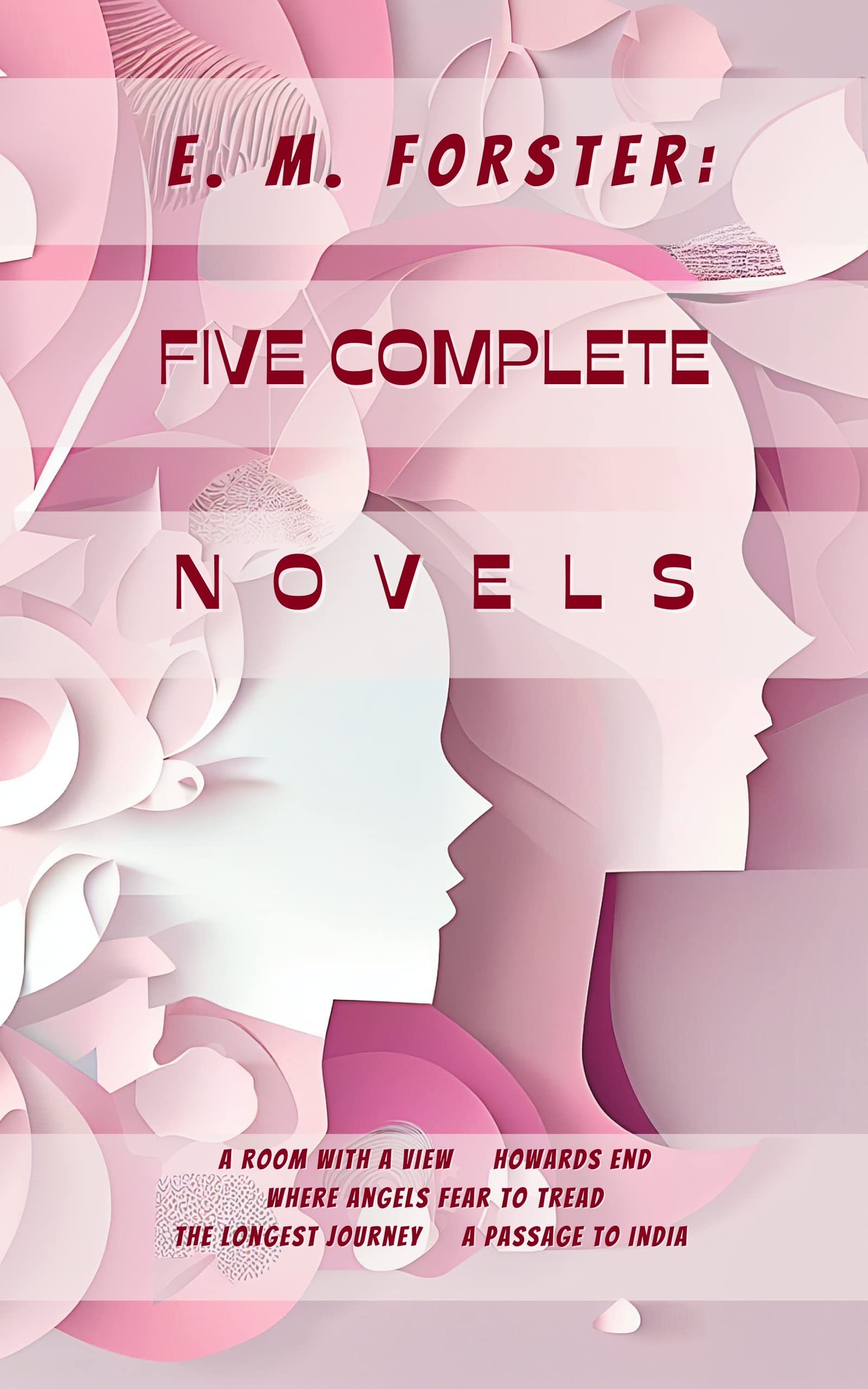
Edward Morgan Forster is a classic of English literature of the 20th century. His works reflected the crisis of the Edwardian era and the tragedy of the "lost generation" that returned after the First World War to their homeland.
This book includes FIVE Complete Novels written by E. M. FORSTER (1 January 1879 – 7 June 1970): A Room with A View (1908), Howards End (1910), Where Angels Fear to Tread (1920), The Longest Journey (1907), A Passage to India (1924).
Edward Morgan Forster, generally published as E.M. Forster, was an English novelist, essayist, and short story writer. He is known best for his ironic and well-plotted novels examining class difference and hypocrisy in early 20th-century British society. His humanistic impulse toward understanding and sympathy may be aptly summed up in the epigraph to his 1910 novel Howards End: "Only connect".
He had five novels published in his lifetime, achieving his greatest success with A Passage to India (1924) which takes as its subject the relationship between East and West, seen through the lens of India in the later days of the British Raj.
Forster's views as a secular humanist are at the heart of his work, which often depicts the pursuit of personal connections in spite of the restrictions of contemporary society. He is noted for his use of symbolism as a technique in his novels, and he has been criticised for his attachment to mysticism. His other works include Where Angels Fear to Tread (1905), The Longest Journey (1907), A Room with a View (1908) and Maurice (1971), his posthumously published novel which tells of the coming of age of an explicitly gay male character.
I so happy to have read this books again. You see the development of Forster as a novelist. The good but limited story in Where Angels Fear to Tread through to the glorious writing in A passage to India. Then the wonderful love story oh Maurice. A novel in which the saddest person, Clive, is he who turns his back on himself, and in which Maurice and Alec escape into the happiness of an unknown future together. Perhaps I won’t wait 20 years to read these novels again.