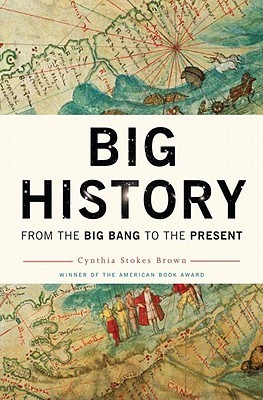
Jared Diamond meets Stephen Hawking in a book that fits human history into the history of the universe, by an American Book Award winner.
An epic for our time, Big History begins when the universe is no more than a single point the size of an atom, squeezed together in unimaginable density, and ends with a twenty-first-century planet inhabited by 6.1 billion people. It's a story that takes in prehistoric geology, human evolution, the agrarian age, the Black Death, the voyages of Columbus, the industrial revolution, and global warming. Historian Cynthia Brown visits the Vikings, the Mayas and Aztecs, the Incas, the Mongol empire, and the Islamic heartlands. Along the way she considers topics as varied as cell formation, population growth, global disparities, and illiteracy, creating a stunning synthesis of historical and scientific knowledge of humanity and the earth we inhabit.
Big History represents a new kind of history, one that skillfully interweaves historical knowledge and cutting-edge science. In an age of global warming, when the fate of the earth hangs in the balance, scientific advances permit us to see the universe as never before, grasping the timescales that allow us to understand the history of mankind in the context of its ecological impact on the planet. Cynthia Brown's lucid, accessible narrative is the first popularization of this innovative new field of study, as thrilling as it is ambitious.
Stokes Brown claims that this is the first truly comprehensive survey of Big History, but at the same time she recognizes that she is very indebted to David Christian and his Maps of Time: An Introduction to Big History, which was published 3 years earlier. With the exception of the first chapters on the origin of the cosmos and life on earth, however, Stokes Brown mainly follows the chronology and periodization of father and son McNeill (The Human Web: A Bird's-Eye View of World History, 2003) and her account becomes a classic world history.
Positive is the attention she gives to ecological aspects, and also the didactic part at the end of each chapter with a list of unanswered questions is initially very inspiring. But plainly annoying is that Stokes Brown regularly displays very outdated views (about the Celts for example) and pays attention to controversial theories such as the Black Athena of Bernal, the Nazca lines in Peru by Von Däniken and the books of Gavin Menzies. She is also often very careless in her formulation, for example in the first chapters her word usage shows that she did not really understand Darwin's theory of evolution. And as we get closer to the present time it gets worse: naming the chapter about the period 1500-1800 "one world" is really incredible, or stating that the collapse of the Soviet Union in 1991, is due to the "party leaders who longed for the material benefits of capitalism", is a banality that makes you speechless. In short, I'm sorry to say that this clearly is a failed attempt at Big History, it never comes near the level of the works of Christian or McNeill.
يعرض هذا الكتاب لمحة عن التاريخ الإنساني، ولكنه على غير عادة الكتب التاريخية الأخرى، لا يبدأ من التاريخ المدون، أو العصور التي تسبق ذلك، بل يذهب أبعد فيبدأ بنظرية الانفجار الكبير، ونشوء الكون ومن ثم نشوء الأرض، وكذا ظهور الكائنات والإنسان حسب النظرية التطورية، ليلي ذلك ظهور المدن والحضارات حتى عصرنا الحديث، كل هذا في 400 صفحة تقريباً، وهو إنجاز عظيم، وخاصة والكتاب يعرض ذلك بأسلوب جميل ومفيد لمن يرغبون في التعرف على التاريخ الإنساني بشكل عام، الكتاب لن يفيد المتخصصين ولن يضيف لهم جديداً، ولكنهم مفيد للمبتدئين.
بانورما تاريخية سريعة ورائعة تاخذك منذ البداية , البداية المطلقة للكون , لحظة البداية مروراٌ بالاحداث الهامة والفارقة فى تاريخ كوكب الارض الي ان ظهر البشر وبعد ذلك كان البشر هم محركوا التغيير علي وجه البسيطة ومعالمها الاكثر وضوحاٌ واهمية كتاب رائع يعطيك الخطوط العريضة والعناوين ويمكنك انت بعدها انت تبحر فى كل هذا من مصادر أخري
النجمتين اللي طاروا علشان شرح نظرية الانفجار العظيم غلط خالص وكفاية الجملة الرئيسية "كتاب ملحمي يبدأ عندما كان الكون مجرد نقطة وحيدة في حجم ذرة ، مضغوطاً بدرجة لا يمكن تخيلها" انا لا مؤاخذة فى الاساس راجل بتاع فيزياء والحاجات دي متتبلعش قال ذرة مضغوطة قال
In 1989, an American history professor named David Christian was teaching at Macquarie University in Sydney when he offered a course entitled Big History. Rejecting historians’ definition of the discipline as beginning with the advent of written records just 5,500 years ago, Christian’s course began with the Big Bang, 13.7 billion years in the past. He invited colleagues on the Macquarie faculty to lecture on astronomy, physics, geology, biology, and other scientific disciplines to fill in the billions of years that transpired before any human set foot on our planet. Christian’s course proved popular, and the idea spread to historians in other countries. A new sub-discipline was born. There is now an International Big History Association.
Big History in print
Nearly two decades later, another American historian, Cynthia Stokes Brown, took up the challenge of writing a book about history as Christian had re-conceived it. She had recently retired from Dominican University in California. The result was Big History: From the Big Bang to the Present (2007). While Christian leaned on colleagues in the sciences to carry the story for its first 13.65 billion years, Brown took it all on herself. With a good deal of simplification but relatively few apparent errors, she surveys the prehistorical past with great skill. For anyone who thinks history is the story of wars and generals and presidents, Big History is a worthy remedy.
Responding to overspecialization
Big History is a belated response to the extreme specialization that now characterizes virtually every academic discipline. It’s no longer enough to specialize in world history, or even ancient history. A scholar needs to specialize in a particular era in the history of Greece. Candidates for Ph.Ds in history need to go even further. For example, a dissertation might be written about women’s role in Spartan society during the Pelopenessian War. Just take a look at the titles of recent doctoral dissertations in nearly any field, if you don’t believe me. I, for one, think this is tragic. God may be in the details, but even She could get lost there.
Other works on Big History
By the way, Christian himself didn’t write this book because instead he approached the topic differently. He wrote two textbooks, Maps of Time: An Introduction to Big History, and Big History: From Nothing to Everything, in collaboration with Craig Benjamin. His more accessible treatment of the subject is a 48-lecture course he recorded for Great Courses. The title is simply Big History. Bill Gates was so impressed by it that he reportedly financed its distribution to schools to the tune of $10 million. I’ve listened to all 48 lectures and loved it.
There are only so many events in history for which I have a keen interest to learn more about. I'd much rather have a broad, comprehensive view of history than know specifics. If you're like me, then you will love the hell out of this book. Cynthia Stokes Brown reduces the exploits of empires into mere paragraphs. Don't care about the human sacrificial rituals of the Incas, or the proliferation of tobacco, cocoa, tea, and coffee during industrialization? Great! Those topics (among vast others) will only take about 20 seconds of your time.
Of immense importance is the fact that this book is written by a woman (too few history books are). Never is the reader burdened with the high-horsed vision of humanity as the great conqueror. Instead, events are examined for their true significance and Cynthia succeeds in revealing the all-important connections between the cultures, technologies and events of the world. She remains unbiased toward all groups throughout the entirety of the book and remains properly skeptical when delving into questions of why.
Most commendable of all is that this book takes into account the ecological process and ecological effects of human growth. It does this not because of any agenda, but because it is necessary to know these things in order to develop an accurate picture of the future, and what is the purpose of history if not to help guide us toward a better future? Sure, these parts can be sad and cynical (particularly the last chapter, which speculates on the immediate future), but that's because they reflect the truth about the properties of the Earth and of the human race. Yes, 2/3 of Africa's forests have been destroyed since 10,000 years ago. Yes, humans are the cause of a sixth major period of extinction in Earth's history. Yes, if we don't curb the trends of the human "experiment," we in for some rough times. If you can't handle the truth, go watch some TV.
I believe that this is the most compact yet comprehensive description of the past and (immediate) future available. If you have any desire for a comprehensive and accurate worldview, do yourself a favor and read this book.
في بانوراما امتدت منذ لحظة الانفجار الكبير الذي وقع منذ ملايين السنين، يبدأ الكتاب في سرد للتاريخ البشري. في 400 صفحة تلضم الكاتبة كل مكونات الحياة و التطور البشري حتى تصل إلى القرن الحادي و العشرين. الكتاب ممتع جداً و الترجمة نجحت في أن تحتفظ بتلك المتعه .. و بالطبع سيطرح الكتاب عليك بعض الأسئلة، لكن ككل أسئلة التاريخ، تظل معلقة بين اللا يقين و اللا شك
وجدت أن العناوين الرئيسية لمن يريد قراءة تاريخ العالم من الصفر الى النهاية تقريباً .. فعليه ان يبحث في تلك العناوين التي سأسردها تباعاً من البداية الى النهاية …
أفضل من وجهة نظري قراءة كتاب او كتابين في اطار عنوان واحد فقط …
طبعاً من المستحيل جمع التاريخ جميعه في عناوين صغيرة كتلك .. لكن برأيي أن العناوين شاملة … و عامة و محايدة لتاريخ العالم
أتمنى من أصحاب الخبرة اضافة عناوين و احداث يجدونها رئيسية من وجهة نظرهم …
ok. five stars as in "this gave me a lot of information", not as in "omg the writing was just mind-blowing and the characters were so well written"... yeah, no.
but! i could eat books like these up! so many facts, from every possible domain: chemistry, phisics, medicine, philosophy, religion etc. i am a sucker for books that contain trivia because besides school, documentaries and works that happen to contain valid facts of history, i really have nothing to rely upon.
what I learned from this:
- what the word "hinduism" means - what the word "barbaric" means - i got reminded of Broca's area - Corpus Callus, the same - Godwana - the different emergence of humans as a species in the world
احد اروع واجمل الكتب يعطي نبذه من تاريخ بدايه الكون الى احداثنا حاليا كتاب رائع وجميل واشبه بالقصه يبدا من الانفجار الكبير مرورا ببدايه الحياه على سطح الارض والانسان الى وقتنا الحاضر من اجمل الكتب انصح به مايعيب الكتاب هو عدم ترتيب الاحداث بشكل زمني متزن
تاريخ الأحداث الكبرى من الإنفجار الكبير إلى الزمن الحاضر سينثيا براون
يميل العلم بشكل عام للإختصاص، وذلك للكم الهائل مما يتوجب على المرء دراسته ومعرفته في كل مجال فإنه من غير الممكن أن يلم الإنسان في كل شيء في ذات الوقت. لذا نجد إختصاصات كثيرة ولكل مختص فيها الكثير مما يتوجب عليه فعله في ذلك المجال.
ثم جاءت نظرية الفوضى التي أزال النقاب عن تلك الخطوط التي تربط كل التخصصات ببعضها البعض.. ونرى في هذا الكتاب "تاريخ الأحداث الكبرى" الذي يربط الكثير من الإختصاصاب ببعضها ليعطينا تلك الإمكانية لأخذ صورة شاملة عن النظرة الحديثة لكوننا وكل ما حدث له وفيه.. بصورة موجزة ومذهلة، حيث يغطي هذا الكتاب فترة زمنية لا تقل عن 13 بليون سنة في حياة هذا الكون.
تحاول براون في هذا الكتاب في وضع أفضل النظريات التي تفسّر الوجود والخلق وتلك السلسلة من الأحداث التاريخية والحضارية التي أوصلت الجنس البشري إلى ما هو عليه الآن.. وهو بالتالي لا يعطينا صورة قاطعة عما حدث.. لكنه يعطينا التخمين الأفضل لما هو من الممكن أن حدث. لكنه رغم ذلك شيء عظيم.
البداية كانت بالحدث الأبرز "نظرية الإنفجار العظيم" النظرية الأكثر إحتمالاً بأنها حدثت ونتج عنها هذا الكون الآسر.. وبكل تأكيد التحوّل الذي لم يبدو مقنعاً من عدم وجود أشكال حياة إلى وجود أول الكائنات الحية من جراثيم والتي حتى السيدة براون تؤكد أنه لم يثبت بأن تلك التفاعلات الكيميائية في الحساء البدائي للمحيطات أن أنتج كائنات حية في المختبر. لكنها أوجدت أحماضاً أمينية والتي تدخل التركيبة الجينية في كل الكائنات الحية والذي قد يوحي بأنه وبشكل ما قد تحوّل إلى كائنات حية حقيقية فيما بعد.. ومن المثير أنها لم تتحدث عن نظرية "البذور الفضائية" والتي وضعت لتفسر ذلك الإنبثاق المفاجيء للكائنات الحية الجرثومية على الأرض في الحساء البدائي والذي يؤكد العلماء أنه من السخافة السؤال عن مصدرها !
وكان ليس من بد أن تشرح وبإسهاب لا بأس فيه التطفرات الجينية والتي كانت سبباً في تطور تلك الجراثيم إلى كل تلاها من كائنات حية، حسب نظرية النشوء والإرتقاء لدارون والإنتقاء الطبيعي وغيرها. وأصل الإنسان والجنسين الأهم له النيانتدرنال والهوموسابينز والذي لربما كانت هجرته إلى أماكن تواجد النيانتدرنال سبباً مباشراً في انقراض الأخير.. رغم أنه كان يملك جمجمة أكبر مما يوحي أنه يملك دماغاً أكبر ولربما ذكاءً أشد.. لكن التموضع التشريحي لحنجرته لا توحي أنه كان يملك القدرة التي يملكها الهوموسابينز على الكلام وهذا لربما حدّ من قدراته على التواصل مع بني جنسه.
ومنذ انتشار الهوموسابينز على أرجاء الكوكب حتى بدأ يسود.. ولا بد من لفت النظر إلى التأويل العلمي لما يحلو لهم تسميته بالأساطير الدينية من جنة عدن والتي لربما تكون منطقة الوادي المتصدع في شرق أفريقيا التي كانت ولا بد جنة للهوموسابينز لوفرة الغذاء والذي لم يجعل الحصول عليه جهداً أكثر من عدة ساعات في اليوم الواحد لا تتجاوز ال 5 ساعات. والطوفان الذي جاء بعد ذوبان جليد الفترة الجليدية والذي أدى إلى ارتفاع مستوى البحار 180 متراً وبلع دون شك مساحات هائلة من اليابسة. وحادثة هابيل وقابيل والتي تفسّر بأنها ترمز لاحتقار الهوموسابينز لمهنة الزراعة بما أن قربان قابيل الزراعي لم يقبل من الله. حيث يعتبر المؤرخون بأن التحول إلى الزراعة وعلى الرغم من أنه أحد أهم التحولات الحضارية في تاريخ الإنسان إلا أنه كان يعني الخروج من جنة عدن التي لا تتطلب العمل لفترات طويلة إلى حياة تتطلب العمل معظم الوقت وتلك هي حياة الزراعة.
بعد ذلك، كان تسلسل الحضارات الإنسانية التاريخية والتي بدأت بالسومر إلى يومنا الحاضر فيما كانت بينهما أكبر الإمبراطوريات التي عرفها التاريخ المكتوب –مرتبة حسب التسلسل الزمني لها- المغول ثم المسلمين وأخيراً الإمبراطورية البريطانية والتي تمثل أكبر إمبراطورية عرفها التاريخ المكتوب على الإطلاق.
آخر الكتاب كان عن التحديات والمستقبل الذي ينتظر جنس الهوموسابينز على كوكبهم الأرض.. عندما تستنفذ موارد هذا الكوكب المتواضع أو عندما تبدأ الشمس بتمددها الأخير عندما تستنفذ ما لديها من مخرون الهيدروجين. وغيرها الكثير من الأخطار التي قد يكون الهوموسابينز نفسه السبب فيها.
باختصار، كتاب جميل يلخص للمرء النظرة الشمولية لتاريخ الكون والإنسان حسب النظرية المرجحة والأكثر إحتمالاً علمياً حتى اللحظة. من الجيد الإطلاع عليه.
كتاب مبهر الي حد الاندهاش .. اخذت في قرئته الكثير والكثير من الوقت كي استوعب القليل من هذا الكم الزاخر بالمعلومات القيمة.
كما حدثنا ماركس ( التاريخ يبدأ بمأساة ويكرر نفسه كمهزلة) .. عمر البشرية هو 30.000 عام حسب تقديرات البشر وما ما يسواي شعرة مقارنه بتاريخ الكون المقدر بحوالي 12.5 مليار سنة.
تطور الانسان لم يكون تطور بيولوجي كسائر الكائنات ولكن تطور في نمط الحياة واسلوبها الهدف منه هو الحصول علي الرفاهية.
لم تختلف الهجمات بين السامورين او استلاءات الفينقيون علي المدن الساحلية او حروب الاغريق والامبراطوية الرومانية او الموج الاعظم للمغول او الزحف الاوربي علي الامريكيتن مروراً بالحروب العالمية وانتهاءاً بالحرب علي العراق التي لم يذكرها الكتاب .. الهدف والغاية واحدة الحصول علي الموراد والبحث عن المجد .. الانسان هذا الكائن التعس والعبثي الاناني استخدم عقله لتخريب الكون والقضاء علي مظاهر السلام بهذا الكوكب الامن بدونه حتماً.
الاديان بأختلافتها التي وصلت اليوم الي نحو 10.000 عقيدة كلها تسمو الي هدف واحد وهو الترفع عن الدنيا في سبيل الجزاء المتوج بالاخرة .. استغل الرجال الاديان من اجل منافع خاصة فنقتل ونعذب ونحرق بأسم الدين ومن اجل ارضاء الرب سواء أكان شمساً او نهراً أكان واحد ام ثلاثة .. تاريخ كل الاديان مدان بلا استثناء بهذه المعضلة الاخلاقية.
من يقرأ التاريخ سوف يسهل عليه التنبوء بالحاضر القريب وليس بصورة كامله عن المستقبل المتقلب للكون
Această carte mi-a trezit curiozitatea despre istoria universului, care a fost de mult îngropată în lecțiile de istorie de la școală. Tare as fi vrut să o citeasc vre-o 5 ani in urmă, dar cred că va servi drept punte pentru studiul mai detaliat al unelor evenimente istorice cât și o punte în viitor. Recomand tuturor cu mare încredere.
This one has been on my shelf for years, a book I read in a piecemeal fashion. It is written in a loose, breezy style, and, like most works of popular history, it is not the kind of book you would ever cite in serious research.
... but, I still liked it. Certainly there are details (like how the collapse of the Bosporus land bridge and the subsequent flooding of the Black Sea is what probably inspired the flood narratives commonly encountered in ancient literature) which are, at best, speculative, but speculation is still interesting. (Likewise, I thought Brown's interpretation of the Garden of Eden story - that it was a metaphor for the abandonment of foraging lifestyles in favor of settled, urban, agricultural life - compelling, but also unlikely / impossible to prove.)
As a reader with a scientific bent, big history (i.e. history from a cosmological perspective) has always been my preferred approach, and this will not be my last book on the subject. You start with the Big Bang and cover topics as diverse as astronomy, paleontology, environmental science, anthropology, and epidemiology. (It was in this book where I first encountered the Great Oxygenation Event in our early history; in short, our oxygenated atmosphere is anomalous, and its oxidizing potential caused mass extinctions.) The perspective is a disinterested one, and little attention is paid to individuals, ideas, or events (although Brown does strike a good balance here).
Pretty good for what I was expecting to get out of it. I definitely enjoyed the sections about ancient civilizations and the transition from hunter-gatherer life to agricultural society.
Not my fav. This was assigned in my freshman year honors class, but I never got past the first few chapters. Having read the whole thing, it was interesting to get a (widely generalized) history of the world, and to have more context for events that have a lot of awareness, but it also reminded me that I don’t like learning about the mainstream perspectives of history. There is so much behind which stories we hear, but I’m much more interested in the more nuanced experiences than description of colonialism and industrialization 🫠
Unfortunately, this Big History hasn't aged well. And without a compelling (or any) unifying theme, there is little to distinguish this historical survey.
Having first recently enjoyed David Christian's Origin Story (2018), which tells a brilliant unifying story of how the energy of the unfolding universe leads to increasing complexity, to the emergence life on this planet and to the accelerating growth of our species, I was anxious to taste again from another grand Big History, this time from Stokes Brown, a pioneer of the genre. Big History: From Big Bang to the Present does not feel present.
Stokes Brown admits in the preface (to the 2012 edition of this 2007 book) that she had deliberately "steered away from proclaiming an underlying theme or pattern -- too many people have been mistaken in the past for me to be that bold." Nonetheless I was intrigued by her promise that she "instead focused on the relationship of humans to the environment as a common thread to my narrative." It seemed to hint at a history retold through the lens of a species anchored within its biosphere, toiling in Eden, insisting on independence while fully dependent. Alas, if there was a unifying thread, I missed it.
Instead the book scans a well-covered historical terrain -- told so much better in books of a similar vintage such as A Short History of Nearly Everything (2003), 1491 (2005) and especially Guns, Germs and Steel (1997). As a fan of sweeping historical surveys, I settled in for the ride, a hop-on/hop-off tour of the usual highlights.
Not until the final chapter -- What Now? What Next? -- does Stokes Brown finally turn to the connection of humans to the environment. The chapter is a rehash of An Inconvenient Truth's rehash (2006) of humanity's blind march toward the cliff of ecological disaster. Ultimately, because Stokes Brown both avoids the bold risk of an unifying grand theme and fails to offers, at the least, an interesting thread to unifies her narrative -- this book reads like a rather straightforward history textbook.
I found the first third of "Big History" fascinating because Cynthia Brown told our Universe's story using the language of science. I'm simply a sucker for cosmology and astronomy. I was therefore disappointed when her narrative turned to more modern times and began sounding like a boring history book. Nevertheless, Brown must be commended for condensing the history of homo sapiens from the point of our birth to the present trouble we're in as population and industrial growth outpace the planet's natural resources. This book is replete with facts and I would dare almost anyone to not find something personally marvelous or interesting as they read.
I'm fully behind the the idea of "Big History" because most people tragically lack the context and perspective to meaningfully understand our universe. Young people especially would benefit from exposure to the "From the Big Bang to the Present" narrative. Their understanding of the universe on a grand scale could only benefit everyone.
If you like premise of Daniel Quinn’s Ismael but found the tone somewhat off putting, you might want to try Big History. Instead of beginning with mankind’s recorded history, this historian starts her story 13.7 billion years ago with the big bang and string theory and dark matter.
We learn to appreciate the Gaia theory as all life forms on earth share the same genetic code, the same biochemical network. If we telescope the age of the earth to one 24 hour period, humans would appear less than two minutes before midnight and agriculture and cities would appear just a few seconds before midnight.
The rise of man was fueled by agriculture, cities, and later industrialization and technology. The major unresolved challenge obviously is how do to keep our growth from outstripping our finite resources.
For those who don't know, "Big History" (the concept) is the history that takes a mega-macro approach to history, starting with the "big bang" and trying to put humanity in perspective in terms of the, well, the long-term. This book is a summary of history including prehistory, from the beginning, and even though I was familiar with the main outlines of certain historical periods, this book helps put the whole span in perspective. Unlike many histories, China and India are included as part of the greater picture, which is as it should be. European history would not be complete without the Mongols, for example. I enjoyed this book, not as a sit-down-and-read from start to finish, but as a bit-at-a-time read before bed.
باستثناء الفصل الأول الذي لخص الانفجار الكبير بشكل شائق ومترابط (كنت قد قرأت الكون لساجان، وأدت الترجمة إلى نفوري أكثر من الفيزياء والفلك بصفة عامة) فإن باقي فصول الكتاب جاءت بما هو أشبه بمقرر دراسي، هناك قيمة وجيهة في اختزال وربط تاريخ العالم أجمع، واستفدت بفصل حضارات الأمريكتين، لكن يغلب التفصيل السردي الممل على غرار: ويتميز شعب الكذا بزراعة كذا وكذا ثم تعدد الكاتبة عشرين محصولاً! وأكثر ما أعجبني هي الأسئلة في نهاية كل فصل، حيث تحاول استثارة القاريء للمزيد من البحث، دون أن تقدم إجابات واضحة على أسئلة لا تزال تشغل بال العلماء والباحثين.
The history of our planet in 248 pages. The last two chapters on the rise of the modern world and, because of what we've done to the planet, how difficult the next 100 years will be are sobering.
A quick smart retelling of our history really shows how unprecedented the last 100 years have been. I think I may start storing food and fuel on my Dad's compound in northern Michigan.
Did you realize that the Mongol empire controlled the largest land area of any of the ancient empires?
أربعة أنجم لهذا الكتاب الشيق الذي ينظر إلى التاريخ من بداية الكون و ليس منذ ظهور الكتابة كما درجت العادة. معلومات موسوعية (إجبارية: يتعين على الجميع معرفتها) نقيصته الوحيدة هو أنه تناول التاريخ بشكل عام دون الخوض في التفاصيل فمثلا تم إغفال الحروب البونيقية تماما و كذلك أحد أطرافها (القرطاجيون) وحضارتهم مهمة جدا في التاريخ القديم كما يعلم الجميع.
I've actually read this book three times so there's isn't much else I have to say except it's a review of all history from the big bang to present, it's short, fast, and comprehensive in an abbreviated way. LOVE IT.
Đại Sử là câu chuyện về Trái đất của chúng ta từ Vụ Nổ Lớn qua những chặng đường của sự sống và lịch sử loài người cho đến nền văn minh ngày nay, phác thảo những kịch bản tương lai tùy theo con người có kiểm soát được sự tăng trưởng quá nóng để phát triển bền vững hay không.