

What do you think?
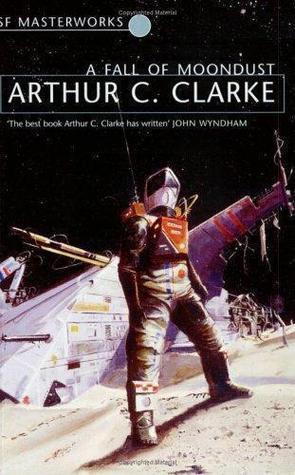
A Fall of Moondust
For a million years the bubble had been growing, like a vast abscess, below the root of the mountains. Now the abscess was about to burst. Captain Harris had left the controls on autopilot and was talking to the front row of passengers as the first tremor shook the boat. For a fraction of a second he wondered if a fan blade had hit some submerged obstacle; then, quite literally, the bottom fell out of his world.
It fell slowly, as all things must upon the Moon. The sea was alive and moving . . . Every stage of that nightmare transformation was pitilessly illuminated by the earth light, until the crater was so deep that its firewall was completely lost in shadow, and it seemed as if Selene were racing into a curving crescent of utter blackness – an arc of annihilation.
In darkness and in silence, they were sinking into the Moon. . . .
224 pages, Paperback
First published September 1, 1961
About the author
Arthur C. Clarke
1,666 books12k followersStories, works of noted British writer, scientist, and underwater explorer Sir Arthur Charles Clarke, include
2001: A Space Odyssey
(1968).
This most important and influential figure in 20th century fiction spent the first half of his life in England and served in World War II as a radar operator before migrating to Ceylon in 1956. He co-created his best known novel and movie with the assistance of Stanley Kubrick.
Clarke, a graduate of King's College, London, obtained first class honours in physics and mathematics. He served as past chairman of the interplanetary society and as a member of the academy of astronautics, the royal astronomical society, and many other organizations.
He authored more than fifty books and won his numerous awards: the Kalinga prize of 1961, the American association for the advancement Westinghouse prize, the Bradford Washburn award, and the John W. Campbell award for his novel Rendezvous with Rama. Clarke also won the nebula award of the fiction of America in 1972, 1974 and 1979, the Hugo award of the world fiction convention in 1974 and 1980. In 1986, he stood as grand master of the fiction of America. The queen knighted him as the commander of the British Empire in 1989.
This most important and influential figure in 20th century fiction spent the first half of his life in England and served in World War II as a radar operator before migrating to Ceylon in 1956. He co-created his best known novel and movie with the assistance of Stanley Kubrick.
Clarke, a graduate of King's College, London, obtained first class honours in physics and mathematics. He served as past chairman of the interplanetary society and as a member of the academy of astronautics, the royal astronomical society, and many other organizations.
He authored more than fifty books and won his numerous awards: the Kalinga prize of 1961, the American association for the advancement Westinghouse prize, the Bradford Washburn award, and the John W. Campbell award for his novel Rendezvous with Rama. Clarke also won the nebula award of the fiction of America in 1972, 1974 and 1979, the Hugo award of the world fiction convention in 1974 and 1980. In 1986, he stood as grand master of the fiction of America. The queen knighted him as the commander of the British Empire in 1989.
Ratings & Reviews
Friends & Following
Create a free account to discover what your friends think of this book!
Community Reviews
Displaying 1 - 30 of 699 reviews

January 20, 2012
The Earth's Moon in the mid 21st Century this frontier land is slowly growing , the future is in its tranquil cities under lunar domes ( Clavius City, population 52,647) . Tourism is a key to financial survival on this remote hostile world. Selene (Moon Goddess) a hovercraft designed to float over the lunar surface especially on the treacherous Sea of Thirst, above the moondust. Only one of these "boats," has been built if successful others will follow you would think . In charge of Selene, is the unambitious but capable Captain Pat Harris and his crew, consisting of just a stewardess Miss Sue Wilkins. Soon to be a couple ? In the time to come old- fashioned words make a comeback, the Captain is a little afraid of the equally competent and attractive Sue. With a full load twenty -two people on board, on an ordinary voyage across the vast, dark, empty and eerie terrain in the long lunar night. They look out at the slowly sinking crescent Earth just above the horizon, lonely mountains nearby, complete silence except for the slight sound of the vessel's engine, disturbs the peace. Passing underneath the moondust looking like a calm liquid sea, only the boat's bright lights to show the stark scenery, with the chilly temperature of more than 200 below zero Fahrenheit, outside ... Somehow the rather ugly gray moonscape is beautiful, but the universe is a violent place a small moonquake occurs and the Selene quietly disappears, to the bottom of the waterless dusty, Sea of Thirst as if back on one of Earth's Oceans not an airless desert... Maybe the thrill seeking tourists should have stayed home, but there is always hope that these brave men and women can be saved, otherwise the Selene becomes just another lost tomb. They wait, with very high expectations ...

May 7, 2020
SF Masterworks 49 - A lunar 'bus' is involved in an accident that sees it disappear off of the surface of the moon. Scientists, engineers, mathematicians, and to a lesser extent the media, work together (led by the engineers), to find, and then attempt to rescue the 2o stranded passengers and the 2 crew. Clarke takes the simple 'coal miners missing after cave-in' idea and adds futurism, science, logic, tons of suspense and well crafted characterisations of a large ensemble cast to make me a nervous wreck for the hours I spent glued to this masterclass in suspense writing! The suspense!
As I work my way through the SF Masterworks series, it's looking more and more like, that Arthur C. Clarke stands heads and shoulders above his peers. My second Clarke read, and yet another easy Four Star rating! Arthur C. Clarke is da man!

2020 read
As I work my way through the SF Masterworks series, it's looking more and more like, that Arthur C. Clarke stands heads and shoulders above his peers. My second Clarke read, and yet another easy Four Star rating! Arthur C. Clarke is da man!
2020 read

March 9, 2018
Oh this was sooo close to 5 stars. It must be, oh gosh, almost 40 years since I read this, and boy did I enjoy it. Arthur C is a magnificent storyteller and an excellent character builder.
This book builds and builds and just when you think
It is an excellent book, and given that I have always enjoyed Arthur C , I have to wonder why I have not read more (often). I have probably read most of his books, but not for a while, so it is about time I revisited my Arthur C library.
(Oh so so so close to 5 stars)
This book builds and builds and just when you think
It is an excellent book, and given that I have always enjoyed Arthur C , I have to wonder why I have not read more (often). I have probably read most of his books, but not for a while, so it is about time I revisited my Arthur C library.
(Oh so so so close to 5 stars)

August 15, 2008
As satisfying as a good HARD SF can be, one complaint often leveled against them is that they are TOO LONG-winded and pageTHICK and that those employing IT don't have the proper skills (story-making, that is) to create the narrative friction and plot rhythm requisite to bring the reading experience to a truly enjoyable climax. Well, at under 225 pages, this story's tight, well-honed body is a classic example of "hard" science fiction doing it right. I DID IT, liked it and I would DO IT again and recommend you consider DOING IT the next time you are looking for a little SFtail tale.
Written in 1961 by one of the masters, this tight, hard tale takes place on the Moon in the near future when our longtime satellite has been colonized and become an expensive tourist destination. The central plot is well laid out and concerns a "cruise" across the surface of one of the "lunar seas" that meets with disaster. From there, the rest of the book is a race against time to save the passengers as various problems are encountered, tempers run high, nerves are frayed, people are frightened, rescue ideas get kicked around and debated, heroes are born, villains exposed...and time, that nasty, unforgiving, unflinching hard ass just keeps ticking.
What makes this such a good piece of book is Clarke's ability to give excellent detail without spoiling the mood of the story. Clarke's science is meticulous, his rescue ideas plausible and set forth in detail and yet the pace never bogs down and he keeps the narrative motion pleasing. Given the slimness of the novel, Clarke does sacrifice character development and those present are fairly two dimensional. This does not hamper the story and is forgivable given the focus of the novel.
As good as this was and as superbly crafted from a technical standpoint, I couldn't quite give it four stars (call it 3.5). I think this may have been in part due to my not really being in the mood for this story when I read it. Unfortunately, books sometimes suffer based on our moods when we read them and that my be the case here. As it is, I still enjoyed it and would say it is certainly worth a read given Clarke's ability to so effectively use the scientific and technical aspects of the plot.
Nominee: Hugo Award for Best Novel.
.
Written in 1961 by one of the masters, this tight, hard tale takes place on the Moon in the near future when our longtime satellite has been colonized and become an expensive tourist destination. The central plot is well laid out and concerns a "cruise" across the surface of one of the "lunar seas" that meets with disaster. From there, the rest of the book is a race against time to save the passengers as various problems are encountered, tempers run high, nerves are frayed, people are frightened, rescue ideas get kicked around and debated, heroes are born, villains exposed...and time, that nasty, unforgiving, unflinching hard ass just keeps ticking.
What makes this such a good piece of book is Clarke's ability to give excellent detail without spoiling the mood of the story. Clarke's science is meticulous, his rescue ideas plausible and set forth in detail and yet the pace never bogs down and he keeps the narrative motion pleasing. Given the slimness of the novel, Clarke does sacrifice character development and those present are fairly two dimensional. This does not hamper the story and is forgivable given the focus of the novel.
As good as this was and as superbly crafted from a technical standpoint, I couldn't quite give it four stars (call it 3.5). I think this may have been in part due to my not really being in the mood for this story when I read it. Unfortunately, books sometimes suffer based on our moods when we read them and that my be the case here. As it is, I still enjoyed it and would say it is certainly worth a read given Clarke's ability to so effectively use the scientific and technical aspects of the plot.
Nominee: Hugo Award for Best Novel.
.

September 8, 2019
What began as a four hour trip became a deadly trap.
Tourists on the Moon take a sightseeing trip across the "Sea of Thirst"
A rare hard science fiction adventure from the pen of Arthur C. Clarke.

The moon desert was filled with an extremely fine dust, a fine powder far drier than the contents of a terrestrial desert and which almost flows like water.
The "Selene" was specially designed to skim across the surface until a rare subsidence caused the ship to sink beneath the dust becoming totally out of all contact.

"Traffic Control we have a Problem"
Captain Harris had left the controls on autopilot and was talking to the front row of passengers when the first tremor shook the boat. For a fraction of a second he wondered if a fan blade had hit some submerged obstacle; then, quite literally, the bottom fell out of his world.
It fell slowly, as all things must upon the Moon. Ahead of Selene, in a circle many acres in extent, the smooth plain puckered like a navel. The Sea was alive and moving, stirred by the forces that had waked it from its age-long sleep. The center of the disturbance deepened into a funnel, as if a giant whirlpool were forming in the dust. Every stage of that nightmare transformation was pitilessly illuminated by the earthlight, until the crater was so deep that its far wall was completely lost in shadow, and it seemed as if Selene were racing into a curving crescent of utter blackness—an arc of annihilation.
The truth was almost as bad. By the time that Pat had reached the controls, the boat was sliding and skittering far down that impossible slope. Its own momentum and the accelerating flow of the dust beneath it were carrying it headlong into the depths. There was nothing he could do but attempt to keep on an even keel, and to hope that their speed would carry them up the far side of the crater before it collapsed upon them.
If the passengers screamed or cried out, Pat never heard them. He was conscious only of that dreadful, sickening slide, and of his own attempts to keep the cruiser from capsizing. Yet even as he fought with the controls, feeding power first to one fan, then to the other, in an effort to straighten Selene’s course, a strange, nagging memory was teasing his mind. Somewhere, somehow, he had seen this happen before.
That was ridiculous, of course, but the memory would not leave him. Not until he reached the bottom of the funnel and saw the endless slope of dust rolling down from the crater’s star-fringed lip did the veil of time lift for a moment.
He was a boy again, playing in the hot sand of a forgotten summer. He had found a tiny pit, perfectly smooth and symmetrical, and there was something lurking in its depths—something completely buried except for its waiting jaws. The boy had watched, wondering, already conscious of the fact that this was the stage for some microscopic drama. He had seen an ant, mindlessly intent upon its mission, stumble at the edge of the crater and topple down the slope.
It would have escaped easily enough—but when the first grain of sand had rolled to the bottom of the pit, the waiting ogre had reared out of its lair. With its forelegs, it had hurled a fusillade of sand at the struggling insect, until the avalanche had overwhelmed it and brought it sliding down into the throat of the crater.
As Selene was sliding now. No ant lion had dug this pit on the surface of the Moon, but Pat felt as helpless now as that doomed insect he had watched so many years ago. Like it, he was struggling to reach the safety of the rim, while the moving ground swept him back into the depths where death was waiting. A swift death for the ant, a protracted one for him and his companions.
The straining motors were making some headway, but not enough. The falling dust was gaining speed—and, what was worse, it was rising outside the walls of the cruiser. Now it had reached the lower edge of the windows; now it was creeping up the panes; and at last it had covered them completely. Pat cut the motors before they tore themselves to pieces, and as he did so, the rising tide blotted out the last glimpse of the crescent Earth. In darkness and in silence, they were sinking into the Moon.
As the Selene heats up and the air becomes unbreathable, young Captain Pat Harris and his chief stewardess Sue Wilkins try to keep the passengers occupied and psychologically stable while waiting to be rescued.
This is what makes Arthur C. Clarke special...
Clarke's Three Laws:
1. When a distinguished but elderly scientist states that something is possible, he is almost certainly right. When he states that something is impossible, he is very probably wrong.
2. The only way of discovering the limits of the possible is to venture a little way past them into the impossible.
3. Any sufficiently advanced technology is indistinguishable from magic.
Enjoy!
Tourists on the Moon take a sightseeing trip across the "Sea of Thirst"
A rare hard science fiction adventure from the pen of Arthur C. Clarke.
The moon desert was filled with an extremely fine dust, a fine powder far drier than the contents of a terrestrial desert and which almost flows like water.
The "Selene" was specially designed to skim across the surface until a rare subsidence caused the ship to sink beneath the dust becoming totally out of all contact.
"Traffic Control we have a Problem"
Captain Harris had left the controls on autopilot and was talking to the front row of passengers when the first tremor shook the boat. For a fraction of a second he wondered if a fan blade had hit some submerged obstacle; then, quite literally, the bottom fell out of his world.
It fell slowly, as all things must upon the Moon. Ahead of Selene, in a circle many acres in extent, the smooth plain puckered like a navel. The Sea was alive and moving, stirred by the forces that had waked it from its age-long sleep. The center of the disturbance deepened into a funnel, as if a giant whirlpool were forming in the dust. Every stage of that nightmare transformation was pitilessly illuminated by the earthlight, until the crater was so deep that its far wall was completely lost in shadow, and it seemed as if Selene were racing into a curving crescent of utter blackness—an arc of annihilation.
The truth was almost as bad. By the time that Pat had reached the controls, the boat was sliding and skittering far down that impossible slope. Its own momentum and the accelerating flow of the dust beneath it were carrying it headlong into the depths. There was nothing he could do but attempt to keep on an even keel, and to hope that their speed would carry them up the far side of the crater before it collapsed upon them.
If the passengers screamed or cried out, Pat never heard them. He was conscious only of that dreadful, sickening slide, and of his own attempts to keep the cruiser from capsizing. Yet even as he fought with the controls, feeding power first to one fan, then to the other, in an effort to straighten Selene’s course, a strange, nagging memory was teasing his mind. Somewhere, somehow, he had seen this happen before.
That was ridiculous, of course, but the memory would not leave him. Not until he reached the bottom of the funnel and saw the endless slope of dust rolling down from the crater’s star-fringed lip did the veil of time lift for a moment.
He was a boy again, playing in the hot sand of a forgotten summer. He had found a tiny pit, perfectly smooth and symmetrical, and there was something lurking in its depths—something completely buried except for its waiting jaws. The boy had watched, wondering, already conscious of the fact that this was the stage for some microscopic drama. He had seen an ant, mindlessly intent upon its mission, stumble at the edge of the crater and topple down the slope.
It would have escaped easily enough—but when the first grain of sand had rolled to the bottom of the pit, the waiting ogre had reared out of its lair. With its forelegs, it had hurled a fusillade of sand at the struggling insect, until the avalanche had overwhelmed it and brought it sliding down into the throat of the crater.
As Selene was sliding now. No ant lion had dug this pit on the surface of the Moon, but Pat felt as helpless now as that doomed insect he had watched so many years ago. Like it, he was struggling to reach the safety of the rim, while the moving ground swept him back into the depths where death was waiting. A swift death for the ant, a protracted one for him and his companions.
The straining motors were making some headway, but not enough. The falling dust was gaining speed—and, what was worse, it was rising outside the walls of the cruiser. Now it had reached the lower edge of the windows; now it was creeping up the panes; and at last it had covered them completely. Pat cut the motors before they tore themselves to pieces, and as he did so, the rising tide blotted out the last glimpse of the crescent Earth. In darkness and in silence, they were sinking into the Moon.
As the Selene heats up and the air becomes unbreathable, young Captain Pat Harris and his chief stewardess Sue Wilkins try to keep the passengers occupied and psychologically stable while waiting to be rescued.
This is what makes Arthur C. Clarke special...
Clarke's Three Laws:
1. When a distinguished but elderly scientist states that something is possible, he is almost certainly right. When he states that something is impossible, he is very probably wrong.
2. The only way of discovering the limits of the possible is to venture a little way past them into the impossible.
3. Any sufficiently advanced technology is indistinguishable from magic.
Enjoy!

February 11, 2022
Много силна фантастична история, в която Артър Кларк предвижда развитието на бъдещ космически туризъм, както и възможните проблеми при него! Туристическият кораб „Селена“ прави стандартна обиколка на видимата част на Луната, но изведнъж потъва в море от лунен прах... Всички пътници са останали невредими, обаче на „Селена“ разполагат с ограничено количество кислород, като шансовете за оцеляване са малки... На борда се оказва и пенсионираният космически комодор Ханстен, като с капитан Пат Харис трябва да намерят начин да поддържат духа на пътниците и да ги предпазват от конфликти, като междувременно имат надежда към организирана спасителна операция, която да ги открие и измъкне навреме от ситуацията.
„Съзнанието има много стражеви кучета и понякога те лаят напразно, но разумният човек никога не пренебрегва предупрежденията им.“
„Съзнанието има много стражеви кучета и понякога те лаят напразно, но разумният човек никога не пренебрегва предупрежденията им.“

December 9, 2022
I know it will sound kinda funny, but this 1961 book by Arthur C. Clarke had all the feel of a '60s stiff-upper-lip travelogue/misadventure TV SHOW. You know, the kind with the bright BBC announcer trying to downplay some really horrible events, possibly mass death?
That's this. It's definitely an adventure, though. Think avalanche, but on the moon, with all the different gravity and situation that it implies.
Not bad. It's definitely a book of its time, however, and a modern audience would expect something more of an emotionally overladen family/lover quarrel added to a desperate measure but with really big blaring horns or something to drive the point that we should be bawling our eyes out or something.
That isn't this, though. Cheerio! We've got this.
That's this. It's definitely an adventure, though. Think avalanche, but on the moon, with all the different gravity and situation that it implies.
Not bad. It's definitely a book of its time, however, and a modern audience would expect something more of an emotionally overladen family/lover quarrel added to a desperate measure but with really big blaring horns or something to drive the point that we should be bawling our eyes out or something.
That isn't this, though. Cheerio! We've got this.

January 15, 2009
I read this book a long long time ago, borrowed from library. This story has typical style of Mr. Clarke: pretty technical but not too tedious, man vs. nature (a.k.a. disaster theme). Maybe not so intense like modern day disaster movies/novels, but I enjoyed this uncommon slow pace disaster story. Slow, but not boring.
a fun trivia: what I can remember after all these years, the length of each chapter is similar. On my edition that I read, length of each chapter is around 8-9 pages.
a fun trivia: what I can remember after all these years, the length of each chapter is similar. On my edition that I read, length of each chapter is around 8-9 pages.

February 13, 2011
Finally Got Around To...
Back in the 80s when I was swimming through Asimov, Herbert, and Clarke, I distinctly remember picking A Fall of Moondust off my high school library's shelf and reading the first page, then putting it back to save for later.
A Fall of Moondust might be the closest thing to a suspense thriller Arthur Clarke ever wrote. Due to a freak moonquake, the tourist bus/spacecraft Selene gets buried 15 meters below one of the lunar "seas" in a region of dust with bizarre, liquid-like properties. Parallel plots ensue focusing on the Selene's passengers and crew buried alive with limited air, the engineers on the surface desperately trying to locate and rescue them, and the news reporters vying for first dibs on the story (or tragedy) of the century.
A Fall of Moondust sits right on the cusp of the Golden Age of SF and the actual, legitimate Space Age. It retains the verve, gusto, and quaint 1950s characterizations of the former, but (especially because this is Clarke) the solid, real-world sensibilities of the latter. The science may be a little off regarding the properties of actual lunar dust, but for 1961 the speculation is mostly spot-on. While we may not have achieved permanent lunar bases and tourism yet, Clarke absolutely nails the importance of sensationalist news reporting in a world of easy global communication (which is not surprising given that Clarke is credited with the original idea for geostationary communication satellites).
Another author may have sacrificed some of the science in order to ramp up the human tension and make that the focus of the story, but that isn't Clarke's style. Nevertheless, his characters aren't merely science-spouting robots, and they aren't supermen either. Clarke recognizes that solving the problems brought on by human foibles would be just as important in this kind of disaster situation as it would be to solve the engineering problems, and he gives both aspects equal time.
I can imagine that if Alfred Hitchcock had ever decided to make a science fiction movie, he might have used something like this book as a place to start.
Back in the 80s when I was swimming through Asimov, Herbert, and Clarke, I distinctly remember picking A Fall of Moondust off my high school library's shelf and reading the first page, then putting it back to save for later.
A Fall of Moondust might be the closest thing to a suspense thriller Arthur Clarke ever wrote. Due to a freak moonquake, the tourist bus/spacecraft Selene gets buried 15 meters below one of the lunar "seas" in a region of dust with bizarre, liquid-like properties. Parallel plots ensue focusing on the Selene's passengers and crew buried alive with limited air, the engineers on the surface desperately trying to locate and rescue them, and the news reporters vying for first dibs on the story (or tragedy) of the century.
A Fall of Moondust sits right on the cusp of the Golden Age of SF and the actual, legitimate Space Age. It retains the verve, gusto, and quaint 1950s characterizations of the former, but (especially because this is Clarke) the solid, real-world sensibilities of the latter. The science may be a little off regarding the properties of actual lunar dust, but for 1961 the speculation is mostly spot-on. While we may not have achieved permanent lunar bases and tourism yet, Clarke absolutely nails the importance of sensationalist news reporting in a world of easy global communication (which is not surprising given that Clarke is credited with the original idea for geostationary communication satellites).
Another author may have sacrificed some of the science in order to ramp up the human tension and make that the focus of the story, but that isn't Clarke's style. Nevertheless, his characters aren't merely science-spouting robots, and they aren't supermen either. Clarke recognizes that solving the problems brought on by human foibles would be just as important in this kind of disaster situation as it would be to solve the engineering problems, and he gives both aspects equal time.
I can imagine that if Alfred Hitchcock had ever decided to make a science fiction movie, he might have used something like this book as a place to start.

March 31, 2015
Before there was The Martian (and indeed, before Apollo 13), there was A Fall of Moondust. I don’t know if the one influenced the other, but the feel is very much the same: people are stranded in a situation in space in which there are problems of communication, air, sanity, etc. (The exact same situations don’t come up, but the same basic problems apply, as of course they would.) I’m not sure how feasible the science of the Sea of Thirst is, but Clarke makes it work within the story, and as far as I can tell follows all his conclusions through logically — x causes y in the way it should, etc.
Unlike The Martian, a whole group of people are trapped and so it goes into the psychology of that kind of situation; the sniping, the attempts to keep harmony, the struggles for control. For the most part it all feels fairly mild — somehow I never really doubted that they would survive and be saved — but the steps of problem solving are interesting, and the glimpses of character and the way people come together for an issue like this. And the atmosphere of the moon, the eeriness of the dusty expanses and the vastness of space, that is all brought across well too.
It’s quite a short book, and maybe there’s not as much character engagement as in a modern work like The Martian, but I enjoyed it.
Originally posted here.
Unlike The Martian, a whole group of people are trapped and so it goes into the psychology of that kind of situation; the sniping, the attempts to keep harmony, the struggles for control. For the most part it all feels fairly mild — somehow I never really doubted that they would survive and be saved — but the steps of problem solving are interesting, and the glimpses of character and the way people come together for an issue like this. And the atmosphere of the moon, the eeriness of the dusty expanses and the vastness of space, that is all brought across well too.
It’s quite a short book, and maybe there’s not as much character engagement as in a modern work like The Martian, but I enjoyed it.
Originally posted here.

June 2, 2017
Remembering little about the story I followed the recommendation of my GR friend Dave and gave it a reread.
I'm glad I did, thanks mate.
My first surprise was realising that this wasn't a juvenile (or YA as they say today) novel, like 'Islands In The Sky' or 'Dolphin Island'.
I had read it in the waaay-back-when and my remembrance was of it was it being very much aimed at kids.
I have no idea where I got that from - ah memory how you let me down...again.
It is in fact a 'grown up' novel which even includes a (tactfully veiled) sex scene.
ACC weaves a creditably tense tale with an excellent last minute dash, but in truth I never felt the ending was in doubt.
His future history is impressive and plausible for the time.
As usual I was blown away by Clarke's science-backed prediction and speculation.
The other surprise was the inclusion of a character who was what he delightfully calls a "mystery-monger" who believes in LGM, Atlantis/Mu/Lemuria and 'the others' who are attempting to hide the 'truth'.
Written in the early 60's I was amazed that woo-woo was a thing back then.
In the book this obsession mostly dies out in the 70's (Ha!) when most people simply get bored of it.
If only that were true.
As I read I grew disappointed in the book and felt I was reading a 3* book and felt I should drop it from my 4* - but finishing it and reflecting I realised I wasn't being fair I was using Clarke's other works as a yardstick.
As a story it really IS a 4* - just not as good as his MANY other 4-5*.
I'm glad I did, thanks mate.
My first surprise was realising that this wasn't a juvenile (or YA as they say today) novel, like 'Islands In The Sky' or 'Dolphin Island'.
I had read it in the waaay-back-when and my remembrance was of it was it being very much aimed at kids.
I have no idea where I got that from - ah memory how you let me down...again.
It is in fact a 'grown up' novel which even includes a (tactfully veiled) sex scene.
ACC weaves a creditably tense tale with an excellent last minute dash, but in truth I never felt the ending was in doubt.
His future history is impressive and plausible for the time.
As usual I was blown away by Clarke's science-backed prediction and speculation.
The other surprise was the inclusion of a character who was what he delightfully calls a "mystery-monger" who believes in LGM, Atlantis/Mu/Lemuria and 'the others' who are attempting to hide the 'truth'.
Written in the early 60's I was amazed that woo-woo was a thing back then.
In the book this obsession mostly dies out in the 70's (Ha!) when most people simply get bored of it.
If only that were true.
As I read I grew disappointed in the book and felt I was reading a 3* book and felt I should drop it from my 4* - but finishing it and reflecting I realised I wasn't being fair I was using Clarke's other works as a yardstick.
As a story it really IS a 4* - just not as good as his MANY other 4-5*.

January 25, 2016
Kada bih proljevao ego kao neki onda bih mogao napisati da je Clarkea pojelo vrijeme i da je ovo jako staro i ne uzbudljivo :) No, Clarke je pitak, moćan, izuzetno znanstven i skočan. Uživanje je čitati starog majstora. Više puta sam si postavio pitanj: "Kako li je samo bilo ljubiteljima fantastike davne 61. godine kada je knjiga napisana?" Kako su samo oni uživali u ovim bravurijama boga znanstvene fantastike.
Bi sam na Sferakonu gdje je jedan hrvatski SF pisac govorio kako je prerastao Clarkea i "da njemu više to nije" :) Ja tvrdim da ga je tako brzo "prerastao" jer mu nikada nije ni dorastao.
Ovo je odmor za dušu i oči.
Premisa je sljedeća: Putničko vozilo Selene propadne u krater na Mjesecu usljed redovnog turističkog obilaska. Nalaze se 15 metara ispod površine. Organizira se spasilačka misija, ljudi u Seleni izdržavaju i prolaze kroz sve faze nadanja.... Dakle, ništa posebno, a proičitao sam u tri dana onako s pol snage... I toliko mi je drago da nisam "prerastao" Clerkea i nikada neću :)
Bi sam na Sferakonu gdje je jedan hrvatski SF pisac govorio kako je prerastao Clarkea i "da njemu više to nije" :) Ja tvrdim da ga je tako brzo "prerastao" jer mu nikada nije ni dorastao.
Ovo je odmor za dušu i oči.
Premisa je sljedeća: Putničko vozilo Selene propadne u krater na Mjesecu usljed redovnog turističkog obilaska. Nalaze se 15 metara ispod površine. Organizira se spasilačka misija, ljudi u Seleni izdržavaju i prolaze kroz sve faze nadanja.... Dakle, ništa posebno, a proičitao sam u tri dana onako s pol snage... I toliko mi je drago da nisam "prerastao" Clerkea i nikada neću :)

December 5, 2015
really wonderful set-up then bogs down into a bunch of people with slide rules digging a hole

May 25, 2018
Ok, have to own up to not having finished this. I couldn't.
It was as dry as the dust which lends it's name to the book. I just couldn't get enthusiastic about it at all.
Sorry Arte!
It was as dry as the dust which lends it's name to the book. I just couldn't get enthusiastic about it at all.
Sorry Arte!

August 11, 2020
Admito que a mistura de "missão de resgate" e "sobrevivencialismo" nunca foi o meu forte, mas esse livro conseguiu me decepcionar mesmo com as expectativas baixas. O começo do livro é promissor, mas assim que o acidente acontece, o livro mergulha em uma descrição árida de planos técnicos para salvar os sobreviventes, que nem são tão interessantes assim. Acho que os fãs de "Perdido em Marte" podem curtir, mas, para mim, não deu.

June 8, 2018
“The best book Arthur C. Clarke has written,” John Wyndham.
No. It isn't. Rendezvous With Rama was the best book Arthur C. Clarke wrote. Not only was RWR the best book Clarke wrote, it is one of the greatest Sci-fi books of all time. Period.
Granted, Rendezvous was published in 1973 and A Fall of Moondust in 1961 and John Wyndham died in 1969 never having the opportunity to read Rendezvous With Rama. Still, A Fall of Moondust is fecal matter splashed on paper.
This book was wretched and boring. It is way too long for the story being told and the story being told is told in such a way that I couldn't care less if everyone died. In fact, that would have been preferable because at least something unpredictable would have happened.
The pacing of this book (if it could be said to have any) is reminiscent of my eighty year old father taking a trip through Sam's Club. He's gonna get himself a cart to push around and lean on, just not that one with a seat and a motor. Sure, it might take him all day, but at least he'll hit every isle and go home with a bunch crap he doesn't really need. (And who doesn't need a thirty pound bag of jasmine rice in their pantry?).
In what is essentially a 'lost at sea' story on the moon, the character development is non-existent. It's generically a series of life or death events where the day is saved in such a banal and predictable manner that provides nothing of substance.
I find my stomach twisting in knots as I write this about an Arthur C. Clarke book, but there's no other way for me to review this. It's just horrid and boring.
No. It isn't. Rendezvous With Rama was the best book Arthur C. Clarke wrote. Not only was RWR the best book Clarke wrote, it is one of the greatest Sci-fi books of all time. Period.
Granted, Rendezvous was published in 1973 and A Fall of Moondust in 1961 and John Wyndham died in 1969 never having the opportunity to read Rendezvous With Rama. Still, A Fall of Moondust is fecal matter splashed on paper.
This book was wretched and boring. It is way too long for the story being told and the story being told is told in such a way that I couldn't care less if everyone died. In fact, that would have been preferable because at least something unpredictable would have happened.
The pacing of this book (if it could be said to have any) is reminiscent of my eighty year old father taking a trip through Sam's Club. He's gonna get himself a cart to push around and lean on, just not that one with a seat and a motor. Sure, it might take him all day, but at least he'll hit every isle and go home with a bunch crap he doesn't really need. (And who doesn't need a thirty pound bag of jasmine rice in their pantry?).
In what is essentially a 'lost at sea' story on the moon, the character development is non-existent. It's generically a series of life or death events where the day is saved in such a banal and predictable manner that provides nothing of substance.
I find my stomach twisting in knots as I write this about an Arthur C. Clarke book, but there's no other way for me to review this. It's just horrid and boring.

January 17, 2017
One of the first novels by Arthur C Clarke that I read as a kid. Part hard science fiction, part suspenseful thriller, it was a good story then and now.
This is a book about saving the lives of people on the moon. It is along the same lines as The Martian, using science and clever ideas to overcome setbacks. Instead of one person trapped, it is a group of 20, and Clarke has fun with their group dynamic. He also uses them as a vehicle to discuss the cult of UFO watchers. Other characters are also solid, from the savvy reporter to the unlikable genius who runs the rescue effort. Some of the science is a bit dated, but this was written almost a decade before anyone walked on the moon.
As to rereading this, I remembered the basic situation and form of rescue, but the various dialog and interactions of the trapped tourists was forgotten. The reality does not detract from the nostalgia. Though my teen self may have rated this a 5 star book, I think it is closer to 4.5 stars.
This is a book about saving the lives of people on the moon. It is along the same lines as The Martian, using science and clever ideas to overcome setbacks. Instead of one person trapped, it is a group of 20, and Clarke has fun with their group dynamic. He also uses them as a vehicle to discuss the cult of UFO watchers. Other characters are also solid, from the savvy reporter to the unlikable genius who runs the rescue effort. Some of the science is a bit dated, but this was written almost a decade before anyone walked on the moon.
As to rereading this, I remembered the basic situation and form of rescue, but the various dialog and interactions of the trapped tourists was forgotten. The reality does not detract from the nostalgia. Though my teen self may have rated this a 5 star book, I think it is closer to 4.5 stars.

January 7, 2018
Все едно гледах от онези филми от 60-те, където една неочаквана ситуация събира куп почтени и безобидни на пръв поглед герои. И после всеки един от тях се разкрива в дълбочина, и нищо не е такова, каквото изглежда.
Дълбочината е ключова за романа, защото героите буквално потъват под лунните пясъци по време на редовна туристическа обиколка. И ето я драмата между все още херметизираните стени, с малка надежда за спасение. Екипаж, пътници и космическият център на Земята влизат в битката на живота си, и се оказва, че сред пътниците и екипажа няма и един обикновен - всеки крие тайна, демони или минало.
Една от любимите ми книги на Кларк, където технология, здрав разум и драма вървят ръка за ръка.
Дълбочината е ключова за романа, защото героите буквално потъват под лунните пясъци по време на редовна туристическа обиколка. И ето я драмата между все още херметизираните стени, с малка надежда за спасение. Екипаж, пътници и космическият център на Земята влизат в битката на живота си, и се оказва, че сред пътниците и екипажа няма и един обикновен - всеки крие тайна, демони или минало.
Една от любимите ми книги на Кларк, където технология, здрав разум и драма вървят ръка за ръка.

January 18, 2026
My first Arthur C. Clarke and what an experience.
I was blown away by how well he captured the human condition. Every character felt so real and well fleshed out. You really feel like you’re there inside the Selene trying to survive. You felt for Lawrence and the amount of work and stress he was under to try to rescue everyone. You start to root for Pat and Sue and their blossoming love story during the fight for their survival. You even felt for Lawson, whose dark childhood shaped the scientist he became, and his hostility and disdain for others becomes understandable.
This is story about a tourist ‘boat’ called Selene, who is on a routine tour across the lunar surface, when one fateful day, the Sea of Thirst decides to claim its first victims in millions of years. It’s a story of survival, found family, impressive feats of engineering, and this was written before humans ever set foot on the moon!
Hats off to Sir Clarke for the incredible journey that is A Fall of Moondust. I was gripped from the start, and the tension of the rescue mission kept me engaged all the way to the end.
The plotting is perfection. The perspectives from inside Selene, Lawson’s pov, Spenser’s pov and Lawrence’s were just what the story needed to give the reader the best vantage point to get the full experience out of this book. I loved the moments of Hansteen urging everyone to come up with ideas for entertainment, and I loved, even more, the fact that Clarke included those moments for us to see. Most authors would leave that as an allusion, but he fully wrote out the mock court scenes, the reading of Shane and The Apple and The Orange. Every moment of the passenger’s plight was a joy to see; people from all walks of live coming together and working as a team to survive when rescue is uncertain gave me such hope in humanity.
The perspective of the media was very intriguing. I’m glad he wrote that, because it provided a sensationalized view of the whole situation. It shows how entertainment can be shallow, and Spenser comes across as a hungry reporter only interested in showcasing the best “scoop.” Whatever the cost, he’s gonna get the shot.
I have to mention one of my favorite moments was when Lawson starts beating himself up that his sensor is useless, it’s not working as it should and isn’t helpful in this situation, and Lawrence comes over and just starts shaking him out of it. He goes, listen, kid, pull yourself together. Hope may not be completely lost, and basically calms him down and talks him through it. It was a beautiful scene and deeply memorable to me.
As if you need more excuses to pick this up, it’s even got a love story! I was not expecting the romance to be so sweet and have such a happy ending. I’m so glad that Clarke chose to include this in this suspenseful story. It adds a load of difference and weight to the narrative.
For a book about survival, A Fall of Moondust is incredibly hopeful at its heart. To see so many people working together to rescue these trapped passengers, the passengers themselves supporting each other sends a lovely message at the end of the day. I’m so grateful to have finally read Clarke, and can’t wait to dive into more of his works.
If you love well thought out characters, stories about survival, stories about love and humanity, I beg you to give A Fall of Moondust a read.
Quotes
It was a sea of dust, not of water, and therefore it was alien to all the experience of men—therefore, also, it fascinated and attracted them.
…perhaps no man could appreciate his own world, until he had seen it from space.
The mind has many watchdogs; sometimes they bark unnecessarily, but a wise man never ignores their warning.
It was a reminder of the fact, which no scientist should ever forget, that human senses perceived only a tiny, distorted picture of the Universe. Tom Lawson had never heard of Plato's analogy of the chained prisoners in the cave, watching shadows cast upon a wall and trying to deduce from them the realities of the external world. But here was a demonstration that Plato would have appreciated; for which Earth was 'real'—the perfect crescent visible to the eye, the tattered mushroom glowing in the far infra-red—or neither?
For a moment the astronomer sat quite motionless, obviously in full control of himself but apparently listening to some inner voice. What was it telling him? wondered Lawrence. Perhaps that he was part of mankind, even though it had condemned him to that unspeakable orphans' home when he was a child. Perhaps that, somewhere in the world, there might be a person who could care for him, and who would break through the ice that had encrusted his heart...
The radio link had already transformed their lives, had brought them hope and put them in touch with their loved ones. Yet in a way, he was almost sorry that their seclusion was ended. The heart-warming sense of solidarity, which even Miss Morley's outburst had scarcely ruffled, was already a fading dream. They no longer formed a single group, united in the common cause of survival. Now their lives had diverged again into a score of independent aims and ambitions. Humanity had swallowed them up once more, as the ocean swallows a rain-drop.
In some ways, thought Lawrence, the Moon was an engineer's paradise. The low gravity, the total absence of rust or corrosion—indeed, of weather itself, with its unpredictable winds and rains and frosts—removed at once a whole range of problems that plagued all terrestrial enterprises. But to make up for that, of course, the Moon had a few specialities of its own—like the two-hundred-below-zero nights, and the dust that they were fighting now.
In space, boredom could be a killer. It might take longer than say, a leak in an airline—but it could be just as effective, and was sometimes much messier.
He had sometimes wondered if the real reason why men sought danger was that only thus could they find the companionship and solidarity which they unconsciously craved.
I was blown away by how well he captured the human condition. Every character felt so real and well fleshed out. You really feel like you’re there inside the Selene trying to survive. You felt for Lawrence and the amount of work and stress he was under to try to rescue everyone. You start to root for Pat and Sue and their blossoming love story during the fight for their survival. You even felt for Lawson, whose dark childhood shaped the scientist he became, and his hostility and disdain for others becomes understandable.
This is story about a tourist ‘boat’ called Selene, who is on a routine tour across the lunar surface, when one fateful day, the Sea of Thirst decides to claim its first victims in millions of years. It’s a story of survival, found family, impressive feats of engineering, and this was written before humans ever set foot on the moon!
Hats off to Sir Clarke for the incredible journey that is A Fall of Moondust. I was gripped from the start, and the tension of the rescue mission kept me engaged all the way to the end.
The plotting is perfection. The perspectives from inside Selene, Lawson’s pov, Spenser’s pov and Lawrence’s were just what the story needed to give the reader the best vantage point to get the full experience out of this book. I loved the moments of Hansteen urging everyone to come up with ideas for entertainment, and I loved, even more, the fact that Clarke included those moments for us to see. Most authors would leave that as an allusion, but he fully wrote out the mock court scenes, the reading of Shane and The Apple and The Orange. Every moment of the passenger’s plight was a joy to see; people from all walks of live coming together and working as a team to survive when rescue is uncertain gave me such hope in humanity.
The perspective of the media was very intriguing. I’m glad he wrote that, because it provided a sensationalized view of the whole situation. It shows how entertainment can be shallow, and Spenser comes across as a hungry reporter only interested in showcasing the best “scoop.” Whatever the cost, he’s gonna get the shot.
I have to mention one of my favorite moments was when Lawson starts beating himself up that his sensor is useless, it’s not working as it should and isn’t helpful in this situation, and Lawrence comes over and just starts shaking him out of it. He goes, listen, kid, pull yourself together. Hope may not be completely lost, and basically calms him down and talks him through it. It was a beautiful scene and deeply memorable to me.
As if you need more excuses to pick this up, it’s even got a love story! I was not expecting the romance to be so sweet and have such a happy ending. I’m so glad that Clarke chose to include this in this suspenseful story. It adds a load of difference and weight to the narrative.
For a book about survival, A Fall of Moondust is incredibly hopeful at its heart. To see so many people working together to rescue these trapped passengers, the passengers themselves supporting each other sends a lovely message at the end of the day. I’m so grateful to have finally read Clarke, and can’t wait to dive into more of his works.
If you love well thought out characters, stories about survival, stories about love and humanity, I beg you to give A Fall of Moondust a read.
Quotes
It was a sea of dust, not of water, and therefore it was alien to all the experience of men—therefore, also, it fascinated and attracted them.
…perhaps no man could appreciate his own world, until he had seen it from space.
The mind has many watchdogs; sometimes they bark unnecessarily, but a wise man never ignores their warning.
It was a reminder of the fact, which no scientist should ever forget, that human senses perceived only a tiny, distorted picture of the Universe. Tom Lawson had never heard of Plato's analogy of the chained prisoners in the cave, watching shadows cast upon a wall and trying to deduce from them the realities of the external world. But here was a demonstration that Plato would have appreciated; for which Earth was 'real'—the perfect crescent visible to the eye, the tattered mushroom glowing in the far infra-red—or neither?
For a moment the astronomer sat quite motionless, obviously in full control of himself but apparently listening to some inner voice. What was it telling him? wondered Lawrence. Perhaps that he was part of mankind, even though it had condemned him to that unspeakable orphans' home when he was a child. Perhaps that, somewhere in the world, there might be a person who could care for him, and who would break through the ice that had encrusted his heart...
The radio link had already transformed their lives, had brought them hope and put them in touch with their loved ones. Yet in a way, he was almost sorry that their seclusion was ended. The heart-warming sense of solidarity, which even Miss Morley's outburst had scarcely ruffled, was already a fading dream. They no longer formed a single group, united in the common cause of survival. Now their lives had diverged again into a score of independent aims and ambitions. Humanity had swallowed them up once more, as the ocean swallows a rain-drop.
In some ways, thought Lawrence, the Moon was an engineer's paradise. The low gravity, the total absence of rust or corrosion—indeed, of weather itself, with its unpredictable winds and rains and frosts—removed at once a whole range of problems that plagued all terrestrial enterprises. But to make up for that, of course, the Moon had a few specialities of its own—like the two-hundred-below-zero nights, and the dust that they were fighting now.
In space, boredom could be a killer. It might take longer than say, a leak in an airline—but it could be just as effective, and was sometimes much messier.
He had sometimes wondered if the real reason why men sought danger was that only thus could they find the companionship and solidarity which they unconsciously craved.
September 10, 2019
I abandoned this at 50%. I normally like Clarke but the 1950ies gender roles annoyed me too much. Women were all stewardesses, former burlesque dancers, or bitter virginal old maids.

November 28, 2013
Arthur C. Clarke is one of those authors of whom I'm never quite sure how fond I am. I hear his name and think “Gee willikers, I love Arthur C. Clarke!” And then I think back over the books I've read by him and I'm not so sure. Before today I'd read a total of thirteen books written or co-written by him, and had given him a rather underwhelming average score of 2.4 out of 5. If one ignores the ones he co-authored (and their style in each case suggests that his co-author did most of the writing) then he leaps up to a marginally less mediocre 2.8 out of 5. Those perhaps aren't the kind of statistics that should make me pick up yet more of his work, but A Fall of Moondust was only two pounds, and it sounded quite good on the back, and there's a quote on the front cover from John Wyndham saying it's Clarke's best work, and Wyndham is an author that I really do like (he averages a much better 3.7 out of 5 from me here on Goodreads).
A Fall of Moondust is basically an episode of Thunderbirds set on the moon. And also set in a Universe where International Rescue doesn't exist, otherwise Thunderbird 3 would've sorted everything out in a few pages. But I'm getting ahead of myself. A tour bus/boat travelling across a sea of quicksand-like dust on the moon's surface falls victim to a sudden seismic shift, and is pulled a short distance beneath the surface. Like Clarke's other works, all this happens very early on in the novel. He doesn't waste time with a bunch of mindless character development or tedious backstory – all that is dealt with while the real plot unfolds. This real plot is twofold – the efforts of the engineers on the surface to find and then save the sunken craft, and the efforts of the twenty-two people stuck underground to maintain their calm.
There's enough levity and drama in both storylines to maintain the novel for its fairly brief length. Particularly quaint in the underground side of things was Clarke's gentle fun with literature. The assembled tourists only have two books amongst them to allay boredom: a copy of that literary classic Shane , and a historical erotic-romance written by a teenager on Mars featuring the couplings of Isaac Newton and Eleanor Gwyn. The brief snippet we hear from this latter work sounds like a pitch-perfect parody of today's book market, flooded with [insert genre here]-erotica riding on the Fifty Shades bandwagon. And then you remember that Clarke published this in 1961 and you have to wonder if this new trend is so new after all.
The drama stakes are kept high through the fairly formulaic approach of letting the characters sort out a problem, having them relax, tossing in some foreshadowing, and then letting some fresh complication throw matters into disarray. Every long running science fiction show has episodes like this (oh no, the crew is trapped, we only have an arbitrary time period to save them!) and they all follow the same script (oh no, now we have even less time to save them!). Clarke even has one of the characters allude to this after one particular disaster, aghast that he “should ever get involved in the Number One cliché of the TV Space Operas.” Again, this was written in 1961 so either science fiction on TV was clichéd even then or this is Clarke's trademark prescience at work. Either way, little flourishes like this help counterbalance the story's occasional aged nature.
The story is far from perfect, and it's never entirely clear if it's setting up clichés for everyone else to follow, or satirising those that already existed. Either way, it's a ripping yarn and might well fulfil John Wyndham's promise even now of being “The best book Arthur C. Clarke has written.”
A Fall of Moondust is basically an episode of Thunderbirds set on the moon. And also set in a Universe where International Rescue doesn't exist, otherwise Thunderbird 3 would've sorted everything out in a few pages. But I'm getting ahead of myself. A tour bus/boat travelling across a sea of quicksand-like dust on the moon's surface falls victim to a sudden seismic shift, and is pulled a short distance beneath the surface. Like Clarke's other works, all this happens very early on in the novel. He doesn't waste time with a bunch of mindless character development or tedious backstory – all that is dealt with while the real plot unfolds. This real plot is twofold – the efforts of the engineers on the surface to find and then save the sunken craft, and the efforts of the twenty-two people stuck underground to maintain their calm.
There's enough levity and drama in both storylines to maintain the novel for its fairly brief length. Particularly quaint in the underground side of things was Clarke's gentle fun with literature. The assembled tourists only have two books amongst them to allay boredom: a copy of that literary classic Shane , and a historical erotic-romance written by a teenager on Mars featuring the couplings of Isaac Newton and Eleanor Gwyn. The brief snippet we hear from this latter work sounds like a pitch-perfect parody of today's book market, flooded with [insert genre here]-erotica riding on the Fifty Shades bandwagon. And then you remember that Clarke published this in 1961 and you have to wonder if this new trend is so new after all.
The drama stakes are kept high through the fairly formulaic approach of letting the characters sort out a problem, having them relax, tossing in some foreshadowing, and then letting some fresh complication throw matters into disarray. Every long running science fiction show has episodes like this (oh no, the crew is trapped, we only have an arbitrary time period to save them!) and they all follow the same script (oh no, now we have even less time to save them!). Clarke even has one of the characters allude to this after one particular disaster, aghast that he “should ever get involved in the Number One cliché of the TV Space Operas.” Again, this was written in 1961 so either science fiction on TV was clichéd even then or this is Clarke's trademark prescience at work. Either way, little flourishes like this help counterbalance the story's occasional aged nature.
The story is far from perfect, and it's never entirely clear if it's setting up clichés for everyone else to follow, or satirising those that already existed. Either way, it's a ripping yarn and might well fulfil John Wyndham's promise even now of being “The best book Arthur C. Clarke has written.”

January 23, 2012
ORIGINALLY POSTED AT Fantasy Literature.
Pat Harris is the captain of Selene, the only tour bus on the moon. Every day he and his stewardess, Sue Wilkins, take passengers on a trip across the moon's Sea of Thirst. This crater filled with moondust seems similar to a lake on Earth, and Selene, like a motorboat, smoothly skims across its surface. By the light of Mother Earth, Selene's passengers are entertained by glorious views of the moon's topography, including the impressive Mountains of Inaccessibility.
Pat Harris loves his job. Selene is an excellent dust cruiser, Pat enjoys skimming along the dust and delighting his passengers with the moon's views, and he has a secret crush on his stewardess. But Pat's and Sue's wits and characters will be severely tested when an unexpected moonquake shakes the Sea of Thirst and Selene sinks into the dust. Communications are cut off and nobody knows where they are. Now Selene's crew and passengers must work together to try to save themselves while scientists and technicians from Earth and the moon are frantically trying to locate them.
Arthur C. Clarke's A Fall of Moondust is a science fiction thriller which was first published in 1961 and was nominated for a Hugo Award. I like Clarke's dramatic stories and his no-nonsense writing style and I love both SF and survival fiction, so I knew A Fall of Moondust would be a winner for me.
At only 224 pages (trade paperback) and 8 hours in audio, this was a short fast read with plenty of nail-biting tension and psychological drama. Plus, as Clarke fans will expect, lots of scientific ideas and hypotheses, too. Character development is a bit lacking, since the book is so short, but the insights we get about Pat Harris and Sue Wilkins, as their characters are tested in an ongoing life-threatening situation, are rewarding, and I was really rooting for them by the end of the story.
I read Brilliance Audio's version of A Fall of Moondust which was narrated by Oliver Wyman. This was the first time I've heard this narrator and I thought he was perfect. He did a great job with all the characters and his reading was enthusiastic without being overdramatic. He sucked me right into the story and I listened nearly straight through, finishing the novel on the day I started it.
A Fall of Moondust probably isn't for everyone, due to its quick pace and focus on survival rather than world-building or character development, but readers who like hard SF and survival stories will be very pleased.
Pat Harris is the captain of Selene, the only tour bus on the moon. Every day he and his stewardess, Sue Wilkins, take passengers on a trip across the moon's Sea of Thirst. This crater filled with moondust seems similar to a lake on Earth, and Selene, like a motorboat, smoothly skims across its surface. By the light of Mother Earth, Selene's passengers are entertained by glorious views of the moon's topography, including the impressive Mountains of Inaccessibility.
Pat Harris loves his job. Selene is an excellent dust cruiser, Pat enjoys skimming along the dust and delighting his passengers with the moon's views, and he has a secret crush on his stewardess. But Pat's and Sue's wits and characters will be severely tested when an unexpected moonquake shakes the Sea of Thirst and Selene sinks into the dust. Communications are cut off and nobody knows where they are. Now Selene's crew and passengers must work together to try to save themselves while scientists and technicians from Earth and the moon are frantically trying to locate them.
Arthur C. Clarke's A Fall of Moondust is a science fiction thriller which was first published in 1961 and was nominated for a Hugo Award. I like Clarke's dramatic stories and his no-nonsense writing style and I love both SF and survival fiction, so I knew A Fall of Moondust would be a winner for me.
At only 224 pages (trade paperback) and 8 hours in audio, this was a short fast read with plenty of nail-biting tension and psychological drama. Plus, as Clarke fans will expect, lots of scientific ideas and hypotheses, too. Character development is a bit lacking, since the book is so short, but the insights we get about Pat Harris and Sue Wilkins, as their characters are tested in an ongoing life-threatening situation, are rewarding, and I was really rooting for them by the end of the story.
I read Brilliance Audio's version of A Fall of Moondust which was narrated by Oliver Wyman. This was the first time I've heard this narrator and I thought he was perfect. He did a great job with all the characters and his reading was enthusiastic without being overdramatic. He sucked me right into the story and I listened nearly straight through, finishing the novel on the day I started it.
A Fall of Moondust probably isn't for everyone, due to its quick pace and focus on survival rather than world-building or character development, but readers who like hard SF and survival stories will be very pleased.

July 31, 2021
Pad meseceve prašine bio je jedan je poslednjih romana Artura Klarka koji do sada nije bio preveden na naš jezik. Naravno, pošto ćemo danas govoriti o njemu, verovatno pretpostavljate da ni on više ne spada u tu mizerno malu kategoriju.
Čemu cinizam. Pa, jednostavno zbog toga što se osećam krajnje bedno jer mi se neprekidno od naših izdavača servira nešto potpuno zastarelo i praktički bezvredno, kao da je to upravo ono što sam tražio. Nisam. Ali naši čitaoci hoće samo Klarka i Asimova čujem glasove izdavača u uvu. Mi živimo od izdavanja knjiga. Pa da, naravno da narod to hoće kad praktično i nema prilike da pročita nešto drugo. (Ako vam ovo odnekuda izgleda poznato, imate pravo, situacija se nimalo ne razlikuje od tekuće političke situacije).
Pored tolikog broja dobrih modernih romana naučne fantastike pisaca za koje u ovim našim krajevima niko nije čuo, izdavati Asimovljeve i Klarkove spiskove za pijac, na kraju će dovesti do formiranja krajnje zaglupljene čitalačke publike koja više neće biti sposobna da čita nešto drugo.
A izdavačima će se to, kad-tad, obiti o glavu. Jer više neće biti nikoga ko će citati Knjigu Novog Sunca Dzina Volfa, zato što je mnogo komplikovana i nema happy-end. 63. izdanje Odiseje u svemiru neće više imati ko da kupi i to ce biti kraj.
No da se nakratko vratimo Padu mesečeve prašine. Pošto je nastao 1961. godine, kada sam se i sam rodio, plašim se da nisam najpouzdaniji sudija, ali ne verujem da je u svoje vreme bio nešto više od omladinskog avanturističkog romana. Naime, Klark se u njemu sluzi svojom oprobanom taktikom: dovede masu ljudi u opasnost, a onda ih izvlači iz nje pokazujući koliko je pametan. Pri tome potpuno zanemaruje da su to ljudi, a ne olovne figure koje se vuku po mesečevim morima punim prašne. Koga je još briga za karakterizaciju likova, a da ni ne pominjemo neke ozbiljnije pokazatelje stepena nečije pismenosti.
Zbog toga, ako u ovo doba promena i vi poželite da unapredite svoje mentalno zdravlje, batalite ovu knjigu. Pustite Klarka da na Šri Lanki mirno ubira zasluženu penziju, a vi se okrenite budućnosti. Čitajte Knjigu Novog Sunca i razmišljajte.
(tekst pročitan na radiju b92 početkom 199o-tih)
Čemu cinizam. Pa, jednostavno zbog toga što se osećam krajnje bedno jer mi se neprekidno od naših izdavača servira nešto potpuno zastarelo i praktički bezvredno, kao da je to upravo ono što sam tražio. Nisam. Ali naši čitaoci hoće samo Klarka i Asimova čujem glasove izdavača u uvu. Mi živimo od izdavanja knjiga. Pa da, naravno da narod to hoće kad praktično i nema prilike da pročita nešto drugo. (Ako vam ovo odnekuda izgleda poznato, imate pravo, situacija se nimalo ne razlikuje od tekuće političke situacije).
Pored tolikog broja dobrih modernih romana naučne fantastike pisaca za koje u ovim našim krajevima niko nije čuo, izdavati Asimovljeve i Klarkove spiskove za pijac, na kraju će dovesti do formiranja krajnje zaglupljene čitalačke publike koja više neće biti sposobna da čita nešto drugo.
A izdavačima će se to, kad-tad, obiti o glavu. Jer više neće biti nikoga ko će citati Knjigu Novog Sunca Dzina Volfa, zato što je mnogo komplikovana i nema happy-end. 63. izdanje Odiseje u svemiru neće više imati ko da kupi i to ce biti kraj.
No da se nakratko vratimo Padu mesečeve prašine. Pošto je nastao 1961. godine, kada sam se i sam rodio, plašim se da nisam najpouzdaniji sudija, ali ne verujem da je u svoje vreme bio nešto više od omladinskog avanturističkog romana. Naime, Klark se u njemu sluzi svojom oprobanom taktikom: dovede masu ljudi u opasnost, a onda ih izvlači iz nje pokazujući koliko je pametan. Pri tome potpuno zanemaruje da su to ljudi, a ne olovne figure koje se vuku po mesečevim morima punim prašne. Koga je još briga za karakterizaciju likova, a da ni ne pominjemo neke ozbiljnije pokazatelje stepena nečije pismenosti.
Zbog toga, ako u ovo doba promena i vi poželite da unapredite svoje mentalno zdravlje, batalite ovu knjigu. Pustite Klarka da na Šri Lanki mirno ubira zasluženu penziju, a vi se okrenite budućnosti. Čitajte Knjigu Novog Sunca i razmišljajte.
(tekst pročitan na radiju b92 početkom 199o-tih)

September 25, 2025
Arthur C. Clarke is one of my favorite classic science fiction authors, perhaps my very favorite. I have read all of his most known books, and with this one, probably just about all of his second-tier novels as well. It is now becoming a challenge to find some of his more obscure works that are likely out of print for the most part at this point.
A Fall of Moondust is not likely to stand the test of time as a science fiction classic, but it is nevertheless a fun read with the right expectations. It takes place in the future (although the imminent future given that it is now 2025, 60+ years after the book was written). The moon has been colonized to at least some minimum degree, and now wealthy tourists can visit and explore the surface. This is a fun premise, even though we are nowhere near this being a reality, and even if we get to this point, this would likely only be a possibility for the ultra-wealthy billionaires. In the book, we have just regular upper class people on this expedition. When something goes wrong, the book becomes somewhat of a disaster story on the moon, with many parallels to the disaster movies (and probably stories) that became popular at the time. In fact, I am somewhat surprised that this book was never adapted for the big screen, at least as far as I know.
I would absolutely recommend this as a quick and enjoyable read for anyone who like classic science fiction or disaster movies. It is also a great choice for anyone who has explored Clarke's handful of most popular novels and is looking to go a bit deeper.
A Fall of Moondust is not likely to stand the test of time as a science fiction classic, but it is nevertheless a fun read with the right expectations. It takes place in the future (although the imminent future given that it is now 2025, 60+ years after the book was written). The moon has been colonized to at least some minimum degree, and now wealthy tourists can visit and explore the surface. This is a fun premise, even though we are nowhere near this being a reality, and even if we get to this point, this would likely only be a possibility for the ultra-wealthy billionaires. In the book, we have just regular upper class people on this expedition. When something goes wrong, the book becomes somewhat of a disaster story on the moon, with many parallels to the disaster movies (and probably stories) that became popular at the time. In fact, I am somewhat surprised that this book was never adapted for the big screen, at least as far as I know.
I would absolutely recommend this as a quick and enjoyable read for anyone who like classic science fiction or disaster movies. It is also a great choice for anyone who has explored Clarke's handful of most popular novels and is looking to go a bit deeper.

September 15, 2015
I see Goodreads has vanished another of my reviews. Very annoying!
Anyway, this is my favourite ACC. The social interactions are very dated but otherwise it holds up fantastically well.
Anyway, this is my favourite ACC. The social interactions are very dated but otherwise it holds up fantastically well.

May 28, 2017
One of the very first sci-fi books I read, after "Red Planet" and other stories by Robert Heinlein.

January 30, 2022
A review to follow.
January 10, 2023
A Fall of Moondust is a simple story of a rescue mission on the moon. The Moon has largely become a tourist destination, and the tour boat Selene ferries passengers across the Sea of Thirst. A sea not of water but of moondust, a dust so finely grained and desiccated that it flows like milk. When Captain Harris of the Selene and his twenty-two passengers fall into the dust due to a cave-in, the engineers on the Moon must race against time to save them. The moondust swallows the Selene whole and it takes a monumental task of science and engineering to find and attempt a rescue.
Despite being a simple and short novel, A Fall of Moondust is packed with tidbits of science that must be thought-out and explored in order to save the submerged tour boat. It also features the psychology of the passengers that are trapped in the boat for what could be days, with the added anxiety of never being found. The added consequence of the incident happening on the Moon makes the engineering problems that much more interesting.
You can never go wrong with reading a classic Arthur C. Clarke novel, and A Fall of Moondust is no exception, despite it being a lesser known novel. While not as good a Rendezvous with Rama, I still enjoyed this book and would recommend it to others.
Despite being a simple and short novel, A Fall of Moondust is packed with tidbits of science that must be thought-out and explored in order to save the submerged tour boat. It also features the psychology of the passengers that are trapped in the boat for what could be days, with the added anxiety of never being found. The added consequence of the incident happening on the Moon makes the engineering problems that much more interesting.
You can never go wrong with reading a classic Arthur C. Clarke novel, and A Fall of Moondust is no exception, despite it being a lesser known novel. While not as good a Rendezvous with Rama, I still enjoyed this book and would recommend it to others.

November 6, 2014
1977 Grade A
2023 Grade A
Classic hard SciFi and an immensely good book. Hard SciFi often has two problems, it tends to become out of date pretty fast and it is often very dry. This one is not very out of date, but I will admit to skipping over some paragraphs this time. But it is so amazing that it still ranks up with the best. The moon is populated. The story is about a rather unique accident. Can the trapped passengers and crew be rescued in time.
Highly recommended.
2023 Grade A
Classic hard SciFi and an immensely good book. Hard SciFi often has two problems, it tends to become out of date pretty fast and it is often very dry. This one is not very out of date, but I will admit to skipping over some paragraphs this time. But it is so amazing that it still ranks up with the best. The moon is populated. The story is about a rather unique accident. Can the trapped passengers and crew be rescued in time.
Highly recommended.

April 27, 2016
I’m surprised that this was never made into a movie during the disaster craze. It is the perfect disaster film, but set on the moon. A tourist bus gets trapped in a sea of dust, and the forces of nature lazily race against a rescue operation that often has no idea what is wrong, or where.
This is very tightly-written, and exciting all the way through.
This is very tightly-written, and exciting all the way through.
Displaying 1 - 30 of 699 reviews