

What do you think?

Wolf unter Wölfen #1-2
Wolf unter Wölfen
Libro usado en buenas condiciones, por su antiguedad podria contener señales normales de uso
736 pages, Paperback
First published January 1, 1937
About the author
Hans Fallada
248 books813 followersHans Fallada, born Rudolf Wilhelm Adolf Ditzen in Greifswald, was one of the most famous German writers of the 20th century. His novel, Little Man, What Now? is generally considered his most famous work and is a classic of German literature. Fallada's pseudonym derives from a combination of characters found in the Grimm fairy tales: The protagonist of Lucky Hans and a horse named Falada in The Goose Girl.
He was the child of a magistrate on his way to becoming a supreme court judge and a mother from a middle-class background, both of whom shared an enthusiasm for music and to a lesser extent, literature. Jenny Williams notes in her biography, More Lives than One that Fallada's father would often read aloud to his children the works authors including Shakespeare and Schiller (Williams, 5).
In 1899 when Fallada was 6, his father relocated the family to Berlin following the first of several promotions he would receive. Fallada had a very difficult time upon first entering school in 1901. As a result, he immersed himself in books, eschewing literature more in line with his age for authors including Flaubert, Dostoyevsky, and Dickens. In 1909 the family relocated to Leipzig following his father's appointment to the Imperial Supreme Court.
A rather severe road accident in 1909 (he was run over by a horse-drawn cart, then kicked in the face by the horse) and the contraction of typhoid in 1910 seem to mark a turning point in Fallada's life and the end of his relatively care-free youth. His adolescent years were characterized by increasing isolation and self-doubt, compounded by the lingering effects of these ailments. In addition, his life-long drug problems were born of the pain-killing medications he was taking as the result of his injuries. These issues manifested themselves in multiple suicide attempts. In 1911 he made a pact with his close friend, Hanns Dietrich, to stage a duel to mask their suicides, feeling that the duel would be seen as more honorable. Because of both boys' inexperience with weapons, it was a bungled affair. Dietrich missed Fallada, but Fallada did not miss Dietrich, killing him. Fallada was so distraught that he picked up Dietrich's gun and shot himself in the chest, but miraculously survived. Nonetheless, the death of his friend ensured his status as an outcast from society. Although he was found innocent of murder by way of insanity, from this point on he would serve multiple stints in mental institutions. At one of these institutions, he was assigned to work in a farmyard, thus beginning his lifelong affinity for farm culture.
While in a sanatorium, Fallada took to translation and poetry, albeit unsuccessfully, before finally breaking ground as a novelist in 1920 with the publication of his first book Young Goedeschal. During this period he also struggled with morphine addiction, and the death of his younger brother in the first World War.
In the wake of the war, Fallada worked several farmhand and other agricultural jobs in order to support himself and finance his growing drug addictions. Before the war, Fallada relied on his father for financial support while writing; after the German defeat he was no longer able, nor willing, to depend on his father's assistance. Shortly after the publication of Anton and Gerda, Fallada reported to prison in Greiswald to serve a 6-month sentence for stealing grain from his employer and selling it to support his drug habit. Less than 3 years later, in 1926, Fallada again found himself imprisoned as a result of a drug and alcohol-fueled string of thefts from employers. In February 1928 he finally emerged free of addiction.
Fallada married Suse Issel in 1929 and maintained a string of respectable jobs in journalism, working for newspapers and eventually for the publisher of his novels, Rowohlt. It is around this time that his novels became noticeably political and star
He was the child of a magistrate on his way to becoming a supreme court judge and a mother from a middle-class background, both of whom shared an enthusiasm for music and to a lesser extent, literature. Jenny Williams notes in her biography, More Lives than One that Fallada's father would often read aloud to his children the works authors including Shakespeare and Schiller (Williams, 5).
In 1899 when Fallada was 6, his father relocated the family to Berlin following the first of several promotions he would receive. Fallada had a very difficult time upon first entering school in 1901. As a result, he immersed himself in books, eschewing literature more in line with his age for authors including Flaubert, Dostoyevsky, and Dickens. In 1909 the family relocated to Leipzig following his father's appointment to the Imperial Supreme Court.
A rather severe road accident in 1909 (he was run over by a horse-drawn cart, then kicked in the face by the horse) and the contraction of typhoid in 1910 seem to mark a turning point in Fallada's life and the end of his relatively care-free youth. His adolescent years were characterized by increasing isolation and self-doubt, compounded by the lingering effects of these ailments. In addition, his life-long drug problems were born of the pain-killing medications he was taking as the result of his injuries. These issues manifested themselves in multiple suicide attempts. In 1911 he made a pact with his close friend, Hanns Dietrich, to stage a duel to mask their suicides, feeling that the duel would be seen as more honorable. Because of both boys' inexperience with weapons, it was a bungled affair. Dietrich missed Fallada, but Fallada did not miss Dietrich, killing him. Fallada was so distraught that he picked up Dietrich's gun and shot himself in the chest, but miraculously survived. Nonetheless, the death of his friend ensured his status as an outcast from society. Although he was found innocent of murder by way of insanity, from this point on he would serve multiple stints in mental institutions. At one of these institutions, he was assigned to work in a farmyard, thus beginning his lifelong affinity for farm culture.
While in a sanatorium, Fallada took to translation and poetry, albeit unsuccessfully, before finally breaking ground as a novelist in 1920 with the publication of his first book Young Goedeschal. During this period he also struggled with morphine addiction, and the death of his younger brother in the first World War.
In the wake of the war, Fallada worked several farmhand and other agricultural jobs in order to support himself and finance his growing drug addictions. Before the war, Fallada relied on his father for financial support while writing; after the German defeat he was no longer able, nor willing, to depend on his father's assistance. Shortly after the publication of Anton and Gerda, Fallada reported to prison in Greiswald to serve a 6-month sentence for stealing grain from his employer and selling it to support his drug habit. Less than 3 years later, in 1926, Fallada again found himself imprisoned as a result of a drug and alcohol-fueled string of thefts from employers. In February 1928 he finally emerged free of addiction.
Fallada married Suse Issel in 1929 and maintained a string of respectable jobs in journalism, working for newspapers and eventually for the publisher of his novels, Rowohlt. It is around this time that his novels became noticeably political and star
Ratings & Reviews
Friends & Following
Create a free account to discover what your friends think of this book!
Community Reviews
Displaying 1 - 30 of 127 reviews

February 15, 2021
Money, money, money... 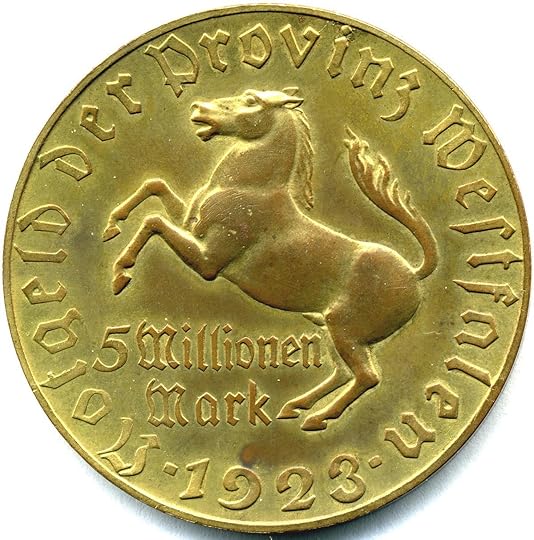
There were those who had money, those who didn’t have any; those who would have some, others who would never have any, but mostly they were all had. Says one character: ”I’ve discovered that ninety-nine per cent of mankind have to torment themselves about money; they think of it day and night, speak of it, spend it, save it, start anew—in short, money is the thing round which the world revolves.”.
###
”A girl and a man were sleeping on a narrow iron bed.” is the first sentence of this novel. The next paragraph informs the reader: ”This is Berlin, Georgenkirchstrasse, third courtyard, fourth floor, July 1923, at six o’clock in the morning. The dollar stands for the moment at 414,000 marks.” Every day at noon the exchange rate changes and every day the useless paper money is further devalued, and ”Quick, wife, here’s another 10,000 marks. Buy something with it—a pound of carrots, some cufflinks, the phonograph record “Yes, we have no bananas,” or a rope to hang ourselves with—it doesn’t matter what. Only be quick, run, don’t lose a second.” is the order of the day in most households. The young people asleep on the narrow bed are Petra (Peter) Ledig and her lover Wolfgang Pagel. Pagel is a gambler and whatever money they have (plus what they can pawn) is spent on the gaming tables. At this stage of their relationship Petra is very submissive, and simply sits around waiting for her lover to return to the boarding house with good news, or more frequently bad news about further losses. ”As with all gamblers, Wolfgang Pagel was firmly convinced that what he was doing was not real gambling and “did not count.”” Everything that can be pawned is quickly taken to the pawnbroker. What Pagel doesn’t yet realise is that Petra loves him, not money, and she literally allows him to pawn the clothes off her body. Hans Fallada transports the reader to the gaming table and ramps up the tension as Pagel plays hand after hand and becomes ever further ensnared.
The second part of the novel finds Pagel in the country, away from gambling dens, working on the estate of a manor house rented by Rittmeister Joachim von Prackwitz-Neulohe. The owner of the estate is his stingy and spiteful father-in-Law. Fortunately for von Prackwitz he meets up with an old acquaintance, the very upright and efficient Herr von Studmann who does everything just so, and is described as being ”didactic and pedantic”, and Studmann is promptly employed to manage affairs on the Neulohe estate. Studmann carefully makes every useless banknote stretch whilst the father-in-law Herr von Teschow continues to find ways to squeeze money out of his son-in-law and to torment him. Studmann soon discovers that the country can easily be as stressful as the city. There are rough elements congregating in the forests and the word ”Putsch” is bandied about. Pagel has his own problems as he has to fulfill certain requirements before he can be reunited with his Petra. Eventually he also gets the measure of his employers, and he can’t help but wonder who is the better person. As per the Afterword by Thorsten Carstensen ”The end of the novel mirrors the beginning. One year has passed, it is once more summer in the city, and Wolfgang and Petra are lying in bed. And yet, the narrator informs us, “everything has become very different.””
There is a large cast of characters, most of them not very nice - starting from the precocious fifteen year old Vi right through to von Teschow and various other obnoxious people. A lot happens in the novel, and the reader can expect escaped prisoners, kidnapping, blackmail, murder and other iniquities. As the title of the novel indicates there are metaphorical wolves here; there is Wolfgang who gambles with wolves, there are wolves such as von Teschow who steal from their own families, there are other human wolves congregating in the forest, etc. and Hans Fallada frequently uses the word ‘wolf’. ”No, I swear it, I do not want to be better, I do not want to change myself. I was all right as I was, with teeth to bite, a wolf among wolves.” He paints a picture of depravity during this period of hyper inflation in the Weimar Republic (1918-1933) when US$1 was worth hundreds of thousands, then millions, then billions of German Marks. ””What are we working for?” the people asked. “What are we living for? The world is coming to an end, everything is falling to pieces. Let us be gay and forget our shame, before we depart this world.” Thus they thought, spoke, and behaved.” As a result the police station was packed with people being processed for one or more of the following:
“Assault.
Immorality.
Unnatural vice.
Petty larceny.
Pocket-picking.
Housebreaking.
Robbing drunks.
Begging.
Street robbery.
Illegal possession of firearms.
Cheating.
Illegal gambling.
Receiving.
Passing of counterfeit money.
Drug-trafficking.
Procuring, trivial and serious cases of.
Blackmail.
Living on immoral earnings.”
###
“Was everybody mad then? Was everybody diseased? Was this inflation some plague carried in the atmosphere, which everyone caught?”
“In those October days the dollar rose from 242,000,000 marks to 73,000,000,000. Hunger crept through the entire country, followed by influenza. Unprecedented despair seized the people; every pound of potatoes was a fence between them and death.”
“He propped his head in his hands; the wilderness of figures was sickening; there was something unclean in this parade of ever more astronomical numbers. Every small man a millionaire—but all we millionaires would yet starve!”
“This is an ingenious, entirely modern postwar invention; they rob you of one-half of the money in your pocket without touching the pocket or the money.”
“But it all happened so quickly, without warning; nothing new came into her life, only the old went away, constantly went away. It was like sitting on an ice floe from which piece after piece splits off until there is nothing left.”
“Holding his wineglass by the stem he turned it round and round, as if examining the color of the port. On his tongue was no taste of wine; only of bitterness and ashes … the bitterness and ashes of a whole life.”
“Man against man, wolf against wolves, he must make his decision if he was to respect himself.”
“She used her religion to worm herself into people. She was like a maggot, living on the decomposed offal of other existences.”
“”Well, well!” grinned the old gentleman, extremely pleased that someone had been caught out (for there was nothing in life he esteemed so highly as swindling a person properly).”
“His forehead was dripping with sweat, and his tone became so sincere and ingenuous that it smelled of lies and deceit for ten miles against the wind.”
There were those who had money, those who didn’t have any; those who would have some, others who would never have any, but mostly they were all had. Says one character: ”I’ve discovered that ninety-nine per cent of mankind have to torment themselves about money; they think of it day and night, speak of it, spend it, save it, start anew—in short, money is the thing round which the world revolves.”.
###
”A girl and a man were sleeping on a narrow iron bed.” is the first sentence of this novel. The next paragraph informs the reader: ”This is Berlin, Georgenkirchstrasse, third courtyard, fourth floor, July 1923, at six o’clock in the morning. The dollar stands for the moment at 414,000 marks.” Every day at noon the exchange rate changes and every day the useless paper money is further devalued, and ”Quick, wife, here’s another 10,000 marks. Buy something with it—a pound of carrots, some cufflinks, the phonograph record “Yes, we have no bananas,” or a rope to hang ourselves with—it doesn’t matter what. Only be quick, run, don’t lose a second.” is the order of the day in most households. The young people asleep on the narrow bed are Petra (Peter) Ledig and her lover Wolfgang Pagel. Pagel is a gambler and whatever money they have (plus what they can pawn) is spent on the gaming tables. At this stage of their relationship Petra is very submissive, and simply sits around waiting for her lover to return to the boarding house with good news, or more frequently bad news about further losses. ”As with all gamblers, Wolfgang Pagel was firmly convinced that what he was doing was not real gambling and “did not count.”” Everything that can be pawned is quickly taken to the pawnbroker. What Pagel doesn’t yet realise is that Petra loves him, not money, and she literally allows him to pawn the clothes off her body. Hans Fallada transports the reader to the gaming table and ramps up the tension as Pagel plays hand after hand and becomes ever further ensnared.
The second part of the novel finds Pagel in the country, away from gambling dens, working on the estate of a manor house rented by Rittmeister Joachim von Prackwitz-Neulohe. The owner of the estate is his stingy and spiteful father-in-Law. Fortunately for von Prackwitz he meets up with an old acquaintance, the very upright and efficient Herr von Studmann who does everything just so, and is described as being ”didactic and pedantic”, and Studmann is promptly employed to manage affairs on the Neulohe estate. Studmann carefully makes every useless banknote stretch whilst the father-in-law Herr von Teschow continues to find ways to squeeze money out of his son-in-law and to torment him. Studmann soon discovers that the country can easily be as stressful as the city. There are rough elements congregating in the forests and the word ”Putsch” is bandied about. Pagel has his own problems as he has to fulfill certain requirements before he can be reunited with his Petra. Eventually he also gets the measure of his employers, and he can’t help but wonder who is the better person. As per the Afterword by Thorsten Carstensen ”The end of the novel mirrors the beginning. One year has passed, it is once more summer in the city, and Wolfgang and Petra are lying in bed. And yet, the narrator informs us, “everything has become very different.””
There is a large cast of characters, most of them not very nice - starting from the precocious fifteen year old Vi right through to von Teschow and various other obnoxious people. A lot happens in the novel, and the reader can expect escaped prisoners, kidnapping, blackmail, murder and other iniquities. As the title of the novel indicates there are metaphorical wolves here; there is Wolfgang who gambles with wolves, there are wolves such as von Teschow who steal from their own families, there are other human wolves congregating in the forest, etc. and Hans Fallada frequently uses the word ‘wolf’. ”No, I swear it, I do not want to be better, I do not want to change myself. I was all right as I was, with teeth to bite, a wolf among wolves.” He paints a picture of depravity during this period of hyper inflation in the Weimar Republic (1918-1933) when US$1 was worth hundreds of thousands, then millions, then billions of German Marks. ””What are we working for?” the people asked. “What are we living for? The world is coming to an end, everything is falling to pieces. Let us be gay and forget our shame, before we depart this world.” Thus they thought, spoke, and behaved.” As a result the police station was packed with people being processed for one or more of the following:
“Assault.
Immorality.
Unnatural vice.
Petty larceny.
Pocket-picking.
Housebreaking.
Robbing drunks.
Begging.
Street robbery.
Illegal possession of firearms.
Cheating.
Illegal gambling.
Receiving.
Passing of counterfeit money.
Drug-trafficking.
Procuring, trivial and serious cases of.
Blackmail.
Living on immoral earnings.”
###
“Was everybody mad then? Was everybody diseased? Was this inflation some plague carried in the atmosphere, which everyone caught?”
“In those October days the dollar rose from 242,000,000 marks to 73,000,000,000. Hunger crept through the entire country, followed by influenza. Unprecedented despair seized the people; every pound of potatoes was a fence between them and death.”
“He propped his head in his hands; the wilderness of figures was sickening; there was something unclean in this parade of ever more astronomical numbers. Every small man a millionaire—but all we millionaires would yet starve!”
“This is an ingenious, entirely modern postwar invention; they rob you of one-half of the money in your pocket without touching the pocket or the money.”
“But it all happened so quickly, without warning; nothing new came into her life, only the old went away, constantly went away. It was like sitting on an ice floe from which piece after piece splits off until there is nothing left.”
“Holding his wineglass by the stem he turned it round and round, as if examining the color of the port. On his tongue was no taste of wine; only of bitterness and ashes … the bitterness and ashes of a whole life.”
“Man against man, wolf against wolves, he must make his decision if he was to respect himself.”
“She used her religion to worm herself into people. She was like a maggot, living on the decomposed offal of other existences.”
“”Well, well!” grinned the old gentleman, extremely pleased that someone had been caught out (for there was nothing in life he esteemed so highly as swindling a person properly).”
“His forehead was dripping with sweat, and his tone became so sincere and ingenuous that it smelled of lies and deceit for ten miles against the wind.”

August 5, 2022
Петра Ледик, необразованная продавщица, и Вольфганг Пагель, портупей-юнкер в отставке, человек без доходов, игрок, отрицающий свою зависимость, живут на средства от игры. Не надо быть провидцем, чтобы ожидать, что он проиграется в пух и прах, проиграется так, что ему придется продать даже одежду Петры. Будучи эгоистичным и безответственным, он не предпринимает никаких серьезных попыток вызволить ее из тюрьмы.
В романе все мысли так или иначе вьются вокруг денег.
В этот период, в послевоенной Германии свирепствовала инфляция, деньги мгновенно превращались в кучу бесполезной бумаги. Мы жили при гиперинфляции, это способ обесценить обязательства правительств, довольно безответственный, надо отметить, но позволяющий правительству сильно манипулировать бюджетом и обязательствами перед населением, и мгновенно обогащаться отдельным дельцам. Да и сейчас мировая инфляция бьёт рекорды,и здесь причиной инфляции является война.
Фаллада показывает нам целый срез общества, от аристократов, коммерсантов, бывших военных, вернувшихся с Первой мировой войны, крестьян и слуг до игроков, проституток, мошенников, заключённых тюрем, полицейских, фашистских заговорщиков. Все страдают от инфляции, и даже иногда голода, потому что все обесценивается. Каждый по-разному проходит испытания, которые создаёт инфляция. Это книга об отношении людей к деньгам в условиях кризиса. Интересно, что в романе расчеты не перешли на условные единицы или более крепкую валюту, и чтобы обезопасить себя от падения курса цены фиксировали натуральными показателями, например, центнерами ржи.
"Это так просто быть добрым и порядочным", - думает Пагель в конце книги.
Символически Пагель сжигает последнюю купюру, на которую он собирался купить сигарет.
В общем, Пагель постепенно перерождается, как личность, и из лудомана, отрицающего зависимость, он становится добропорядочным гражданином, поступает на медицинский, чтобы стать врачом-психиатром, находит Петру и женится на ней. Я не могу судить о том, возможно ли самостоятельно справиться с зависимостью. Фаллада хорошо описал чувства игрока, я даже думаю, может он тоже страдал лудоманией?
В романе все мысли так или иначе вьются вокруг денег.
В этот период, в послевоенной Германии свирепствовала инфляция, деньги мгновенно превращались в кучу бесполезной бумаги. Мы жили при гиперинфляции, это способ обесценить обязательства правительств, довольно безответственный, надо отметить, но позволяющий правительству сильно манипулировать бюджетом и обязательствами перед населением, и мгновенно обогащаться отдельным дельцам. Да и сейчас мировая инфляция бьёт рекорды,и здесь причиной инфляции является война.
Фаллада показывает нам целый срез общества, от аристократов, коммерсантов, бывших военных, вернувшихся с Первой мировой войны, крестьян и слуг до игроков, проституток, мошенников, заключённых тюрем, полицейских, фашистских заговорщиков. Все страдают от инфляции, и даже иногда голода, потому что все обесценивается. Каждый по-разному проходит испытания, которые создаёт инфляция. Это книга об отношении людей к деньгам в условиях кризиса. Интересно, что в романе расчеты не перешли на условные единицы или более крепкую валюту, и чтобы обезопасить себя от падения курса цены фиксировали натуральными показателями, например, центнерами ржи.
"Это так просто быть добрым и порядочным", - думает Пагель в конце книги.
Символически Пагель сжигает последнюю купюру, на которую он собирался купить сигарет.
В общем, Пагель постепенно перерождается, как личность, и из лудомана, отрицающего зависимость, он становится добропорядочным гражданином, поступает на медицинский, чтобы стать врачом-психиатром, находит Петру и женится на ней. Я не могу судить о том, возможно ли самостоятельно справиться с зависимостью. Фаллада хорошо описал чувства игрока, я даже думаю, может он тоже страдал лудоманией?

March 26, 2022
Στο πρώτο μέρος του βιβλίου του υπερταλαντούχου
Χανς Φάλαντα, «λύκος ανάμεσα σε λύκους», η ιστορία μας λαμβάνει χώρα στην πόλη του Βερολίνου και ο χρόνος αφήγησης καλύπτει μόνο ένα εικοσιτετράωρο.
Μια εμβληματική ιστορική μυθοπλασία που εξιστορεί με εξαιρετική λογοτεχνική ενάργεια την περιγραφή των παθών στη Γερμανία, το καλοκαίρι και το φθινόπωρο του 1923.
Βρισκόμαστε στην πολιτική περίοδο της Δημοκρατίας της Βαϊμάρης, τότε που ο αρρωστημένος υπερπληθωρισμός αναπτύσσεται, γέννημα θρέμμα της οικονομικής κρίσης, μιας κατάστασης απελπισίας και απόγνωσης που με τη σειρά της φέρνει το οικονομικό κραχ του 1929 και την άνοδο του Χίτλερ στην εξουσία.
Ο Φάλαντα περιγράφει όπως πάντα, με αριστοτεχνική πρόζα και χτίζει χαρακτήρες μέσα απο κεντρικούς ήρωες και δορυφορικές σε αυτούς δευτερεύουσες μα αξιοσημείωτες προσωπικότητες.
Ένα βασανιστικό και σαρωτικά άγριο έπος που ζωγραφίζει την κατάρρευση της γερμανικής οικονομίας μετά την ήττα του Α’ΠΠ και την εξευτελιστική για αυτούς Συνθήκη των Βερσαλλιών.
Οι κοινωνικές αναταραχές και οι πληγές που κακοφορμίζουν σε ψυχές, μυαλά και σώματα, οδηγούν τον λαό σε ένδεια, ανέχεια, απελπιστική φτώχεια, ανεργία, πόνο, πείνα, παράνομες πράξεις χαμηλού ηθικού αναστήματος που πολλαπλασιάζονται με σκοπό την εξασφάλιση κάποιων υλικών αγαθών. Ναρκωτικά, όπλα, εγκληματικότητα και χάος.
Οι τρεις βασικοί μας πρωταγωνιστές,είναι στρατιωτικοί που πολέμησαν στο ίδιο σύνταγμα ιππικού κατά τη διάρκεια του Α’ΠΠ.
Και όσο κι αν κατέρρεε η Γερμανία έπρεπε να πληρώσει. Ο κόσμος δεν το διάβαζε μονο στις εφημερίδες μα το ένιωθε. Κάθε μαρτύριο που έπρεπε να υποστούν γίνονταν συστατικό της ζωής τους, μπόλιαζε τα όνειρα τους, καθόριζε τον ύπνο και τον ξυπνο τους.
Το φαγητό τους, τις ανάγκες τους, τις διαπροσωπικές τους σχέσεις.
Απελπισμένος λαός, παράλογη, γεμάτη τρέλα και σχιζοφρενικές αντιδράσεις εποχή.
Καλή ανάγνωση.
Πολλούς και σεμνούς ασπασμούς.
Χανς Φάλαντα, «λύκος ανάμεσα σε λύκους», η ιστορία μας λαμβάνει χώρα στην πόλη του Βερολίνου και ο χρόνος αφήγησης καλύπτει μόνο ένα εικοσιτετράωρο.
Μια εμβληματική ιστορική μυθοπλασία που εξιστορεί με εξαιρετική λογοτεχνική ενάργεια την περιγραφή των παθών στη Γερμανία, το καλοκαίρι και το φθινόπωρο του 1923.
Βρισκόμαστε στην πολιτική περίοδο της Δημοκρατίας της Βαϊμάρης, τότε που ο αρρωστημένος υπερπληθωρισμός αναπτύσσεται, γέννημα θρέμμα της οικονομικής κρίσης, μιας κατάστασης απελπισίας και απόγνωσης που με τη σειρά της φέρνει το οικονομικό κραχ του 1929 και την άνοδο του Χίτλερ στην εξουσία.
Ο Φάλαντα περιγράφει όπως πάντα, με αριστοτεχνική πρόζα και χτίζει χαρακτήρες μέσα απο κεντρικούς ήρωες και δορυφορικές σε αυτούς δευτερεύουσες μα αξιοσημείωτες προσωπικότητες.
Ένα βασανιστικό και σαρωτικά άγριο έπος που ζωγραφίζει την κατάρρευση της γερμανικής οικονομίας μετά την ήττα του Α’ΠΠ και την εξευτελιστική για αυτούς Συνθήκη των Βερσαλλιών.
Οι κοινωνικές αναταραχές και οι πληγές που κακοφορμίζουν σε ψυχές, μυαλά και σώματα, οδηγούν τον λαό σε ένδεια, ανέχεια, απελπιστική φτώχεια, ανεργία, πόνο, πείνα, παράνομες πράξεις χαμηλού ηθικού αναστήματος που πολλαπλασιάζονται με σκοπό την εξασφάλιση κάποιων υλικών αγαθών. Ναρκωτικά, όπλα, εγκληματικότητα και χάος.
Οι τρεις βασικοί μας πρωταγωνιστές,είναι στρατιωτικοί που πολέμησαν στο ίδιο σύνταγμα ιππικού κατά τη διάρκεια του Α’ΠΠ.
Και όσο κι αν κατέρρεε η Γερμανία έπρεπε να πληρώσει. Ο κόσμος δεν το διάβαζε μονο στις εφημερίδες μα το ένιωθε. Κάθε μαρτύριο που έπρεπε να υποστούν γίνονταν συστατικό της ζωής τους, μπόλιαζε τα όνειρα τους, καθόριζε τον ύπνο και τον ξυπνο τους.
Το φαγητό τους, τις ανάγκες τους, τις διαπροσωπικές τους σχέσεις.
Απελπισμένος λαός, παράλογη, γεμάτη τρέλα και σχιζοφρενικές αντιδράσεις εποχή.
Καλή ανάγνωση.
Πολλούς και σεμνούς ασπασμούς.

February 27, 2021
Ο Hans Fallada όπως με το Και τώρα, ανθρωπάκο; μου πρόσφερε μια Γλυκιά Μελαγχολία σε ένα σκοτεινό πιάτο.
Βερολίνο 1923. Η ατμόσφαιρα σκοτεινή, μίζερη, χυδαία και αμαρτωλή, γίνεται ένα με την διάθεση των ανθρώπων. Ο συγγραφέας περιγράφει ωμά μια εποχή που η ελπίδα φαίνεται να μην υπάρχει πουθενά.
Σε κάθε γωνιά της πόλης παραμονεύει και ένα πάθος. Μια παράνομη λέσχη τζόγου εδώ, γυναίκες που πωλούν το σώμα τους παρακάτω.
Οι ηθικές αξίες φαίνονται και αυτές επηρεασμένες από τον σιωπηλό πρωταγωνιστή αυτού του βιβλίου, τον Υπερπληθυσμό.
...
Στην αρχή, ο Hans Fallada παρουσιάζει τους βασικούς χαρακτήρες του βιβλίου, όλοι τους σχεδόν παραδομένοι στα πάθη τους και στις ορμές τους. Μερικοί, συνηθισμένοι στην παρακμή φαίνονται απαθείς απέναντι στην περαιτέρω πτώση. Άλλοι καταναλώνουν λαίμαργα τις ηδονές τους χωρίς να επιδιώκουν κάποιο είδος κορεσμού από αυτές.
Και ξαφνικά επαρχεία. Ένα τσιφλίκι, μια οικογένεια, ο Υπερπληθωρισμός και το ένστικτο της επιβίωσης. Όλοι οι χαρακτήρες που γνώρισες στον 'Α Τόμο πλέον μαζί, συγκεντρωμένοι στον ίδιο χώρο. Πάθη, πόθοι, παρορμητισμοί αλληλοεπιδρούν μεταξύ τους.
Ο Hans Fallada με κέρδισε με το ύφος του. Κάνει κάτι σκοτεινό και μαύρο να φαίνεται τόσο γοητευτικό.
Το βιβλίο φαντάζει κρύο. Οι ήρωες ψυχροί. Η ατμόσφαιρα που αποπνέει από τις σελίδες του, παγωμένη. Επιζητάς τις ελάχιστες ζεστές στιγμές που σου προσφέρει αλλά τα δάχτυλα σου ανυπομονούν να ξαναπαγώσουν.
Υπέροχη αναγνωστική εμπειρία!
Βερολίνο 1923. Η ατμόσφαιρα σκοτεινή, μίζερη, χυδαία και αμαρτωλή, γίνεται ένα με την διάθεση των ανθρώπων. Ο συγγραφέας περιγράφει ωμά μια εποχή που η ελπίδα φαίνεται να μην υπάρχει πουθενά.
Σε κάθε γωνιά της πόλης παραμονεύει και ένα πάθος. Μια παράνομη λέσχη τζόγου εδώ, γυναίκες που πωλούν το σώμα τους παρακάτω.
Οι ηθικές αξίες φαίνονται και αυτές επηρεασμένες από τον σιωπηλό πρωταγωνιστή αυτού του βιβλίου, τον Υπερπληθυσμό.
...
Στην αρχή, ο Hans Fallada παρουσιάζει τους βασικούς χαρακτήρες του βιβλίου, όλοι τους σχεδόν παραδομένοι στα πάθη τους και στις ορμές τους. Μερικοί, συνηθισμένοι στην παρακμή φαίνονται απαθείς απέναντι στην περαιτέρω πτώση. Άλλοι καταναλώνουν λαίμαργα τις ηδονές τους χωρίς να επιδιώκουν κάποιο είδος κορεσμού από αυτές.
Και ξαφνικά επαρχεία. Ένα τσιφλίκι, μια οικογένεια, ο Υπερπληθωρισμός και το ένστικτο της επιβίωσης. Όλοι οι χαρακτήρες που γνώρισες στον 'Α Τόμο πλέον μαζί, συγκεντρωμένοι στον ίδιο χώρο. Πάθη, πόθοι, παρορμητισμοί αλληλοεπιδρούν μεταξύ τους.
Ο Hans Fallada με κέρδισε με το ύφος του. Κάνει κάτι σκοτεινό και μαύρο να φαίνεται τόσο γοητευτικό.
Το βιβλίο φαντάζει κρύο. Οι ήρωες ψυχροί. Η ατμόσφαιρα που αποπνέει από τις σελίδες του, παγωμένη. Επιζητάς τις ελάχιστες ζεστές στιγμές που σου προσφέρει αλλά τα δάχτυλα σου ανυπομονούν να ξαναπαγώσουν.
Υπέροχη αναγνωστική εμπειρία!

March 22, 2022
Διαβάζεις μερικά βιβλία και μετά βλέπεις ειδήσεις και μετά κάθεσαι με τον καφέ σου και ένα άλλο βιβλίο στο χέρι σκεπτόμενος πως δεν θα αλλάξει ποτέ τίποτα.
Δεν ξέρω αν είναι είναι το αριστούργημα που λένε, ξέρω όμως πως αυτό που αποτυπώνεται είναι τρομακτικά αληθινό.
Δεν ξέρω αν είναι είναι το αριστούργημα που λένε, ξέρω όμως πως αυτό που αποτυπώνεται είναι τρομακτικά αληθινό.

October 11, 2010
OMG, I never reviewed this book? Bad Helen!
This was an incredibly important read for me. It's a story of life in Germany running up to World War 2, told by a master of realism.
It's shortly after World War 1. Money is worthless, being devalued by the hour; there are tales of men pushing a wheelbarrow full of money to the store to buy a loaf of bread. Whatever sum you agreed to work for at the beginning of the day won't buy you a quart of milk by the end of the day.
Wolf, one of the lucky young veterans who survived the war, is a handsome, amiable and shiftless young man, addicted to the thrill of gambling in the way that drinkers are addicted to alcohol, and drug addicts are addicted to heroin, habits that Hans Fallada knew very well. The wisest thing Wolf does is to marry Petra, a sweet, lovely and clear-headed young woman from the working class, who goes to bed with Wolf for the money, a desperate thing that many hungry and impoverished women did in Germany after World War 1.
Fallada writes books that are tapestries, several connected stories weaving together into a colorful and gorgeously textured whole. Setting the story into motion is one fateful event that cascades into disaster. Wolf dreams of a lucky streak, on a day that he has a huge pot of money so that he can keep playing on and on. With the rent due, and feeling lucky, Wolf pawns his wife's clothing and steals a valuable painting from his mother's house to sell for a stake; and when the police bust the illegal casino, he loses everything. When the rent goes unpaid, his pretty young wife is turned out onto the street without her clothes, and she is arrested as a streetwalker. His angry and saddened mother turns him away, taking away his last support. Wolf loses everything.
Fortunately, he runs into old army buddies, one of whom is running a valuable estate/farm into the ground and is badly in need of a staff he can trust. Wolf is offered the job of bailiff, or farm manager, managing the books and the agricultural production of the manor house.
Wolf heals himself while living in the country, away from the temptations of the city. But one of the pleasures of this book is the way it plays with cliches; corruption thrives in this pastoral paradise. Militia men agitate, corrupting locals and hoping to overthrow the elected government; greedy villagers cheat whoever they can. This is a relentlessly realistic book, and yet, in the end, it is still very much about love.
There are too many themes and threads to mention here, including a surprisingly feminist storyline. Wolf Among Wolves was written in 1938, and though they are never mentioned, you feel the ominous stomp of stormtroopers boots ringing through every chapter. I learned a great deal about pre-World War 2 Germany from the book, and what the Germans were struggling to recover from when Hitler offered them his deadly cure.
This was an incredibly important read for me. It's a story of life in Germany running up to World War 2, told by a master of realism.
It's shortly after World War 1. Money is worthless, being devalued by the hour; there are tales of men pushing a wheelbarrow full of money to the store to buy a loaf of bread. Whatever sum you agreed to work for at the beginning of the day won't buy you a quart of milk by the end of the day.
Wolf, one of the lucky young veterans who survived the war, is a handsome, amiable and shiftless young man, addicted to the thrill of gambling in the way that drinkers are addicted to alcohol, and drug addicts are addicted to heroin, habits that Hans Fallada knew very well. The wisest thing Wolf does is to marry Petra, a sweet, lovely and clear-headed young woman from the working class, who goes to bed with Wolf for the money, a desperate thing that many hungry and impoverished women did in Germany after World War 1.
Fallada writes books that are tapestries, several connected stories weaving together into a colorful and gorgeously textured whole. Setting the story into motion is one fateful event that cascades into disaster. Wolf dreams of a lucky streak, on a day that he has a huge pot of money so that he can keep playing on and on. With the rent due, and feeling lucky, Wolf pawns his wife's clothing and steals a valuable painting from his mother's house to sell for a stake; and when the police bust the illegal casino, he loses everything. When the rent goes unpaid, his pretty young wife is turned out onto the street without her clothes, and she is arrested as a streetwalker. His angry and saddened mother turns him away, taking away his last support. Wolf loses everything.
Fortunately, he runs into old army buddies, one of whom is running a valuable estate/farm into the ground and is badly in need of a staff he can trust. Wolf is offered the job of bailiff, or farm manager, managing the books and the agricultural production of the manor house.
Wolf heals himself while living in the country, away from the temptations of the city. But one of the pleasures of this book is the way it plays with cliches; corruption thrives in this pastoral paradise. Militia men agitate, corrupting locals and hoping to overthrow the elected government; greedy villagers cheat whoever they can. This is a relentlessly realistic book, and yet, in the end, it is still very much about love.
There are too many themes and threads to mention here, including a surprisingly feminist storyline. Wolf Among Wolves was written in 1938, and though they are never mentioned, you feel the ominous stomp of stormtroopers boots ringing through every chapter. I learned a great deal about pre-World War 2 Germany from the book, and what the Germans were struggling to recover from when Hitler offered them his deadly cure.

January 15, 2018
I've given this 5 stars and that's unusual. This is an excellent book and arguably Fallada's masterwork.
August 1, 2021
Λιτή και ρεαλιστική γραφή! Οι σελίδες "καταπίνονται" πανεύκολα!
Πάμε στο 2ο τόμο τώρα...
Πάμε στο 2ο τόμο τώρα...

January 13, 2021
3.5/5 - Γνώριμη η γραφή, το ύφος, η περίοδος από τα υπόλοιπα έργα του Fallada που έχουν μεταφραστεί στην ελληνική. Οι ίδες αρετές είναι εδώ. Μια μικρή δυσκολία (συγκριτικά με τα άλλα) να αφεθείς στο σκηνικό, να διεισδύσεις στους χαρακτήρες κ.λπ. Τον θέλουν τον χρόνο τους οι 807 σελίδες του α' τόμου και (οριακά) τον αξίζουν.


February 11, 2026
Thomas Mann feeling

November 11, 2011
Germany 1923: with exponential deflation, ever-rising poverty in the cities, and the French occupation of the Ruhr in the background, Fallada follows the fortunes of three ex-soldiers who had fought together in WWI but who now, like most of their countrymen, are struggling to make sense of the present state of chaos.
The soldiers move from hunger-, drink-, cocaine-, prostitution- and gambling-stricken Berlin to what they imagine will be a better life in the countryside, however their hopes are disappointed: around them, a downward spiral of recklessness, infatuation, envy and revenge takes its toll. In the surrounding countryside, disaffected soldiers are preparing a putsch against the government. Prisoners are let out of the prisons to gather the harvest. People with different political allegiances and ideologies roam the forests. Each of the three soldiers has to come to terms with his own demons, as he realizes that the courage which equipped him to be a hero during the war is of no use in this type of civilian life.
I won't say anything about the plot, just encourage you to read this novel, which is now avalable in a faithful translation, that reinstates the parts of the text that were dropped in the 1938 English translation.
As I read this novel, another author came to mind: John Maynard Keynes. In his 1919 book, The Economic Consequences of the Peace, he foresaw events that would take place in Germany, in only a few years, and Fallada's novel describes the coming true of Keynes's worst fears.
The soldiers move from hunger-, drink-, cocaine-, prostitution- and gambling-stricken Berlin to what they imagine will be a better life in the countryside, however their hopes are disappointed: around them, a downward spiral of recklessness, infatuation, envy and revenge takes its toll. In the surrounding countryside, disaffected soldiers are preparing a putsch against the government. Prisoners are let out of the prisons to gather the harvest. People with different political allegiances and ideologies roam the forests. Each of the three soldiers has to come to terms with his own demons, as he realizes that the courage which equipped him to be a hero during the war is of no use in this type of civilian life.
I won't say anything about the plot, just encourage you to read this novel, which is now avalable in a faithful translation, that reinstates the parts of the text that were dropped in the 1938 English translation.
As I read this novel, another author came to mind: John Maynard Keynes. In his 1919 book, The Economic Consequences of the Peace, he foresaw events that would take place in Germany, in only a few years, and Fallada's novel describes the coming true of Keynes's worst fears.

November 25, 2020
Birinci Dünya Savaşı sonrasında Almanya’nın yaşadığı hiperenflasyon dönemini tarih kitaplarında günlük oran vb. bilgilerle okumak mümkün fakat o döneminin insanını, çaresizliğini, tükenişini, içinde bulunduğu kaotik ortama rağmen yaşama güdüsünü hiçbir bilimsel yapıt Fallada’nın bu eserindeki gibi anlatamaz.
Küçük insanların yazarı Fallada, ‘büyük’ insanlarında günün sonunda nasıl küçüldüklerini; gittikçe değer kaybeden paranın yanında insan hayatının, onurun ve ahlak kavramının da paraya paralel olarak nasıl yok olduğunu anlatmış.
Bazı kitapları okuduğumda -çok dizi film takip eden biri olmasam da- koca bir sezonluk diziyi bitirmiş gibi hissediyorum kendimi. Kişileri görüyorum, mekanları, yolları. Bunu asla okuru sıkmadan, uzun betimlemelerle bunaltmadan yapmak büyük beceri. bence.
Yine, bir kitaba karakter olamayacak herkesin, ne yediğini ne içtiğini, evini, kızını, karısıyla ilişkisini, geçim derdini okuyabiliyoruz kitaplarında. Sadece ana karaktere odaklanıp, yanındakileri figür amacıyla kitabın orta sayfalarında kaybettiğimiz romanlara inat, yoldan geçen o sıradan adamın da hikayesinin sonunu öğreniyorsunuz. Çünkü Fallada’nın derdi bu, ben de onu bu yüzden çok seviyorum. Derdi küçük insanlar olan büyük yazar. Toprağı bol olsun.
Küçük insanların yazarı Fallada, ‘büyük’ insanlarında günün sonunda nasıl küçüldüklerini; gittikçe değer kaybeden paranın yanında insan hayatının, onurun ve ahlak kavramının da paraya paralel olarak nasıl yok olduğunu anlatmış.
Bazı kitapları okuduğumda -çok dizi film takip eden biri olmasam da- koca bir sezonluk diziyi bitirmiş gibi hissediyorum kendimi. Kişileri görüyorum, mekanları, yolları. Bunu asla okuru sıkmadan, uzun betimlemelerle bunaltmadan yapmak büyük beceri. bence.
Yine, bir kitaba karakter olamayacak herkesin, ne yediğini ne içtiğini, evini, kızını, karısıyla ilişkisini, geçim derdini okuyabiliyoruz kitaplarında. Sadece ana karaktere odaklanıp, yanındakileri figür amacıyla kitabın orta sayfalarında kaybettiğimiz romanlara inat, yoldan geçen o sıradan adamın da hikayesinin sonunu öğreniyorsunuz. Çünkü Fallada’nın derdi bu, ben de onu bu yüzden çok seviyorum. Derdi küçük insanlar olan büyük yazar. Toprağı bol olsun.

November 7, 2010
Second Reading: This is both panoramic and tightly focused. The book is, to me, slow to get started as Fallada introduces us to the lives of the large cast of characters. But his look at the characters individually is quite focused and sharp. Unlike many history books, which feel too distanced, this novel thrusts the reader right into the economic despair of 1923 Germany, with absurdly runaway inflation and a nation on the skids. Fallada's characters are distinct and individual, humanly full of foibles and good will. Believable. Little Man, What Now? and Every Man Dies Alone are much smaller in scale, though no less honest, and thus move more quickly. Fine fine work.
Like Every Man Dies Alone, this one is superb in depicting the lives of "ordinary" people in very unordinary times, the great inflation of 1923 in Germany, when virtually every German was a millionaire, but a loaf of bread might cost a hundred million marks. A large cast of characters can make things confusing, especially in the beginning, and this one doesn't have the incredible plot "hook" of EMDA, but still a very very fine book.
Like Every Man Dies Alone, this one is superb in depicting the lives of "ordinary" people in very unordinary times, the great inflation of 1923 in Germany, when virtually every German was a millionaire, but a loaf of bread might cost a hundred million marks. A large cast of characters can make things confusing, especially in the beginning, and this one doesn't have the incredible plot "hook" of EMDA, but still a very very fine book.

November 28, 2024
Bana kalırsa, Kurtlar Sofrasında; Büyük hikayelerin, küçük insanların, enflasyonun, sevginin, namuslu kalabilmenin, düştüğünde ayağa kalkıp devam edebilmenin, sabrın, insanın özünün hem kentte hem taşrada nasıl aynı kaldığının, bu statik duruma rağmen yine insanın nasıl değişebileceğinin romanı.
Hans Fallada müthiş bir yazar.
Hans Fallada müthiş bir yazar.
May 21, 2010
In his Philosophical Dictionary, Voltaire distinguished between history and fable. The former, he said, is "the recital of facts represented as true" whereas fable is "the recital of facts of facts represented as fiction." In terms of historiography, that is a fair distinction. In terms of grasping history, though, fiction may be as effective as a history book.
The recent revival of German novelist Hans Fallada's works is a case in point. Last year, his novel about personal integrity and resistance during the Nazi regime, Every Man Dies Alone , was first published in English. Publisher Melville House has now released the first unabridged English translation of Wolf Among Wolves . While Every Man Dies Alone was based on the true story of a working class couple in Berlin who mounted their own modest campaign of resistance by dropping postcards containing anti-Nazi and anti-Hitler messages throughout the city, Wolf Among Wolves takes an even closer look at the struggle for integrity and survival amid the post-World War I economic disaster that contributed to Hitler's rise to power.
Although first published in 1937 (with an abridged translation published in the U.S. the following year), the book is emblematic of the Neue Sachlichkeit ("New Objectivity") movement that arose in 1920s Germany. It was a school of artistic expression that "vividly depicted and excoriated the corruption, frantic pleasure seeking and general demoralisation of Germany following its defeat in the war and the ineffectual Weimar Republic which governed until the arrival in power of the Nazi Party in 1933." Using a highly descriptive approach tinged with reportage, Fallada looks beyond the broad causes of Germany's economic struggles to show its impact on a wide range of the German public. His characters served in the war or come from a variety of social classes, all struggling with finding or holding on to a place in a collapsing economy in 1923. Akin to a tolling bell, from the first page Wolf Among Wolves periodically details the value of the German mark in the rampant hyperinflation of the times. (In the roughly five months covered by the book, the number of marks it took to equal a U.S. dollar increased from 414,000 to 4.2 trillion.)
The copious detail with which Fallada -- the pen name of Rudolf Ditzen -- creates his characters and explores the dismay and decadence of German society is established at the outset. Just under half the nearly 800-page book deals only with July 26, 1923. The day is not notable in German history. It is a simply an average day Fallada uses to portray life at the time. He builds Wolf Among Wolves around Wolfgang Pagel, a former army second lieutenant and current inveterate gambler, his live-in girlfriend Petra, and his former military comrades, Rittmeister (Captain) Joachim von Prackwitz and Oberleutnant (Senior Lieutenant) Etzel von Studmann. Numerous other characters, most family members or individuals who work at the large farming estate von Prackwitz leases from his in-laws, make up the complete cast and several occasionally disappear for large portions of the book before returning. By focusing on the details of a particular day in several lives, this portion of the book portrays the decadence and decay of German society in its most vivid detail.
Describing the area around one of Berlin's major railway stations, Fallada writes that "to the dreariness of the facades, the evil smells, the misery of that barren stone desert, there was added a widespread shamelessness, the child of despair or indifference, lechery born of the itch to height a sense of living in a word which, in a mad rush, was carrying everyone toward an obscure fate." Shortly thereafter, in the Friedrichstrasse section of central Berlin, von Prackwitz comes across a bazaar-like setting full of prostitutes, both female and male, war-wounded beggars and drug addicts. The description of the area of central Berlin where Pagel and Petra live also helps explain the sex trade:
Yet even when the focus of the book -- and Pagel and von Studmann -- moves largely to von Prackwitz's rural estate, the impact of the failing economy remains a core element. There is not only the economic burden imposed by the Versailles Treaty but also the French occupation of Germany's industrial heartland, both contributing to even more political unrest and economic dislocation. When these macroeconomic factors are brought to the level of the individual it all sets the stage not only for an overarching love story but personal and political intrigue, the escape of prison inmates helping with the harvest and a failed putsch (coincidentally or not, just five weeks before the Beer Hall Putsch that led to the imprisonment during which Hitler wrote most of Mein Kampf). They also continue and bear out the theme suggested by the title -- virtually every character becomes a lone wolf at times, with self-preservation often taking precedence over the overall interests of the pack that is society. Some characters eventually raise themselves up; others descend further into chaos.
The second half of the book moves more briskly, although still not at a rapid pace. Pace seems to have been a primary motivation behind the abridgment of the 1938 English translation. In an Afterword, Thorsten Carstensen, who did the additional translations with Nicholas Jacobs, observes that many of the earlier omissions involved paragraphs that did not advance the plot but delved into characters' feelings or behavior. That could give rise to a criticism of the unabridged edition. Although the reader does not know which passages were restored, there are times the detail becomes almost too minute. Although the second half of the book does not contain as much detail, Fallada often uses foreshadowing at the end of various sections to keep the reader on task.
Unquestionably, the realistic detail of events and characters' psyches was key to making Every Man Dies Alone and The Drinker , Fallada's posthumously published novel about a businessman's descent into alcoholism, exceptional works. In Wolf Among Wolves that attention helps readers better understand the realities of life in Weimar Germany, even if it doesn't fully examine the causes. Still, even though there is benefit to reading the work as originally published, the continuing attention to seemingly minor points could perhaps dissuade modern readers from completing what is still a rewarding read, one which may take them further inside the times than a straightforward work of history.
(Originally posted at A Progressive on the Prairie)
The recent revival of German novelist Hans Fallada's works is a case in point. Last year, his novel about personal integrity and resistance during the Nazi regime, Every Man Dies Alone , was first published in English. Publisher Melville House has now released the first unabridged English translation of Wolf Among Wolves . While Every Man Dies Alone was based on the true story of a working class couple in Berlin who mounted their own modest campaign of resistance by dropping postcards containing anti-Nazi and anti-Hitler messages throughout the city, Wolf Among Wolves takes an even closer look at the struggle for integrity and survival amid the post-World War I economic disaster that contributed to Hitler's rise to power.
Although first published in 1937 (with an abridged translation published in the U.S. the following year), the book is emblematic of the Neue Sachlichkeit ("New Objectivity") movement that arose in 1920s Germany. It was a school of artistic expression that "vividly depicted and excoriated the corruption, frantic pleasure seeking and general demoralisation of Germany following its defeat in the war and the ineffectual Weimar Republic which governed until the arrival in power of the Nazi Party in 1933." Using a highly descriptive approach tinged with reportage, Fallada looks beyond the broad causes of Germany's economic struggles to show its impact on a wide range of the German public. His characters served in the war or come from a variety of social classes, all struggling with finding or holding on to a place in a collapsing economy in 1923. Akin to a tolling bell, from the first page Wolf Among Wolves periodically details the value of the German mark in the rampant hyperinflation of the times. (In the roughly five months covered by the book, the number of marks it took to equal a U.S. dollar increased from 414,000 to 4.2 trillion.)
The copious detail with which Fallada -- the pen name of Rudolf Ditzen -- creates his characters and explores the dismay and decadence of German society is established at the outset. Just under half the nearly 800-page book deals only with July 26, 1923. The day is not notable in German history. It is a simply an average day Fallada uses to portray life at the time. He builds Wolf Among Wolves around Wolfgang Pagel, a former army second lieutenant and current inveterate gambler, his live-in girlfriend Petra, and his former military comrades, Rittmeister (Captain) Joachim von Prackwitz and Oberleutnant (Senior Lieutenant) Etzel von Studmann. Numerous other characters, most family members or individuals who work at the large farming estate von Prackwitz leases from his in-laws, make up the complete cast and several occasionally disappear for large portions of the book before returning. By focusing on the details of a particular day in several lives, this portion of the book portrays the decadence and decay of German society in its most vivid detail.
Describing the area around one of Berlin's major railway stations, Fallada writes that "to the dreariness of the facades, the evil smells, the misery of that barren stone desert, there was added a widespread shamelessness, the child of despair or indifference, lechery born of the itch to height a sense of living in a word which, in a mad rush, was carrying everyone toward an obscure fate." Shortly thereafter, in the Friedrichstrasse section of central Berlin, von Prackwitz comes across a bazaar-like setting full of prostitutes, both female and male, war-wounded beggars and drug addicts. The description of the area of central Berlin where Pagel and Petra live also helps explain the sex trade:
It was a poor district in a starving age, and everywhere, at every hour of the day, stood women, girls, widows, miserable bodies rigged up in the most ridiculous rags, hunger and misery in their faces. To find a buyer for that miserable body was the last hope of war widows done out of their pensions; working-class women whose husbands, even the soberest and most industrious, were tricked out of their wages by every devaluation of the mark; girls, some almost children, who could no longer witness the misery of their younger brothers and sisters.
Yet even when the focus of the book -- and Pagel and von Studmann -- moves largely to von Prackwitz's rural estate, the impact of the failing economy remains a core element. There is not only the economic burden imposed by the Versailles Treaty but also the French occupation of Germany's industrial heartland, both contributing to even more political unrest and economic dislocation. When these macroeconomic factors are brought to the level of the individual it all sets the stage not only for an overarching love story but personal and political intrigue, the escape of prison inmates helping with the harvest and a failed putsch (coincidentally or not, just five weeks before the Beer Hall Putsch that led to the imprisonment during which Hitler wrote most of Mein Kampf). They also continue and bear out the theme suggested by the title -- virtually every character becomes a lone wolf at times, with self-preservation often taking precedence over the overall interests of the pack that is society. Some characters eventually raise themselves up; others descend further into chaos.
The second half of the book moves more briskly, although still not at a rapid pace. Pace seems to have been a primary motivation behind the abridgment of the 1938 English translation. In an Afterword, Thorsten Carstensen, who did the additional translations with Nicholas Jacobs, observes that many of the earlier omissions involved paragraphs that did not advance the plot but delved into characters' feelings or behavior. That could give rise to a criticism of the unabridged edition. Although the reader does not know which passages were restored, there are times the detail becomes almost too minute. Although the second half of the book does not contain as much detail, Fallada often uses foreshadowing at the end of various sections to keep the reader on task.
Unquestionably, the realistic detail of events and characters' psyches was key to making Every Man Dies Alone and The Drinker , Fallada's posthumously published novel about a businessman's descent into alcoholism, exceptional works. In Wolf Among Wolves that attention helps readers better understand the realities of life in Weimar Germany, even if it doesn't fully examine the causes. Still, even though there is benefit to reading the work as originally published, the continuing attention to seemingly minor points could perhaps dissuade modern readers from completing what is still a rewarding read, one which may take them further inside the times than a straightforward work of history.
(Originally posted at A Progressive on the Prairie)

January 31, 2014
Corruption and weakness in the German countryside.
The book treads lightly around political topics, unsurprising given that Fallada wrote it 1937 when the Nazis were in charge. The novel is set in 1923, during the Weimar Republic's period of rampant inflation, a sort of safe topic given that it was a period no one in Germany recalled fondly.
The novel is huge. Any one of the seemingly dozens of supporting characters could be the protagonist of their own novella. My favourites: Rittmeister Herr von Prackwitz, a Homer Simpson or Ignatius Reilly of the Weimar Republic who is doomed to failure and obliviousness, most the book's action stems from his inability/refusal to run a farming estate leased from his father-in-law; Black Meier, a farming bailiff turned rogue; Lieutenant Fritz, whose secret arms cache is known to everyone in the village and whose Putsch is doomed to failure; Kniebusch, the aging forester who just wants the respect due his age and a stable currency that would allow him even a sham of a retirement; Sophie, a scheming former handmaid who helps orchestrate her lover's escape from prison; The mad baron and the doctor in charge of him, I forget their names but their antics in Berlin and a Sanatorium are quite memorable.
I was a little bit disappointed that Petra and Studdman seemed to become less important characters over time. I'd have liked to see more of the Rag and Bones and Sanatorium businesses.
Perhaps my favourite scene in the entire novel is the Rittmeister's walk in the forest with his daughter, where they encounter the lieutenant. Each of the character's motives are completely at odds with the others, but they're all so wrapped up in themselves as to be unable to see what's going on. It's hilarious.
Also I can't help but wonder if the moralizing widow (or spinster?) who lives with the Geheimerat is a thinly-veiled self-criticism. She speaks mostly in parables and references to fables, and most people ignore her or don't take her seriously. Fallada had tried to avoid criticism and undue attention after the Nazi's rise to power by writing only fables and children's stories, which were never popular.
All in all, I think it's my second favourite Fallada novel, after Every Man Dies Alone.
The book treads lightly around political topics, unsurprising given that Fallada wrote it 1937 when the Nazis were in charge. The novel is set in 1923, during the Weimar Republic's period of rampant inflation, a sort of safe topic given that it was a period no one in Germany recalled fondly.
The novel is huge. Any one of the seemingly dozens of supporting characters could be the protagonist of their own novella. My favourites: Rittmeister Herr von Prackwitz, a Homer Simpson or Ignatius Reilly of the Weimar Republic who is doomed to failure and obliviousness, most the book's action stems from his inability/refusal to run a farming estate leased from his father-in-law; Black Meier, a farming bailiff turned rogue; Lieutenant Fritz, whose secret arms cache is known to everyone in the village and whose Putsch is doomed to failure; Kniebusch, the aging forester who just wants the respect due his age and a stable currency that would allow him even a sham of a retirement; Sophie, a scheming former handmaid who helps orchestrate her lover's escape from prison; The mad baron and the doctor in charge of him, I forget their names but their antics in Berlin and a Sanatorium are quite memorable.
I was a little bit disappointed that Petra and Studdman seemed to become less important characters over time. I'd have liked to see more of the Rag and Bones and Sanatorium businesses.
Perhaps my favourite scene in the entire novel is the Rittmeister's walk in the forest with his daughter, where they encounter the lieutenant. Each of the character's motives are completely at odds with the others, but they're all so wrapped up in themselves as to be unable to see what's going on. It's hilarious.
Also I can't help but wonder if the moralizing widow (or spinster?) who lives with the Geheimerat is a thinly-veiled self-criticism. She speaks mostly in parables and references to fables, and most people ignore her or don't take her seriously. Fallada had tried to avoid criticism and undue attention after the Nazi's rise to power by writing only fables and children's stories, which were never popular.
All in all, I think it's my second favourite Fallada novel, after Every Man Dies Alone.

June 20, 2022
Uzun bir okumanın sonunda, Fallada ile tanışma kitabım olan Kurtlar Sofrasında adlı eseri bitirmiş bulunuyorum. Evet, biraz uzun bir zaman oldu. Fakat belki de bu tip kitaplar bu şekilde zamana yayılmalı, araya farklı kitaplar koyarak okunmalı. Belki de ben kendime göre bir şey uyduruyorum :)
Kitabın sürükleyiciliği çok güzel. Sanki bir sahne seyreder gibi okuyorsunuz. Fakat bu sahnede sadece esas oğlan ve esas kız yok, bu sahnede herkes var. Bu herkesin hayatı ve herkesin değişimi. Yaşadığımız dönemde, temas ettiğimiz tüm insanlar gibi düşünün bunu.
Bu aslında bir süredir benim de aklımı kurcalayan bir konu. Şu an yaşadığımız dönemde bizle beraber olan, bu yolda bazen yan yana bazen alakasız noktalarda ilerleyen insanlar. Bizler bu dönemdeyiz. Öldüğümüzde hiç birimiz hatırlanmayacağız. Çünkü bizleri tanıyanlar da bir dönem sonra yok olacaklar. Tıpkı Fallada’nın bu kitapta yer verdiği insanlar gibi.
Sadece bu değil elbette. İnsanların değişimleri, güce ve paraya olan bakışları ve bu bakış açısının ne kadar çabuk değiştiğini göstermiş Fallada. Aslında bu insanların daha doğrusu toplumların özünde ne kadar ilkel, ne kadar bencil olabileceğini de gösteriyor. Medeniyetlerin en ufak bir gerilimle savaşması, sonrasında savaş esnasında ve sonrasında nasıl insanlıktan, merhametten ve sevgisen yoksun davrandıklarını görüyoruz.
Kurtlar Sofrasında’yı okurken okuduğum bir kaç tarih kitabı ile burada geçenlere baktığımda, ne kadar doğru ne kadar yerinde tespitlerinin olduğunu gördüm Fallada’nın. Kitabın esas güzel yanı, bu tespitleri size belli başlı bir kaç karakterle ya da olayla değil, çok daha fazla insanla ve olayla göstermesi. Sanki hayatın içinden gibi, bir film seyreder gibi. Çıkarımları yapmak size kalmış. Kısacası benim en sevdiğim üslup olan, bazı değerlendirmeleri okuyucuya serbest stilde bırakarak. Teşekkürler Fallada!
Kitabın sürükleyiciliği çok güzel. Sanki bir sahne seyreder gibi okuyorsunuz. Fakat bu sahnede sadece esas oğlan ve esas kız yok, bu sahnede herkes var. Bu herkesin hayatı ve herkesin değişimi. Yaşadığımız dönemde, temas ettiğimiz tüm insanlar gibi düşünün bunu.
Bu aslında bir süredir benim de aklımı kurcalayan bir konu. Şu an yaşadığımız dönemde bizle beraber olan, bu yolda bazen yan yana bazen alakasız noktalarda ilerleyen insanlar. Bizler bu dönemdeyiz. Öldüğümüzde hiç birimiz hatırlanmayacağız. Çünkü bizleri tanıyanlar da bir dönem sonra yok olacaklar. Tıpkı Fallada’nın bu kitapta yer verdiği insanlar gibi.
Sadece bu değil elbette. İnsanların değişimleri, güce ve paraya olan bakışları ve bu bakış açısının ne kadar çabuk değiştiğini göstermiş Fallada. Aslında bu insanların daha doğrusu toplumların özünde ne kadar ilkel, ne kadar bencil olabileceğini de gösteriyor. Medeniyetlerin en ufak bir gerilimle savaşması, sonrasında savaş esnasında ve sonrasında nasıl insanlıktan, merhametten ve sevgisen yoksun davrandıklarını görüyoruz.
Kurtlar Sofrasında’yı okurken okuduğum bir kaç tarih kitabı ile burada geçenlere baktığımda, ne kadar doğru ne kadar yerinde tespitlerinin olduğunu gördüm Fallada’nın. Kitabın esas güzel yanı, bu tespitleri size belli başlı bir kaç karakterle ya da olayla değil, çok daha fazla insanla ve olayla göstermesi. Sanki hayatın içinden gibi, bir film seyreder gibi. Çıkarımları yapmak size kalmış. Kısacası benim en sevdiğim üslup olan, bazı değerlendirmeleri okuyucuya serbest stilde bırakarak. Teşekkürler Fallada!

July 24, 2024
Okurken detaylarda boğulmamak için kendimi zorladığım bir başka Fallada romanı oldu Kurtlar Arasında. Hikaye 1923 yılı Temmuzunda başlıyor ve Alman ekonomisinin battığı beş aylık bir dönemde geçiyor.
I. Dünya savaşında birlikte savaşmış Emekli Yüzbaşı Von Prackwitz, Teğmen Von Studmann ve Pagel bir takım tesadüfler sonucu Berlin’de karşılaşır. Hepsinin de ciddi sorunları vardır. Üçü birlikte Von Prackwitz’in kayınpederinden kiralayıp işlettiği çiftlikteki sorunları çözmek için Neulohe’ye giderler. Çiftlikte bir çok sorun vardır. Buna Prackwitz’in ailevi sorunları da eklenince disiplinli Von Studmann ve çalışkan Pagel’in çabaları da kaçınılmaz sonu engelleyemez. Çiftlik yönetimi von Studmann için kendi kişiliğiyle bir kere daha yüzleşme anlamına gelirken Pagel içinse pozitif bir değişim söz konusu olur. Versay anlaşmasının ve özellikle Fransa’nın dayatmalarıyla altüst olan ekonomi sebebiyle halkın büyük bölümü açlıkla mücadele ederken, açgözlü bir azınlık ise bu durumdan fayda sağlayıp zenginleşmeye devam eder. Dış satımın durduğu ve ekonominin çökmekte olduğu 1923 yılı Temmuz ayında Amerikan dolarının geçici kuru 414 bin mark iken Kasım ayına gelindiğinde 420 milyon marka çıkar. Açlık ve grip salgını bütün ülkeye yayılır. Ekonomik durumdan ve Fransa hegemonyasından rahatsız eski askerler Reich ordusunu da arkalarına alarak darbe hazırlıkları yaparlar. Bu olayların ekseninde insanların yaşam mücadelesi anlatılıyor romanda.
Her Fallada romanı gibi çok fazla karakter ve detay var. Sonunda tüm detaylar hikayeye ve sona katkıda bulunsa da okurken yoruyor insanı. Fallada sıradan insanın kötülüğünü ve bencilliğini o kadar iyi anlatıyor ki Alman halkının Hitler ve Nazizm’in peşinden gitmeleri çok da aykırı gelmiyor artık. ePub versiyonundan okudum kitabı daha önce de belirttiğim sayfa çokluğu sebebiyle. Ve çok sayıda yazım ve imla hatası vardı.
I. Dünya savaşında birlikte savaşmış Emekli Yüzbaşı Von Prackwitz, Teğmen Von Studmann ve Pagel bir takım tesadüfler sonucu Berlin’de karşılaşır. Hepsinin de ciddi sorunları vardır. Üçü birlikte Von Prackwitz’in kayınpederinden kiralayıp işlettiği çiftlikteki sorunları çözmek için Neulohe’ye giderler. Çiftlikte bir çok sorun vardır. Buna Prackwitz’in ailevi sorunları da eklenince disiplinli Von Studmann ve çalışkan Pagel’in çabaları da kaçınılmaz sonu engelleyemez. Çiftlik yönetimi von Studmann için kendi kişiliğiyle bir kere daha yüzleşme anlamına gelirken Pagel içinse pozitif bir değişim söz konusu olur. Versay anlaşmasının ve özellikle Fransa’nın dayatmalarıyla altüst olan ekonomi sebebiyle halkın büyük bölümü açlıkla mücadele ederken, açgözlü bir azınlık ise bu durumdan fayda sağlayıp zenginleşmeye devam eder. Dış satımın durduğu ve ekonominin çökmekte olduğu 1923 yılı Temmuz ayında Amerikan dolarının geçici kuru 414 bin mark iken Kasım ayına gelindiğinde 420 milyon marka çıkar. Açlık ve grip salgını bütün ülkeye yayılır. Ekonomik durumdan ve Fransa hegemonyasından rahatsız eski askerler Reich ordusunu da arkalarına alarak darbe hazırlıkları yaparlar. Bu olayların ekseninde insanların yaşam mücadelesi anlatılıyor romanda.
Her Fallada romanı gibi çok fazla karakter ve detay var. Sonunda tüm detaylar hikayeye ve sona katkıda bulunsa da okurken yoruyor insanı. Fallada sıradan insanın kötülüğünü ve bencilliğini o kadar iyi anlatıyor ki Alman halkının Hitler ve Nazizm’in peşinden gitmeleri çok da aykırı gelmiyor artık. ePub versiyonundan okudum kitabı daha önce de belirttiğim sayfa çokluğu sebebiyle. Ve çok sayıda yazım ve imla hatası vardı.
June 5, 2009
This is the most amazing book ever. It vividly portrays unstable aura of the Weimar republic and the excesses of 1930s Berlin, but is above all a gripping story, about Wolf's fall from grace and decline into gambling addiction, and how he sets out to win back his girlfriend, who is pregnant unknown to him. Hard to describe the epic nature of this book - only to say it reminds me of the convoluted intrigue of a Dickens novel, with all the twists and turns, vivd detail and a rip-roaring story. Let me know if you get hold of it (from your library) and if you liked it!


April 27, 2013
This lengthy novel was Fallada’s magnum opus, published during the Nazi era, 1937. Having read all of his major works, I can list my ratings as follows. Individual critiques have been posted for each title.
“Little Man, What Now?” 4 stars. The futility of the hand-to-mouth existence of a white-collar worker and his wife in early 1930s Germany.
“The Drinker” 4 stars. An intense account of a successful, happily married businessman’s downward spiral into alcohol addiction, drunken altercations, infidelity, adultery, delusional episodes, leading to his arrest and eventual confinement to merciless penal institution.
“Small Circus” 2 stars. A confusing, ponderous, bloated, provincial novel. Factions, political intrigue, rivalries involving about seventy characters.
“Every Man Dies Alone” 5 stars. Grounded in the author's own experiences living under the heel of Hitler's divisively oppressive regime. This is fiction steeped in legitimate historical relevance. Published after WW2.
“Wolf Among Wolves” 3.5 stars. A tortuous tapestry of urban and rural life in post-war Germany, 1923-24. Economic realities are chaotic with inflation having gone out of control. The social fabric is disintegrating. The plot revolves around about a dozen characters, the chief one being Wolfgang Pagel, a young former soldier who survives by gambling. Later circumstances bring him to a rural estate where he becomes the financial manager of farm, forest and livestock operations.
Most of Fallada’s works follow the ‘new objectivity’ literary style represented by detailed accounts akin to journalistic reportage. Dozens of characters are introduced in the first half of the book. I found myself making notes to keep track of who was related to whom and what. It does take a bit of work to keep track since most are referred to by titles or positions and other times by their names. The second half introduces some interesting new characters as they are joined by those of the main ones from the first half. There is no tranquility in this novel. Conflicts, rivalries, intrigues and deceptions abound. Somehow it felt devoid of emotional drama.
Having great admiration for Fallada’s other works, I loyally continued reading but frankly much of it was a slog. I hoped things would sort themselves out. Mostly they did albeit some of them tragically. Was it worth it? I would only recommend this book to devout Fallada devotees or to history buffs interested in the German social and economic chaos of the 1920s, which engendered the appeal of the Nazi ideology and the rise of its despotic strongman Adolph Hitler in the 30s.
“Little Man, What Now?” 4 stars. The futility of the hand-to-mouth existence of a white-collar worker and his wife in early 1930s Germany.
“The Drinker” 4 stars. An intense account of a successful, happily married businessman’s downward spiral into alcohol addiction, drunken altercations, infidelity, adultery, delusional episodes, leading to his arrest and eventual confinement to merciless penal institution.
“Small Circus” 2 stars. A confusing, ponderous, bloated, provincial novel. Factions, political intrigue, rivalries involving about seventy characters.
“Every Man Dies Alone” 5 stars. Grounded in the author's own experiences living under the heel of Hitler's divisively oppressive regime. This is fiction steeped in legitimate historical relevance. Published after WW2.
“Wolf Among Wolves” 3.5 stars. A tortuous tapestry of urban and rural life in post-war Germany, 1923-24. Economic realities are chaotic with inflation having gone out of control. The social fabric is disintegrating. The plot revolves around about a dozen characters, the chief one being Wolfgang Pagel, a young former soldier who survives by gambling. Later circumstances bring him to a rural estate where he becomes the financial manager of farm, forest and livestock operations.
Most of Fallada’s works follow the ‘new objectivity’ literary style represented by detailed accounts akin to journalistic reportage. Dozens of characters are introduced in the first half of the book. I found myself making notes to keep track of who was related to whom and what. It does take a bit of work to keep track since most are referred to by titles or positions and other times by their names. The second half introduces some interesting new characters as they are joined by those of the main ones from the first half. There is no tranquility in this novel. Conflicts, rivalries, intrigues and deceptions abound. Somehow it felt devoid of emotional drama.
Having great admiration for Fallada’s other works, I loyally continued reading but frankly much of it was a slog. I hoped things would sort themselves out. Mostly they did albeit some of them tragically. Was it worth it? I would only recommend this book to devout Fallada devotees or to history buffs interested in the German social and economic chaos of the 1920s, which engendered the appeal of the Nazi ideology and the rise of its despotic strongman Adolph Hitler in the 30s.

December 11, 2023
Ken Follett --------------|---Vedat Türkali
Ken Follett ile Vedat Türkali arasında bir skala olsa bu kitap fena halde Vedat Türkali'nin herhangi bir eserine benzerdi. Hatta şunu net bir şekilde farkettim ki Vedat Bey Hans Fallada'dan fena halde etkilenmiş.
Neden? Çünkü Vedat Türkali gibi Hans Fallada da 3-4 sayfalık bitmek bilmeyen iç monologlar yaşayan karakterler yazmış. Karakterler bir türlü kendinden emin değil. Küçük dünyalarının esiri. 4 sayfa yapsam mı diye düşünüyor ve sonunda vazgeçiyor. Bu birkaç kez olabilir ancak her karakterde 1200 sayfa boyunca gerçekten okuyucuyu yoruyor.
Ve aynı Vedat Türkali karakterleri gibi her birinden ayrı ayrı nefret ettim. Halbuki (aslında) Hitler öncesini anlattığı dönem gerçekten çok okumaya değer. Ken Follett bu dönemleri yansıtırken karakterler üzerinden inanılmaz bir hikaye anlatıyor. Dolayısıyla karakterler önde, dönem fonda oluyor. Halbuki bu kitapta enflasyonun tavan yaptığı bu dönem önde ancak karakterler arkada.
Bu kitabın en önemli eksiği ise duyguydu. Durumların ağırlıkta olduğu ancak hiç plot-twist'in olmadığı bu kitapta hiçbir duyguyu hissedemedim, karakterlerle özdeşleşemedim. Böyle olduğunda da "ben niye bu kitabı okuyorum ki" oluyorum. Bir türlü ısınamıyorum.
Eğer bu kitapla Devlerin Düşüşü arasında kalırsanız mutlaka ve mutlaka Devlerin Düşüşü'nü okuyun. Karakter gelişimi hakkında ne demek istediğimi tam olarak anlayacaksınız.
Herkese keyifli okumalar!
Ken Follett ile Vedat Türkali arasında bir skala olsa bu kitap fena halde Vedat Türkali'nin herhangi bir eserine benzerdi. Hatta şunu net bir şekilde farkettim ki Vedat Bey Hans Fallada'dan fena halde etkilenmiş.
Neden? Çünkü Vedat Türkali gibi Hans Fallada da 3-4 sayfalık bitmek bilmeyen iç monologlar yaşayan karakterler yazmış. Karakterler bir türlü kendinden emin değil. Küçük dünyalarının esiri. 4 sayfa yapsam mı diye düşünüyor ve sonunda vazgeçiyor. Bu birkaç kez olabilir ancak her karakterde 1200 sayfa boyunca gerçekten okuyucuyu yoruyor.
Ve aynı Vedat Türkali karakterleri gibi her birinden ayrı ayrı nefret ettim. Halbuki (aslında) Hitler öncesini anlattığı dönem gerçekten çok okumaya değer. Ken Follett bu dönemleri yansıtırken karakterler üzerinden inanılmaz bir hikaye anlatıyor. Dolayısıyla karakterler önde, dönem fonda oluyor. Halbuki bu kitapta enflasyonun tavan yaptığı bu dönem önde ancak karakterler arkada.
Bu kitabın en önemli eksiği ise duyguydu. Durumların ağırlıkta olduğu ancak hiç plot-twist'in olmadığı bu kitapta hiçbir duyguyu hissedemedim, karakterlerle özdeşleşemedim. Böyle olduğunda da "ben niye bu kitabı okuyorum ki" oluyorum. Bir türlü ısınamıyorum.
Eğer bu kitapla Devlerin Düşüşü arasında kalırsanız mutlaka ve mutlaka Devlerin Düşüşü'nü okuyun. Karakter gelişimi hakkında ne demek istediğimi tam olarak anlayacaksınız.
Herkese keyifli okumalar!

March 1, 2013
Wolf Among Wolves is the fourth novel that I have read by Hans Fallada. It was his sixth book, published in 1938 just before the outbreak of World War II. It follows on from Fallada’s attempts to deflect unwelcome attention from the Nazis by writing children’s stories and other non-political material, and because it is a critique of the chaotic Weimar Republic, Goebbels was very pleased with it. Unfortunately for Fallada, far from deflecting Nazi attention, the success of this brilliant novel encouraged them to commission anti-Semitic and pro-Nazi works, and before long he capitulated to Nazi intimidation, earning him trenchant criticism from the likes of Thomas Mann who fled Germany rather than submit.
Although he later showed great courage by writing The Drinker while in gaol (see my review) and redeemed his reputation with Alone in Berlin (see my review) Fallada was vulnerable to intimidation because of his mental illness and drug addiction. He made numerous suicide attempts, and his unstable situation was exacerbated by his failed relationships, his ambiguous sexuality and of course by the onset of a brutal war. Yet it was these very vulnerabilities which make his writing so powerful. The authenticity of Wolf Among Wolves derives from Fallada’s own experience of weakness and folly, and of living in a society that was crumbling.
Wolf Among Wolves is completely absorbing. It’s nearly 800 pages long but it’s one of those books that make you want to drop everything else until you’ve finished reading it. Uncompromisingly realistic, it is written in what is called the New Objectivity style:
The New Objectivity … is a term used to characterize the attitude of public life in Weimar Germany as well as the art, literature, music, and architecture created to adapt to it. Rather than some goal of philosophical objectivity, it was meant to imply a turn towards practical engagement with the world—an all-business attitude, understood by Germans as intrinsically American: “The Neue Sachlichkeit is Americanism, cult of the objective, the hard fact, the predilection for functional work, professional conscientiousness, and usefulness.” (Wikipedia)
Not unlike the great classic Russian novels in the way that it depicts domestic concerns on a sprawling canvas, Wolf Among Wolves is a love story, a coming-of-age story and a story of flawed personalities struggling to cope in a society which was in economic and moral chaos. The love story is thwarted by the characters’ ignorance of themselves and each other, by their mutual immaturity and by the society which is crumbling all around them.
To read the rest of my review please visit http://anzlitlovers.com/2014/08/31/wo...
Although he later showed great courage by writing The Drinker while in gaol (see my review) and redeemed his reputation with Alone in Berlin (see my review) Fallada was vulnerable to intimidation because of his mental illness and drug addiction. He made numerous suicide attempts, and his unstable situation was exacerbated by his failed relationships, his ambiguous sexuality and of course by the onset of a brutal war. Yet it was these very vulnerabilities which make his writing so powerful. The authenticity of Wolf Among Wolves derives from Fallada’s own experience of weakness and folly, and of living in a society that was crumbling.
Wolf Among Wolves is completely absorbing. It’s nearly 800 pages long but it’s one of those books that make you want to drop everything else until you’ve finished reading it. Uncompromisingly realistic, it is written in what is called the New Objectivity style:
The New Objectivity … is a term used to characterize the attitude of public life in Weimar Germany as well as the art, literature, music, and architecture created to adapt to it. Rather than some goal of philosophical objectivity, it was meant to imply a turn towards practical engagement with the world—an all-business attitude, understood by Germans as intrinsically American: “The Neue Sachlichkeit is Americanism, cult of the objective, the hard fact, the predilection for functional work, professional conscientiousness, and usefulness.” (Wikipedia)
Not unlike the great classic Russian novels in the way that it depicts domestic concerns on a sprawling canvas, Wolf Among Wolves is a love story, a coming-of-age story and a story of flawed personalities struggling to cope in a society which was in economic and moral chaos. The love story is thwarted by the characters’ ignorance of themselves and each other, by their mutual immaturity and by the society which is crumbling all around them.
To read the rest of my review please visit http://anzlitlovers.com/2014/08/31/wo...

September 24, 2021
Ενδιαφέρουσα αν και πολλές φορές έντονα περιφραστική αφήγηση !
Θέλει υπομονή καλή διάθεση και χρόνο για να το διαβάσεις !
Έντονο το στοιχείο του υποτιμημένου Μάρκου της Γερμανίας και της επίπτωσης του στις συμπεριφορές των ανθρώπων
Ίσως συνεχίσω με τον Β τόμο …..
Θέλει υπομονή καλή διάθεση και χρόνο για να το διαβάσεις !
Έντονο το στοιχείο του υποτιμημένου Μάρκου της Γερμανίας και της επίπτωσης του στις συμπεριφορές των ανθρώπων
Ίσως συνεχίσω με τον Β τόμο …..


December 29, 2022
L'he acabat abans de fi d'any!!!
És mèrit de la facilitat amb què es llegeix.
Una història amb múltiples personatges entrellaçats per les lamentables circumstàncies de la postguerra i hiperinflació a l'Alemanya de 1923.
Egoisme, traïció, mentides, odi, corrupció, bogeria, desesperança, ira...
Veiem com tothom, tothom, en major o menor mesura, al llarg de la narració, treu el pitjor de si mateix.
Poèticament, qui podem entendre com a protagonista, comença ofegat per la ludopatia i la covardia i acaba redimit, mentre que els altres, que al principi semblen més responsables i bones persones, s'enfonsen en la misèria moral.
És mèrit de la facilitat amb què es llegeix.
Una història amb múltiples personatges entrellaçats per les lamentables circumstàncies de la postguerra i hiperinflació a l'Alemanya de 1923.
Egoisme, traïció, mentides, odi, corrupció, bogeria, desesperança, ira...
Veiem com tothom, tothom, en major o menor mesura, al llarg de la narració, treu el pitjor de si mateix.
Poèticament, qui podem entendre com a protagonista, comença ofegat per la ludopatia i la covardia i acaba redimit, mentre que els altres, que al principi semblen més responsables i bones persones, s'enfonsen en la misèria moral.

March 2, 2019
Set in Germany during the hyperinflation of 1923, with a vast cast of characters, many of whom are unsympathetic or at least teeth-grindingly stupid (some of them get a redemption arc but good lord does it take a long time), this is another one of those Fallada books that should be super-depressing but somehow ends up being 1200+ pages of non-stop solid, if sometimes exasperating, entertainment. I was at times reminded of weightier classics that this book shares characteristics with, like Les Misérables (never-ceasing flood of calamities that nevertheless remains entertaining) and Gone with the Wind (makes you root for genuine arseholes). The most impressive thing about it, though, was the setting. Fallada's portrayal of grim, inflation-driven depression and daily struggle for survival, coupled with a defiant spirit of excess and rebellion against no longer relevant moral codes, is precise and brutal and I was fascinated by how this uniquely insane zeitgeist drove the motivations and passions of the characters. I won't be rereading this anytime soon because good god that was a lot of pages, but I can also say that I wasn't bored with even one.

August 21, 2019
I am so glad to have ‘discovered’ this book and it’s author, Hans Fallada. It’s a epic work, nearly 800 pages but I did not want it to finish. He is a great storyteller, making you really care about the characters and the style of his writing is like a movie script or screenplay. He depicts life in 1920’s Germany so vividly, you picture it so clearly in your mind. It may help to have an interest in that period of Germany’s history, The Weimar years, which I currently have but the story could easily be set in today’s era. Troubled times, desperate people but ultimately a story of personal growth and courage.
Displaying 1 - 30 of 127 reviews