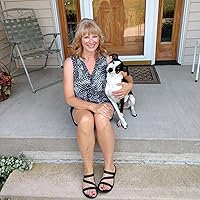
A prolific author whose output includes plays, essays, memoirs and fiction, Gladys Taber (1899 – 1980) is perhaps best recalled for a series of books and columns about her life at Stillmeadow, a 17th-century farmhouse in Southbury, Connecticut.
Born Gladys Bagg on April 12, 1899 in Colorado Springs, Colorado, she was the middle child and only one to survive to adulthood. Her parents were Rufus Mather Bagg, who could trace his ancestry back to Cotton Mather, and the former Grace Sibyl Raybold. An older sister, Majel, had died at the age of six months while a younger brother Walter died at 15 months. During her childhood, she moved frequently as her father accepted various teaching posts until they finally settled in Appleton, Wisconsin. Gladys graduated from Appleton High School and enrolled at Wellesley College, receiving her bachelor’s degree in 1920. She returned to her hometown and earned a master’s in 1921 from Lawrence College, where her father was on faculty. The following year, she married Frank Albion Taber, Jr., giving birth to their daughter on July 7, 1923.
Mrs. Taber taught English at Lawrence College, Randolph Macon Women’s College in Lynchburg, Virginia, and at Columbia University, where she did postgraduate studies. She began her literary career with a play, Lady of the Moon (Penn), in 1928, and followed with a book of verse, Lyonesse (Bozart) in 1929. Taber won attention for her first humorous novel, Late Climbs the Sun (Coward, 1934). She went on to write several other novels and short story collections, including Tomorrow May Be Fair ( Coward, 1935), A Star to Steer By (Macrae, 1938) and This Is for Always (Macrae, 1938). In the late 1930s, Taber joined the staff of the Ladies’ Home Journal and began to contribute the column “Diary of Domesticity.”
By this time, she had separated from her husband and was living at Stillmeadow, a farmhouse built in 1690 in Southbury, Connecticut, sharing the house with Eleanor Sanford Mayer, a childhood friend who was often mistakenly identified as her sister. Beginning with Harvest at Stillmeadow (Little, Brown, 1940), Taber wrote a series of books about her simple life in New England that possessed homespun wisdom dolled out with earthy humor and an appreciation for the small things. She published more than 20 books related to Stillmeadow, including several cookbooks.
In 1959, she moved from Ladies’ Home Journal to Family Circle, contributing the “Butternut Wisdom” column until her retirement in 1967. In 1960, her companion, Eleanor, died and Taber decided to abandon life at Stillmeadow. Having spent some summers on Cape Cod in Massachusetts, she decided to relocate to the town of Orleans where she would live out the remainder of her days. While a resident of Orleans, Taber contributed “Still Cove Sketches” to the Cape Cod Oracle . Her final book, published posthumously, was Still Cove Journal (Lippincott, 1981).
Gladys Taber had divorced her husband in 1946 and he later passed away in October 1964. She died on March 11, 1980 in Cape Cod Hospital in Hyannis, Massachusetts at the age of 80.
A stellar Stillmeadow book! I find I love them more each time I read one! This book too is broken down into 12 month chapters of a year in Gladys' life. I found the chapter on May especially enchanting. "May is a month for dreaming. The rich fulfillment of summer is not yet come, and the stern reality of winter is one with all time past.... But May is enchantment without shadow. May is the sweetness of love and the mystery of blossoming. And in May the faery folk come back to our New England hills from the land beyond the sunset... My unicorn stamps his silver hoofs on the massed wild violets in the light of the May moon, and the glossy heart-shaped leaves bend as he passes. He crops the dark-purple and the blue-and-white violets, and his polished silver horn lifts the delicate rosy bells of the wild bush honeysuckle as he moves up the hill.
Just might be my favorite of Gladys Taber's books yet! I so love her reflections on the wonder of nature and the appreciation of all the simple comforts of home.
Dogs, cats, gardens, cooking, nature, country living...this book pretty much checks all my boxes for paradise and the experience of reading it was like a little slice of heaven. Gladys Taber's writings are filled with peace, joy and an exuberance for life.
Reading Gladys Taber's Stillmeadow memoirs is nostalgic, even if it's nostalgia for a place and time the reader hasn't experienced on their own. Even though this book was published in 1950, it is wonderfully appropriate to the troubled world of today. This is a book I will re-read, along with reading more of her Stillmeadow writing. The serenity and peacefulness that the reader feels while enjoying Taber's thoughts, philosophy, gardens, kitchen, dogs, and home is something that not many other writers can evoke with simplicity and clarity. Stillmeadow Seasons holds wonderful reminders that life is indeed good.
It is bittersweet for me to read the writings of a woman from my grandmother's generation. I love to hear about her life, her family, pets, friends and neighbors. Some of her ideas about woman are outdated, but mostly she writes with keen insight into her world. The way she tracks and appreciates the seasons is poetic. I find myself looking up words that aren't used much these days. This is comfort reading for the soul.
I return to these books often dipping in and out of them over the years. The Stillmeadow series is a perennial favorite of mine which I commonly pick up in the winter months looking for a comforting read of domestic life. Ms. Taber writes of her historic farm house in Connecticut, the weather, dogs, friends, cooking, gardening, cleaning, and sometimes the state of humanity.
I came across her writing because of mine and my wife's favorite Christmas movie- "Christmas in Connecticut." The main character Elizabeth Lane was inspired by Gladys Taber's long running columns in Ladies Home Journal and Family Circle.
Many of these books are reprints of the magazine columns following the seasons of the year. Ms. Taber liked to start her books with Spring, usually starting in April. Her columns would describe a favorite recipe, an anecdote about children or dogs, or a problem that she was confronting. (In the movie version, she couldn't find a certain kind of rocker. Only to have several readers come to her rescue by sending 20+ rockers!)
In 2018, I turn to the January section of the book and read about the sound and smell of snow from 1947. Her words are timeless and a little Rockwellian. But I want to believe such a place exists someplace in the world. A place where kids ice skate on ponds, apple wood burns bright in the fireplace, a dog sleeps on the rug and Cranberry Island Stew is simmering on the stove. I find comfort in these books and I hope you will too.
"From my desk I can look out through the old bubbly glass panes in the window. There are twelve panes above, eight panes below, and it is very hard to wash clear to the corners of them. But since the house was built around 1690, I can only be thankful that the old windows were never ripped out."
So Gladys Taber introduced Stillmeadow Seasons. It is based on the regular column, "Diary of Domesticity," which she wrote for the Ladies Home Journal beginning in 1937. She also wrote the "Butternut Wisdom" column for Family Circle from 1959-1967. Stillmeadow Farm is the home in the Connecticut countryside she and her husband bought with another couple so they could spend weekends away from the city. She taught English at Lawrence College and Columbia University. After both husbands had passed away, Gladys and her friend Jill lived at Stillmeadow full time.
I needed this breath of fresh air in between more powerful books and all that is going on in the world. Snuggling into StillMeadow Farm is a relaxing way to spend a few days.
Gladys Taber was my grandmother's favorite author, so I wanted to try her writing. This volume is ordered by month and features her collected writings from various magazines. The articles have been compiled to provide a vague narrative of life at Stillmeadow through the year. I can understand why she was so popular with readers in the mid-twentieth century. Her bright, cheerful tone and detailed observations on her life and its joys and difficulties made me want to have my own Stillmeadow. Her observations on national and world events were juvenile, naive, and glaringly wrong in hindsight, but fortunately she mostly confined herself to writing about the things she actually knew.
The book was tedious to read straight through and began to feel repetitive about 40 pages in. I found it worked best to read it slowly throughout the year, as a companion to each month. (Having a book as an open project for ten months drove me a little bit batty at times, but that's just a personal issue with impatience to reach completion.)
This was a reread from probably 40 years ago. I have a collection of Gladys Taber books, many out of print, telling of her life in an old farmhouse in Connecticut with numerous cats and dogs. Her thoughtful observations on life and relationships are warm and engaging.
"I have learned that the mind can wander at will while one does routine tasks, which is one reason housework never has to be dull... Housekeeping is fun,and i think the women who hate it lack imagination." "I prefer hot fresh air to closed-up, lifeless air." (Why I spend so much time at the park with my windows down in the summer. A big reason for thinking Gladys Taber is wise.)
It's a beautifully pleasant memoir for you to dip into maybe once a month to compare your state of affairs to the authors. But to read in one fell swoop is fun at times, but boring at many others. There's something about reading about December in May that doesn't sit well with me. Gladys does have an optimistic viewing about her life and politic interests and her gaiety shines through in her words, but I found her writing style grew tired as I got through the remaining few chapters.
It took me over a year to finally decide to read this book. I loved it. Each chapter is a month in her life on her farm. Since the book is from 1950 it reads slower than I am used to. This is what made th book so delicious. It was a different time and how I wish sometimes to live in a time like that. How I wish to be able to go about my days with a feeling of peace that this book delivers with such charm.
Heather found a photocopy of pages 134-135 in Barbara's 1984 Calendar.
"The Quiet Garden is lovely in September, even though the summer flowers are gone. One nice thing about having a special small garden for your flowers is that you can remember it like a picture at all seasons. I remember how sweet it is in spring with the white daffodils and narcissus and white and violet-blue tulips and white pansies." page 135
Delightful writing and inspiring insight into being a wife, mother, and valued member of the community that is timeless. Gladys was all about connecting with others, which she still manages to do many years after her passing. (If you question that sentence, please go to the Friends of Gladys Taber website.)
So many parallels from her time to today. I want to go back and annotate this book. Her nature observations are beautifully written and her observations on her lovely Irish setter and her beloved cocker spaniels bring me joy as a fellow dog enthusiast. All in all a wonderful book.
This is an old book, copyright 1940. I have had it for decades having inherited it as part of a motley assortment of my grandmother's books.The book jacket was lost and the drab book underneath looked like nothing special. Zooming forward at least 20 years, in search of something different to read, I picked it up. So glad I did as it's a gem! The author Gladys Taber writes beautifully. The book is centered on her life at Stillmeadow, her antique Connecticut home in the country. Taber's prose when she describes the different seasons is so poetic. The gist of much of her writing is focusing on the here and now and appreciating nature and the comfort of home and good people. The comments she makes about avoiding the hustle and bustle of life are apparently timeless---we could sure use her influence in our times!! I loved this book so much that I have bought a few others of hers from e-bay. I found out there is even a Gladys Taber fan club!
I'm not really sure how to classify this book published in 1950 and written by Gladys Taber. It is beautifully written with passages that you just want to stop and savor. The whole book is about a Connecticut farm family as they go through the seasons in a year. It was recommended to me by Patti who said she found the Taber books when she was in high school and has loved them ever since.
Definitely a feel good book. Speaks to my down home soul. I found it charming and witty and inspirational. I love Ms. Taber's way with words. Any book that provides fodder for joy, quotes, and exploration of new words like mort, badinage, etc. rates high on my list.
My first introduction to Gladys Taber. I absolutely love her grateful approach to life (even though I found through research that her life was not as placid or joyful as it appears). Her prose is beautiful and the stories of her day to day life at Stillmeadow are enriching and edifying.