

What do you think?
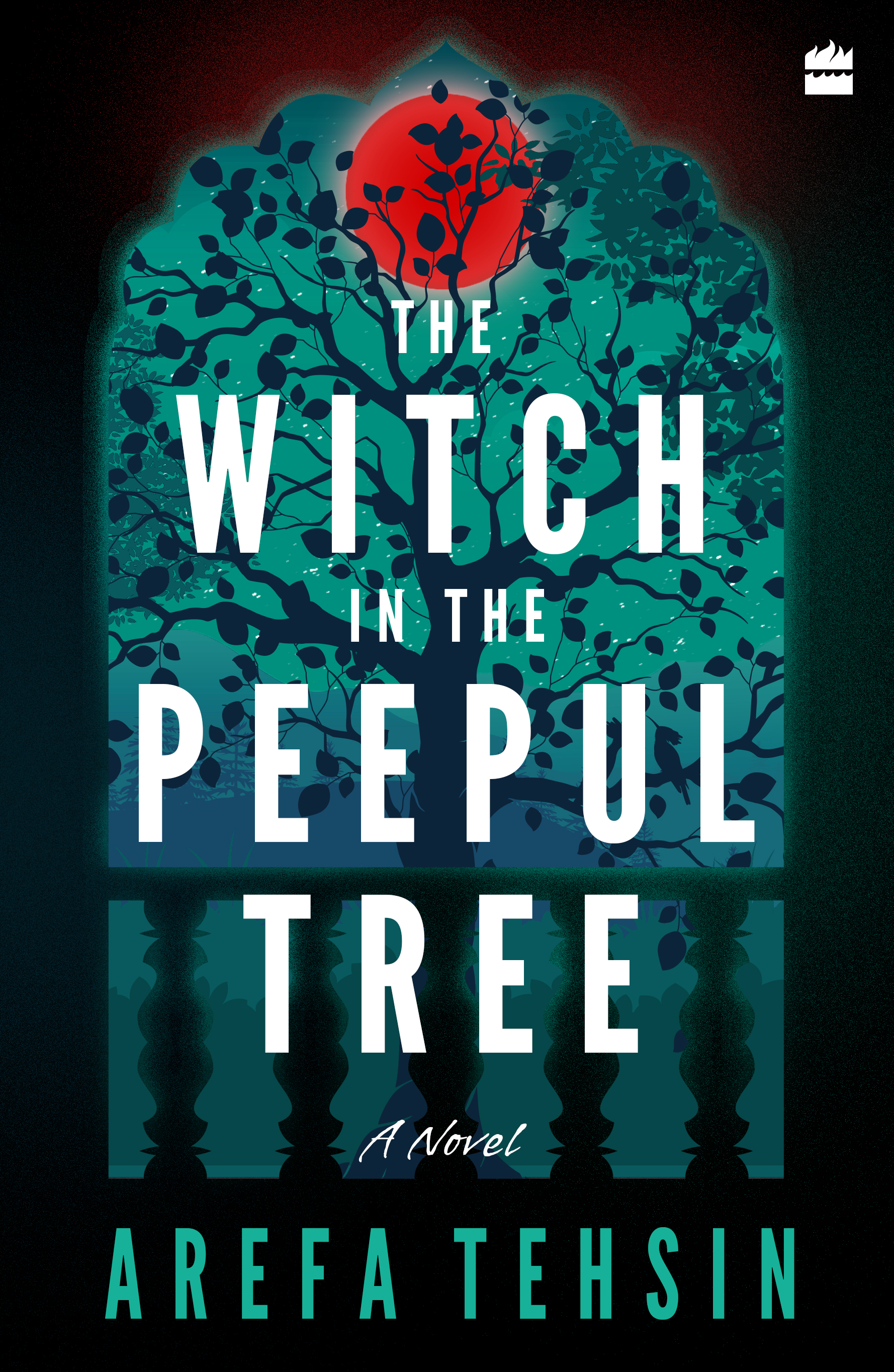
The Witch In The Peepul Tree
AWARDS SHORTLISTS:
Super-Shortlisted for The Asian Prize for Fiction
Longisted for Godrej Literature Live! Best Fiction of the Year
Geraldine Brooks, Pulitzer Prize winning novelist: ...the grand house murder
mystery transformed utterly by its Udaipur setting and its original, eccentric
characters.
Namita Gokhale, Director of Jaipur Literature Festival names The Witch in the
Peepul Tree in Open Magazine Best of 2023 Books: This novel took me by
surprise... I savoured this taut and haunting read.
Hindustan Times: Tehsin is a phenomenally talented writer... a wonderfully
nuanced read.
Udaipur Times: A compulsive read.
Swati Roy, Festival Director, Bookaroo: I am speechless... The novel is absolutely
phenomenal.
Zai Whitaker, Author and Founder of Madras Crocodile Bank: Arefa Tehsin has
bounced into the world of adult fiction with great panache!
Sam Perera, Publisher: Prejudices, superstitions and biases of the powerful and
powerless fill the pages which you turn, hoping the story never ends. In a way, it
doesn't.
Bikram Grewal, Author: Vivid, immersive and compelling. A page turner indeed.
Madhavan Narayan, Author & Columnist: Some works of fiction tell you more
about politics and history than textbooks... a crafted work of intrigue and beauty.
Ashok Banker, Author (of the bestseller Ramayana Series): ...this kaleidoscopic
novel set in India on one momentous day in 1950.
Ranjit Lal, a multi-award winning author: A novel rich in character and place, and
clashing timelines.
Sayoni Basu, Consultant Editor, Penguin Random House: ...moving and
transformative.
It is Makar Sankranti,1950, when sixteen-year-old Sanaz's body is discovered in her father Dada Bhai's house in Bohrawadi, Udaipur. A few of those in and around the house that day are the cruel zamindar Rao sahib of Singhgarh, the devout degenerate Hariharan, the young Bhil Nathu, visiting from a remote tribal village to inform Dada Bhai of a leopard kill, the attractive night soil worker Parijat, and the acerbic widow Sugra, who rolls a rosary and wishes for the jeevti dakkan-the living witch in the peepul tree-to be her secret ally. As the shadows grow long, it becomes clear that something sinister walks the halls of this grand old house. What unfolds is a genre-bending tale of suspense, intrigue and something so much darker.
Super-Shortlisted for The Asian Prize for Fiction
Longisted for Godrej Literature Live! Best Fiction of the Year
Geraldine Brooks, Pulitzer Prize winning novelist: ...the grand house murder
mystery transformed utterly by its Udaipur setting and its original, eccentric
characters.
Namita Gokhale, Director of Jaipur Literature Festival names The Witch in the
Peepul Tree in Open Magazine Best of 2023 Books: This novel took me by
surprise... I savoured this taut and haunting read.
Hindustan Times: Tehsin is a phenomenally talented writer... a wonderfully
nuanced read.
Udaipur Times: A compulsive read.
Swati Roy, Festival Director, Bookaroo: I am speechless... The novel is absolutely
phenomenal.
Zai Whitaker, Author and Founder of Madras Crocodile Bank: Arefa Tehsin has
bounced into the world of adult fiction with great panache!
Sam Perera, Publisher: Prejudices, superstitions and biases of the powerful and
powerless fill the pages which you turn, hoping the story never ends. In a way, it
doesn't.
Bikram Grewal, Author: Vivid, immersive and compelling. A page turner indeed.
Madhavan Narayan, Author & Columnist: Some works of fiction tell you more
about politics and history than textbooks... a crafted work of intrigue and beauty.
Ashok Banker, Author (of the bestseller Ramayana Series): ...this kaleidoscopic
novel set in India on one momentous day in 1950.
Ranjit Lal, a multi-award winning author: A novel rich in character and place, and
clashing timelines.
Sayoni Basu, Consultant Editor, Penguin Random House: ...moving and
transformative.
It is Makar Sankranti,1950, when sixteen-year-old Sanaz's body is discovered in her father Dada Bhai's house in Bohrawadi, Udaipur. A few of those in and around the house that day are the cruel zamindar Rao sahib of Singhgarh, the devout degenerate Hariharan, the young Bhil Nathu, visiting from a remote tribal village to inform Dada Bhai of a leopard kill, the attractive night soil worker Parijat, and the acerbic widow Sugra, who rolls a rosary and wishes for the jeevti dakkan-the living witch in the peepul tree-to be her secret ally. As the shadows grow long, it becomes clear that something sinister walks the halls of this grand old house. What unfolds is a genre-bending tale of suspense, intrigue and something so much darker.
- GenresThriller
335 pages, Kindle Edition
Published June 25, 2023
About the author
Arefa Tehsin
25 books25 followersArefa Tehsin is the author of 20+ books (publisher Penguin Random House, HarperCollins, National Book Trust etc), both for children and adults, and contributes columns, features and travel articles to various publications like Conde Nast Traveller, The Indian Express, Hindustan Times, The Hindu, Deccan Herald, Outlook Money and TerraGreen. The Great Indian Safari (Puffin) has been shortlisted for BTB Wordsmith of Year 2025 and the AG-BLF 2025 Book Award. The Witch on the Peepul Tree, her first novel for adults, published by HarperCollins, was “super-shortlisted” for The Asian Prize for Fiction 2023; the only book from India to be in “The Asian Trio”. Her book The Chirmi Chasers was shortlisted for Neev Book Award 2021. Amra and the Witch was shortlisted for FCCI’s Best Book of the Year Award 2019. She was shortlisted for the The Hindu Young World-Goodbooks Best Author Award 2017 for her book Wild in the Backyard. The picture book The Elephant Bird was read at 3200+ locations in India from the slums to the Presidential library on the International Literacy Day, 2016 and translated in 35+ languages. Do Tigers Drink Blood and 13 Other Mysteries of Nature is being translated in Chinese. A few schools in India and Sri Lanka have taken up her books as textbooks and supplementary readers. The fantasy book ‘Iora and the Quest of Five’ was released in the U.S. and U.K. in 2022. Daughter of the renowned naturalist Dr. Raza H. Tehsin, Arefa has spent her childhood days treading jungles with her father, exploring caves and handling snakes. She was appointed as the Honorary Wildlife Warden of Udaipur district and has pursued nature conservation through her writings and columns. Find out more on www.arefatehsin.com
Ratings & Reviews
Friends & Following
Create a free account to discover what your friends think of this book!
Community Reviews
Displaying 1 - 30 of 37 reviews

July 11, 2023
The Witch in the Peepul Tree at its very core is a murder mystery but what makes it interesting is the clever use of societal norms that Arefa has imbibed in the story. The story is set in 1950, India just a few years shy of being independent and so we see people from different social statuses struggling to cope with the changes. Casteism is at its peak and manipulation is an essential tool for the rich to get things done. Amidst all this, a 16 year old young lady is found dead in her room on the auspicious day of Makar Sankranti. Her father, Dada Bhai is a renowned man who is both loved and respected by the tribals and those who are trampled by the upper castes.
The book begins when Sanaz is found dead in her room. Arefa immediately introduces an array of characters, each having their own chapters and whose paths meet on that particular day. There’s the Zamindar, Rao Sahib and the Middleman, Hariharan who visit Dada Bhai each with their own motives. Then there are the untouchables, Bhola and his wife Parijat who are nightsoil workers. Two tribals who arrive at the house for some work. Dada Bhai’s widowed old mother and another widow who acts as their caretaker have their own stories to tell. A skinny lad Ismail, who has a cheeky grin and a sharp tongue working for the family. All of these eccentric characters are given enough importance to keep the story going. So when the murder occurs, everyone becomes a suspect.
This story is indulging in nature and it is more character driven than the murder itself. We see the rich exploiting the poor, the jealousy that comes from being loved by many and complex relationships. Arefa has done a splendid job in tying loose ends of the story. It almost felt like watching tributaries flowing into a river. I did feel that the story dragged a bit in the middle, some unnecessary details tempting me to skim through the pages. But I most certainly didn’t see the twist in the end.
If you’re looking for a unique murder mystery that has a deep background, then you’ll probably like this book. Thanks for the copy @harpercollinsin ✨
The book begins when Sanaz is found dead in her room. Arefa immediately introduces an array of characters, each having their own chapters and whose paths meet on that particular day. There’s the Zamindar, Rao Sahib and the Middleman, Hariharan who visit Dada Bhai each with their own motives. Then there are the untouchables, Bhola and his wife Parijat who are nightsoil workers. Two tribals who arrive at the house for some work. Dada Bhai’s widowed old mother and another widow who acts as their caretaker have their own stories to tell. A skinny lad Ismail, who has a cheeky grin and a sharp tongue working for the family. All of these eccentric characters are given enough importance to keep the story going. So when the murder occurs, everyone becomes a suspect.
This story is indulging in nature and it is more character driven than the murder itself. We see the rich exploiting the poor, the jealousy that comes from being loved by many and complex relationships. Arefa has done a splendid job in tying loose ends of the story. It almost felt like watching tributaries flowing into a river. I did feel that the story dragged a bit in the middle, some unnecessary details tempting me to skim through the pages. But I most certainly didn’t see the twist in the end.
If you’re looking for a unique murder mystery that has a deep background, then you’ll probably like this book. Thanks for the copy @harpercollinsin ✨

July 13, 2023
I recently had the opportunity to immerse myself in a captivating book that transported me to 1950, shortly after India's Independence. The story revolves around the mysterious death of Sanaz, a young girl whose lifeless body is discovered in her father Dada Bhai's house in the enchanting town of Bohrawadi, Udaipur.
From the moment I delved into the pages, I was introduced to a cast of intriguing characters who were present on that fateful day. The zamindar Rao Sahib of Singhgarh, known for his cruelty, the devout yet morally corrupt Hariharan, the young Bhil Nathu who arrived from a distant tribal village with news of a leopard kill, the alluring night soil worker Parijat, and the acerbic widow Sugra, who harbored secret wishes and sought the assistance of the enigmatic living witch, jeevti dakkan, hidden within the peepul tree.
As the story unfolded, I found myself drawn deeper into a web of suspense, intrigue, and a darkness that permeated the very walls of the grand old house. This book masterfully blended various genres, keeping me on edge as I yearned to uncover the truth behind Sanaz's fate and the malevolence lurking within human hearts and surroundings.
The book delved much deeper into the inherent evilness present in people's minds. It fearlessly tackled distressing social issues, prominently highlighting the oppression faced by women in an uncensored manner. The author skillfully maintained a palpable sense of suspense, leaving me captivated until the very last page.
In conclusion, I highly recommend this book for its ability to transport readers to a bygone era and skillfully blend suspense, social commentary, and character-driven storytelling. It is a compelling and thought-provoking read that will both chill and captivate you in equal measure.

July 28, 2023
The Witch in the Peepul Tree by Arefa Tehsin
.
Set in the 1950 s Udaipur, the book firstly brings the aura of a just independent and partitioned India. We have Dada bhai and his wife Mena, who are quite elevated in their reformist ideologies trying to bring in social emancipation of all sorts. Obviously the society never takes in kindly to anyone who tries to bring in any good by changing the existing!
.
So on the day of Makar Sankranti, Dada Bhai's teenaged daughter is found dead in the house, discovered by her younger brother Ahad. A bevy of people with prospective motives seems to have come to that house that day and chapter wise we get to know the backgrounds of each of these individuals till Thanedar Tapan Singh has his time with them all.
.
So how did Sanaz die - presumably the 'Jeevti Dakan' took her - In what appears to a paranormal murder trilled book by the title, its exactly the opposite. Layer after layer the book throws light on issues that plague our society even today - religious, caste divides with inhumane beliefs that however fatal cannot after all burn out love.
.
In the guise of a misnomer this book is a social commentary that throws light through the tallest and darkest peepul trees into witches that rule the human minds and hearts more.
.
Thanks @harpercollinsin for the copy.
.
.
Set in the 1950 s Udaipur, the book firstly brings the aura of a just independent and partitioned India. We have Dada bhai and his wife Mena, who are quite elevated in their reformist ideologies trying to bring in social emancipation of all sorts. Obviously the society never takes in kindly to anyone who tries to bring in any good by changing the existing!
.
So on the day of Makar Sankranti, Dada Bhai's teenaged daughter is found dead in the house, discovered by her younger brother Ahad. A bevy of people with prospective motives seems to have come to that house that day and chapter wise we get to know the backgrounds of each of these individuals till Thanedar Tapan Singh has his time with them all.
.
So how did Sanaz die - presumably the 'Jeevti Dakan' took her - In what appears to a paranormal murder trilled book by the title, its exactly the opposite. Layer after layer the book throws light on issues that plague our society even today - religious, caste divides with inhumane beliefs that however fatal cannot after all burn out love.
.
In the guise of a misnomer this book is a social commentary that throws light through the tallest and darkest peepul trees into witches that rule the human minds and hearts more.
.
Thanks @harpercollinsin for the copy.
.

November 9, 2024
**AN UNDERWHELMING 2 STARS**
⭐⭐
“They say a living witch haunts the peepul tree in your lane. The Jeevti Dakkan. And many believe it to be a fact that she haunts this building too. Dada Bhai looked at him with the incredulity of a non believer.. there is no witch in the peepul tree. That is a fact”
It’s Makar Sankranti, 1950, marking the end of the winter solstice. Dada Bhai’s son, Ahad, is outside with his brothers, flying their kite and enjoying the one-day kite celebration along with the rest of the city. But when Ahad forgets something, he runs back to the house, only to find his sister, Sanaz, dead. The strangest thing, however, is that the room is locked from the inside.
Everyone believes the house is haunted by the spirit of the Jeevti Dakkan (living witch), who lives in the peepul tree outside and roams the halls at night.
The superintendent and his two colleagues are brought in to investigate what happened surrounding the mysterious death of Sanaz. They realise they have a list of suspects who were all in and out of the house that day. The story explores several key suspects, whom we are introduced to:
•Dada Bhai: a respected, good hearted nobleman much loved by the community, but who has fallen into financial hardship.
•Mena Bai: his stunning wife, who causes disapproval within the community by trying to empower and educate the local women.
• Rao Sahib: the landowner and friend of Dada Bhai, but also a cruel, self-centered, stingy man
• Hariharan: the middleman—a devious, sly opportunist who believes in the power of politics
• Parijat: the night-soil worker, a beautiful “untouchable” who cannot speak and is married to a disabled man named Loola
• Suğra: Dada Bhai’s ungracious mother. Who wants the Jeevti Dakkan as an ally
• Nathu: a young village-jungle tracker on his way to tell Dada Bhai about a leopard kill
• Badi Bi: the elderly, loyal housemaid to Dada Bhai and a child widow
• Ismail: an annoying, mischievous, up-to-no-good servant boy
All are potential suspects and all have something to hide.
What really happened to Sanaz?
Why was the door locked from the inside?
Who killed her? What was their motive?
How are the characters linked to Dada Bhai and Sanaz?
Does the Jeevti Dakkan really exist?
~~~~~~~~~~~~~~~~
Rating: 2 STARS
I’m going to keep this spoiler-free, which I don’t normally do when reviewing a book.
If you’re expecting an eerie, almost delectable tale of folklore—perhaps a witch, an urban legend, or a spooky ghost story crafted to scare little children, mixed with crime and mystery—then prepare to be disappointed. Don’t be fooled like I was! I’m warning you now, this is NOT it.
This story is primarily a crime mystery with elements of historical fiction. It explores large themes related to India in the 1950s, including the independence of both India and Pakistan, as well as the end of British colonial rule. If historical fiction isn’t your thing, you may want to avoid it. As someone who doesn’t usually enjoy it, I’m not against the genre, but this one really bored me.
Personally, I did not enjoy this book—it just wasn’t for me. I could not wait for it to end! Yes, there were bits and pieces (perhaps certain chapters focusing more on Parijat or Suğra) that somewhat piqued my interest, but only for me to fall asleep with my eyes open a few pages later.
By the time it got to the characters’ motives, their secrets being exposed, and what happened to them afterward, I simply didn’t care. There was a lot of unnecessary waffle. It felt like such a waste of time! I’m genuinely annoyed, especially since I’d been looking forward to reading it in October and was excited to read a book by a BIPOC author.
The only positive I can give is that some of the characters were, at times, slightly intriguing—specifically Parijat, Suğra, and Nathu (towards the end). They are the reason the book received a two-star rating instead of a one.
On to the cons:
• The author's language can be vulgar and repulsive at times. The number of times I read about farts, sticky semen, and whores was unreal. There's mention of a semen-stained mattress, a thirteen-year-old's breast, a man scratching his 'sacks,' and burps smelling of pakoras or eggs-it made me sick. The author's storytelling was nauseating, to say the least. Was it necessary? If it was relevant to the story, perhaps, but the majority of the time, it was not needed.
• The author caters to a specific audience—I’m assuming mainly those who are South Indian. If you don’t understand Hindi or Urdu, forget it, because, like me, you’ll be spending a lot of time Googling words from the book. It would have been helpful to have a glossary for a smoother reading experience, even for those who are South Indian (like myself) and don’t fully understand the meanings of certain words or phrases.
• The story is historical fiction, largely focusing on India in the 1950s, the independence of India (with India and Pakistan as separate nations), and the end of British colonial rule. I’m not necessarily against historical fiction, but I think that if it’s done right, it can be a great work of fiction. If done wrong, I’ll fall asleep—and in my case, it was the latter.
But the biggest con of all is the CLICKBAIT TITLE! Extremely misleading! I don’t want to say there is no living witch, because I think that’s subject to interpretation.. However, please be warned: when deciding to pick this book up, do not expect the story to primarily focus on the witch.
Personally, I would not recommend it. If you’re someone who likes historical fiction, is interested in BIPOC authors, and enjoys stories depicting another era, this may be one for you.
⚠️Some Possible Triggers: Murder, sexual violence, attempted murder, substance abuse, poverty, infertility, post-colonial trauma, segregation, gender inequality.
“They say a living witch haunts the peepul tree in your lane. The Jeevti Dakkan. And many believe it to be a fact that she haunts this building too. Dada Bhai looked at him with the incredulity of a non believer.. there is no witch in the peepul tree. That is a fact”
It’s Makar Sankranti, 1950, marking the end of the winter solstice. Dada Bhai’s son, Ahad, is outside with his brothers, flying their kite and enjoying the one-day kite celebration along with the rest of the city. But when Ahad forgets something, he runs back to the house, only to find his sister, Sanaz, dead. The strangest thing, however, is that the room is locked from the inside.
Everyone believes the house is haunted by the spirit of the Jeevti Dakkan (living witch), who lives in the peepul tree outside and roams the halls at night.
The superintendent and his two colleagues are brought in to investigate what happened surrounding the mysterious death of Sanaz. They realise they have a list of suspects who were all in and out of the house that day. The story explores several key suspects, whom we are introduced to:
•Dada Bhai: a respected, good hearted nobleman much loved by the community, but who has fallen into financial hardship.
•Mena Bai: his stunning wife, who causes disapproval within the community by trying to empower and educate the local women.
• Rao Sahib: the landowner and friend of Dada Bhai, but also a cruel, self-centered, stingy man
• Hariharan: the middleman—a devious, sly opportunist who believes in the power of politics
• Parijat: the night-soil worker, a beautiful “untouchable” who cannot speak and is married to a disabled man named Loola
• Suğra: Dada Bhai’s ungracious mother. Who wants the Jeevti Dakkan as an ally
• Nathu: a young village-jungle tracker on his way to tell Dada Bhai about a leopard kill
• Badi Bi: the elderly, loyal housemaid to Dada Bhai and a child widow
• Ismail: an annoying, mischievous, up-to-no-good servant boy
All are potential suspects and all have something to hide.
What really happened to Sanaz?
Why was the door locked from the inside?
Who killed her? What was their motive?
How are the characters linked to Dada Bhai and Sanaz?
Does the Jeevti Dakkan really exist?
~~~~~~~~~~~~~~~~
Rating: 2 STARS
I’m going to keep this spoiler-free, which I don’t normally do when reviewing a book.
If you’re expecting an eerie, almost delectable tale of folklore—perhaps a witch, an urban legend, or a spooky ghost story crafted to scare little children, mixed with crime and mystery—then prepare to be disappointed. Don’t be fooled like I was! I’m warning you now, this is NOT it.
This story is primarily a crime mystery with elements of historical fiction. It explores large themes related to India in the 1950s, including the independence of both India and Pakistan, as well as the end of British colonial rule. If historical fiction isn’t your thing, you may want to avoid it. As someone who doesn’t usually enjoy it, I’m not against the genre, but this one really bored me.
Personally, I did not enjoy this book—it just wasn’t for me. I could not wait for it to end! Yes, there were bits and pieces (perhaps certain chapters focusing more on Parijat or Suğra) that somewhat piqued my interest, but only for me to fall asleep with my eyes open a few pages later.
By the time it got to the characters’ motives, their secrets being exposed, and what happened to them afterward, I simply didn’t care. There was a lot of unnecessary waffle. It felt like such a waste of time! I’m genuinely annoyed, especially since I’d been looking forward to reading it in October and was excited to read a book by a BIPOC author.
The only positive I can give is that some of the characters were, at times, slightly intriguing—specifically Parijat, Suğra, and Nathu (towards the end). They are the reason the book received a two-star rating instead of a one.
On to the cons:
• The author's language can be vulgar and repulsive at times. The number of times I read about farts, sticky semen, and whores was unreal. There's mention of a semen-stained mattress, a thirteen-year-old's breast, a man scratching his 'sacks,' and burps smelling of pakoras or eggs-it made me sick. The author's storytelling was nauseating, to say the least. Was it necessary? If it was relevant to the story, perhaps, but the majority of the time, it was not needed.
• The author caters to a specific audience—I’m assuming mainly those who are South Indian. If you don’t understand Hindi or Urdu, forget it, because, like me, you’ll be spending a lot of time Googling words from the book. It would have been helpful to have a glossary for a smoother reading experience, even for those who are South Indian (like myself) and don’t fully understand the meanings of certain words or phrases.
• The story is historical fiction, largely focusing on India in the 1950s, the independence of India (with India and Pakistan as separate nations), and the end of British colonial rule. I’m not necessarily against historical fiction, but I think that if it’s done right, it can be a great work of fiction. If done wrong, I’ll fall asleep—and in my case, it was the latter.
But the biggest con of all is the CLICKBAIT TITLE! Extremely misleading! I don’t want to say there is no living witch, because I think that’s subject to interpretation.. However, please be warned: when deciding to pick this book up, do not expect the story to primarily focus on the witch.
Personally, I would not recommend it. If you’re someone who likes historical fiction, is interested in BIPOC authors, and enjoys stories depicting another era, this may be one for you.
⚠️Some Possible Triggers: Murder, sexual violence, attempted murder, substance abuse, poverty, infertility, post-colonial trauma, segregation, gender inequality.

July 30, 2023
"The Witch in the Peepul Tree" is a mysterious and thought-provoking story that makes you question society. It starts with the death of Dada Bhai's daughter, Sanaz, and takes place on a special day in 1950 in Udaipur. The story slowly reveals the nature of each character in Dada Bhai's house. Despite being a good person, there's something strange about their home as Dada Bhai's mother believes there is a witch in the nearby tree. The book also explores the injustices faced by different people, like the caste system and mistreatment of certain communities. It teaches us about the importance of self-reflection and making positive changes in society.
September 1, 2024
Spoiler alert:
There is no witch in the story! I think I'd have enjoyed it more had the title and the synopsis not been so misrepresentative of what the book is actually about.
"As the shadows grow long, it becomes clear that something sinister walks the halls of this grand old house. What unfolds is a genre-bending tale of suspense, intrigue and something so much darker." -- This is what the synopsis says. There is nothing "sinister" walking the halls of the grand old house, or if there is, it never comes to light. I also didn't find anything"genre-bending" about the story. It is a simple murder mystery, and a decent one tbh. But the supernatural element that was supposed to bend the genre never factors in as well as it should have to dignify the title of the book. Instead, the witch appears as an insignificant presence who acts as a thin-layered metaphor, which is highly disappointing.
There is no witch in the story! I think I'd have enjoyed it more had the title and the synopsis not been so misrepresentative of what the book is actually about.
"As the shadows grow long, it becomes clear that something sinister walks the halls of this grand old house. What unfolds is a genre-bending tale of suspense, intrigue and something so much darker." -- This is what the synopsis says. There is nothing "sinister" walking the halls of the grand old house, or if there is, it never comes to light. I also didn't find anything"genre-bending" about the story. It is a simple murder mystery, and a decent one tbh. But the supernatural element that was supposed to bend the genre never factors in as well as it should have to dignify the title of the book. Instead, the witch appears as an insignificant presence who acts as a thin-layered metaphor, which is highly disappointing.

February 26, 2024
This novel is just what I was looking for. It is a choral novel where characters are studied in detail in order to reveal the culture and history of Udaipur in 1950. What drives the plot? A murder and the witch in the peepul tree. The style reminds me of Maryse Condé and her novel "Crossing the Mangrove", where all characters narrate their story in order to provide a point of view concerning the mysterious death of a character. All in all, I regard this novel as one of my favorites.
July 13, 2023
⏩ Your favourite Read of the month ?
🪄Before we start with a review, the one thing about this book that will be with me forever is " There is a witch in all of us, unknowingly, we are living with it every day".
🪄The Witch In Pupil Tree by Arefa Tehsin is a book that will haunt your thoughts even after reading it, and I am not talking about witches here, but the elements and plot.
🪄The cover of the book literally gives me shivers and also reminds me of the BulBul series (on Netflix).
🪄This book could make a great screen adaptation one day.
🪄The elaboration of Makar Sankranti was beautiful to read.
🪄I love how the author created a suspense element in the first part only. It will put you in grip from right there, till you finish the book.
🪄The story revolves around 1950, around the time of partition, in Makar Sankranti, Udaipur.
🪄Dada bhai - the most respected man, with his family, lived in fear of Jivti Dakan in the pupil tree, when his daughter Sanaz, a young and excited girl, was found dead in her room.
🪄Who killed her ? Is there someone from the family? Or outside or enemy of Dada bhai ?
🪄As being a crazy horror and mystery lover, I was waiting for the witch to appear and haunt me, but when I completed reading this I realised that I had already witnessed the witch many times, in the form of humans.
🪄The author did a beautiful job on the execution of characters - in the first half, all the characters were introduced with layering, honest, bold, naked, so that when the mystery unfolds readers can make the thief's own assumptions and understand each characters depth.
🪄However, in some parts, some explanations seem over-stretched, making it a little bit boring.
🪄But the second half is the highlight when inspector Tapan starts his investigation. That puts everyone under suspicion.
🪄Along with the murder mystery, the author did a smooth job of addressing various issues in society from years ago - upper- lower cast, manipulations, violence, abuse, fear of having literate empowered women, treating women as a tool that can be controlled, abused and used whenever men can. - all these facts made me disgust.
🪄The part where it showed how the lower cast is treated, killed and abused because of biased thinking and unnecessary ego problems.
🪄I love Dad bhai's character the most. His character is not easy to understand, complex yet simple, soft.
🪄This plot has various characters and all these characters have their own space and parts in the story and all of them are equally participated in the story.
🪄Sometimes I find the story without any plot, but sometimes it addresses social and political issues strongly.
🪄Parijat's character was something that gives the story proper support, while Ismail, despite being a househelper in Dad bhai's home, everyone is aware that that child understands everything. After all, house helpers are people who know better than everyone.
🪄 Recommended to everyone to witness the magic of this book.
🪄Before we start with a review, the one thing about this book that will be with me forever is " There is a witch in all of us, unknowingly, we are living with it every day".
🪄The Witch In Pupil Tree by Arefa Tehsin is a book that will haunt your thoughts even after reading it, and I am not talking about witches here, but the elements and plot.
🪄The cover of the book literally gives me shivers and also reminds me of the BulBul series (on Netflix).
🪄This book could make a great screen adaptation one day.
🪄The elaboration of Makar Sankranti was beautiful to read.
🪄I love how the author created a suspense element in the first part only. It will put you in grip from right there, till you finish the book.
🪄The story revolves around 1950, around the time of partition, in Makar Sankranti, Udaipur.
🪄Dada bhai - the most respected man, with his family, lived in fear of Jivti Dakan in the pupil tree, when his daughter Sanaz, a young and excited girl, was found dead in her room.
🪄Who killed her ? Is there someone from the family? Or outside or enemy of Dada bhai ?
🪄As being a crazy horror and mystery lover, I was waiting for the witch to appear and haunt me, but when I completed reading this I realised that I had already witnessed the witch many times, in the form of humans.
🪄The author did a beautiful job on the execution of characters - in the first half, all the characters were introduced with layering, honest, bold, naked, so that when the mystery unfolds readers can make the thief's own assumptions and understand each characters depth.
🪄However, in some parts, some explanations seem over-stretched, making it a little bit boring.
🪄But the second half is the highlight when inspector Tapan starts his investigation. That puts everyone under suspicion.
🪄Along with the murder mystery, the author did a smooth job of addressing various issues in society from years ago - upper- lower cast, manipulations, violence, abuse, fear of having literate empowered women, treating women as a tool that can be controlled, abused and used whenever men can. - all these facts made me disgust.
🪄The part where it showed how the lower cast is treated, killed and abused because of biased thinking and unnecessary ego problems.
🪄I love Dad bhai's character the most. His character is not easy to understand, complex yet simple, soft.
🪄This plot has various characters and all these characters have their own space and parts in the story and all of them are equally participated in the story.
🪄Sometimes I find the story without any plot, but sometimes it addresses social and political issues strongly.
🪄Parijat's character was something that gives the story proper support, while Ismail, despite being a househelper in Dad bhai's home, everyone is aware that that child understands everything. After all, house helpers are people who know better than everyone.
🪄 Recommended to everyone to witness the magic of this book.

July 11, 2023
Witch in the peepul tree
Author - Arefa Tehsin
Genre - Novel
3/5
Another novel that came so close to my heart this year. Striking honest, fiery, bold, with a dash of spooky author tells us a story from 1950 Makar Sankranti. The riveting and heartwarming story she narrated with her tingling masterful writing.
It's a story of oppressor and oppressed. There was Parijat a bhangan, who belongs to the bottom row of the caste system, her life is a story that created a painful slump in my throat. A legend of a witch Jeevti Dakkan, Rao Sahab the zamindar, and a dada bhai who was representing sprinkles of modernity still there is void, there's a question was his efforts enough to shed light on the village life that revolves around zamindar Rao Sahab.
This book makes me stumbled upon because of the cover and then slowly I was exploring the poignant posture of the story. Arefa slowly uncovers the village life, cast system, and uncomfortable life of the minorities with a hinge of murder mystery and spooky but while reading this novel I was thinking who is the real witch in this story? The folk tales legend or the humans who are crawling on earth flashing delusional thought inflicted manipulation.
With a reverse narrative and poetic eloquence skillfully author portrayed 1950s India and the north Indian Village life. I enjoyed her poetic language along with very detail in the narrative, but, the lack of clarity and intention to tell the story makes me feel suffocating. The story somehow lost the main plotline or maybe it was an intentional new style but I enjoyed her writing ability and you know I love exploring new styles.
Too many details make this book very slow. After the second half the book reached its ending quite easily and the sequences felt disconnected, it feels like an open ending, like short stories although it reveals the mystery to me but, still it feels a cliffhanger.
This book definitely is evidence of good narrative skills and reflects author's ability to create ambiance and her power to convey a poignant story, I would say it's a little dynamite inside this beautiful cover but, I found it dragged, lack of clarity in storytelling style, overwhelming and there is no real baseline of plot, a chunks incidents that describe those days social, economical and cultural landscape ultimately makes me want to end this book for the sake of reading.
Author - Arefa Tehsin
Genre - Novel
3/5
Another novel that came so close to my heart this year. Striking honest, fiery, bold, with a dash of spooky author tells us a story from 1950 Makar Sankranti. The riveting and heartwarming story she narrated with her tingling masterful writing.
It's a story of oppressor and oppressed. There was Parijat a bhangan, who belongs to the bottom row of the caste system, her life is a story that created a painful slump in my throat. A legend of a witch Jeevti Dakkan, Rao Sahab the zamindar, and a dada bhai who was representing sprinkles of modernity still there is void, there's a question was his efforts enough to shed light on the village life that revolves around zamindar Rao Sahab.
This book makes me stumbled upon because of the cover and then slowly I was exploring the poignant posture of the story. Arefa slowly uncovers the village life, cast system, and uncomfortable life of the minorities with a hinge of murder mystery and spooky but while reading this novel I was thinking who is the real witch in this story? The folk tales legend or the humans who are crawling on earth flashing delusional thought inflicted manipulation.
With a reverse narrative and poetic eloquence skillfully author portrayed 1950s India and the north Indian Village life. I enjoyed her poetic language along with very detail in the narrative, but, the lack of clarity and intention to tell the story makes me feel suffocating. The story somehow lost the main plotline or maybe it was an intentional new style but I enjoyed her writing ability and you know I love exploring new styles.
Too many details make this book very slow. After the second half the book reached its ending quite easily and the sequences felt disconnected, it feels like an open ending, like short stories although it reveals the mystery to me but, still it feels a cliffhanger.
This book definitely is evidence of good narrative skills and reflects author's ability to create ambiance and her power to convey a poignant story, I would say it's a little dynamite inside this beautiful cover but, I found it dragged, lack of clarity in storytelling style, overwhelming and there is no real baseline of plot, a chunks incidents that describe those days social, economical and cultural landscape ultimately makes me want to end this book for the sake of reading.

July 13, 2023
Plot
As the weather on Makar Sankranti of 1950 takes an unexpected turn, many people with suspicious and less than honourable motives enter and exit Dada Bhai’s Haveli. Soon, a dead body is discovered of his eldest- Sanaz.
All the events in the book take place on one day of Makar Sankranti 3 years post Independence. While the political situation in India settles down, many landowners and aristocrats are worried about what will happen to their lands. Rao Sahib is one of them and He visits Dada Bhai in that matter.
Writing
I liked the author’s way of putting forth the events in a systematic manner. The chapters are categorized by characters and time of day which lets reader understand the flow of events nicely.
Depth & Variety of Characters
The initial chapters offered useful insights in all characters background and circumstances. The author has paid attention to make the writing authentic using phrases like Khamma Ghani and highlighting royal vibes in describing scenes.
The characters are diverse and consistent. Some are introduced late in the plot and to give the book its thriller aspect. The black magic atmosphere is maintained throughout while the plot proceeds.
Poetic Devices
The author has used numerous poetic Devices like Personification & metaphors in her writing which enhance the reading experience.
Casteism at the Core
Constant mention of casteism at all levels throughout the book. The characters hopelessness around it was evident. This led them to resort to manipulation in order to survive.
My Take
Although I liked the premise of the book and writing style and ending was quite unexpected for me, I feel the ending is open-ended and open to interpretation.
The story was engaging and insightful into the lives of rich and poor, High and low castes after the country gained freedom. The Dusk part of the day where the characters story takes a closure was my favorite.
The author did a great job in embroidering the story around all characters.
I feel the ending could have been better and some characters more explored. Also I wouldn’t count this book in horror genre. It is just a ruse to keep the reader focused elsewhere while the real story unfolds
As the weather on Makar Sankranti of 1950 takes an unexpected turn, many people with suspicious and less than honourable motives enter and exit Dada Bhai’s Haveli. Soon, a dead body is discovered of his eldest- Sanaz.
All the events in the book take place on one day of Makar Sankranti 3 years post Independence. While the political situation in India settles down, many landowners and aristocrats are worried about what will happen to their lands. Rao Sahib is one of them and He visits Dada Bhai in that matter.
Writing
I liked the author’s way of putting forth the events in a systematic manner. The chapters are categorized by characters and time of day which lets reader understand the flow of events nicely.
Depth & Variety of Characters
The initial chapters offered useful insights in all characters background and circumstances. The author has paid attention to make the writing authentic using phrases like Khamma Ghani and highlighting royal vibes in describing scenes.
The characters are diverse and consistent. Some are introduced late in the plot and to give the book its thriller aspect. The black magic atmosphere is maintained throughout while the plot proceeds.
Poetic Devices
The author has used numerous poetic Devices like Personification & metaphors in her writing which enhance the reading experience.
Casteism at the Core
Constant mention of casteism at all levels throughout the book. The characters hopelessness around it was evident. This led them to resort to manipulation in order to survive.
My Take
Although I liked the premise of the book and writing style and ending was quite unexpected for me, I feel the ending is open-ended and open to interpretation.
The story was engaging and insightful into the lives of rich and poor, High and low castes after the country gained freedom. The Dusk part of the day where the characters story takes a closure was my favorite.
The author did a great job in embroidering the story around all characters.
I feel the ending could have been better and some characters more explored. Also I wouldn’t count this book in horror genre. It is just a ruse to keep the reader focused elsewhere while the real story unfolds

September 23, 2023
The Witch in the Peepul Tree" by Arefa Tehsin is a mesmerizing literary journey that transports readers to the intriguing world of Bohrawadi, Udaipur, on the auspicious day of Makar Sankranti in 1950. At its core, this novel is a chilling mystery, but it transcends traditional genres by seamlessly blending elements of suspense, folklore, and the supernatural. Tehsin's storytelling prowess shines as she weaves a tale that is as enchanting as it is haunting.
The book introduces us to a diverse cast of characters, each with their own secrets and motives, who converge on Dada Bhai's house on that fateful day. From the cruel zamindar Rao Sahib to the enigmatic night soil worker Parijat, and the young tribal visitor Bhil Nathu, each character adds depth and complexity to the narrative. Their interactions and the eerie backdrop of the peepul tree set the stage for a story that keeps readers on the edge of their seats.
Arefa Tehsin excels in creating an atmosphere that is both vivid and foreboding. The house's grandeur is juxtaposed with the growing sense of unease as shadows lengthen, hinting at a malevolent presence lurking within. The author's prose is evocative, painting a rich tapestry of sights, sounds, and emotions, immersing the reader in the world she has crafted.
What makes "The Witch in the Peepul Tree" truly exceptional is its exploration of human nature and the darker aspects of society. Tehsin delves into themes of superstition, greed, and the clash between tradition and modernity, adding depth and relevance to the narrative. The suspenseful plot keeps readers guessing, with twists and turns that defy easy prediction.
As the story unfolds, the boundaries between reality and the supernatural blur, leaving readers to ponder the mysteries of the peepul tree and the sinister forces at play. "The Witch in the Peepul Tree" is a literary gem that challenges conventional storytelling and offers a captivating and thought-provoking reading experience. Arefa Tehsin's talent for crafting an atmospheric and immersive narrative makes this novel a must-read for those seeking a unique and spine-tingling literary adventure.
The book introduces us to a diverse cast of characters, each with their own secrets and motives, who converge on Dada Bhai's house on that fateful day. From the cruel zamindar Rao Sahib to the enigmatic night soil worker Parijat, and the young tribal visitor Bhil Nathu, each character adds depth and complexity to the narrative. Their interactions and the eerie backdrop of the peepul tree set the stage for a story that keeps readers on the edge of their seats.
Arefa Tehsin excels in creating an atmosphere that is both vivid and foreboding. The house's grandeur is juxtaposed with the growing sense of unease as shadows lengthen, hinting at a malevolent presence lurking within. The author's prose is evocative, painting a rich tapestry of sights, sounds, and emotions, immersing the reader in the world she has crafted.
What makes "The Witch in the Peepul Tree" truly exceptional is its exploration of human nature and the darker aspects of society. Tehsin delves into themes of superstition, greed, and the clash between tradition and modernity, adding depth and relevance to the narrative. The suspenseful plot keeps readers guessing, with twists and turns that defy easy prediction.
As the story unfolds, the boundaries between reality and the supernatural blur, leaving readers to ponder the mysteries of the peepul tree and the sinister forces at play. "The Witch in the Peepul Tree" is a literary gem that challenges conventional storytelling and offers a captivating and thought-provoking reading experience. Arefa Tehsin's talent for crafting an atmospheric and immersive narrative makes this novel a must-read for those seeking a unique and spine-tingling literary adventure.

January 3, 2024
The Witch In The Peepul Tree by Arefa Tehsin is a murder mystery, suspense novel. In the recent dawn of partition, in the Makar Sankranti of 1950, when Sanaz’s body was found dead, it shook the walls of Tahir’s or commonly known as Dada Bhai’s house in Bohrawadi, Udaipur. One Murder, many suspicions- Rao Sahib of Singhgarh, a zamindar who was there for his good; Hariharan, an opportunistic in the newly minted Hindustan; Nathu, a Bhil, who came there to inform Dada Bhai about a leopard kill; Parijat, a Bhangan- nightsoil worker; Sugra, Dada Bhai’s mother who is constantly seeking the “Jeevti Dakkan” – the witch in the peepul tree! Who did this, is what the police are trying to find out. Read this book to know the Murderer.
The Makar Sankranti, Jeevti Dakkan on the peepul tree, murder mystery, and suspense, it was more than enough for me to get into the book.
The story although covers the history of the characters in detail, it takes place in a single day and thus follows intense details and information. All the characters have their motives, intentions, and aims which they want to achieve and it has been shown in detail.
The author’s writing is detailed, consisting of lots of local words and sentences which gives it a real touch. It sheds light on the landlord system and social structure after partition and its after-effects.
The character of Parijat and Sugra were very intriguing and they show the diversity of emotions one can go through. They both come from polar opposite backgrounds, and they might appear to have nothing in common, but when it comes to emotional dilemma, turmoil, and intensity, there appears a ray of similarity in them, with which I feel connected.
The book was slow and it takes time to get into it. The story of Parijat and Rao Sahib astonished me in the end but otherwise, the ending was predictable for me. The story shows casteism in great detail, but it takes center stage rather than murder and loses interest. The police investigation seems very superficial and I expected more from it.
The book has a great world-building and if it looks interesting to you, you can pick it up.
The Makar Sankranti, Jeevti Dakkan on the peepul tree, murder mystery, and suspense, it was more than enough for me to get into the book.
The story although covers the history of the characters in detail, it takes place in a single day and thus follows intense details and information. All the characters have their motives, intentions, and aims which they want to achieve and it has been shown in detail.
The author’s writing is detailed, consisting of lots of local words and sentences which gives it a real touch. It sheds light on the landlord system and social structure after partition and its after-effects.
The character of Parijat and Sugra were very intriguing and they show the diversity of emotions one can go through. They both come from polar opposite backgrounds, and they might appear to have nothing in common, but when it comes to emotional dilemma, turmoil, and intensity, there appears a ray of similarity in them, with which I feel connected.
The book was slow and it takes time to get into it. The story of Parijat and Rao Sahib astonished me in the end but otherwise, the ending was predictable for me. The story shows casteism in great detail, but it takes center stage rather than murder and loses interest. The police investigation seems very superficial and I expected more from it.
The book has a great world-building and if it looks interesting to you, you can pick it up.

July 12, 2023
“There is an evil influence in this house, something which is not human.” This house is in beautiful Udaipur and belongs to Dada Bhai and his wife, Mena, who work toward women's empowerment and girls' education. There is a peepul tree just outside the house, and the story tells that there is a living witch in that tree.
The book is set on one auspicious day of Makar Sankranti when Dada bhai’s son discovers his 16-year-old sister Sanaz's dead body. Did the living witch take the young girl, or did much more sinister happen at this home?
Before the death investigation, the author takes the readers into the past events of that day and the other characters of the story. Sugra, the oldest in the house, is Dada bhai’s mother, who wants to keep the family under her control.
Parijat, a nightsoil, low-caste worker, reflects the society's deeply rooted caste system. Through Parijat’s story, the author shows how the lower caste faced untouchability, exploitation, and hatred. The story also shows the hypocritical side of the society. In one incident, a higher-caste woman abuses Parijat for passing through her home, throws the pots on her, and demands money for her loss. On one side, the so-called high-class tries to escape from the lower-caste shadow, and another side doesn’t hesitate to take money from them. As Parijat stated,
“Money had no caste. It passed effortlessly from the bed of a prostitute to the begging bowl of a leper to the praying (preying) thali of a priest to the bloodstained plank of a butcher.”
All the characters, from Dada bhai, Mena bai, Hariharan, and Parijat to the living witch, play an important role in shaping the story.
The medium-paced narration effortlessly moves the story between history, social commentary, and fiction. Amidst a murder mystery, the story highlights societal prejudices, the caste system, women's situations, and other social evils of society.
Overall, Arefa Tehsin weaves a fantastic periodic drama with a tinge of mystery that will make readers explore the witch hiding inside every character of the story.
The book is set on one auspicious day of Makar Sankranti when Dada bhai’s son discovers his 16-year-old sister Sanaz's dead body. Did the living witch take the young girl, or did much more sinister happen at this home?
Before the death investigation, the author takes the readers into the past events of that day and the other characters of the story. Sugra, the oldest in the house, is Dada bhai’s mother, who wants to keep the family under her control.
Parijat, a nightsoil, low-caste worker, reflects the society's deeply rooted caste system. Through Parijat’s story, the author shows how the lower caste faced untouchability, exploitation, and hatred. The story also shows the hypocritical side of the society. In one incident, a higher-caste woman abuses Parijat for passing through her home, throws the pots on her, and demands money for her loss. On one side, the so-called high-class tries to escape from the lower-caste shadow, and another side doesn’t hesitate to take money from them. As Parijat stated,
“Money had no caste. It passed effortlessly from the bed of a prostitute to the begging bowl of a leper to the praying (preying) thali of a priest to the bloodstained plank of a butcher.”
All the characters, from Dada bhai, Mena bai, Hariharan, and Parijat to the living witch, play an important role in shaping the story.
The medium-paced narration effortlessly moves the story between history, social commentary, and fiction. Amidst a murder mystery, the story highlights societal prejudices, the caste system, women's situations, and other social evils of society.
Overall, Arefa Tehsin weaves a fantastic periodic drama with a tinge of mystery that will make readers explore the witch hiding inside every character of the story.

July 17, 2023
Dada Bhai and his wife, Mena Bhai, are a reformist couple sought out by women and minorities while criticised by the rest of the village. It is the year 1950, and on the day of Mahar Sankranti, Dada Bhai's son Ahad finds his sister, Sanaz, dead in her room. Just before Sanaz's lifeless body was discovered, Dada Bhai's house was flooded with visitors. From Rao Sahib - the Zamindar, to Hariharan - the middleman, Khadija - Dada Bhai's childless sister, Parijat -the nightsoil worker, Ismail - the housemaid and Nathu - the Bhil, was seen inside Dada Bhai's house on the same day.
Inspector Tanendar Tapan Singh investigates the murder starting from Dad Bhai to everyone else, including Dad Bhai's widowed mother, Sugra and his housemaids, Badi Bi and Ismail. As the investigation unfolds, everyone seems to have a motivation for the murder, including the witch that supposedly lives in their peepul tree.
Unlike the title suggests, this book is more of a social commentary than a murder mystery. I felt the witchy element and murder plot were only accessories to the main plot of social criticism, and the story has more to deal with the lives of people and their morale hidden under the veil of honour and pride. The book touches upon the treatment of people considered low caste by those who consider themselves the upper caste. But it is sad that the book is also mirroring today's society though it is set in the 1950s in the city of Udaipur.
As much as I liked the ending and its essence, I would have preferred the first half to be even more precise and paced. The descriptions of their everyday lives and the poetic narration were good. Still, in an attempt to be metaphorical, the narrative became a bit complex, and the outlandish writing sometimes left me confused. The problems seemed to be less in the latter half of the book, which had to deal more with the mystery than the character development.
Overall, the climax and the social criticism part are beautiful and stand out in the book, if not the rest of it.
MY REVIEW: 3.5/5
Inspector Tanendar Tapan Singh investigates the murder starting from Dad Bhai to everyone else, including Dad Bhai's widowed mother, Sugra and his housemaids, Badi Bi and Ismail. As the investigation unfolds, everyone seems to have a motivation for the murder, including the witch that supposedly lives in their peepul tree.
Unlike the title suggests, this book is more of a social commentary than a murder mystery. I felt the witchy element and murder plot were only accessories to the main plot of social criticism, and the story has more to deal with the lives of people and their morale hidden under the veil of honour and pride. The book touches upon the treatment of people considered low caste by those who consider themselves the upper caste. But it is sad that the book is also mirroring today's society though it is set in the 1950s in the city of Udaipur.
As much as I liked the ending and its essence, I would have preferred the first half to be even more precise and paced. The descriptions of their everyday lives and the poetic narration were good. Still, in an attempt to be metaphorical, the narrative became a bit complex, and the outlandish writing sometimes left me confused. The problems seemed to be less in the latter half of the book, which had to deal more with the mystery than the character development.
Overall, the climax and the social criticism part are beautiful and stand out in the book, if not the rest of it.
MY REVIEW: 3.5/5

August 24, 2023
It is Makar Sankranti, the one-day kite festival that marks the end of the winter solstice, in the year 1950. The children of Dada Bhai's house in Bohrawadi, Udaipur are flying their kites high. Young Ahad discovers the body of his sixteen-year-old sister Sanaz, in her room in a highly dramatic way. They say that the jeevti dakkan, the living witch in the Peepul tree took the girl. We are introduced to several characters that visited the house that day. As the police carry out their investigation, it becomes clear that something sinister walks the halls of the old house. What follows next is certainly something good to read.
The whole story occurs during a single day. The story is introduced with the kite flying festival and the girl being found dead in the afternoon, then the story tells us what happened before noon, then the morning. The next parts follow the events of the evening and the night.
The writing is quite interesting, definitely commendable, raw and chillingly uncensored. The book talks about the caste system and the discrimination the lower class faced back in the newly independent India. Although I felt for a while that the book has too many characters for a single day but yes since it's a suspense novel, it's definitely adding more excitement to the story. The characters have been introduced and developed well. Paranormal element, a whodunnit murder mystery, social commentary, definitely a genre-bending novel with brilliant writing. The book seems long although the descriptions are quite beautiful.
The whole story occurs during a single day. The story is introduced with the kite flying festival and the girl being found dead in the afternoon, then the story tells us what happened before noon, then the morning. The next parts follow the events of the evening and the night.
The writing is quite interesting, definitely commendable, raw and chillingly uncensored. The book talks about the caste system and the discrimination the lower class faced back in the newly independent India. Although I felt for a while that the book has too many characters for a single day but yes since it's a suspense novel, it's definitely adding more excitement to the story. The characters have been introduced and developed well. Paranormal element, a whodunnit murder mystery, social commentary, definitely a genre-bending novel with brilliant writing. The book seems long although the descriptions are quite beautiful.

July 18, 2023
“There is an evil influence in this house, something which is not human.”
Makar Sakranti ( Hindu festival where people fly kites) + Murder + Udaipur as the place + Witch
This combination was more than enough for me to pick this book up. But i got one more when I saw the cover. Beauty ❤️
The Witch in the Peepul Tree by Arefa Tehsin is a murder mystery + societal mirror of India post partition. It has themes of how the earlier leisurely class now lost financial footing as well as the deep penetrated caste, class and religious issues.
The book as it's base had the unfolding of the murder of Sanaz - daughter of Dada bhai. He is shown as one of the respected persons inspite of everyone predicting his soon to face monetary crisis.
The author introduces a series of characters pivotal to the story - partly for the murder - but mostly to highlight the lives of the ones considered "lowly" , barring 2 characters.
What I liked :
The word building. I loved how fluently the story took us into it's world.
The themes introduced related to genuine Indian conditions.
The character of Sugra and Badi Bi - damn powerful ones.
What could have been improved?
If the storytelling could have been a little more focused on the murder and do justice to it. The caste somehow took the major stage.
Also more significance of Sankranti into the murder angle.
The ending could have not been open ended 🙈 or maybe I understood it wrong.
Makar Sakranti ( Hindu festival where people fly kites) + Murder + Udaipur as the place + Witch
This combination was more than enough for me to pick this book up. But i got one more when I saw the cover. Beauty ❤️
The Witch in the Peepul Tree by Arefa Tehsin is a murder mystery + societal mirror of India post partition. It has themes of how the earlier leisurely class now lost financial footing as well as the deep penetrated caste, class and religious issues.
The book as it's base had the unfolding of the murder of Sanaz - daughter of Dada bhai. He is shown as one of the respected persons inspite of everyone predicting his soon to face monetary crisis.
The author introduces a series of characters pivotal to the story - partly for the murder - but mostly to highlight the lives of the ones considered "lowly" , barring 2 characters.
What I liked :
The word building. I loved how fluently the story took us into it's world.
The themes introduced related to genuine Indian conditions.
The character of Sugra and Badi Bi - damn powerful ones.
What could have been improved?
If the storytelling could have been a little more focused on the murder and do justice to it. The caste somehow took the major stage.
Also more significance of Sankranti into the murder angle.
The ending could have not been open ended 🙈 or maybe I understood it wrong.

December 16, 2023
Reading The Witch in the Peepul Tree by Arefa Tehsin is akin to attending a master class in the art of story writing. This is one of those books that I enjoyed both as a reader and a writer. Set in 1950, on the day of Makar Sankranti, the entire story unfolds over a single day.
Tehsin’s writing is fabulous. This is the first time I am reading a book by this author, and have become a fan! I loved how she introduces the characters, and how each character has its distinct voice, quirks, and mannerisms. The narration flows with no hindrance despite the large number of characters.
She has used vernacular language copiously. Though readers unfamiliar with the language might find it difficult, I feel it added immense value in creating an authentic connection.
The setting is absolutely authentic, and she has done a fabulous job of depicting the socio-political climate, caste disparities, changing ideologies, and impact of British rule and independence on the rich and poor.
I would recommend The Witch in the Peepul Tree to readers who enjoy slow-paced historical fiction.
This review is powered by the Blogchatter Book Review Program.
Wordsopedia Rating 4.25/5
Find my detailed review on my blog
Tehsin’s writing is fabulous. This is the first time I am reading a book by this author, and have become a fan! I loved how she introduces the characters, and how each character has its distinct voice, quirks, and mannerisms. The narration flows with no hindrance despite the large number of characters.
She has used vernacular language copiously. Though readers unfamiliar with the language might find it difficult, I feel it added immense value in creating an authentic connection.
The setting is absolutely authentic, and she has done a fabulous job of depicting the socio-political climate, caste disparities, changing ideologies, and impact of British rule and independence on the rich and poor.
I would recommend The Witch in the Peepul Tree to readers who enjoy slow-paced historical fiction.
This review is powered by the Blogchatter Book Review Program.
Wordsopedia Rating 4.25/5
Find my detailed review on my blog

August 7, 2023
SYNOPSIS
Sanaz is found dead in her room on the day of Makar Sakranti when everyone is busy flying kites or making & eating pakoras and laddus made of til. Everyone feels it is the work of 'Jeevti Dakkan' - The Witch in the Peepul Tree.
#bookhoarderreviews
The book is set in Bohrawadi, Udaipur in the 1950s. It's the time when India had just received independence and was still nursing the wounds of partition. It was the time when our society was still plagued by evils such as biases based on caste and religion and the condition of women.
Though the book has an exceptionally well thought of theme, the execution felt a little forced. There were a lot of characters, each having a back story to remember. This amounted to a lot of confusion. The story had a lot of description which could have been cut short to maintain a good pace for the otherwise interesting story.
I am familiar with the author's writing style as I have read a couple of her earlier works. This is her first novel for adults and I would say a good attempt at that. The thought process, shackles of patriarchy, religious and caste based bias and pitiable situation of women was very well woven in the story. The entire concept of the Witch was fantastic. Except for the slow pace and confusion caused by a plethora of characters, this book showcases the evils in the society through a paranormal phenomena very well.
Sanaz is found dead in her room on the day of Makar Sakranti when everyone is busy flying kites or making & eating pakoras and laddus made of til. Everyone feels it is the work of 'Jeevti Dakkan' - The Witch in the Peepul Tree.
#bookhoarderreviews
The book is set in Bohrawadi, Udaipur in the 1950s. It's the time when India had just received independence and was still nursing the wounds of partition. It was the time when our society was still plagued by evils such as biases based on caste and religion and the condition of women.
Though the book has an exceptionally well thought of theme, the execution felt a little forced. There were a lot of characters, each having a back story to remember. This amounted to a lot of confusion. The story had a lot of description which could have been cut short to maintain a good pace for the otherwise interesting story.
I am familiar with the author's writing style as I have read a couple of her earlier works. This is her first novel for adults and I would say a good attempt at that. The thought process, shackles of patriarchy, religious and caste based bias and pitiable situation of women was very well woven in the story. The entire concept of the Witch was fantastic. Except for the slow pace and confusion caused by a plethora of characters, this book showcases the evils in the society through a paranormal phenomena very well.

September 11, 2023
"The sky was a battlefield. Monkeys had left the terraces, but hateful crows shrieked their disapproval. The kites were a scattering of colourful flower petals thrown on a baraat.Theysoared,ducked,swirled,tumbled,
dragged and bravely hugged each other in a dance of death.”
A description of a sky with so many words building up the grim essence of a story that’s going to begin has never before pulled me in.
.
The book starts in the afternoon at Dada bhai’s house where Ahad, dada bhai’s son finds his elder sister dead in her room.
.
The story is set up a few years after India gains independence and the partition.
.
As we move forward in the novel, we are introduced to the lives of Rao Sahib,Sugra, Dada Bhai’s mother,Nathu,Parijat,
Hariharan and the book gains points for Arefa Tehsin’s brilliant symbolism she uses at every step of the narrative that speaks so much more than just taking the story ahead and lead us to a death
.
Another Harper Collins book that made me colour my book pink,blue and orange.
.
Though the book didn't require them as the story itself unfolds the exhilarating contemporary bollywood song… “AISA DESH HAI MERA” ...full of colours that may make you highlight the way you have for a very long time looked at the unfolding of a suspense in a small village of India.
Read the entire review on the blog.
dragged and bravely hugged each other in a dance of death.”
A description of a sky with so many words building up the grim essence of a story that’s going to begin has never before pulled me in.
.
The book starts in the afternoon at Dada bhai’s house where Ahad, dada bhai’s son finds his elder sister dead in her room.
.
The story is set up a few years after India gains independence and the partition.
.
As we move forward in the novel, we are introduced to the lives of Rao Sahib,Sugra, Dada Bhai’s mother,Nathu,Parijat,
Hariharan and the book gains points for Arefa Tehsin’s brilliant symbolism she uses at every step of the narrative that speaks so much more than just taking the story ahead and lead us to a death
.
Another Harper Collins book that made me colour my book pink,blue and orange.
.
Though the book didn't require them as the story itself unfolds the exhilarating contemporary bollywood song… “AISA DESH HAI MERA” ...full of colours that may make you highlight the way you have for a very long time looked at the unfolding of a suspense in a small village of India.
Read the entire review on the blog.

September 22, 2023
"The Witch In The Peepul Tree" by Arefa Tehsin is a literary gem that transported me to the intriguing and shadowy world of Bohrawadi, Udaipur on Makar Sankranti in 1950. This novel weaves a captivating narrative around the mysterious death of sixteen year old girl, Sanaz in her father's house.
The strength of author's storytelling lies in her well-crafted characters, each with a unique blend of darkness and depth. From the cruel zamindar Rao Sahib to the morally complex Hariharan and the enigmatic widow Sugra, the characters are vividly portrayed leaving me both fascinated and repelled by their secrets.
Suspense is built through the narrative, enveloping me in an atmosphere of intrigue and foreboding.
As the shadows lengthen, the tension escalates, and the eerie presence of the "jeevti dakkan" in the peepul tree adds an extra layer of unease to the story.
"The Witch In The Peepul Tree" is more than just a suspenseful tale; it's a genre-defying masterpiece that explores the darkness within human nature.
The story kept me guessing until the very end, is commendable, making it a must-read for lovers of mystery and psychological thrillers.
Last but not the least, the cover is exquisite with a mysterious touch. This only attracted me to the book.
The strength of author's storytelling lies in her well-crafted characters, each with a unique blend of darkness and depth. From the cruel zamindar Rao Sahib to the morally complex Hariharan and the enigmatic widow Sugra, the characters are vividly portrayed leaving me both fascinated and repelled by their secrets.
Suspense is built through the narrative, enveloping me in an atmosphere of intrigue and foreboding.
As the shadows lengthen, the tension escalates, and the eerie presence of the "jeevti dakkan" in the peepul tree adds an extra layer of unease to the story.
"The Witch In The Peepul Tree" is more than just a suspenseful tale; it's a genre-defying masterpiece that explores the darkness within human nature.
The story kept me guessing until the very end, is commendable, making it a must-read for lovers of mystery and psychological thrillers.
Last but not the least, the cover is exquisite with a mysterious touch. This only attracted me to the book.
August 7, 2026
Weak start, strong finish.
What started as a murder mystery in newly independent India - where people having mixed opinions about independence and decentralisation - took us into a rabbit hole of politics, social stigma, human evils and despicable thoughts through and through.
The set up was short and powerful but the character intros and the consequent progression felt weaker over time getting lethargic at a point. The author was a non fiction writer turned into fiction story teller, we can see the difference in her writing too. The aspects of ideologies of the characters with new India and old india were mostly talked in non fiction point of view, rather than thoughts it felt more like data or facts or opinions.
The number of shit, fart, piss, and phlegm usage felt too much over a point making reader feel disgust. Instead of feeling sympathy or understanding the situation of downtrodden it kinda made me uncomfortable by the description.
(This is a slight personal opinion, perhaps yours might be different)
The ending was totally unexpected because the character was the one which was least explored amongst all. Not a good murder mystery but a great character study and mindset study of fresh independent India.
What started as a murder mystery in newly independent India - where people having mixed opinions about independence and decentralisation - took us into a rabbit hole of politics, social stigma, human evils and despicable thoughts through and through.
The set up was short and powerful but the character intros and the consequent progression felt weaker over time getting lethargic at a point. The author was a non fiction writer turned into fiction story teller, we can see the difference in her writing too. The aspects of ideologies of the characters with new India and old india were mostly talked in non fiction point of view, rather than thoughts it felt more like data or facts or opinions.
The number of shit, fart, piss, and phlegm usage felt too much over a point making reader feel disgust. Instead of feeling sympathy or understanding the situation of downtrodden it kinda made me uncomfortable by the description.
(This is a slight personal opinion, perhaps yours might be different)
The ending was totally unexpected because the character was the one which was least explored amongst all. Not a good murder mystery but a great character study and mindset study of fresh independent India.
April 16, 2026
2.75 stars
The blurb doesn’t accurately reflect what this book actually delivers. I went in expecting a murder mystery—perhaps with touches of the supernatural or superstition—set in 1950s India, along with some exploration of the social landscape of the time. I wanted the mystery to take center stage. Instead, the murder functions more as a device to examine the social realities of 1950s India—caste, patriarchy, and politics—through a wide range of characters.
Positives:
The author introduces a diverse cast spanning different strata of Indian society, which helps paint a detailed picture of the era. The setting is well-realized, and most of the characters feel distinct. I gave a good picture of society of that time.
Negatives:
What starts as a strength eventually becomes a drawback. The narrative leans so heavily into characters and social commentary—even in the latter half—that the central mystery feels sidelined. By the end, it comes across as though the murder plot exists mainly as a framework to explore these broader themes, which feels a bit misleading given the initial premise.
The blurb doesn’t accurately reflect what this book actually delivers. I went in expecting a murder mystery—perhaps with touches of the supernatural or superstition—set in 1950s India, along with some exploration of the social landscape of the time. I wanted the mystery to take center stage. Instead, the murder functions more as a device to examine the social realities of 1950s India—caste, patriarchy, and politics—through a wide range of characters.
Positives:
The author introduces a diverse cast spanning different strata of Indian society, which helps paint a detailed picture of the era. The setting is well-realized, and most of the characters feel distinct. I gave a good picture of society of that time.
Negatives:
What starts as a strength eventually becomes a drawback. The narrative leans so heavily into characters and social commentary—even in the latter half—that the central mystery feels sidelined. By the end, it comes across as though the murder plot exists mainly as a framework to explore these broader themes, which feels a bit misleading given the initial premise.
July 17, 2023
The Witch in the Peepul Tree is a difficult one to categorize. There is a murder mystery at the heart of the story, but it's varied characters, their status in a newly independent India and their interplay is an in-depth social commentary of the times. The characters represent a wide strata of the society and their lives portray the privileges and challenges of those living in those times. And most of these are relevant even today. The book is engrossing, the murder intriguing and the plot is compelling. The author weaves a tale which is at parts warm and funny, but always difficult to predict. The characters are rich and real and represent an India which is brimming with optimism and opportunity at it's new found freedom, yet is seeped in its age old customs and beliefs that's holding it back. A wonderful book with a shocking twist at the end, this book is one which is difficult to put down.

July 6, 2023
The story was set in 1950 in the house of an aristocrat, Dada Bhai. His daughter Sanaz's death make the guests that Dada Bhai had that day on the verge of suspicion. To add to that, we see the tale of the witch in the Peepul Tree and wonder if the witch was behind Sanaz death.
The book showed the evilness that exists in one's mind. There were several characters and it was interesting to read about all of them. Along with that, the book also talked about the social issues that existed during that time.
Reading this book was like going through the streets of Udaipur in the 1950s. The care put behind the details can be seen in the story. The book went from the chilly tale of the witch to that of the murder investigation of Sanaz. The suspense was maintained until the end and the book was an interesting mystery- horror story.
The book showed the evilness that exists in one's mind. There were several characters and it was interesting to read about all of them. Along with that, the book also talked about the social issues that existed during that time.
Reading this book was like going through the streets of Udaipur in the 1950s. The care put behind the details can be seen in the story. The book went from the chilly tale of the witch to that of the murder investigation of Sanaz. The suspense was maintained until the end and the book was an interesting mystery- horror story.

July 13, 2023
This book has an excellent plot and detailed crafting of the storyline. The book is divided into four parts and the first two move a bit slowly. The book picks up pace only after it reaches part 3 and thereafter it is thoroughly entertaining. I would have definitely liked it better if the book were racy right from the start. The author has tried to use the axiom 'Show but don't tell' in every part of the book which takes a phenomenal amount of talent. There is not even a little bit of telling anywhere. But this aspect of the book prevents it from being a racy thriller as avoiding 'telling' completely acts as a speed breaker and slackens the pace. If it were not for this one defect it would be a brilliant book and it is for this sole reason I am cutting off one point and going with a 4/5.

August 6, 2023
This is no ordinary book. It’s more than a murder mystery, even though the book opens on a tragic note, young Ahad finding his dead teenage sister, Sanaz, on the auspicious day of Makar Sankranti in 1950. The plot looks simple enough on the surface. But unlike all the mystery books where the police and saviours are searching for the criminal throughout the story, Tehsin shows us the milieu around the murder. All the activities take place in 24 hours, but it’s unlike what you see on OTT, here nothing has been narrated in a hurry. It is a slow read. I savoured the rich language and felt the emotions of the many characters who came alive in the book. And the wicked witch in the peepul tree is just another magnificent peg to hang the plot on.

July 4, 2023
There is no witch in this novel and the peepul tree hardly plays any role. Both the witch and the peepul are metaphors. In the words of one of the characters, “There is an evil influence in this house, something which is not human.” The house belongs to Dada Bhai who is an exceptionally benevolent human being. His beautiful wife Mena is as good too and she has devoted her life to such noble social causes as empowerment of women and education of girls. Yet there is something sinister about their house. There may be a witch lurking in the heart of the best of people.
Welcome to the complete review: https://matheikal.blogspot.com/2023/0...
Welcome to the complete review: https://matheikal.blogspot.com/2023/0...

July 8, 2023
Read my full review here:
http://booksandmuggles.com/2023/07/08...
In the year 1950, India has been independent for less than three years, still trying to find her way back on her feet and the religion and caste divide is huge. When the body of the much revered Dada Bhai daughter Sanaz is discovered in her room on Makar Sankranti it creates a sensation like no other. At the centre stage are people from all walks of life, the family loved and hated by all in equal measure, the rich, the religious, the untouchables, and of course the ever-present spirit of the peepul tree.
http://booksandmuggles.com/2023/07/08...
In the year 1950, India has been independent for less than three years, still trying to find her way back on her feet and the religion and caste divide is huge. When the body of the much revered Dada Bhai daughter Sanaz is discovered in her room on Makar Sankranti it creates a sensation like no other. At the centre stage are people from all walks of life, the family loved and hated by all in equal measure, the rich, the religious, the untouchables, and of course the ever-present spirit of the peepul tree.
August 14, 2023
Riveting and well-paced are two adjectives which aptly describes my experience while reading this book. I would like to commend the author for crafting each character with nuance and distinctive personality that everyone mentioned in the book contributed in adding suspense to the storyline.
The author has also subtly mentioned the sociopolitical backdrop during post-Independence in 1950 which added to the allure of the book.
Overall, a highly recommended read which not only has the thrilling pace but also has impeccable literary writing style which adds to the pleasure of reading.
The author has also subtly mentioned the sociopolitical backdrop during post-Independence in 1950 which added to the allure of the book.
Overall, a highly recommended read which not only has the thrilling pace but also has impeccable literary writing style which adds to the pleasure of reading.

August 25, 2023
I have with all my heart read this book and found it quite interesting. The novel revolves around the death of Sanaz, a sixteen year old girl in her father's house. The novel is set in 1950s and talks well about that time when zamindaari, caste, subjugation of women were quite common.
The plot is based in Udaipur, and describes a rich culture. With a lot many characters in the plot, my favourite is Sugra. The narration is easy and in a lucid language with a slow beginning.
I recommend this book as an coffee time read and not a bed time. 😁
The plot is based in Udaipur, and describes a rich culture. With a lot many characters in the plot, my favourite is Sugra. The narration is easy and in a lucid language with a slow beginning.
I recommend this book as an coffee time read and not a bed time. 😁
Displaying 1 - 30 of 37 reviews