Jump to ratings and reviews
Rate this book

Trespassers on the Roof of the World: The Secret Exploration of Tibet

Rate this book
For nineteenth-century adventures, Tibet was the prize destination, and Lhasa, its capital situated nearly three miles above sea level, was the grandest trophy of all. The lure of this mysterious land, and its strategic importance, made it inevitable that despite the Tibetans’ reluctance to end their isolation, determined travelers from Victorian Britain, Czarist Russia, America, and a half dozen other countries world try to breach the country’s high walls.


In this riveting narrative, Peter Hopkirk turns his storytelling skills on the fortune hunters, mystics, mountaineers, and missionaries who tried storming the roof of the world. He also examines how China sought to maintain a presence in Tibet, so that whenever the Great Game ended, Chinese influence would reign supreme. This presence culminated in the Chinese invasion of Tibet in the 1950s, and in a brief afterword, Hopkirk updates his compelling account of "the gatecrashers of Tibet" with a discussion of Tibet today—as a property still claimed and annexed by the Chinese.

286 pages, Paperback

First published January 1, 1982

61 people are currently reading
2255 people want to read

About the author

Peter Hopkirk

20 books303 followers
Peter Hopkirk was born in Nottingham, the son of Frank Stewart Hopkirk, a prison chaplain, and Mary Perkins. He grew up at Danbury, Essex, notable for the historic palace of the Bishop of Rochester. Hopkirk was educated at the Dragon School in Oxford. The family hailed originally from the borders of Scotland in Roxburghshire where there was a rich history of barbaric raids and reivers hanging justice. It must have resonated with his writings in the history of the lawless frontiers of the British Empire. From an early age he was interested in spy novels carrying around Buchan's Greenmantle and Kipling's Kim stories about India. At the Dragon he played rugby, and shot at Bisley.

Before turning full-time author, he was an ITN reporter and newscaster for two years, the New York City correspondent of Lord Beaverbrook's The Sunday Express, and then worked for nearly twenty years on The Times; five as its chief reporter, and latterly as a Middle East and Far East specialist. In the 1950s, he edited the West African news magazine Drum, sister paper to the South African Drum. Before entering Fleet Street, he served as a subaltern in the King's African Rifles in 1949 – in the same battalion as Lance-Corporal Idi Amin, later to emerge as a Ugandan tyrant.

Hopkirk travelled widely over many years in the regions where his six books are set – Russia, Central Asia, the Caucasus, China, India, Pakistan, Iran, and eastern Turkey.

He sought a life in dangerous situations as a journalist, being sent to Algeria to cover the revolutionary crisis in the French colonial administration. Inspired by Maclean's Eastern Approaches he began to think about the Far East. During the Bay of Pigs fiasco in 1961 he was based in New York covering the events for the Express. No stranger to misadventure, Hopkirk was twice arrested and held in secret police cells, once in Cuba, where he was accused of spying for the US Government. His contacts in Mexico obtained his release. In the Middle East, he was hijacked by Arab terrorists in Beirut, which led to his expulsion. The PLO hijacked his plane, a KLM jet bound for Amsterdam at the height of the economic oil crises in 1974. Hopkirk confronted them and persuaded the armed gang to surrender their weapons.

His works have been officially translated into fourteen languages, and unofficial versions in local languages are apt to appear in the bazaars of Central Asia. In 1999, he was awarded the Sir Percy Sykes Memorial Medal for his writing and travels by the Royal Society for Asian Affairs.[3] much of his research came from the India Office archives, British Library, St Pancras.

Hopkirk's wife Kathleen Partridge wrote A Traveller's Companion to Central Asia, published by John Murray in 1994 (ISBN 0-7195-5016-5).

Hopkirk died on 22 August 2014 at the age of 83.

Ratings & Reviews

What do you think?
Rate this book

Friends & Following

Create a free account to discover what your friends think of this book!

Community Reviews

5 stars
510 (37%)
4 stars
629 (46%)
3 stars
178 (13%)
2 stars
26 (1%)
1 star
11 (<1%)
Displaying 1 - 30 of 129 reviews
Profile Image for Daren.
1,567 reviews4,571 followers
April 20, 2023
Hopkirk sets out to summarise a history of Western adventurers attempts (unsuccessful ans those which succeed) to reach Lhasa. Commencing with Montgomerie's spies in 1865 through to the Dali Lama's departure from Lhasa to India in the wake of Chinese invasion in 1959.

He does so more than adequately, and does a good job of determining where to spend his time and where to skip over the main points. He maintains a good pace, keeping the entertainment level and interest levels high, throwing in cultural aspects and more distant history as necessary.

This is one of Hopkirk's many books on The Great Game - espionage, and confrontation (political and diplomatic more than military) between the British Empire and the Russian Empire over Central Asia. Britain had fears that Russia was making dealt with Lhasa (although they were not), and considered it essential to get eyes inside Lhasa. Their early attempts, which met with some success, involved training Indians as surveyors to map the routes in and avoid detection by taking on the role of Buddhist holy men. With notes secreted with prayer wheels, a compass hidden in a false compartment and a thermometer in the removable top of a staff.

As keen as the British were to access Lhasa, the Tibetan's were to keep foreigners out. Execution was the punishment for attempting to enter Lhasa, although this wasn't commonly carried out - especially on those Westerners who were caught - and there were many - who were first instructed to return the way they came, and when (as was mostly the case) it was not possible to do so (usually climatic conditions and the state of their pack animals and guides) they were offered assistance with a more simple route out of Tibet - usually to India.

I wont spoil the fun with a list of those who tried, and what the outcomes were, but we may get one longer more complex story in a chapter, or two or even three attempts in a a chapter. Either way, they are all varied and interesting, for what is essentially a list of people who are all trying to to the same thing, and more often than not ended in the same outcome!

Worth a read if only to put all those attempts into a context. Also referred to are a number of books written by those lucky enough to have been sent out - which leads on to further reading in more depth if desired.

For me four stars.
Profile Image for Dottie (I'm not dotty).
26 reviews13 followers
October 18, 2024
Watching, 'Seven Years in Tibet', I was amazed by the country and its people. Back then I wasn't spending the little money I had on books. I shall try to find the book now my interest has been reignited.
The author does have a way of making this tale gripping and exciting (I wish this was a film). Three-miles high and mostly ignored for centuries then, from all points of the compass, come the emissaries of the hungry. Jostling for position and favour: it becomes a dangerous game.
A great read.
Profile Image for Bianca.
25 reviews7 followers
October 24, 2024
A terrific read. So exciting.
Profile Image for Beth.
86 reviews35 followers
May 5, 2023
I'll not take up your time with talk of the content, the research and work that must have been put into this.
Before picking this up, I was a huge fan of Peter Hopkirk.
This is an incredible read.
So well written: an edge of the seat thriller.


Profile Image for Stacey B.
469 reviews209 followers
October 24, 2025
4.8

Book was great with info I would never have the opportunity to learn.
Thank goodness for books.
Profile Image for John.
137 reviews38 followers
April 6, 2023
A truly great adventure story from a great storyteller.

Adventurers from all points of the compass made their way onto the plains of Tibet in a race to reach Lhasa, pitting their wits against old enemies. The Russians and the British, once more hoping to do the other down.

Written as a thriller more than a history book, this is a ‘ripping yarn’ and a joy to read.
Profile Image for Caroline.
561 reviews720 followers
May 21, 2015
At the beginning of the 19th century Tibet was largely unknown. Hemmed in by ferociously high mountains, and experiencing freezing temperatures, it was not the easiest of places to explore. A third factor was to play an important part too. The British and Russian empires were extending their influence into central Asia, creeping towards Tibet.... In fact Britain just wanted to form a series of buffer states, or a 'cordon sanitaire' between the wealth of India and possible trouble from the north, but the Tibetans were convinced that the British had designs on their goldfields. They also felt that the British and Russians wanted to destroy their religion. The Tibetans were passionate about their traditional religious beliefs, and as a result they took these imagined threats very seriously. They therefore became extremely hostile to anyone crossing their borders. Their main deterrent (besides the natural barriers of mountains and the cold), was to order their citizens to never help foreigners entering Tibet in any way. Anyone transgressing this, even if it was done in absolute innocence, was subject to the most horrendous and torturous punishments.

I like to think that the following waves of explorers, cartographers, soldiers and missionaries who entered Tibet did not know about the threat they posed to the well-being of any native Tibetans they tried to barter with, or fooled with their disguises. The retaliation they brought down upon the heads of those who unwittingly helped them was cruel and savage beyond belief.

But a steady wave of people did enter Tibet, and this book is all about them - the people who made the attempt to breach the Himalayan mountains and reach the impossible goal of Lhasa.

Some of the people in this book really stood out for me...

The Pundits

These were incredibly courageous and tough Indians, sent up to Tibet from British India, mainly to map what was largely uncharted territory, but also to bring back any intelligence they could garner. Their journeys were full of adventure, and in many instances incredibly harsh and demanding. The tools they used for their cartography were extraordinary, as everything had to be hidden in their Tibetan disguises.

Not only was the Buddhist rosary ingeniously adapted....but so were prayer-wheels. These were fitted with a secret catch which enabled the pundit to open the copper cylinder and insert or remove the scrolls of paper bearing his route notes and other intelligence. Late the workshops at Dehra Dun were to conceal compasses inside the wheels, so that a pundit could take bearings while pretending to be at prayer. Large instruments like sextants were concealed in specially built false bottom in the travelling chests which native travellers carried, while secret pockets were added to their clothing. Thermometers, for measuring altitude, were concealed in hollowed out staves, and mercury - necessary for setting an artifical horizon when taking sextant readings - was hidden in a sealed cowrie shell and poured into a pilgrim's bowl whenever needed"

Most extraordinary, to me, was that much of this mapping was done by the pundits counting their footsteps. The pundit Nain Singh walked 1,200 miles, and counted two-and-a-half-million individual paces, with the aid of his rosary. Another pundit, Kishen Singh, was sent on a gigtantic route survey of nearly 3,000 miles. He counted five-and-a-half-million paces with his rosary. Later cartography expeditions found their work surprisingly accurate.

The Adventurers

Henry Savage Landor, grandson of the Victorian poet, had the most amazing and harrowing time in Tibet. He and his two servants were lucky to escape with their lives, and this was much due to Landor's almost freakish impassiveness when they were captured and tortured by hostile Tibetans.

Ekai Kawaguchi was a Japanese Buddhist monk, and abbot of a monastery - he entered Tibet disguised as a Chinese physician. He reached Lhasa, even though it took him four years, and he stayed there for fourteen months. He did not gain a favourable impression of the Tibetan monks, describing them as lascivious, ignorant, cruel, dirty, greedy, lazy and dishonest. He was also not enamored with the levels of dirt he found in Lhasa. One of the chapters in his book is entitled "A Metropolis of Filth." Most of all, he was horrified by the barbaric way the Tibetans punished wrongdoers, and tortured suspects. What I particularly liked about him was that with his simple medical knowledge he was able to help the local people, and he gained a good reputation in this respect. Eventually he even got to meet the Dalai Lama.

The Soldier

In 1902 the British were really worried about Russia's intentions towards Tibet. Unable to liaise with the Tibetans through normal channels (because the Tibetans refused to communicate), Franchis Younghusband was sent to Tibet. He went there first with 200 Indian troops - but the Tibetans still refused to talk to them, and later, in 1903 he was sent back, this time with 1000 soldiers - and this time there was fighting. At Guru and Karo Pass the Tibetans were defeated, in spite of having much larger numbers. The British went on into Lhasa....and won the hearts of the people:
*They respected their holy places.
*They paid for their provisions.
*They had a good reputation for being merciful after the fighting at Guru.
Younghusband was popular, and able to negotiate a strong pro-British agreement with the Tibetans, although later this was considerably watered down by a revision from London.

The book also describes the first Chinese invasion of Tibet in 1910, and their retreat in the face of revolution at home. It also describes the brutal and tragic second Chinese invasion of 1950 - the repercussions of which are felt to the present day.

Throughout the book, and in spite of the incredibly harshness of their living conditions, and the savage enactment of Tibetan law..... the Tibetans themselves were praised for their good humour, courage, loyalty and stoicism.

In the end I was left feeling quite ambivalent towards all those who tried enter Tibet during this period - the loss of limbs and lives, to both servants and animals, seemed a high price to pay for the knowledge gained.

Generally I enjoyed the book, except I was slightly bored by the repetitiveness of the layout - descriptions of one explorer after the other. I have also been spoilt. I have read Heinrich Harrer's Seven Years in Tibet, which is one of my all time favourite books. This book complements Harrer's book well though, and it's good to have learnt more about the broader context of Tibet in the nineteenth and twentieth century.
Profile Image for Bettie.
9,977 reviews5 followers
March 6, 2014
A brief history of Tibet where the original Gods descended by ropes from the sky and skittled back up to heaven as and when the notion appealed to them, however one of the ropes became severed and that is where the race of Tibetans originates.

A thousand years later Buddhism hits, that bastardised form that came via India and included all manner of animistic mysteries. Mixed into this was a low grade Christianity and voilá! the result is Laimist religion we know today.

The main-stay of this book is the surreptitious mapping of this forbidden-to-outsiders land during The Great Game years and the spy tactics employed by the Colonial English Army in India. Some parts of the adventure encapsulated in Kim by Kipling:

Page 55: If the gatecrashers were determined to get in, the Tibetans were equally determined to keep them out. The dreadful retribution meted out to a Tibetan official who had unwittingly given assistance to one such intruder is grim proof of this. [insert horrid description here]. The gatecrasher who caused all this trouble was Sarat Chandra Das, immortalised in 'Kim' as Hurree Chunder Mookerjee.

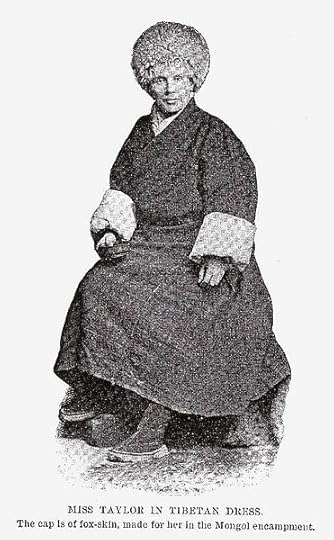
Annie Royle Taylor (7 October 1855 – 9 September 1922) was an English Evangelical missionary to China and the first Western woman known to have visited Tibet. She attempted to reach the "forbidden" city of Lhasa.

Henry Savage Landor: In 1897 he set off on his travels to explore Tibet where he was captured and suffered terrible adversities and tortures. Nevertheless, he discovered the sources of the Indus and the Brahmaputra. Landor returned fearlessly to Tibet a second time and then to Nepal. From his journeys to Tibet and Nepal come his books In the Forbidden Land (1898) and Tibet and Nepal (1905).
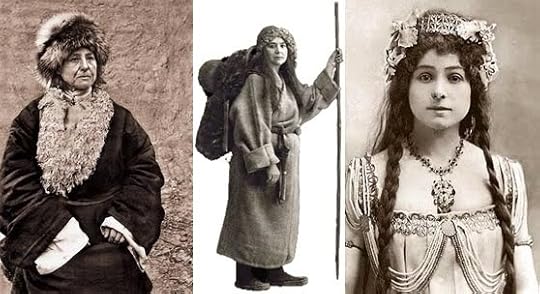
Alexandra David-Néel, a Blavatsky Theosophy student.
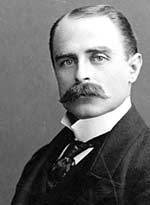
FrancisYounghusband 1904 British expedition to Tibet, during which a massacre of Tibetans occurred
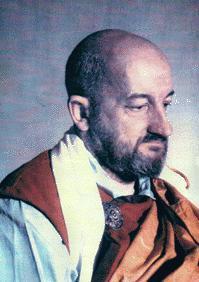
Tuesday Lobsang Rampa, author of The Third Eye, turned out to be plain, untravelled Cyril Henry Hoskin, a plumber from Devon.

Ultimately the history is just such a sad thing to contemplate; its privacy prised open by Westeners and then The Red Guards take over the country completely.

Spring 2013 Himahlya reads:

CR In the Forbidden Land
4' Trespassers on the Roof of the World
CR In the Himalayas
Profile Image for Mary.
85 reviews41 followers
March 8, 2023
I can say no more than Claire Turner (see her review) other than, without any credentials when it comes to the written word, Peter Hopkirk’s writing does engage me.

I had to read this in bits (my studies got in the way - I’ve my head stuck in early-modern Europe).

A tale of those made of stern stuff. A great read.
Profile Image for Yann.
1,412 reviews397 followers
February 13, 2016
Au XiXème siècle, trois empires se partagent l'Asie: l'Angleterre, la Russie et la Chine. Les deux puissances européennes se livrent à une compétition pour la suprématie en Asie, les premiers en Inde et en Asie du sud, les seconds dans touts les khanats Asiatique: au milieu, juché sur le toit du monde, le Tibet, un état vassal de la Chine, jouissant dans les faits d'une large autonomie, a fermé ses frontières aux étrangers, ainsi que l'avait fait le Japon deux siècles avant.

La Chine, souhaitant contenir les prétentions européennes a inspiré aux dirigeants de Lhassa une grande méfiance à l'égard de ces derniers, leur prêtant l'intention de vouloir éradiquer le bouddhisme. Il n'en faut pas moins pour enflammer la curiosité des explorateurs, brulant d'être les premiers à découvrir la cité interdite. Les premiers envoyés sont des espions britanniques d'origine indienne, qui effectuent dans des conditions extrêmement difficile les premiers relevés topographiques. La rigueur des autorités à l'égard de ceux qui aideraient les étrangers est extrême. Après de multiples essais infructueux de missionnaires, aventuriers en quête d'un article sensationnel, et têtes brulées de toutes nationalités, c'est un japonais qui parviendra le premier à donner des informations sur la ville mystérieuse. Il n'est guère complaisant à l'égard d'un clergé qui, comme dans biens des endroits et bien des moments, abuse de la crédulité des paysans, les accable d'impôts, les contient par la crainte de châtiments cruels et la superstition, alors que la plupart font profession de vivre à l'envers des principes qu'ils défendent: ils mangent de la viande, sont querelleurs et paresseux.

Il faut attendre 1904 pour que des européens pénètrent une première fois à Lhassa : inquiets des rumeurs que feraient les russes pour étendre leur main sur le Tibet, les Anglais envoient une colonne armée qui défait sans difficultés la défense Tibétaine, équipée contre une armée moderne par des talismans, fournis par le clergé, censés les protéger des balles. Curieusement, l'Angleterre va reculer face à ce succès, et laisser le champ libre à la Chine pour réaffirmer son droit: le dalaï-lama se réfugie en Inde, mais les troupes Chinoises sont défaites, en même temps que l'empire est anéanti et que lui succède la république.

Le pays reste difficile d'accès, mais fascine l'occident : les histoires de Yéti, de bonzes volant et autres calembredaines font un malheurs chez les naïfs, et ouvrent carrière à une foule d'imposteurs. La course à l’Everest est jalonnée par des accidents tragiques. Finalement, après la décolonisation, lorsque la Chine communiste viendra apporter le grand bond en avant sur une terre qui recouvre pas moins du quart de son territoire, c'est en vain que les autorités appelleront à l'aide les puissances occidentales avec lesquelles de bonnes relations avaient été établies. Il n'y a pas de doute que le régime des lamas fut théocratique et injuste, mais le "remède" apporté par le voisin a été particulièrement sévère: les vexations et les injustices n'ont pas manqué de faire croître très rapidement le ressentiment de la population contre l'armée occupante, et le cycle des vengeances et des répressions a achevé de rendre les parties irréconciliables.

Je ne connaissais pas bien l'histoire récente de cette région de la Chine. J'ai apprécié sa peinture nuancée et circonstanciée. Ce livre est très intéressant, et il a la chance d'être illustré par de magnifiques et émouvantes photographies de l'époque, faisant apparaitre sous nos yeux les acteurs de ces drames et de ces aventures.
Profile Image for Jeanette (Ms. Feisty).
2,179 reviews2,184 followers
April 29, 2008
This author is an outstanding historian and an excellent storyteller. His great strength is in sharing the history without including the boring details that only serious historians find interesting.
The book starts with an explanation of why the Tibetans historically guarded their borders and the holy city of Lhasa so carefully. Then the book describes a series of expeditions large and small that crossed the borders illegally and attempted to reach Lhasa. The Tibetans were fierce and vigilant, and the attempts were repelled. Eventually the British succeeded by using military force, and established outposts in Tibet.

The latter part of the book details some of the early attempts to reach the summit of Mt. Everest (known to Tibetans as Goddess Mother of the World) from within Tibet.
There are also some little-known accounts of harrowing experiences during WWII. One I found especially interesting was about a WWII plane that crashed near Lhasa in a storm. Those aboard didn't even know they were in Tibet.

The book ends on a sad note, telling of how the Chinese Red Guards took over Tibet and set about destroying all that was good or unique about it.

There's a lot of fascinating information about the old culture of Tibet in this book, also. They were primitive and tribal, and very superstitious. Not at all like the "Shangri-La" image a lot of people have of the Forbidden Land. Their traditional greeting was to stick their tongues out at each other as far as they could, flat against their chins! There's even a picture in the book of them doing this.
Profile Image for Sophie Schiller.
Author 17 books132 followers
May 2, 2012
There are no other words to describe this book other than it is a treasure trove of knowledge regarding Central Asian/Tibetan exploration. After reading it, you will come away with a better understanding of Tibetan culture and beliefs--but also the fears, anxieties and stress the Tibetans have been under for centuries to maintain their distinct culture and way of life--and the players who risked their lives to break down the walls of Tibetan instransigence. Anyone planning to embark on a journey to Tibet, either physically or scholarly, must read this book. Mr. Hopkirk treats the subject with the respect and dignity it deserves, especially with regard to honoring the memory of those who made the self-sacrificing journey to "the roof of the world".
Profile Image for Tim Pendry.
1,150 reviews491 followers
October 10, 2017

Peter Hopkirk, a leading British journalist, wrote a series of excellent popular histories of Central Asia, between 1980 and 1996, which opened up the area to the British public and re-introduced them to the Great Game for control of Eurasia that continues to this day.

This volume, the second of six and published in 1982, concentrates on Tibet after it closed its borders to protect its unique culture and then became the subject of intense curiosity by Victorians with many different motives, prepared to risk severe deprivation and death in order to reach Lhasa.

The book speaks for itself. The first half is essentially a long series of individual stories, some of which are basically espionage, others simple adventuring and some absurd idealistic efforts to Christianise the country. Each an adventure and each a good read.

Surveying Tibet was a military concern for the British since there was, probably ill informed, fears that Moscow might appear in Lhasa one day and the way south to British India be laid open. The Russians themselves clearly had some interest in keeping Tibet out of British control.

Throughout this time, Tibet held a curious place within the Chinese Empire, nominally part of it but essentially independent in all but name - desperately poor and ruled by an exceptionally brutal theocratic caste operating a form of feudalism maintained through religious fear.

The virtue of the book lies in the skills of Hopkirk as journalist. He reports things straight without ideological overlay (contemporary journalists might have learned a thing or two from him) and in a way that allows us, with maps, to construct a strong sense of Tibet's topography.

The climax of the book is Younghusband's Expedition of 1903 which was a classically British reluctant invasion against an unprepared feudal army led by religious numskulls where even the invaders were horrified by the slaughter and were quick to try to save the lives of those they shot.

The book loses impetus towards the very end because Younghusband effectively opened up Lhasa to British influence (which the British Cabinet clearly did not entirely care about) with a line of trading situations out of Sikkim that probably benefited Raj and Tibet alike.

But the British always respected Chinese suzerainty and did nothing substantial to improve the condition of the country. Tibet also declined to be anything but studiously neutral in the Second World War which probably sealed its fate later.

The final chapter is a fair account of the Chinese invasion of Tibet which really has nothing to do with the main theme of the book but is a necessary coda for a readership that, at time of publication, was very aware of the role of Central Asia (Afghanistan) in the Cold War.

This brings out the modern moral problem of Tibet. On the one hand, the Tibet that China invaded in 1950 was recognised as within China by the international community and China was invading a regime that was only marginally less brutal, feudal and poor than 100 years before.

On the other hand, anyone who believes in national self determination might recognise that the Tibetans ought to have had a right to determine their future - that is, if they had been anything close to a democracy.

Hopkirk is sound in his judgements. The British had withdrawn from the Raj and Nehru did not want confrontation with China. The Chinese came in as 'class liberators' (not without some justification) but faced the fact that much of the population was dependent on the existing system.

In disrupting that system, the Chinese authorities instigated rebellion and a genuine Tibetan nationalist revolt counteracted any class liberation strategy. Things deteriorated from Chinese mismanagement and then brutality as Chinese investigators were later to accept.

The romance of the current Dalai Lama, however, should not stop us from considering that the story of Tibet is not a black and white story and no doubt the US has been dabbling as it often does with agit-prop and subversion. It is a complex story that needs more up to date telling.

As a whole, this well written book is largely about individual tales of adventure and derring-do by remarkable men and some women who make our contemporaries look like wimps in terms of what they were prepared to do for whatever ends they had in mind.

As so often, the uniqueness of the British Raj shines through. Though ultimately always beholden to the British Government in London on policy, it really ran itself and developed political, military, diplomatic and espionage systems that were 'state of the art' at the time.

At the other end of the book from the Chinese invasion is the remarkable story not of the incursion of lone Westerners but of the Indians who worked for British intelligence and went undercover in Tibet at great risk, literally to pace out a survey of Tibet with their feet and hidden instruments.

Indeed, one of the problems of the book is how to claim discovery when, of course, the Chinese had no problem of access and neither did, say, Russian Buryats or Raj Ladakhs. Self-evidently the book is only about those excluded by Lhasa - the presumed agents of foreign imperial powers.

So, this book is not to be regarded as a book of 'discovery' or even exploration (since the Tibetans knew their own country only too well) but one of imperial incursion and cultural invasion, even if the Tibetans perhaps could have done with some modern ideas for the sake of their people.

Romantics may want or have wanted Tibet to be preserved in the aspic of theocracy because of its unique Buddhist culture but we should be clear about this - that culture was obscurantist and capable of extreme cruelty and exploitation.

The 'spiritual' aspects of Buddhism did not require thousands of parasitical lamas and many of the beliefs were and are absurd uses of human energy in obeisance to a structure of power that brought few material benefits to the population and was based largely on fear - of demons and lamas.

Which brings us back to modern Tibet which is in limbo - modernised up to a point by China with a condition of the people improved materially but not master of its own destiny and now with large numbers of Han Chinese settlers having diluted its ethnic base.

One has no doubt that feudalism has gone for good but the structures and networks of the old families in exile no doubt stand ready to return and create a form of neo-liberal Buddhism if this can be engineered by Washington so that little is resolved.

One might hope that the Tibetans themselves might be given some form of democracy free of foreign but also of theocratic influence but its geo-political situation and the ambitions of elites of all stripes make this unlikely. It remains subject to a zero sum game between empires.

All we can hope for is continued material improvements as the Chinese economy improves and as Eurasia becomes a unified economic zone and sufficient respect for tradition that Tibetans can feel that their identity is still theirs and can be built on for the future.
Profile Image for Philip.
1,767 reviews112 followers
August 4, 2017
First Hopkirk book I ever read, and got me hooked on his whole series of Central Asian histories. Fascinating in that they are all character driven -- and there's no more interesting cast of characters than all those 19th and early 20th century British explorers!
409 reviews194 followers
November 18, 2023
Been meaning to read Hopkirk for a while, and this was a very good introduction to Tibet, Lhasa, and the region's history and geopolitical significance. Superbly written, and manages to treat the Tibetans with respect and agency while writing about foreigners attempting to gatecrash them. Recommended.
Profile Image for Poppy.
74 reviews45 followers
March 15, 2024
Excitement from cover to cover.

I'm in awe of those who trod these paths. I'm becoming a fan of Mr Hopkirk and I believe every word written here. he makes my frail little heart flutter.
Profile Image for brian dean.
202 reviews3 followers
May 31, 2018
The book does exactly what it claims to, describes the efforts of outsiders to visit Lhasa, but so few of the stories have happy endings, and the country of Tibet sure does not, that this is not an uplifting book.

I read Hopkirk's The Great Game and Quest for Kim, both of which literally cover similar ground. The three together focus on the lure and mystery of the Himalayas and Tibet specifically.

I don't know how much of Tibet the Llamas thought they ruled but the book shows there was a lot they didn't control. The main difficulty of explorers trying to reach Lhasa were the bandits. Criminals or not, they did an excellent job of supporting Tibet's rulers in not allowing foreigners far into their country.

I wrote that the stories are not uplifting but they sure are examples of dedication and perseverance. The men and women who attempted to reach Lhasa faced great challenges and overcame many. And even when they failed in their ultimate goal, they still managed to supply the outside world with maps and biological specimens never before known.
Profile Image for Mosco.
449 reviews44 followers
January 18, 2022
ma lasciarli in pace, questi tibetani, pare brutto?

Bravo Hopkirk, sempre puntuale e interessante
Profile Image for Gisela.
59 reviews25 followers
September 27, 2024
It's a thrilling read.
Another well-reasearch, well-written, fact-based thriller from a great historian and writer.
Profile Image for Claire Turner.
27 reviews8 followers
April 19, 2022
Yes, as we read here, Tibet is surrounded by some of nature's most challenging defences, but I am astounded that the developing world knew virtually nothing of Tibet up until the last years of the 19th Century.
in 1889, a Frenchman by the name of Gabriel Bonvalot, an experienced traveller in central Asia said, "To apply for a passport, as Prejevalsky [a Russian trespasser, a few years earlier] had, was lunacy, for it simply alerted the enemy.
The enemy!!!! France were not at war with Tibet. Nor were Britain, Russia, America or any of the other nations trying so desperately to gain passage, illegally, across the roof of the world.
This is a thoroughly absorbing read, giving accounts of trespassers who spent years obsessed with the notion of setting foot in the capital city of Lhasa. At great risk of life and limb, struggling against the harshest of depravities, enslavement, disease, mountain sickness, starvation, years living in disguise whilst gathering 'intelligence' and faced with failure after failure, they went back for more.
This is obviously well-researched and as the author admits, he scoured the national archives, spoke with those still alive who could offer witness, read early manuscripts and memoirs of the trespassers and their cohorts.
I've heard it said, 'We are all born to spy'. If your neighbours build a high-fence that prevents you from peering into their back garden, you will spend your time at your bedroom window looking down on their, now, private space.
In this, I failed to find remark of, 'how much did the Tibetans know of their 'new' neighbours? Did they know of the lands ravaged by the marauding Cossacks on behalf of the Tzar? Did they know of India, raped, pillaged and bled dry by its recent occupiers?
During and before the 19th Century, a few 'foreign devils' had apparently made home on the roof of the world: the odd Christian priest and possibly others the book makes no mention of.
Maybe the Tibetans knew more about the would-be trespassers than they themselves cared to believe, or were prepared to admit. Should we wonder why the Tibetans had no desire to allow these warring interlopers entry into their otherwise peaceful domain?
The lengths we, the developing world, went to to develop it further, beggars belief.
It's not as if we were wanting to park our boats on the beaches of the new world; it's Tibet, a country that exists at an altitude higher that 12,000 feet, where the temperatures for most of the year are below zero: it's a very small country on the roof of the world.
I could not put this down; it is the most incredible tale.


Profile Image for Anita Edwards.
66 reviews
May 19, 2014
A series of short stories chronicling all the attempts by Westerners to enter Tibet and the forbidden city of Lhasa from the mid-nineteenth century through the mid-twentieth century.

The cast of characters range from interesting to charming, baffling, to insensitive, timid to brutal, but all (including the Chinese and Tibetans) with an unwavering ethnocentrism. While the book merely "tells the stories" it's hard not ask bigger questions:

Why the desperate need to map Tibet, when the mappers would never be allowed in and therefore never be able to use the maps they made(at the cost of many lives)?

Is curiosity any more or less of a justification for trespassing in another culture than racial, religious and cultural prejudice is for excluding a class of visitors? Tibet wasn't forbidden to everyone, the Chinese and Indians always had access. Buddhists on pilgrimage from outside of Tibet were routinely admitted.

But it would be disingenuous for me to say I didn't think Tibetans had good reason to think the West was out to reform their religion, their medieval government or that racial prejudice and arrogance wasn't a big part of the motivation to explore.

Tragically, despite all the energy and lives Tibetans spent on keeping them out,it wasn't ultimately Westerners who ravaged Tibet and Tibetan culture. It was Maoist China and the Red Guard.

While it doesn't take a position, this book is weighing on my mind as I am scheduled to go to Lhasa in a little over a week. It hasn't escaped my notice that it is the Chinese who are giving me a visa to enter Tibet, not the Tibetans. I admit curiosity about this place, these people and the Potala Palace are prime motivators for going. Still, I wonder if a Tibetan were allowed to state his/her opinion, if they wouldn't say tourism is just the latest kind of invasion and I am just another trespasser on the roof of the world.
323 reviews3 followers
April 7, 2019
A history of those trying to get into Tibet and Lhasa from 18th century onwards. Towards the end of the Victorian era, the secretive and closed Kingdom of Tibet became a source of intrigue and obsession for some around the Great Game, and this is a story of them, including the relations and politics with Britain and particularly through India, then Russia and finally China.

Hopkirk recounts each of the major expeditions, drawing heavily on primary sources (often their own accounts, where even a miss could become a publishing sensation). He gives a good - often gripping - tale of the spies, military, missionaries and general...what's the word..."eccentrics" who had a crack at this - and all now just over a hundred years ago. More strikingly for a book that was written in 1982, there were still a couple of people involved (latterly) alive.

Though what is good is that Hopkirk is quite balanced - the collections of Westerners intent on "discovering" Lhasa are held up for what exactly they were - "Trespassers" and Hopkirk is genuinely sympathetic to the Tibetans, who undoubtedly felt they were quite well discovered as they were thank you very much (and remarkably tolerant of the trespassers).

The book covers incidents, trespassers, invasions, and through to the climbers - Mallory et al until the Chinese invasion of 1950. Accessible, informative, and often as entertaining as it is educational, and excellent piece.
Profile Image for Ted.
142 reviews
May 13, 2010
Not exciting enough to be a good adventure book nor compelling enough to be a satisfying history, this is nonetheless a decent read due to both the author's solid writing and the intriguing subject. It becomes quite repetitive, however, as explorer after explorer gets turned away before reaching Lhasa. It feels like he included some stories for the sake of completeness rather than for their drama. I did like the book enough that I may try some more of Hopkirk's histories of Central Asia.
Profile Image for Thom.
1,819 reviews74 followers
April 14, 2013
I really enjoyed this collection of tales of the first non-asians to enter Tibet. Many published their own accounts later, but this was an excellent summary, and had the pacing of a thriller at times. It took me only seven days to read it in my few off hours.

With two major libraries near me, only one had a beat-up copy in the central archives, acquired thirty years ago. I am glad the person who dog-ears either stopped reading after the second chapter or gave up the habit. I just wish the food-eater had done the same - but unfortunately speckles of stuff were found all the way to the end.

This book deserves to be reprinted and possibly updated.
Profile Image for Jesse Voet.
18 reviews4 followers
December 23, 2013
This is the 2nd book of Peter Hopkirk I read, and again this reads almost like a thriller, when, of course, interested in history. Before reading this book, I only knew Tibet from the protests, the Dalai Lama, and temples. This book basically writes the history of the last 200 years, whereby Tibet was locked down, and struggled with Russia, China and the UK. I never realised that Tibet was so mysterious 100 years ago, and that it was, in quite some ways, really the last discovery of the modern world.
Profile Image for Lauren Albert.
1,834 reviews190 followers
June 21, 2017
Hopkirk is just a good writer. I can understand people's sensitivity to bias but he makes it clear that when he discusses who he thinks "won" the great game, he makes it clear that the great game was very clearly between two countries without discounting the achievements of those from other countries who also made the attempt to reach Tibet and its main city.
Profile Image for Yigal Zur.
Author 11 books144 followers
August 5, 2018
tibet is unique and so is the book
Profile Image for Abhineet Singh.
36 reviews1 follower
May 19, 2023
Having become a fan of Hopkirk’s literary style, I am proud to finish this painstakingly detailed narrative of the conquest of Tibet. As usual, the author dwells sufficiently deep into the topics which merit such detail and provides extensive bibliography for further research. A must read for anyone who wants to witness the exploration of Shangri-La.

Prologue
Highlight(yellow) - Location 95
the secret activities of those amazing British-trained Indian spies, the ‘pundits’. Posing as holy men, and for little reward, they mapped huge areas of Tibet for their imperial masters.
1. Tibet – The Forbidden Land
Highlight(yellow) - Location 129
Travelling in Tibet presents other peculiar problems. Water boils there at a lower temperature than at normal altitudes. To plunge one’s hand into boiling water is bearable–just. Cooking thus becomes a laborious business, and Tibet has never been famous for its cuisine.
Highlight(yellow) - Location 204
Tibetan tradition maintains that they are the descendants of a monkey-saint and a she-demon who lived in a cave at a place which is still pointed out today. Fed on magic grain, the six children of this union gradually lost their simian characteristics and turned into men and women–the first Tibetans.
Highlight(yellow) - Location 211
For Tibetan funeral custom requires the corpse to be cut up, the bones–including the skull–to be crushed, and the remains to be fed to vultures and wild dogs. The reason for this was that the ground was too hard during much of the year for graves to be dug, while the scarcity of wood in this treeless land ruled out cremation.
Highlight(yellow) - Location 226
The name Tibet, by which the country is known to all except the Tibetans, appears to have been borrowed by the West from the Arab geographers, who called it Tubbat, or from the Chinese who in ancient times knew it as Tu-bat. The precise meaning of the name has never been satisfactorily explained, although it is possibly a corruption of the Chinese word To, meaning high, and the Tibetan word Bod, the name they themselves use for their country. Historians are equally uncertain of the origin of the word Bod, although it is very likely derived from Bon, the devil-worshipping, shamanistic religion practised by Tibetans before the arrival of Buddhism. To add to the confusion, there are two further names for Tibet in current use. Gangjong, meaning ‘Land of Snow’, is sometimes used by the Tibetans themselves, while Xizang is the modern Chinese name for Tibet. The latter is derived from two characters, one meaning ‘the West’ and the other ‘to hide’–in other words, ‘Hidden in the West’.
Highlight(yellow) - Location 267
Whenever a Dalai Lama died a search began for his reincarnation. The chosen male child had to possess certain mystic qualities which distinguished him from ordinary mortals. One was the ability to identify the possessions of his predecessor, or rather his previous self. Another requirement was that he should have large ears, upward-slanting eyes and eyebrows and that one of his hands should bear a mark like a conch-shell. The successful candidate, usually aged two or three, was then removed from his family to Lhasa to begin a long period of spiritual training for his future role. The Panchen Lamas were chosen in a similar way. Invariably the reincarnated leaders were ‘discovered’ in the households of lowly families rather than of noble ones. This, it has been said, was deliberate, to ensure that no single and powerful lay family could seize the title and make it hereditary.
Highlight(yellow) - Location 288
‘Om! Mani Padme Hum!’ Translated literally, this means ‘Hail! Jewel in the Lotus!’,
Highlight(yellow) - Location 328
the most prized and expensive of all Tibetan medicines were the pills made from the mixed excreta of the Dalai and Panchen Lamas. Another outlandish belief was that drinking the urine of young boys would restore virility in elderly men.
4. Panning for Gold on the Roof of the World
Highlight(yellow) - Location 676
In return the Chinese sold large quantities of tea, for which the Tibetans have a remarkable appetite. Nain Singh found that they greatly preferred Chinese brick tea to the Indian variety, even though the latter was considerably cheaper, having to be transported less far. The diggers told him that they found Indian tea too ‘heating’, whatever that meant, and considered it fit only for the very poor. This was hardly encouraging news for British tea growers in Darjeeling who had long harboured hopes of replacing China as the principal source of tea for a people who drank anything up to fifty or sixty cups a day–albeit mixed with yak butter.
Highlight(yellow) - Location 848
William Rockhill, who was to make two adventurous and illegal journeys through Tibet himself, wrote in his book The Land of the Lamas: ‘If any British explorer had done one third of what Nain Singh … or Kishen Singh [he lists others] accomplished, medals and decorations, lucrative offices and professional promotion, freedom of cities, and every form of lionisation would have been his. As for those native explorers, a small pecuniary reward and obscurity are all to which they can look forward …’
9. The Nightmare of Susie Rijnhart
Highlight(blue) - Location 2439
But what about the race for Lhasa–could Ekai Kawaguchi be said to have won it? The answer is complicated by his being an Asiatic, but it really boils down to no. For while never a race in any formal sense, it had from the start essentially been a rivalry between westerners, beginning with Nikolai Prejevalsky. After all, Sarat Chandra Das himself was already in Lhasa when the great Russian explorer was making the first of his two attempts to get there. If Kawaguchi is to be included as a contestant, then Sarat Chandra Das must also be. To exclude them, as I have, is neither to deny them their achievements nor to underestimate the risks they took. The vengeance meted out to those who aided them surely proves this. But being Asiatics unquestionably gave them an advantage over their western rivals when it came to the plausibility of their cover stories and their disguise. It was clearly far harder for a European, however good his Tibetan, to reach Lhasa than an Asiatic. So far as western travellers were concerned, therefore, the race was still on.
Note - Location 2446
Yup. Only westerners can decide whether it is a race or not. Only the western view matters.
11. ‘Golden Domes like Tongues of Fire’
Highlight(blue) - Location 3154
In exchange for safe passage home via India, the Chinese surrendered their arms. On January 6, 1913, the last of their beleaguered garrison marched out of Lhasa for Kalimpong. The Tibetans had finally rid themselves of these latest uninvited guests, although this time it had taken them three bitter years. Only now did the Dalai Lama return to his capital to resume his twice-interrupted rule. The new Republican Government, anxious not to let go of Tibet entirely, telegraphed the God-king apologising for the excesses of the previous regime’s rough soldiery, and informing him that they had decided to restore him to his former rank in the Chinese Empire. In a reply which to this day Tibetans consider as terminating centuries of Chinese colonial rule and marking the dawn of modern Tibetan independence, the Dalai Lama declined their offer and announced his intention of taking over full control of his country. Some thirty-seven years, and another divine reincarnation, were to pass before Peking was to challenge this.
12. The Riddle of the Snows
Highlight(blue) - Location 3183
The Survey’s chief computer, Radhanath Sikhdar, is said to have rushed excitedly into the Surveyor General’s office and gasped: ‘Sir, I have discovered the highest mountain in the world.’ The official histories, however, discount this as folklore and attribute the discovery of its height of 29,002 feet (a figure later slightly adjusted) to team work. Thirteen more years were to pass before Peak XV, as it was then called, acquired its present name–a tribute to Sir George Everest, ‘father’ of the modern Survey of India.
Note - Location 3186
Because there is no need to reward the achievements of the natives - Indians. Only when a while person “discovers” it will that be considered a “proper” discovery.
Highlight(blue) - Location 3247
Perhaps it was the climbers’ accounts of this lost Tibetan valley and its monastery which inspired James Hilton’s Shangri La in Lost Horizon.
13. Lhasa Lowers its Guard
Highlight(blue) - Location 3455
of sparks and within seconds the grass was ablaze. This seemingly paranormal phenomenon which enables sadhus, or Himalayan holy men, to survive half naked in sub-zero temperatures has, it should be said, more than once been attested to by independent and sceptical European witnesses. But if thumo reskiang, or self heating, is within the bounds of scientific credibility,
Note - Location 3459
How sadhus survive in extreme cold without any warm clothes. A phenomenon attested by several westerners, but ignored by our own government.
Highlight(blue) - Location 3572
For months their approach to the mountain was held up by a holy war between fanatical Muslim and Tibetan tribesmen, waged with the barbaric cruelty for which the region had always been notorious. Rock describes how the fierce Tibetan horsemen charged the Muslims with their terrible thirty-foot lances, impaling them ‘like men spearing frogs’. Captured Tibetans, in their turn, were hung up by their thumbs and disembowelled alive. Red hot coals were then heaped inside them. In one small township, one hundred and fifty Tibetan heads were strung up like a grisly garland of flowers, while the ‘heads of young girls and children decorated posts in front of the barracks’.
14. Jumping into the Land of God
Highlight(blue) - Location 3775
The story of Heinrich Harrer and Peter Aufschnaiter who, starving, ragged and with bleeding feet, eventually reached Lhasa in January 1946, is probably too well known to need repeating here. The two men, both pre-war mountaineers of distinction, were given asylum in Lhasa until forced to flee the Chinese invasion of 1950.
Highlight(blue) - Location 3778
But another epic tale of escape into wartime Tibet–The Long Walk, by Slavomir Rawicz–is perhaps less well remembered, although at the time of its publication it was to engender considerable controversy among Central Asian experts. It told the harrowing story of how, with seven companions, the Polish-born author escaped from a Stalinist slave camp in Siberia and fled across Tibet to safety in India. While most reviewers hailed the book–published more than ten years after the events it described–as a masterpiece of travel literature, others with a closer knowledge of the area began to question its bona fides. Foremost among the doubters was Peter Fleming, who had travelled widely in Central Asia before the war. Writing in The Spectator shortly after the book’s publication, he challenged the author on a number of points.
15. Red Guards in Lhasa
Highlight(blue) - Location 3815
Chinese invaded Tibet on the twenty-third day of the ninth month of the Year of the Iron Tiger–or, by our own calendar, on November 7, 1950.
Highlight(blue) - Location 3896
The result was that more and more Tibetans joined the guerrillas. At first resistance was mainly confined to the east, but gradually it spread to other provinces of Tibet. Chinese attempts to crush the movement by means of harsh sentences, executions, deportations and other forms of reprisal were unsuccessful. But little of all this reached the outside world. Occasional rumours filtered through to India, but as these were impossible to check they were largely discounted in the West. It was Nehru’s policy at that time, moreover, to placate his powerful Communist neighbour by discouraging such unfriendly stories. One British journalist living in Kalimpong was threatened with expulsion if he continued to write them. But then, in the autumn of 1958, reports began to reach India that a full-scale anti-Communist revolt was in progress in Tibet. The truth could no longer be denied.
Note - Location 3902
Nehru - the great idiot!
Highlight(blue) - Location 3946
The saga of his thirteen-day flight to asylum in India is now part of history, and certainly of Tibetan folklore. Clutching a rifle, and dressed as a Khamba guerrilla, he slipped through one of the palace gates without being recognised. Ahead of him, also disguised as Khamba soldiers, were his mother, sister and young brother. Their immediate destination was the rebel stronghold of Loka, beyond the Tsangpo, where for the moment he would be safe from pursuit. For at that time most of Tibet south of the river was firmly in Khamba hands. The only way the Chinese could now injure or kill him, presupposing they could find him, was from the air. As the Dalai Lama hurried south, with an armed escort of Khambas and Tibetan regulars, he still clung to the hope of remaining somewhere in southern Tibet from where he would continue to lead his people and endeavour to negotiate with the Chinese.
Highlight(blue) - Location 3987
Just how much loss of life there was during the three days of bitter fighting which followed the attack on the summer palace is hard to say. Following India’s independence, the British Mission had been withdrawn, and there were no longer any westerners living in the capital. However, had his lips not been sealed by an anxious Nehru, a valuable eye-witness would have been the Indian Consul General, a former army officer. It had been his official dispatches to Delhi, transmitted by radio, which had given the first substantiated reports of the Lhasa uprising to the world. But they were primarily concerned with the safety of the consulate general and its staff who found themselves uncomfortably close to the fighting. One is therefore left entirely in the hands of witnesses deeply committed to one side or the other. The Tibetans themselves, in a semi-official history written by one of the Dalai Lama’s former ministers, put the death toll at a staggering twelve thousand. Anna Louise Strong, a life-long sympathiser with Communist China, claims on the other hand that Tibetan casualties totalled only some six hundred, a figure she was told by Chinese officers when an official guest in Lhasa.
Highlight(blue) - Location 4023
But there is one important eye-witness to all this, Prem Nath Kaul, who shortly after the Dalai Lama’s flight was posted to Lhasa as the new Indian Consul General. On his retirement from Indian Government service, this former wartime officer in the British army produced a modest book of memoirs entitled Frontier Callings. Published in Delhi in 1976, and unnoticed outside India, it is written with the careful circumspection one would expect from a former senior diplomat still bound, presumably, by his country’s secrecy laws. Even so it is clear from what he writes that, during those two years, he was living in a repressive police state rather than the paradise depicted by Miss Strong. He tells how Tibetans were forced by the Chinese to inform on their neighbours. He writes of the ‘indiscriminate arrests’ which followed the uprising, and of the ‘many’ who were still languishing in Lhasa’s jails awaiting trial.
Profile Image for Benjamin.
153 reviews4 followers
February 28, 2020
Well written and I was surprised by just how readable this book is. Basically a well grounded record of the quest for knowledge about Tibet and particularly Lhasa during the high Imperial age (late 19th and early 20th century). The book does an excellent job of this but I do feel that it is hurt by it's limited scope. I would have greatly appreciated more information on Tibet itself during this period rather than just glimpses at the broader political maneuverings beyond exploration and individual adventures. Still, the book does do what it advertises, it just isn't a one-stop-shop for learning about Tibet during this period.
Displaying 1 - 30 of 129 reviews

Can't find what you're looking for?

Get help and learn more about the design.