Two unlikely worlds collide in Sheila Peters’s first novel, The Taste of Ashes, a story of redemption and the resilience of the human spirit, even at its most frail and vulnerable.
Isabel Lee’s early life in rural BC was forever changed by a brief but powerful love affair with a young Oblate priest. Now a recovering alcoholic, Isabel struggles to pull the tattered fragments of her life together and repair the damage to her relationship with her estranged daughter.
Once idealistic and hopeful, Father Álvaro Ruiz now has his own demons to confront. Brutally tortured at the hands of the Guatemalan authorities and unable to escape the wounds of his past, Álvaro returns to Canada seeking sanctuary, a broken man with a tenuous grip on his faith in God and humanity.
Isabel’s and Álvaro’s stories slowly weave together and they are eventually faced with their greatest challenge yet: can they carry on in the wake of the damage and bring themselves to forgive? Compelling, disturbing but ultimately hopeful, this is the story of how we find grace in the most unexpected places.
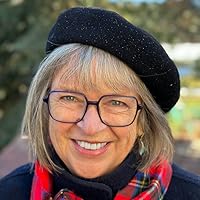
Born in the coastal BC town of Powell River, Sheila Peters moved inland to the mountains near Smithers in northwestern BC over 40 years ago. She married and raised two sons while working as a journalist, weaver, college instructor, environmental and human rights activist. She and her husband have recently returned to live in Powell River.
Her work has appeared in several Canadian literary journals, including Event, Prairie Fire, Grain, The Malahat Review, and Descant.
Creekstone Press published her first book, Canyon Creek: A Script in 1998 and Beach Holme Press in Vancouver published Tending the Remnant Damage, a collection of linked short stories, in 2001. The weather from the west came out in 2007 and The Taste of Ashes, a novel, was published by Caitlin Press in 2012. Shafted: A Mystery was published by Creekstone Press in 2015. The Bathymetry of Lax Kwaxl, a collection of sonnets built around a kayak trip to islands off the coast from Prince Rupert, was published by Leaf Press in 2016.
Her writing has also been published in several anthologies including Rocksalt (Mothertongue) and Unfurled (Caitlin). Her blog, Say the Names, collects stories and essays around the resistance to the Enbridge Northern Gateway Pipeline proposal.
Sheila is a member of The Writers Union of Canada.
As a member of TWUC, she is eligible for funding from its National Public Readings Program as well as other Canada Council funded readings and residencies.
This book had me two pages in...the writing is tight, the main characters are complex, and the narrative is lean leaving a fair amount to the reader - just as I like it. It was refreshing to have a northern BC community as a centre point and not have the author explain the culture. It is very rare I give a 5 star rating and I think Peters deserves it.
This is a thoughtful and well-written novel which will challenge those in 'comfortable pews' as well as those readers who try to avoid reading about genocide (in this case, Guatemala) or those who have set ideas about Catholic priests. This is to name just three good reasons to read this challenging book. The central characters are not having easy lives: Isabel is a recovering alcoholic in her late forties, living in a small northern Canadian town. She is a lonely woman who has made many poor choices in male companionship while under the influence and who has difficult relationships with two of her three adult children. Her daughter Janna is bright, hardworking and just as stubborn as her mother but she has managed to escape the town where her mother's drunken, lustful escapades brought down more than her fair share of shame amongst her peers. There are two brothers with different fathers, one increasingly remote and disapproving and the other, wonderfully developed, the emotional and sensible pillar of the family, who provides stability for them all. His Gitxan family roots are exemplified by his behaviour and leadership. One character observed that Isabel was "fierce for her children" for all her lapses and failings. She struggles to pay her mortgage, working as the assistant manager of a discount clothing store for $12.50/hour. She finds solace in gardening though, descriptions of which illuminate the darkness of the story in much the same way as bulbs planted in late fall restore the faith of northern gardeners when they emerge to announce another spring.
Isabel tucked the (peony)root into the ground. Before she covered it, she said a prayer for Janna, a prayer to overcome anger. Isabel had felt it in herself when she hugged Janna at her college graduation last spring. She'd felt it in her daughter, the way her pretty face pinched in resistance and her body became an awkward stick that Isabel wanted to shake. She covered the root and prayed that Janna would grow soft, would send out tender shoots, and that she would come home.
Alvaro is the Catholic priest who has lost his faith, his calling and who is suffering terribly from post-traumatic stress. Alvaro endured torture in Guatemala and encountered its manifestations daily while working to reunite families, even if some of the members were bones in a mass grave. There are many more characters, all masterfully created 3-D people, great, reprehensible or merely meddling, with devastating results to show for it. They are characters that linger in my mind, each one fully developed. This is not a book to rush through but to think and feel and hope through and the author's skill is such that one is forced to confront one's own prejudices and easy judgments.
The author, Sheila Peters, has done a substantial amount of research with human rights workers in Guatemala, with Catholic priests and lay persons, and with trauma counselors in Canada. By tackling the sacred and the profane, the best and worst behaviours of humanity, she has offered us an ambitious first novel of great depth and complexity with memorable characters that will linger a long while after the ending, which is just exactly right for the story.The Taste of Ashes