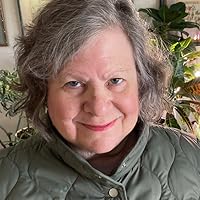
At just past seventy, Alex Witchel’s smart, adoring, ultra-capable mother began to exhibit undeniable signs of dementia. Witchel reacted as she’d been If something was broken, she would fix it. But as medical reality undid that hope, she retreated to the kitchen, trying to reclaim the mother who was disappearing in plain sight, by cooking the comforting foods that were her mother’s signature. Reproducing the perfect meat loaf was no panacea, but it helped a grieving daughter come to terms with her predicament, the growing phenomenon of “ambiguous loss” ― loss of a beloved one who lives on. Gradually Witchel developed a deeper appreciation for all the ways the mother she was losing lived on in her, starting with the daily commandment ― “Tell me everything that happened today” ― that set a future reporter and writer on her path. And she was inspired to turn her experience into this bittersweet account that offers true balm for an increasingly familiar form of heartbreak.
Alex Witchel is a staff writer for The New York Times Magazine and also writes "Feed Me," a monthly column for the Times Dining section. The author of the novels The Spare Wife and Me Times Three, she lives in New York City with her husband, Frank Rich.
"All Gone" is a beautifully written mother-daughter love story, heartfelt and moving, but as a whole a bit thin. Perhaps I was expecting more details about her mother's dementia and its progression, while the bulk of the book was about the author's life with her mother growing up. Like her mother, my mother has vascular dementia from small strokes, and the progression of my mother's dementia over the years has been far more complicated and nuanced than what we see in "All Gone." Never-the-less, I appreciated the author's insights (while wishing for more of them). Like many adult children who find themselves suddenly taking on the role of caregiver for an aging parent, I recognized the author's years of denial that anything was wrong, and her frustration with many of the symptoms of early cognitive decline, such as her mother's repeating herself or not acting appropriately. Later, when her mother's dementia gets worse and the author reads online about family caregivers who quit their careers to care for their parent 24/7 with little support, the author, like me, rejects that ideal of a "good daughter." As I have, she reminds herself that her mother would never want her to give up her own life, or jeopardize her marriage, to be a 24/7 caregiver for years and years (and dementia can continue for 20 years or more). I liked as well how she learns to enjoy her time with her mother despite the disease, to appreciate that her mother listens "with her heart if not her head." --author of new book, "Inside the Dementia Epidemic: A Daughter's Memoir"
How flagrantly and/or promiscuously in your life have you tossed around the adjective "Proustian" as if it were a small, perfect ping pong ball, one whose whiteness can always be relied on to catch the light? I'm Proustian, you're Proustian, even the orchestra is Proustian.
But ALL GONE truly is, at least by my standards/definitions, not because it is as insanely fussed-at, or endless, or so refined that it seems, at times, to have been written in invisible ink; not, in other words, although other words are not needed, on the surface anything like the work of le Maitre lui-meme, which is Yiddish for Big Marcel, his own self.
It is Proustian because it uses sense memory (in this case, taste, just as in Proust's hernia-giver) as a miner's light into the cave of a complex, puzzling, past, and in this case into the memories of the author's complex, puzzling mother, whom dementia has drained of at least most aspects of her essential self, who is, in a sense, here but All Gone.
The miracle of this book is that she's not (a parallel miracle: Witchel has written the only book I know of that is at the same time mouth-watering and harrowing). The "gone" Barbara Witchel's daughter has searched for her, has not allowed her to be lost, has, using the lens of treasured recipes and meals, reconstituted her, summoned her flavor, not through nineteen years of therapy but from a recaptured recipe for baked chicken or a hot dog casserole (made it; delicious. And easy.) ALL GONE says what was put before us, to nurture us, to please us -- madeleine or noodle pudding -- is always, in some essential way, still there, even after everything else is all gone.
If you have a family member living with dementia, read this. You'll no longer feel so alone, and you'll laugh and cry...and also contemplate cooking a great meal.
I loved this book. I could have lived without the recipes, though I get that's part of the whole "shtick". The story was very touching and real. My heart goes out to Ms. Witchel and her mom.
Losing someone you've always felt you could never live without is difficult. It doesn't matter whether you lose them unexpectedly or quickly or watch them slowly fade away. Alex Witchel has given us a beautifully written, loving and heart wrenching memoir of her mothers life before and during her slowly progressing dementia.
I actually enjoyed this book more than I expected to. Honestly, I half expected to find it dreary and depressing - given the subject was something so close to my own heart,. Immediately after my Dad died in 1999, my mom became chronically ill. I eventually moved in with her and my baby sister and was moms main caregiver until she passed in 2006. So it was very easy for me to relate to the author with her plight to seek out and provide the best care available for her mom. I understood the need for numerous doctor visits, the back and forth discussions with siblings, continuously feeling overwhelmed and utterly responsible for every tiny nuance that affected my mom. Like the author, my world orbited around my mom. And even though I knew it was going to happen, eventually, I was still surprised and crushed when my sweet momma passed away. Even still, there's rarely a day goes by that I don't think about her or wish we could talk and I truly miss the times we shared in the kitchen.
As with Alex, many of the memories of my own mother go hand and hand with comfort food and family feasts, celebrations and holiday get-togethers. So while I related to and appreciated the honesty and rawness of her story, I especially loved the recipes she included at the end of each chapter for dishes mentioned in that chapter... Good old fashioned, mother approved, yummy comfort food recipes (or 'refreshments' according to the cover).. By the way, I will be adding crumbled cornflakes to my next meatloaf as well as trying out the Potato Latkes recipe - because they sound amazing!
I received this book in a GoodReads first-read giveaway in exchange for my honest review. Thank you Goodreads for offering the giveaway opportunity and Riverhead / Penguin Group for supplying the book.
The second of two "difficult mom" books I read over the weekend. Richard Russo's mom was mentally ill, Alex Witchel's mom develops dementia. Both books were quite good, but I don't understand why there are recipes in this one. What an odd marketing strategy: nobody would buy it as a cookbook, would they? "Hey, enjoy this small collection of comfort food recipes, you can just ignore the parts with all the crying."
It also brings up interesting issues of money and class: this particular family is able to afford the best doctors, a full-time companion, and drop-by physical therapists for their ailing mom, and her children have flexible jobs that allow them to drop everything and help. It really makes me concerned about the 95% of Americans trying to deal with ill parents with none of these resources.
This is both a heartfelt and stinging recollection of Witchel's relationship with her mother and father. Witchel's rendering of her childhood, Nana, and Passaic will also stay with you. Witchel expresses her feelings so openly. I am hoping that she'll write a second memoir. Her relationship with her sister, Phoebe, and her husband and stepsons seems so loving and worthy of sharing--because of her depth of caring (and not just because her husband is Frank Rich from the NYT). Her story is authentic. This memoir provides much to hold on to if you are caring for your parents or another loved one suffering with dementia and (by way of refreshments) will give you a few recipes to try.
A heartfelt book about a daughter, who was exceptionally close to her mother, and the mother who had sufffered a series of small strokes and whose memory was slowly eroding. Hoping to help her mother, who had always taken pride in how she took care of her family, she began to cook with her hoping to spark her old memories. Sad in parts, a very able woman slowly fading away and yet also very perceptive in reallizing that to help her mother she has to be willing to let her go. My mom is still alive, thank the lord, in reasonable health, but so much of this book reminded me of my mother and I that at time is was very eerie.
I won this through a First Reads giveaway.This book was very insightful into caring for a parent with dementia. It makes you think about things that you normally would try to avoid. I enjoyed the flashbacks to the author's childhood.
I loved this memoir. It's short, sweet, balanced, and well written. I've always been a fan of Alex Witchel's magazine and newspaper columns. Her memoir does not disappoint.
Won Uncorrected proof on First Reads. Engaging, endearing and well-written. Witchel's family is brought to life on the page. I wish there were some pictures; I like photos with a memoir.
I found reading this book to be a totally empathetic experience. Novelist and NY Times journalist Alex Witchel's memoir of ambiguous loss mirrors my own experience of caretaking a parent with memory loss. In Witchel's case, her mother's dementia is stroke-induced, causing a once brilliant college professor to withdraw from much of life. One of Witchel's responses to this dilemma is to start furiously cooking her beloved mother and Nana's old recipes, thus the refreshments indicated in the subtitle. Yes, there are recipes included (and I plan to photocopy the latkes recipe), but for me, no matter how many pages are devoted to cooking, that is not where the book's main appeal lies. A strong vein of daughter-mother love and concern is what kept me avidly reading.
Alex Witchel and her mother have always had a close relationship. In between all the food-related writing, we sympathasize and lend a listening ear to Alex's frantic efforts to rescue, support and help her mother in any way she can. And mourn the mother, who during the course of a few years, is more and more gone, barely recognizable. Yet together, they have their loving moments. Towards the end of the book, a small scene of emotional truth really touched my heart. Alex's mother makes pottery and when the author tells her mother "You decorate my house," as a way of thanking her for a bowl she made, her mother smiles. And says "You decorate my heart." Read if you dare, get out your handkerchief (and your skillet)!
It was sad. She writes, "I spoke with Roberta Epstein about the possibility of another family meeting. I filled her in on what was happening with Mom, how she was there, but not there. 'It's called ambiguous loss, " she told me. 'Gone, but not gone. She is your mother, but not the mother you knew. If she had died it would be easier to grieve her loss. It's hard to do that when she's sitting in front of you. That person is no longer the person you knew.'"
She also writes, "I felt crushed. Yes., I'd had the unmistakable sensation of being stuck on pause for too long. But I hadn't taken stock of the sheer length of it, the cumulative toll of this ongoing, endless situation."
And lastly, "She smiled at me. 'You decorate my heart.'"
The author's share does a good job of recreating her mother with dementia as a complete individual - mostly as a parent, and especially their lifetime relationship - but also as a mother to others, a wife, a career woman, a daughter. It's not funny, or written as a well as "Departure Lounge" - but good in it's own way for it's honesty. I think one complement someone had given the author, 'that she listened maniacally' - is probably true. I would suggest she has 'observed' through this experience, this way as well. It made me mildly disappointed that I have not had the energy and discipline to document my mother and my conversations and relationship through her changes since memory loss began.
I have been on quite a memoir kick as of late. Each has been better than the last and thankfully, All Gone followed that pattern as well.
In All Gone, author Alex Witchel recounts her mother’s battle with dementia. With refreshments, of course. The book begins with how Ms. Witchel copes by cooking her mother’s recipes, using food as a way to bridge the gap between who her mother was and is becoming. Each chapter ends with a difference recipe from Alex’s collection, recipes formed not only in food but memories. All Gone is packed with sentiment. She portrayers her dilemma with heartbreaking truthfulness. As a reader, I felt her grief, her sadness at losing her mother although she is presently here in body. As Alex says, gone but not gone.
This memoir touched me deeply especially since my parents are getting older. I read this partially in fear of what I might have to go through. I hope that if I was ever in the same situation, I would survive with as much poise and grace as Ms. Witchel has. The beauty in this memoir not in the coping though. It is in how Ms. Witchel finds her way back to herself.
I believe foodies and non-foodies alike will enjoy this short memoir. It also inspired by to search out my own family recipes, to learn how to make them with as much love as my parents cook and to make my own food memories.
In this day and age, when anyone and everyone and her sister writes blogs and self publishes books, and everyone thinks she can write well.... it is refreshing to read a book by a *writer*... who can actually write with talent! Witchel writes about her mother with such tenderness and wit and clarity, that it didn't matter that there were no black and white photos of her Mom in the book. You get the picture perfectly. I feel like I know her mother. And if that weren't enough, Witchel includes recipes in her book! Ones her mother used. And what's so funny and touching is that they aren't home made natural all-from-scratch ones as you'd expect. No, her mom used Lawry's seasoning. And canned peas... and other processed stuff I wouldn't use! :-) But it's clear how Witchell loves her mom, loves the recipes she grew up with, and loves how the dishes turned out. They mean home to her and she finds great comfort in them, especially now that her mother has dementia.
Witchell's writing reminds me a lot of Jeannette Wall's. If you haven't read The Glass Castle and you like memoirs, you should read that one too.
Having had a similar experience to the author's with my own mom, I could certainly relate to the mental/psychological/emotional struggles she recounts in this book. However, as one reviewer says, her memoir is a bit "thin." I didn't find the recipe conceit to work well, especially when it doesn't seem that food and cooking were really that much an integral part of her family history. While I completely understand that the tedium of life with a loved one who is literally losing her mind is a very challenging narrative to address, I found Witchel's detours into her own career (New York Times, here we go again in another memoir) and her lack of detail about her father and her parents' relationship to be glaring. Finding a caregiver like the one she did is a godsend and literally almost impossible to accomplish; I was envious. What I did like was the manner in which the author addressed the guilt, the letting go, the finding a way to accept the unacceptable. More of this and less of the name-dropping and potato pancakes would have been better.
This one was a disappointment for me. I'd expected a cathartic read (my mother recently died of Alzheimer's), and I thought a memoir by someone who'd gone through the same thing would be emotionally satisfying. Except a good chunk of the time, the author talks about her life, her career, her marriage, which often has nothing to do with her mother or her mother's dementia. The promise of "with refreshments" in the subtitle implies that there's a food connection with her mother, but it's tenuous at best; her mother didn't really like to cook, and some of the recipes Witchel includes came from grandmothers, not her mother. The book lacks focus, the connections are tenuous, and the ending is slap-bang fast.
This book is a keeper.It will be housed with my special collection for all eternity. My heart was breaking for Alex Witchel as she travels through many years of her mother's life- pre and post dementia. Seeing that I have first hand experience with this debilitating illness( it attacked my own mother some seven years ago), I laughed, cried, empathized and mourned along with the author every step of the way.It felt like an honor and a privilege sharing Witchel's walk with illness and grief.You can be sure I will attempt to follow the recipes shared at the end of each chapter in honor of moms, loved and lost.
I tend to read all memoirs about dementia and Alzheimer's, because it taps into my two greatest fears -- that one of my loved ones will lose his or her mind, and that one day I will. Read this in a day -- very honest about family dynamics. Very honest about how hard it is. I liked it although it will not change one's life. It's sort of what you expect of the situation, actually. Alex Witchel writes for the NYT, and is married to Frank Rich(!).
Written by New York Times food journalist Alex Witchel, the book is a retelling of her mother's earlier life as a college professor, wife, and mother of four, before her sad descent into dementia. Anyone who has seen a beloved parent succumb to dementia will identify. Witchel includes some of her mother's recipes. A quick read and a good contribution to the growing list of memoirs on this topic.
I have to agree with the other reviewers who are disappointed that this book reads as more of an autobiography of the author, rather than a "memoir of her mother's dementia", as described. The novel is more about how the author deals with her own life while her mother declines into dementia,instead of focusing more on the dementia and its progression. And although the ending felt inconclusive, the recipes were a sweet touch.
Reviewed for ELLE Magazine's Readers' Prize Program (October 2012). "Witchel cooks up a timely memoir that reflects the multi-layered issues impacting the Sandwich Generation." Check out ELLE.com for the rest of my review.
A familiar story to many of my generation, yet it missed the mark for me. While grieving and food are a time-honored combination, here it felt like an awkward afterthought, as in, "I'm witnessing the unstoppable disappearance of my beloved mother..and oh, yeah, here's my mother's recipe for Roast Chicken."
This year, I have added quite a few books on the topic of dementia to my TBR. I am interested in the perspective of the people who have been diagnosed with dementia, but I am really focused on their caregivers and loved ones because I am trying to come to terms with my father's illness. He had vascular dementia caused by mini strokes. I'm not a fan of the term "mini strokes" because putting the word "mini" in front of most words makes the accompanying word sound cute and adorable - think "mini me" or "mini skirt." Cute, right? But I digress.
This book by Alex Witchel is honest, heart-breaking and compelling. Alex shares stories about her childhood and her deep adoration and respect for her mother, who was a teacher and then a college professor at a time when most women did not work outside the home. Her father was not always the nicest person and Alex did not shy away from sharing those stories or the stories of her mother's lack of joy in the kitchen. Yet, it was the time that Alex spent with her mother and grandmother that she wanted to recapture and escape back to in the food that her mother cooked. I could be wrong but I think most of us probably have specific memories of food that our mothers made that are our comfort food. Alex shared some of her most treasured recipes of her mother's meals. I might not ever make any of the recipes, but that doesn't mean I didn't appreciate what she shared.
This is a very personal, heart-felt memoir. I listened to the book, read by Alex herself. I don't want to be mean or hurtful in any way, but I thought Alex's reading was a little under-emotional. Alex shared deeply personal stories but she did not interject the emotion that I thought the stories warranted. Maybe she had to hold herself back in order to avoid being too emotional. Maybe it took multiple takes for her to read her book without crying. I'm thinking that's probably what happened. Even when she was reading about being at her wits end when her mother's health was failing and she was crying on a daily basis, her tone stayed fairly even. The exception was when she described the time that she and her mother both cried together. When she called her mother Mommy, I almost cried. When she said "It's my fault, it's my fault, it's my fault," I shouted back "it's not your fault, it's not your fault, it's not your fault."
I was touched by this memoir. I know this book is not for everyone. But I would recommend it for anyone who a caregiver or has an elderly parent. Anyone who has read Alex Witchel's columns would also like it.
I hope that writing this memoir made author Alex Witchel feel better...her sadness and suffering over her mother's decline into dementia was painful for me to experience, just as a reader. In fact, I don't think I would suggest this book for anyone with elderly parents, a spouse or other loved one who is in such a situation – it's so heartrending. For me, having already lost my parents rather early in life, I know this is something I'm not going to experience. However, I have friends who are living through this right now and I feel some of what they are going through. My heart breaks for Alex Witchel and for those I know who are in the midst of this.
I applaud the author for her bravery. Confronting her circumstances was beyond difficult, and to write about it for anyone else to read, requires a willingness that many don't or can't share. It does a service, however, because as our population ages and lifespans lengthen, more and more people will face this problem, and it is clear that more attention and resources are required. Alex Witchel is more fortunate than many – she is financially comfortable, she is well educated, she has a supportive husband, and she lives in New York City, where many of the best doctors and care can be obtained. And while she took on the primary role in arranging her mother's care, she also has three siblings who could shoulder some of the weight, though she didn't turn to them that often. Most people don't have these advantages and many have to go it alone.
Witchel explained the role of food, the homemade food produced by our mothers and other family members, as the touchstones of both normality and memory. How many of us envision and can almost taste and smell the dishes of our childhood that brought about feelings of safety, comfort and love? When I manage to (almost) reproduce one of those, I am transported back to happier, more innocent times.
The recipes Witchel included are the ones her mother made for the family. Don't expect gourmet, sophisticated or nuanced dishes. I won't be preparing any of them, as I already have my own cache of the ones made by my mother or grandmother, but I understand how much they mean to Witchel, and how each time she prepares one, she feels a little of the mother she knew in her presence, and for her, as it would be for many, that's the ultimate comfort.
I liked this book in the beginning, however seemed to lose my interest quickly. I decided to finish it as parts reminded me of my mother and I am so glad I did. I could relate to feelings the daughter had while caring for her mother with dementia. She talked about her mother’s frustration in knowing she was losing part of herself and yet could not understand why. It is a story of finally accepting that life as you have known it is gone, feelings I witnessed my own mother having while caring for her on hospice. This book also talks of family recipes and I still think of my mother every time I make her favorite recipes, it makes me feel happy and close to her. I in turn have already passed these on to my children. I have to say not my favorite book but still glad I read it till the end.
This entire review has been hidden because of spoilers.