A riveting look at the story of World War II and the Holocaust through the diaries of Dutch citizens, firsthand accounts of ordinary people living through extraordinary times
Based on select writings from a collection of more than two thousand Dutch diaries written during World War II in order to record this unparalleled time, and maintained by devoted archivists, The Diary Keepers illuminates a part of history we haven’t seen in quite this way before, from the stories of a Nazi sympathizing police officer to a Jewish journalist who documented daily activities at a transport camp.
Journalist Nina Siegal, who grew up in a family that had survived the Holocaust in Europe, had always wondered about the experience of regular people during World War II. She had heard stories of the war as a child and Anne Frank’s diary, but the tales were either crafted as moral lessons — to never waste food, to be grateful for all you receive, to hide your silver — or told with a punch line. The details of the past went untold in an effort to make it easier assimilate into American life.
When Siegal moved to Amsterdam as an adult, those questions came up again, as did another horrifying one: Why did seventy five percent of the Dutch Jewish community perish in the war, while in other Western European countries the proportions were significantly lower? How did this square with the narratives of Dutch resistance she had heard so much about and in what way did it relate to the famed tolerance people in the Netherlands were always talking about? Perhaps more importantly, how could she raise a Jewish child in this country without knowing these answers?
Searching and singular, The Diary Keepers mines the diaries of ordinary citizens to understand the nature of resistance, the workings of memory, and the ways we reflect on, commemorate, and re-envision the past.
Nina Siegal has been a regular freelance contributor for The New York Times since 2012. Based in Amsterdam, she covers museums, exhibitions, art restoration and attribution issues, art world discoveries and legal cases, profiles of conductors, filmmakers, dancers and other cultural figures, and culture in a socio-political context. An occasional general-news reporter, she has also written about migration issues, emerging political parties and legal cases in the Netherlands.
Siegal began reporting for The Times in 1997 as a stringer for the San Francisco bureau, and worked for The Times' "The City" section in New York from 1998 to 2000, covering Harlem and The Bronx. After that, she spent four years as the cultural news and art market reporter for Bloomberg News in New York.
Siegal was born in New York City, graduated with a BA in English Literature from Cornell University and received her MFA in Fiction from the Iowa Writers' Workshop. In addition to The Times, her freelance writing has appeared in dozens of newspapers and magazines, including the Wall Street Journal, W. Magazine, Art in America, 1stDibs.com, ArtNews, Sotheby's Magazine, The Progressive, and the Holland Herald. She was the launching editor of Time Out Amsterdam, managing editor of Flow Magazine International, and a founding creative editor of See All This, a Dutch art magazine.
Nina has written two novels: The Anatomy Lesson (Nan A. Talese/Knopf Doubleday, 2014) and A Little Trouble with the Facts (HarperCollins, 2008). For her fiction, she has received numerous grants and fellowships, including a Fulbright Fellowship in Creative Writing, two MacDowell Colony fellowships, and the post-graduate Jack Leggett Fellowship from Iowa. Her first novel was top finalist for the James Jones First Novel Fellowship.
Likely the most important book I've read in a long time.
While looking for information about her own family, Siegal began to have bigger questions about The Netherlands, her adoptive country, during WWII. For example, Why did they loose a significantly higher percentage of Jews than did their neighbors?
During her research, she discovered an incredible resource. Almost immediately after the war, The Netherlands government collected diaries, scrapbooks, and other firsthand accounts of their citizens' experiences during the occupation. These 2100+ written records came from all kinds of people: members of the resistance, sympathizers, people who were just trying to survive, Jews in hiding, and Jews who were deported.
In this book, Siegal looks at a handful of these diaries written by very different people who lived during the Nazi occupation of The Netherlands. Historical background is interwoven with chronological diary entries that show people's reactions from different viewpoints.
It's impossible to express how affecting this book is. Of course, it cannot answer all our questions about what happened or why people let the Holocaust occur, but it does provide insight and humanizes all sides. No matter how much you think you know about WWII, you will absolutely learn more by reading The Diary Keepers.
I was particularly taken by the way people reacted after the end of the war, when the few survivors of concentration camps returned and when Jews who were in hiding emerged. The interactions with their old friends and neighbors and with the world at large were not always what you might imagine.
Only by studying these accounts and keeping the stories alive and in people's minds will we have any chance of averting such horrors in the future.
As I often do with nonfiction, I both read and listened to this book. The audiobook is performed by a number of narrators and by the author. The narrators infused their delivery of the diary entries with emotion, fear, depression, and--yes--sometimes happiness. There were no weak performances; it was sometimes difficult to listen to because the material is so hard. I can't judge the pronunciations of the Dutch, German, Yiddish, or whatever other languages were used, but everything flowed smoothly.
Thanks so much to the publishers for review copies in various media. I bought the audiobook as well as a finished copy of the print book for my personal library.
This book is more than just a collection of excerpts from personal diaries. It continues a conversation about compliance and complicity among civilians in an occupied territory ( one that is happening now regarding Ukraine). The diaries excerpted include Jews and gentiles; pro-Nazi and resistor. It should be on your "must read" list. Also full disclosure: my uncle Bill Hirzel was killed during the liberation of the Netherlands.
This is a non fiction book based on the diaries of several people in the Netherlands who were Jewish and had experienced WWII. This was a tough read at times, I had no idea, for example, that three quarters of the Jewish population of the Netherlands was either killed when deported, committed suicide when they found out the Germans were coming or were betrayed by their neighbors, family or coworkers. Some also believed what the Nazis and believed that they would be returned after being sent to a work camp. We know now that was not what happened. The most famous diary from the Netherlands was Anne Frank's, her was not included in this selection, these were ordinary everyday people, a widow, a shopkeeper, a journalist, etc, their diary reflected their experiences, not always pleasant but still important to this day to be heard. The author touches on a lot of subjects, why Netherlands had such a high loss of Jewish people, why most people seemed to stand by and do nothing, and why most people wanted to forget the war and move forward with the future. All very interesting and at the same time depressing. Though I would highly recommend if you enjoy non fiction, WWII types of books. Thanks to #Netgalley and #Ecco Press for the ARC
Reading history forward is really painful, but well worth it. I had to put the book down several times to process my emotions. And now my copy of the book is filled with highlights of passages that filled me with dread, sadness, and anger. Not sure how Nina Siegel kept it together as she wrote this book.
Fascinating. Read it. Now. I also have the audiobook, which I am going to start today.
Read this after the author came to speak to our history class. Pretty cool to read while I was in Amsterdam visiting the Anne Frank House and National Holocaust Museum. Honestly, I didn’t love the way it was organized and it covered many themes that I had read a lot about already in class. I liked how she included multiple povs but it was super hard to read the entries from the nazi sympathizers. Really enjoyed reading the accounts from Philip (journalist at Westerbork) and Elisabeth (housed Jews in Epe). Overall, glad I read it and really enjoyed Siegals added commentary.
The journals are 5/5; they are so well written and incredibly fascinating. I love the contrasting perspectives the author included. I took a star off for the chapters between the journals. They included historical context but were too frequent and unnecessary. I would’ve loved more journal entries.
A powerful examination of the human condition during unimaginably difficult times.
I lived in the Netherlands for seven years, five as a child (1970-1975) and two as a young adult (1984-1986) serving as a missionary for the Church of Jesus Christ of Latter Day Saints. My understanding of the German occupation of the Netherlands was informed by Anne Frank, "Soldier of Orange," Rotterdam's "Destroyed City" sculpture, and tales of Dutch hunger and misery. I learned that aside from a few collaborators, the Dutch suffered, endured, and resisted, while aiding the Jews where possible. I'm no expert on modern Dutch history, but my understanding seemed to be generally consistent with the Dutch views I encountered during those years when memories of the war were still relatively fresh.
"The Diary Keepers" paints a much more nuanced picture of Dutch life under occupation. The Government of the Netherlands encouraged its citizens to keep and submit war diaries. Over 2,000 are now stored at the Netherlands Institute for War Documentation. Siegal draws on these diaries to bring the reader into the lives of a variety of Dutch citizens; the Dutch wife of a Dutch member of the German SS, a member of the Amsterdam police who helped enforce German directives against the Jews, a secretary for the beleaguered Jewish Council in Amsterdam, a Jewish diamond worker in hiding, a woman who hid multiple Jews in a small town, a Jewish journalist who spent nearly two years in the primary Dutch camp for transporting Jews to the east. The result is a portrait of two national tragedies that were very different for Jews and non-Jews.
Siegal intersperses the diary excerpts with insights into how Dutch attitudes about the occupation have changed in recent years. Some have pressed for a reckoning and a broader recognition of the roles that some played in either facilitating the removal of Jews or turning a blind eye in the interest of self preservation. Historians are challenging the national myth of the Dutch as heroic resisters and hiders of Jews. Three quarters of Dutch Jews were murdered in concentration camps. The question of what more could have been done to stop their removal from Dutch society when the options seemed so limited is one that still haunts today. It's a painful reckoning that some would rather forget or ignore.
The similarities with our own unwillingness to come to grips with slavery, Jim Crow, Native American removal etc. are hard to miss.
Autorka w swojej książkę skupia uwagę na holenderskich Żydach i to wokół nich wszystko się toczy, przy czym poznajemy też rodzinną historię pisarki. Czytając nie spodziewałam się takiej formy książki, a raczej jej treści. Myślałam, że pewnie znów odgrzewany kotlet typu masa opisów, masa dat i innych takich rzeczy. Ale było zupełnie inaczej niż w dotychczasowych w książkach, które miałam okazje czytać o tematyce IIWŚ.
Pani Siegal przedstawia świadectwo walki o życie (choć bardziej pasuje to słowo przetrwanie )Żydów z Holandii w postaci pamiętników, które pozostały po osobach i które zostały uznane za wiarygodne przez historyków. Muszę przyznać, że jest to ciekawa forma przedstawienia faktów z perspektywy osób, który brały czynny udział w tych okropnych czasach. Te pamiętniki to „namacalna” historia, historia ludzi, którzy chcieli aby ich losy były widoczne przez następne pokolenia.
Autorka ma bardzo przyjemny styl pisania, nie zanudza(wiem, że są osoby który uznają historię za nudną by czytać o niej). W lekturze autorka zabiera nas w podróż do odkrycia kim był jej dziadek i jego rodzina, który przetrwał to piekło. Mamy tutaj różne wiarygodne osoby zajmujące się historią Żydów ale nie tylko. Czytając widać to jaki ogrom Pani Nina włożyła do tej książki.
Pamiętnikarze to książka, którą poleciłabym przeczytać każdemu, bez wyjątku. Nie zanudzi młodszych, a starsi być może odkryją jakieś jeszcze fakty o których nie mieli pojęcia wcześniej. W książce znajdzie również parę fotografii, cytatów.
Wiecie co jest przykre? Czasy IIWŚ były nieludzkie, makabryczne, bestialskie. Głód, ubóstwo, walka o przetrwanie. Wieczna ucieczka, w której się wygrywało albo przegrywało i dotyczyło to nie tylko holenderskich Żydów, ale wszystkich w tym były inne mniejszości narodowe czy etniczne. Zaprzeczenie człowieczeństwu. W tej książce też to idzie odczuć, nie zostaje to pominięte.
Ale czy historia nie zatacza koła? To co dzieje się obecnie na świecie w XXI wieku jest nie do zaakceptowania. Przykre jest to że historia znów pisze najgorsze scenariusze a my wszyscy na to patrzymy. Karygodne i niewiarygodne.
Dziękuję HarperCollinsPolska za książkę do recenzji. ✨
This was an extraordinary book about the Netherlands over the course of the Second World War and especially the fate of the Dutch Jews as told via excerpts from diaries kept by Dutch people of all walks of life: working-class, middle-class, upper-class, rich, poor, Jewish, non-Jewish, those that heroically protected Jews, and those that joined the Nazis in persecuting the Jews and otherwise oppressing the Dutch in general. The audio-book version (I listened to it on a Playaway) was well-produced with the author reading the parts of the book she wrote, while actors read the parts of the various diary keepers the book followed. The book raised many questions about the practice of keeping diaries in the first place; nonetheless, I can't think of a more direct "eye-witness" way of hearing about history, especially the tragic history of the Second World War. I highly recommend this book; it is an eye-opener: while some of the Dutch heroically saved Jews, others were nearly totally oblivious of what was going on around them, continued to live a life of parties, shopping, consumerism, and socializing with prominent officers of the German occupying forces. Eighty percent of Dutch Jews died in World War II - that in a country most would call liberal, even progressive, and tolerant! The question remains as to how this could have happened in the Netherlands, why was there either cooperation with the murderous Nazi project of extermination or passive inaction which let the events unfold, as people watched from their windows as neighbors were led away to their deaths. Although there were Dutch people who hid Jews (the instance of Anne Frank is a notable example - but the Frank family was also betrayed eventually and members then died in concentration camps) mostly the only way the Jews could survive the Nazi invasion was to flee the Netherlands, which many of them did. This is a well-written, if gut-wrenching, book about a tragic chapter of world history, enlightening and thought-provoking. I recommend it to anyone most especially at the present moment of the rising tide of antisemitism worldwide.
Since I recently traveled to Amsterdam, I was interested in the book. I did not know this work existed until it was recommended by an acquaintance. I was surprised to learn the history and fate of Jews in the Netherlands from 1933-1945. For some reason, I thought the Dutch had been kinder and sympathetic to the Jews. I was sadly mistaken. More Dutch Jews percentage wise were killed by the Nazis than in any other country. The book is a series of diaries and accompanying explanations (by the author of the compilation) written during the occupation of the Netherlands. A nationwide project for diary writing had been established when the Germans invaded. The author choose diaries written by Dutch from diverse backgrounds and situations. Needless to say, the diaries are both heartwarming and chilling. Resilience in the face of societal breakdown is the common denominator among the writers, with the exception of the spoiled wife of a Nazi official and the weak, cruel police officer. The book became too long after 300 or so pages. Many sections could have been cut down. At the very end of the book, the author adds comments about diaries being questionable sources for history. I was disconcerted given the book is made up of diaries.
This entire review has been hidden because of spoilers.
This is an extraordinary book—the author used excerpts from a selected group of diaries collected by a Dutch organization that has collected the diaries of Dutch citizens who lived through World War II. The diarists in this book include a shopkeeper who worked to hide Jewish people, the wife of a Nazi leader, an extraordinary Jewish journalist who documented his detainment in a Dutch camp for over a year (and somehow managed to smuggle the books out), a Dutch police officer who quickly embraced fascist rule, and a few more. The contrast between the desperate families searching for missing family members and a Nazi housewife complaining about the selections at the grocery store is perfectly done—showing how different communities experienced this time in the same city.
In addition to the diary entries, the author provides chapters to explain and fill in the blanks of the stories of the diarists. She found descendants of the diarists, showing how the ripples of the war and the Holocaust remain to this day.
In a time where democracy is at risk (worldwide but for my own experience, in the United States), understanding the slow roll that the Third Reich took to get to the ‘Final Solution’ is a chilling reminder of the parallels between 1945 and 2025.
Incredibly well organized, researched, and presented. I originally thought I was getting a book about the Dutch resistance, but it turned out to be much more. The author presents impactful stories about all aspects of Occupation, some of which are not kind or nice but all should be remembered. The end comparisons between Holocaust historiography was very interesting, but the authors lack of acknowledgement of her own biases within that spectrum take away, minorly, from her conclusion. This book is not an over arching history, if that is what you are looking for, but a welcome contribution to WWII research that revisits an often glossed over country and their experience. Many lessons to learn and thoughts to carry into today as well as we continue to see forms of antisemitism rising around the world.
Reading about The Holocaust is never easy, but this book detailing life in the Netherlands during 5 years of Nazi occupation and the murder of 75 percent of the nation’s Jewish population (the largest percentage of any Western Europe country …yes, you read that right) was fascinating because it was told largely through the diary entries of seven+ Dutch people who lived through the nightmare, including two Jews who managed to write while in horrific “camps,” a brave shopkeeper who joined the resistance and helped hide Jews at great personal risk, and a Dutch Nazi police officer who did the Germans’ dirty work. I was reading two parallel stories - the first interrogating “the myth” of Dutch resistance that many of us picked up from the Anne Frank story and the second, about why diarists write and why it matters (which is the focus of the “diary book” I am writing.) I really appreciated journalist Nina Siegal’s additional reporting from more conventional sources to put the diarists’ writing in perspective and to add context, plus her detailed discussion about how/why the different diarists keep a diary and the challenge and pitfalls of using diaries as a primary source in writing history. Illuminating and provocative.
This was great effort by the author to combine diary entries from Dutch citizens during the nazi occupation. I did not know that their government wanted people to keep records for future historians. Quite moving.
If you love to read about history, this book is excellent. Told from the diaries of people in occupied Netherlands, it gives insight into the everyday lives of both the persecuted and the average citizen. Emotions run high in this book but it is not gruesome or gory. It tries to tell the truth.
Nina Siegal opens The Diary Keepers with a child's innocent confusion. Her grandfather Emerich, Auschwitz survivor turned Queens auto mechanic, spoke of "the camps" while she pictured s'mores and canoe rides. This book is an act of the same repair work Emerich later performed in his garage. Dismantling a broken history, naming each piece, reassembling the truth. Siegal, a New York journalist long resident in Amsterdam, discovers the NIOD Institute's bank vault. Over 2,100 wartime diaries, each a Dutch civilian's attempt to keep something true. She reads forward through occupation, deportation, and liberation, matching each diary against historical record and the testimony of surviving relatives.
The nine diarists Siegal selects span the moral spectrum of occupied Europe with full and painful completeness.
Douwe Bakker, Amsterdam policeman and NSB member, fills 3,300 pages with contempt for "Jewish beasts". His meticulous entries constitute damning documentary evidence of Dutch police collaboration, a bureaucrat's love letter to extermination.
Inge Jansen, Dutch Nazi socialite, socializes her way through genocide, recording SS cocktail parties while deportation trucks idle on nearby streets. Even a diary with Hitler lovingly pasted on its marbleized cover appears in the vault, surrounded by hand-drawn SS marching songs.
These materials put pressure on the Dutch "myth of resistance," constructed decade by decade by national historian Loe de Jong, until it is shattered by its own evidentiary weight.
Against these pages Siegal places the testimony of heroes with actual names and addresses.
Elisabeth van Lohuizen, a general-store owner in Epe, hides Jewish families in her storerooms and records each act of solidarity with the matter-of-fact courage of a woman for whom decency was a daily inventory item.
Salomon de Vries Jr., a Jewish journalist, writes the February 1941 general strike with the heat of a witness to grace. Amsterdam dockworkers stopping work to protest the deportation of Jews, a solidarity that puts paid to Dutch exceptionalism.
Mirjam Levie, a Jewish Council secretary taken to Bergen-Belsen as an "exchange Jew," sends letters-as-diary to her fiancé and arrives in Eretz Israel clutching proof that the record of what was done to her people would survive.
Philip Mechanicus, journalist and Westerbork prisoner, carries a craftsman's name and a craftsman's discipline. His diaries, smuggled back to Amsterdam before liberation, were the last work he completed, murdered at Auschwitz in 1944.
Siegal's most urgent contribution is her confrontation of "the knowledge question." The diaries make visible what postwar Dutch memory suppressed. The deportations ran in broad daylight, through market squares and tram stops, in front of shopkeepers, factory clerks, and policemen keeping their own private notebooks. Seventy-five percent of Dutch Jews were murdered, the highest proportion in Western Europe.
The book attributes this outcome partly to Dutch administrative efficiency and the active complicity of institutions, a verdict the national myth was designed to bury.
The postwar chapters turn to the politics of commemoration. Queen Wilhelmina reportedly demanded a monument of Jewish gratitude from survivors in 1950, substituting compulsory thankfulness for acknowledgment of complicity. Against this Siegal places the 2021 National Holocaust Names Monument by Daniel Libeskind. 102,163 individual bricks, each bearing a name, a birth date, and an age at death.
Grief has a longer memory than gratitude, so does evidence. The book closes with documentation of today's Dutch far-right parties trafficking in Holocaust trivialization, and a warning to all cultures where the relationship to recorded atrocity has turned ornamental. (It should also include the Left as well with its celebration of the October 7th mass lynching and attempted genocide of Jews.)
The diary keepers kept faith with their dead. Every reader keeps something of theirs. A gorgeously written essential addition to the history of the Shoah in general and in the Netherlands in particular. Frank, often personal and very informative introductions, carefully selected diary pages and fascinating scholarly analysis combine to make this book essential reading. It lays blame where it belongs, humanizes the true heros and serves as a dire warning for future harbingers of genocide and those who cheapen the memory of the Shoah.
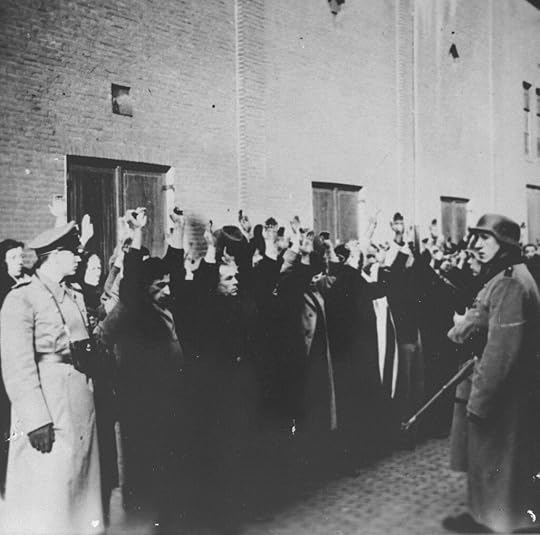
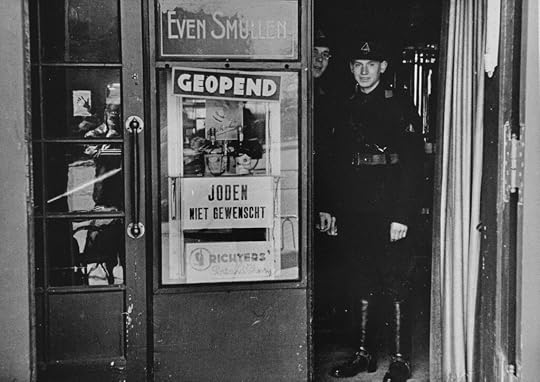
Round up of Jews in the Jewish quarter of Amsterdam. Amsterdam, the Netherlands, February 22, 1941. Members of the paramilitary organization of the Dutch Nazi Party stand in the doorway of a restaurant. The sign states "Jews are not desired." Amsterdam, the Netherlands, 1941–42. ❤️ 🇮🇱
Dzisiejsze Królestwo Niderlandów (dawniej Holandia) to kraj wielu kultur, narodowości i wyznań. Nikogo nie dziwi widok kobiety w hidżabie, osoby z wytatuowaną twarzą czy dwojga ludzi tej samej płci trzymającej się za ręce. Nie oznacza to jednak, że Niderlandy to kraj mlekiem i miodem płynący gdzie incydenty na tle religijnym czy ideologicznym nigdy się nie zdarzają. Jak wyglądało życie w Polsce podczas okupacji niemieckiej, każdy z nas doskonale wie. W polskich archiwach, muzeach czy zbiorach prywatnych odnaleźć możemy obszerne materiały na ten temat. O tym, jak wyglądały prześladowania ludności żydowskiej w Holandii czy sąsiedniej Belgii wiemy już nieco mniej. Kraje te, mimo że nie ucierpiały tak bardzo, jak Polska wskutek działań wojennych, to jednak mogą poszczycić się pewnym niechlubnym rekordem. Cytując histmag.org „Spośród 140 tys. holenderskich Żydów do obozów zagłady deportowano aż 105 tys. Zginęło blisko 100 tys. osób”. To zatrważająca liczba, biorąc pod uwagę, że Holandia jest krajem 7 razy mniejszym od Polski. Czy na ten niechlubny wynik wpływ miała postawa ówczesnej ludności cywilnej, obojętnej na tragedię swoich sąsiadów? Tego będzie próbowała dowiedzieć się autorka tej książki – holenderska dziennikarka i badaczka historii II wojny światowej. . W rodzinie Niny Siegal temat Holocaustu nigdy nie był tematem tabu. Od dziecka była świadkiem rozmów dorosłych, podczas których słyszała niezrozumiałe dla niej słowa takie jak holocaust czy obóz. Dla małej dziewczynki słowo obóz kojarzyć się może z dobrą zabawą, nowymi przyjaciółmi i wypoczynkiem. Nie rozumiała, dlaczego jej bliscy mówią o nim jako o miejscu, w których nie chcieli przebywać. Zadawane przez nią wówczas pytania zwykle pozostawały bez odpowiedzi, dlatego już jako osoba dorosła sama postanowiła znaleźć na nie odpowiedź. Jako Żydówka z pochodzenia od zawsze czuła, że jej obowiązkiem jest poznanie prawdy o swoich przodkach i motywach, jakie kierowały ich zachowaniem. . Książka ta jest o tyle wyjątkowa, bo powstała z potrzeby serca. Jest w dużej mierze próbą odpowiedzi na pytanie, dlaczego w sytuacjach zagrożenia postępujemy tak, a nie inaczej i czy da się usprawiedliwić okrucieństwo człowieka wobec człowieka. . „Pamiętnikarze. Druga wojna światowa w Holandii słowami jej naocznych świadków” zawiera notatki, wspomnienia i relacje osób, które same przeżyły pobyt w obozie bądź były świadkami prześladowań innych. Prawdziwe, wstrząsające i niezwykle szczegółowe mimo upływu wciąż dotykają tych samych dylematów moralnych. Gdzie leży granica między człowieczeństwem a zezwierzęceniem? Do czego gotowi byli posunąć się ludzie w chwilach zagrożenia życia lub zdrowia swojego, lub swoich bliskich? Czy będąc na ich miejscu, zachowalibyśmy się inaczej? Podczas lektury wielokrotnie zadawałam sobie tego typu pytania i odpowiedź zawsze brzmiała – nie wiem. Nie mam pojęcia, jak zachowałabym się w chwili próby. Czy byłabym katem, czy bohaterem? Naprawdę nie wiem i nigdy nie chciałabym się tego dowiedzieć. . Książka Niny Siegel nie jest lekka łatwa i przyjemna, ale takie właśnie książki są nam dziś potrzebne. Byśmy pamiętali jakim okrucieństwem niesie za sobą wojna. Jest takie powiedzenie, że Holender będzie ci współczuł, ale to Polak ci pomoże i z własnego doświadczenia wiem jak dużo w tym prawdy. Oczywiście każdy człowiek jest inny i nie wolno mierzyć wszystkich jedna miara, bo wszyscy wiemy, do czego może doprowadzić nienawiść i nietolerancja. Nie ma narodów lepszych i gorszych. Jedno jest pewne - dzięki zaangażowaniu i pracy osób takich jak Nina Siegal jest nadzieja na to, że pamięć o minionych wydarzeniach będzie ciągle żywa. Polecam wam serdecznie tę książkę. Wzbudzi w was wiele emocji, skłoni do refleksji i być może zainteresuje dotychczas niezainteresowanych tematyką II wojny światowej. . PS. Zapewne większość z was czytała Dziennik Anny Frank i wie, że dziewczynka wraz z rodziną przez długi czas ukrywała się w mieszkaniu pewnej Holenderki. W Amsterdamie pamięć o Annie Frank jest nadal żywa. Będąc w tym mieście, warto odwiedzić muzeum o nazwie Dom Anny Frank, a także zobaczyć jej pomnik. Wydaje się, że Holendrzy są świadomi tego, że ich postawa wobec holokaustu mogła być inna. Jednak czasu nie da się już cofnąć, ale można wyciągnąć wnioski na przyszłość. Zostawiam wam także link do ciekawego artykułu na który natknęłam się szukając informacji do tej recenzji: https://histmag.org/Jaka-byla-postawa... . Za możliwość przeczytania i zrecenzowania książki dziękuję @harpercollinspolska
I was surprised by how few diarists’ entries are included. There were of the most famous ones though those were mentioned. From well over 1,000 options: 3 Jewish, 2 Dutch Nazis, 1 a member of the resistance, 1 young adult with no political affiliation, and a very few mentions of other diaries/diarists. I ended up liking and appreciating those selected.
It was interesting (and sometimes horrifying) reading the different perspectives of the same time periods & events.
The reading got a bit tedious at times for me. It might be because even though I keep reading non-fiction I’ve been more in the mood for fiction. Most of it was not at all boring. At times it read like a thriller. The information presented was fascinating and there was a lot about Holland and its Jews during WWII which was previously unknown to me in spite of my having reading hundreds of Holocaust books.
The diary excerpts are put in sections that are in chronological order: Part I: Occupation, May 1940-May 1941; Part II: Persecution and Deportation, April 1942-February 1944; Part III: Toward Liberation, May 1944-May 1945; Part IV: The War in Memory, May 1945-May 2022.
At the start of each section some general history information for that time period is given. I found these parts at least as interesting as the entries from the diaries. In addition to this general current event of the time information included is some of author’s and others’ biographical information and general happenings of that time period and more currently.
This is a superb book. It’s an important book. My only real criticism is its repetitiveness. I also wish there had been even more: more diary writers. It was heartbreaking to read about the lost diaries, the lost stories of people, and I felt greedy to read more knowing that there were thousands more available. The book is already long but perhaps a list of all the known Dutch diaries could have been included. I would have loved that.
The author is the daughter and granddaughter of Holocaust survivors but they were not from the Netherlands. The author and her daughter do live in the Netherlands.
My favorite diarist might be Philip Mechanicus. His portions are really well written. He had been a professional journalist, and I loved how he kept working at Westerbork to report what was going on there. Heartbreaking.
It was disturbing to read about NSB people writing about their relatively posh and normal daily lives when other people are writing about their stressful (to say the very least) daily lives.
The sections at the end that covered a new Memorial and current antisemitism are excellent.
I greatly appreciated the many photos. There is a center section with color photos and each section starts with one black & white photo. The color photo section includes photos of many of the diaries, their outsides and their insides too. In one case illustrations the diary writer made are shown on the pages.
I needed many breaks from this book. I think it’s an exceptionally good book but it was emotionally difficult to read. It felt as though it took me even longer to read than it did.
4-1/2 stars. This is a 5 star book all the way but a half star off for the repetitiveness (even though maybe it wouldn’t have been easy to avoid and even though there wasn’t really that much of it) and because at times I found it hard to read.
I’ve been involved in Holocaust education for over 20 years and have read many Holocaust-related books. I find The Diary Keepers to be one of the most significant contributions of this century. I know my review won’t do it justice, but I’ll try.
If you read a description like this – The Diary Keepers presents diary excerpts from seven Dutch civilians during the war and intersperses them with historical background” – you might say “Next!”
But what if the seven diarists represent a compelling span of civilian experience under occupation? We have a Dutch Nazi policeman, the self-serving wife of a Nazi sympathizer, a teenager in a working class family, a Jewish woman in the Jewish Council that was forced to follow Nazi orders, the Jewish chronicler of Westerbork transit camp, a Jewish man in hiding, and an incredibly brave rescuer (Elizabeth van Lohuizen, who leaves one in awe). From Nina Siegal’s careful selections, you feel as close to the diarists’ experience as you can be. You may know how the war ends, but you don’t know what’s going to happen to these individual people day by day and come to share their hope and dread.
And what if the sections with historical background make it one of best single-volume sources on the major ethical issues in Holocaust justice, scholarship, and remembrance? Siegal doesn’t avoid the moral issues we face in “explaining” war, especially the ethical traps people find themselves when struggling to choose the least horrible of impossible choices – or to explain themselves when they chose the most horrible options. These sections include: • the trial of the Dutch Nazi policeman and the “self-distancing strategies” of collaborators’ defenses • the desperate attempts of the Jewish Council to follow Nazi orders in ways to protect Dutch Jews which only became delays in their ultimate deaths • in a chapter entitled "What Do You Have to Know to Know?," the torturous logic used to justify inaction in face of clear evidence that the disappearing Jews were going to their deaths (“We didn’t know about the gas chambers” . . . but came to know everything up to that point) • the value of diaries as historical documents, given their subjective perspective made deeper by the stresses of war and survival. • the arduous process of collecting survivor testimonies, and evaluating how the survivors' memories may have changed over the decades • the controversies over how to memorialize the Holocaust and give immediacy to the victims’ experience.
In addition, Siegal’s working with the NIOD Institute for War, Holocaust, and Genocide Studies in Amsterdam to identify and excerpt the diaries, interviewing the diarists’ relatives and some of the surviving diarists themselves, researching her own relatives’ experiences in the war (some in hiding, some in camps) – all add to this gripping work. Siegal is an experienced, gifted, and committed writer who has afforded us a unique view of the Holocaust and its ramifications.
In THE DIARY KEEPERS, journalist Nina Siegal presents a wide-ranging panorama of characters and events from World War II as experienced in the Netherlands, revealing horrors, heroism and a mixed view of human nature.
Siegal’s family emigrated from Europe, where the planned annihilation of Jews was carried out --- day by day, truckload by trainload --- over a five-year period. The Netherlands sustained a reputation as one country where Jews were protected, hidden by non-Jews, often for the duration of the Nazi occupation. Because of her family’s direct experience of those harrowing years, Siegal grew up with questions that went unanswered until she decided to tackle the subject directly, in cooperation with Amsterdam’s NIOD Institute for War, Holocaust and Genocide Studies. There she accessed the diaries written by those who lived through and observed the happenings.
These diaries are presented day by day, starting in February 1941 when journalist Philip Mechanicus recorded that a group of Nazi sympathizers, along with German soldiers and local police, were prowling the streets, smashing windows in Amsterdam’s Jewish sector and beating or shooting anyone who raised an outcry against them. These incidents escalated until the Jewish quarter was closed off entirely, and people who lived there began to disappear, never to return. There were Dutch people who aided the Jewish population in a variety of ways --- hiding them in basements, storing their belongings for the day of their anticipated freedom --- while some cooperated with the invaders, either out of fear or because of a shared antisemitic viewpoint. During the years of occupation, the majority of the country’s Jews were killed.
Some Jews, like Siegal’s mother, managed to hide out and stay alive. But when Siegal would once refer to her mother as a “survivor,” she was chided --- that word was used only for those who had been in the camps. Such fine points of language and recollection are shimmering threads running through the diarists’ entries, combined with Siegal’s interspersed, assiduously researched commentary. Now, she notes, when so many sources --- including the world-heralded THE DIARY OF A YOUNG GIRL --- tell so much about “Dutch resilience, resistance, and triumph against evil,” there are still those who would gloss over the less savory truth of the Holocaust in the Netherlands.
However, Siegal’s remarkable work relates the facts fairly and plainly, containing courageous accounting seen by those who were there. As she states, their diaries should be regarded as a “first draft of memory.” Diarist and store owner Elisabeth van Lohuizen, noting that liberation was finally at hand in May 1945, perhaps speaks for all: “Will we be free of war in the future? I hope that God will grant it. We must make every effort to make that so.”
The Diary Keepers is a book by Nina Siegal that tells the stories of ordinary Dutch people who kept diaries during World War II. The book is divided into three parts: “The Occupation,” “The Resistance,” and “The Liberation.” Each part features the stories of several diarists, including Elisabeth van Lohuizen and Philip Mechanicus.
Elisabeth van Lohuizen was a 48-year-old store owner who lived in the town of Epe, Netherlands. She was a devout Christian and a member of the Dutch Reformed Church. When the Nazis invaded the Netherlands in 1940, van Lohuizen began hiding Jewish refugees in her home. She also helped to smuggle food and other supplies to the resistance.
In her diary, van Lohuizen wrote about the daily horrors of the occupation. She described the raids on Jewish homes, the deportations to concentration camps, and the executions of resistance fighters. She also wrote about her own fears and doubts, but she never gave up hope.
Philip Mechanicus was a journalist who worked for the Dutch newspaper Het Parool. He was arrested by the Nazis in 1942 and sent to the Westerbork concentration camp. Mechanicus kept a diary during his time in the camp, and he wrote about the daily horrors of life in a concentration camp.
Mechanicus was deported to Auschwitz in 1943, where he was murdered. His diary was found after the war and published in 1946. It is a powerful and moving account of the Holocaust.
The Diary Keepers is a powerful and moving book that tells the stories of ordinary Dutch people who lived through the horrors of World War II. The book is a reminder of the importance of courage, hope, and resilience in the face of evil.
The Diary Keepers is a valuable resource for anyone who wants to learn more about the Holocaust. The book provides a first-hand account of the occupation of the Netherlands, the resistance movement, and the liberation. The stories of Elisabeth van Lohuizen and Philip Mechanicus are just two examples of the many stories of courage and resilience that can be found in the book.
The Diary Keepers is a must-read for anyone who wants to understand the Holocaust. The book is a powerful and moving reminder of the importance of freedom and democracy
I would like to express my sincere appreciation to both Netgalley and Ecco Press for granting me the privilege of reading a complimentary copy of this non-fiction book. The views expressed in this review are entirely my own, and I apologize for offering my insights after the book's publication date.
This is a powerful non-fiction work based on the diaries of several Dutch Jewish individuals who lived through the horrors of World War II. Reading their stories was at times an emotionally challenging experience, as it revealed the unfathomable depths of suffering and tragedy they endured. Prior to delving into this book, I had no knowledge of the staggering toll on the Dutch Jewish population. Learning that three-quarters of the Jewish community in the Netherlands either perished when deported, took their own lives upon learning of the impending German occupation, or were betrayed by neighbors, family members, or colleagues was a shattering revelation. Some held onto false hope, believing the Nazis' deceitful promises of return from work camps, a cruel ruse that history has since exposed.
Remarkably, the author chose to spotlight the diaries of everyday individuals—widows, shopkeepers, journalists, and more—rather than the widely known Anne Frank. Their diaries provide intimate accounts of their experiences, which, while often harrowing, are essential to our collective memory and understanding of history.
The narrative delves into a multitude of topics, such as why the Netherlands suffered such significant losses within its Jewish population, the widespread inaction of bystanders, and the collective desire to move on and forget the war. These explorations are both fascinating and profoundly sobering.
For readers with an interest in non-fiction books, particularly those focused on World War II, I wholeheartedly recommend this poignant and historically significant work. It's a stark reminder of the horrors endured by many, and it is essential that their stories continue to be heard and remembered.
Excellent book! This is NOT historical fiction, this is history. Brutal history. Extremely well researched and presented.
Based on select writings from an exceptional Amsterdam archive containing more than two thousand Dutch diaries from World War II, The Diary Keepers illustrates a part of history we haven’t seen in quite this way before. Nina Siegal, an accomplished journalist and novelist, weaves together excerpts from the daily journals of collaborators, resisters, and the persecuted—a Dutch Nazi police detective, a Jewish journalist imprisoned at the Westerbork transit camp, a grocery store owner who saved dozens of lives—into a braided nonfiction narrative of the Nazi occupation and the Dutch Holocaust as individuals experienced it day by day.
Siegal provides the context , both historical and personal, while she tries to make sense of her own relationship to this past. As a “second-generation survivor “ born and raised in New York she attempts to understand what it meant for her mother and maternal grandparents to live through the war in Europe during those times. When Siegal moved to Amsterdam, those questions came up again, as did another horrifying one: Why did 75 percent of the Dutch community perish in the war, while in other Western European countries the proportions were significantly lower? How did this square with the narrative of Dutch resistance she had heard so much about?
Searching and singular, The Diary Keepers takes us into the lives of seven diary writers and follows their pasts into the present, through interviews with those who preserved and inherited these diaries. Along the way, Siegal investigates the nature of memory and how the traumatic past is rewritten again and again.
Most of us have read stories about the Holocaust and the Nazi effort to eradicate the Jews in Europe. Many also have read or watched the story of Anne Frank and the way her and her family hid from the SS for so many months before eventually being arrested and sent to a death camp.
So it’s understandable that we might assume we have a pretty good understanding of the Holocaust. However, the effort by journalist Nina Siegal brings the Holocaust to a very personal level. The story is told largely from the diaries of those who lived it in the Netherlands. The diaries are shocking in many ways. First, of course, are the heart wrenching stories of entire families who complied with SS demands but were later victims of the Holocaust. However, the second way these diaries are shocking is through the eyes of those who supported the deportation of Jews to the death camps mostly in Poland. For example, we read the diary of a Dutch police officer who fully cooperates with the Germans as they round up Jews in Amsterdam. It’s just another day at the office to read his diaries.
These revelations are in stark contrast to the image I have of the residents of the Netherlands bravely resisting the Nazi occupation and protecting their Jewish neighbors from arrest and deportation. The sad truth, often surpassed or ignored after the war, is that many of the Dutch cooperated with the Nazi regime. In fact, I was astounded to learn then when some of the surviving families returned from the camps after the war, the Netherlands government moved to foreclose on their property for failure to pay taxes during that time.
This is an eye-opening book that raises important issues which have been avoided for many years.
This book is not marketed sufficiently, and I say that as a compliment. It is a series of diary entries of those who lived through the war in the Netherlands, but it has so many other elements that it would be impossible to funnel it into just one category.
1. The diary entries themselves are poignantly edited together. The different voices speak out in tandem, showcasing the contrast and relatability amongst them. Based on the author's description of the thousands of pages that she sifted through, it is really an incredible testament to her connection with the diarists that she was able to convey so much through her ordering and editing of each entry.
2. There is expositional material between the sections that highlights the broader local and international context. The research that Siegal provides assists the reader in understanding the first-hand testimonies. Some of the information is preemptive, given in an effort to shape the reader's engagement with the diary entries; at other times, she allows one to jump straight into the writing.
3. Nina Siegal's own journey in coming to terms with her familial history was the impetus for this book, and she shares freely of her physical and emotional exploration of the Netherlands and its meaning for her. She shares research into the ideas of collective memory, contributing a framework for processing generational trauma. The complexity of shared experience is that each individual will have his or her own unique interaction with the memories of that experience, and Siegal respectfully and honestly conveys a myriad of perspectives.
I would strongly recommend this book, especially for those who are interested in the personal, psychological, and practical elements of remembrance and first-hand historical testimony.
4.5 ⭐️Overall I learned a lot about WW2 from the perspective of those living in the Netherlands. Growing up I only heard about the war through American eyes and occasionally a teacher would mention the holocaust. Sad, huh? As I became interested in historical fiction, I found myself drawn to this war and the stories that weren’t taught then and aren’t taught now. This book is NOT historical fiction but it’s taken from the diaries of many who lived through the war taking place on one of the lesser countries considered for inclusion in WW2 writing. Nonetheless, Hitler and his influence certainly didn’t over look this beautiful place.
The diary entries show the fear, the dread, the planning (to help others), and the waiting - the agony of waiting for all the suffering to be over. These entries, however short some of them are, all reach your soul. There are several entries from a woman whose husband was rising with the SS and these are upbeat and excited - a very sharp contrast to what the average person was feeling and experiencing.
The only reason I didn’t give this 5 stars is that after a series of diary entries the author interrupts to give us further background information or to tie loose ends together. A lot of the material in these explanation add value to the diary keepers’ stories but an almost equal amount don’t. I found some of this information to be less intregral and therefore a distraction. Some obviously like all the material and I’m probably in the minority here. You decide. I just suggest you read this as it shows no one was safe under Hitler. I shudder to think what the world is capable of producing now.
4.5. This is largely a chronological compilation of diary excerpts maintained during WWII by Dutch citizens; the voices included a young Jewish woman and an older Jewish journalist; a middle-aged farmer's wife who worked to shelter Jews during the war; to the wife of a Nazi leader, and the juxtaposition was really powerful. What I loved in particular was how conscientiously some of the diarykeepers were trying to come to terms with the reality and horror of what was happening and the fact that their contemporaneous observations felt a bit suspended in time. Bearing that in mind with the historical knowledge of how it all turned out, it was particularly moving to read passages from, say, January 1941, when they coudn't fathom what was to come either in terms of duration or horror. It is also a good reminder at this moment in American history that millions of Europeans were living normal lives prior to the war where the idea of Nazi domination and the Holocaust were unimaginable, unfathomable, and yet came to pass. I'm in no way likening Trump to the Nazis, but it serves as a reminder that our way of life is not promised. My one critique is that I felt like the author's voice was much more prominent throughout the book than it needed to be--especially towards the end. The book would have been even stronger if it had been more exclusively the diary excerpts.
75% of the Dutch Jewish community perished in the Second World War, while in other western European countries, the proportions were significantly lower. Coincidentally as I read this book, Israel was recovering from terroristic attacks on its citizens.
History has recorded the treatment of Jews by the Nazis from 1933-1945. However this reader was surprised by similar treatment of Jews by the Dutch. The diaries describe how Jews were hunted down. Jewish families were separated. Their properties and possessions were seized. They suffered physical beatings and a variety of emotional and mental humiliations.
Some Dutch did their best on hiding Jews or preventing them from being sent outside the country to labor camps and gas chambers. Jews were thrown on trains as cattle. There were vivid descriptions on how they were horribly treated.
How could civilized people allows this to happen? Fear of reprisals? Hatred and distrust of Jews?
There were diaries of those who supported Jews and those that supported the Nazis. Their motives are part of the story. The diaries depict stories of both heroism and cowardice.
History continues to repeat itself...
Very sobering book and surprising as one would expect the Dutch people to be more civilized.