Jump to ratings and reviews
Rate this book

3 Strange Tales

Rate this book
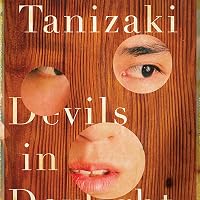
3 Strange Tales presents new translations of this classic Japanese author's most well-known stories: Rashomon; A Christian Death; the never-before-published-in-English story, Agni; and a bonus story, In a Grove.

100 pages, Paperback

First published November 15, 2012

9 people are currently reading
83 people want to read

About the author

Ryūnosuke Akutagawa

1,337 books2,137 followers
Akutagawa Ryūnosuke (芥川 龍之介) was one of the first prewar Japanese writers to achieve a wide foreign readership, partly because of his technical virtuosity, partly because his work seemed to represent imaginative fiction as opposed to the mundane accounts of the I-novelists of the time, partly because of his brilliant joining of traditional material to a modern sensibility, and partly because of film director Kurosawa Akira's masterful adaptation of two of his short stories for the screen.

Akutagawa was born in the Kyōbashi district Tokyo as the eldest son of a dairy operator named Shinbara Toshizō and his wife Fuku. He was named "Ryūnosuke" ("Dragon Offshoot") because he was born in the Year of the Dragon, in the Month of the Dragon, on the Day of the Dragon, and at the Hour of the Dragon (8 a.m.). Seven months after Akutagawa's birth, his mother went insane and he was adopted by her older brother, taking the Akutagawa family name. Despite the shadow this experience cast over Akutagawa's life, he benefited from the traditional literary atmosphere of his uncle's home, located in what had been the "downtown" section of Edo.

At school Akutagawa was an outstanding student, excelling in the Chinese classics. He entered the First High School in 1910, striking up relationships with such classmates as Kikuchi Kan, Kume Masao, Yamamoto Yūzō, and Tsuchiya Bunmei. Immersing himself in Western literature, he increasingly came to look for meaning in art rather than in life. In 1913, he entered Tokyo Imperial University, majoring in English literature. The next year, Akutagawa and his former high school friends revived the journal Shinshichō (New Currents of Thought), publishing translations of William Butler Yeats and Anatole France along with original works of their own. Akutagawa published the story Rashōmon in the magazine Teikoku bungaku (Imperial Literature) in 1915. The story, which went largely unnoticed, grew out of the egoism Akutagawa confronted after experiencing disappointment in love. The same year, Akutagawa started going to the meetings held every Thursday at the house of Natsume Sōseki, and thereafter considered himself Sōseki's disciple.

The lapsed Shinshichō was revived yet again in 1916, and Sōseki lavished praise on Akutagawa's story Hana (The Nose) when it appeared in the first issue of that magazine. After graduating from Tokyo University, Akutagawa earned a reputation as a highly skilled stylist whose stories reinterpreted classical works and historical incidents from a distinctly modern standpoint. His overriding themes became the ugliness of human egoism and the value of art, themes that received expression in a number of brilliant, tightly organized short stories conventionally categorized as Edo-mono (stories set in the Edo period), ōchō-mono (stories set in the Heian period), Kirishitan-mono (stories dealing with premodern Christians in Japan), and kaika-mono (stories of the early Meiji period). The Edo-mono include Gesaku zanmai (A Life Devoted to Gesaku, 1917) and Kareno-shō (Gleanings from a Withered Field, 1918); the ōchō-mono are perhaps best represented by Jigoku hen (Hell Screen, 1918); the Kirishitan-mono include Hokōnin no shi (The Death of a Christian, 1918), and kaika-mono include Butōkai(The Ball, 1920).

Akutagawa married Tsukamoto Fumiko in 1918 and the following year left his post as English instructor at the naval academy in Yokosuka, becoming an employee of the Mainichi Shinbun. This period was a productive one, as has already been noted, and the success of stories like Mikan (Mandarin Oranges, 1919) and Aki (Autumn, 1920) prompted him to turn his attention increasingly to modern materials. This, along with the introspection occasioned by growing health and nervous problems, resulted in a series of autobiographically-based stories known as Yasukichi-mono, after the name of the main character. Works such as Daidōji Shinsuke no hansei(The Early Life of

Ratings & Reviews

What do you think?
Rate this book

Friends & Following

Create a free account to discover what your friends think of this book!

Community Reviews

5 stars
24 (18%)
4 stars
44 (33%)
3 stars
51 (38%)
2 stars
10 (7%)
1 star
2 (1%)
Displaying 1 - 20 of 20 reviews
Profile Image for Janet.
147 reviews64 followers
December 2, 2012
I think this is a case of lost in translation combined with an absence of intellect because I just didn't get it. The only story that held my interest was the 'bonus' tale entitled In a Grove which I could at least follow.

An added distraction was the book's poor production value which had the look and feel of a Kinko's job. The preface by translator, Glenn Anderson should have been on a sandwich board ... 'While this collection could just stop there, in the fashion and spirit of this collection we have added a bonus story. Yes, a bonus story.' And then the grammatical errors... 'In truth, the story was just to good to leave out, and so we present it to you, our readers, as a bonus.'

I picked up this slim volume based on Ryan's review. Ryan is a guy who does the deep dive and harvests the pearl; I want to know what he knows. Someday maybe he will explain it all to me in terms understandable to a third grader.
Profile Image for Rise.
308 reviews41 followers
January 16, 2016

I met the couple yesterday, a little past noon. The breeze blew through and pulled back the silk scarf draped over the woman and I saw her face for just a moment. It was just a second, because then I couldn't see it anymore. Maybe that was the reason, I'm not sure, but she looked like she'd fallen from heaven and I made up my mind then and there to steal her away, even if it meant killing the man.

The speaker, the notorious bandit Tajomaru, was confessing to the crime. All he needed was just a second to be waylaid. He wasn't sure what compelled him to do harm. He thought it was the breeze momentarily revealing the face of a woman. Maybe that was the reason, I'm not sure. But he made up his mind there and then. Later:

But you didn't see her face. You didn't see the way her eyes burned when she said it. When I saw her face, let God strike me dead, I had to have her for my wife. I had to have her—that was the only thought in my head.

The actions of Akutagawa Ryūnosuke's characters are strange. They are rash, impulsive. They are strange because they went unexplained. Or the explanation was insufficient—You didn't see her face. The characters decide things rather quickly, without regard for the consequences of their acts. They—in a word—snap.

The moment I stood the man kicked me to the ground, and it was just then that I saw the glint—it's hard to describe it, but there was a glint in my husband's eyes. I don't know how to describe it, but just the memory of it sends shivers down my spine.

The woman's testimony, contradicting the bandit's, was equally strange. She knew what she had seen—a glint—and was terrified of it. There was uncertainty on her part (it's hard to describe it ... I don't know how to describe it) but she nonetheless left an indelible image—a glint—that will be very hard to forget.

These passages were taken from the popular story of Akutagawa Ryūnosuke called "In a Grove". The last story from the recent translation 3 Strange Tales. It was in fact the fourth story, a "bonus story" after the first three. The inexact number of stories in the title may be fitting, given the set of unreliable narrators in "In a Grove" whose testimonies regarding what happened on the day a man was killed were (oddly) at odds with each other.

All four stories were unified by a mood of passionate intensity. The characters were impulsive, highly sensitive, slaves to their feelings. Their violent deeds were executed with no fuss. In moments of desperation, they were, moreover, not quite themselves. They seemed to be possessed by somebody else. Here was the murdered victim of "In a Grove", his testimony spoken through a medium, no less.

The grove was silent, or I thought it was. Straining my ears in the quiet, I could just make out the sound of someone crying. Soon I discovered that it was only my own quiet sobs that filled the clearing.

Yet another kind of possession was at work in the third story, "Agni", which appeared here in translation for the very first time. The story was about an Indian woman, a witch, who kidnapped a young girl which she forcefully used as the medium for Agni, a powerful Indian god who could tell the future. The witch was notorious as a fortune teller; she was selling Agni's prophecies to rich buyers. At the start of the tale, a man called on the witch to ask when Japan and America will go to war. A possession was scheduled at midnight so the woman could give the answer in the morning.

With the help of a man who was searching for the girl, the girl hatched a plan to escape the witch. She would pretend a false possession by Agni right before she went to sleep. As Agni, she would then command the witch to immediately return her to her father or else she will be killed. Will the girl be able to pull it off? Will she be able to pretend as being possessed before she went to sleep and became actually possessed by Agni? And, in that case, will she be able to convince the witch?

This "possession", a kind of wholesale transformation of character, was an essential device for Akutagawa. The transformation may be brought about by an actual possession, or it may be compelled by extreme events and circumstances, but the result was the same. A character was changed into someone else, someone violent.

The other two stories in the slim collection—"Rashomon" and "A Christian Death"—were widely anthologized. They also closely followed the framework of unpredictability brought about by the characters' sudden emotional outbursts and violent actions. They captured the strange territory of the rashomonesque, the relative notion of good and evil. But this time, the stories unfolded within apocalyptic settings.

"Rashomon" was set in the declining city of Kyoto in the aftermath of disasters: earthquakes, typhoons, fires, and famines. A servant, newly dismissed by his master, was contemplating the surrounding wasteland below the gate of Rashomon. It was raining and he was trapped. The moral decay around him was essential to understanding the moral choice he made at the end of the story, while confronting an old woman in a tower. The choice—his conviction—suddenly came to him, as if it possessed him.

As he listened he was gripped by a new conviction, one that worked on him in precisely the opposite way than his earlier ruminations on evil had when he leapt into the tower and grappled with the woman. It was the very conviction that he had lacked when he sat under the gate.

The servant had been profoundly troubled when confronted with a choice between death and a life of crime. But now—now, the very concept of starvation had left him entirely.

"A Christian Death", a fictional account of an event in Nagasaki sometime in the late 16th century, was also concerned about moral choices. With the same economy of detail in the other stories, Akutagawa sketched a story of Christian missionaries faced with a moral crisis. A young boy they adopted and grew very fond of was accused of impregnating a girl in the neighborhood. He was expelled from the church. The tale culminated with an apocalyptic fire, an event that became a testing ground for the faith of all involved characters and the veritable stage for Akutagawa's successive unfolding of revelations, as unpredictable as they were incredible.

The translations of three (plus one) stories, by Glenn Anderson, sounded simple and conversational. They are a perfect sampler of the most intense stories by the acknowledged "father of the Japanese short story".


I received a review copy of the book from the publisher.

Profile Image for W.
349 reviews2 followers
April 12, 2023
Short stories get no love.

I enjoyed this, but then again, I am heavily biased towards 20th Century Japanese fiction that has lines like:

“Nothing else is known about the life of this girl. But that is no matter, for the magnificence of a person’s life is condensed into the singular moment when their spirit reaches its pinnacle of expression. A man will make his life worth living when he tosses a wave into the darkest night, breaking through the firmament of human desire that stretches over the sea, and captures in its foam the light of the moon yet to rise. Therefore, do not those who know Lorenzo’s end know the whole of her life?”

Ooo yeh 🫦 that’s the good stuff 🌊🎑

Bonus points for Akira Kurosawa.
Profile Image for Heni.
Author 3 books45 followers
July 21, 2022
I've read the three out of four stories here, which titled Agni. It's not that good either. I think Akutagawa's best book is In the Grove and Rashomon, and as it's been featured in many collection, it feels like a cheat 😐
Anyway, Agni: it's about an Indian god who possessed a Japanese girl and foretold the future to the Indian witch. Kind of like an Oracle. There's this damsel in distress, old wicked witch and a prince with shining armor plot. So ordinary, and honestly, not at all strange.
Profile Image for Divine.
409 reviews188 followers
November 27, 2020
To be honest this wasn't very impressive at all. I really liked Rashomon and In The Grove though. Maybe this got lost in translation? Idk, but I'll probably read more of Akutagawa's works to know for sure. Anyway, this is a light and digestible read.
Profile Image for Natascha Eschweiler.
Author 3 books5 followers
January 23, 2021
Decent translation and nice design. Agni is quite different from what Akutagawa usually did but interesting nevertheless. 3.5/5
Profile Image for Toty.
15 reviews1 follower
February 16, 2023
Rashōmon and In The Grove were my personal favorites of this short afternoon read however, I feel like some parts may have been lost in translation as I feel a lot of words are repeated throughout the book and that the details aren’t very explicit. I do enjoy Akutagawa’s descriptions of the different settings and atmospheres.

6.8/10
96 reviews5 followers
January 4, 2018
Definitely strange...I'm going to have to do a little research, but isn't that the sign of a good book? That it leaves you with questions?
Profile Image for Dave.
1,356 reviews11 followers
April 3, 2020
Excellent stories by Akutagawa!
Profile Image for Bryce.
11 reviews3 followers
May 3, 2020
Turn of the century horror/mystery stories from Japan. A must for fans of Lafcadio Hearn. Inspired Kurosawa's Rashomon.
Profile Image for Zet.
68 reviews3 followers
November 2, 2021
2 dari 4 cerita dalam buku ini sudah kubaca (Rashomon dan In The Groove atau Di Balik Belukar) namun ada beberapa bagian yang berbeda.. mungkin karena perbedaan interpretasi dari penerjemah.
Profile Image for Grizel Olmilla.
154 reviews
October 1, 2024
3.5⭐

I thought this was a simple, but decent collection of stories. I liked "In a Grove" the best because of the conflicting testimonies. Some themes didn't age very well though!
Profile Image for Ilana.
356 reviews7 followers
July 12, 2020
I've never been a short story fan, but once I just accepted these as basically brief looks into a larger story I was able to really enjoy what I was reading. The writing (& translation) was very vivid, I was really able to feel a connection in so few pages. I look forward to reading more by Akutagawa.

(I will admit that the reason I sought this book out was to read Rashomon as I am just a tad obsessed with Bungou Stray Dogs and the character of Akutagawa. I am about to go on a Japanese classic journey thanks to an anime/manga. Who'd have thought?)
Profile Image for nathan.
687 reviews1,349 followers
February 21, 2013
3 Strange Tales by Akutagawa Ryunosuke was..can I advertise a potty read? This is a white-porcelain read, quick, easy, and stupid about Indian witches, a peasant who’s trapped in the rain, a bland bible story, and a dumb murder “mystery”. Hailed as the “Father of the Short Story Form of Japan”, I really hope that isn’t true, because these were quite pathetic. Either that or the translation was really off. Not recommended.
Profile Image for Shed.
399 reviews11 followers
August 23, 2020
Another Japanese Author has been added to my list. .

3 STRANGE TALES by AKUTAGAWA RYŪNOSUKE is the perfect gateway drug to his books. I still have a lot of Jap-authored books on my list (sure, sure, Haruki is there somewhere). I might actually start Confessions by Kanae Minato this month. We'll see.


This marks my...5th book for the month, I think. I'm starting to lose track. Who gives a shit anyway.
Profile Image for daniel.
443 reviews12 followers
April 23, 2013
rather than saying he was waiting for a break in the rain, allow me to rephrase: the servant was trapped by the rain, but had nowhere else to go.

_________________________

a bonus story--!! can never read 'in a grove' enough.
Displaying 1 - 20 of 20 reviews

Can't find what you're looking for?

Get help and learn more about the design.