From the author of Blood at the Root: A Racial Cleansing in America and the National Book Award finalist Elegy for a Broken Machine: Poems, here is the first collection from award-winning poet Patrick Phillips.
A river runs through Patrick Phillips’s collection Chattahoochee, and through a family saga as powerful and poignant as the landscape in which it unfolds. Here are tales of a vanished South, elegies for the lost, and glimpses of what Flannery O’Connor called the “action of grace in territory held largely by the devil.” In language delicate and muscular, tender and raw-boned, Phillips writes of family, place, and that mythic conjunction of the two we call home.
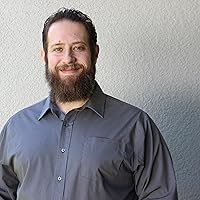
Patrick Philips was born in Atlanta, Georgia. He earned a BA from Tufts University, an MFA from the University of Maryland, and a PhD in English Renaissance literature from New York University. He is the author of the poetry collections Chattahoochee (2004), winner of the Kate Tufts Discovery Award, Boy (2008), and Elegy for a Broken Machine (2015), a finalist for the National Book Award. Through his poems, Philips frequently tells stories of earlier generations of his white, working-class family’s life in Birmingham, Alabama; in his work, he also grapples with race relations, the complex and violent dynamics of family relationships, and parenthood. In an interview for storySouth, Philips noted that he has found working in traditional poetic forms to be “generative” while acknowledging a poem’s need for both narrative and song.
His honors include a fellowship from the National Endowment for the Arts, a Guggenheim Fellowship, and a Fulbright Scholarship to the University of Copenhagen. He won the American-Scandinavian Foundation’s translation prize for his translations of the work of Danish poet Henrik Nordbrandt.
I have read other works by this writer. I previously read some of his poems in an anthology of Southern poets and his nonfiction book, Bloot at the Root. The poet incorporates Southern dialect and culture into his work. He also uses the poetic devices of repetition and imagery so each of the poems feels personal and a depiction of his family and culture.
Another great book of poetry by Patrick Phillips. His imagery is fantastic. Many of the poems leave you feeling like you were watching on whatever he described. The words are descriptive and concise.
"If the drowned man must speak, then-- as his body, stripped bare, floats away--let him say this: the oldest instinct is to find what you bury, to come back and dig up your bones."
Beautiful collection of poems. There were a few I had to read a few times just to savor it and because they were so affecting. It really evoked "the South" for me, even though I've only been to the South a handful of times.