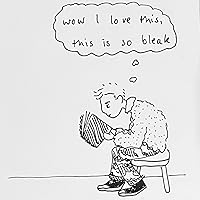
Arguing that we are living in a state of intellectual emergency, a renowned critic fears that the transition from book to screen threatens basic premises of humanism and that information technologies and the printed page are not compatible. IP.
Sven Birkerts is an American essayist and literary critic of Latvian ancestry. He is best known for his book The Gutenberg Elegies, which posits a decline in reading due to the overwhelming advances of the Internet and other technologies of the "electronic culture."
Birkerts graduated from Cranbrook School and then from the University of Michigan in 1973. He has taught writing at Harvard University, Emerson College, Amherst College, and most recently at Mount Holyoke College. Birkerts is the Director of the Bennington College Writing Seminars and the editor of AGNI, the literary journal. He now lives in the Boston area, specifically Arlington, Massachusetts, with his wife Lynn, daughter Mara, and son Liam.
I probably shouldn't even talk about this book considering I didn't read the entire thing...what would VirJohn think? But, I will have the self-restraint to not give it a star rating. Instead, I'll just respond to it.
I've read a few of the most applicable chapters from this book, and have adapted it into a lit review, but I might be missing aspects of Birkerts' argument. However, this is what I've picked up from what I read: Birkerts isn't optimistic about what the internets are going to do to teh litrature! NOT TEH LITRATURE! AAAAAAAAAAAAHHHHHHHHHHHHH!
Because, you know, once writers can do stuff like randomly link to other texts in the middle of a piece of writing, and redirect you to other texts, the linearity, and to a certain extent, the control of the author is moved increasingly into the hands of the reader. The reading experience is, in Birkerts' opinion, less linear, less challenging (because you can change gears more quickly).
But yo. How many of us read everything straight through? When I'm about halfway through a book, I flip to the end and read the last sentence, and ponder how we'll get to that sentence from here, or what that sentence might reveal. When I'm reading anything academic...like Birkerts' book....I flip around in a self-serving fashion, not especially concerned with taking in everything homeboy says chronologically. THIS IS HOW PEOPLE READ: HOWEVER THEY FLIPPIN WANT TO. So, the distinction Birkerts and many other scholars are making seems entirely superfluous to me.
But, what do I know? I'm such a goddamned anarchist it's not funny. I say, teach the highschoolers Tupac and Snoop Dogg if it can teach them to think critically. Hell, teach them Angelic Upstarts and Cockney Rejects, too. As this website illustrates very clearly, you can think critically about crap, and you can think uncritically about Literature. So, I think of literature as a bit of a myth, generated for simplicity: certain things are worth reading, while others aren't. This makes things much easier for English majors, and it perpetuates the need to print books that are of a higher quality, but don't sell as many copies. Don't get me wrong: this is a good thing. But...where am I going with this. Okay, I was tangenting. Back on topic.
The idea that critical thinking comes from viewing certain forms of art and not others is a myth. Kat proves this with her reviews, as does Keely, as do many other people on goodreads. And, it's this same sort of mentality of valuing the familiar over the unfamiliar that perpetuates the myth that you only learn while reading that which is academically approved. Fuck the academy, and fuck anyone who thinks they can point out what really counts as "literature" and what doesn't.
(Note: apparently this book, which extensively denounces and condemns twenty-first century technology, is available on Kindle and as an eBook. That's almost painfully ironic, and also hilarious.)
I read "The Owl Has Flown" for a class about four years ago, and had been wanting to read more of Birkerts' work since then. It took me a while to track down this copy, and even longer to finally read it. When I did, it was disappointing. Sven Birkerts is pretentious and pedantic, and often very ignorant. There's a section in which he talks about how his experiences reading the works of various black authors has affected his interactions with black people he meets face to face, and it was cringe inducing. I wrote a note in one of the margins that it seemed like Birkerts was saying, "I understand black people! I've read about them in books."
There's a lot of name-dropping, both of authors and of "good literature", and that grew obnoxious quickly, especially since it'd often happen more than once per page. Birkerts also seems to only be aware of people within his own demographic, taking it for granted that everyone has access to such demonic devices as a telephone and a computer, and that everyone lives in a suburban house and drives a car. These assumptions were sometimes jarring for me. He also makes oral traditions out to be a "primitive" precursor to the evolutionary superior written word, and basically equates illiteracy with stupidity or laziness. These things are classist and racist, and potentially ableist as well.
I started getting disgruntled partway through the book and took to mocking the author in the margins, hating his arrogance but feeling like I couldn't stop reading. I felt like since I'd put so much effort in, I had to finish, if only to add another book toward my yearly Goodreads challenge. There'd also occasionally be an interesting idea or phrase, and I'd keep going to see if any more interesting things would happen. I probably would have given up, but then I happened across a message from a previous reader. In a section where Birkerts was talking about how there's a greater sense of connectedness because of technology, I discovered a few words in cursive which read, "But I feel isolated !"
I think it's Billy Collins who has a poem about how marginal notes from previous readers in books can change the way the current reader sees/understands the work. I've definitely enjoyed reading the notes and underlinings I've come across in used books, but I've never before had an experience quite like I did when I read that message. There was this ache, the "suffering together" that compassion literally translates to. I wanted to meet the person who wrote of their isolation and tell them that I feel isolated, too. It took me minutes to get back to my reading, after that, just thinking about who this person could be and what was going on in their life when they wrote that. I wonder how they're doing now.
I also wonder if Sven Birkerts now has a computer, twenty years after writing "The Gutenberg Elegies" on his typewriter, staunchly avoiding as much tech as possible and worrying that children who grow up around Walkmen and answering machines will lose all their compassion and ability to think deeply.
This is a passel of independently published essays more than a singular coherent book, and the seams show. Chapter 8 begins, "Some years ago, a friend and I comanaged a used and rare book shop in Ann Arbor, Michigan" as if imparting new information. Yes, we know - you told us this story in great detail in Chapter 2.
Several of the chapters are pointless word salads. And I found it ironic that the cover of a book bemoaning the downsides of computer technology seems to be one of the ugliest PowerPoint slides ever created. All I can see when I look at it is text boxes in Times New Roman, shortened or shrunken, widened or rekerned, with a fugly unfocused chunk of clip art in the center. This hideousness is not uncommon for paperbacks published in the late 80s-early 90s as art departments turned to Microsoft for their design tools.
The most interesting part of the book (p. 17) is when Birkerts tells of teaching an undergraduate course on "The American Short Story"' in 1992. They read Washington Irving (the students find The Legend of Sleepy Hollow over-long and verbose), Hawthorne, and Poe. But with Henry James's "Brooksmith" the class hits a wall. "My students could barely muster the energy for a thumbs-up or -down. It was as though some pneumatic pump had sucked out the last dregs of their spirits." (Chatgpt suggests that the college where Birkerts was teaching was Harvard.) What had stymied the students? "Was it a difficulty with the language, the style of writing? Nods all around." "Was it vocabulary, sentence length, syntax?" Actually it was the whole thing. After endless discussion it was revealed that "these students were entirely defeated by James's prose - the medium of it - as well as by the assumptions that underlie it. It was not the vocabulary, for they could make out most of the words; and not altogether the syntax, although here they admitted to discomfort, occasional abandoned sentences. What they really could not abide was what the vocabulary, the syntax, the ironic indirection, and so forth, were communicating. They didn't get it..."
A lightbulb went off in Birkerts' head and he mused that he had encountered "a conceptual ledge," "a paradigm shift" between eras and worlds. These students were from a generation whose collective experience "had rendered a vast part of our cultural heritage utterly alien....what is at issue is not diction, not syntax, but everything that diction and syntax serve. Which is to say, an entire system of beliefs, values, and cultural aspirations." James "is inward and subtle, a master of ironies and indirections; his work manifests a care for the range of moral distinctions. And one cannot "get" him without paying heed to the least twist and turn of the language. James's world, and the dramas that take place in that world, are predicated on the idea of individuals in an organic relation to their society. In his universe, each one of those individuals are still surrounded by an aura of importance; their actions and decisions are felt to count for something."
I mean, yes, of course. James can be hard to penetrate even for people who read a lot, and Birkerts says these students didn't. They "had problems with what they thought of as archaic diction, with allusions, with vocabulary that seemed "pretentious"; that they were especially uncomfortable with indirect or interior passages, indeed with any deviations from straight plot; and that they were put off by ironic tone because it flaunted superiority and made them feel that they were missing something."
Here's "Brooksmith," available free from the Library of America.
The story of this book is all about how personally Sven Birkets feels about reading and how electronic media is destroying this. He is trying to give a passionate defense of reading and print culture while constantly attacking electronic media.
"What is the place of reading, and of the reading sensibility, in our culture as it has become?"
This is the question which is asked by author in this book. That place is shrinking, he thinks and only because of saturation of electronic media. In the last parts of book, he says that he is out to defend the literary culture and literary values that we have given high importance for so many ages from electronic media. He believes that literary culture is endangered species.
However, there is one problem with this book. While Birkerts's description of the state of reading shows that he has reflected long and deeply about it, his description of electronic media is impersonal and leans heavily on the thoughts of others.
"I won't tire the reader with an extended rehash of the differences between the print orientation and that of electronic systems. Media theorists from Marshall McLuhan to Walter Ong to Neil Postman have discoursed upon these at length. What's more, they are reasonably commonsensical. I will therefore abbreviate."
This is very low part of the book and which makes me feel like it does not deserve a high rating. When he discusses reading he explicitly states he is not concerned with all written media, nor even just books, nor even just literary works, but only literary fiction. But when he considers electronic media he excludes nothing, throwing into the mix computers, fax machines, books on tape, email, CD-ROM, television, camcorders, telephone answering machines, and more. This won't do. To fail to distinguish between different kinds of electronic media, because they all are based on manipulating electrons, is as fundamental a mistake as failing to distinguish between tax forms and novels, because they are both printed on paper.
A bit boring book i rather say and full of personal views and not an unbiased judgement of an issue.
Birkerts is on to something here. While he's certainly not the first to realize electronic gadgetry addiction is dumbing us down, he writes some compelling essays that illustrate his point very well. I enjoyed reading this book. Why "only" 3 stars? Not all of his essays are approachable. His erudition shows through sharply and he enjoys showing off with muscular prose; overselling his point. Had he simplified it a bit, written "down market", if you will, to a more plebeian readership, he would have widened the scope of his potential audience. In any case, those of you who choose to read this book: You may be immune to the pull of video games, Facebook, and television as your sole raison d'etre.
3.5 stars - This was an interesting discussion of the fate of reading as electronics change our society. I enjoyed sections 1 and 3, but section 2 was outdated because the book is older.
I debated how to rate this collection of essays but ended up choosing five stars because it gave me so much to think about. I don't agree with everything he writes but he writes in such a way that prompts me to ask myself, 'well, what do I think about this topic?' - forcing me to really sit back and clarify what I believe. That is excellent! A book that makes me think. A book that furthers my knowledge. A book that fosters reflection. That's five stars to me.
For a book written nearly thirty years ago, it is spooky how much he got right about the internet changing society. Sure, sometimes he was off the mark but wow, he was on pointe about so much. His prediction that the internet would radically change our attention spans - such a prescient statement! No one was talking about that issue in the early/mid nineties. The future of technology was all sunshine, lollipops and rainbows. Humans rushed headfirst into the future without thinking about possible ramifications.
Birkerts makes an excellent case for the idea that humans are in the middle of a huge developmental change, one we are unable to know the end result of. Yet there still isn't a lot of concern about that. Oh, people are beginning to notice their attention spans have changed for the worse. They are noting an increase in mental health issues among children and teens who have grown up online. Social media is not seen as something with only benefits anymore. And of course, we are starting to understand how the internet is dividing our country and weakening democracy because everyone is in their own little echo chamber.
Still, is anyone giving up the internet or their smart phone? Can you really give up your smart phone? Is that even an option these days? I recently read an article about an elderly woman(85+) in England who didn't own a computer or a smart phone and was have numerous issues with paying bills, banking, getting customer service rep help, etc because it is presumed that you will have the ability to go online. Younger neighbors were having to help her. She was getting her electricity turned off, getting overcharged for her landline etc. all because she was not online. Its frightening when you stop and think about it. We no longer have a choice.
Who knows how this will all play out in future generations? I kept thinking about that viral video from a few years ago, the one that showed a young toddler confidently swiping on an Ipad. The Ipad is removed and she is given a magazine(remember those lol) and she looks befuddled when her swiping motion does not work. She did not know how to open it! She thought it was a screen! I find that terrifying.
Are we going to end up like the people in the movie WALLE? Morbidly obese and tied to a screen? Are we heading towards the reality of the movie Idiocracy? Technology seems be highlight our worst traits more than our best ones. Of course, I completely recognize the irony of my complaints on a website! Written on a computer. I kept thinking how funny it would have been if I read this book on my Kindle app. There are definitely so many plusses about technology and those traits are what tends to be highlighted. I think there needs to be more discussion about what we are doing and where we are heading instead of blinding traipsing down the garden path.
I could go on and on about these essays and how thought provoking they are. I haven't even mentioned the essays about the joy of reading and what it means to be a reader. He was able to verbalize beliefs I didn't realize I even had. He asked questions I had never considered. Where am I when I am involved in a book? Reading is like a meditative state, we are immersing ourselves into a text, eclipsing awareness of the surrounding world. He doesn't mean skimming online but deep reading of one book for a prolonged period. How many people do that anymore?
Some of the many, many quotes I highlighted:
Reading has changed over the centuries...the gradual displacement of the vertical by the horizontal....from depth to range....from intensive to extensive
Today access to information is not the problem. Proliferation of information is the problem.
When everything is happening everywhere, it is harder to care about anything.
Reading is a collaboration....we work with the writer to build the book. We bring our substance to the writers words and make them live.
People that chose not to read tend to see reading as a kind of value judgment upon themselves, as an elitist and exclusionary act
Serious reading is an agency of self-making. The reader recognizes the self as malleable and that reading helps develop the inner life.
I read books to read myself.
Books force you to create a space for reflection.
The screen is where the information wars will be fought.
Tech/telecommunications are like the railroads of the 19th century.
What the internet is doing: 1) Language erosion. Complexity is replaced by "plainspeak" Language is impoverished and verbal intelligence is dumbed down. Simplistic linguistic prefab becomes the norm. 2)There is a flattening of historical perspectives. The internet plants us in a perpetual present. All information is equally accessible which create a weightless order. Historical memory is altered. 3)The waning of the private self. We are always potentially online. We increasingly accept no privacy/the transparency of life online, within the system.
The past that has slipped away will be rendered ever more glorious, ever more a fantasy play with heroes and villains and quaint settings and props. Small town American life returns as "Andy of Mayberry". At first it is enjoyed with recognition, then later accepted as a faithful portrait of how things used to be.
Tech brings lateral knowledge, not depth.
Will sustained exposure to the cognitive collage affect the attention span? Will we lose the ability to sit with a text for extended periods?
Consuming data expands short term memory and atrophies long term memory
In the future it will not be about who knows the most but who can best execute the technical functions.
We are no longer at ease with complex or compound constructions or with extended sentences.
We become disgruntled and fidgety with longer passages and difficult parts of reading.
Pace is a serious issue with audiobooks. You can't pause at a certain sentence and stop and ponder it, gazing out into the middle distance. You have to march in lockstep with the speaker....If you miss something in the audio due to thinking then when tuning in again you are wobbly and confused from trying to catch up. With reading, not listening, you are in control, not the speaker. The collaborative component of reading is gone, one simply receives.
Too often we read serious books at the same rate at which we read the morning paper, gulping the words.
On Earth we are separate because of geography and physics. Online we are all piled together.
Fierce battles will be waged for control of the system ....(wow, this is what is happening right now with Twitter)
The shaping of data, movement and control will become more and more important.
We will spend more and more time online. We will have fewer face to face encounters. It will be harder and harder to step away from our devices. We will establish wide lateral interaction and deal more and more with people online. We will never be forced to confront the slow, grainy momentum of time.
We are undergoing a complete social transformation yet there is a lack of existential questioning.
The ways of being that have ruled people since we first evolved are suddenly - with a fingersnap - largely irrelevant. This is more astonishing that we generally admit.
We gain efficiency at the expense of self awareness. At every step, we trade for EASE. Ease quickly swallows up the initial strangeness of a new tool.
This book is an excellent celebration and mourning of the written word. Birkets is far too pessimistic, but his prose is simply too great and his style far too persuasive for me to dismiss his views. I would recommend this book for anyone who cares about reading.
A masterpiece of non-fiction prose and of cultural criticism. Published in 1994, this is a beautiful, prescient defense of print culture against the nascent internet culture, a culture of constant connection and divided attention that has, in the years since, slowly but surely enveloped our lives. The core of Sven Birkerts's argument is a consideration of the relationship between the act of reading and the human soul. It is the single most compelling, persuasive account of print-based reading and writing I've ever come across. If one accepts Birkerts's theory of print-based media, then it's easy to see why the internet, which manifests radically different relationships between author and reader and attention and time, poses such threat. Birkerts knows that complete abstention from the internet is impractical, indeed undesirable, but he is right to encourage us to use it less. One of my New Year's resolutions is to read more books.
A strong argument for why reading literature in book form is so important, exactly at the time when readers are abandoning books for newer modes and technologies (Kindle, electronic downloads, etc.)--or, sadly, not reading at all. Birkerts also makes a compelling case for solitary contemplation, facilitated through books, in an age where everything is becoming connected on all fronts. The reader can tell Birkerts is partially in awe of the new technologies, but mostly heartbroken as he realizes how the culture has shifted seismically away from his beloved books over the past quarter-century. If we avoid the traps Birkerts warns against, "The Gutenberg Elegies" just may become a modern classic, a "Walden" for the readers of this century.
Sven Birkerts is one of my favorite social commentators. He primarily writes about literature and its place in the current digitally-dominant intellectual landscape, but he is also a man who knows how to coin a worthy phrase. Any who know me know that I have a special weakness for the essayist. I think the essay is one of the most under-appreciated genres in the literary world. Birkerts proves me right. While some of the themes may seem outdated and proven inconsequential as a result of the technological realities and gains of the day, it's still a book worth reading.
The four stars are really for the first few essays, which focus on the joy of reading and praises deep time, that is the time space one inhabits when reading - slow, peaceful and reflective. "Resonance is a natural phenomenon, the shadow of import alongside the body of fact, and it cannot flourish except in deep time. Where time has been commodified, flattened, turned into yet another thing measured, there is no chance that any piece of information can unfold its potential significance. We are destroying this deep time...No deep time, no resonance; no resonance, no wisdom. The only remaining oases are churches (for those who still worship) and the offices of therapists."
It's greatly persuasive as to why fiction is important and worthwhile, and advocates quality of thought over quantity - seldom experienced with the barrage of info we are subjected to in the digital age (of which Goodreads contributes to as yet another social media feed!). It's persuasive in the completeness of a world that a book can offer and the satisfaction it can offer as an end in itself, rather than the unsatisfying online world, where nothing is an end. So, trying to find oneself in a digital world where popularity, beauty and entertainment is quantified in terms of likes, views, followers etc., is antithetical to how one would find themselves through lit (yes we measure book sales and ratings, but not when engaging with the book itself). I'd go as far to say that any attempt to find oneself via social media is doomed to failure by the internet's inability to satisfy existential questioning (maybe that's me being old mannish).
Birkerts' writing style is a pleasure to read however the second half of the book became frustrating (I didn't reach the end), I think perhaps in that it is outdated not least i'm sure due to the fact that it was written in 1994, at the turn of the digital age. It reads as snobbish and irrationally sentimental, that is, criticising all that is electronic exactly because it is electronic, without dissecting different mediums, which essential. Radio, video, live TV, the web, social media, email, ebooks impress on us in very different ways and so should not be treated with a broad brush, which Birkerts happily does under the guise of the big bad technological revolution. Snapchat and the Kindle present very different threats to society!
A more salient argument is one that considers how we use technology, and not allowing our minds to be its slave. I hope our generation can teach this to our children as an important skill (maybe this is optimistic!). Switching off and settling down to a good book for a longer period is a perfectly good way to return to depth and to vertical thinking, even if it's not one's default state. Lateral and vertical thinking can co-exist in the same brain (possibly not at the same time)... I reject that there has to be a total generation-wide paradigm shift (to that perhaps Birkerts would argue that i'm straw-manning him and misreading his book, probs due to the fact that i'm a skim-reading lightly thinking Millennial... some of which is true).
I can’t believe what he foresaw in 1994 and again in 2006. Would be interesting to read another, current book on this topic. “Life in the near future will take place among an exciting and maddening and deeply distracting hum of signals.” As I write this on my phone. It is something I reckon with. I keep hearing the plea “refuse it”. It seems too late for that. But we can at the least, ask the question of meaning. Ask the question how much of technology can be refused individually….when to pick up a book instead. I find it to always be the path- for knowledge, escape, well-being. This book was given to me years ago by a friend. I only wish I had read it sooner. I could expound more here, but am going to get out of the hive, and pick out my next book.
this book goes over and over the fact that technology has been killing reading and art softly since more or less the 50s. during the almost 300 hundred pages, the author keeps on showing his discontent about the fact that things weren’t like they were before. it’s a constant whine about how tv and especially computers are turning people into stupid entities without the sensitivity enough to care about literature. the author writes from a moral superiority very irritating, and the book only charges against progress from a very pessimistic point of view. all in all, i really hated it and i don’t recommend this book at all.
Sven Birkerts is the Man. I will spend more time over the next few days writing a tighter review, even striving to find a good quote to sum up his thesis is hard.
Second Look Books: The Gutenberg Elegies: The Fate of Reading in an Electronic Age by Sven Birkerts (Faber and Faber, $22.95). This book review was first published in February 1995. It includes a discussion of “Out of Control” by Kevin Kelly.
Sven Birkerts is one of those rarest of rare birds, an essayist and critic with something to say. He is the author of three books of criticism, most recently “American Energies: Essays on Fiction,” and he has won the coveted National Book Critics Circle Citation for Excellence. Although some of the pieces in “The Gutenberg Elegies” were previously published in various critical literary journals, and some were given as addresses to scholarly and political groups, they fit together in a brilliantly seamless string.
And though Birkerts goes astray slightly in one long chapter devoted to a reminiscence about the early days of his writing career, “Elegies” is must reading for any civilized person struggling with the current dilemmas and problems of American cultural life. Birkerts’ collection is a powerful call to intellectual arms for those of us concerned with the fate of the book, with the future of reading in America, and with the direction and tendencies of American publishing.
Birkerts argues powerfully that there is currently a state of emergency that, as we shift from print to screen, threatens to overturn one of the core premises of humanism in our time. It seems that in the blink of an eye our culture has begun to transform itself in its entirety. The stable and authoritative hierarchy of the printed page, heretofore one of the givens of knowledge in the world, threatens to collapse and disappear in the face of freshly minted circuits, sound bites, fax machines, car phones, TV screen, E-mail, and a web of internets that makes simultaneity and impermanence primary physical and mental realities. While the displacement of the book by the screen is not as yet total, and may never be total, the large-scale tendency is apparent to anyone who cares to look.
And it just isn’t a theoretical change. Children sit huddled in a corner playing their video games, businessmen and women ride to work with the buzz of faxes in their ears and as whirr from the car phone. Families, communities, individuals and civic groups are replaced by interest groups, opinion polls, victims and consumers.
The plus and minus of postmodernism
Birkerts tries hard to include a few “plusses” in his evaluation of the postmodern condition. He cites, as advantages of all this screen information and sound bite, an increased awareness of the “big picture”, a global context made up of extraordinary interrelations and complexity. In addition, he refers to our seeming new ability to hold and entertain serial and simultaneous neural stimuli, which often makes for an erosion of old biases, both cultural and racial.
In the loss column, Birkerts cites the undoubted sense of the fragmentation of time, or the wearing away of the so-called durational experience, a depth phenomenon we know as reverie or contemplation. In common-sense terms, he means good old- fashioned wonder and awe, the deep, abiding sense of self and world that is the springboard an soul of Western philosophy. How many of us have time to watch sunsets, spend a week in the woods with our kids, or even think for an hour or so? AS a related phenomenon, Birkerts mentions reduced attention spans and a general lack of faith in sustained and rational inquiry. It wasn’t just a Willy Horton sound bite that got Gorge Bush in the White House. Before that it was “Where’s the Beef?”
Deeply related, although different, is our current lack of faith in institutions and the historical narratives that give our lives coherence and shape. As history fades away from us in favor of images and products, what we share with our fellow human beings becomes no more than current fashion.
Although much of this sounds abstract, it is not. More and more books are sold in the marketplace, but fewer and fewer of them are serious, being mostly diet, self-help, astrology, smut or celebrity bios. There are no public forms for sustained and rational debate. And Birkerts argues that the situation is getting bleaker. Everyone in publishing, editing, or teaching agrees that it is harder than ever to get something good or decent published or read.
The future of the book
Mega-mergers in the publishing industry have turned the bottom line into the only line. Acquisitions editors are under the gun to produce “products” which sell, regardless of quality, and regardless of any ethical duty to do otherwise. Most recently Jonathan Yardley in “The Washington Post” has called the trend the “Warnerization” of the fiction industry, referring to the huge deal between Warner Books and Brandon Tartikoff (a television programmer), which was intended to produce “books” that could be turned into films and TV projects. It was, and is, Warner Books that has brought us “Scarlett” and “The Bridges of Madison County”, and which threatens the industry daily with “concept fiction”, work with a skin of plot and character that can be hung on a more profitable skeleton.
And while serious readers still exist, they are a dwindling and aging group. Among the under-30 crowd, book reading and book buying have, demonstrably, fallen off rapidly and precipitously. And as information technologies expand screen techniques, providing us with “hypertext” and “interactive” literature, who could guess how many kids will even learn how to read, much less buy, collect and cherish books and the words they contain?
Certainly the rash of corporate conglomerate takeovers in publishing has accelerated us into a society in which the notion of economics has replaced the notion of culture. Publishers no longer care whether it is James Joyce of Rush Limbaugh they are publishing, so long as the numbers are there. But blame must be adduced in favor of the electronic media as well. Entertainment—MTV, video games, cable television and VCR’s have all diminished audiences for books, and made leisure preferable to the work and concentration required for reading itself. Watching and playing have replaced talking and reading.
Already there is CD-ROM technology on the market that “enhances” the reading experience, shorthand for “glosses and illustrates”, a way to break the perceived tedium of reading by a generation of students unable to concentrate. Don’t worry about “Hamlet”; just pull up the screen and see some famous actors and actresses who’ve played the part, see some clips from the movies, and there you have it—and interactive book.
The Faustian hive
The forces of cultural change are complex and interrelated. We are no longer a society of individuals. One cannot help but see the coming connectedness (at first indicated by connectedness in email, fax, telephone answering devices, computer networks), a state of psychological titillation referred to as being “online”. Already word processing has replaced typewriting, just as typing replaced handwriting before that.
In the words of Kevin Kelly, executive editor of “Wired,” the online Bible, “I live on computer networks. There is no central keeper of knowledge in a network, only curators of particular views. People in a highly connected yet deeply fragmented society can no longer rely on a central canon for guidance. They are forced into the modern existential blackness of creating their own culture, beliefs, markets and identity…”
As far as Kelly is concerned, he can do without the book entirely, relying instead on the elements of electronic writing space, the Internet where the text is conversation with millions of participants. Kelly says that, “many participants prefer the quality of writing on the Net to book writing because Net-writing is of a conversational peer-to-per style, frank and communicative, rather than precise and overwritten.”
Kelly has even written a recent book extolling the virtues of networked neo-biological technology, a world in which software, animation, programmed trading and screens approximate a biological entity (“Out of Control”, Addison-Wesley, $28).
The forgetfulness of being
The great German existential philosopher Martin Heidegger postulated that modern man was plagued by a “forgetfulness of being”. He was speaking of that condition of modern life characterized by a lack of spirituality, an unawareness of the depth of experience, the kind of experience characterized by walking fatefully out into a dark night to watch the stars for hours, for signs of meteors. It is the kind of experience emphasizing depth, meaning, inwardness and duration.
Being “online” is the opposite of that kind of experience. Being “online” emphasizes electrical connection and instantaneousness--an inability to be aware of the passing of time. Ours is a world in which it is unthinkable to walk five miles to visit a friend, unthinkable to give ourselves over to the planting of an orchard.
Birkerts asks the question asked by Walker Percy: “Why does man feel so sad in the twentieth century—an age in which he has succeeded in satisfying his every material desire?” The answer is that we have, by creating, utilizing and relying on technology, cut ourselves off from the primary things that give meaning and purpose to life. We have cut ourselves off from beauty, love, from true passion, and from the spiritual.
I have grown up almost entirely in the world Sven Birkerts anticipates with fear and trembling. Written in 1994, The Gutenberg Elegies mourns what he views as the loss of a world in which printed and published texts were treated with respect and assumed to have authority. This is not a precise logical argument in defense of reading, it is what it says it is: a series of elegies, deeply personal and sorrowful reflections on the value of reading and the decline of the authority given to written texts.
Birkerts looks at the students in his classes--unable and unwilling to engage with difficult texts--and wonders how our culture's vast project to connect ourselves to one another and to create a hypertext world is affecting the next generation. And he questions whether this is actually technology we need or have even asked for, or whether it is simply the inevitable next step. Do we want this, or do we simply see what the technology can do and realize that the microchip has made us offers that are very hard to refuse (193). Indeed.
I was continually fascinated by Birkerts' theories about how technology created postmodernism both in thinking and in art. Two ideas stood out especially to me:
First, I was reminded of Francis Schaeffer's The God Who Is There and his depiction of postmodernism when Birkerts concludes that “Inundated by perspectives, by lateral vistas of information that stretch endlessly in every direction, we no longer accept the possibility of assembling a complete picture. Instead of carrying on the ancient project of philosophy…we direct our energies to managing information. The computer, our high-speed, accessing, storing, and sorting tool, appears as a godsend” (75). In an age of information, we no longer seek meaning or believe it possible to find but we still long for it.
Second, after reading Nancy Pearcey Saving Leonardo: A Call to Resist the Secular Assault on Mind, Morals, and Meaning, I understood and agreed with his conclusion that "The entire movement of postmodernism in the arts is a consequence of this same macroscopic shift. For what is postmodernism at root but an aesthetic that rebukes the idea of an historical time line, as well as previously uncontested assumptions of cultural hierarchy. The postmodern artifact manipulates its stylistic signatures like Lego blocks and makes free with combinations from the formerly sequestered spheres of high and popular art. Its combinatory momentum and relentless referencing of the surrounding culture mirror perfectly the associative dynamics of electronic media” (123).
Birkerts declares that the reading we do voluntarily demonstrates our desire to transform ourselves. I hope I am the kind of reader Birkerts valued and mourned the loss of, a culturally engaged reader at least familiar enough with the important cultural touchstones of literature to appreciate the allusions who still maintains enough discipline to get lost in the flow of a book. I hope my little reading side hobby proves that the world he mourns as lost is not lost entirely.
When Sven Birkerts’s The Gutenberg Elegies was published in 1994, the Internet was an infant. The primary purpose of a cell phone was to make phone calls. Texting was barely a thing. It wasn’t until three years later that you could order a DVD in the mail through Netflix. Youtube was a decade away. iDevices didn’t exist yet, nor did e-readers. Amazon had just been founded and wouldn’t release their popular Kindle device until 2007, a year after Birkerts released an updated 2006 edition of The Gutenberg Elegies. The point is that our world has recently been flooded with new technologies all designed to make our lives simpler, more fun, more efficient. Birkerts is afraid that books and literary culture as he knew it as a young man will disappear, occluded by electronic noise of the modern world.
In The Gutenberg Elegies, Birkerts expresses concern that the onslaught of electronic technologies will convert humanity into a species of automatons and that we will “lose the ability to confer meaning on the human experience”. My initial reaction was to dismiss this concern, to think that humanity will be just fine. But I look around and see an increasing number of faces buried in glowing screens. I was at a baseball game a few weeks ago and hundreds of people around me spent the game staring at their iPad or cell phone screens, browsing the Internet or texting people. Only when those of us actually watching the game cheered or booed would their heads snap up and they’d look around frantically asking those of us around them what had happened. The next time you go to a restaurant, take a look around at how many people have their smartphones in their hands, not talking to each other. Birkerts may be on to something, though I do not want to admit it. Maybe it is not too late.
Most of the notes I took while reading this book are counter-arguments to the points of view Birkerts shares. As I read those notes now though, having had a couple of weeks to mull them over and observe the world around me with Birkerts’s perspective, I find myself agreeing more often. There are bright spots though. Thanks to the Internet, we now have the ability to connect with like-minded individuals from around the world whereas in the pre-Internet age, one would need to meet up with book club members at the local library to discuss a book. I think we should still do that because nothing beats a face-to-face conversation, but outlets like goodreads.com and the book blogosphere (into which I hope bookthump.com will be accepted soon) offer thriving communities full of intelligent people yearning to have thoughtful discussions and debates.
Sven Birkerts displayed an eerie prescience in 1994 about the effect modern technology has had on literary culture. Many readers are converting to e-readers and downloading their reading material. Brick-and-mortar stores are closing by the hundreds, unable to compete with the wholesale prices offered online. Personally, I love the physicality of a book, particularly a nice hardback. I even named this website after the sound a thick hardcover makes when you snap it shut. I enjoy collecting books, browsing bookshops. I enjoy the experience of holding a book in my lap and reading. In this, Birkerts and I agree. I am not sure I am ready to believe mankind is losing its humanity as a result of technology, but the more I read Internet forum comments (pick any news outlet and prepare to recoil at the magnitude of vitriol and hatred expressed by commenters hiding behind anonymity), the more I wonder if we may realize his prescience about our loss of humanity in another decade. It may already be happening, but we are too busy with our noses glued to tiny glowing screens to notice… or care. Oh, and Birkerts is on Twitter so his journey toward the Dark Side is complete.
I thought I would agree more with this author bemoaning the fate of reading since I see first-hand in teaching American literature how few of my students actually read ... or have ever read a book for that matter. As the author says, it's true that many people in the youngest generations are more comfortable with television, movies, and the internet than they are with a book. It's true that students seem to more often have difficulty understanding literature without being guided through it. I often find myself surprised that students don't know how to use an index or card catalog and depend on google and wikipedia for everything. Sometimes I think technology is making people lazier and causing less people to read. But I think this author has taken these ideas to extremes.
Perhaps the author is more extreme in his views since he's writing in 1994 when the internet, for most of us, was a fairly new concept. Unfortunately, this author comes across as a technophobe who thinks that authors should still be using typewriters and who cannot see that hyperlinks on the computer screen are the same as footnotes, endnotes, and indexes made more user-friendly. He hopes that the world will refuse these new ways of conveying information because it's no longer the static words on a page that he's used to.
Unfortunately, the author chose to see technology as creating a doom and gloom future. He did not use any sort of empirical data to back up his conjectures. I would really like to see someone write a book that includes actual research on these ideas instead of just the fears of a man who feels more comfortable behind the pages of a book than in front of a computer screen.
The author of this book might sound a little nuts because of his conservative views on technology, reading, and the future of the printed word. I laughed at his thinly veiled disdain towards any attempts to revise and open up the canon. However, I was struck by the core argument of his book of essays: something is being lost (depth, perhaps) in this noisy, laterally expanding, technologically dependent world that we now live in. Birkerts laments that the destabilization of the author and the rise of more democratic literary forms is not necessarily an improvement because quality is lost along the way. Parts of this book were phenomenally interesting and others were tedious and self-aggrandizing. However, if the topic of technology and its implications on the printed word interest you, then this book is certainly worth a read as it rigorously examines what the end of books(!) could mean for our world.
I appreciate the points Birkerts is trying to make about reading, but I was prevented from really getting into it because I was put off by the language. It's too flowery for my taste - the subject doesn't lend itself well to lush prose. Ironically, he was inspired to write about this after students in one of his short story classes felt the same way about a Henry James story.
I really did want to like this. Especially because, like me, Birkerts spent his formidable years working in a bookstore, in fact the same chain bookstore where I used to work. He even spent part of his career there working with the remainders, which was my main focus for about a year. But the disconnect between the parts I could identify with and get into and the parts that were too esoteric for me was too great for me to really like this book as a whole.
Sad indeed that someone as gifted as Sven would also be this damaged - I mean, the guy did nothing throughout the whole book but stared dejectedly into his intellectual navel. Lots of Freudian slips there that indicate why.. And the book world has still not come to an end, not as long as we live, and after we are gone, who cares. I am Sven's generation, and I read comfortably books not just off my laptop, but of Kindle and my HTC. Books. The same way I read them on paper. Not sure if I understand the fixation with dead trees, really. Especially if you think that most of what is being printed is not worth the ink it was printed with.
Wondering, too, how his daughter turned out. She would be in her twenties now. Does she use Kindle? Does she read?
This book spoke to me about the loss of wisdom we are experiencing in our culture as a result of electronics that speed up our sense of time. Sound bites. Speed that our brain tries to keep up with. When I read this I was in an intensive of Continuum Movement titled Portals of Perception surrounded by rolfers. Sven is an intellectual who weaves incredibly rich sentences. I have his newest book on my list, The Art of Time in Memoir, part of teh Graywolf series on craft. He is the perfect author for this book and I am excited about delving into his words again.
"I've been to the crossroads and I've seen the devil there." Sven Birkerts in Gutenberg Elegies offers a lamentation for literature and a gnashing of teeth for the technological changes that will prevent future generations from savoring and devouring books. Gutenberg Elegies is a collection of 14 essays, after an introduction and with an additional ending essay which concludes and recaps the ideas. These essays tell the story of a strong relationship to, love of, and obsession with literature in book form. Each essay has a different take on this relationship to literature. The author explores aspects of, learning to read, enjoyment of reading, the nature of the reading life, the new electronic age, the critic's work, how we think, and the likely future of literature. Birkerts makes interesting and valid observations of how reading, writing and thinking are intertwined and should be glorified. However, I arrive at different conclusions than he does based on his observations. The strongest message I took away from this book was a meditation on the interconnection between reading, writing and thinking. This book review will explain how Gutenberg Elegies talks to me about making meaning through reading and writing. First I will discuss Birkerts' love of reading.
The first of the three parts is titled, "The Reading Self." The lead essay addresses how thought itself can be embodied in the written word. Already in this first essay, Birkerts laments the lost age we are leaving behind because of our new uses of video, internet and hypertext.
This first essay includes an itemized list of what we gain and lose through postmodern electronics. This essay broaches an important idea he has about a definite relationship between reading and thinking. He suggests that our ability to think is shaped by the experience of reading deeply of the correct body of literature. In "The Owl Has Flown" he also explains the connection between reading and thinking. Since it is important for us to think better, discussions of ways to improve thinking are valuable ideas to hear and consider. These points are well made should be shared widely. Next, he relates his love of literature.
The essay, "The Paper Chase" is a clear exposition of Birkerts intense love of the reading experience. This is conveyed though this autobiographical fragment that describes how he was transported, when young, by immersion in books. One aspect Birkerts comes back to again and again is how time is impacted when reading. He mentions how we are transported to a different time, or a frozen time. Also in "The Woman in the Garden" essay he talks about how time can be obliterated through reading. One sign of how strongly he was affected by reading were the occasions when tears would come to his eyes because of incidents in the book. Next he talks more about meaning and self.
In the essays "Paging the Self" and "The Shadow Life of Reading" Birkerts talks about self-formation. These offer good examples of how we interpret the meaning in books. Also, how our minds are formed and molded by exposure to books. He mentions how we each have traces of what we have read. So, he is saying we can see all the influences on a person by those traces of the books they read. In the essay "From the Window of a Train" more points are made about our growth through reading. There he mentions the ambiguities and entanglements that we encounter when engaged in the reading act. The next part of the book relates more directly with electronic communications technology.
The first essay in the second part tells how electronic mediated information processing destroys our historical perception. The additional essays in the second part critique electronic technologies including video, audio books, and hypertext. The four essays together of the second part clearly outline Birkerts' discomfort with technology in communications. A major concern for him is the mediation between the writer and the reader. Here again he demonstrates clear observations, but more questionable conclusions. This section is also the weakest because of his analysis of technology. Birkerts asserts that technology removes individuality from people. He also states that our ends and means are confused and driven by technology. These conclusions are based on his views of technology formulated when the essays were written. So the essays might need to be updated to take account of new technological interactions that exist today. The next section of the book gives the strongest warnings about the future.
The third and final part of the book, before the "Coda," is titled: "Critical Mass: Three Meditations." In the essay "The Western Gulf" he makes his assertion that things were better in the good old days. He states that we now have an impoverished culture. This is perhaps Birkerts' most extreme diatribe against all things modern. He even includes a screed against increased college and university enrollment. He says in the good old days college students could connect to people in the culture at large, and we have now lost that connection (174). Birkerts relates how the changes over the past few decades have rewritten how we apprehend reality (177). He talks about how electronic media is one of the negative influences that have wreaked havoc upon society (177). Next, Birkerts laments the place of writers in our modern world.
Birkerts asserts that the authors once had a more exalted position in society (184). He feels now our culture is controlled by moneychangers (184). He states that literature is dead in the societal perspectives (184). While he does admit that literature is a social construct, he implies that his view of literature is an extremely valuable way to conceive it. Another way he sees that society has changed in negative ways is the idea that romantic ideas are no longer respected. As explained next, Birkerts even feels the study of literature has fallen in quality.
An important concept Birkerts introduces is that the proper study of literature has been lost. He relates that there is no core by which to study literature (186). He gives the example of the obscenity trail of Lady Chatterley"fs Lover in 1960 in England. The experts who should have been able to define literature could not agree on a single definition (187). He talks about how Kernan blames this on philosophic tumults in the 20th century including Socialism, Marxism, feminism and postmodernism. Birkerts defends those conceptual efforts and sees them at least as attempting to offer some coherent philosophical frameworks. Birkerts accuses the collapse of coherent systems on the encroaching communications technologies. These technological changes have led to the printed page being less important in our world (188). In places Birkerts does mention his awareness that others disagree with some of his ideas.
The "Death of Literature" and "In the Narrowing Ledge" essays are somewhat self aware. Birkerts explains that he is somewhat divided in his views of these changes. But each essay tells of the losses we are suffering and what chances there might be for salvation. He states that we can not read literature as it is meant to be read. He says we can not make judgement about human character and values (192). He gives some good analysis of how writing and reading go together. He states that writers help readers see things in deeper ways (209). He expresses a sliver of optimism that postive change might return society to the way it was in the past. Birkerts expresses a possible hope that a type of back-draft might come that will resurrect the respect for and role of literature in our society. The final section wraps up the ideas in the book.
In the "Coda" Birkerts talks about soul, thinking, self awareness, mediation of the real and deep time. The "Coda" and "Introduction" served to bind the separate essays into a somewhat unified whole. I think they do a good job, especially given the general themes that connect the essays. Mostly the "Coda" was a recap of material covered fully in the essays. One new concept introduced, in the "Coda," is the aura. I understand aura to be somewhat like the idea of soul. He feels our mediated communication technology has a negative effect on our aura (226). Birkerts ends the book with a statement of his refusal to embrace the new technologies.
This book turned out to be very difficult to read. As individual essays they seem somewhat negative and contain an exhausting number of unpleasant diatribes. For me, what might be easy to tolerate in isolated essays becomes almost unbearable when strung together in 200 pages. I agree with most basic observations made by Birkerts. But when he goes on to draw conclusions from those observations, I often disagree. I feel the essays contain a common theme of nostalgia for the past and a harking back to the good old days. I however, do not believe those good old days of yesteryear ever existed. As a Black man, the good old days are anathema to me. When the privileged, mostly, men were able to sit in their studies and peruse the ancient tomes and enjoy the deep meaning of literature, my ancestors were slaving in the fields to make that leisure available to the select few.
In taking a cultural analytic approach to this book I ask what cultural conditions obtained for the writer that led him to make the assertions he made. My conclusions relate to the time and place and situations of the author's youth and development stages. Fortunately Birkerts offers autobiographical details and cues within this book. English was not his first language. As he acquired proficiency in English he discovered literature that could entertain and enlighten him as a beginning reader. As a critic making his living through his essays, Birkerts has an interest in sounding the warning bells about the loss of literature. While I agree society has transformed over the last 50 years, in large part due to technological changes, I would suggest our relationship to the written word has been undergoing continuous change over the last few hundred years. Next, I explain where I think Birkerts' conclusions might lack deeper context or understanding of technology's impact on our society.
I disagree with an unspoken assumption that there was a great deal of reading for depth and philosophical growth before the second half of the 20th century. I believe that most literacy in the past couple of hundred years in Europe and America was driven by a need to read the Bible. I accept the statistics that Birkerts quotes that more books are published and purchased now than at anytime in the past. I interpret this to mean exactly what it says. Birkerts dismisses the fact as irrelevant. Another assumption is that somehow deep reading in the past made people better. Instead I would assert that the problems we have today which include political, environmental, economic, social and technological ones are due to failures of our past leaders and populations in making wise decisions. I do not assert we are any better today, I am only arguing against the good old days.
In "The Owl Has Flown" Birkerts has interesting comments about the "ermeneutics circle" (75). He is saying people need to have opinions about means and ends. This is a good harking back to discussions led by Professor Giotta about ends versus means in the growth of communication technologies. Birkerts states we have lost the assumption of ends. I would instead hope that we can reach conclusions without accepting the ends that past generations accepted as givens. Today religion and privileges of wealth and power are not givens, and we should continually question the ends believed by past generations. Again and again, in the essays, Birkerts relates missing the stability offered by the structures of the past.
Another point of stability that Birkerts states has been upended is Kernan's "knowledge tree" (189). I would agree that it has been upended and I applaud that upending. The knowledge tree as conceived by Kernan and Birkerts is a division of the world into static, arbitrary separate branches, of intellectual study, that often led scholars down wrong paths. For example, to say that philosophy must be separate from linguistics or natural science is a wrong division of the world. Birkerts admires a former exalted state of authors that he believes once existed.
In "The Narrowing Ledge" essay Birkerts explains his belief that movies like Youngblood Hawke from 1964 would not be made today because writers don't have the respect they once did. I immediately thought about Moulin Rouge from 2001where the protagonist is a writer. There are numerous other movies made about writers, some unflattering, some of them not exactly novelists, like Adaptation (2002), The Ghost Writer (2010), Anonymous (2011). I list these to indicate that Birkerts' conclusions sometimes miss the point. He also asserts that editors today have different roles, than they did in the good old days. He says that now they are just commercial businessmen. I instead believe that printing has historically been a business enterprise. I would actually suspect there is more not-for-profit printing going on today than at anytime in the past.
Finally, here are some of Birkerts' most damning critiques of the changing relation to literature. He bemoans that with new ways of relating to media we don't have that overwhelming loss of connection to the present. He also states we lose what makes us spirit creatures. We are overwhelmed with utilitarian pursuits and forget primal terms of existence. He states that our immersion in the electronic media culture instead of literature causes a loss of our individuality (202). Because we do not engage in the subjective immersion of reading literature we are lesser beings. He asserts the the computer screen is incompatible with the special change in time that is accessible through literature. He even states we will lose our ability to pursue meaning because we are not deeply reading literature. Birkerts makes many great observations and a large number of philosophical conclusions about the world we live in today. I think the observations are valuable but suggest taking a pinch of salt with the conclusions.
The strongest conclusions put forth by Birkerts alienated me from accepting any of his ideas without thorough examination. For example the implication that we only do serious thinking when we are lost in the imagined world of literature strikes me as somewhat irresponsible. Today, as I worked on this review I had the computer on in the background watching a live broadcast of protestors at a Walmart warehouse who were risking arrest in support of workers there. Last night I gave a nonviolence training to 100 of these protestors and Union organizers and was fascinated to see how the technology of live video recording and broadcasting made it possible for me to watch the live interaction between my students and the police about 100 miles away from where I was typing. So while I was engaging in many bad technologies according to Birkerts, I would argue that my engagement in the real world is sometimes even more valuable that being lost in the deep time of great literature. So, while I would agree we make meaning through writing and reading, we also make meaning by acting in the world and using new communication technologies.
This entire review has been hidden because of spoilers.
Birkerts's winding and roving form of "argumentation" (which is not really that, as it's far too dreamy and phenomenological) I think works well for a subject like this. After all, what we're really talking about, at the end of the day, is the importance and potential doom of reading. You can spin that through either a societal or individual lens, and Birkerts does both at different times; but where he truly shines is in exploring the individual experience of reading and how linearity, author-centrality, and private subjectivity are all at stake in a technologically shifting age. His arguments, in many places, hit home. I underlined fervidly in a few sections (those who have taken my technology class will understand why), and I sat and pondered others happily for many minutes. I don't always do that.
The one knock against the book is simply the organization, and perhaps also some redundancy. To an extent, this is just the culprit of individual essays being smooshed together and retroactively tied together with an introduction: There is always going to be a certain mental acrobatics going on when that happens. In short, I understand this, and though I make open acknowledgement of this issue, I still think the book "works" in a unified sense.
There are many lovely essays and explorations here, and I can tell I have found partially a kindred spirit. Some in Goodreads review hell have called him stodgy and pretentious, but I didn't get that sense; pretentious is putting on airs, and I don't think Birkerts really cares what you think of him, and I further think that he actually probably just thinks and writes like he does. I also don't think he's an establishment shill or zealot, trying to push for the old boys' club of literature. He happens to like many of those books, sure, but nowhere did I feel that that's all he reads and respects. (Also, aren't we over identity politics and postmodern victim-victimizer frameworks yet? It's exhausting and uninteresting. I can't wait until the humanities pull themselves out of that crevasse.)
In the end, this book put into prose many thoughts I've long implicitly had about what it means to be literate, and also what it means to read and think well. It also clarified for me the role of subjectivity (he uses words like "spirit" and "soul," which I accept with some caveats) when reading. I think most readers will find something here to appreciate, and I warrant that some sections will be downright moving to those who love Literature (How elitist! Did he just capitalize it?!).
This was the first time I read Gutenberg Elegies and I was glad my first experience was this 10th year anniversary edition. In the text, Birkerts clearly explains why he is deeply concerned about the affect of the electronic medium on the brain. In particular he is concerned with what he was already seeing in the classroom and elsewhere that people's attention spans were growing shorter and comprehension skills diminishing. He notes several times in the original text that he is writing by hand and that he puts a final draft on a typewriter. The last sentence in the book indicates that he remains deeply suspicious of the computer and plans to resist its encroachment. So, it was amusing to read in the foreword and afterward in the tenth anniversary edition how he felt the need to explain how and why he has accommodated to the presence and use of the computer in communicating and writing.
And, recently, I saw him interviewed by Karen Swallow Prior via Zoom during the height of the pandemic.
I too am concerned about the role the electronic medium is playing on how we communicate and analyze texts. However, the computer and Internet' plusses far outweigh the negatives.
I enjoyed several things about the Gutenberg Elegies. First was his autobiographical revelations. I was in the two book stores in Ann Arbor that he talks about. Gosh, how I miss Borders! And, Birkerts shows us that literary critics are made over time and require lots of reading and thinking.
Second, he explains why reading, reading deeply matters, and what this process is.
Third, he uses Lionel Trilling to show us how our electronic age really does work with different assumptions and ways of thinking than someone who was born into the world in 1905.
Gutenberg Elegies is definitely a book worthy of one's time and attention.
This month I read The Gutenberg Elegies: the Fate of Reading in an Electronic Age, by Sven Birkerts. I was drawn to this book simply because of its amusing title. The author’s critique on the demise of print reading really got me thinking about what is happening to the act of reading in our society. With all of these fancy new technologies popping up (Kindle, iPad, eReaders etc.) should we be worried about the loss of a tangible page to turn? This book is broken up into three sections: Birkert’s personal journey with reading, his defense for print reading, and then his criticisms with electronic media.
I breezed through the first section. He reflected on the act of reading, and the meditative space one moves into while curling up with a good book. In the last two sections he argues strongly against electronic culture, and its effect on the printed word. I agree with the general idea that Birkerts is getting at (moderation with technology use); however, I found his argument to be a bit scattered and difficult to follow. It would have been more effective if he would have picked a specific “electronic media” to attack. Instead, he bounced from books on tape to hypertext. The book was published in 1994, so this probably had something to do with his vague technology scope. I would be extremely curious to read his thoughts on 2010 technology; seeing as how several of his Internet predictions have proven true.
With the type of work we are all engaged in, several of us are sucked into computers all day long. Reading this book has helped me to remember to maintain a balance with the amount of time I spend “plugged-in”. If anyone has suggestions for a more up-to-date read on this topic, I would be greatly interested!