

What do you think?

The Rise and Fall of the Second American Republic: Reconstruction, 1860-1920
A groundbreaking, expansive new account of Reconstruction that fundamentally alters our view of this formative period in American history. We are told that the present moment bears a strong resemblance to Reconstruction, when freedpeople and the federal government attempted to create an interracial democracy in the south after the Civil War. That effort was overthrown and serves as a warning today about violent backlash to the mere idea of black equality. In The Rise and Fall of the Second American Republic , acclaimed historian Manisha Sinha expands our view beyond the usual temporal and spatial bounds of Reconstruction (1865–1877) to explain how the Civil War, the overthrow of Reconstruction, the conquest of the west, labor conflict in the north, Chinese exclusion, women’s suffrage, and the establishment of an overseas American empire were part of the same struggle between the forces of democracy and those of reaction. Highlighting the critical role of black people in redefining American citizenship and governance, Sinha’s book shows that Reconstruction laid the foundation of our democracy. 53 illustrations
592 pages, Hardcover
First published March 26, 2024
About the author
Manisha Sinha
22 books57 followersManisha Sinha is professor at the University of Connecticut and the James L. and Shirley A. Draper Chair in American History. She was born in India and received her Ph.D from Columbia University where her dissertation was nominated for the Bancroft prize. In 2017, she was named one of Top Twenty Five Women in Higher Education by the magazine Diverse: Issues in Higher Education.
Sinha's research interests lie in United States history, especially the transnational histories of slavery and abolition and the history of the Civil War and Reconstruction.
Sinha's research interests lie in United States history, especially the transnational histories of slavery and abolition and the history of the Civil War and Reconstruction.
Ratings & Reviews
Friends & Following
Create a free account to discover what your friends think of this book!
Community Reviews
Displaying 1 - 30 of 66 reviews

September 19, 2026
Reconstruction has traditionally been defined as the period from 1865 to 1877 when Radical Republicans dominated Congress and the 13th, 14th and 15th amendments freed the enslaved and guaranteed them the rights of citizenship and franchise. Sinha describes the Civil War as a “Second American Revolution” whereby the federal government was committed to be a biracial democracy guided by a commitment to its most vulnerable citizens.
It was a “brief, shining historical moment when abolition democracy triumphed in much of the South and across the rest of the nation.” Sinha captures the idealism of Reconstruction—lofty aspirations and impressive achievement by black Americans and their white allies. Black schools proliferated as freed people sought to become literate and act as a gateway to opportunity and active citizenship. The federal Freedmen’s Bureau acted to protect freed people from vengeful whites, and tried to enforce fair-labor policies. Civic education was provided by Union Leagues—an arm of the Republican Party—to mentor men with natural leadership potential into politics. More than 30 blacks became members of the U.S. House and Senate. Hundreds were elected to state offices, and thousands more became constables, magistrates, tax assessors and county clerks.
And then the Second American Republic would soon come crashing down, the victim of a violent counterrevolution whose principal weapons were racial terror and political assassination. What rose up in its place was the New South, where class distinctions were shored up, where the government was by and for white men and where the belief that Black people were inferior to white people was firmly in place. The growth of education was trampled too as terrorists burned down more than 600 Black schools.
The Army that was raised to fight Southern counterrevolutionaries was redeployed in the West to subjugate Indians. The literacy requirements used to disenfranchise Black American in the South was used to target immigrants and working-class people in the North.
The ideals of the Second Republic did not completely die—they helped to foster women’s suffrage with the adoption of the 19th amendment in 1920.
It was a “brief, shining historical moment when abolition democracy triumphed in much of the South and across the rest of the nation.” Sinha captures the idealism of Reconstruction—lofty aspirations and impressive achievement by black Americans and their white allies. Black schools proliferated as freed people sought to become literate and act as a gateway to opportunity and active citizenship. The federal Freedmen’s Bureau acted to protect freed people from vengeful whites, and tried to enforce fair-labor policies. Civic education was provided by Union Leagues—an arm of the Republican Party—to mentor men with natural leadership potential into politics. More than 30 blacks became members of the U.S. House and Senate. Hundreds were elected to state offices, and thousands more became constables, magistrates, tax assessors and county clerks.
And then the Second American Republic would soon come crashing down, the victim of a violent counterrevolution whose principal weapons were racial terror and political assassination. What rose up in its place was the New South, where class distinctions were shored up, where the government was by and for white men and where the belief that Black people were inferior to white people was firmly in place. The growth of education was trampled too as terrorists burned down more than 600 Black schools.
The Army that was raised to fight Southern counterrevolutionaries was redeployed in the West to subjugate Indians. The literacy requirements used to disenfranchise Black American in the South was used to target immigrants and working-class people in the North.
The ideals of the Second Republic did not completely die—they helped to foster women’s suffrage with the adoption of the 19th amendment in 1920.
July 21, 2026
It is my understanding that for the past 18 months the National Park Service has been altering the historic narratives presented to its visitors to delete or minimize some of the more distasteful features of American History, such as slavery and displacement of indigenous peoples. This has been done at the behest of President Trump who believes that recounting the negative chapters of the US past will cause people to "hate America". If you are wondering what kind of narratives disturb the president, Manisha Sinha has put together almost 500 pages of such accounts in this book. I, and perhaps Professor Sinha, have a higher opinion of our fellow Americans than the president and think that they will such narratives not as reasons to hate America, but will come away with admiration and respect for those who faced, and often overcame, the challenges presented by racial and ethnic hatreds, and those who would exploit such negative passions for political gain.
The author focuses primarily on the Reconstruction after the Civil War, one of the primary emphases of he work is showing that the same forces of prejudice and greed that caused the failure of Reconstruction also pushed Native Americans into reservations, kept miners and industrial workers laboring at subsistence wages, denied the franchise to women, and encouraged American expansion into the Pacific and Caribbean. A decade after Appomattox, it was clear to most Americans that the 14th and 15th amendments could be enforced in the South only at gunpoint. As a result, Americans, with the exception of the freedmen themselves and a few remaining Radical Republicans, preferred, or acquiesced to, those guns being pointed at indigenous peoples of the West and striking workers of the North. Once the US Army withdrew from the South, the same people who had run the Confederacy were able to take power again and restore their preferred form of undemocratic, apartheid government. Like the Bourbons, he Confederates had learned nothing and forgotten nothing. It would take the better part of the next century to establish something that at least resembled democracy in the American South.
The author focuses primarily on the Reconstruction after the Civil War, one of the primary emphases of he work is showing that the same forces of prejudice and greed that caused the failure of Reconstruction also pushed Native Americans into reservations, kept miners and industrial workers laboring at subsistence wages, denied the franchise to women, and encouraged American expansion into the Pacific and Caribbean. A decade after Appomattox, it was clear to most Americans that the 14th and 15th amendments could be enforced in the South only at gunpoint. As a result, Americans, with the exception of the freedmen themselves and a few remaining Radical Republicans, preferred, or acquiesced to, those guns being pointed at indigenous peoples of the West and striking workers of the North. Once the US Army withdrew from the South, the same people who had run the Confederacy were able to take power again and restore their preferred form of undemocratic, apartheid government. Like the Bourbons, he Confederates had learned nothing and forgotten nothing. It would take the better part of the next century to establish something that at least resembled democracy in the American South.

February 8, 2024
An in-depth and thoroughly researched treatise on Reconstruction. A bit long-winded in parts, with court transcript like run-down of the horrible crimes of the Klan and other white supremist groups as Reconstruction fell apart, the book overall was really well done. I did take a bit of issue with the focus in the latter part of the book on Native peoples and the conquest of the west as connecting that to Reconstruction. Reconstruction and the guarantees it gave for Freed people were taken from them while Native People were never given those protections in the first place so it bogged the book down when the focus truly should have remained with the Freed People.

August 20, 2026
Though I had to bow out for several weeks due to moving shenanigans, I did catch up on the reading for the continuation of the American History class I take on Mondays. We are all out of Alan Taylor books so we continued into the post-Civil War period with Manisha Sinha’s The Rise and Fall of the Second American Republic: Reconstruction, 1860-1920.
Sinha takes an expansive view of the period of Reconstruction and its violent overthrow, starting the book with changes to the social order made while the Civil War was still in full swing and ending with what she argues to be the last major accomplishment of the reforming social forces at work in Reconstruction: the passage of the 19th Amendment. This expansive view of Reconstruction was I think a major strength of the book in that it cut directly against the sort of chopped-up sense of American history that I sometimes end up with, where different “eras” that were really quite soon after one another sit in my brain as entirely unconnected time periods. The later chapters in this book in particular have a big “where are they now” element of what a lot of folks who were active in the Civil War and Reconstruction were doing in the 1880s, the 1890s, and even into the early 20th century, where it kind of never really occurred to me that they didn’t just stop existing once that “chapter” of history closed. Also, a distressing number of Union veterans followed up the Civil War and Reconstruction by going West to murder Native Americans, which is a huge bummer.
Most of this book is, in fact, a huge bummer, for the simple reason that the violent overthrow of Reconstruction by white supremacist terrorist groups is one of the biggest downers of American history. Sinha doesn’t stint on reporting on what these groups actually got up to, and the way they laundered their reputations after the fact to convince generations of Americans that Reconstruction just sort of fell apart under its own problems and also the Confederacy were some sort of honorable opponents instead of what they really were: a bunch of vicious egotists who felt entitled to be considered better than everyone else while steadfastly refusing to cultivate a single decent quality among the lot of them, as a manner of “honor” (kind of like today’s manosphere types, who go on about the loss of dignified “men’s work” by defining anything actually useful or anything they could actually do as “woman’s work” and therefore they never have to do any work. I saw a video today where a guy defined “going to the bank” as traditional feminine labor because he didn’t feel like going to the bank. The BANK). The specific argument she’s making is well worth making, even if it seems a bit obvious (to me, at least), and it’s an argument that does require bolstering with a ton of evidence because lots of people are resistant to accepting it, either because they don’t want to believe it or because they are also racist or because they want the real answer to be something more complicated so they can feel clever. But, regrettably, the real answer does seem to be that America is a very racist place and it has engaged in a lot of extremely racist violence and that violence did the stuff it was intended to do, e.g., fuck up people of color.
Fortunately, this book also details the wins of Reconstruction–temporary as some of them were–as well as highlighting the valiant people who struggled against the tide to make America a better place, particularly the freedpeople who refused to just sit around and wait for white people to decide what ought to happen to them. There’s some really good “history from below” in here that modern activists and organizers could learn from.
Overall, despite a few detours into academic disagreements that I don’t have the background to understand, I found this to be a really rich, readable book that both included a lot of valuable detailed information and set it all in context in a really understandable way.
Originally posted at Steps forward and back.
Sinha takes an expansive view of the period of Reconstruction and its violent overthrow, starting the book with changes to the social order made while the Civil War was still in full swing and ending with what she argues to be the last major accomplishment of the reforming social forces at work in Reconstruction: the passage of the 19th Amendment. This expansive view of Reconstruction was I think a major strength of the book in that it cut directly against the sort of chopped-up sense of American history that I sometimes end up with, where different “eras” that were really quite soon after one another sit in my brain as entirely unconnected time periods. The later chapters in this book in particular have a big “where are they now” element of what a lot of folks who were active in the Civil War and Reconstruction were doing in the 1880s, the 1890s, and even into the early 20th century, where it kind of never really occurred to me that they didn’t just stop existing once that “chapter” of history closed. Also, a distressing number of Union veterans followed up the Civil War and Reconstruction by going West to murder Native Americans, which is a huge bummer.
Most of this book is, in fact, a huge bummer, for the simple reason that the violent overthrow of Reconstruction by white supremacist terrorist groups is one of the biggest downers of American history. Sinha doesn’t stint on reporting on what these groups actually got up to, and the way they laundered their reputations after the fact to convince generations of Americans that Reconstruction just sort of fell apart under its own problems and also the Confederacy were some sort of honorable opponents instead of what they really were: a bunch of vicious egotists who felt entitled to be considered better than everyone else while steadfastly refusing to cultivate a single decent quality among the lot of them, as a manner of “honor” (kind of like today’s manosphere types, who go on about the loss of dignified “men’s work” by defining anything actually useful or anything they could actually do as “woman’s work” and therefore they never have to do any work. I saw a video today where a guy defined “going to the bank” as traditional feminine labor because he didn’t feel like going to the bank. The BANK). The specific argument she’s making is well worth making, even if it seems a bit obvious (to me, at least), and it’s an argument that does require bolstering with a ton of evidence because lots of people are resistant to accepting it, either because they don’t want to believe it or because they are also racist or because they want the real answer to be something more complicated so they can feel clever. But, regrettably, the real answer does seem to be that America is a very racist place and it has engaged in a lot of extremely racist violence and that violence did the stuff it was intended to do, e.g., fuck up people of color.
Fortunately, this book also details the wins of Reconstruction–temporary as some of them were–as well as highlighting the valiant people who struggled against the tide to make America a better place, particularly the freedpeople who refused to just sit around and wait for white people to decide what ought to happen to them. There’s some really good “history from below” in here that modern activists and organizers could learn from.
Overall, despite a few detours into academic disagreements that I don’t have the background to understand, I found this to be a really rich, readable book that both included a lot of valuable detailed information and set it all in context in a really understandable way.
Originally posted at Steps forward and back.

September 19, 2026
I thought that I would enjoy this more than I actually did. The central premise and the research supporting it are compelling, and are communicated clearly and thoroughly. The author’s writing style is what let me down.
Large sections of this book feel like lists of names and events that are relevant to the thesis, but that aren’t really woven together by any kind of material analysis. It leaves the impression that things just kept happening, and obscures the political, historical, and ideological dynamics at play.
I also took issue with the tone and citations—the choice to use bulky, grouped citations makes it hard to follow up on a lot of the content here, and there are times when the lack of consistent citations mixes with the author’s editorializing approach to create the vibe of your auntie’s “epic clapbacks” on facebook.
Overall though, I really appreciated her thesis and the extremely comprehensive body of research that supports it. I think that work would have been better served by being committed to a longer, multi-volume work that leaves more room for historical analysis and criticism. Obviously there’s less of a public audience for that kind of writing, and I understand the impetus to condense this into something more digestible. The result though left me wanting more.
This is a fantastic overview for someone interested in learning more about an under-analyzed period of American history. I think it functions most effectively as an encyclopedia of the Reconstruction period, which is ultimately a vital project.
Large sections of this book feel like lists of names and events that are relevant to the thesis, but that aren’t really woven together by any kind of material analysis. It leaves the impression that things just kept happening, and obscures the political, historical, and ideological dynamics at play.
I also took issue with the tone and citations—the choice to use bulky, grouped citations makes it hard to follow up on a lot of the content here, and there are times when the lack of consistent citations mixes with the author’s editorializing approach to create the vibe of your auntie’s “epic clapbacks” on facebook.
Overall though, I really appreciated her thesis and the extremely comprehensive body of research that supports it. I think that work would have been better served by being committed to a longer, multi-volume work that leaves more room for historical analysis and criticism. Obviously there’s less of a public audience for that kind of writing, and I understand the impetus to condense this into something more digestible. The result though left me wanting more.
This is a fantastic overview for someone interested in learning more about an under-analyzed period of American history. I think it functions most effectively as an encyclopedia of the Reconstruction period, which is ultimately a vital project.

April 27, 2026
This book is well written, researched, and is topical in 2026. I would definitely give this to people who love reading and are interested in a comprehensive history. I marked it down though because Sinha makes some bold claims, esp. in the second half of the book, that I do not think she successfully proves (ex. That the 19th amendment is a reconstruction ammendment). Additionally, she also ignores evidence that would undermine her narrative (ex. That many people who were pro-Reconstruction were also went out west to imperial American projects). Lastly, the way that her theory of power works is mainly in the political halls of power, which is more of a me problem as that history is not as interesting to me. Overall though, this is a good book, and I cam see why it won a prize very recently. If you are interested in a well-written refiguring of American history, you should read this book.
This entire review has been hidden because of spoilers.

February 7, 2025
Dr Sinha expands our view and understanding of Reconstruction, arguing that the era began with Lincoln’s election and ends with the 19th amendment—Reconstruction’s final amendment. In doing so, we witness an even longer fall of the movement from 1877-1920 as a slow painful drip. This allows Dr Sinha to make some compelling arguments about race and the ebbs and flows of American democracy

June 20, 2026
I found this book fascinating, but was often distracted by the narrator's unusually mannered style of reading and noticeable mispronouncing of US place names, although she had no accent discernable to my American ear. Many of the events and people chronicled are far less familiar than they should be. If I return to it, it will be as a text.

August 4, 2026
This was a fantastic book! I picked it up because I believe the North won the battle but lost the War and wanted to find out more. Sinha does a great job of taking the reader through Reconstruction, it's downfall, and ties in most other issues I have with America as well! If you want to see where it all started going wrong, read this book!

May 1, 2026
A unique and progressive perspective to Recinstruction and postbellum America. Incredibly well researched. Legal, political, economic, and literary analysis of the era. If you enjoy Eric Foner’s mid-19th century work, you’ll enjoy Sinha.

December 15, 2024
Prior to Civil War, the southern slave power fundamentally directed the destiny of the American Republic, facilitated at least in part by an unfair advantage in representation baked into the Constitution with the “three-fifths clause” that counted the unenfranchised enslaved as fractional, fictional citizens. But yet the nature of their peculiar institution ravaged the environment and left them ever hungering for new lands to spoil, especially the vast territories of the west that had been seized in the Mexican War. Lincoln’s 1860 election on a free-soil platform foreclosed that expansion and secession ensued. Lincoln, antislavery but hardly an abolitionist, prosecuted the war to preserve the Union; only later was emancipation added as a goal. The Confederacy was finally defeated on the battlefield, yet today many historians might argue that the south actually won the Civil War, as evidenced by the long reign of segregation, institutionalized racism, and the hundreds of monuments to white supremacy that still dot the landscape. But in the three decades that separated Appomattox and Plessy v. Ferguson, the United States embarked on a radical agenda to expand human rights that reached beyond outlawing human chattel slavery to extending the franchise and legislating equality. Although Reconstruction ultimately failed, its unfulfilled promises remain inextricably bound to the soul of our nation, reemerging in other centuries in unlikely places like the Edmund Pettus Bridge and sites of Black Lives Matter protests.
In The Rise and Fall of the Second American Republic: Reconstruction, 1860-1920 [2024], an ambitious, encyclopedic, groundbreaking work of scholarship, noted historian Manisha Sinha takes a fresh look at sixty years of American history and erases the boundaries attached to dates and events enforced in traditional textbooks, while sketching in her own markers. Civil War studies are typically bookended by the Mexican Cession that accelerated the crises of the antebellum, and the “Compromise of 1877” that officially ended Reconstruction—an artificial construct that ignores the fact that significant elements of Reconstruction endured at least until Plessy, with a last gasp when North Carolina Rep. George Henry White’s term expired in 1901, the sole remaining black from the south elected to Congress in the nineteenth century. Sinha, who previously distinguished herself with her widely acclaimed history of abolition, The Slave’s Cause, goes much, much further. In her striking reinterpretation that challenges the conventional historiography, the election of 1860 marked the dawn of the “Second American Republic,” a new era that extended far further than the timeline usually given to Civil War and Reconstruction, and expands the theme of Lincoln’s “new birth of freedom” from emancipation to a whole host of unfulfilled rights those then marginalized would claim for themselves. As such, wide arms are wrapped around such seemingly disparate topics as women’s suffrage, the fate of Native Americans, Gilded Age plutocracy, the suppression of labor, and even overseas imperialism.
An outline of the events of Reconstruction should be familiar to most Americans—but sadly that is not the case. When I was growing up, the story of the Civil War—as scripted by “Lost Cause” mythmakers and overlayed with the dramatic musical refrain from the film Gone with the Wind—was styled as a regional conflict of white men, a brother-against-brother struggle over states’ rights and tariffs. African Americans had bit parts, and slavery was almost beside the point. Then the “gallant” Lee surrendered, Lincoln was shot, the enslaved went free, and a national reconciliation occurred just about overnight. Reconstruction was treated superficially if at all, but once more to the tune of that same leitmotif that had poor downtrodden southerners preyed upon by rapacious northern “Carpetbaggers” in a harsh occupation. Then, in a flash, federal troops did the right thing and withdrew, white people north and south lived happily ever after, and blacks were essentially erased from history.
It remains astonishing that, until relatively recently, that is how most Americans understood the war and its aftermath. All too many still do. But the scholarly consensus has established that the central cause of the Civil War was human chattel slavery, that African Americans played a pivotal role in the Confederacy’s defeat, and that the postwar years in the south had far less to do with depredations by greedy northern plunderers than with the prevalence of violent bands of white supremacists who terrorized and murdered blacks attempting to claim civil rights newly won and enshrined in amendments to the Constitution.
The Rise and Fall of the Second American Republic opens at the dawn of Reconstruction. Lincoln left no definitive blueprint for how he would frame the postwar period, but broad hints seemed to point towards generous terms for the defeated, rapid reunification, and at least some guarantees for the welfare of the newly emancipated. What was clear was his conviction that the process was to be directed by the executive branch. Congress—then controlled by the “Radical Republicans”—disagreed. They advocated for some sort of punishment for the south after all the bloodshed, demanded stiff conditions for states that had seceded to rejoin the Union, and imagined vastly expanded civil rights for African Americans—all under the purview of the legislative branch.
Clashes between these competing visions were made moot by Lincoln’s murder, just five days after Appomattox. At first glance, his successor, wartime governor Andrew Johnson—a Jacksonian Democrat known to despise the plantation elite, who had preemptively freed the enslaved in occupied Tennessee—had seemed a likely ally for Congressional aims. But such hopes were dashed early on as it became clear that the insecure and deeply racist Johnson gloried at the prospect of earning the esteem of his old foes by offering blanket pardons, while blocking all efforts to wield federal authority to protect freedmen under threat by their erstwhile masters. Leading Confederates, who once feared retribution, were delighted by the unexpected turn of events.
But Congress fought back. Significant legislation was passed, Johnson’s many vetoes overridden, and the landmark 14th Amendment mandating equal rights for African Americans was enacted in 1866. Johnson barely survived impeachment, but his tenure had wrought much havoc. Legal statutes proved tenuous against militant leagues of white supremacists like the Ku Klux Klan that would routinely intimidate and frequently murder blacks unwilling to be bullied into submission, as well as the whites who stood by them, particularly as the ranks of federal troops thinned with demobilization.
Next in the White House was the politically moderate Ulysses S. Grant, Lincoln’s rightful heir, who both sought unity and sympathized with beleaguered blacks. But for all his good intentions, Grant turned out to be less adept and less effective as president than as general. And in many ways, it was already too late. There was no way to turn back the clock on the Johnson years. One by one, states formerly in rebellion that had rejoined the Union effectively overturned Reconstruction governments and claimed “Redemption” as ex-Confederate elites took power, and African Americans were even more heinously brutalized. Those who had once led the rebellion even took seats in Congress. Reconstruction formally sunsetted as occupying armies were withdrawn in a deal that settled the disputed election of 1876, but that was more ornamental than consequential. Reconstruction had been defeated; that was just a matter of pulling up stakes.
Efforts to realize the goals associated with Reconstruction persisted for the rest of the century, but these were generally marked by some small victories and many larger defeats. A number of blacks were elected to the House and Senate, even as equal protections guaranteed in the 14th Amendment faded away in practice. Although the 15th Amendment that extended the franchise to African American males became law in 1870, it could not be enforced across the bulk of the old Confederacy. And thus, the old three-fifths clause, officially extinct, had come full circle. Blacks were no longer counted as fractions for the purpose of representation, but as whole numbers. Yet, just as before, they were effectively denied the right to vote. The old slave power, sans the enslaved, had taken back much of what had been lost by secession and war—and somehow gained even more political clout.
For those who have read Eric Foner or Douglas Egerton, there is not much new here, but Sinha succeeds brilliantly in adding much-needed nuance while contextualizing Reconstruction beyond the political to a complex, interrelated movement of social, economic, and cultural forces that coexisted with often competing dynamics of a postwar United States driven by a thirst for wealth and territorial domination, while desperate to bury the past and move forward. As in her previous work on abolition, the author rightly refocuses the history on the ground to highlight African Americans who did the heavy lifting to advance Reconstruction, rather than their white allies who habitually receive credit in other accounts. And here again she excels, reminding us just how common it was for blacks to be arbitrarily targeted for violence and how many were left for dead. By citing numerous incidents, and attaching names (when possible) to the victims, she restores their humanity from the statistical anonymity of most studies.
But Sinha may be less successful when she leaves the struggle for African American civil rights behind to attach a Reconstruction zeitgeist to much wider arenas that encompass women’s suffrage, the Indian Wars, unbridled capitalism, strike-breaking, and imperialism. To be sure, Reconstruction was a truly radical attempt to remake society that carved deep grooves elsewhere, but there are limits. Certain ostensible correlations might be overstated. There is no doubt that the outcome of the Civil War resulted in a federal government capable of serving as a powerful agent for change, which warrants underscore. But even absent the conflict, it seems that given historical forces already present in the antebellum, such as the explosive growth of manufacturing in the north, an expanded labor pool fueled by immigration, innovations in communication and transportation, and westward expansion, subsequent developments such as the Second Industrial Revolution, an overheated economy, increasing inequality, and clashes between capital and labor were likely to occur regardless. As to overseas adventurism, so-called “filibusters” hankered for Cuba many decades before Theodore Roosevelt helped facilitate that “splendid little war.”
Sinha’s thesis finds its firmest ground in her treatment of the suffrage movement, as the long fight for women’s voting rights was first manifested in a series of alliances—of whites and blacks—that overlapped with causes favoring abolition and equal rights for African Americans. Many white women who had expended so much effort in this behalf were deeply embittered when black men seemed to leapfrog over them to earn the franchise. Some cloaked their disappointment, steadfast in the belief that their time would come. Others turned hostile. Sinha reveals the uncomfortable story of how, for a time, suffrage icons Susan B. Anthony and Elizabeth Cady Stanton betrayed black women by making common cause with Democrats openly inimical to civil rights in order to advance attempts to obtain the ballot. Other suffragists, loath to view expanding rights as a zero sum game, took a more honorable path. Sinha concludes The Rise and Fall of the Second American Republic with the ratification of the 19th Amendment in 1920, which finally granted the right to vote to all adults, regardless of gender or color. Of course, for black women across the south, like their male counterparts, this was to be an empty promise until the late 1960s.
It is more difficult to connect the dots from Reconstruction to the displacement and near extermination Native Americans: brutally forced off their lands, driven to starvation, herded into reservations, hunted and killed by the cavalry, faced with extinction. Sinha emphasizes that many advocates for black equality witnessed these events unfold with horror and went on record in protest. But these figures represented the tiniest of minorities. The rest of America, north and south, was just as united after the war as in the antebellum in the pursuit of manifest destiny, and either wholly antagonistic or merely agnostic to the plight of the indigenous. Stephen Douglas’s cry for “popular sovereignty” that ended up fanning the flames of secession was deeply entangled with lobbying for a transcontinental railroad that would ride roughshod through domains Indians claimed as their own. Few whites objected then or later. In 1860, southern elites lusted for the western territories to recreate enslaved societies on the plains, while northern free-soilers yearned just as fervently for wide open spaces reserved for yeoman farmers. Neither vision included free blacks, and each excluded Native Americans. The end of the war simply translated into more resources that could be brought to bear upon Indian relocation or annihilation, accelerating a process long underway.
Like many historians, Sinha bemoans the fact that Lincoln’s party, which once cheered abolition and equality, mutated into a coldhearted pro-corporate entity indifferent to rights denied to large segments of its citizenry, and unfriendly to a labor force comprised principally of foreign nationals. Tragic indeed, but how surprising was that? The origin of the Republican Party, after all, was a coalition of former pro-business Whigs, disaffected Democrats, nativist “Know Nothings,” and racist, antislavery free-soilers—most whom despised the tiny minority of abolitionists who clung to the fringes. Antislavery and abolition rarely overlapped in those days. And in 1860, abolitionists were split over whether to endorse Lincoln. Even later, emancipation and civil rights were ideologically dominant in the party for only a very brief period. With the Union restored and slavery outlawed, Republicans cynically returned to their roots.
While impeccably researched and extremely well-written, The Rise and Fall of the Second American Republic is also a long, dense read, which some readers may find intimidating. Scores upon scores of individuals populate the narrative, further complicated by references to numerous organizations thereafter rendered in acronym. It is, at times, hard to keep track, something that might have been mitigated in appendices by a “cast of characters” and a table or two. Still, I suppose this is a quibble, and should by no means overshadow Sinha’s achievement in turning out this outstanding work of history that is original, illuminating, and thought-provoking. If you have a Civil War era bookshelf, this volume belongs on it.
Note: I reviewed Egerton’s Reconstruction work here: Review of: The Wars of Reconstruction: The Brief, Violent History of America’s Most Progressive Era, by Douglas R. Egerton https://regarp.com/2018/03/26/review-...
The Rise and Fall of the Second American Republic: Reconstruction, 1860-1920, by Manisha Sinha https://regarp.com/2024/12/15/review-...
In The Rise and Fall of the Second American Republic: Reconstruction, 1860-1920 [2024], an ambitious, encyclopedic, groundbreaking work of scholarship, noted historian Manisha Sinha takes a fresh look at sixty years of American history and erases the boundaries attached to dates and events enforced in traditional textbooks, while sketching in her own markers. Civil War studies are typically bookended by the Mexican Cession that accelerated the crises of the antebellum, and the “Compromise of 1877” that officially ended Reconstruction—an artificial construct that ignores the fact that significant elements of Reconstruction endured at least until Plessy, with a last gasp when North Carolina Rep. George Henry White’s term expired in 1901, the sole remaining black from the south elected to Congress in the nineteenth century. Sinha, who previously distinguished herself with her widely acclaimed history of abolition, The Slave’s Cause, goes much, much further. In her striking reinterpretation that challenges the conventional historiography, the election of 1860 marked the dawn of the “Second American Republic,” a new era that extended far further than the timeline usually given to Civil War and Reconstruction, and expands the theme of Lincoln’s “new birth of freedom” from emancipation to a whole host of unfulfilled rights those then marginalized would claim for themselves. As such, wide arms are wrapped around such seemingly disparate topics as women’s suffrage, the fate of Native Americans, Gilded Age plutocracy, the suppression of labor, and even overseas imperialism.
An outline of the events of Reconstruction should be familiar to most Americans—but sadly that is not the case. When I was growing up, the story of the Civil War—as scripted by “Lost Cause” mythmakers and overlayed with the dramatic musical refrain from the film Gone with the Wind—was styled as a regional conflict of white men, a brother-against-brother struggle over states’ rights and tariffs. African Americans had bit parts, and slavery was almost beside the point. Then the “gallant” Lee surrendered, Lincoln was shot, the enslaved went free, and a national reconciliation occurred just about overnight. Reconstruction was treated superficially if at all, but once more to the tune of that same leitmotif that had poor downtrodden southerners preyed upon by rapacious northern “Carpetbaggers” in a harsh occupation. Then, in a flash, federal troops did the right thing and withdrew, white people north and south lived happily ever after, and blacks were essentially erased from history.
It remains astonishing that, until relatively recently, that is how most Americans understood the war and its aftermath. All too many still do. But the scholarly consensus has established that the central cause of the Civil War was human chattel slavery, that African Americans played a pivotal role in the Confederacy’s defeat, and that the postwar years in the south had far less to do with depredations by greedy northern plunderers than with the prevalence of violent bands of white supremacists who terrorized and murdered blacks attempting to claim civil rights newly won and enshrined in amendments to the Constitution.
The Rise and Fall of the Second American Republic opens at the dawn of Reconstruction. Lincoln left no definitive blueprint for how he would frame the postwar period, but broad hints seemed to point towards generous terms for the defeated, rapid reunification, and at least some guarantees for the welfare of the newly emancipated. What was clear was his conviction that the process was to be directed by the executive branch. Congress—then controlled by the “Radical Republicans”—disagreed. They advocated for some sort of punishment for the south after all the bloodshed, demanded stiff conditions for states that had seceded to rejoin the Union, and imagined vastly expanded civil rights for African Americans—all under the purview of the legislative branch.
Clashes between these competing visions were made moot by Lincoln’s murder, just five days after Appomattox. At first glance, his successor, wartime governor Andrew Johnson—a Jacksonian Democrat known to despise the plantation elite, who had preemptively freed the enslaved in occupied Tennessee—had seemed a likely ally for Congressional aims. But such hopes were dashed early on as it became clear that the insecure and deeply racist Johnson gloried at the prospect of earning the esteem of his old foes by offering blanket pardons, while blocking all efforts to wield federal authority to protect freedmen under threat by their erstwhile masters. Leading Confederates, who once feared retribution, were delighted by the unexpected turn of events.
But Congress fought back. Significant legislation was passed, Johnson’s many vetoes overridden, and the landmark 14th Amendment mandating equal rights for African Americans was enacted in 1866. Johnson barely survived impeachment, but his tenure had wrought much havoc. Legal statutes proved tenuous against militant leagues of white supremacists like the Ku Klux Klan that would routinely intimidate and frequently murder blacks unwilling to be bullied into submission, as well as the whites who stood by them, particularly as the ranks of federal troops thinned with demobilization.
Next in the White House was the politically moderate Ulysses S. Grant, Lincoln’s rightful heir, who both sought unity and sympathized with beleaguered blacks. But for all his good intentions, Grant turned out to be less adept and less effective as president than as general. And in many ways, it was already too late. There was no way to turn back the clock on the Johnson years. One by one, states formerly in rebellion that had rejoined the Union effectively overturned Reconstruction governments and claimed “Redemption” as ex-Confederate elites took power, and African Americans were even more heinously brutalized. Those who had once led the rebellion even took seats in Congress. Reconstruction formally sunsetted as occupying armies were withdrawn in a deal that settled the disputed election of 1876, but that was more ornamental than consequential. Reconstruction had been defeated; that was just a matter of pulling up stakes.
Efforts to realize the goals associated with Reconstruction persisted for the rest of the century, but these were generally marked by some small victories and many larger defeats. A number of blacks were elected to the House and Senate, even as equal protections guaranteed in the 14th Amendment faded away in practice. Although the 15th Amendment that extended the franchise to African American males became law in 1870, it could not be enforced across the bulk of the old Confederacy. And thus, the old three-fifths clause, officially extinct, had come full circle. Blacks were no longer counted as fractions for the purpose of representation, but as whole numbers. Yet, just as before, they were effectively denied the right to vote. The old slave power, sans the enslaved, had taken back much of what had been lost by secession and war—and somehow gained even more political clout.
For those who have read Eric Foner or Douglas Egerton, there is not much new here, but Sinha succeeds brilliantly in adding much-needed nuance while contextualizing Reconstruction beyond the political to a complex, interrelated movement of social, economic, and cultural forces that coexisted with often competing dynamics of a postwar United States driven by a thirst for wealth and territorial domination, while desperate to bury the past and move forward. As in her previous work on abolition, the author rightly refocuses the history on the ground to highlight African Americans who did the heavy lifting to advance Reconstruction, rather than their white allies who habitually receive credit in other accounts. And here again she excels, reminding us just how common it was for blacks to be arbitrarily targeted for violence and how many were left for dead. By citing numerous incidents, and attaching names (when possible) to the victims, she restores their humanity from the statistical anonymity of most studies.
But Sinha may be less successful when she leaves the struggle for African American civil rights behind to attach a Reconstruction zeitgeist to much wider arenas that encompass women’s suffrage, the Indian Wars, unbridled capitalism, strike-breaking, and imperialism. To be sure, Reconstruction was a truly radical attempt to remake society that carved deep grooves elsewhere, but there are limits. Certain ostensible correlations might be overstated. There is no doubt that the outcome of the Civil War resulted in a federal government capable of serving as a powerful agent for change, which warrants underscore. But even absent the conflict, it seems that given historical forces already present in the antebellum, such as the explosive growth of manufacturing in the north, an expanded labor pool fueled by immigration, innovations in communication and transportation, and westward expansion, subsequent developments such as the Second Industrial Revolution, an overheated economy, increasing inequality, and clashes between capital and labor were likely to occur regardless. As to overseas adventurism, so-called “filibusters” hankered for Cuba many decades before Theodore Roosevelt helped facilitate that “splendid little war.”
Sinha’s thesis finds its firmest ground in her treatment of the suffrage movement, as the long fight for women’s voting rights was first manifested in a series of alliances—of whites and blacks—that overlapped with causes favoring abolition and equal rights for African Americans. Many white women who had expended so much effort in this behalf were deeply embittered when black men seemed to leapfrog over them to earn the franchise. Some cloaked their disappointment, steadfast in the belief that their time would come. Others turned hostile. Sinha reveals the uncomfortable story of how, for a time, suffrage icons Susan B. Anthony and Elizabeth Cady Stanton betrayed black women by making common cause with Democrats openly inimical to civil rights in order to advance attempts to obtain the ballot. Other suffragists, loath to view expanding rights as a zero sum game, took a more honorable path. Sinha concludes The Rise and Fall of the Second American Republic with the ratification of the 19th Amendment in 1920, which finally granted the right to vote to all adults, regardless of gender or color. Of course, for black women across the south, like their male counterparts, this was to be an empty promise until the late 1960s.
It is more difficult to connect the dots from Reconstruction to the displacement and near extermination Native Americans: brutally forced off their lands, driven to starvation, herded into reservations, hunted and killed by the cavalry, faced with extinction. Sinha emphasizes that many advocates for black equality witnessed these events unfold with horror and went on record in protest. But these figures represented the tiniest of minorities. The rest of America, north and south, was just as united after the war as in the antebellum in the pursuit of manifest destiny, and either wholly antagonistic or merely agnostic to the plight of the indigenous. Stephen Douglas’s cry for “popular sovereignty” that ended up fanning the flames of secession was deeply entangled with lobbying for a transcontinental railroad that would ride roughshod through domains Indians claimed as their own. Few whites objected then or later. In 1860, southern elites lusted for the western territories to recreate enslaved societies on the plains, while northern free-soilers yearned just as fervently for wide open spaces reserved for yeoman farmers. Neither vision included free blacks, and each excluded Native Americans. The end of the war simply translated into more resources that could be brought to bear upon Indian relocation or annihilation, accelerating a process long underway.
Like many historians, Sinha bemoans the fact that Lincoln’s party, which once cheered abolition and equality, mutated into a coldhearted pro-corporate entity indifferent to rights denied to large segments of its citizenry, and unfriendly to a labor force comprised principally of foreign nationals. Tragic indeed, but how surprising was that? The origin of the Republican Party, after all, was a coalition of former pro-business Whigs, disaffected Democrats, nativist “Know Nothings,” and racist, antislavery free-soilers—most whom despised the tiny minority of abolitionists who clung to the fringes. Antislavery and abolition rarely overlapped in those days. And in 1860, abolitionists were split over whether to endorse Lincoln. Even later, emancipation and civil rights were ideologically dominant in the party for only a very brief period. With the Union restored and slavery outlawed, Republicans cynically returned to their roots.
While impeccably researched and extremely well-written, The Rise and Fall of the Second American Republic is also a long, dense read, which some readers may find intimidating. Scores upon scores of individuals populate the narrative, further complicated by references to numerous organizations thereafter rendered in acronym. It is, at times, hard to keep track, something that might have been mitigated in appendices by a “cast of characters” and a table or two. Still, I suppose this is a quibble, and should by no means overshadow Sinha’s achievement in turning out this outstanding work of history that is original, illuminating, and thought-provoking. If you have a Civil War era bookshelf, this volume belongs on it.
Note: I reviewed Egerton’s Reconstruction work here: Review of: The Wars of Reconstruction: The Brief, Violent History of America’s Most Progressive Era, by Douglas R. Egerton https://regarp.com/2018/03/26/review-...
The Rise and Fall of the Second American Republic: Reconstruction, 1860-1920, by Manisha Sinha https://regarp.com/2024/12/15/review-...
October 5, 2024
Yet another work about Reconstruction. As I've liked several other histories of Reconstruction better, I didn't finish this one. I'm not sure I found anything new in this one.

September 3, 2024
A caveat: I listened to the book and the narrator was terrible. She mispronounced both historical terminology and basic vocabulary a lot and had a rather stiff, almost AI-sounding manner of narrating. At times I had to rewind the book to figure out what a given name or term was. So my review's somewhat critical nature might reflect the rather sub-optmial listening experience. It seems pretty basic that narrators should receive pronunciation guides from either authors or publishers (probably publishers).
This is a bold work, and I found parts of it compelling, but I don't think the broader interpretation of US history in this period holds up. Sinha argues for a more expansive view of Reconstruction as "The Second American Republic," akin to the Third French Republic founded after the 1870 Paris Commune. Her argument is that the Civil War and Reconstruction prompted/enabled a larger social movement of women and African-Americans to demand that the government ensure the protection and fulfillment of their rights and opportunities. She has a lot of really great history about the conjoined activism of AAs and women against slavery, for Reconstruction, and at times for women's enfranchisement. She also shows the rifts within these communities and how white and patriarchal authority took advantage of those divides to weaken these movements.
During this 2nd American Republic, the federal government made serious efforts to provide for the rights and welfare of all people, including AAs in the South through the Freedman's Bureau, but also through legislation like the Morrill Act to create land-grant universities and the Homestead Act to enable farmers in the West to take up small parcels of land. Of course, the 13-15 Amendments were the most important acts in this period, as they established the formal equality of all citizens under the law (although without granting voting rights to women."
This 2nd Republic, however, fell as part of a broader backlash from capital and white supremacy that took down Reconstruction, and labor activism, and the nascent women's rights movement. MS does a nice job showing the linkages between these forms of backlash. White capitalists from the North preferred to invest in the "New South" rather than support justice for black people, and they allied with the business-oriented liberal Republicans to abandon Reconstruction. At the same time, they cleared the way for the surge of American industry and big business across the country, including by crushing early attempts at industrial unionism. They also sought to expand America's power and access to resources/markets across the West and into the Pacific and Caribbean in an age of American imperialism. Sinha sees all of these movements as the forces that overthrew the Second American Republic and instituted a darker age for American democracy that featured low voter turnout, corrupt parties in the pockets of capital, Jim Crow, and the suppression of women. She calls this an American Thermidor, which I think is appropriate.
But the story Sinha tells is a bit too neat, however, and it isn't really clear what she means by the 2nd AR. Is is a literal thing, like the French Third Republic? Did people at the time use this moniker? When exactly was it overthrown? At times, I felt like this was more of a social history to complement Eric Foner's argument about a "second founding" during Reconstruction rather than a fully convincing argument in its own right. There are a lot of complications in this history that kind of get glossed over. Where does Progressivism fit in? It's barely mentioned, even though it definitely expanded the role of govt in everyday life as well as in balancing the power of capital in society. Populism is discussed, but rather briefly. Are these part of the 2AR? Are these elements of the 2nd AR that persisted past the fall of Reconstruction and the rise of Jim Crow?
Another issue I have is that I can't help but think that MS is overplaying the significance of these social movements. Yes, Reconstruction was a truly revolutionary effort at remaking southern society and politics, and it had elements that were applied to other parts of the country. But it was also something that the vast majority of powerful people believed would be temporary, and the will to enforce it at the expense of national unity ran out pretty quickly. There were, of course, significant women's and AA movements in this period, but they were relatively small in the face of a broadly hostile white population that, in this time period, was probably never going to get behind full equality for black people and other minority groups. I think social historians often overstate how large and powerful these groups are and how close they came to success, and this book seems to fall into that category, in part because the author (understandably) sympathizes so much with the main groups.
Finally, I thought the treatment of the 19th Amendment was a little off. There are interesting discussions of the women's movement's ups and downs as well as its internal rifts, but there was no mention of the critical enabling factor of women's suffrage: World War I. The service women conducted in this war for the national effort gave them the leverage to finally win their rights to vote, but as far as I recall there's almost no discussion of this in the book, which instead argues that the 19th A was the culmination of the 2nd American Republic. How can this be, if there are 4 decades between the fall of Reconstruction and the 19th Amendment? What about WWI's larger impacts on American society? These things are all mostly overlooked.
One more thing: at times Sinha's politics seemed to leak into the argument. She says in the conclusion that America in the early 20th century was not a democracy but a reactionary capitalist regime. This is pretty strong, especially after the 19th Amendment enabled women to vote. I prefer thinking of America as a highly flawed democracy, mainly because of the exclusion of AAs from voting rights in the South. I think it would be fair to characterize the South as a sort of hybrid regime or herrenvolk democracy with only a single party, but political competition in the rest of the country (and even within the Democratic Party in the South) was quite robust. Also only about 10% of the population was black, and much of that population lived in the North or West where they could and did vote, so it is a major stretch to say that the United States wasn't a democracy. It seems that this argument reflects Sinha's political views about what a "real" democracy is more than the historical reality of a flawed and yet highly competitive and participatory political system. In short, I found this to an unconvincing, 1619 Project-ish part of the book.
I think what we gain from the idea of a 2nd AR or greater Reconstruction is awareness of how efforts for reform were often linked and that the key idea behind labor, black, and women's activism was for the federal government to reach more into ordinary life to support rights, fairness, and opportunities. This view of the federal government became more standard in the New Deal Era, and a great deal of our politics ever since has been about fighting over how much the gov't should do this stuff and for whom. But this doesn't mean the entire 1865-1920 period can be understood as a single 2nd AR. I still find it hard to conceptualize this period, but I think there's something to be said for the standard narrative in which Reconstruction is followed by Jim Crow, populism, imperialism, progressivism, and finally WWI.
So anyways, I've been quite critical of this book. I'm an American historian, but this isn't my specialization by any means. I picked up this book to try to get a better handle on this time period, and it helped me do so in many ways. For me, it was less the historical content of the book than the broader interpretation that was problematic.
This is a bold work, and I found parts of it compelling, but I don't think the broader interpretation of US history in this period holds up. Sinha argues for a more expansive view of Reconstruction as "The Second American Republic," akin to the Third French Republic founded after the 1870 Paris Commune. Her argument is that the Civil War and Reconstruction prompted/enabled a larger social movement of women and African-Americans to demand that the government ensure the protection and fulfillment of their rights and opportunities. She has a lot of really great history about the conjoined activism of AAs and women against slavery, for Reconstruction, and at times for women's enfranchisement. She also shows the rifts within these communities and how white and patriarchal authority took advantage of those divides to weaken these movements.
During this 2nd American Republic, the federal government made serious efforts to provide for the rights and welfare of all people, including AAs in the South through the Freedman's Bureau, but also through legislation like the Morrill Act to create land-grant universities and the Homestead Act to enable farmers in the West to take up small parcels of land. Of course, the 13-15 Amendments were the most important acts in this period, as they established the formal equality of all citizens under the law (although without granting voting rights to women."
This 2nd Republic, however, fell as part of a broader backlash from capital and white supremacy that took down Reconstruction, and labor activism, and the nascent women's rights movement. MS does a nice job showing the linkages between these forms of backlash. White capitalists from the North preferred to invest in the "New South" rather than support justice for black people, and they allied with the business-oriented liberal Republicans to abandon Reconstruction. At the same time, they cleared the way for the surge of American industry and big business across the country, including by crushing early attempts at industrial unionism. They also sought to expand America's power and access to resources/markets across the West and into the Pacific and Caribbean in an age of American imperialism. Sinha sees all of these movements as the forces that overthrew the Second American Republic and instituted a darker age for American democracy that featured low voter turnout, corrupt parties in the pockets of capital, Jim Crow, and the suppression of women. She calls this an American Thermidor, which I think is appropriate.
But the story Sinha tells is a bit too neat, however, and it isn't really clear what she means by the 2nd AR. Is is a literal thing, like the French Third Republic? Did people at the time use this moniker? When exactly was it overthrown? At times, I felt like this was more of a social history to complement Eric Foner's argument about a "second founding" during Reconstruction rather than a fully convincing argument in its own right. There are a lot of complications in this history that kind of get glossed over. Where does Progressivism fit in? It's barely mentioned, even though it definitely expanded the role of govt in everyday life as well as in balancing the power of capital in society. Populism is discussed, but rather briefly. Are these part of the 2AR? Are these elements of the 2nd AR that persisted past the fall of Reconstruction and the rise of Jim Crow?
Another issue I have is that I can't help but think that MS is overplaying the significance of these social movements. Yes, Reconstruction was a truly revolutionary effort at remaking southern society and politics, and it had elements that were applied to other parts of the country. But it was also something that the vast majority of powerful people believed would be temporary, and the will to enforce it at the expense of national unity ran out pretty quickly. There were, of course, significant women's and AA movements in this period, but they were relatively small in the face of a broadly hostile white population that, in this time period, was probably never going to get behind full equality for black people and other minority groups. I think social historians often overstate how large and powerful these groups are and how close they came to success, and this book seems to fall into that category, in part because the author (understandably) sympathizes so much with the main groups.
Finally, I thought the treatment of the 19th Amendment was a little off. There are interesting discussions of the women's movement's ups and downs as well as its internal rifts, but there was no mention of the critical enabling factor of women's suffrage: World War I. The service women conducted in this war for the national effort gave them the leverage to finally win their rights to vote, but as far as I recall there's almost no discussion of this in the book, which instead argues that the 19th A was the culmination of the 2nd American Republic. How can this be, if there are 4 decades between the fall of Reconstruction and the 19th Amendment? What about WWI's larger impacts on American society? These things are all mostly overlooked.
One more thing: at times Sinha's politics seemed to leak into the argument. She says in the conclusion that America in the early 20th century was not a democracy but a reactionary capitalist regime. This is pretty strong, especially after the 19th Amendment enabled women to vote. I prefer thinking of America as a highly flawed democracy, mainly because of the exclusion of AAs from voting rights in the South. I think it would be fair to characterize the South as a sort of hybrid regime or herrenvolk democracy with only a single party, but political competition in the rest of the country (and even within the Democratic Party in the South) was quite robust. Also only about 10% of the population was black, and much of that population lived in the North or West where they could and did vote, so it is a major stretch to say that the United States wasn't a democracy. It seems that this argument reflects Sinha's political views about what a "real" democracy is more than the historical reality of a flawed and yet highly competitive and participatory political system. In short, I found this to an unconvincing, 1619 Project-ish part of the book.
I think what we gain from the idea of a 2nd AR or greater Reconstruction is awareness of how efforts for reform were often linked and that the key idea behind labor, black, and women's activism was for the federal government to reach more into ordinary life to support rights, fairness, and opportunities. This view of the federal government became more standard in the New Deal Era, and a great deal of our politics ever since has been about fighting over how much the gov't should do this stuff and for whom. But this doesn't mean the entire 1865-1920 period can be understood as a single 2nd AR. I still find it hard to conceptualize this period, but I think there's something to be said for the standard narrative in which Reconstruction is followed by Jim Crow, populism, imperialism, progressivism, and finally WWI.
So anyways, I've been quite critical of this book. I'm an American historian, but this isn't my specialization by any means. I picked up this book to try to get a better handle on this time period, and it helped me do so in many ways. For me, it was less the historical content of the book than the broader interpretation that was problematic.
April 25, 2026
An ambitious book with a great premise that fell shockingly flat. At the paragraph level, the writing is great and colorful, and there's plenty of interesting stories, observations, etc. throughout. But at the section and chapter level, the narrative and focus gets messy to a frustrating degree, and everything just ends up feeling disjointed and unfocused and analytically thin. Too much of the book feels like its just listing out events. The idea of the "Second American Republic" as a quasi-revolutionary government that established equal rights and true democracy is powerful - but the book never seems to really delve into the heart of its structure and politics, instead focusing on more surface-level aspects in a somewhat scattered manner. Ditto for the narratives around the "fall" and the re-establishment of apartheid.
I think a major problem is that there is a lack of real analysis and focus on Black and working-class political power, its institutional forms, etc. They are present of course, but they never seem to be the real protagonist of the story; instead, they are continually shunted aside to talk about the forces of reaction and their various crimes. This is important, but the result feels very immaterial and its unclear how and why the Second American Republic ever existed in the first place. This is all a real shame, because the author's last book, "The Slave's Cause: A History of Abolition" was fantastic precisely because it centered the power and inner dynamics of the abolitionist movement (and its Black leadership) as the focus of its narrative.
The other, related problem is that the narrative stays mainly at the level of "rights", i.e. voting rights and workers' rights, at the expense of really unpacking the high-level political and economic changes that took place over the post-Civil War period. There's little political economic analysis, despite major chapters being about the settler-colonial expansion into the West, the rise of industrial capitalism, the rise of imperialism. The analysis of how this all affected high-level political dynamics is not very deep. Again, a lot of this book ends up reading like a list of things that happened, without coherent and well-woven analysis or strong concrete narratives.
I think a major problem is that there is a lack of real analysis and focus on Black and working-class political power, its institutional forms, etc. They are present of course, but they never seem to be the real protagonist of the story; instead, they are continually shunted aside to talk about the forces of reaction and their various crimes. This is important, but the result feels very immaterial and its unclear how and why the Second American Republic ever existed in the first place. This is all a real shame, because the author's last book, "The Slave's Cause: A History of Abolition" was fantastic precisely because it centered the power and inner dynamics of the abolitionist movement (and its Black leadership) as the focus of its narrative.
The other, related problem is that the narrative stays mainly at the level of "rights", i.e. voting rights and workers' rights, at the expense of really unpacking the high-level political and economic changes that took place over the post-Civil War period. There's little political economic analysis, despite major chapters being about the settler-colonial expansion into the West, the rise of industrial capitalism, the rise of imperialism. The analysis of how this all affected high-level political dynamics is not very deep. Again, a lot of this book ends up reading like a list of things that happened, without coherent and well-woven analysis or strong concrete narratives.

August 27, 2024
One of the more approachable books on reconstruction I've ever read. I really liked the authors analogy of the French republican system to describe the transformation of reconstruction and its 'unraveling' following 1877. The chapters describing the violence in the south remain difficult to read, as is any book on the subject. The chapters on the women's movement and its connection to reconstruction were very good at pulling a through line, but left me a little more unsatisfied as it didn't really connect to the larger changes brought on by the first World War and progressive/populist movements. I think a book synthesizing these arguments and Michael McGerr's 'A Fierce Discontent's examination of progressivism and segregation would really be cooking some interesting arguments about the transformation of the United States at the end of the 19th Century.

March 1, 2024
The Rise and Fall of the Second American Republic is a comprehensive look at the history around Reconstruction. While it did drag in some places, I enjoyed the examination of race and minority populations within that time period.

August 3, 2024
The dates in the title, 1860-1920, matter. The scope runs from Lincoln's election to success in women's suffrage. In also goes North and West, not just South.

October 7, 2024
While Eric Foner's works have long been my "go-to" for Reconstruction/post Civil War history, I deeply admire what Professor Sinha has done in this book!
I recommend it for all who not only wish to better understand how the hopes of Lincoln for a post-war world of reconciliation between former enemies AND justice and liberation for the former slaves struggled to succeed from the very beginning, but also how its failure was linked both to the savage warfare that displaced America's native peoples from their lands and to the beginning of American overseas imperialism marked by the Spanish-American war.
And these events ARE linked!
As we can still see all around us today, the idea that some people are both "better" and "more suited to rule" than others is an ancient and persistent one.
In the immediate post-war South -- and aided by Lincoln's racist vice-president who became president upon Lincoln's assassination -- those who had rebelled in the hopes of preserving their chattel slave system quickly resorted to all sorts of mechanisms to continue to deny the newly freed men and women the fruits of their emancipation. And central to these efforts were all sorts of savage violence.
For a very brief period from the end of the war until only 1876, the federal government DID try to contain this violence and to enhance the status of the freed people, both through the presence and intervention of federal troops and through the vital institution of the Freedman's Bureau. Professor Sinha does a wonderful job of showing how black people themselves played a crucial role in all of these efforts.
However, by 1876 the nation as a whole became increasingly caught up in economics; as should be evident today the American people apparently quickly weary of sustaining their attention or involvement for very long. With the Compromise of 1876, in which a contested federal election resulted in allowing a Republican to continue to hold the presidency in exchange for the withdrawal of all federal troops from the South, the last bastions of protection for freed people ended and Southern revenge and violence surged with a vengeance.
During the '70s and '80s of the 19th century violence was ever-present: against Blacks, against Native Americans, and against unions and their supporters. Periods of serious economic depressions alternated with stop and go efforts to unionize urban workers, but all were intermixed with ongoing racism, government police and armed forces aiding and abetting capital against workers, and the forceful relocation of native peoples to "reservations."
In the '90s the Supreme Court and Congress enshrined the supremacy of big business and corporations, effectively blessed the Jim Crow system that had spread effective repression against Black people throughout the South, and with the Spanish-American war saw the beginning of decades of American presence -- and interference -- in the affairs of the Philippine people and of Central and Latin Americans.
World War I ended not only the bright, if brief, period of Progressivism that sprung up in the first years of the new century in response to the pervasive corruption of the late 19th century, but also saw a resurgence of nativism and racism. It was in the '20s that a resurgent Ku Klux Klan emerged, an organization no longer restricted to the Deep South but which had many followers in the North as well.
I find eerie and frightening parallels between those times and our own, honestly. We, too, are seeing not only renewed and ever-bolder racist rhetoric and action, but an open call to the "virtues" of violence as necessary to preserve "our way of life" from the alleged threat posed by people of color who are already citizens and the millions of others who yearn to become citizens. Once again, the virtuous "white race" is feeling threatened and the call is out for "the good men and women who are true Americans" to defend themselves against those "others" whose only sin is yearning to be free.
Those who try to escape our mask aspects of our past are completely unable to comprehend, let alone positively respond to, our present!
I recommend it for all who not only wish to better understand how the hopes of Lincoln for a post-war world of reconciliation between former enemies AND justice and liberation for the former slaves struggled to succeed from the very beginning, but also how its failure was linked both to the savage warfare that displaced America's native peoples from their lands and to the beginning of American overseas imperialism marked by the Spanish-American war.
And these events ARE linked!
As we can still see all around us today, the idea that some people are both "better" and "more suited to rule" than others is an ancient and persistent one.
In the immediate post-war South -- and aided by Lincoln's racist vice-president who became president upon Lincoln's assassination -- those who had rebelled in the hopes of preserving their chattel slave system quickly resorted to all sorts of mechanisms to continue to deny the newly freed men and women the fruits of their emancipation. And central to these efforts were all sorts of savage violence.
For a very brief period from the end of the war until only 1876, the federal government DID try to contain this violence and to enhance the status of the freed people, both through the presence and intervention of federal troops and through the vital institution of the Freedman's Bureau. Professor Sinha does a wonderful job of showing how black people themselves played a crucial role in all of these efforts.
However, by 1876 the nation as a whole became increasingly caught up in economics; as should be evident today the American people apparently quickly weary of sustaining their attention or involvement for very long. With the Compromise of 1876, in which a contested federal election resulted in allowing a Republican to continue to hold the presidency in exchange for the withdrawal of all federal troops from the South, the last bastions of protection for freed people ended and Southern revenge and violence surged with a vengeance.
During the '70s and '80s of the 19th century violence was ever-present: against Blacks, against Native Americans, and against unions and their supporters. Periods of serious economic depressions alternated with stop and go efforts to unionize urban workers, but all were intermixed with ongoing racism, government police and armed forces aiding and abetting capital against workers, and the forceful relocation of native peoples to "reservations."
In the '90s the Supreme Court and Congress enshrined the supremacy of big business and corporations, effectively blessed the Jim Crow system that had spread effective repression against Black people throughout the South, and with the Spanish-American war saw the beginning of decades of American presence -- and interference -- in the affairs of the Philippine people and of Central and Latin Americans.
World War I ended not only the bright, if brief, period of Progressivism that sprung up in the first years of the new century in response to the pervasive corruption of the late 19th century, but also saw a resurgence of nativism and racism. It was in the '20s that a resurgent Ku Klux Klan emerged, an organization no longer restricted to the Deep South but which had many followers in the North as well.
I find eerie and frightening parallels between those times and our own, honestly. We, too, are seeing not only renewed and ever-bolder racist rhetoric and action, but an open call to the "virtues" of violence as necessary to preserve "our way of life" from the alleged threat posed by people of color who are already citizens and the millions of others who yearn to become citizens. Once again, the virtuous "white race" is feeling threatened and the call is out for "the good men and women who are true Americans" to defend themselves against those "others" whose only sin is yearning to be free.
Those who try to escape our mask aspects of our past are completely unable to comprehend, let alone positively respond to, our present!

November 27, 2025
This book has a few things going for it, as it is well written and it covers a lot of ground. But it was a slog to get through, as the premises of the book, that "Reconstruction" and "the Second American Republic," lasted from 1860-1920 were not presented in a convincing fashion. Much of the book focuses on the "traditional" time frame of Reconstruction (1865-1877), and it does make a strong case for the notion that the forces that shaped Reconstruction began emerging as soon as Lincoln was elected in 1860. But I'm not at all sure why the book included the last quarter century of the 1800's. The author discusses the subjugation of the western tribes and the discrimination against the Chinese, but they seem connected to the post-1877 retreat from black rights simply by racism, which clearly was not confined to that sixty year period. She also takes a look at the battles of the late 19th century workers' movement, but, again, the connection to Reconstruction is not at all clear. The final section of the book is about the fight for the 19th Amendment, which gave women the vote. She describes the battle within the suffrage movement on the question of where the priorities- the vote for white women or black men- should lie, but simply labeling the 19th Amendment "the last Reconstruction amendment" does not make for a convincing argument. To be honest that final chapter simply seemed tacked on, like the nose on a Picasso portrait. There were statements here and there that seemed based more on her political convictions than the historical record. For instance, William Sherman's father was an admirer of Tecumseh, and did not give his son a "trophy name." The author describes again and again how the 1870's Liberal Republicans were in favor of ending Reconstruction (they were), but she does not bring up their strong anti-corruption sentiments, which could explain why she barely mentioned the scandals of the Grant administration. She states that Elizabeth Cady Stanton "came late" to abolitionism, yet it was her experience of being denied entrance to an anti-slavery conference in London in 1841 that led her to organize the 1848 Seneca Falls Convention. She infers that Lincoln's use of a "pocket veto" to block the Wade-Davis bill meant that he must have been sympathetic to it (huh? he vetoed it!). And accusing Susan B. Anthony of being a racist because of her endorsement of a particular candidate displays a type of Manichaean view of the world that our entire political system is suffering from these days. Finally, it became quite annoying to read, again and again, how different her book was from previous studies of Reconstruction. (The type of grandiosity that Trump has made prominent emerges in strange places, indeed.) The author makes a point, on numerous occasions, that her book is finally showing the impact of women, especially black women, on Reconstruction. I took summer course in 2014 with her mentor (and the nation's most prominent Reconstruction scholar) Eric Foner, and he taught the class accompanied by Dr. Martha Jones, whose book "All Bound Up in Freedom" is about the role of African-American women in the public life of the South. It appears that, if anything, this author might be a little late to that particular party. Finally, I must say a word about her use of citations. Her book is full of quotes and often contentious claims, yet the citations are few and far between. One twenty-five page chapter had exactly seven(!) citations. But when the reader turns to the citations section at the back of the book, each one has ten or twelve sources. Good luck, reader, sorting that out. In short, I do not recommend this book. There are better books out there on just about every sub-topic covered in this volume. And if you are really interested in Reconstruction, stick with the books of Eric Foner.
January 18, 2025
This is a very good book of what I guess you'd call "Long Reconstruction" -- looking not only at the classic era of Reconstruction (1865-77) but reverberations around it. The book's main point is you had a grassroots movement of black and white abolitionists to expand the nature of freedom and citizenship in America. Supporters of this movement wished to make the US a genuine multiracial democracy, with equal rights and full protection of those rights for all people, regardless of race. As an off-shoot of that, a women's suffragette movement existed, that in its initial phase was closely tied to abolitionism -- after all, it's all about expanding equal rights for all.
The movement came of age during the trauma of the Civil War, and peaked during Reconstruction. During Reconstruction, hostility by many southern whites (fanned on and supported by Pres. Andrew Johnson) to any change in the area's racial hierarchy pushed many northerners to back Radical Republicans, who were genuine believers in a pluralistic society (that's what made them radical).
It all came fading away. Most northerners didn't really believe in racial equality in the first place. The Freedman's Bureau was whittled away, and the Freedman's Bank collapsed in 1873. The North started to focus on its own concerns, a big one being the rise of industrial capitalism. A new inequality gained prominence - economic inequality. The Republican Party's concern for free labor came to defending business interests over all else as northern class relations became violent. The nation continued expanding out west, engaging in a huge number of wars against Native Americans. Then the US went overseas and engaged in imperial adventures, which by their nature made the conquered people lesser and unequal. In all this, black rights collapsed, as by the 1890s segregation laws became common and southern states disenfranchised black voters. The Supreme Court decided the 14th Amendment applied to corporations, not to black people.
The women's suffragette movement did have its success with the 1920 passage of hte 19th Amendment (which Sinha terms "the final Reconstruction Amendment." However, by this time the women's suffrage movement itself had transformed. The movement split in 1869 between a wing that wanted to stay tied to abolitionism (led by Lucy Stone) and one who wanted to go it alone (led by Elizabeth Cady Stanton and Susan B. Anthony). The breach was eventually healed, but the movement stayed more conservative, sometimes openly supporting racist measures against black people or elitist anti-immigrant sentiments.
I knew a lot of this, but it's still well covered. Some moments feel a little forced, but the overall narrative is effectively done, and it grew on me as the book went alone.
Some random nuggets: northern states copied southern vagrancy laws initially meant to target freedmen. Railroad miles shot up from 45,000 in 1970 to over 200,000 by 1900. Sinha includes the story of the Molly Maguires in the overall trajectory of labor relations. She writes of one labor incident I was unfamiliar with: an 1887 massacre of 60 sugar cane workers in Thibadoux, Louisiana. Sinha notes how the turn-of-the-century women's movement included Women's Clubs for middle class working women, and the settlement house movements. Only four southern states passed the 19th Amendment - Texas, Arkansas, Tennessee, and Kentucky - but then again, they needed every state they could get.
The movement came of age during the trauma of the Civil War, and peaked during Reconstruction. During Reconstruction, hostility by many southern whites (fanned on and supported by Pres. Andrew Johnson) to any change in the area's racial hierarchy pushed many northerners to back Radical Republicans, who were genuine believers in a pluralistic society (that's what made them radical).
It all came fading away. Most northerners didn't really believe in racial equality in the first place. The Freedman's Bureau was whittled away, and the Freedman's Bank collapsed in 1873. The North started to focus on its own concerns, a big one being the rise of industrial capitalism. A new inequality gained prominence - economic inequality. The Republican Party's concern for free labor came to defending business interests over all else as northern class relations became violent. The nation continued expanding out west, engaging in a huge number of wars against Native Americans. Then the US went overseas and engaged in imperial adventures, which by their nature made the conquered people lesser and unequal. In all this, black rights collapsed, as by the 1890s segregation laws became common and southern states disenfranchised black voters. The Supreme Court decided the 14th Amendment applied to corporations, not to black people.
The women's suffragette movement did have its success with the 1920 passage of hte 19th Amendment (which Sinha terms "the final Reconstruction Amendment." However, by this time the women's suffrage movement itself had transformed. The movement split in 1869 between a wing that wanted to stay tied to abolitionism (led by Lucy Stone) and one who wanted to go it alone (led by Elizabeth Cady Stanton and Susan B. Anthony). The breach was eventually healed, but the movement stayed more conservative, sometimes openly supporting racist measures against black people or elitist anti-immigrant sentiments.
I knew a lot of this, but it's still well covered. Some moments feel a little forced, but the overall narrative is effectively done, and it grew on me as the book went alone.
Some random nuggets: northern states copied southern vagrancy laws initially meant to target freedmen. Railroad miles shot up from 45,000 in 1970 to over 200,000 by 1900. Sinha includes the story of the Molly Maguires in the overall trajectory of labor relations. She writes of one labor incident I was unfamiliar with: an 1887 massacre of 60 sugar cane workers in Thibadoux, Louisiana. Sinha notes how the turn-of-the-century women's movement included Women's Clubs for middle class working women, and the settlement house movements. Only four southern states passed the 19th Amendment - Texas, Arkansas, Tennessee, and Kentucky - but then again, they needed every state they could get.
April 25, 2025
Let me begin by saying that I really like Sinha’s first book, The Slave’s Cause, and in some respects, I think I had high expectations.
The book is ambitious. Its argument hopes to challenge how we think about the place and purpose of Reconstruction which sits at the center of all that it means to be American. That goal itself deserves credit. And I agree with Sinha that Reconstruction should be viewed through a national lens. Certainly, it was not just the South that experienced revolutionary change in the late 19th century but the West and the North were also transformed in this short period. So I agree with the purpose of her work.
However, Sinha’s revised periodization of expanding the process of “Reconstruction” to 1860-1920 is less compelling. It seems that the only reason Sinha chooses 1920 is to include Women’s Suffrage as a Reconstruction Amendment. As such, the work seems to present its primary intervention as the inclusion of women as part of Reconstruction. While an interesting claim, there are other ways that historians have included women’s rights into reconstruction without forcing the issue of national suffrage.
I think Sinha’s argument would have worked better if she ended her period at 1898 or 1900. There is plenty to discuss on the reconstruction of gender before the turn of the century, including the expansion of rights and influence at the local and state levels. But also importantly 1898 is considered the death knell of Reconstruction. Wilmington ushers in Jim Crow; and the Spanish-American War reunites north and south against a new enemy. The frontier is declared “civilized” and thus—the US must seek a new frontier beyond the west coast.
It is even clear from the books structure that this is the more natural end point to her work as the 1900-1920 section feels disjointed from the rest. (Additionally, her acknowledgements suggest a more comfortable wheelhouse in the 19th c. than 20th).
As a result—it feels that the book makes a bigger claim than is necessary in order to justify its existence.
Sinha’s acknowledgements open by clarifying how the project started as a dual biography. I would be really interested to see what that original manuscript would have looked like.
The book is ambitious. Its argument hopes to challenge how we think about the place and purpose of Reconstruction which sits at the center of all that it means to be American. That goal itself deserves credit. And I agree with Sinha that Reconstruction should be viewed through a national lens. Certainly, it was not just the South that experienced revolutionary change in the late 19th century but the West and the North were also transformed in this short period. So I agree with the purpose of her work.
However, Sinha’s revised periodization of expanding the process of “Reconstruction” to 1860-1920 is less compelling. It seems that the only reason Sinha chooses 1920 is to include Women’s Suffrage as a Reconstruction Amendment. As such, the work seems to present its primary intervention as the inclusion of women as part of Reconstruction. While an interesting claim, there are other ways that historians have included women’s rights into reconstruction without forcing the issue of national suffrage.
I think Sinha’s argument would have worked better if she ended her period at 1898 or 1900. There is plenty to discuss on the reconstruction of gender before the turn of the century, including the expansion of rights and influence at the local and state levels. But also importantly 1898 is considered the death knell of Reconstruction. Wilmington ushers in Jim Crow; and the Spanish-American War reunites north and south against a new enemy. The frontier is declared “civilized” and thus—the US must seek a new frontier beyond the west coast.
It is even clear from the books structure that this is the more natural end point to her work as the 1900-1920 section feels disjointed from the rest. (Additionally, her acknowledgements suggest a more comfortable wheelhouse in the 19th c. than 20th).
As a result—it feels that the book makes a bigger claim than is necessary in order to justify its existence.
Sinha’s acknowledgements open by clarifying how the project started as a dual biography. I would be really interested to see what that original manuscript would have looked like.

July 30, 2024
This is an informative yet depressing book, as readers continually wonder what might have been if Reconstruction hadn't been derailed by a variety of figures, Andrew Johnson's opposition being the primary obstruction. Sinha contends that Reconstruction started with Lincoln's election. She notes that by the end of the Civil War 10% of Union troops were Black.
After Lincoln's death, his plan for Reconstruction, despite Johnson, proceeded as an "unprecedented experiment in interracial democracy." For a few short years, Blacks were elected to local and state governments throughout the South, passing legislation guaranteeing rights, including riding public conveyances, regardless of race.
Yet a complete lack of contrition by ex-slaveholders fomented a push to restore bondage to African Americans in everything but name only. Ku Klux Klan intimidation led to Democratic legislative takeovers throughout the South. The Klan operated with impunity through much of the South, beating, castrating, and lynching Black men and raping Black women. Onetime Confederate leaders gained power again and the Supreme Court scuttled enforcement of federal amendments protecting Black rights. Sadly, suffragists such as Susan B. Anthony and Elizabeth Cady Stanton aligned themselves with Southern racists, fighting against Black men gaining the vote before "educated" white women.
President Grant initially reacted vigorously to stop the terror, using the U.S. military to intervene, but second term economic crises and political scandals hampered him. By the mid-1870s, Blacks faced generations of second-class status.
The book contains many interesting little-known facts, but tends to devolve into minutia. Sinha makes a not always convincing effort to connect hatred of Blacks to anti-feminism, anti labor union, and anti Native American sentiment. Too much ink is devoted to the greedy capitalism of railroad barons.
After Lincoln's death, his plan for Reconstruction, despite Johnson, proceeded as an "unprecedented experiment in interracial democracy." For a few short years, Blacks were elected to local and state governments throughout the South, passing legislation guaranteeing rights, including riding public conveyances, regardless of race.
Yet a complete lack of contrition by ex-slaveholders fomented a push to restore bondage to African Americans in everything but name only. Ku Klux Klan intimidation led to Democratic legislative takeovers throughout the South. The Klan operated with impunity through much of the South, beating, castrating, and lynching Black men and raping Black women. Onetime Confederate leaders gained power again and the Supreme Court scuttled enforcement of federal amendments protecting Black rights. Sadly, suffragists such as Susan B. Anthony and Elizabeth Cady Stanton aligned themselves with Southern racists, fighting against Black men gaining the vote before "educated" white women.
President Grant initially reacted vigorously to stop the terror, using the U.S. military to intervene, but second term economic crises and political scandals hampered him. By the mid-1870s, Blacks faced generations of second-class status.
The book contains many interesting little-known facts, but tends to devolve into minutia. Sinha makes a not always convincing effort to connect hatred of Blacks to anti-feminism, anti labor union, and anti Native American sentiment. Too much ink is devoted to the greedy capitalism of railroad barons.

July 17, 2025
Sometimes the term "intersectional" can begin to sound like a meaningless buzzword adjective when various progressive causes are discussed. This book does a fantastic job of laying out exactly what intersectionality (or, more commonly, the lack of intersectionality) has meant in the long history of the struggle for suffrage and other rights by marginalized groups. Although abolition and Black rights are at the center of the story of this time period, the author shows how women's rights, Indigenous rights, immigrant rights, and workers' rights are all interwoven and connected with Black rights, with progress or regress in one domain affecting the others. This was a good read about a period of American history that often gets skimmed or even skipped in favor of the flashier periods of revolution and war. It is a difficult and disappointing history in many ways; it shows how deep the cancer of white supremacy runs in our country, which was never eradicated as thoroughly as it should have been in the aftermath of the Civil War -- with consequences extending to the present day. The fall of Reconstruction is something of an American tragedy, though there's comfort in knowing that the civil rights movement of the 20th century was able to fulfill some of the dreams of 19th century reformers.
I gave this four stars instead of five just because there are sections of this book that drag, and the writing sometimes has a very list-y quality, like a series of bullet points describing one human rights atrocity after another after another (after another...there were MANY). But overall, this was a very good read, filling in some of my gaps of knowledge about this time period and showing the interconnectedness of the various progressive movements and their main characters.
I gave this four stars instead of five just because there are sections of this book that drag, and the writing sometimes has a very list-y quality, like a series of bullet points describing one human rights atrocity after another after another (after another...there were MANY). But overall, this was a very good read, filling in some of my gaps of knowledge about this time period and showing the interconnectedness of the various progressive movements and their main characters.
August 28, 2024
I listened to this book on Audible where there were multiple mispronunciations, which detracted from what otherwise was an interesting if overdetailed narrative. "Aborr" for abhor, Reading RR which is pronounced Redding but the narrator did not know this. Arapahoe pronounced arapa oe. Succor pronounced sucker on several occasions. These are just a few of the mistakes which I found irritating.
The author's thesis is that although the Second American Republic effectively ended in the latter part of the 1870's when Reconstruction gave way to White Supremacy, its lasting effects influenced the woman's suffrage movement and the plight of the Indigenous Peoples. Capitalism with its focus on wealth at any cost led to a period of unrestrained greed, which had its effect on the labor movement, including the farm workers as well as on the women's quest for equal rights.
Sinha's well researched volume is notable for its detail. She must have combed thousands of records to find instances of injustices toward blacks in almost every state. I think she spent too much time detailing these atrocities, almost to the extent that the reader is numbed. I felt it would have been better to limit the discourse to a fewer number of incidents, especially the massacres in Mississippi and the Canal Street Massacre in New Orleans.
The later chapters on the conquest of the West by white colonizers was mostly unknown to me and I appreciated this part of the book the most. All in all, I would have preferred a bit more political history but clearly this was not the author's principal intent.
The author's thesis is that although the Second American Republic effectively ended in the latter part of the 1870's when Reconstruction gave way to White Supremacy, its lasting effects influenced the woman's suffrage movement and the plight of the Indigenous Peoples. Capitalism with its focus on wealth at any cost led to a period of unrestrained greed, which had its effect on the labor movement, including the farm workers as well as on the women's quest for equal rights.
Sinha's well researched volume is notable for its detail. She must have combed thousands of records to find instances of injustices toward blacks in almost every state. I think she spent too much time detailing these atrocities, almost to the extent that the reader is numbed. I felt it would have been better to limit the discourse to a fewer number of incidents, especially the massacres in Mississippi and the Canal Street Massacre in New Orleans.
The later chapters on the conquest of the West by white colonizers was mostly unknown to me and I appreciated this part of the book the most. All in all, I would have preferred a bit more political history but clearly this was not the author's principal intent.

June 27, 2025
Sinha’s work is an attempt to unite the eras of progressivism and reconstruction in a Marxist understanding of history that indicts the racism and capitalism of the era. In doing so, her chapters follow a schema of (1) bold claim, (2) laundry list of incidents related to the theme of the chapter (half the chapters focus on Reconstruction, later chapters focus on the “Indian Wars”, workers rights, imperialism, women’s suffrage), (3) a restatement of the bold claim, (4) an anachronistic framing of the past, and (5) a one sentence link to modern politics (always against modern conservative ideas and devoid of any argument). Unfortunately, the chapters rarely provide context to unite and create a true narrative around the theme nor do they succeed in presenting a coherent argument for (1) or (3) with (2). In addition to this, the odd citation method (pages of text followed by a grouped citation) makes follow-up investigation difficult. In the end, Sinha’s grand attempt to cobble together different strands of American history over a sixty year period as a coherent, socialistic political project falls apart. The political preaching of the book renders the historical details disparate while her polemics fail to deliver a coherent argument.

November 15, 2024
The book starts around the time of the Civil War when abolitionists support change and enslaved men escape to the Union Army where they are emancipated when they fight for the Union. It ends with the 19th Amendment giving women the right to vote. If you have not read much about this time period you will get a thorough education! In between is Reconstruction with some promise of jobs, land and voting for Freedmen, encouraagine the quest for women's suffrage (albeit tainted with racism) and labor organizing. The downfall comes next with rampant murder and mayhem in the South, targeting both elected officials and ordinary people - there were hundreds if not thousands of incidents. The large U.S. army is now available for Western expansion that decimates Native tribes and confiscates their lands. The author proposes this expansion was the training ground for imperialism.
The last 20% of the book is notes so it's not quite as long as it sounds. While it can seem somewhat repetitive, the citation of so many gruesome events makes the point that the horrors were not isolated incidents.
I recommend this book for others who, like me, knew little about this period, as long as they like a dose of US history even when it has a bitter taste.
The last 20% of the book is notes so it's not quite as long as it sounds. While it can seem somewhat repetitive, the citation of so many gruesome events makes the point that the horrors were not isolated incidents.
I recommend this book for others who, like me, knew little about this period, as long as they like a dose of US history even when it has a bitter taste.

January 31, 2026
What a chronicle! This book starts in the antebellum south and traces through Lincoln, Johnson, Grant, Hayes, and onward as the federal government grappled with what to do with the South. The overarching argument in this book is that the policies and actions taken with respect to black people in the South (including the instatement of Reconstruction and its downfall, but so much more, like the Freedman's Bureau) echoed forward in time and into the country's treatment of indigenous people, women, labor (workers), and even indigenous people outside the continental U.S., as the country grew into a capitalist, imperialist giant.
The book is LONG. It is sometimes consumed with tedious, detailed chronicles of people, names, and events, but these are interspersed with genuinely hair-raising horrific massacres and other scenes of unimaginable brutality of human against human. You can't leave this book without wondering, "Who ARE we?" But I also learned a _lot_ (and I hope I can retain some fraction of it).
The book is LONG. It is sometimes consumed with tedious, detailed chronicles of people, names, and events, but these are interspersed with genuinely hair-raising horrific massacres and other scenes of unimaginable brutality of human against human. You can't leave this book without wondering, "Who ARE we?" But I also learned a _lot_ (and I hope I can retain some fraction of it).

June 27, 2024
An amazing account of Reconstruction, expanded beyond the historically accepted 1877 end date. Sinha tells a compelling story of Reconstruction, from it's hard-fought beginnings to its tragic demise, and the repercussions for democracy. Drawing on the ensuing histories of rising capitalist forces in the Gilded Age, labor uprisings, the destruction of Native American peoples, American colonialism, and women's suffrage, the author ties all to the failed attempt at interracial democracy following Emancipation and the end of the Civil War. The book is dense, and the author uses many examples (and hence, many names, places, organizations) to convey her points. Go with it. Take notes (as I did). And, you will be reminded of the history you learned in school, and exposed to more depth, greater understanding, and a more continuous look at American history and its impact seen yet today. Highly recommend.

July 15, 2025
Wow! Yup, that’s my review.
First of all, the book had to be spectacular in order to surpass the woman reading the audio. Mispronounced words and words that just don’t exist, “interpretated” made up a big part of the audio experience.
Still, the concept of the work overshadowed everything. Dr. Singh expanded the era known as Reconstruction to its outer limits. The term stretched to consider Reconstruction as an event felt by the whole nation, not just the states of the traitorous south. Using language from the French Revolution, she evoked a holistic view of the time between 1860-1929, allowing a look at any and all efforts to create a multiracial, inclusive democracy.
I actually was so intrigued by the audio version that I bought a paper version (which arrives tomorrow!) because I want to be able to take notes on the actual text. That’s how important I think this book is.
My mind is officially blown.
First of all, the book had to be spectacular in order to surpass the woman reading the audio. Mispronounced words and words that just don’t exist, “interpretated” made up a big part of the audio experience.
Still, the concept of the work overshadowed everything. Dr. Singh expanded the era known as Reconstruction to its outer limits. The term stretched to consider Reconstruction as an event felt by the whole nation, not just the states of the traitorous south. Using language from the French Revolution, she evoked a holistic view of the time between 1860-1929, allowing a look at any and all efforts to create a multiracial, inclusive democracy.
I actually was so intrigued by the audio version that I bought a paper version (which arrives tomorrow!) because I want to be able to take notes on the actual text. That’s how important I think this book is.
My mind is officially blown.
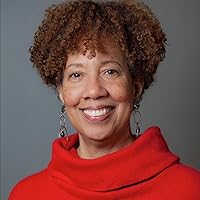
October 15, 2025
A history of Reconstruction as a window to a critical history that mirrors the perpetual conflict between those who restrict rights to the wealthy and powerful and those who want to expand democracy and citizenship to all, which continues in the 2000s. Manishra Sinha shows the relationship between abolition, suffrage, labor, and Native American sovereignty and the destruction of multiracial democracy reenforced by state governments, courts at every level, and congressional and executive capitulation to white supremacists and gilded age corporate and southern oligarchy as legacies of the past showing up in contemporary American society. The book is also a lesson in the messiness of justice movements while it lifts up Radical Republicans, Colored Women’s Clubs, labor unions, Native American resistance, and other justice movements that echo in democracy movements through the 20th and 21st centuries.
Displaying 1 - 30 of 66 reviews