

What do you think?

Across Five Aprils[ACROSS 5 APRILS][Mass Market Paperback]
Across Five Aprils <> Mass Market Paperback <> IreneHunt <> BerkleyBooks
Mass Market Paperback
First published September 1, 1964
About the author
Irene Hunt
31 books101 followersIrene Hunt was an American children's writer known best for historical novels. She was a runner-up for the Newbery Medal for her first book, Across Five Aprils, and won the medal for her second, Up a Road Slowly. For her contribution as a children's writer she was U.S. nominee in 1974 for the biennial, international Hans Christian Andersen Award, the highest international recognition available to creators of children's books. [https://en.wikipedia.org/wiki/Irene_Hunt]
Ratings & Reviews
Friends & Following
Create a free account to discover what your friends think of this book!
Community Reviews
Displaying 1 - 30 of 1,525 reviews
May 2, 2024
I’d forgotten I read this book as a boy. I don’t recall it as being particularly enthralling yet I never forgot the title which seemed to me a simple yet poetic and dramatic way to describe a conflict. It lasted from 1861 to 1865, when many, at the start, were convinced it would hardly go beyond one year.
This is one Northern boy’s experience of that long conflict. Consider that America’s involvement in WW2 went from early December 1941 to August 1945. Long enough but something less than the four years of the uncivil civil war🔥
🪵
“You hev hedged Ma’s question, Cousin Wilse. What about the right and wrong of one man ownin’ the body—and sometimes it looks as if the soul, too—of another man?”
🪵
Now the cabin had the look of a lonely old man brooding in the summer sunlight. Beyond the chatter of Nancy’s little boys, there was no lightness within the cabin or anywhere nearby.
🪵
Finally at a blazing crossroads known as Cold Harbor, Grant had met Robert E. Lee; and he was no more a conqueror of that legendary general than George B. McClellan had been. There was one difference though: Grant would not give up.
🪵
“Human nature ain’t any better one side of a political line than on the other—we all know that—but human nature, the all-over picture of it, is better than it was a thousand—five hundred—even a hundred years ago. There is an awakenin’ inside us of human decency and responsibility. If I didn’t believe that, I wouldn’t grieve fer the children I’ve buried; I wouldn’t look for’ard to the manhood of this youngest one.”
YA 3.75
This is one Northern boy’s experience of that long conflict. Consider that America’s involvement in WW2 went from early December 1941 to August 1945. Long enough but something less than the four years of the uncivil civil war🔥
🪵
“You hev hedged Ma’s question, Cousin Wilse. What about the right and wrong of one man ownin’ the body—and sometimes it looks as if the soul, too—of another man?”
🪵
Now the cabin had the look of a lonely old man brooding in the summer sunlight. Beyond the chatter of Nancy’s little boys, there was no lightness within the cabin or anywhere nearby.
🪵
Finally at a blazing crossroads known as Cold Harbor, Grant had met Robert E. Lee; and he was no more a conqueror of that legendary general than George B. McClellan had been. There was one difference though: Grant would not give up.
🪵
“Human nature ain’t any better one side of a political line than on the other—we all know that—but human nature, the all-over picture of it, is better than it was a thousand—five hundred—even a hundred years ago. There is an awakenin’ inside us of human decency and responsibility. If I didn’t believe that, I wouldn’t grieve fer the children I’ve buried; I wouldn’t look for’ard to the manhood of this youngest one.”
YA 3.75
May 25, 2024
YA
One of those YA works that is so philosophically inclined I recommend it to adult readers as well. It will certainly afford you an insightful overview of the American Civil War of 1861-65 sans a great deal of prejudice since so many varied opinions are part of the story.
🥁 For the first 40% of the book we move along very slowly indeed. The writing is impeccable, and the presentation of both Northern and Southern points of view commendable. But at 12 (my first reading) I must have been “driven to distraction” (to use 19th century English) by the snail’s pace. However, soon enough we are, along with our narrator young Jeth Creighton of Illinois, dealing with our older brothers’ enlistments and the war coming home to us in letters from the front and grim newspaper accounts of the many (too many) horrific battles.
🥁 Reminiscent of Crane’s The Red Badge of Courage, along with Jeth we are soon dealing with desertion. Then wounds, battle losses and death in combat. Because one brother joined the Southern forces we are living in fear of persecution by vengeful neighbors who cry out that Bill Creighton is shooting at and has killed many of their Northern boys.
🥁The novel succeeds on many levels and one of them is the criticisms various characters level at inept (and not inept) Union commanders. Everybody is an armchair general. And everyone is an armchair politician just like today. Lincoln is castigated mercilessly until he is proven right and then suddenly characters in the book decide he is the greatest American president (at least from a Northern perspective).
You soon live and breathe and bleed with the Creighton family and a nation torn apart.
One of those YA works that is so philosophically inclined I recommend it to adult readers as well. It will certainly afford you an insightful overview of the American Civil War of 1861-65 sans a great deal of prejudice since so many varied opinions are part of the story.
🥁 For the first 40% of the book we move along very slowly indeed. The writing is impeccable, and the presentation of both Northern and Southern points of view commendable. But at 12 (my first reading) I must have been “driven to distraction” (to use 19th century English) by the snail’s pace. However, soon enough we are, along with our narrator young Jeth Creighton of Illinois, dealing with our older brothers’ enlistments and the war coming home to us in letters from the front and grim newspaper accounts of the many (too many) horrific battles.
🥁 Reminiscent of Crane’s The Red Badge of Courage, along with Jeth we are soon dealing with desertion. Then wounds, battle losses and death in combat. Because one brother joined the Southern forces we are living in fear of persecution by vengeful neighbors who cry out that Bill Creighton is shooting at and has killed many of their Northern boys.
🥁The novel succeeds on many levels and one of them is the criticisms various characters level at inept (and not inept) Union commanders. Everybody is an armchair general. And everyone is an armchair politician just like today. Lincoln is castigated mercilessly until he is proven right and then suddenly characters in the book decide he is the greatest American president (at least from a Northern perspective).
You soon live and breathe and bleed with the Creighton family and a nation torn apart.
This entire review has been hidden because of spoilers.

June 14, 2024
This dust was once the man,
Gentle, plain, just and resolute, under whose cautious hand,
Against the foulest crime in history known in any land or age,
Was saved the Union of these States.
--Walt Whitman, 1871
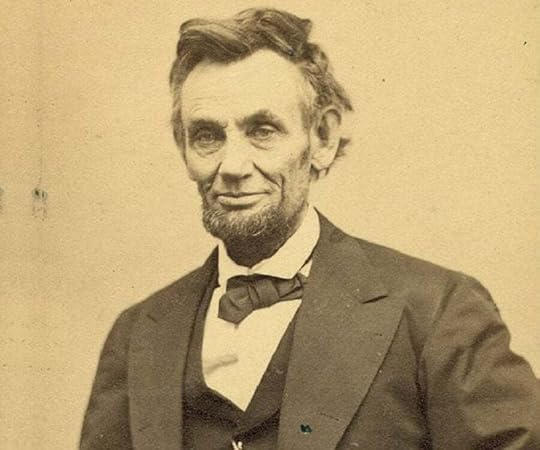
If you have ever doubted Abraham Lincoln's demeanor, behavior or efficacy as a U.S. President or a human being, I invite you to open up this Newbery Honor book and see what you think of the man.
We don't “visit” with President Lincoln in this middle grades read; we see him only from afar, through the eyes of several fellow Illinoisans, and we get to read a letter that he wrote.
But this story, set in Illinois during the Civil War, ends with the jubilant end of the war and then the nightmarish, shocking tragedy of Lincoln's death.
I've never encountered a story before where we are made privy, as readers, to so many personal responses to Lincoln's assassination.
I bawled, right out on our deck, reading the final pages to my daughter.
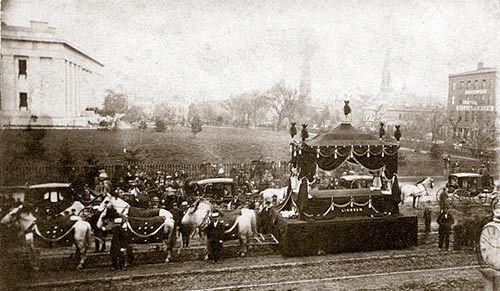
It is hard to imagine, here, where we are, in 2024, feeling so bereaved that one of our presidents has died that we can't speak, can't work, and can't think.
Even as divided as this nation was in 1865. . . we still mourned the loss of a leader in a way that I fear has been lost to us forever, for several reasons. I hope that I'm wrong.
This book is imperfect; in the shared opinion of this combined mother/daughter team, we found this story to be too lopsided with newspaper updates and letters and not enough action or adventure.
We both preferred RIFLES FOR WATIE, as a middle grades Civil War offering, but this book was definitely good, and the best parts all involved Abraham Lincoln.
Gentle, plain, just and resolute, under whose cautious hand,
Against the foulest crime in history known in any land or age,
Was saved the Union of these States.
--Walt Whitman, 1871
If you have ever doubted Abraham Lincoln's demeanor, behavior or efficacy as a U.S. President or a human being, I invite you to open up this Newbery Honor book and see what you think of the man.
We don't “visit” with President Lincoln in this middle grades read; we see him only from afar, through the eyes of several fellow Illinoisans, and we get to read a letter that he wrote.
But this story, set in Illinois during the Civil War, ends with the jubilant end of the war and then the nightmarish, shocking tragedy of Lincoln's death.
I've never encountered a story before where we are made privy, as readers, to so many personal responses to Lincoln's assassination.
I bawled, right out on our deck, reading the final pages to my daughter.
It is hard to imagine, here, where we are, in 2024, feeling so bereaved that one of our presidents has died that we can't speak, can't work, and can't think.
Even as divided as this nation was in 1865. . . we still mourned the loss of a leader in a way that I fear has been lost to us forever, for several reasons. I hope that I'm wrong.
This book is imperfect; in the shared opinion of this combined mother/daughter team, we found this story to be too lopsided with newspaper updates and letters and not enough action or adventure.
We both preferred RIFLES FOR WATIE, as a middle grades Civil War offering, but this book was definitely good, and the best parts all involved Abraham Lincoln.

August 22, 2011
Do they make kid's books like this sort anymore? Real and real painful. Across Five Aprils was required reading in 6th grade and it was as if the teacher's were saying "Life's a bitch, get used to it."
I remember this as eloquently rendered and high-minded, gut-wrenching drama when I read it way back then. Mind you, I also thought TV's The Waltons was the height of drama, so maybe my opinion is a bit skewed on the subject.
Just the same, Across Five Aprils, the story of brothers torn apart by the America Civil War, did win the Newbery, so it must've been doing something right. The story is told from the perspective of the youngest son watching his older brothers go off to war. Like the town they live in, most are pro-Union, but one of them sides with the Confederacy, and so he and the family suffer. It's a large family with daughters embroiled in their own private war of romance and love held in check.
I recall the ending feeling a bit slapped on for happiness sake and that a happy ending that made sense in the context of the story to that point would've felt more natural, if a happy ending must happen that is. Perhaps Hunt or her publisher felt like they'd beaten up the psyche of us kids enough to that point.
I remember this as eloquently rendered and high-minded, gut-wrenching drama when I read it way back then. Mind you, I also thought TV's The Waltons was the height of drama, so maybe my opinion is a bit skewed on the subject.
Just the same, Across Five Aprils, the story of brothers torn apart by the America Civil War, did win the Newbery, so it must've been doing something right. The story is told from the perspective of the youngest son watching his older brothers go off to war. Like the town they live in, most are pro-Union, but one of them sides with the Confederacy, and so he and the family suffer. It's a large family with daughters embroiled in their own private war of romance and love held in check.
I recall the ending feeling a bit slapped on for happiness sake and that a happy ending that made sense in the context of the story to that point would've felt more natural, if a happy ending must happen that is. Perhaps Hunt or her publisher felt like they'd beaten up the psyche of us kids enough to that point.

November 12, 2022
First published in 1964, this short (188 pages) novel was written for younger readers, but like other quality fiction for that demographic is also appreciable for adults. I first read it in the mid 60s and liked it, but had never reviewed it here because I felt that I first needed to reread it. This month, an unexpected window of opportunity for working in a short book gave me a chance to do that.
The titular "five Aprils" here are the five from April 1861 to April 1865. Our geographical setting is Jasper County, Ilinois. This is a real county, located in the southern (but not extreme southern) part of the state; the county seat Newton and the smaller community of Hidalgo, both mentioned in the book, are actual places. Protagonist and viewpoint character Jethro Creighton is nine years old at the outbreak of the war. He's smart and mature for his age (of course in his milieu, as Hunt makes clear, kids are expected to be a lot more mature than most kids --and many adults-- are today), with good instincts; he's the youngest of 12 siblings, of whom at least four are already dead when the book opens. (Maybe five --the one who took off for California in the gold rush of 1849 hasn't been heard of since.) The Creightons are hard-working but poor farmers; Jethro's parents aren't educated, but they respect and value education, and have communicated that attitude to him. This is the story, seen through his eyes, of the effects of the war years on the family and local community, as he comes of age on the home front. (Struggles aren't confined to the battlefields; and as is often true of the best fiction, our main character here will have to make a moral choice.)
Though I'm a fan of historical fiction, the hellish crucible of the Civil War, like World War II and the Holocaust aren't my favorite settings for it; and most of the Civil War historical novels I've read, like this one, are set in the civilian world, away from the wall-to-wall butchery the armies were experiencing. But the long shadow of the war, with the passions and hardships it would bring, fell over every corner of the land, North and South. While southern Illinois didn't have to deal with the ravages of invading armies, it was a border region, largely settled from the South. Like most poor whites on both sides of the Ohio river, most of the settlers of Jasper County had no brief for slavery and might even hate it, but many also had family ties in the South and varying opinions on which side was right. When most males enlisted, those left behind bore with worry for their safety, and all too often grieved for their deaths. Farm labor, already back-breakingly hard, was a lot worse when kids and teen girls were left to plow huge fields alone. Wartime inflation drove prices high; and southern Illinois also saw acts of abolitionist vs. Copperhead terrorism, and the depredations of hungry, desperate and angry army deserters. Hunt brings all of these realities to vivid life.
Her basic sympathies (and those of most of the Creightons) are with the North; but Hunt faithfully reproduces the kinds of debates --often internal as well as external-- that went on before and after the coming of the war. To her credit, she doesn't demonize all those with southern sympathies (or fall into the trap of tarring them all as slavery apologists), nor portray the war as a glorious crusade of unqualifiedly noble heroes on one side against cartoon villains on the other. (She also deserves credit for bringing out, in places, the point that the coming of peace and the end of slavery wasn't equivalent to the "happy ever after" end of a fairy tale; the penniless and uneducated freed blacks now needed to be embraced as part of the national community and have their needs fairly met. One character feared they might wait 50 years for that to happen; sadly, though progress has been made, most have had to wait a lot longer. :-( ) But this isn't mostly a novel of ideas; it's a novel about life: family, personal growth in tough times, facing challenges without flinching. The characters here are enormously realistic and well-drawn, and you come to care about them.
As is sometimes the case in historical fiction, Hunt honestly faces the fact that in pre-modern times, teens might attract --and return-- serious romantic interest from persons over 18. If that scandalizes you, you'll be scandalized here (though the couple involved are only five years apart in age). As I've indicated in other reviews, it doesn't scandalize me. IMO, older teens are biologically adult; whether or not they're mentally adult depends on the individual, and in assessing the age at which someone can marry, I'd say that his/her socio-economic circumstances, goals and ability to carefully consider and stick to serious decisions has to be considered --which is to say, the way the person is socialized, and the kind of cultural milieu he/she lives in, has a lot to do with it. Some 30-year-olds in 2022 aren't emotionally mature enough to marry (or even date!); but I'd say that some teens in the early 1860s were.
In her brief author's note, Irene Hunt (1907-2001) speaks of the considerable research she did for this book, and of her memories of the many stories of this time told to her by her grandfather, to whom she was very close, and who like Jethro was nine at the time of the firing on Ft. Sumter. It shows in the realism of the story here; it's rich in incident and event and in the texture of daily life, and the dialogue rings with the actual dialect of the time and place. (This is fiction in the best Realist tradition.) From the time that I located Jasper County on a map, I suspected that the author herself had roots there. It turns out I was correct; she was Illinois born, and lived in Newton until she was seven. Across Five Aprils was her first novel (though I didn't suspect that --there's no freshman awkwardness about it!), written when she'd already spent decades as a schoolteacher, and published when she was 61. It was critically acclaimed, and her next novel won the Newbery Award. When she died on her 94th birthday, she left behind a corpus of eight novels. This is the only one that I've ever read; but I wouldn't mind reading more of her work.
The titular "five Aprils" here are the five from April 1861 to April 1865. Our geographical setting is Jasper County, Ilinois. This is a real county, located in the southern (but not extreme southern) part of the state; the county seat Newton and the smaller community of Hidalgo, both mentioned in the book, are actual places. Protagonist and viewpoint character Jethro Creighton is nine years old at the outbreak of the war. He's smart and mature for his age (of course in his milieu, as Hunt makes clear, kids are expected to be a lot more mature than most kids --and many adults-- are today), with good instincts; he's the youngest of 12 siblings, of whom at least four are already dead when the book opens. (Maybe five --the one who took off for California in the gold rush of 1849 hasn't been heard of since.) The Creightons are hard-working but poor farmers; Jethro's parents aren't educated, but they respect and value education, and have communicated that attitude to him. This is the story, seen through his eyes, of the effects of the war years on the family and local community, as he comes of age on the home front. (Struggles aren't confined to the battlefields; and as is often true of the best fiction, our main character here will have to make a moral choice.)
Though I'm a fan of historical fiction, the hellish crucible of the Civil War, like World War II and the Holocaust aren't my favorite settings for it; and most of the Civil War historical novels I've read, like this one, are set in the civilian world, away from the wall-to-wall butchery the armies were experiencing. But the long shadow of the war, with the passions and hardships it would bring, fell over every corner of the land, North and South. While southern Illinois didn't have to deal with the ravages of invading armies, it was a border region, largely settled from the South. Like most poor whites on both sides of the Ohio river, most of the settlers of Jasper County had no brief for slavery and might even hate it, but many also had family ties in the South and varying opinions on which side was right. When most males enlisted, those left behind bore with worry for their safety, and all too often grieved for their deaths. Farm labor, already back-breakingly hard, was a lot worse when kids and teen girls were left to plow huge fields alone. Wartime inflation drove prices high; and southern Illinois also saw acts of abolitionist vs. Copperhead terrorism, and the depredations of hungry, desperate and angry army deserters. Hunt brings all of these realities to vivid life.
Her basic sympathies (and those of most of the Creightons) are with the North; but Hunt faithfully reproduces the kinds of debates --often internal as well as external-- that went on before and after the coming of the war. To her credit, she doesn't demonize all those with southern sympathies (or fall into the trap of tarring them all as slavery apologists), nor portray the war as a glorious crusade of unqualifiedly noble heroes on one side against cartoon villains on the other. (She also deserves credit for bringing out, in places, the point that the coming of peace and the end of slavery wasn't equivalent to the "happy ever after" end of a fairy tale; the penniless and uneducated freed blacks now needed to be embraced as part of the national community and have their needs fairly met. One character feared they might wait 50 years for that to happen; sadly, though progress has been made, most have had to wait a lot longer. :-( ) But this isn't mostly a novel of ideas; it's a novel about life: family, personal growth in tough times, facing challenges without flinching. The characters here are enormously realistic and well-drawn, and you come to care about them.
As is sometimes the case in historical fiction, Hunt honestly faces the fact that in pre-modern times, teens might attract --and return-- serious romantic interest from persons over 18. If that scandalizes you, you'll be scandalized here (though the couple involved are only five years apart in age). As I've indicated in other reviews, it doesn't scandalize me. IMO, older teens are biologically adult; whether or not they're mentally adult depends on the individual, and in assessing the age at which someone can marry, I'd say that his/her socio-economic circumstances, goals and ability to carefully consider and stick to serious decisions has to be considered --which is to say, the way the person is socialized, and the kind of cultural milieu he/she lives in, has a lot to do with it. Some 30-year-olds in 2022 aren't emotionally mature enough to marry (or even date!); but I'd say that some teens in the early 1860s were.
In her brief author's note, Irene Hunt (1907-2001) speaks of the considerable research she did for this book, and of her memories of the many stories of this time told to her by her grandfather, to whom she was very close, and who like Jethro was nine at the time of the firing on Ft. Sumter. It shows in the realism of the story here; it's rich in incident and event and in the texture of daily life, and the dialogue rings with the actual dialect of the time and place. (This is fiction in the best Realist tradition.) From the time that I located Jasper County on a map, I suspected that the author herself had roots there. It turns out I was correct; she was Illinois born, and lived in Newton until she was seven. Across Five Aprils was her first novel (though I didn't suspect that --there's no freshman awkwardness about it!), written when she'd already spent decades as a schoolteacher, and published when she was 61. It was critically acclaimed, and her next novel won the Newbery Award. When she died on her 94th birthday, she left behind a corpus of eight novels. This is the only one that I've ever read; but I wouldn't mind reading more of her work.

June 15, 2008
TERRIBLE BOOK. that is all I have to say. This is about the Civil War and how the main character Jethro is coming of age. This book was so boring that I do not have anything more to say. Do not read it. If you are interested in the Civil War, maybe you should consider it because it gives you a lot of historical background information. Otherwise, it is veyr hard to keep reading this book.

May 9, 2020
So first and foremost, what had made Irene Hunt's 1964 Across Five Aprils (and which won a Newbery Honour designation in 1965) so readable and so relatable, so wonderful for and to me as a personal reading experience is the author's, is Irene Hunt's accurate and historical sense of time and place, is her narrational realism (and which is achieved not only by her detailed and factually based descriptions of events occurring or having occurred but also because to add colour and life, to add a sense of immediacy, Irene Hunt also has her characters speaking vernacular, talking non standard parlance, conversing amongst themselves not in standard written English but in the manner of how the common people would be chatting and that yes indeed and to and for me, this has truly made Across Five Aprils shine much more brightly than if the author, than if Irene Hunt had penned not only her third person narrative descriptions but also her presented personal conversations in standard written English).
But of course, for any good novel, for a decent story, there needs to be a successful combination of both writing style and writing content/themes offered. And yes, with Across Five Aprils, I also totally do much appreciate that Irene Hunt approaches some very problematic and difficult questions that usually and realistically do tend to arise in wartime and especially so, in internal, in civil wars, since especially in the latter type of conflicts, there are not only divisions within one's country and one's communities, but often also within families (both immediate and extended). Therefore and with this in mind, I as a critical and adult reader (but indeed I also would have appreciated this as a child) have absolutely delighted in the fact that in Across Five Aprils, Irene Hunt depicts and presents the US Civil War not ever in my opinion as something even remotely heroic and necessary but as a mostly and utterly tragic, useless and even dangerously ridiculous conflict, as a war that in fact ended up killing more Americans than ANY OTHER war to date.
And yes indeed, to and for me as an ardent pacifist, the decidedly but quietly shown strong anti-war message encountered by readers in Across Five Aprils is therefore totally and utterly to be cheered and to be lauded, albeit that I also realise from reading other online reviews that some also do seem to consider Across Five Aprils to be boring and tedious and to equally be much too intent on supposedly showcasing Irene Hunt's own sentiments against war (but since I am of her mindset and of her opinion with regard to this, I for one and of course totally find Irene Hunt's narrative delightful and absolutely have enjoyed how critical Across Five Aprils is both towards the US Civil War and towards the main movers and shakers of that war, both in the North and in the South).
But of course, for any good novel, for a decent story, there needs to be a successful combination of both writing style and writing content/themes offered. And yes, with Across Five Aprils, I also totally do much appreciate that Irene Hunt approaches some very problematic and difficult questions that usually and realistically do tend to arise in wartime and especially so, in internal, in civil wars, since especially in the latter type of conflicts, there are not only divisions within one's country and one's communities, but often also within families (both immediate and extended). Therefore and with this in mind, I as a critical and adult reader (but indeed I also would have appreciated this as a child) have absolutely delighted in the fact that in Across Five Aprils, Irene Hunt depicts and presents the US Civil War not ever in my opinion as something even remotely heroic and necessary but as a mostly and utterly tragic, useless and even dangerously ridiculous conflict, as a war that in fact ended up killing more Americans than ANY OTHER war to date.
And yes indeed, to and for me as an ardent pacifist, the decidedly but quietly shown strong anti-war message encountered by readers in Across Five Aprils is therefore totally and utterly to be cheered and to be lauded, albeit that I also realise from reading other online reviews that some also do seem to consider Across Five Aprils to be boring and tedious and to equally be much too intent on supposedly showcasing Irene Hunt's own sentiments against war (but since I am of her mindset and of her opinion with regard to this, I for one and of course totally find Irene Hunt's narrative delightful and absolutely have enjoyed how critical Across Five Aprils is both towards the US Civil War and towards the main movers and shakers of that war, both in the North and in the South).

June 9, 2008
I wish I could find my copy of this. It's around here somewhere. I still have the edition I read in high school and I wanted to look up the copywrite date. The edition I selected here -- obviously -- isn't the one I have but I doubt there's a picture of my edition's cover anywhere on-line, it's so old. When I locate it, I'll come back and annotate the exact date.
This is a classic tale about the Civil War and I've read it at least three times--maybe more. The last time was with my daughters and I enjoyed it more than ever!
Started: 29 November 2000
This is a classic tale about the Civil War and I've read it at least three times--maybe more. The last time was with my daughters and I enjoyed it more than ever!
Started: 29 November 2000

October 4, 2017
This is the only book I have read that captures the reality of the Civil War in a gripping, astounding story. This story does not choose a political side and push propaganda, like so many other stories and history textbooks do. Across Five Aprils shows the truth: that there was much more to the American Civil War than just slavery.
From a historical, realistic viewpoint, this book was spot on and never had info dumps. It flowed well and showed many events in a clear light. The setting was also vivid.
The characters were all very well done and memorable. Each character added something to the story.
I cannot serve this book justice by my review. I love it.
From a historical, realistic viewpoint, this book was spot on and never had info dumps. It flowed well and showed many events in a clear light. The setting was also vivid.
The characters were all very well done and memorable. Each character added something to the story.
I cannot serve this book justice by my review. I love it.
February 6, 2015
Across Five Aprils by Irene Hunt manages to turn the thrilling action and gruesome turmoil of war into threadbare monotony. Despite its detailed descriptions of familial discords, the book has no central plot. The chapters are nonsensical and do not follow a recognizable storyline. For instance, in one chapter, Jethro's mother falls ill because of caffeine addiction. In the next chapter, a criminal's father rescues Jethro from an attacker on the roadside. How do all these scattered events come together? What effect do they have on the overall atmosphere of war? In the book, the topic of war, which is supposedly the main idea, is only mentioned briefly and vaguely. In addition, the characters are flat and undeveloped. Jenny appears repeatedly as a lovesick and educated girl, and Jethro as a farm boy who matures, but neither of these characters have a profound effect on the progress of the story. All in all, Across Five Aprils is a tedious read due to its colorless storyline and characters. I would definitely not recommend this book, and if you're one of the less fortunate students forced to read it for school, let SparkNotes be your savior.
February 6, 2014
First of all, anyone who gave this book a single star or complained "My lame teacher made me read this...." needs to be deleted. A few months ago, I was reminiscing about the mandatory reading that was required in junior and high school and one of the few I remembered was this story. I decided to read this since I realize you don't ever appreciate things when you're in high school.
This book, to me is actually a 4.5 only because of the slow start until about chapter 4. The poor grammar of Jethro and his family written can be hard to read at times also but you get used to it. I did find the characters feelings very real. It painted a very real image of the times and how hard it was to even survive. I felt that I was living on a farm in southern Illinois during the Civil War.
The historical writing is fantastic and the story represented the civil war fiction very well. Anyone with interest in how the civil war had affected everyday people, who gave up their family to fight such horrific battles for our country will enjoy!
This book, to me is actually a 4.5 only because of the slow start until about chapter 4. The poor grammar of Jethro and his family written can be hard to read at times also but you get used to it. I did find the characters feelings very real. It painted a very real image of the times and how hard it was to even survive. I felt that I was living on a farm in southern Illinois during the Civil War.
The historical writing is fantastic and the story represented the civil war fiction very well. Anyone with interest in how the civil war had affected everyday people, who gave up their family to fight such horrific battles for our country will enjoy!
January 24, 2017
This book shows us in a moving and sympathetic way the effects of the American Civil War on a farming family in southern Illinois.

July 28, 2026
A book from a much younger time, a much younger me. Impressive book because I still remember reading it and the fact that it stayed with me. Thank you Murray for the reminder!
March 16, 2009
i wish irene hunt's death could have been at least as agonizing as reading this.

April 25, 2017
Cleanliness
Children's Bad Words
Mild Obscenities and Substitutions - 3 Incidents: danged, h*ll
Name Calling - 7 Incidents: Copperhead, smart-aleck, dumb brute
Scatological Terms - 1 Incident: bl**dy
Violence - None
Romance Related - 18 Incidents: A girl is sad to say good-bye to a young man she's in love with: "Shad's leavin' fer Newton now, I guess. Jenny has to say good-bye like as if he was goin' to the North Pole." A discussion about a young man, whether or not a young girl likes the young man and a mention that she's "too young to be thinkin' about" any young man. It's also noted that she had "her eye" on him. A young woman is sad because her father won't allow her to marry so young. She says that "Ma understands." "Both Jenny and Shad embarrassed him a little with their talk of love."
"...there was Jenny, who was not too young to be in love...." It is asked if it would be "pure pleasure" to have Shad back "lookin' bashful at little Jenny." A character is surprised that a boy ever "took a likin'" to a girl, and that statement makes her blush. "sweet talk" is mentioned between two youth. There is a "no romance" rule set by the father. It is noted that the boy perhaps had "some mood of defiance for his future father-in-law" and writes the girl a love letter, despite the rule. A girl blushes upon receiving a love letter. Family members discuss a young girl keeping a "love letter" private, and not sharing its contents with her family. The "secret letter" is mentioned as having put a young girl in a "fine mood." A young girl discusses her reasons for not disclosing a secret "love letter" - namely, because love is supposed to be between just two people. Youth discuss a spot in a list where their future wedding date will be listed. A boy is told that his sister is "quite a little beauty," to which the brother replies "she's spoken for." This leads to some laughter (mocking) from the boy paying the compliment and anger from the brother. Someone asks a boy if his sister is "in love" with another boy, and they discuss the love letters exchanged between the two youth. Two characters discuss whether or not it is appropriate for youth to marry, and never to "underestimate the possibilities of young love." Various love letters are quoted, including a note that two parents give permission for their 16 year old daughter to marry.
Religious & Supernatural - 2 Incidents: A man mentions that when he was young he was scared of "witch stories" that his Aunt used to tell him. A discussion about witches and what makes someone a witch (namely superstitions).
Attitudes/Disobedience - 5 Incidents: "... he wanted to anger her a little for spoiling...the morning."
A boy has "feeling(s) of anger" for his father. A disapproval of a father not allowing his daughter to marry. "I respect him so much... but I think he's overshooting the mark when he sets himself up as knowing exactly what is right or wrong for two other people." There is a "no romance" rule set by the father. It is noted that the boy perhaps had "some mood of defiance for his future father-in-law" and writes the girl a love letter, despite the rule. "He couldn't remember when he had lied to Jenny, and he wasn't sure that he could do it well." Jenny then makes a guess and what she thinks is bothering him and he doesn't say anything - making her believe she guessed right.
Conversation Topics - 4 Incidents: Whiskey, tobacco, liquor, cider and a pipe are mentioned throughout the book. It is noted that a youth would have liked to "try smoking herself if she had dared." It is discussed how a young man can stay soft and value human life when he is ordered by his general to perform acts such as looting, burning homes etc. Men are drinking and toasting to Lincoln.
Parent Takeaway
Most bad behaviors (including drinking) are done by the bad guys in the story. The romance in the book is not fantasized but written more matter-of-fact, having to do with the war and the seriousness of the times. Family loyalty is shown as being stronger than one's patriotic views.
**Like my reviews? Then you should follow me! Because I have hundreds more just like this one. With each review, I provide Content Considerations, mentioning any objectionable content I come across so that parents and/or conscientious readers (like me) can determine beforehand whether they want to read a book or not. Content surprises are super annoying, especially when you’re 100+ pages in, so here’s my attempt to help you avoid that!
If you’re considering a book or looking for a new title to read, check out my highly categorized shelves, read my reviews and Friend or Follow me to spiff up your feed with clean, wholesome, living books.
I have an Instagram account that’s pretty bookishly unique too!
Children's Bad Words
Mild Obscenities and Substitutions - 3 Incidents: danged, h*ll
Name Calling - 7 Incidents: Copperhead, smart-aleck, dumb brute
Scatological Terms - 1 Incident: bl**dy
Violence - None
Romance Related - 18 Incidents: A girl is sad to say good-bye to a young man she's in love with: "Shad's leavin' fer Newton now, I guess. Jenny has to say good-bye like as if he was goin' to the North Pole." A discussion about a young man, whether or not a young girl likes the young man and a mention that she's "too young to be thinkin' about" any young man. It's also noted that she had "her eye" on him. A young woman is sad because her father won't allow her to marry so young. She says that "Ma understands." "Both Jenny and Shad embarrassed him a little with their talk of love."
"...there was Jenny, who was not too young to be in love...." It is asked if it would be "pure pleasure" to have Shad back "lookin' bashful at little Jenny." A character is surprised that a boy ever "took a likin'" to a girl, and that statement makes her blush. "sweet talk" is mentioned between two youth. There is a "no romance" rule set by the father. It is noted that the boy perhaps had "some mood of defiance for his future father-in-law" and writes the girl a love letter, despite the rule. A girl blushes upon receiving a love letter. Family members discuss a young girl keeping a "love letter" private, and not sharing its contents with her family. The "secret letter" is mentioned as having put a young girl in a "fine mood." A young girl discusses her reasons for not disclosing a secret "love letter" - namely, because love is supposed to be between just two people. Youth discuss a spot in a list where their future wedding date will be listed. A boy is told that his sister is "quite a little beauty," to which the brother replies "she's spoken for." This leads to some laughter (mocking) from the boy paying the compliment and anger from the brother. Someone asks a boy if his sister is "in love" with another boy, and they discuss the love letters exchanged between the two youth. Two characters discuss whether or not it is appropriate for youth to marry, and never to "underestimate the possibilities of young love." Various love letters are quoted, including a note that two parents give permission for their 16 year old daughter to marry.
Religious & Supernatural - 2 Incidents: A man mentions that when he was young he was scared of "witch stories" that his Aunt used to tell him. A discussion about witches and what makes someone a witch (namely superstitions).
Attitudes/Disobedience - 5 Incidents: "... he wanted to anger her a little for spoiling...the morning."
A boy has "feeling(s) of anger" for his father. A disapproval of a father not allowing his daughter to marry. "I respect him so much... but I think he's overshooting the mark when he sets himself up as knowing exactly what is right or wrong for two other people." There is a "no romance" rule set by the father. It is noted that the boy perhaps had "some mood of defiance for his future father-in-law" and writes the girl a love letter, despite the rule. "He couldn't remember when he had lied to Jenny, and he wasn't sure that he could do it well." Jenny then makes a guess and what she thinks is bothering him and he doesn't say anything - making her believe she guessed right.
Conversation Topics - 4 Incidents: Whiskey, tobacco, liquor, cider and a pipe are mentioned throughout the book. It is noted that a youth would have liked to "try smoking herself if she had dared." It is discussed how a young man can stay soft and value human life when he is ordered by his general to perform acts such as looting, burning homes etc. Men are drinking and toasting to Lincoln.
Parent Takeaway
Most bad behaviors (including drinking) are done by the bad guys in the story. The romance in the book is not fantasized but written more matter-of-fact, having to do with the war and the seriousness of the times. Family loyalty is shown as being stronger than one's patriotic views.
**Like my reviews? Then you should follow me! Because I have hundreds more just like this one. With each review, I provide Content Considerations, mentioning any objectionable content I come across so that parents and/or conscientious readers (like me) can determine beforehand whether they want to read a book or not. Content surprises are super annoying, especially when you’re 100+ pages in, so here’s my attempt to help you avoid that!
If you’re considering a book or looking for a new title to read, check out my highly categorized shelves, read my reviews and Friend or Follow me to spiff up your feed with clean, wholesome, living books.
I have an Instagram account that’s pretty bookishly unique too!
This entire review has been hidden because of spoilers.

October 16, 2016
The 12yo in my house had to finish this for summer reading, and would not stop complaining about how boring it was. I'm an enormous fan of historical fiction, so I was of course incensed. How could you not love a book about growing up during the Civil War? I decreed that we'd finish it as an audio book so I could explain its many virtues and strengths.
Turns out the book is unbelievably dull. I mean tepid bathwater on a Tuesday night dull. There's no character development. There isn't even a lot of dialogue, and what's there is stilted and awkward. There's no scaffolding that helps explain the issues behind the civil war. The plot follows an adolescent character who has virtually no interaction with adolescent peers, making it especially dull to the average tween reader. And by the end of the book it lapses into simply recounting the outcome of a series of Civil War battles that the main character reads about in newspapers. Which, hey, is a lot like reading about them in history books. So much for bringing history alive.
In sum, I am incredulous that this is so commonly assigned in schools. The world is teeming with engaging, well-written historical fiction for teens. This is not it.
Turns out the book is unbelievably dull. I mean tepid bathwater on a Tuesday night dull. There's no character development. There isn't even a lot of dialogue, and what's there is stilted and awkward. There's no scaffolding that helps explain the issues behind the civil war. The plot follows an adolescent character who has virtually no interaction with adolescent peers, making it especially dull to the average tween reader. And by the end of the book it lapses into simply recounting the outcome of a series of Civil War battles that the main character reads about in newspapers. Which, hey, is a lot like reading about them in history books. So much for bringing history alive.
In sum, I am incredulous that this is so commonly assigned in schools. The world is teeming with engaging, well-written historical fiction for teens. This is not it.

March 27, 2011
I am reading this with a book with a group of 6th graders, and so far they do not appreciate this excellent book. My high school English teacher always said to give classic literature a good 50 pages before giving up, and I think/hope they will be hooked by then. I last read it in junior high - I remember liking it, but as an adult I loved it. It is beautifully written, with wonderfully well developed characters. I laughed and I cried with the experiences of a very genuine family and the impact of the Civil War in their lives. I've been to many Civil War battlefields and I've seen the movie Gettysburg several times (it's 4 hours long, so that is saying something!), so I am familiar with the names of many of the generals and battles in the book. It covers the length of the war, so there are a lot of generals and battles to have to keep track of, which will probably bog down story for the kids I am reading it with. Overall though it is an outstanding piece of children's literature and definitely worth reading.
July 2, 2009
soooooooooooo B-O-R-I-N-G!!!!!!!!!!!!!!!!!!!!!!!!!!!

February 12, 2019
Touches a lot of familiar subjects/names/places and I see why it’s assigned reading for tweens. However, I feel like it could have been more emotional and personal to really pull the reader in.

February 24, 2021
In my youth I read Irene Hunt's Up a Road Slowly, and thought it very good. I then came across this title and quickly rejected it because A) it was about a boy, and B) it was about the Civil War. I'm a little more broad-minded now, so when a copy fell serendipitously my way, I gave it a try to see if I'd missed out on anything. Yes and no. Parts of this book, the parts detailing young Jeth's immediate daily life, and his interactions with his large family which includes brothers on both sides of the fight, were really good, and engrossing. But when Hunt zooms out (which she does more and more frequently as the book progresses) to give us the big picture of what's happening in the war my eyes glazed over. I don't regret reading the book, but will soon be passing it on to its next owner.
March 31, 2024
I don’t have a lot to say about this book but I’ll say what I do have.
This book made me cry. Especially the ending. It’s just so raw and real. The story of a 9 yr old boy as he grows up over the 4 year span of the civil war. He has a brother on each side of the war, and not only does it make it harder for his family (they’re loyal to the north) but because one of their boys is a Reb, some of the townspeople hate (hate=burning down their barn and more) their family.
And than when everything was starting to look up, the ending happened. And that’s where I cried. It made their pain from that war feel so real to me. Read it.
Highly recommend this book! Short summary of my review that’s already short…
This book made me cry. Read it.
This book made me cry. Especially the ending. It’s just so raw and real. The story of a 9 yr old boy as he grows up over the 4 year span of the civil war. He has a brother on each side of the war, and not only does it make it harder for his family (they’re loyal to the north) but because one of their boys is a Reb, some of the townspeople hate (hate=burning down their barn and more) their family.
And than when everything was starting to look up, the ending happened. And that’s where I cried. It made their pain from that war feel so real to me. Read it.
Highly recommend this book! Short summary of my review that’s already short…
This book made me cry. Read it.
December 10, 2017
5 Stars
I first received a copy of Across Five Aprils from my grandfather several Christmases ago. She had bought three copies at a Civil War battlefield, one for me and two for my cousins. I began reading it right away, but I found the slang too challenging at the time. It sat unread for a few years, until I picked it up a few weeks ago. And I was happily surprised.
Things I Love:
1) The setting. Hidalgo was the perfect place to capture the conflict between residents of once close-knit towns. It also revealed the stark contrasts of different areas of Indiana. (Western North Carolina, where I live, was also a place of conflict during the Civil War, so this appealed to me. My book, Letters from Home: A Civil War Story, focuses on much of this strife.)
2) Bill. Bill was a character anyone could relate to. The man that does what he feels he needs to do, and is criticized for it. The man whose father is disparaged by his neighbors for his son's "wrong" actions.
a) Bill's description: pg.22:
" reading was not regarded highly there was something suspect about a young man who not only cared very little for hunting or wrestling and nothing at all for drinking and rampaging about the country, but who read every book he could lay his hands upon as if he prized a printed page more than the people around him. He wasn’t quite held in contempt, for he had great physical strength and was a hard worker, two attributes admired by the people around him; but he was odd, and there was no doubt of that. Men had seen him stop his team in midfield to watch the flight of a line of birds, and a story went the rounds of Bill talking to his horse as if it were a person. “He talked to it gentle,” the story went, “like a woman talkin’ to a young ‘un.” He had even attended school the previous winter when work was slack, which was surely a fool thing to do unless one was interested in “breakin’ up school.” He had listened intently to what a young man three years his junior had to say; he had studied and done the tasks set for him by Shadrach Yale as if he were no older than Jethro. It was not a behavior pattern of which the backwoods community approved; a lot of people smirked a little when they mentioned Bill Creighton.
Jethro loved Bill far and away beyond his other brothers; his mother understood why. “He’d put his hand in the fire fer you, Jeth,” she told him once, and Jethro believed her."
b) Bill's thoughts on the war: pg. 41:
""Air yore thoughts about the war, Bill?"
"About the war--yes, mostly."
"The north will fin'ly win, won't it, Bill?"
"I don't know if anybody ever 'wins' a war, Jeth. I think that the beginnin's of this war has been fanned by hate till it's a blaze now; and a blaze kin destroy him that makes it and him that the fire was set to hurt. There oughtn't to be a war, Jeth; this war ought never to ha' bin."
"Did the South started it, didn't they, Bill?"
"The North and the South and the East and the West--we all started it. The old slavers of other days and the fact'ry owners of today that need high tariffs to help 'em git rich, and the cotton growers that need slave labor to help 'em git rich and the new territories and the wild talk-" He broke off suddenly and walked over the window where a branch of poplar tree seemed to be trying to peer inside the small, cramped room. "I have slavery, Jeth, but I hate another slavery of people workin' their lives away in dirty fact'ries for a wage that kin scarce keep life in 'em; I hate secession, but at the same time I can't see how a whole region kin be able to live if their way of life is all of a sudden upset; I hate talk of nullification; but at the same time I hate laws passed by Congress that favors one part of a country and hurts the other."
c) Bill's departure: pg. 44-46:
""What's hurt you, Bill?" he asked, his voice barely audible, for he was pretty sure he knew.
"We had a fight, Jeth, about an hour ago. We fit like two madmen, I guess."
"You and John?"
Bill's sigh was almost a moan. "Yes, me and John. Me and my brother John."
Jethro could not answer. He stared at the cut above Bill's right eye, from which blood still trickled down his cheek...
"What made you fight, Bill?"
"Hard feelin's that have have been building up fer weeks, hard feelin's that fin'ly came out in harsh words." He held his hand across his eyes for a minute and then spoke quickly. "I'm leavin', Jeth; it ain't that I want to, but it's that I must. The day is comin' when I've got to fight, and I won't fight fer arrogance and big money against the southern farmer. I won't do it. You tell Pa that. Tell him, too, that I'm takin' my brown mare--she's mine, and I hev the right. Still, it will leave him short, so you tell him that I'm leavin' money I made at the sawmill and at cornshuckin'; it's inside the cover of his Bible. You tell him to take it and buy another horse."
Jethro was crying unashamedly in the face of his grief. "Don't go, Bill. Don't do it," he begged.
"Jeth..."
"I don't want you to go, Bill. I don't think I kin stand it."
"Listen to me, Jeth; you're gettin to be a sizable boy. There's goin' to be a lot of things in the years ahead that you'll have to stand. There'll be thing that tear you apart, but you'll have to stand 'em. You can't count on cryin' to make 'em right."
..."Will ye fight for the Rebs?"
Bill hesitated for a few seconds. "I've studied this thing, Jeth, and I've hurt over it. My heart ain't in this war; I've told you that. And while I say that the right ain't all on the side of the North, I know jest as well that it ain't all on the side of the South either. But if I hev to fight, I reckon it will be fer the South.""
Things I Didn't Like:
Nothing at all.
I'm really glad I chose to read this book. Across Five Aprils has earned itself a place in my favorite books.
I first received a copy of Across Five Aprils from my grandfather several Christmases ago. She had bought three copies at a Civil War battlefield, one for me and two for my cousins. I began reading it right away, but I found the slang too challenging at the time. It sat unread for a few years, until I picked it up a few weeks ago. And I was happily surprised.
Things I Love:
1) The setting. Hidalgo was the perfect place to capture the conflict between residents of once close-knit towns. It also revealed the stark contrasts of different areas of Indiana. (Western North Carolina, where I live, was also a place of conflict during the Civil War, so this appealed to me. My book, Letters from Home: A Civil War Story, focuses on much of this strife.)
2) Bill. Bill was a character anyone could relate to. The man that does what he feels he needs to do, and is criticized for it. The man whose father is disparaged by his neighbors for his son's "wrong" actions.
a) Bill's description: pg.22:
" reading was not regarded highly there was something suspect about a young man who not only cared very little for hunting or wrestling and nothing at all for drinking and rampaging about the country, but who read every book he could lay his hands upon as if he prized a printed page more than the people around him. He wasn’t quite held in contempt, for he had great physical strength and was a hard worker, two attributes admired by the people around him; but he was odd, and there was no doubt of that. Men had seen him stop his team in midfield to watch the flight of a line of birds, and a story went the rounds of Bill talking to his horse as if it were a person. “He talked to it gentle,” the story went, “like a woman talkin’ to a young ‘un.” He had even attended school the previous winter when work was slack, which was surely a fool thing to do unless one was interested in “breakin’ up school.” He had listened intently to what a young man three years his junior had to say; he had studied and done the tasks set for him by Shadrach Yale as if he were no older than Jethro. It was not a behavior pattern of which the backwoods community approved; a lot of people smirked a little when they mentioned Bill Creighton.
Jethro loved Bill far and away beyond his other brothers; his mother understood why. “He’d put his hand in the fire fer you, Jeth,” she told him once, and Jethro believed her."
b) Bill's thoughts on the war: pg. 41:
""Air yore thoughts about the war, Bill?"
"About the war--yes, mostly."
"The north will fin'ly win, won't it, Bill?"
"I don't know if anybody ever 'wins' a war, Jeth. I think that the beginnin's of this war has been fanned by hate till it's a blaze now; and a blaze kin destroy him that makes it and him that the fire was set to hurt. There oughtn't to be a war, Jeth; this war ought never to ha' bin."
"Did the South started it, didn't they, Bill?"
"The North and the South and the East and the West--we all started it. The old slavers of other days and the fact'ry owners of today that need high tariffs to help 'em git rich, and the cotton growers that need slave labor to help 'em git rich and the new territories and the wild talk-" He broke off suddenly and walked over the window where a branch of poplar tree seemed to be trying to peer inside the small, cramped room. "I have slavery, Jeth, but I hate another slavery of people workin' their lives away in dirty fact'ries for a wage that kin scarce keep life in 'em; I hate secession, but at the same time I can't see how a whole region kin be able to live if their way of life is all of a sudden upset; I hate talk of nullification; but at the same time I hate laws passed by Congress that favors one part of a country and hurts the other."
c) Bill's departure: pg. 44-46:
""What's hurt you, Bill?" he asked, his voice barely audible, for he was pretty sure he knew.
"We had a fight, Jeth, about an hour ago. We fit like two madmen, I guess."
"You and John?"
Bill's sigh was almost a moan. "Yes, me and John. Me and my brother John."
Jethro could not answer. He stared at the cut above Bill's right eye, from which blood still trickled down his cheek...
"What made you fight, Bill?"
"Hard feelin's that have have been building up fer weeks, hard feelin's that fin'ly came out in harsh words." He held his hand across his eyes for a minute and then spoke quickly. "I'm leavin', Jeth; it ain't that I want to, but it's that I must. The day is comin' when I've got to fight, and I won't fight fer arrogance and big money against the southern farmer. I won't do it. You tell Pa that. Tell him, too, that I'm takin' my brown mare--she's mine, and I hev the right. Still, it will leave him short, so you tell him that I'm leavin' money I made at the sawmill and at cornshuckin'; it's inside the cover of his Bible. You tell him to take it and buy another horse."
Jethro was crying unashamedly in the face of his grief. "Don't go, Bill. Don't do it," he begged.
"Jeth..."
"I don't want you to go, Bill. I don't think I kin stand it."
"Listen to me, Jeth; you're gettin to be a sizable boy. There's goin' to be a lot of things in the years ahead that you'll have to stand. There'll be thing that tear you apart, but you'll have to stand 'em. You can't count on cryin' to make 'em right."
..."Will ye fight for the Rebs?"
Bill hesitated for a few seconds. "I've studied this thing, Jeth, and I've hurt over it. My heart ain't in this war; I've told you that. And while I say that the right ain't all on the side of the North, I know jest as well that it ain't all on the side of the South either. But if I hev to fight, I reckon it will be fer the South.""
Things I Didn't Like:
Nothing at all.
I'm really glad I chose to read this book. Across Five Aprils has earned itself a place in my favorite books.


October 23, 2022
So very good, a story that helps show the division of the nation under the Civil War and how it separated families and friends. I also thought it was clever how they managed to include mention of so many of the battles. Pre-read this as a Term 2 choice for my Y8 and I plan to have her make a map to go along with the reading. (Plus we need to actually go visit some of the sites we live super close to and have yet to make it to see 🤦🏼♀️)

June 5, 2012
This is an extensively well researched book, the author having woven the story primarily from her grandfather's journals but also from old newspaper clippings, letters, war journals, and stories he related to her and her parents. Her grandfather was 9 years old when the Civil War began and the story 11 year old Jethro chronicles is her grandfather's story. Jethro watches a war unfold around him and feels the effects of it on his community and on his own family.
Five men & boys, age 16 and over, join the forces, four with the Union, and one enlisting with the Confederates. Despite literature that ideallizes the simplicity of an agrarian life in the 1800's, the reality is life was hard, with or without war. Living in Southern Illinois, was a hotbed for conflicting feelings; there were cousins in the family who fought, & died, on both sides. The author gives readers compelling arguments on both sides and the emotions that went with that division, not only within the country but within communities and families. The book begins and ends in April, over a period of 5 years. During these 5 years we see the main character, Jethro, become a man as he takes on the responsibilities not only of the large family farm, but for other household duties and being a substitute father & role model for his brother's sons who live with them. He finds himself in the middle of dangerous, even life threatening situations with some lowlife townspeople who persecute him & his family for having a son / brother considered a traitor for having joined the Confederates.
I am so glad I read this book. I not only gained insights to the Civil War, but to the realities of life 150 years ago. This was a wonderful book---A good book for men and women, both, whether history lovers or readers who prefer human dramas. I would recommend only to young adults who are avid readers. It is another book I give an extra star to for no vulgar language, gratuitous sex, or descriptive violence. It does deal with some shady vile characters, and some heart wrenching situations in regard to the war, but does it in a tasteful, easy to read style and is a highly moral book with a realistic but satisfying conclusion. Considering the themes and subjects it deals with, it could be very dark, but it is not. I'm a better person for having read it.
Five men & boys, age 16 and over, join the forces, four with the Union, and one enlisting with the Confederates. Despite literature that ideallizes the simplicity of an agrarian life in the 1800's, the reality is life was hard, with or without war. Living in Southern Illinois, was a hotbed for conflicting feelings; there were cousins in the family who fought, & died, on both sides. The author gives readers compelling arguments on both sides and the emotions that went with that division, not only within the country but within communities and families. The book begins and ends in April, over a period of 5 years. During these 5 years we see the main character, Jethro, become a man as he takes on the responsibilities not only of the large family farm, but for other household duties and being a substitute father & role model for his brother's sons who live with them. He finds himself in the middle of dangerous, even life threatening situations with some lowlife townspeople who persecute him & his family for having a son / brother considered a traitor for having joined the Confederates.
I am so glad I read this book. I not only gained insights to the Civil War, but to the realities of life 150 years ago. This was a wonderful book---A good book for men and women, both, whether history lovers or readers who prefer human dramas. I would recommend only to young adults who are avid readers. It is another book I give an extra star to for no vulgar language, gratuitous sex, or descriptive violence. It does deal with some shady vile characters, and some heart wrenching situations in regard to the war, but does it in a tasteful, easy to read style and is a highly moral book with a realistic but satisfying conclusion. Considering the themes and subjects it deals with, it could be very dark, but it is not. I'm a better person for having read it.

November 15, 2011
This is a written for children through the eyes of a 10 year old boy but the author has taken true stories passed down from her Grandfather who was a 9 year boy at the beginning of the Civil War. Then she did extensive research to fill in the holes. It gave a good picture of the civil war from a Northern perspective. Even families in the North were divided. She gave a good picture of the Generals of the Northern armies and how difficult it was for Lincoln to find one that would win the war and end it. Sometimes it was difficult to understand the conversations because she was true to the characters and wrote exactly as they spoke.
Some quotes from the book:
"..does trouble over slavery come because men's hearts is purer above the Mason-Dixon line? Or does slavery throw a shader over greed and keep that greed from shown' up quite so bare and ugly?"
"Human nature ain't any better one side of a political line than on the other-we know that-but human nature, the all-over picture of it, is better than it was a thousand-five hundred-even a hundred years ago. There is an awakening' inside us of human decency and responsibility. If I didn't believe that, I wouldn't grieve fer the children I've buried; I wouldn't look forward to the manhood of this youngest one."
Some quotes from the book:
"..does trouble over slavery come because men's hearts is purer above the Mason-Dixon line? Or does slavery throw a shader over greed and keep that greed from shown' up quite so bare and ugly?"
"Human nature ain't any better one side of a political line than on the other-we know that-but human nature, the all-over picture of it, is better than it was a thousand-five hundred-even a hundred years ago. There is an awakening' inside us of human decency and responsibility. If I didn't believe that, I wouldn't grieve fer the children I've buried; I wouldn't look forward to the manhood of this youngest one."

April 28, 2018
I’m not sure how this got on my library hold list. Maybe something to do with my reading My Brother Sam is Dead for Banned Books Week? Maybe because it has that Newbery Award mention on the Overdrive entry? No idea.
So, I thought the narration was terrible. The accents and the female voices and even the higher pitch of the younger main character all drove me nuts. It’s possible this would have been a three star read if I’d gotten the ebook, but there were plenty of other things I didn’t like about it. Even taking into account that it’s probably a middle grade book, it felt overly simplistic at times. I didn’t really like many of the characters or feel all that interested in them.
The big redeeming feature was that it’s very informative. Between this and Liar Temptress Soldier Spy, I feel I’ve learned a decent amount about the Civil War recently and my previous knowledge was pretty basic and incomplete.
So, I thought the narration was terrible. The accents and the female voices and even the higher pitch of the younger main character all drove me nuts. It’s possible this would have been a three star read if I’d gotten the ebook, but there were plenty of other things I didn’t like about it. Even taking into account that it’s probably a middle grade book, it felt overly simplistic at times. I didn’t really like many of the characters or feel all that interested in them.
The big redeeming feature was that it’s very informative. Between this and Liar Temptress Soldier Spy, I feel I’ve learned a decent amount about the Civil War recently and my previous knowledge was pretty basic and incomplete.
November 14, 2009
An absolute piece of shit. If you can get past the writing style, which is essentially redneck-toungue, you're going to be treated to a boring, predictable tale about some kid and his family while his brothers go off to kill each other in the civil war.
I was made to read this book in the seventh grade, and I remember that we, my class I mean (all from South Carolina no less) had to go through a crash course in the redneck "language" that this book was written in. It was painful to read. Like reading Shakespeare in Klingon. Check that, like reading Twilight in Klingon.
I was made to read this book in the seventh grade, and I remember that we, my class I mean (all from South Carolina no less) had to go through a crash course in the redneck "language" that this book was written in. It was painful to read. Like reading Shakespeare in Klingon. Check that, like reading Twilight in Klingon.
June 18, 2008
I hated this book so much! I was forced to read it in school and hated it. I never even had that much intrest in civil war stories anyway. So to say I hated this book was an understatement. I would only reccomend this to you if you are absolutely obsessed with the civil way, but if you aren't dont bother reading this long and exteremely boring book!

April 17, 2026
"'Listen to me, Jeth; you're gittin to be a sizable boy. There's goin' to be a lot of things in the years ahead that you'll have to stand. There'll be things that tear you apart, but you'll have to stand 'em....'"
✏️ Review ✏️
A chronicle of one boy's journey through the tumultuous years of the Civil War, Across Five Aprils delivers a coming-of-age story that shows the dynamic affects violent conflict, and all its terrible results, has on those inhabiting a war-torn country. This narrative portrays on a small scale how so many families across the United States were forever changed by the tragedies and brutalities of the Civil War.
I enjoyed reading Across Five Aprils but found the delivery in particular to be disappointing. Jethro, the MC, does not get enough on-page character development, ultimately suppressing much of the story's impact. Although there are some sections featuring Jethro's thoughts and emotions, these were hardly enough to thoroughly communicate his dynamic internal development. His internal coming-of-age transition is assumed to have happened more than it is shown to have happened. *sigh* And that really irks me because, y'all, Jethro's character has soooo much powerful potential! I really believe the author tried, but there's too much of the storyline used for historical explanations about Civil War battles and such, especially the second to last chapter, which is completely utilized for a rather tedious description of a few of the Civil War's last battles. Is weaving historical facts into a story like this important? Absolutely, it's historical fiction after all. But injecting historical information into a story is not helpful or desirable when it ruins the story's pacing, sacrifices needed character development, and consumes much of the plot. So yeah, this story could've greatly benefited from more on-page character growth and less historical explanations.
Otherwise, though, Across Five Aprils is a thought-provoking narrative that allows readers to observe the negative, life-changing impacts this brutal, terrible, tragic thing called war has on young people and the family and friends they love.
📚📚📚📚📚📚📚📚📚📚📚📚📚📚📚📚📚📚
📊 A Quick Overview 📊
👍🏼 What I Liked:
• The thought-provoking presentation of war's affect on a nation's people, particularly young people.
• The writing style — it's descriptive and realistic in its delivery.
👎🏼 What I Did Not Like:
• The delivery of the story, which directs significant attention to historical details — this greatly reduced the amount of on-page character development and broke the flow of the story.
• The fact that the MC does not get much on-page character development.
📚📚📚📚📚📚📚📚📚📚📚📚📚📚📚📚📚📚
❓ To Read or Not To Read? ❓
— Would I recommend this book? Yes.*
— To whom? To those who enjoy coming-of-age historical fiction stories that feature a thought-provoking Civil War narrative containing a great deal of historical commentary.
*(Note: I leave it up to each individual to decide the maturity and discernment level required to read the books I recommend, based on my content warnings below [in my Book Breakdown]. My content warnings [if any] should always be considered alongside my recommendations when deciding who these books are best suited for.)
📚📚📚📚📚📚📚📚📚📚📚📚📚📚📚📚📚📚
📖 BOOK BREAKDOWN 📖 (Overall: 3/5)
~Fundamentals: (1=worst; 5=best)
— 📈 Plot: 3/5
— 📝 Writing: 3.5/5
— 👥 Characters: 3/5
~Content: (0=none; 1=least; 5=most)
— 🤬 Language: 0/5
— ⚔️ Violence: 1/5
• Mild descriptions of war violence, including brief mentions of death.
— ⚠️ Sexual: 0/5
📚📚📚📚📚📚📚📚📚📚📚📚📚📚📚📚📚📚
📣 Random Comments 📣
• (None)
📚📚📚📚📚📚📚📚📚📚📚📚📚📚📚📚📚📚
💬 Favorite Quotes 💬
• (None)
✏️ Review ✏️
A chronicle of one boy's journey through the tumultuous years of the Civil War, Across Five Aprils delivers a coming-of-age story that shows the dynamic affects violent conflict, and all its terrible results, has on those inhabiting a war-torn country. This narrative portrays on a small scale how so many families across the United States were forever changed by the tragedies and brutalities of the Civil War.
I enjoyed reading Across Five Aprils but found the delivery in particular to be disappointing. Jethro, the MC, does not get enough on-page character development, ultimately suppressing much of the story's impact. Although there are some sections featuring Jethro's thoughts and emotions, these were hardly enough to thoroughly communicate his dynamic internal development. His internal coming-of-age transition is assumed to have happened more than it is shown to have happened. *sigh* And that really irks me because, y'all, Jethro's character has soooo much powerful potential! I really believe the author tried, but there's too much of the storyline used for historical explanations about Civil War battles and such, especially the second to last chapter, which is completely utilized for a rather tedious description of a few of the Civil War's last battles. Is weaving historical facts into a story like this important? Absolutely, it's historical fiction after all. But injecting historical information into a story is not helpful or desirable when it ruins the story's pacing, sacrifices needed character development, and consumes much of the plot. So yeah, this story could've greatly benefited from more on-page character growth and less historical explanations.
Otherwise, though, Across Five Aprils is a thought-provoking narrative that allows readers to observe the negative, life-changing impacts this brutal, terrible, tragic thing called war has on young people and the family and friends they love.
📚📚📚📚📚📚📚📚📚📚📚📚📚📚📚📚📚📚
📊 A Quick Overview 📊
👍🏼 What I Liked:
• The thought-provoking presentation of war's affect on a nation's people, particularly young people.
• The writing style — it's descriptive and realistic in its delivery.
👎🏼 What I Did Not Like:
• The delivery of the story, which directs significant attention to historical details — this greatly reduced the amount of on-page character development and broke the flow of the story.
• The fact that the MC does not get much on-page character development.
📚📚📚📚📚📚📚📚📚📚📚📚📚📚📚📚📚📚
❓ To Read or Not To Read? ❓
— Would I recommend this book? Yes.*
— To whom? To those who enjoy coming-of-age historical fiction stories that feature a thought-provoking Civil War narrative containing a great deal of historical commentary.
*(Note: I leave it up to each individual to decide the maturity and discernment level required to read the books I recommend, based on my content warnings below [in my Book Breakdown]. My content warnings [if any] should always be considered alongside my recommendations when deciding who these books are best suited for.)
📚📚📚📚📚📚📚📚📚📚📚📚📚📚📚📚📚📚
📖 BOOK BREAKDOWN 📖 (Overall: 3/5)
~Fundamentals: (1=worst; 5=best)
— 📈 Plot: 3/5
— 📝 Writing: 3.5/5
— 👥 Characters: 3/5
~Content: (0=none; 1=least; 5=most)
— 🤬 Language: 0/5
— ⚔️ Violence: 1/5
• Mild descriptions of war violence, including brief mentions of death.
— ⚠️ Sexual: 0/5
📚📚📚📚📚📚📚📚📚📚📚📚📚📚📚📚📚📚
📣 Random Comments 📣
• (None)
📚📚📚📚📚📚📚📚📚📚📚📚📚📚📚📚📚📚
💬 Favorite Quotes 💬
• (None)
Displaying 1 - 30 of 1,525 reviews