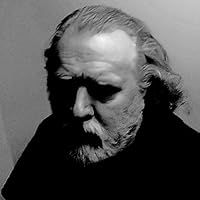
Gary Numan tells the story of his life from the 70s to the cult status he currently enjoys as a pop icon and protagonist of trip hop and ambient music. This is a story of excess, speed and the music media.
Ever since I heard "Cars" on the radio in 1979 at the age of 14, I've been a Gary Numan fan. He was different. He was strange. He made good music. I enjoyed his first few albums and then lost track of him. Well, recently, I've renewed my interest in Numan and have purchased quite a few of his albums, including some older ones I didn't have and some newer ones that are quite different from his old sound. And I've really enjoyed listening to his music again. For a long time, I wondered what this unusual person was like. He obviously had been influenced by glam and Bowie. But how much? And the fascination with the synth? It's like they were made for him.
I found out about this book last year and immediately wanted to get it. It's Numan's autobiography, but it's from a British publisher and is apparently out of print because you can't get new copies. It was also published in 1998, so it's not brand new. Still, it sounded promising. A couple of months ago, I found a bookstore in England that had a good used copy they would sell me for an obscene price, but I bit the bullet and paid and it was for some reason shipped through Switzerland and arrived at my house last week. I was elated.
I dove into the book and couldn't stop reading. It was everything I had hoped for and more. It's an excellent autobiography, very personal, very telling, very detailed, very good.
Numan was born Gary Webb to doting parents who pretty much spoiled him. He was initially a good student, but as he approached his high school years, became rebellious and was kicked out of school. From an early age, he showed an appreciation of music and of airplanes.
He learned to play the guitar at a young age and played at being in a band with some friends. This was news to me, because I'd always thought of him as a keyboardist. I didn't even know he played the guitar. He eventually formed a band as a late teen called Tubeway Army and they were signed to a small label, where they put out their first album sometime around 1977 or so. However, as Gary was the driving force in the band, they changed the name to Gary Numan and Tubeway Army and later just to his name. (He had come up with a more "interesting" surname than just Webb.)
His album Replicas came out in 1979 and was an immediate hit, much to everyone's surprise. "Down in the Park" was a great song, and there were other good ones on it too. He then felt pressure from the music label to come up with something else, so later in the same year, he released the classic, The Pleasure Principle, which featured "Cars" and soon both the song and the album were number one on the charts. He was a star at the age of 20.
Now bear in mind, he was very much an introvert -- except when he was on the stage. He was a loner, he felt uncomfortable with other people, he was socially awkward, and he liked technology more than he did people. When he discovered synthesizers in a studio, it not only changed his music forever, it changed his life. Now he was the front man, no longer playing guitars, and his band was synth heavy. In 1980, he released Telekon, which I believe also hit number one with great songs, such as "This Wreckage" and "We Are Glass." His devoted parents were now part of his crew. His dad was his manager, his mother, his wardrobe designer and in charge of the new fan club. All of a sudden, he was rich and bought houses and cars and eventually even an airplane that he learned to fly. He went on tours of both Europe and America and even though he never played to big audiences, he usually connected with his fans in a big way. Except his tours lost money. A lot.
In 1981, Dance was released with the single, "She's Got Claws," and it too was a hit. His music company was putting pressure on him to become more dance-oriented, though, and his stuff, while it sometimes had a beat, was more tech-based. His lyrics were also strange, drawing on his love of Philip K. Dick and Williams Burroughs.
It was at this point he started to slip. In 1982, he released I, Assassin, but it didn't do as well as his previous records and the press was absolutely just slaughtering him publicly, something he never understood and something that would never change in his career. The press hated him. As he continued to release albums, other New Wave, synth-heavy bands started competing with him and he couldn't get any more radio airplay, which just killed his career. Soon, he split from his label, and finding little interest elsewhere, formed his own. However, instead of concentrating on his career, he stupidly signed insignificant indie acts and plowed money into them, which he subsequently lost. By the mid to late '80s, he was no longer musically significant, even though he continued to produce records. And he went broke. In debt, even. He had to sell the houses, cars, airplane, etc.
Let me interject. He met other musicians along the way. At one point, he was elated to get to meet his hero, Bowie, to do a television concert. Well, Bowie blew him off and got him tossed off the show. That really hurt him. However, he also got to meet Queen, and writes that they were tremendously nice to him and he had a great time hanging out with them. That was cool, as I'm also a Queen fan.
During Numan's down time, he decided to embark on a crazy journey -- he flew around the world. It's a really interesting tale in the book and it was a harrowing journey, including getting arrested in India on suspicion of being a spy! He got so good at flying, he eventually became an instructor and did air shows.
Back to the music. A couple of things happened in the mid '90s to turn things around for Numan. First, popular bands started doing Numan covers in concerts and on their albums -- groups like Nine Inch Nails, Marilyn Manson, The Smashing Pumpkins, Fear Factory, Hole, and many more. Many musicians cited him as being a major influence on their own career. And he came back out of the shadows and became sort of in fashion again. Also, he found a new sound. He moved to a heavier goth/industrial sound with more sobering lyrics and, as a result, gained a new audience. Since then, his albums have sounded this way and I have several and I just love them. They're brilliant. Nothing like his early stuff, but that's okay. Musicians have to grow and change or they'll become stagnant.
It was around this time that he met his wife, Gemma, and they're still together -- I follow both on Twitter -- and they have three daughters. He's made back some of his money, although I don't know how much, but things seems pretty good for him. And that makes me happy.
This book looks deep inside Gary Numan and it's a real treat to read about his happiness, his insecurities, his victories and his defeats. It's a very personal autobiography and I can't endorse it strongly enough. Heavily recommended.
A great insight into the mind of Gary Numan. A brutally honest biography which highlights the darker side of the music industry but with humor and a touch of humility. A must read for any Numan fan if you can get your hands on a quality used copy.
An interesting read, although the book and its subject are unintentionally hilarious at times. Numan is a bizarre character, seemingly unhappy with his fame & success, a socially inept creature who truly doesn't fit in to the world around him. He's a little too honest for his own good at times, and his declaration that he finds the fantasy world of Tolkien a more believable true history of the earth than the old testament is just one of a myriad of embarrassing quips he throws out to a bemused public. Strangely, the most fascinating part of the book is the coverage of his solo flight around the globe when he became obsessed with all things aeronautic in the mid-80s. There are a few genuinely tense moments, sadly lacking in the exploration of his music and private life.
I approached Gary Numan's Praying to the Aliens with some trepidation. Generally, I do not pay any more attention to celebrities than I would to any random human I might pass on the street on any given day. Celebrities generally disappoint me whenever they discuss anything but their craft. I've been a fan of Gary's music since 1980, and only really knew that I might not agree with much of his politics. What a relief to find that his autobiography is charming, humorous, intelligent, and very nicely written!
Numan was blessed with loving and very supportive parents who have continued to readily adopt his projects throughout his life. His childhood was in no way exceptional though he was generally solitary and a little alienated. He developed a powerful interest in music early on, and manifested an unconventional gift for it. The book moves at a very brisk pace, only pausing to reflect where Numan feels the need to explain himself or when he exuberantly details a humorous anecdote.
Numan is anything but a cliche. He has a mild case of asperger's syndrome, and yet, he is obviously at least as left-brained as he is right-brained and he cares very deeply about what people think of him. He is intensely honest and his great sense of humor is often quite self-effacing - so much so that one reviewer seemed to believe that the books humor was unintentional. Though he has loved music from an early age, his passion for it seems to be about equal, or maybe less, than his ambition to become famous. This same sort of obsessiveness led him to succeed in a second career of stunt flying. The very candid narrative self-examination of Praying to the Aliens was very entertaining, and for me at least, quite moving.
The most interesting part of a musician’s autobiography is often the distance between the public image and the person who has to live with it. In Praying to the Aliens, Gary Numan offers a revealing account of his journey from a shy, technology-obsessed boy to one of the most distinctive figures in British electronic music. I found it particularly rewarding for its insight into his early career and the obstacles he had to overcome, even if my interest occasionally wandered when the subject moved away from music.
Written with Steve Malins, the book follows Numan from childhood through the formation of Tubeway Army, the breakthrough success of Replicas and The Pleasure Principle, and the less straightforward years that followed. Rather than simply recounting the making of records, Numan explores the personal experiences and decisions that shaped his path. His rise is especially interesting given how unusual his sound and image were at a time when synthesiser-driven pop was far from universally accepted. The attention he attracted brought success, but also criticism and pressure.
The early chapters are among the book’s strongest. Numan gives a vivid impression of his childhood, his closeness to his family, his shyness and his fascination with machines and technology. These details help explain the person he became without making his development seem inevitable. His account of finding his direction and entering the music industry is engaging, particularly when it reveals how uncertain and improvised the process could be. The scale of his eventual success feels all the more remarkable against this background.
One of the book’s strengths is its willingness to discuss the difficulties behind the public achievements. Numan reflects on mistakes, disappointments and periods of self-doubt, offering a sense of the personal cost of trying to maintain a career in a demanding industry. He comes across as someone determined to follow his own instincts, but also sensitive to criticism and affected by how others perceive him. These candid moments add depth to the story and make it more than a nostalgic account of early hits.
As an autobiography, the book naturally presents events from Numan’s own perspective. That is part of its appeal: readers get direct access to his recollections and explanations rather than a detached retrospective. However, anyone looking for a broader history of electronic music or a detailed picture of the wider musical scene may want to supplement it with other sources. The emphasis remains firmly on Numan’s personal experiences, rather than on placing every development within a larger historical context.
My main reservation is that the book occasionally gives too much space to Numan’s passion for flying. I understand that aeroplanes are an important part of his life, and the subject clearly means a great deal to him, but the extended passages about flying and piloting became monotonous for me. I found myself skipping sections to return to the material that interested me most. Readers who share his enthusiasm may enjoy these diversions, but for me they interrupted the flow of the narrative.
Despite that, Praying to the Aliens is a worthwhile read, particularly for anyone interested in Numan’s formative years and the experiences behind his music. It provides a personal perspective on the uncertainty and resilience involved in building an unconventional career, while giving readers a clearer sense of the man behind the distinctive public image.
I would recommend it to Gary Numan fans and anyone interested in the development of British electronic pop. Those mainly drawn to the music will find plenty to engage with, although they may, like me, choose to skim some of the flying material. The occasional detours aside, this is an illuminating account of Numan’s life and early success, told in his own voice.
What is there to say? Gary Numan is an interenting and truly wonderful man who makes great music. I had the privilage of meeting hom and getting this book signed. Can’t wait until he comes back to MN!