While physicists were busy revolutionizing our outlook on the fundamentals of the universe, the mechanistic paradigm of the past had already taken hold on the methods of every other field. Our biologists had taken a mechanistic view of life. From a biology textbook quoted by Capra, "One of the acid tests of understanding an object is the ability to put it together from its component parts. " (Capra p. 102) An approach that ironically is quite opposed to the study of life. We've now realized that the mapping of the human genome has yielded many beautiful computer models but little else. The biomedical model which concentrates on the mechanisms of smaller and smaller fragments of the body has yielded an approach that views disease as, "the malfunctioning of biological organisms which are studied from the point of view of cellular and molecular biology; the doctor's role is to intervene, either physically or chemically, to correct the malfunctioning of a specific mechanism." (p.123) The ingestion of many chemicals and execution of complicated surgeries has resulted in ever rising health care costs, and while saving many lives has primarily served as an excuse for lifestyles that run counter to human nature. "We prefer to talk about our children's hyperactivity or learning disability rather than examine the inadequacy of our schools; we prefer to be told that we suffer from hypertension rather than change our over-competitive business world; we accept ever increasing rates of cancer rather than investigate how the chemical industry poisons our food to increase its profits." (p.163)
Fritjof Capra (born February 1, 1939) is an Austrian-born American physicist. He is a founding director of the Center for Ecoliteracy in Berkeley, California, and is on the faculty of Schumacher College. Capra is the author of several books, including The Tao of Physics (1975), The Turning Point (1982), Uncommon Wisdom (1988), The Web of Life (1996) and The Hidden Connections (2002).
After a time of decay comes the turning point. The powerful light that has been banished returns. There is movement, but it is not brought about by force... The movement is natural, arising spontaneously. For this reason the transformation of the old becomes easy. The old is discarded and the new is introduced. Both measures accord with the time; therefore no harm results.
I Ching
The book has been adapted to cinema, under the title “Mindwalk”, by Amadeus Capra. I have not read the book, but I have watched the movie.
Before entering into the movie, some notes on the author of The Tao of Physics.
In an interview he gave, Fritjof Capra (director of the Center of Ecoliteracy) clarified his thought: (1) he rejects in an absolute way the “vitalist” model (which admits such notions as “the spark of life” and “vital field”); (2) his model is a synthesis of the quantitative approach (what matter is made of) and the qualitative approach (what is the organization of matter); his emphasis is on PROCESS; so (he joked): he’s only 33% materialistic. (3) Mind and consciousness emerged from matter at a certain level of complexity (of the evolution). His approach is typically holistic (versus the Cartesian view).
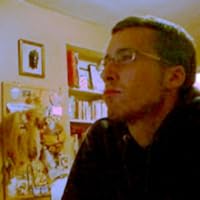
(Tom, the middle figure...)
Now, the movie. It’s an adaptation of the book “The Turning Point” and it’s very simple as regards to settings and number of characters. The movie is about dialogue, mainly; is about divulging the message, a new view of life. I would say the Messenger has been chosen on purpose to be a woman, in this case, the actress Liv Ullmann.
Two very different American brothers, middle aged, are the introducers of the plot. They talk over the phone. Jack, a politician, in Washington. Tom, a poet, a theater lover ,now in France.
They get to a deal, so that Jack will meet Tom at Mont St Michel, by the beach. Jack is about to run again for senate; Tom disappointed with life, finds Jack ever “opinionated” …maybe a public persona only, a façade. They walk and they talk. Until they come across this lady, a physicist, on a sabbatical leave.
She’s Sonia, whose daughter finds her quite apart, always reading books, maybe too intellectual.
So the trio walks and talks now. And this is the core of the movie: the dialogue; one idealistic/poetic mind called Tom, the realistic mind called Jack, the politician, and Sonia the bearer of a new approach: anti-Cartesian, holistic. Think of processes instead of structures. Descartes had this dream of a world as a perfect machine; well, the world is a living organism.
Their talk is almost unending, sometimes even boring: they touch on population control, debt, arms race, pollution, new technologies; Physics and Biology,…Medicine for the rich; the nature of matter and light.
Sonia always pressing for a new approach to these problems: the feminine way, since, so far, these problems have been approached by a “patriarchal idea of man dominating all”. What’s needed for solving world problems: the idea of interconnectedness; people just don’t see it, suggests Sonia: it’s a “crisis of perception”,” we need a new vision”; change everything at the same time…
Her own life experience is shared: she had been in the USA, in Boston, doing research on lasers (medical applications), but things changed: she had found that now the US Defense department was using the technology on Star Wars.
On matter, for example, she explains to the brothers: what really exists: not particles but RELATIONSHIPS; relationships make up matter. At a subatomic level there are no solid objects.
Sometimes over the dialogue, Tom, the poet, gets a little bit away from Jack and Sonia; but the poet is perceptive and even asks her: what’s the place of your daughter in your theories?. They walk over the beach….the tide is low. The politician seems a little bit convinced of this new view and invites Sonia to join him in his campaign team.
Well, end is approaching. The tide is up.
Sonia, the natural scientist, now gives a hug to her daughter. -a turning point, in relationships? -does it, really, matter?
If anything is worse than garbage, it's surely trite, boring garbage.
I understand the raves, truly. The book brings up ideas that some people have never considered, and for those people it's an enlightening expansion.
The problem is he gets his physics wrong and in a preachy way. His "ideas" are an inch deep and, I suspect, for effect -- mostly just the opposite of our culturally received wisdom, so that by showing us that east is always better than west, female is always better than male, new is always better than old, he relieves us from actually having to think these things through for ourselves to discover that the world is not really black and white.
Simply pointing out that quantum physics contains what in our world appear to be paradoxes does not constitute disproof of everything we ever thought. I prefer books that do not provide "answers" but rather help understand and refine the questions.
One of the best writer / thinker of our time, I think. It thoroughly explained the roots of the problems of the society, which are getting worse and worse unless we become aware of what is happening and what is causing them.
It guides me into understanding what holistic vision is all about. It really complemented what I am learning at the moment : holistic education.
In "The Turning Point", Fritjof Capra, the bestselling author of "The Tao Of Physics" elucidates the perils of being obsessed with the Cartesian-Newtonian paradigm. The effect of acruthless and focused reductionist approach, Capra argues, would only result in a world that is restless, impoverished, polluted and disillusioned. Capra's proposed solution to the problem of reductionism is to adopt a "Systems" view of the world.
According to the Systems or the Systemic view envisaged by Capra, the ideal way for making the world better would be to view various processes from a holistic perspective considering the fact that the entire world is nothing but an agglomeration and synthesis of interactions, integrations and inter connectedness. This symbiotic approach can be seamlessly adopted to all social as well as hard sciences such as Economics, Physics, Medicine and other mercantile activities. For example a recognition that the field of Economics has an inextricable linkage with the Ecology within the contours of which the dismal science operates would facilitate a holistic approach towards embellishing the economic progress and removing the various disparities currently permeating the global economy such as income inequality and wealth dispersal.
Similarly when it comes to the domain of medicine, accepting that there is an invaluable linkage between the modern biomedical methods and the traditional approaches to healing such as Eastern medicine, mysticism and shamanism would enable the practitioners to treat their patients in a more humane and rational fashion rather than reducing patients to disabilities and concentrating on a particular part of the affected anatomy instead of viewing the sufferer as a whole. This is where according to Capra, a willful and voluntary synthesis between physiology, psychology and psychiatry and psychotherapy would play a vital and indispensable role revolutionising the field of medicine itself. While physicians will move out of the mindset that treatment of the body alone is their sole prerogative, psychiatrists and psychologists will also experience a paradigm mental shift whereby they would devote more attention to the human body. Thus the Descartes notion of mind-body duality would be rend asunder.Pursuing the Systems Approach would lead to a cascading flow of benefit such as alleviating poverty, reducing the stockpiling of nuclear weapons, lower reliance on nuclear fission and the consequent production of dangerous elements such as Plutonium, and obliterating the economic chasms separating countries in the world today.
While "Turning Point" lends a radical twist to modern thinking, some of the means to attain the end are controversial and disputable. For instance, relying upon the Primal Scream technique evolved by Arthur Janov as a mode of psychotherapy and according an elitist status to mysticism and shamanism as touchstones of healing surely does raise an eyebrow or two. Capra seems to place unfounded faith in P.D.Laing's quote, "mystics and Schizophrenics both swim in the same ocean, but while mystics swim, schizophrenics drown".
All in all, "Turning Point" serves as a brilliant and refreshing mind churner whose avowed objective lies in making the world a better place to live.
Saw the film MINDWALK -- -- not once but three times in three weeks; hunted desultorily for the book for nearly 6 years and finally read it -- that took me a full year and half a dozen 5X7 legal pads of notes -- but it was worth it. This is/was a life-changing encounter with a book for me.
Like the current era, the United States of the mid-70’s and early 80’s were tinged with a new batch of thinkers making strong cases for the reorganization of society. Interestingly, this period corresponds to the time when the United States peaked in domestic oil production. Economic growth slowed to a crawl and people were considering social alternatives before the aggressive economic policies and financial deregulation of the 80’s and 90’s led to the creation of financial accumulation instead of growth in wealth, distracting those seriously considering alternatives to economic growth and the industrial production/consumer infrastructure that had defined modernism in the period after World War II. Fritjof Capra’s The Turning Point falls into the aforementioned category of ideas that were ripe at the time they were published and then pushed by the wayside when rampant domestic economic growth supported by global tolerance of the US Dollar allowed massive trade deficits to accumulate, creating the illusion of prosperity.
Now that the economic illusion of the last three decades has started to fade, The Turning Point was an eerie read. Capra’s commentary on a number of trends for a future where humanity adhered to the outdated paradigm of prosperity only from growth, a biomedical paradigm centered on eradicating microorganisms and a science based on specialization and determinism are revealing themselves in the headlines. Dr. Capra, a theoretical physicist by training and practice, was wise to integrate a holistic view of humanity and to offer an alternative for society that perhaps we’ve only now wizened enough to appreciate. Key to his thesis is the idea that our world, our governments and our scientists operate as if the deterministic paradigm of the Enlightenment period hasn’t changed. Ignoring the reality of relativity, quantum mechanics, chaos theory, biology and modern science has crippled society from the truth of the natural world. We’ve forgotten that nature does not guarantee our existence! In providing an all encompassing critique of society, Capra does not seek to denigrate the colleagues in other fields but merely to offer a well reasoned and referenced approach to modernizing the way we choose to organize our species.
Starting by providing the background of why we need to change, essentially the problem statement, Capra states the crises of society and defines the importance of the Chinese concept of wu wei, the idea that we must refrain from action contrary to nature. As Chuang Tzu says, “Nonaction does not mean doing nothing and keeping silent. Let everything be allowed to do what it naturally does, so that its nature will be satisfied.”
“In all these fields the limitations of the classical, Cartesian world view are now becoming apparent. To transcend the classical models, scientists will have to go beyond the mechanistic and reductionist approach as we have done in physics, and develop holistic and ecological views. Although their theories will need to be consistent with those of modern physics, the concepts of physics will generally not be appropriate as a model for the other sciences… Scientists will not need to be reluctant to adopt a holistic framework for fear of being unscientific. Modern physics can show them that such a framework is not only scientific but is in agreement with the most advanced scientific theories of physical reality.” (p. 49)
Capra continues by describing a history of the old world view, the mechanistic reductionist approach that has led to our current predicament. The history of our materialistic success and the limits to our knowledge of the world is retraced through Copernicus, Descartes, Bacon and Newton. This approach has led to a world where, in the words of R.D. Laing as quoted by Capra, “Out go sight, sound, taste, touch and smell and along with them has since gone aesthetics and ethical sensibility, values, quality, form; all feelings, motives, intentions, soul, consciousness, spirit. Experience as such is cast out of the realm of scientific discourse.” (p.55)
The Turning Point then follows the development of the new physics that started in 1905 when Einstein published his papers on the photoelectric effect and the theory of General Relativity. The photoelectric effect winning the 1921 Nobel Prize and laying the groundwork for quantum mechanics, leading to Heisenberg’s discovery of the Uncertainty Principle, an actual physical concept that there are limits to knowledge. Later, Schrodinger’s work in demonstrating the electrons and protons that we visualize as balls on a pool table are actually probability clouds, that the foundation of reality is a probability. This work led to John Bell’s discovery that our physical reality is subject to non-local phenomena… that the measurement of the spin of a particle in one location will change the spin of a particle in another location, the “spooky action at a distance” that is beginning to make our world look more like one envisioned by the alchemists (well… maybe alchemists like Isaac Newton). And now we’ve discovered that these non-local connections may be responsible for many basic actions in biology like memory and even consciousness.
While physicists were busy revolutionizing our outlook on the fundamentals of the universe, the mechanistic paradigm of the past had already taken hold on the methods of every other field. Our biologists had taken a mechanistic view of life. From a biology textbook quoted by Capra, “One of the acid tests of understanding an object is the ability to put it together from its component parts. ” (Capra p. 102) An approach that ironically is quite opposed to the study of life. We’ve now realized that the mapping of the human genome has yielded many beautiful computer models but little else. The biomedical model which concentrates on the mechanisms of smaller and smaller fragments of the body has yielded an approach that views disease as, “the malfunctioning of biological organisms which are studied from the point of view of cellular and molecular biology; the doctor’s role is to intervene, either physically or chemically, to correct the malfunctioning of a specific mechanism.” (p.123) The ingestion of many chemicals and execution of complicated surgeries has resulted in ever rising health care costs, and while saving many lives has primarily served as an excuse for lifestyles that run counter to human nature. “We prefer to talk about our children’s hyperactivity or learning disability rather than examine the inadequacy of our schools; we prefer to be told that we suffer from hypertension rather than change our over-competitive business world; we accept ever increasing rates of cancer rather than investigate how the chemical industry poisons our food to increase its profits.” (p.163)
In psychology, Capra advocated that the rational approach of Freudian analysis would need to be transcended to explore the subtler aspects of the human psyche. The incorporation of altered states of consciousness into mainstream psychological studies could yield insights into our human predicament. I’d like to summarize more here but this is a dense critique of many psychologists.
Capra’s exception to economics is that we’ve mechanistically reduced people into rational actors, using our education systems to produce a standardized robot class with predictable consumer society that ignores collective values and the psychological need for community. Key to this chapter is the point that the advantages won by the worker in the modern world is generally to the detriment of workers and citizens in the developing world… the great sleight of hand trick made possible by technology and economy. The automation of daily life through complex technologies reduces employment and centers on a capital based approach which is highly inflationary, an economic reality that can be seen by looking at charts of US Dollar inflation over the last hundred years. This section is the most important of the entire book and highly relevant to our current situation.
Capra then follows these critiques with answers for each field through a systems view of life that incorporates feedbacks and recognition of evolution through cooperation. A health model that acknowledges holistic principles and a psychology grown from Jung can provide a basis for this new society. Tackling energy, Capra explains the physics and the economics behind our immediate need for a solar economy.
I’ve tried to summarize all 419 pages but so much has slipped through the cracks. While it is easy to view the predicaments of the current global situation, Capra’s writings aren’t the least bit outdated and a specifically resonant with its solutions. If you are disheartened by the problems of overpopulation, energy crises, etc… (the list can go on forever) do yourself a favor and read the solutions Capra advocates in The Turning Point.
Holy smoly took my 2 braincells a while to get through, however super worth the time! Packed with information, insights, perspectives and ideas. 💅🏼 Aged super well too, its hard to imagine the book is from the early 80’s given its relevance! Capra ate with this one! 🕺🏼😗✌🏼
If I had to pick only one book to recommend for all the world leaders to read cover-to-cover, it would be this book.
Still extremely pertinent to today even having been written in the eighties, this book manages to get to the root of why there are so many problems in our culture, our academics, our health, psychology, philosophy, economy. And then goes on to propose solutions based on a holistic system theory.
Capra published this book in 1982, so the science, geopolitics, economics, and philosophy all have wonderful historical context. This was a book used for interdisciplinary instruction by some college professors as perspective for the reader. I found the utility of the author’s work to be self evident as a gauge for measuring our progress or lack there of regarding the status of our world threatening problems from carbon based energy systems to our failed health care systems and toxic economics.
The author indicts western civilization beginning with it’s adoption Cartesian and Newtonian mechanistic principles. From the fatal flaw of a mechanical reductionist approach to literally all things as a foundation Capra expands on the catastrophic impact to our world. The continued decline of our societies and quality of life is indisputable evidence for the authors hypothesis. His remedies may be more controversial, but the ideas are still very relevant with brilliant observations for all to consider. The author is deeply invested in Eastern Taoist philosophy combined with wholistic systems discipline as the foundation for a sustainable world inhabited by healthy happy peoples.
Little sections of this book get four stars. Chapter 2, The Newtonian World Machine is a nice fairly clear statement about how Descartes' vision led to a Cartesian split in cognition. There is just enuf au jus in the explanation to make you think of the mechanisitc way a cogition is attached to a structure of method, yet it is an unadorned address.
Chapter 7, The Impasse of Economics, is worthy of a look. Capra gives a little acounting of the word origin of the word property, 'privare', as in meaning to deprive the commons of the value of a good or service. Then there is the mention on p. 198 of how the notion of a 'just price' option, was bootlegged by John Locke to enter pricing into the domain of supply and demand, thereby 'liberating' merchants from the morality of a pricing scheme on their own. It may have taken 2 days to decide to sell a jug of wine to Mr. Smellers before this advance.
Last there is a bit on that old nugget of unexplained wisdom, the 'invisible hand' and invisible and mysterious guiding force behind production where men of like mind join efforts and increase trade and exchange. Capra gives a protein shake to the physiocrats in giving them credit for uninvisibleing it as productive force, as the Industrial Revolution made life into and became a mechanized life, built of the raw material as nature hath furnished into machines.
It is a readable text, introductory but at a literable level like a good play with all the star figures introduced and left to interact on the page at a decent party.
well elucidated, exhaustively comprehensive and passionately argued, Mr Capra's writing is the dream of any casual reader looking for an intellectually stimulating read. This is good academic writing, and potent writing at that. what disturbs me greatly though, is that for a book written nearly 25 years ago, the dangers it warns of are still tragically and dangerously relevant. really makes you wonder what "progress" we have made. its sobering to realize that the hopeful note on Tomorrow Capra ends on was supposed to refer to our todays...yet it sounds like we have hardly advanced at all.
When it comes, Will our Turning Point be the lowest point of an upward curve...or the point when/where we started to slide irreversibly downhill?
This was a book we used in an interdisciplinary course I had as an undergraduate. It was a science-philosophy-political science course. It was highly interesting.
I still quote Capra some 20-some years later. He successfully explained to me learning. His explanation is that each time we are presented with something new, we have to categorize it. We slot new information within our own paradigm based on how it fits with what we already understand. Those items that we struggle to slot cause us dissonance. We have to either ignore those items or adjust our paradigm to accommodate the new information. Doing so is how we evolve.
Estou muito preso ao pensamento cartesiano. Ainda que eu ache que o livro é ótimo em termos de incentivar uma nova visão do mundo e que empiricamente concorde com muitos resultados, acho que a simplificação de modelos, tão criticada pelo autor, em muitas vezes é necessária e nos diz muito. Acho que mais do que uma grande mutação, adaptações devem dirigir nosso pensamento para mudanças que não gerem grandes rupturas. Por outro lado, espero que o autor esteja certo, pois acredito que minha visão de um mundo melhor é muito parecida com a dele, apenas com um processo de mutação diferente do sugerido.
The first several chapters are a good layman's introduction to modern physics, particularly quantum physics and the intelligence that seems to be behind all things. Spirituality and Science are not mutually exclusive but dovetail in the physics of the very small.
I enjoy Fritjof Capra's way of explaining history of various topics in the context of paradigm shifts, and I agree that the mechanistic, reductionist Cartesian model needs to make room for systems thinking or ecological worldview based more on holism and processes rather than parts and things.
However, I found myself disagreeing with minor points throughout the book, such as world population and hunger. Here I agree more with Daniel Quinn.
His vision for a green transition is delusional. Most of these technologies are completely dependent upon fossil fuels for their entire lifecycle. They are more like fossil fuels repackaged in environmental feel-good sensibilities. Worse, their intermittent nature and type of energy makes them inferior to fossil fuels. See Green Illusions by Ozzie Zehner and Bright Green Lies by Derrick Jensen.
Solar farms and wind farms are not ecological. Nor can the electricity produced by them power techno-industrial civilization. In fact, these technologies are also dependent upon on energy intensive infrastructure of global techno-industrial society.
Does Capra really believe a local community will be able to mine and process the particular grade of silicon necessary for photovoltaics, and manufacture them in energy intensive clean room factories?
At best small scale, decentralized applications might offer some cushion for the coming collapse and dark ages beyond peak oil, not the green mythology he, Amory Lovins, and others propose.
Lastly, Capra also attacks patriarchy throughout while promoting feminism. This seems tangential to the core message, and one which I reject. Surely even patriarchal societies can benefit from systems theory.
"The Turning Point: Science, Society, and the Rising Culture" is a book written by Fritjof Capra, a physicist and systems theorist, published in 1982. The book explores the interconnections between modern science, society, and culture, and argues that the prevailing mechanistic and reductionist worldview of modern science is inadequate for addressing the complex challenges facing humanity today.
Capra argues that the scientific discoveries of the 20th century, particularly in the fields of quantum physics, systems theory, and ecology, have revealed a new understanding of the universe as a dynamic, interconnected network of relationships. This new understanding, Capra suggests, has profound implications for how we view ourselves and our place in the world, and for how we organize our societies and solve our most pressing global problems.
In the book, Capra also critiques the dominant economic and political systems of the modern world, arguing that they are based on outdated assumptions and values that prioritize growth, competition, and individualism over sustainability, cooperation, and community. He suggests that a shift toward more holistic, participatory, and ecologically sustainable forms of social organization is necessary to address the challenges of the 21st century.
Overall, "The Turning Point" offers a thought-provoking and interdisciplinary exploration of the connections between science, society, and culture, and provides a framework for rethinking our assumptions and values in the face of global challenges.
"The Turning Point" is a book written by Fritjof Capra, a physicist and systems theorist. In the book, Capra discusses the idea that society is at a turning point in its development and that a new paradigm is emerging.
The book explores the interconnectedness of all aspects of life, including science, art, philosophy, and spirituality, and argues that these different areas of knowledge are not separate but are rather interconnected and interdependent. Capra also discusses the role that science and technology have played in shaping society and argues that a new understanding of the world is needed in order to address the complex challenges facing society today.
Throughout the book, Capra draws on a wide range of sources, including the latest developments in science, philosophy, and spirituality, to explore the many facets of this new paradigm and the ways in which it is influencing our understanding of the world.
I have met Capra twice and this is his greatest book.
It’s a manual for systems thinking. How to see reality as a whole. It's holistic thinking at its best. How did the modern world come to be?
By breaking things down into parts and then arranging those parts into a machine. Newton and Descartes showed us the way. What is the benefit and what is the danger?
Humans have created a civilization that runs like a machine and devours countless resources to fuel it. People in a few “advanced” countries today have a standard of living that only kings could dream of a few hundred years ago. But in a world of limits and infinite wants, this is a strategy for an eventual system crash.
Capra has few solutions, but he asks the right questions.
Esse livro é incrível no sentido que explica detalhadamente como a filosofia cartesiana influencia o pensamento atual e como a física quântica nos propõe que há um outro caminho possível. É um beabá para entender a cultura atual de violência e acumulação de riqueza que domina o estilo de vida atual, mas abre caminhos esperançosos para que possamos entender que estamos em um período transitório e que esse pensamento decadente está apenas esperneando em suas fases derradeiras. Porém, tenho a impressão de que o ponto de mutação que ele previa em 1982 devesse estar mais perto. Infelizmente para nós, ele ainda não chegou, mas é inevitável identificar os comportamentos que ele prevê ao fim do livro.
Bilimsel devrimlerle gelen mekanik evren anlayışına eleştiri niteliğinde yazılmış bir kitap. 1982 yılında yazılmış olduğu düşünülürse batı düşüncesindeki bunalımı o dönemde ortaya koyduğunu söyleyebilirim. Tabii gündeme getirdiği pek çok şey artık bolca tartışılmış durumda. Belli bir aşamadan ekonomi, ekoloji ve tıptaki sorunlarının mekanik ve parçalı değil bütüncül bir sistemler yaklaşımı ile kavranıp çözülebileceğini ileri sürüyor. Mesele dönüp dolaşıp etik ve ruhani bir boyuta geliyor. Bu açıdan kitap biraz da bilim dışına kayıyor. Bunu da çok yadırgamadım aslında. Çünkü çağın en önemli sorunu bilimin insanlara cevaplar verip anlamı elinden alması. Kitabı bu anlam arayışının bir uzantısı olarak gördüm. Okuduğuma değdiğini düşünüyorum.
One of the best views of the modern world i have read, even though it has been written 40 years ago, it is now more relevant than ever. Refreshingly, it is not just set to explain everything that is wrong (and Fritjof has done that in such great detail and in an entirely new way for me), but also to propose how it can be overcome in every discipline separately, as well as on the level of the whole system. Just an amazing eye opening view into the world, which is criticizing and yet manages to give hope for a better tomorrow.
Idee interessanti, poste in modo ridondante e poco approfondito a mio parere. Ho faticato molto a finirlo, la ripetizione degli stessi concetti chiave usando le stesse parole lungo tutto il testo rendono la lettura un interminabile deja-vu. Peccato, perché gli argomenti trattati sono ancora molto attuali, e riesce a parlare di ambiti molto diversi in modo organico.
This book needs to be read in tandem with “Tao of Physics”, both of which allow for a deeper understanding into the world along with thought processes to come together. From the Cartesian thinking of breaking everything down to simpler blocks in order to understand the sum as parts of the whole, towards an integrated consciousness.
This rather eclectic book proposes a paradigm shift in human society from energy consumption to mental health treatment. Fun and interesting but dated and some of the suggestions have been proven and overcome by events. The book will make you think so worth the read.
Written in 1982, this book is still relevant today. Tracing the history and interconnectedness of science, medicine, economics, sociology and philosophy it shows that we are at a tipping point in cultural development while pointing a way towards a better future.
This is a seminal work by a top-class scientist who has become a pioneering, passionate storytelling crusader — bearing witness to the multiple crises and paradigm shifts we are all living through in this defining historical moment.