

What do you think?

Paris 1928
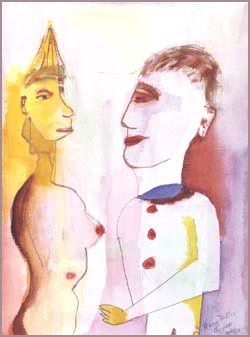
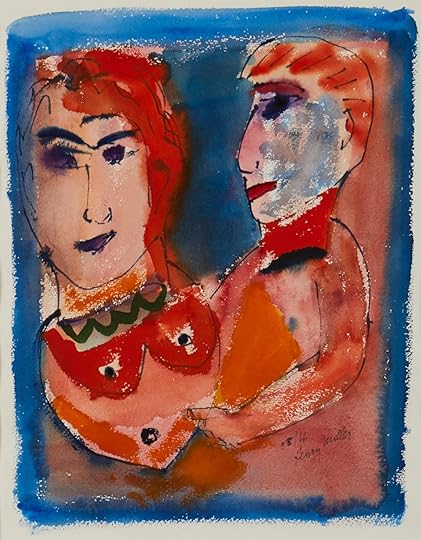
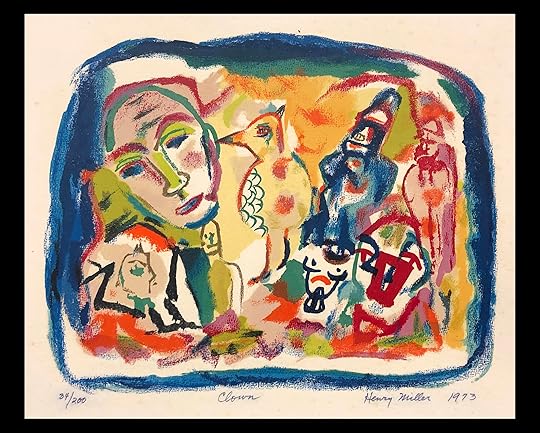
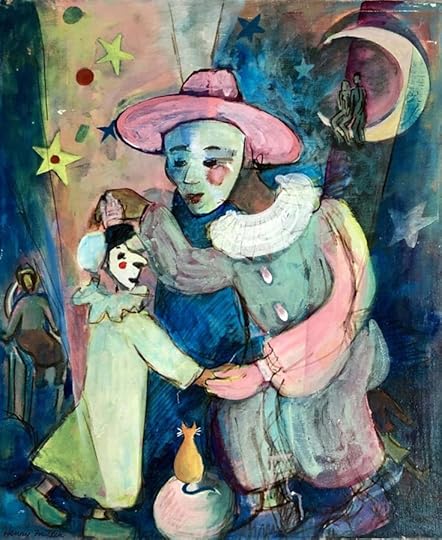
Published for the first time in English, Paris 1928 (Nexus II) continues in true Henry Miller fashion the narrative begun in Nexus, the third volume of the Rosy Crucifixion trilogy. A rough draft that Miller ultimately abandoned, the story describes Miller's first wondrous glimpse of Paris and underscores several of the recurrent themes of his work. These previously unpublished memoirs capture Miller's troubled relationship with his second wife, June; reflections on what he left behind in New York's sweltering summer of 1927; and the anticipation of all that awaits him in Europe. Paris 1928 presents Miller's views on Europe on the brink of great changes, counterpointed by his own personal sexual revelry and freedom of choice. Illustrations in this edition are by Australian artist and filmmaker Garry Shead.
Audio CD
First published January 1, 2012
About the author
Henry Miller
970 books5,313 followersHenry Valentine Miller was an American novelist, short story writer and essayist. He broke with existing literary forms and developed a new type of semi-autobiographical novel that blended character study, social criticism, philosophical reflection, stream of consciousness, explicit language, sex, surrealist free association, and mysticism. His most characteristic works of this kind are Tropic of Cancer, Black Spring, Tropic of Capricorn, and the trilogy The Rosy Crucifixion, which are based on his experiences in New York City and Paris (all of which were banned in the United States until 1961). He also wrote travel memoirs and literary criticism, and painted watercolors.
Ratings & Reviews
Friends & Following
Create a free account to discover what your friends think of this book!
Community Reviews
Displaying 1 - 30 of 36 reviews

August 11, 2023
That night I didn’t sleep a wink. It wasn’t the bedbugs that kept me awake, it was Europe, the horror and misery, which penetrated it through and through.
Paris 1928 ~~~ Henry Miller
In a 1962 interview with the Paris Review, Henry Miller was asked what he found in Paris that he couldn’t find in America. For one thing, I suppose I found a freedom such as I never knew in America. I found contact with people so much easier — that is, the people that I enjoyed talking to. I met more of my own kind there. Above all I felt that I was tolerated. I didn’t ask to be understood or accepted. To be tolerated was enough.
This is my second dive into Henry Miller this year after having read Tropic of Cancer. I was as enthralled with the writing in Paris 1928 (Nexus II) as I had been with Tropic of Cancer. What I find most fascinating here is Miller's offering different perspectives on people and places that he wrote about in other texts. Once more, Miller brilliantly blurs the lines between reality and imagination. Miller is quickly becoming a favorite of mine.
Miller’s Paris 1928 (Nexus II) grabbed me from the very first sentence. Based upon Miller’s own experience in Paris between the wars, it covers a broad range of topics, including the impending depression, Miller's ruminations on literature, God and the state of the world, and it is here that we are finally introduced to his wife, the legendary June, referred to here as Mona.
Miller's recollections of the Paris 0f 1928 are vivid ~~ we meet painters, writers, madmen and whores ~~ along with time spent in cafes, conversations had, literature read, shared meals and wine drunk along the way.
So, what is it I find so fascinating in Miller's writing? I believe it is how entertaining Miller is as his life unfolds thru his writing.
What’s next on my journey with Henry Miller? A slight detour as I venture with Anaïs Nin & Henry and June: From "A Journal of Love": The Unexpurgated Diary of Anaïs Nin, 1931-1932.
Paris 1928 ~~~ Henry Miller
In a 1962 interview with the Paris Review, Henry Miller was asked what he found in Paris that he couldn’t find in America. For one thing, I suppose I found a freedom such as I never knew in America. I found contact with people so much easier — that is, the people that I enjoyed talking to. I met more of my own kind there. Above all I felt that I was tolerated. I didn’t ask to be understood or accepted. To be tolerated was enough.
This is my second dive into Henry Miller this year after having read Tropic of Cancer. I was as enthralled with the writing in Paris 1928 (Nexus II) as I had been with Tropic of Cancer. What I find most fascinating here is Miller's offering different perspectives on people and places that he wrote about in other texts. Once more, Miller brilliantly blurs the lines between reality and imagination. Miller is quickly becoming a favorite of mine.
Miller’s Paris 1928 (Nexus II) grabbed me from the very first sentence. Based upon Miller’s own experience in Paris between the wars, it covers a broad range of topics, including the impending depression, Miller's ruminations on literature, God and the state of the world, and it is here that we are finally introduced to his wife, the legendary June, referred to here as Mona.
Miller's recollections of the Paris 0f 1928 are vivid ~~ we meet painters, writers, madmen and whores ~~ along with time spent in cafes, conversations had, literature read, shared meals and wine drunk along the way.
So, what is it I find so fascinating in Miller's writing? I believe it is how entertaining Miller is as his life unfolds thru his writing.
What’s next on my journey with Henry Miller? A slight detour as I venture with Anaïs Nin & Henry and June: From "A Journal of Love": The Unexpurgated Diary of Anaïs Nin, 1931-1932.

June 10, 2019
Ah, this classic little piece was all I needed to remember why I love Miller. Which can't be put into words. There are only a lot of Maybes. Maybe it's because reading him is like listening to myself thinking. Maybe it's because his description of sex is like he's having it for the first time, every time. Not only for his own personal biography, but in history. He's the first representative of the mankind that's having a real life look at that mystic place called vagina. Maybe it's also a definition of what good erotica is supposed to sound like. And what good sex should be about. It's landing on a Moon. It's mystery that never ends. And he's using those simple words, yet you know there's experience behind. It's like listening to great rock and roll based on 3 chords, and there's magic that hit's you right in the face because how obvious it is. I'm a Henry Miller groupie. Always was.

November 23, 2019
DNF at 1:20 of 3:32 hour audiobook
The Initial arrival in Paris was engaging and interestingly conversational, but didn't hold my interest as it went along. I may pick it up another time but too many other things to listen to that interest me so may not.
The Initial arrival in Paris was engaging and interestingly conversational, but didn't hold my interest as it went along. I may pick it up another time but too many other things to listen to that interest me so may not.

December 9, 2013
As with all books by Henry Miller, they are all 5-star. I devoured this the way I devoured all of his books. I swear reading Henry Miller, he is right there across the table from me sharing good conversation. Though I never met the man, if I were to meet him today we would sit and talk as if we were picking up the conversation from where we were the last time we talked. I know he rewrote a lot of his writing, but it sure feels like all his words come first time, casually, or ferociously, however he is speaking at the moment. Henry writes life better than any author I have ever met. I recommend this book to anyone who has an inkling for life. And for those who do not as well, this just might be the thing to knock them out of their stupor.

December 4, 2021
All the romance of the city pushed to the side exposing gratuitous fleshy philanderings of what feels like a sleazy drunk uncle.
November 6, 2014
I haven't read Miller since college, but this newly published edition brought his Paris back in full force. Not only is his and his wife June's time in Paris fascinating, but their travels through "le midi", Vienna, Budapest and in Romania are starkly revealing of place and era.
On post-Imperial Vienna:
"It was a letdown, Vienna, after the beautiful Tyrol. All seemed grim, desolate, threadbare. Maybe it was only like that around the station, I thought to myself. Don't judge too hastily.
"Her uncle was there waiting for us, his face wreathed in smiles. He looked haggard, shabbily clothed, anything but the Colonel of the Hussars he had once been. He wouldn't let us take a taxi, too expensive, he said. We took a tram and then a bus. We walked down a lugubrious looking street that might have been lifted out of Greenpoint, Brooklyn, except that in Greenpoint the walls of the buildings showed no signs of being sprayed by bullets.
"Up three flights of stairs through ill-smelling halls, the linoleum worn to tatters, the wainscoting hanging in shreds. We came to a door whose varnish had long since peeled off; there was a little brass sign above the doorbell with his name on it..."
On post-Imperial Vienna:
"It was a letdown, Vienna, after the beautiful Tyrol. All seemed grim, desolate, threadbare. Maybe it was only like that around the station, I thought to myself. Don't judge too hastily.
"Her uncle was there waiting for us, his face wreathed in smiles. He looked haggard, shabbily clothed, anything but the Colonel of the Hussars he had once been. He wouldn't let us take a taxi, too expensive, he said. We took a tram and then a bus. We walked down a lugubrious looking street that might have been lifted out of Greenpoint, Brooklyn, except that in Greenpoint the walls of the buildings showed no signs of being sprayed by bullets.
"Up three flights of stairs through ill-smelling halls, the linoleum worn to tatters, the wainscoting hanging in shreds. We came to a door whose varnish had long since peeled off; there was a little brass sign above the doorbell with his name on it..."

September 12, 2017
I hadn't read Henry Miller for more than a decade. The Rosy Crucifixion was probably my favorite work of his and this shook me enough to read Paris 1928.
It is more memoir and less fiction, though Miller blurs these lines through his style but this is straightforward and reads that way. It reminded me of the digital versus analog argument. High definition strips away the gloss, the veneer. Those elements count too. Still an interesting insight into a world much different from ours.
It is more memoir and less fiction, though Miller blurs these lines through his style but this is straightforward and reads that way. It reminded me of the digital versus analog argument. High definition strips away the gloss, the veneer. Those elements count too. Still an interesting insight into a world much different from ours.

March 27, 2013
Quit listening after the first disc. I haven't read anything by Miller but when this audiobook came across my desk at the library I thought I'd give it a try. I don't know if it was the narrator or the content, but it started sounding a little too Hemingway-esq for my tastes (and I like Hemingway): He-man literary type in Paris drinking wine and having sex with lots of name dropping in between.

June 12, 2017
I really enjoyed the part set in Paris and the travel around Europe.

March 3, 2023
Miller said in an interview that if he could go back he would write the shortest books, leaving out many of the passages that as an older man he no longer thought were important. Here we have an insight into what that might have looked like. Paris 1928 is a wonderful short book in which all of the magic of Miller - his descriptions of places, his use of dialogue, and of course his depictions of many aspects of the human experience; hunger, poverty, desperation, wealth, generosity, meanness, vulgarity, beauty, and of course sensuality in its rawest forms - may be found, perfectly honed within a hundred or so pages. All in all, it is a charming, exuberant, hopeful, humorous and insightful work that I cannot recommend too highly.

January 18, 2024
Il primo libro che leggo di Miller. Pensavo di leggere una sorta di racconto di viaggio parigino, come in qualche modo è stato "Festa Mobile" per Hemingway. E, se inizia così, raccontando dei cafè, degli artisti, del cercare di sopravvivere in una città costosa con un budget risicato, alla fine si trasforma radicalmente. Diventa un viaggio attorno all'Europa, con interessanti considerazioni perfino socio-antropologiche, fino a culminare, nelle ultime decine di pagine, in un costante, insaziabile racconto sessuale, spintissimo, senza alcun pudore, che tuttavia mantiene - lo si scopre alla fine - un senso allo scopo conclusivo di questo romanzo breve. Insomma: Miller in piena regola.

April 7, 2021
Despite it being abandoned by Miller, this is, personally, my favorite of all his posthumously published material. Perhaps because it covers a time that hasn’t been written of in depth during his formative years, Paris 1928 is certainly entertaining, and would have been a welcome addition to The Rosy Crucifixion had it been finished.

January 26, 2023
It read like a travel memoir, where they just kept missing all the more famous people, until the last chapter when it turned into a Penthouse Magazine forum letter. [probably sexual fantasy, right?]
3 stars
So far this year, my library saved me A$276.15
3 stars
So far this year, my library saved me A$276.15
February 15, 2024
3.7/5
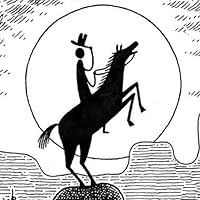
Second Henry Miller book, and this one felt like a quicker and more realistic than Tropic of Cancer. I would like to travel how Miller and his wife roam around aimlessly with nothing but a few checks and good wits. The drawings included on almost every page were extremely enjoyable.
Second Henry Miller book, and this one felt like a quicker and more realistic than Tropic of Cancer. I would like to travel how Miller and his wife roam around aimlessly with nothing but a few checks and good wits. The drawings included on almost every page were extremely enjoyable.

August 25, 2024
Miller is at his best with short books like this, "Joey: a Loving Portrait of Alfred Perles Together with Some Bizarre Episodes Relating to the Opposite Sex," "Quiet Days in Clichy," et cetera. No filler. No surrealist rants, just the making of art out of life.
June 25, 2019
Not quite what I expected....
January 3, 2020
Not what I was expecting/hoping for

February 2, 2021
Miller is unique. He has a fantastic sense of humor. When he talks about the language and rhymes of some of the long unpronouncable words it's simply hilarious

August 1, 2021
Life in Paris, but sex was in NYC. Nuff said.

September 14, 2023
Due e mezzo
In due pagine sono passato da una vecchia fattoria sperduta in Romania piena di gente che scoreggia ad una chiavata a tre a New York.
Finale col botto direi,
In due pagine sono passato da una vecchia fattoria sperduta in Romania piena di gente che scoreggia ad una chiavata a tre a New York.
Finale col botto direi,

March 3, 2025
Henry Miller can take beautiful places with beautiful people and quickly cover everything in a layer of viscous slimy ooze.

September 11, 2025
Lack of complexity and naive sexual explicitly is de rigeur and I ask why I’m putting myself through this as I read the word ‘boobies’ published on the page.
December 11, 2015
A not-so-Moveable Feast
This is an abandoned sequel to Nexus which was to continue the journey of Mona and Val (the fictional proxies of June and Henry Miller) as they first journey to Paris together in 1928 and then on to other parts of Europe.
Publishing it now (in English in 2012, in French in 2004) might have had some historical gossip value but the fictionalized characters that the couple meet are generally not that interesting. One of the characters, Carl, may have been partially based on poet Robert W. Service. Service mentions an encounter with Miller where they did discuss other writers similarly to how Carl speaks with Val in Paris 1928 (see http://robertwservice.blogspot.ca/201...).
This is an abandoned sequel to Nexus which was to continue the journey of Mona and Val (the fictional proxies of June and Henry Miller) as they first journey to Paris together in 1928 and then on to other parts of Europe.
Publishing it now (in English in 2012, in French in 2004) might have had some historical gossip value but the fictionalized characters that the couple meet are generally not that interesting. One of the characters, Carl, may have been partially based on poet Robert W. Service. Service mentions an encounter with Miller where they did discuss other writers similarly to how Carl speaks with Val in Paris 1928 (see http://robertwservice.blogspot.ca/201...).
January 6, 2014
The first few chapters of this book were truly glorious. The awe and optimism of an American abroad on the continent in 1928, bar scenes and cityscapes depicted in lush impressionistic passages, an adventure! A lark! Books and booze, artists and hookers! Oh yeah!
Then it got really dull. I didn't really care - I was busy doing other things while listening to it on audiobook - but it did rather remind me of listening to an old uncle rattle off an itinerary of their last trip. Dull as, bro.
What can we expect from an early unpublished work that is posthumously published? Probably a couple of great chapters. Well, that's exactly how I would describe this book.
Then it got really dull. I didn't really care - I was busy doing other things while listening to it on audiobook - but it did rather remind me of listening to an old uncle rattle off an itinerary of their last trip. Dull as, bro.
What can we expect from an early unpublished work that is posthumously published? Probably a couple of great chapters. Well, that's exactly how I would describe this book.

August 7, 2013
With an imminent return to Paris and the happy surprise of finding something 'new' by Henry Miller, one might think that Paris 1928 would be a great and good pleasure for a reader like me. Not so much. Not that the book itself is bad; just that the book itself was left unpublished for a reason. Originally intended to become Nexus II, which I never knew existed as an idea, it reads as the draft-notes it essentially is - something bigger and better might have come from this thin draft, but alas, as is, this is best left for Henry Miller fans who have exhausted the best of Miller's oeuvre.

September 10, 2013
Imagine Henry Miller without the joie de vivre. This book, assembled from unpublished notes, is a short description of Miller's first trip to Europe. We endure descriptions of self important artists drunkenly talking about great writers. Then find even Miller was bored by them.
Some good descriptions of horrible post war poverty in Hungary, and a wicked, Penthouse type tale at the ending made it interesting in places.
All in all, a must read for someone like me who has read everything by Henry Miller. But still a short, sparse volume with unrelated artwork used to pad the pages.
Some good descriptions of horrible post war poverty in Hungary, and a wicked, Penthouse type tale at the ending made it interesting in places.
All in all, a must read for someone like me who has read everything by Henry Miller. But still a short, sparse volume with unrelated artwork used to pad the pages.

February 20, 2013
I hadn't read Miller in many years. Paris 1928 captures a jaunt through Europe with his wife, sometimes high on the hog and sometime hand to mouth. When their money flowed, they rubbed shoulders with Parisian bohemians, eating and drinking their way around the City. When they were broke, abandoned by their new 'friends', they wired to America for more cash. What I can tell, the travels took place over about a year...ending back in NYC with a wild sexual romp.

June 3, 2025
“Paris 1928” by Henry Miller is probably one of the most graphic books I’ve come across. I liked the beginning, especially the funny parts during the trip to Budapest, and I found it interesting how excited the author was about visiting Romania. His descriptions of Europe after World War I were also quite eye-opening. But the last chapter felt more like something out of a men’s magazine, which kind of ruined it for me. I can see why this book wasn’t published while he was still alive.

May 10, 2013
nice little Eurotrip book... Miller’s way with words is great...and, for the time, how unafraid of describing sex acts, was pretty novel. Honestly, if there wasn’t so much name-dropping it might have more substance/interest to me. If you’re looking for a tone of cultural references within the writing scene, between the two world wars? this book’s got it for you. a strange ramble, really.

April 11, 2013
Miller's incredibly boring European travelogue should have stayed unpublished. Even when 3/4 through the book he describes his romp with 2 women, I cared so little about the characters that the scene wasn't even interesting.
Displaying 1 - 30 of 36 reviews