The PT boat was a class of motor torpedo boats used by the United States during the Second World War. Armed with a 40mm antiaircraft gun, two 20mm antiaircraft guns and four torpedo tubes, their agility and speed consistently bested even the most outlandish expectations. Against Japan, they figure prominently in some of the best-known feats of heroism of the entire war. In Devil Boats, the reader is right on board, buffeted by the spray of the crashing Pacific minutes after the Pearl Harbor disaster as a PT boat brings down the first enemy plane. And there again as PT boats, their engines muffled, steal along on an unforgiving ocean to sink a warship, blow up a supply barge, carry a sabotage team past enemy lines, or effect another extraordinary rescue of a downed Allied pilot. In instance upon instance, the PT boats and their crews performed deeds demanding incredible courage and skill, pitting their plywood craft against the force of the angry sea, or the might of ships hundreds of times their own size. Among their legendary exploits - General MacArthur being spirited off besieged Corregidor; Philippine president Quezon's "kidnapping" to Australia; and the unforgettable heroism of a wounded John F. Kennedy and his fearless PT-109.
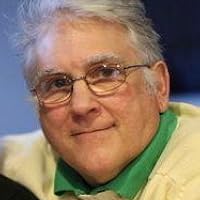
William B. Breuer landed with the first assault waves in Normandy on D-Day (June 6, 1944), then fought across Europe. Later, he founded a daily newspaper on a string in Rolla, Missouri, and after that, a highly successful public relations firm in St. Louis, Missouri. He had been writing books full time since 1982
Wow. I’ve heard the name “PT Boat”. But did not know the incredible stories of these boats and their contribution in the Pacific Theater.
This book is full of nearly impossible stories of these 60 ft long PLYWOOD boats roaring up close to Destroyers and Cruisers, launching their few torpedo’s, and then zig-zagging away in hopes of surviving. And in hopes that one of the torpedo’s find its mark and takes down the massive, metal warships.
Someone please make a tv series or movie based on these incredible true stories!
Having read many books on the naval war in the Pacific during World War II, the role of the PT boats was something I rarely came across. This book gives a great overview of PT boat operations in the Philippines during the dark, early days of the war, as well as later on in the Solomons and New Guinea campaigns. Lots of great stories about interesting actions, raids and rescue missions, and I especially liked the description of the role PT boats played in the Battle of Surigao Strait. A nice, quick read, well worth the time!
Introduction: As early as 1927, the Nipponese warlords concocted the Tanaka Memorial, a secret plan , a blue print for the conquest of Asia, and war with America. The warlords were ready to strike in 1937. They initiated a clash with the Chinese in Marco Polo bridge in Peking and start a massive invasion of mainland China. The woefully unprepared America was nearly driven out from the Pacific in the early days of the war. There were only four leaking, obsolete PT boats which comprised her fleet in the Philippines but these boats managed to attack Japanese warships nightly for many weeks.
The Japanese juggernaut had stunned the free world. They carried out a blitzkrieg which dwarfed the German blitzkrieg in Europe. The attack on Pearl Harbor dragged the United States of America to the second World War on Dec. 7, 1941. Manila was attacked on Dec. 10, 1941. Due to lack of supplies and ammunition, Bataan and Corregidor eventually surrendered on April & May 1942, respectively.
Upon the order of the U.S. President, Gen. MacArthur left the Island of Corregidor. Travelled the unchartered waters by night on board the 4 PT boats to avoid the Japanese naval blockade which were roaming around the Philippine waters unchallenged,
Gen. MacArthur was expecting a strong army waiting for him in Australia. He was planning to return to the Philippines within a few weeks but he was shocked as he landed that the “army” he was to lead back to the Philippines to rescue the troops in Bataan and Corregidor did not exist.
He was able to convinced President Roosevelt to built 200 torpedo boats within eight months. These boats will attack hostile Japanese vessels and prevent invasion on the islands or a continent. Constructing a battleship or aircraft carriers will takes years but America did not have those years.
The Japanese invaded the Solomon Islands and were constructing an airfield in Guadalcanal in order to attack American shipping vessels bound for Australia and also use it as a jumping ground for an invasion in Australia.
The Patrol Torpedo boats or “PT boats” are made of plywood materials, armed with torpedoes and four 50 cal. Machine guns with a speed of 41 knots which can easily outrun & evade enemy ships. These boats prowls the seas at night, hunting for enemy ships to ambush with torpedoes.
The American marines invaded Guadalcanal and other islands on July 2, 1942. Determined to recapture and wipe out the American troops, the Japanese sent troops and supplies nightly along with naval ships to attack the island. The Americans labelled these incursions as the “Tokyo Express”. It was in this desperate situation that the PT boats attack relentlessly the Japanese ships even in the absence of American destroyers, cruisers or battleships as they are sunk or damage limping back to port for repair. A David and Goliath encounter. The Japanese feared the PT boats that they call it the “Devil Boats” as the boats inflicted a lot of damage in the Japanese fleet.
As planned by the General, the PT boats destroyed the Japanese ships moving around the islands to resupply and transfer troops. The pace of the American offensive, will take 10 years to reach the Philippines and another 5 years to push on to Japan. So, he decided to “leap-frog” to Leyte from Morotai Island instead of flushing out all Japanese in every island while depriving them from supplies and troop movement by utilizing the PT boats to do the job. With 280,000 men, 1,000 ships and 3,000 landing craft, Gen. MacArthur landed in Luzon.
CONCLUSION. The book was written based on the accounts of the PT boat officers & crew who survived the war in the Pacific. When the Americans invaded Guadalcanal, the Japanese naval convoy travel to the area to deliver troops and supplies every night, eager to create another Bataan like scenario to humiliate the Americans again. But they were confronted by American and Australian Cruisers and destroyers. Both sides suffered heavy casualties. A lot of ships sunk in Iron Bottom Bay. As the damaged Allied ships were limping back to Australia or the nearest port for repair, the Devil boats were always there prowling at night to deliver their torpedoes upon the endless convoy of the “Tokyo Express”.
A profound and dramatic story of brave men of the Devil Boats who turned the tides of World War II.
I've been looking for a detailed history of U.S. PT boat operations in the Pacific during World War II. After this book, I'm still looking.
"Devil Boats" was published in 1987, but in many places it reads more like an early 40s propaganda pamphlet designed to boost home front morale. Japanese politicians, admirals and generals are not politicians, admirals and generals, but "Nipponese warlords" who direct not an army or navy, but a "raging war machine."
The author insists on calling the pilot who led the surprise attack on Pearl Harbor "Captain Mitsuo Fuchido," but every Japanese speaker I have ever heard pronounces his family name as "Fuchida."
The author rightfully lauds the courage and "can do" spirit of the young men who served in the U.S. PT boat force, including a certain Lt. John F. Kennedy, whose exploits as commander of PT 109 were part of the elementary school curriculum of people who grew up in the 1960s, like me. But he sometimes has trouble getting his facts straight, and this makes it difficult to take his book seriously as military history.
He writes: "In 1927 the Nipponese warlords had drawn up a secret plan called the Tanaka Memorial. It was a blueprint for military conquest of vast expanses of Asia and war with America." This is simply incorrect. The "Tanaka Memorial" story makes good copy for those who like to peddle feverish Yellow Peril fantasies, but it has been dismissed by real historians. Says John Dower in his book "War Without Mercy: Race and Power in the Pacific War," the supposed "blueprint" was described as "Japan's Mein Kampf" in the 1940s U.S. propaganda film "Know Your Enemy--Japan," but "most scholars now agree that it was a masterful anti-Japanese hoax." In fact, the Japanese government and military were deeply divided over the plan to initiate hostilities with the U.S.
Another weakness in "Devil Boats" is the author's comically overheated writing style. Some examples:
"The Japanese bomber flights began circling impudently over Manila Bay as though they were passing in review for Emperor Hirohito back in Tokyo."
And also:
"On each hip he carried a menacing pistol, and he clutched a tommy gun in a manner that caused others to believe he was itching to locate a Japanese to use it on."
And then there's:
"Nicknamed 'Razor Brain,' Tojo was barely five-feet-four and wore oversized horn-rimmed glasses that gave him an owlish appearance." Thankfully, the next lines did not include any references to "buck teeth" and the thickness of those eyeglasses.
"Devil Boats" is a series of vignettes describing the death-defying heroics of small groups of U.S. servicemen. It does that well, but is far from being a comprehensive history of the PT boat force. Reading it, I did not learn anything about that force that I didn't know before I started.
I loved this book! Breuer's style of writing and the heroic stories of the PT men gripped my attention and I only put the book down when I was tired or drawn into other projects. For those who remember the 1960's TV show McHale's Navy about PT73, this is quite different.
These men were extraordinary warriors performing courageous acts of valor in places that no one ever heard of before. The PT boats were small, plywood vessels crewed by young men barely out of high school and college. They attacked Japanese barges, cruisers, destroyers, battleships, and submarines. Imagine an 80' plywood boat taking on heavily armed, steel vessels much larger than theirs. They also rescued downed pilots, inserted recon patrols in enemy held territory, and often went ashore themselves to attack and destroy Japanese facilities. All of this in some of the most hostile environments on the planet.
I encourage anyone to pick this book up and read about the often forgotten men and stories of the PT boats of World War II. For younger readers be aware that God's name is taken in vain in more than one place. This was the only thing about the book that I did not feel was necessary to include.
A decent collection of anecdotes though rather sensationally written in the old school style wherein every individual is named in full and the writing is a bit verbose ...using the term Japanese and Nipponese in the same paragraph for example. The author is obviously a MacArthur fan, and the facts at an operational level are often suspect.
Fine for what it is, but I hope to find better collections of PT sailors' stories.
I appreciate that my copy is the Jove War Book edition with fantastic cover art.
This book told a different side to the war in the Pacific. The author brought the unique brotherhood of the PT sailors to life. The challenges they faced, their actions, the daring missions, and the impact they had on the success of the war all come out. The reader is left at the end of the book feeling saddened by the “funeral pyre” that brought an end to such an important part of the victory.
Outstanding telling of the contribution of the PT Boat to the allies victory in WW2. Interesting perspective overall and surprising (to me at least) look at General MacArther's relationship to the PT fleet.
Good overview of the PT's of WWII and their actions in the Pacific. From Pearl Harbor to Leyte Gulf, this coverage gives the reader an idea of the PT Operations and their inherent limitations and strengths against a seasoned ememy.