

What do you think?

Rowan Williams on Icons #2
Ponder These Things: Praying With Icons of the Virgin
This beautifully illustrated book invites modern-day pilgrims and people of prayer to think about some of the different ways in which Mary is regularly portrayed in the art of Eastern Christianity. Specifically, it explores three of the most common yet theologically rich images of the Holy Virgin—She Who Points the Way or Hodegetria , The Virgin of Loving Kindness or Eleousa , and The Virgin of the Sign or Oranta —all of which serve as a wonderful springboard for theological and personal reflection.
96 pages, Hardcover
First published January 1, 2002
About the author
Rowan Williams
272 books372 followersRowan Douglas Williams, Baron Williams of Oystermouth, is an Anglican bishop, poet, and theologian. He was Archbishop of Canterbury from December 2002-2012, and is now Master of Magdalene College, Cambridge and Chancellor of the University of South Wales.
Ratings & Reviews
Friends & Following
Create a free account to discover what your friends think of this book!
Community Reviews
Displaying 1 - 25 of 25 reviews

July 31, 2022
I love icons especially when they draw people together, breaking down barriers which our limited vocabulary frequently creates. In the case of this book, there are three icons, and a profoundly moving, yet brief text describing each which would seem to appeal to persons of many various backgrounds and beliefs. Originally, I bought this charming little book for a gift, meaning only to read and give it away; now I am not sure I can bear to part with it. Archbishop Rowan Williams has chosen three icons of Our Lady as well as a Legend, brand new to me.
The first, the Hodegetria, The One Who Points the Way, has Christ at the center with Mary looking at us, but pointing to her Son who is pointing right back to her. We learn that icons are about movement; our eyes are meant to move all around the picture never really able to settle at any one place for long.
The Eleousa, The Virgin of Loving Kindness, shows us a God of eager and even boisterous love. Jesus has his cheek pressed up against Mary’s, his eyes fixed on her, one hand grasping her veil, the other fondling her chin, and ‘one foot thrust towards us as if he is pushing himself up against her body with great energy’. The message here being that God is closer than we can ever imagine. He longs to love us with a passionate love.
Finally, the Orans, The Virgin of the Sign, has very ancient origins. It is simply Mary praying with hands extended and Christ in her center, her womb. There are any number of possible interpretations of this icon, none of which need be ‘wrong’, but Williams offers an interesting meditation which considers the icon as our glimpse of Christ praying to His Father. Not every prayer time goes according to ‘plan’. God frequently has His own plans for us, and He has been known to take over prayer times; but unsettling as this is, such glimpses are divine opportunities, not to be lightly tossed aside. In fact, they are beautiful opportunities to discover the God Within, as Mary in the picture is always meant to stand in for us.
The Legend about Mary concerns ‘The Veil’—the veil separating God and Man, perfectly illustrated when Good Friday falls on March 25th, the Feast of the Annunciation. In the former, the Temple Veil is rent in two at the moment of our LORD’s death, but years before, our God first opened the veil between God and Humanity when He entered into Time and became one of us. This meditation explores the many veils/curtains/barriers we place between ourselves and God. Beautiful! and one to be returned to often.
Indeed, I have convinced myself I must keep this book and buy others for gifts.
The first, the Hodegetria, The One Who Points the Way, has Christ at the center with Mary looking at us, but pointing to her Son who is pointing right back to her. We learn that icons are about movement; our eyes are meant to move all around the picture never really able to settle at any one place for long.
The Eleousa, The Virgin of Loving Kindness, shows us a God of eager and even boisterous love. Jesus has his cheek pressed up against Mary’s, his eyes fixed on her, one hand grasping her veil, the other fondling her chin, and ‘one foot thrust towards us as if he is pushing himself up against her body with great energy’. The message here being that God is closer than we can ever imagine. He longs to love us with a passionate love.
Finally, the Orans, The Virgin of the Sign, has very ancient origins. It is simply Mary praying with hands extended and Christ in her center, her womb. There are any number of possible interpretations of this icon, none of which need be ‘wrong’, but Williams offers an interesting meditation which considers the icon as our glimpse of Christ praying to His Father. Not every prayer time goes according to ‘plan’. God frequently has His own plans for us, and He has been known to take over prayer times; but unsettling as this is, such glimpses are divine opportunities, not to be lightly tossed aside. In fact, they are beautiful opportunities to discover the God Within, as Mary in the picture is always meant to stand in for us.
The Legend about Mary concerns ‘The Veil’—the veil separating God and Man, perfectly illustrated when Good Friday falls on March 25th, the Feast of the Annunciation. In the former, the Temple Veil is rent in two at the moment of our LORD’s death, but years before, our God first opened the veil between God and Humanity when He entered into Time and became one of us. This meditation explores the many veils/curtains/barriers we place between ourselves and God. Beautiful! and one to be returned to often.
Indeed, I have convinced myself I must keep this book and buy others for gifts.
November 10, 2025
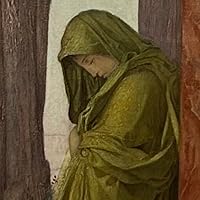
“Mary stands for all the history of God’s people, the steady knowledge of promise and faithfulness.”
Anglican girl autumn is in full swing!!
Anglican girl autumn is in full swing!!
February 21, 2026
The image of God’s action we are presented with here is of a hungry love.
When I picked this book up at Russell’s (where all good books can be found) I knew that I would like it. I mean I have been meaning to read Rowan Williams for years, and with a foreword from Met. Ware (memory eternal) I knew it had to bang. So it went on my Lent reading list. But I did not expect this to surge to one of my favourite books. I think I might re-read it before Lent is out.
In a lot of ways, this book is a systematic theology of Christ, Mary, the church, humanity, prayer, icons, forgiveness, sin, the Father, love, angels — and all with exceeding depth unexpected of such a short devotional work. But more than all of that, it is an antidote to the deeply hateful and self-loathing Reformed theology that I was raised with. Rather than a God of holiness who cannot abide with humans because of their decrepit sinfulness, it is a God of clamouring and messy love who just wants to hold us.
With no meditation on Scripture directly, but deeply soaked in it, Rowan gave us a powerfully moving text that I think everyone should read. Even if you are uncomfortable with icons and a high view of Mary, the (now former) Archbishop of the Anglican Church did a good job here mediating a Protestant meditation. I am left with this text from Galatians urging us to be like Mary as I put down this book.
May we all be like Mary who knew the Lord deeply as He formed in her, and felt His unabashed love in her arms.
When I picked this book up at Russell’s (where all good books can be found) I knew that I would like it. I mean I have been meaning to read Rowan Williams for years, and with a foreword from Met. Ware (memory eternal) I knew it had to bang. So it went on my Lent reading list. But I did not expect this to surge to one of my favourite books. I think I might re-read it before Lent is out.
The Lord here does not wait, impassive, as we babble on about our shame and penitence, trying to persuade him that we are worth forgiving. His love is instead that of an eager and rather boisterous child, scrambling up on his mother’s lap, seizing handfuls of her clothing and nuzzling his face against hers, with that extraordinary hunger for sheer physical closeness that children will show with loving parents.
In a lot of ways, this book is a systematic theology of Christ, Mary, the church, humanity, prayer, icons, forgiveness, sin, the Father, love, angels — and all with exceeding depth unexpected of such a short devotional work. But more than all of that, it is an antidote to the deeply hateful and self-loathing Reformed theology that I was raised with. Rather than a God of holiness who cannot abide with humans because of their decrepit sinfulness, it is a God of clamouring and messy love who just wants to hold us.
What we see is a circular motion, Mary pointing to Christ who looks at her. Mary ‘returns’ to herself through Christ; she is who she is not only as pointing to Christ but as the object of her son’s love; and for her to look at Christ is for her to look at herself truthfully — as loved by him.
With no meditation on Scripture directly, but deeply soaked in it, Rowan gave us a powerfully moving text that I think everyone should read. Even if you are uncomfortable with icons and a high view of Mary, the (now former) Archbishop of the Anglican Church did a good job here mediating a Protestant meditation. I am left with this text from Galatians urging us to be like Mary as I put down this book.
My little children, for whom I am again in the pain of childbirth until Christ is formed in you.
May we all be like Mary who knew the Lord deeply as He formed in her, and felt His unabashed love in her arms.
June 24, 2019
A perfect little reflection on Mary and the one who is "closer to me than I am to myself." I can't think of a book that leaves me with more peace.

April 28, 2021
Enticing me to adopt a more attentive posture towards icons, to learn more from Mary, to attend to the meaning that may draw us more deeply into the humble life of Jesus.

August 7, 2021
A decent enough publication by Rowan Williams, current Archbishop of Canterbury, that very briefly analyses four famous depictions (or icons) of the Virgin Mary. This interested me wherever it was I picked the book up because I know Anglicans, as with all Protestants, are generally wary of the Catholic Marian tradition, and therefore I thought this would make for good reading - to see how one of their leading "authorities" responds to such a concept (that is, "praying through icons"). It turns out, this book does not delve into Catholic thought at all, as all the works considered are of the Eastern Orthodox tradition.
Either way, it makes for a pleasant and occasionally insightful read. Nothing amazing, by any means. Some nice pictures though. Some might fight the written text a little perfucntory perhaps, as I did sometimes.
Either way, it makes for a pleasant and occasionally insightful read. Nothing amazing, by any means. Some nice pictures though. Some might fight the written text a little perfucntory perhaps, as I did sometimes.

October 8, 2022
Perhaps my biggest intellectual crush, Rowan Williams delivers yet again with this profound, accessible, beautifully appointed little book.
It's reading Williams that I'm reminded why I love theology so much. That exquisite combination of poetry, reason, art, culture, people and ultimacy. His prose manages to be both serious and playful, his humility and vulnerability (as a person and a thinker) so apparent.
Williams reflects on four different icons from the Eastern church, drawing out meaning - whether written deliberately or by God's providence - to inspire and challenge us.
The east has so much to teach those of us in the west (as Williams' scholarship continues to prove). Perhaps the biggest lesson is an openness to mystery, a reluctance to pin things down as this or that, a comfort with liminality and uncertainty. This left brain faculty is so important not only for a proper approach theology and poetry, but for our lives in general. (Iain McGilchrist's Master and his Emissary comes to mind.)
If there's one book I could direct Christian-sceptics to that shows the best of what the faith can be, this would be it.
It's reading Williams that I'm reminded why I love theology so much. That exquisite combination of poetry, reason, art, culture, people and ultimacy. His prose manages to be both serious and playful, his humility and vulnerability (as a person and a thinker) so apparent.
Williams reflects on four different icons from the Eastern church, drawing out meaning - whether written deliberately or by God's providence - to inspire and challenge us.
The east has so much to teach those of us in the west (as Williams' scholarship continues to prove). Perhaps the biggest lesson is an openness to mystery, a reluctance to pin things down as this or that, a comfort with liminality and uncertainty. This left brain faculty is so important not only for a proper approach theology and poetry, but for our lives in general. (Iain McGilchrist's Master and his Emissary comes to mind.)
If there's one book I could direct Christian-sceptics to that shows the best of what the faith can be, this would be it.

August 12, 2025
Gifted this book by a friend who has found great comfort from Christ through icons. The book does a wonderful job of bridging the gap of two often seeming contradictory ideas by continuously pointing to the Gospel. It is a beautiful thing to worship in different ways and I’m grateful to have a little more understanding of those who find Jesus intimately through icons. Grace upon grace.

June 22, 2026
A sheer delight!
June 26, 2026
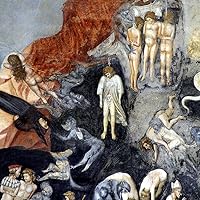
In Orthodox terminology, icons are not painted, they are ‘written.’ It is the worshipper’s role, therefore, to read them.
Williams says this:
‘She (Mary) is introducing her son; but the child she shows us is precisely a figure who gives his whole attention to her, it is very typical of the icon style that it presents people to us clearly in defining relations to each other, not as solitary portraits.’
Icons are written as novels are, or should be, with everything dependent on relationship. An icon-ic literature, and a prayerful iconophilic worldview, is something that moves around relation, where everything - each character, plot change, line, even phrase - points towards something else, something other, something beyond. Icons are written as novels are written, for the purpose of seeing the other and falling in love.
Williams says this:
‘She (Mary) is introducing her son; but the child she shows us is precisely a figure who gives his whole attention to her, it is very typical of the icon style that it presents people to us clearly in defining relations to each other, not as solitary portraits.’
Icons are written as novels are, or should be, with everything dependent on relationship. An icon-ic literature, and a prayerful iconophilic worldview, is something that moves around relation, where everything - each character, plot change, line, even phrase - points towards something else, something other, something beyond. Icons are written as novels are written, for the purpose of seeing the other and falling in love.

December 2, 2025
Well I just adore Rowan Williams’s writing. He’s got this lovely ability to make us ponder (lol) without feeling like he’s preaching, shoving anything down your throat. With attention (perhaps a glimmer of the attention with which he suggests that Christ attends to us), Williams gestures us towards a way of responding to pictures, places, people and God that is characterised by care, as we are washed afresh with awe for miraculous divinity of Christ’s incarnation held in Mary. Held in attention, in love and in the unseen. And, Williams suggests, modelled in icons, this may be true for not only Mary, but us too.

March 16, 2020
Very enjoyable. One really felt one journeyed with the icons as Rowan Williams helped us to read the icons. My only gripe is that it such a short book, one can easily read it in one sitting. Give me more! Still it's great spiritual reading. I read it during Lent but it might be nice due to it's Marian focus to read it during Advent.

Read
December 6, 2023Feels a bit like the reading equivalent of listening to a very good sermon. I wish I wasn’t so mildly resentful of Rowan Williams for personal theological reasons (look, he’s better than Welby but the bar is on the ground), because I think I could’ve gotten more out of this if that wasn’t the case. Even so, some nice Marian devotion for Advent.

May 21, 2018
an interesting little book of meditations on three iconic icons of Mary. As usual with Rowan it is well written and enlightening. it is more his personal take on the icons than an historical or traditional aspect. It is worth reading more than once.

November 24, 2018
Helpful meditations on icons, helped me to see how to read and pray with an icon :)

June 13, 2026
Airplane read. Wonderful book in preparation for a pilgrimage.

August 10, 2024
A very refreshing and timely little book.

September 17, 2024
I loved this beautiful book. The writing is poetic, but still feels practical and applicable. 🩵
It is divided up into bite-sized sections, so is easy to pick up and put down as time allows.
It is divided up into bite-sized sections, so is easy to pick up and put down as time allows.

December 13, 2024
PONDER THESE THINGS: Praying With Icons of the Virgin by Rowan Williams. This short book and its workbook were required reading for a zoomed Advent study this year. Reading the icons of Mary was found to be an excellent, new type of scripture engagement comprised of reflecting on the art and aesthetics of three important icons of orthodox christianity, and discussing and praying the icons, much like one prays a scripture verse or passage.
In the first three chapters, Rowan Williams discussed three different icons of the Virgin Mary and her child and initiated us into a few elementary concepts of orthodox christianity. So we covered these icons : ADVENT WEEK 1: THE HODEGETRIA: The One Who Points the Way
ADVENT WEEK 2: THE ELEOUSA: The Virgin of Loving Kindness
ADVENT WEEK 3: The ORANS: The Virgin of the Sign
In chapter four, Rowan Williams discussed a long-standing legend about the Virgin Mary’s life and backstory before the Angel Gabriel accosted her but ever so nicely. ADVENT WEEK 4: WEAVING SCARLET AND PURPLE: A Legend of Mary.
It seems to me legends were like the TikToks of centuries past.
Apparently that legend had it that Mary helped weave the red and purple temple cloth that separated off the Holy of Holies in the temple.
I used to wonder about that, after reading the Old Testament accounts of God’s commands for his dwelling place, but it never occurred to me that the temple materials and physical goods and items were constantly being refurbished, maintained, renewed.
But the effect of this last chapter was that we received some elementary instruction in a very few basic concepts of judaism this time.
I suppose the connection of the book to the Advent season is that the Virgin Mary is so strongly representative of the Incarnation for the Roman Catholic Church.
In fact, in the last few minutes of the entire zoomed Advent study, we learned of a few, shall we say, spiritual-technical things that occurred at the very moment that Mary said, in essence, yes to the visiting angel by saying something to the effect of ‘Let it be to me according to your word.’
Are the things we heard professional clerical knowledge for the college of cardinals in Rome?
However, since then, I’ve noticed that in the book of Revelation 11.19 the traditional ark of the covenant is the one that’s seen in God’s opened temple. So it’s all rather difficult to understand.
All in all, in this book Rowan Williams showed a remarkable orientation and openness to wide-ranging ecumenicism, obviously not wanting to appear to be close-minded about the CoE.
This book would probably be more pleasing to someone with an artistic bent, as in parts the icons are described much as a museum docent would discuss a painting hanging on a museum wall.
Have a lovely day everyone.
In the first three chapters, Rowan Williams discussed three different icons of the Virgin Mary and her child and initiated us into a few elementary concepts of orthodox christianity. So we covered these icons : ADVENT WEEK 1: THE HODEGETRIA: The One Who Points the Way
ADVENT WEEK 2: THE ELEOUSA: The Virgin of Loving Kindness
ADVENT WEEK 3: The ORANS: The Virgin of the Sign
In chapter four, Rowan Williams discussed a long-standing legend about the Virgin Mary’s life and backstory before the Angel Gabriel accosted her but ever so nicely. ADVENT WEEK 4: WEAVING SCARLET AND PURPLE: A Legend of Mary.
It seems to me legends were like the TikToks of centuries past.
Apparently that legend had it that Mary helped weave the red and purple temple cloth that separated off the Holy of Holies in the temple.
I used to wonder about that, after reading the Old Testament accounts of God’s commands for his dwelling place, but it never occurred to me that the temple materials and physical goods and items were constantly being refurbished, maintained, renewed.
But the effect of this last chapter was that we received some elementary instruction in a very few basic concepts of judaism this time.
I suppose the connection of the book to the Advent season is that the Virgin Mary is so strongly representative of the Incarnation for the Roman Catholic Church.
In fact, in the last few minutes of the entire zoomed Advent study, we learned of a few, shall we say, spiritual-technical things that occurred at the very moment that Mary said, in essence, yes to the visiting angel by saying something to the effect of ‘Let it be to me according to your word.’
Are the things we heard professional clerical knowledge for the college of cardinals in Rome?
However, since then, I’ve noticed that in the book of Revelation 11.19 the traditional ark of the covenant is the one that’s seen in God’s opened temple. So it’s all rather difficult to understand.
All in all, in this book Rowan Williams showed a remarkable orientation and openness to wide-ranging ecumenicism, obviously not wanting to appear to be close-minded about the CoE.
This book would probably be more pleasing to someone with an artistic bent, as in parts the icons are described much as a museum docent would discuss a painting hanging on a museum wall.
Have a lovely day everyone.
April 15, 2016
Theological devotion at its best. Beautiful, clear and simple writing from Rowan Williams is so refreshing. This could be read and re-read many times and will change your prayer life. Also, his companion volume on Praying with the Icons of Christ is a must. There are lots of surprising bits in there too. And for my Protestant friends who worry about icons, just read the intro to The Dwelling of the Light, and give it a try, I have no doubt you'll be pleasantly surprised at how much you agree with and are challenged by Williams unpacking of these icons.

December 28, 2014
I really enjoy Rowan Williams writing, especially his more devotional works, as he is able to navigate the line between profound and accessible fairly well. This is a nice little set of four devotions on the life of Mary, Jesus, and what their relationship says about our own relationship with God.
My one complaint is that it is fairly short, which is fine, but I can't really think of a situation in which I could recommend someone read it.
My one complaint is that it is fairly short, which is fine, but I can't really think of a situation in which I could recommend someone read it.

February 13, 2013
An insightful devotional that introduced me to a way of prayer I was almost completely unfamiliar with beforehand. Each small segment will challenge your growth, the way you love, and the way you contain God inside of you.

May 30, 2011
interesting, in a kind of removed sense, but not as engaging as the subject matter should demand.

July 30, 2012
Maybe, I'm stange, but I've read a lot of books about this topic, and this one doesn't have abything new and different from books of this genre

October 2, 2014
Gorgeous, deep, pastoral in the true sense of both acceptance and call. The next best thing to having Rowan lead your retreat.
Displaying 1 - 25 of 25 reviews