

What do you think?

The Memory Room
A women traumatized by her past creates a new identity for herself with the help of friendship, music, art, the Psalms, and the poetry of Paul Celan. A first novel. 20,000 first printing.
Hardcover
First published April 1, 2002
About the author
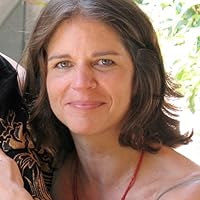
Mary Rakow
4 books31 followersMary Rakow, Ph.D. comes to creative writing from theology and parenting, with advanced degrees from Harvard University and Boston College. She is a Lannan Foundation Fellowship recipient. Her debut novel, The Memory Room was shortlisted for the Stanford Saroyan Prize, teh PEN Center West Fiction Prize and the LA Times Fiction Award. Her commissioned essay on the visual artist Enrique Martinez-Celaya is forthcoming in December 2012, published by Poligrafa, titled Working Methods: Enrique Martinez Celaya. She has recently abandoned the novel as the right form for her current thinking and is breaking it apart, unsure what will result. Ah! Onward....Meanwhile, she has the privilege of working with private writing students in the SF Bay Area, a real joy! and occasionally she edits manuscripts for traditional and self-publication.
For a video of Mary reading at Lip Service West:
http://player.vimeo.com/video/4300078...
For a video of Mary reading at Lip Service West:
http://player.vimeo.com/video/4300078...
Ratings & Reviews
Friends & Following
Create a free account to discover what your friends think of this book!
Community Reviews
Displaying 1 - 28 of 28 reviews
March 17, 2020
This is a challenging book, emotionally and intellectually - but a gem for the right reader. The narrator, a bright college professor, is mentally deteriorating as memories of severe parental abuse have begun to surface. The book traces her slow healing journey through her relationship with a wise, yet very human therapist; her patient and eccentric neighbor; the poetry of Paul Celan; music; and lines and stories from the Bible. Many sections are written as poetry - and even the prose sections have a lyric quality. Highly original. Heartbreaking. Hopeful.

December 25, 2012
this is one of the few books i recommend to anyone who wants to read what i consider a perfect book... it is also one of the few books i kept after donating my enormous library of fiction and non-fiction several years ago... everything about this book is sublime... the writing is spectacular, the imagery is astounding, and the depth of the narrative is beyond belief... simply an unbelievably amazing work...

March 1, 2026
The Memory Room is one of the more beautifully challenging reads that I've experienced, a powerful view into the way we deal with trauma, grief, and the world around us. Written moreso as a long-form poem than a traditional chapter-by-chapter novel, Rakow makes every word and stanza hold so many layers behind it that it often feels like two or three novels at once.
Following Barbara's journey back into life from the lowest point of despair, replete with so many realistic setbacks and hurdles & told through such an artistic voice made The Memory Room hold such weight in my hands. I don't often take down quotes from books I read, but there are several passages that I see myself going back to with frequency, even long after I've reshelved this book. I particularly loved the passages reminding us that the little & mundane things in life can often be the most beautiful.
While I'll certainly acknowledge that there were several sections that I feel went over my head or felt too sprawling during my first read, I think this is more a function of my own misunderstanding than a demerit to the book. Additionally, I feel a lot of Rakow's writing on the Psalms and faith didn't have as much lasting impact on me since I'm not personally a man of faith, but they never felt out of place or pandering.
The Memory Room is an unapologetically unique, haunting, and beautiful book that stands alone in my reading experience.
Following Barbara's journey back into life from the lowest point of despair, replete with so many realistic setbacks and hurdles & told through such an artistic voice made The Memory Room hold such weight in my hands. I don't often take down quotes from books I read, but there are several passages that I see myself going back to with frequency, even long after I've reshelved this book. I particularly loved the passages reminding us that the little & mundane things in life can often be the most beautiful.
"The stillness of ordinary things.
Duck, fountain, his matching socks.
Without the tinted glass, the sun is brighter than I thought.
We sit next to each other on the rug, just inside the metal frame.
The cello in between.
A min in hip boots fixes the fountain.
Ducks swim about.
Nothing special happens.
It is just right."
While I'll certainly acknowledge that there were several sections that I feel went over my head or felt too sprawling during my first read, I think this is more a function of my own misunderstanding than a demerit to the book. Additionally, I feel a lot of Rakow's writing on the Psalms and faith didn't have as much lasting impact on me since I'm not personally a man of faith, but they never felt out of place or pandering.
The Memory Room is an unapologetically unique, haunting, and beautiful book that stands alone in my reading experience.

August 25, 2023
”This is how we discover ourselves. In ruins. The parts that have survived.”
The Memory Room is a tremendously challenging read. Rakow’s writing is densely poetic and the subject matter is tragic. I picked this up wanting a difficult read in several senses and this definitely fit the bill.
The book follows Barbara, a former teacher who is undergoing a sort of mental breakdown as she attempts to uncover long-suppressed memories of severe childhood abuse. She is assisted by a quiet, fascinating therapist, as well as her neighbor and a few other straggling connections she has maintained during her reclusion. A big part of the intellectual challenge here, aside from the poetic writing style, is that the story is written from Barbara’s trauma-ridden perspective. We receive her thoughts, actions, and recollections in as disjointed of a manner as she receives them. I have to conclude that Rakow wanted us to be lost alongside Barbara and to accept our role as mere witnesses to her uncovering. As stated in the novel: “Sometimes to be seen is the same as being saved.”
Overall, this was a deeply moving read and a good stretch for my own reading capabilities. 4.5 rounded up to accommodate for my own out-of-practice reading comprehension skills.
The Memory Room is a tremendously challenging read. Rakow’s writing is densely poetic and the subject matter is tragic. I picked this up wanting a difficult read in several senses and this definitely fit the bill.
The book follows Barbara, a former teacher who is undergoing a sort of mental breakdown as she attempts to uncover long-suppressed memories of severe childhood abuse. She is assisted by a quiet, fascinating therapist, as well as her neighbor and a few other straggling connections she has maintained during her reclusion. A big part of the intellectual challenge here, aside from the poetic writing style, is that the story is written from Barbara’s trauma-ridden perspective. We receive her thoughts, actions, and recollections in as disjointed of a manner as she receives them. I have to conclude that Rakow wanted us to be lost alongside Barbara and to accept our role as mere witnesses to her uncovering. As stated in the novel: “Sometimes to be seen is the same as being saved.”
Overall, this was a deeply moving read and a good stretch for my own reading capabilities. 4.5 rounded up to accommodate for my own out-of-practice reading comprehension skills.

May 29, 2008
At first, I quite liked it. Later, I less liked it. Finally, I had to have it put down. There is poetry on every page. But one doesn't read a five-hundred page book of poetry like one reads a novel, now does one? Well, this one doesn't. The Memory Room is serious, severe and bereft of humor. I suggest taking it along to funerals and hospital visits because then everything else won't seem so bad.

November 4, 2016
There are few books that change everything! Make us look at the world differently. Make us inspired, as writers, to reroute our work, take more risks in structure. Rakow is now in my top 10 writers after reading this book! I have more of her work on the way. It is everything in a novel. Poetry, verse, poetic prose, prose. She rocked my world. I was mesmerized, heartbroken, inspired, and changed forever by this novel. WOW! I don't want to say anymore. It is for you to find out. Get a copy!
November 3, 2024
I read this because I cannot get the author's other book "This is Why I Came" out of my mind. This was a very difficult book to read The reader is inside the head of someone who has had terrible things happen to her as a child, has recently remembered them and has had a breakdown. It is hopeful. It is disturbing. It is memorable.
Read
December 14, 2024“You said, ‘No one witnesses for the witness.’
This is not true.
You combed my hair clean.”
Beautifully written and haunting. A novel that reads more like a book of poetry with a through line.
This is not true.
You combed my hair clean.”
Beautifully written and haunting. A novel that reads more like a book of poetry with a through line.
August 22, 2024
This is my favorite book. Mary Rakow does a beautiful job drawing the reader through a Barbara’s transformation after reliving a trauma. The combination of the Psalms, Paul Celan, and the Rakow’s poetic style draw a beautiful picture of the interplay of faith, art, and emotion. I felt this book on a very personal level. Equal parts devastating and inspiring.

Read
January 1, 2010Thist is not essentially a story of espionage, which is just as well; Australia's Secret Intelligence Service and its employees, as depicted, are on the one hand clichéd and on the other simply unbelievable. Vincent, the central 'spy', is authenticated by a sketchily drawn operation. "Building that set of Chinese agents in Singapore was a real coup," the Director General tells him (moreover, in reality he wouldn't have needed to articulate what both knew "You did well in Singapore" would have sufficed).
But despite breaking most of the operational rules, Vincent continues to be rewarded. Recalled from the brink of a diplomatic disaster in China, he is put in charge of all the most secret and sensitive files at base. The Director General says, "... you must understand this is an academic exercise between the two of us. Don't go writing to our stations overseas -or to anyone else." Yet this conversation is immediately confided to Vincent's diary which includes the deathless report, "Today, at nine o'clock, I had an interview with the Director General: 'A', as he's known in the Service." At least it wasn't 'M'. Irrelevant anyway because he is never referred to again as 'A'. At his first meeting with Vincent, the Director General asks to be called 'Dick.'
No more convincing is the television career which opens up for Erika, the book's central female character. She is taken on largely because she is beautiful but instantly finds herself conducting probing interviews with senior Australian figures. These are apparently set up and carried out entirely independently; there is no reference to any kind of editorial control.
The dialogue doesn't help. Consider the following from the Professor who first identifies Vincent's suitability for espionage. "The virtues of Catholicism - devotion to dogma, conscious submission to an entire spiritual and intellectual system - are turned upside down in such cases, and made into a force for evil. As in witchcraft - yes? And this was the case with Dzerzhinsky, who gave himself body and soul to the Revolution - who became Saint Felix, revered today by all good officers of the KGB. His statue stands outside KGB headquarters like an icon to be worshipped. Iron Felix: he continues to strike into people's hearts, as he did in life!"
Does anybody - even a professor - speak like that?
Think pieces of that nature abound: on Chinese poetry, on French revolutionary politics, on Russian composers, etc. At times the narrative thrust stalls for page after page. Some may feel that on the terms it sets itself, the novel is a valid exploration of the psychology of secrecy, but for that it would need more plausible background and more credible characters.
But despite breaking most of the operational rules, Vincent continues to be rewarded. Recalled from the brink of a diplomatic disaster in China, he is put in charge of all the most secret and sensitive files at base. The Director General says, "... you must understand this is an academic exercise between the two of us. Don't go writing to our stations overseas -or to anyone else." Yet this conversation is immediately confided to Vincent's diary which includes the deathless report, "Today, at nine o'clock, I had an interview with the Director General: 'A', as he's known in the Service." At least it wasn't 'M'. Irrelevant anyway because he is never referred to again as 'A'. At his first meeting with Vincent, the Director General asks to be called 'Dick.'
No more convincing is the television career which opens up for Erika, the book's central female character. She is taken on largely because she is beautiful but instantly finds herself conducting probing interviews with senior Australian figures. These are apparently set up and carried out entirely independently; there is no reference to any kind of editorial control.
The dialogue doesn't help. Consider the following from the Professor who first identifies Vincent's suitability for espionage. "The virtues of Catholicism - devotion to dogma, conscious submission to an entire spiritual and intellectual system - are turned upside down in such cases, and made into a force for evil. As in witchcraft - yes? And this was the case with Dzerzhinsky, who gave himself body and soul to the Revolution - who became Saint Felix, revered today by all good officers of the KGB. His statue stands outside KGB headquarters like an icon to be worshipped. Iron Felix: he continues to strike into people's hearts, as he did in life!"
Does anybody - even a professor - speak like that?
Think pieces of that nature abound: on Chinese poetry, on French revolutionary politics, on Russian composers, etc. At times the narrative thrust stalls for page after page. Some may feel that on the terms it sets itself, the novel is a valid exploration of the psychology of secrecy, but for that it would need more plausible background and more credible characters.

January 25, 2013
This is one amazing book. It's surprising, sensitive, mysterious, confusing, makes no sense but yet it does.
Its writing style is everything I hate in a book - the premise of the book is not stated up front, it's like a murder mystery, and it's poetic.
However, all these contradictions and contrasts are what make this such a great book.
The story is about a woman called Barbara who was the victim of horrendous abuse as a child at the hands of her father. This story is about her journey,
with the help of a counsellor, from a life of isolation and terror to one of healing towards her eventual successful assimilation back into society.
The chapters are short. The early chapters are consistently short which gives the reader a sense of Barbara's difficulty in dealing with the world around her.
Toward the end of the book there are more longer chapters which show a distinct growth in Barbara's healing process.
This book tugged at my heart strings very strongly. I think the reason for this was that Mary Rakow masterfully only gave the reader snippets of what Barbara's
childhood involved which encouraged the reader to keep reading to see what happens next. I found myself both rooting for Barbara to get well as well as hoping
she would take her time - I didn't want to say goodbye to this strong yet fragile woman whom I had come to know and love as closely as though she was my own
friend or family.
This book will forever have a special place in my heart. I would highly recommend this book to anyone who wants to read a book with a difference and lots of
great twists and turns.
5 stars.
Its writing style is everything I hate in a book - the premise of the book is not stated up front, it's like a murder mystery, and it's poetic.
However, all these contradictions and contrasts are what make this such a great book.
The story is about a woman called Barbara who was the victim of horrendous abuse as a child at the hands of her father. This story is about her journey,
with the help of a counsellor, from a life of isolation and terror to one of healing towards her eventual successful assimilation back into society.
The chapters are short. The early chapters are consistently short which gives the reader a sense of Barbara's difficulty in dealing with the world around her.
Toward the end of the book there are more longer chapters which show a distinct growth in Barbara's healing process.
This book tugged at my heart strings very strongly. I think the reason for this was that Mary Rakow masterfully only gave the reader snippets of what Barbara's
childhood involved which encouraged the reader to keep reading to see what happens next. I found myself both rooting for Barbara to get well as well as hoping
she would take her time - I didn't want to say goodbye to this strong yet fragile woman whom I had come to know and love as closely as though she was my own
friend or family.
This book will forever have a special place in my heart. I would highly recommend this book to anyone who wants to read a book with a difference and lots of
great twists and turns.
5 stars.

August 19, 2011
I loved this book but it is so sad. This woman suffers from pretty severe depression and is trying to cope with her life throughout the book. What I loved so much about this book was the way it was written. Maybe because of her depression, or maybe just because she's a talented writer, but this book is almost like an epic poem, which makes the sadness of it beautiful in its own way.

June 7, 2015
I have to say this was one of the most difficult books I have ever read; however I saw it through until the very end.
Although parts of it were difficult to follow, here is Barbara baring her soul, laying out a picture of the pain she carries and ultimately releases herself from.
This book will leave me thinking for a very long time.
Although parts of it were difficult to follow, here is Barbara baring her soul, laying out a picture of the pain she carries and ultimately releases herself from.
This book will leave me thinking for a very long time.

January 28, 2008
Fascinating, different and entirely affecting. Not written in typical paragraph format, but still draws you along in the story, while giving you a little of the disjointed feeling the main character is experiencing.

January 21, 2014
I thought this book was a creation of beautiful words depicting horrible events in the heroine's life. It made my heart hurt to imagine children being hurt so cruelly, but I loved how Barbara's healing and coming out if the dark was portrayed. I loved the hope it left in its wake.

March 21, 2007
It's long and somewhat dense and disturbing, but I did like it. A woman's long road to reccovery after terrible abuse.
July 27, 2007
enjoyed the prose writing style - novel is about a woman's current life while trying to cope with the past, mostly her childhood. read this years ago, so don't remember it clearly now.

February 20, 2008
The Memory Room is one of the best novels I've read in recent years--innovative, evocative, a brave work
March 11, 2008
No one writes like Mary Rakow. Nobody. This book is inspiring. It opens your eyes to see so many "normal" things in a new way.

May 11, 2008
A combination of narrative & poetry which tells the story of a young woman who is dealing with memories of an abusive childhood. An overdone subject, but this book is unique and powerful.

December 9, 2009
There are books that you read and remember, and there are books that fit under your skin and become a part of you.
Read
October 26, 2010Wow, how fiction can heal fact is what I learnt from this book. Also poetry, movement, how writing is composition like music
December 1, 2012
What a beautiful book! I don't want to give too much away because certain people will kill me but I would definetly re-read this! There were so many good quotes too.
November 22, 2013
This is one of my favorite books. I love it and read it again, now and then, just for the pleasure of hearing Mary Rakow's deep and genuine voice. Not a book for everyone, but brilliant.

December 28, 2013
Amazing insight into mental illness and recovery. Wonderful integration of Paul Celan's poetry creates a haunting effect that intensifies the main character's experience.
July 28, 2011
Amazing and beautiful
Read
April 30, 2012Deep in meaning. A good book to read when you feel lost.
August 24, 2014
A masterpiece.
Displaying 1 - 28 of 28 reviews