A dazzling cultural and scientific exploration of alien life and the cosmos, examining how the possibility of life on other planets shapes our understanding of humanity, for fans of Leslie Jamison, Carl Zimmer and Carlo Rovelli.
One of the most powerful questions humans ask about the cosmos is: Are we alone? Yet this very question is inevitably reduced to yes or no, to odds and probabilities that posit answers through complex physics. The science is fascinating, but it doesn't exist in a vacuum. It is a reflection of our values and aspirations, our fears and anxieties, and most importantly, our enduring sense of hope.
In The Possibility of Life, acclaimed science journalist Jaime Green traces the history of our understanding, from the days of Galileo and Copernicus up through to our contemporary quest for exoplanets in the "Goldilocks zone," where life akin to ours on Earth might exist. Along the way, she interweaves insights from a long-standing tradition of science fiction writers who use the power of imagination to extrapolate and construct worlds that in turn inspire scientists.
Weaving in expert interviews, cutting-edge astronomy research, philosophical inquiry and pop culture touchstones ranging from A Wrinkle in Time to Star Trek to Avatar, The Possibility of Life explores our evolving conception of the cosmos to ask an even deeper question: What does it mean to be human?
Jaime Green is a science writer, essayist, editor, and teacher, and she is series editor of The Best American Science and Nature Writing. She received her MFA in Creative Nonfiction from Columbia, and her writing has appeared in Slate, Popular Science, The New York Times Book Review, American Theatre, Catapult, Astrobites, and elsewhere. She lives in Connecticut with her husband and son.
The Possibility of Life reads like a history of the search for life within the universe and a guide to how or where it could possibly exist and our place within it all.
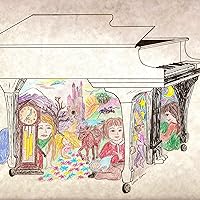
I loved how Jaime Green gave a little background or history on each subject before elaborating on the possibilities of life existing outside of our planet and also its wider effect on humanity. Occasionally there were hand-drawn illustrations, which I found helpful in gaining a better understanding of some of the subject matter.
I felt that the writing was complex but still fully understandable throughout. This seems to be a rare occurrence in books of this type and makes this very book accessible to a wider audience, without its content being too watered down.
If you have any interest in the possibility of life away from earth, astronomy or just a lose interest in science then this could be a book for you. Overall a fascinating and educational read.
I received an advanced copy for free and I'm leaving this unbiased review voluntarily.
This is a profound subject that is handled brilliantly by Green in this book. This is a rumination on extraterrestrial life and extraterrestrial intelligence. It is fascinating, skillfully written, and thought provoking. Though it is speculative, it is based on scientific thought.
The book addresses multiple questions concerning extraterrestrial life and intelligence. Does it exist at all? Will it be carbon based? What kind of planets will it develop on? Will organisms be Earth - like or vastly different? What will alien societies and civilizations be like? What technology will they have developed? How will humans recognize extraterrestrial life? How will discoveries in these areas affect humanity? There is no scientific consensus on these questions, so the author explores different theories and views.
First, Green looks at the science behind these questions. Next, she looks at speculation by science fiction writers and other thinkers. Science fiction books, films, and television shows are explored. The various Star Trek television shows are referenced and analyzed. Carl Sagan’s contributions to the science relating to this subject as well as his fiction book, Contact, are heavily referenced. Those who have read Contact will get more out of this work.
I would also mention that David Grinspoon’s Lonely Planets: The Natural Philosophy of Alien Life also explored this topic and was also excellent but was still quite different from this work.
For those interested in this subject, this is a great read, This and Grinspoon’s book will go well together. I found this an engaging and insightful subject and book.
ATTENTION all science, sci-fi, and/or fascinating non-fiction lovers! I have a book that I guarantee will be a totally new topic to deep dive into for you OR a totally new way to view a subject you may already love! Jaime not only seeks to compile research and add commentary to the question, “Is there life beyond Earth?”, she challenges us to reflect on what that question and our search for the answers reveals about us as humans- no matter the answer.
The way Jaime organizes her book makes it easy for any reader to digest. She considers other forms of life through the lens of language, animals, technology, and more. She weaves together science and culture by locating the intersections of research, interviews, and data with pop culture and behavioral and social observation. If you are a sci-fi fan, you may find commentary on your favorite books and movies. You will also find material to add to your to-read and to-watch list, regardless!
Sometimes it’s nice to break away from fiction and jump down a rabbit hole of information that stretches your thinking in ways you couldn’t have done alone. This book will do that for you, I promise! I not only walk away with fresh thoughts on whether or not we’re alone in the universe; I look at animals, movies, books, technology, and the direction of space exploration differently. (Also, Jaime is one of my favorite humans on the internet- please go follow her for bookish and life content.)
I’ll leave you with this quote: “…science fiction is more than entertainment, it’s a generative act that creates new possibilities of life beyond Earth, as valid and potent as anything we might conjure up in the lab. Through fiction we can move beyond likelihoods and binary outcomes to look instead at what our imaginations do with the limitless possibilities of outer space and, crucially, ask what that might mean.”
Thank you to NetGalley, Hanover Square Press, and the magnificent Jaime Green for an advanced copy of this book! Mark your calendars for its release on April 18th!
Really enjoyable exploration of science (with a little pop culture sprinkled in). Felt very reminiscent of books written in the mid 00s, but much less annoying. A nostalgia read that still has a lot interesting and reflective ideas told with strong writing and organization. More thoughts in an upcoming podcast interview with the author.
A thoughtful, illuminating, sweeping, and captivating look at... well, exactly what the title says. Is there life elsewhere in the universe? If so, is it anything like what's here on earth? What would we do when we received that first electrifying clear signal from a distant star cluster?
For Green, who is a science writer, these are loaded questions, and probably not very useful. She captures where she's coming from (intellectually, of course, not in cosmological terms) this way: "The question most often—too often—asked about extraterrestrial life is whether or not. The fact is, that’s a very boring question. Its answer would be revolutionary, and plenty of scientists are pursuing it, but sitting here posing it to a vast and empty sky doesn’t tell us anything. We should really be asking what if? What if? makes us ask questions about life on Earth. How did it arise? Why is it the way it is? Are we special and what would that mean? What is our responsibility with the intelligence and technology that we have?"
As Green establishes very early, talk about a search for "intelligent life on other planets" is exciting, to be sure, but much more fraught than discussions of technological constraints might suggest. For one thing, we can't even truly define what "life" is on Earth, let alone "intelligence." Could there be a life form based not on carbon but on methane, for example? Are we certain we'd be able to recognize something in a methane environment as a "living organism"? Our heuristic for thinking about "life" is necessarily bound by what is around us here on earth, what is perceivable by our carbon-based human brains and senses: "With neither a theory nor a definition [about what 'life' is], we’re left with our intuition, entirely shaped by the life we know on Earth," she observes.
She cites one researcher who thinks "that our understanding of life, as a phenomenon, is right now where we were with gravity before Newton. We can describe what we see, but we have no sense of the underlying principles—we just see an apple falling to the ground... Without a theory, a deeper understanding of what life is, the search for it beyond Earth is preemptively doomed. And if we don’t understand the phenomenon of life, how could we begin to mark its origin?"
Green's book looks at the question of life in the universe from many perspectives. She reports on how researchers frame the question(s). She's as likely to quote an episode of Star Trek, novels like Mary Doria Russell's "The Sparrow," L'Engle's "A Wrinkle in Time," and the movies "Contact" and "Arrival" (there's even a nod to "Guardians of the Galaxy") as she is to report the research findings of microbiologists and the speculations of philosophers. She offers fascinating glimpses into how researchers have discovered exoplanets in the first place, what evidence they've gathered about their atmospheres (or lack thereof), the special role water seems to play in creating an environment in which life might evolve, and how researchers have striven to think of Earth itself as an exoplanet in their hypotheses so they can minimize conceptual bias.
Two discussions in the book really grabbed me. The first had to do with how science fiction deals with things like first contact, space travel, and settling other planets. There is a marked difference, she observes, between how such encounters are thought of in Western countries and how they are thought of in places (Africa and Latin America, for example) that were themselves once colonized by outsiders.
The second has to do with communication. After covering what we know and hypothesize about language, Green directs our attention to the moment we receive "contact" from another part of the universe. There is a very high possibility is that we wouldn't recognize it as a "message" in the first place, and and almost certainly we wouldn't be able to decipher it, for all that movies have shown us about "universal translators" and the like.
And then there are the vast distances that would make the interval between "hi" and are "how are you" measurable in, well, millennia.
Green puts the challenge in a recognizable context. Researchers and various agencies here on earth are trying to develop warnings for sites of nuclear waste disposal. The danger of contamination from such places would last 10,000 years. What would future intelligent beings recognize as a warning? Words ("danger" or "keep out") and symbols (skulls) that we are able to understand might have different or no significance at all for future travelers. "You need," she writes, these future humans to not only understand the warning but to believe it."
Old English was spoken until around 1,000 years ago, she reminds us, yet almost no one can understand it now. Middle English, spoken until about 600 years ago, is nearly incomprehensible to ordinary English-speakers today. (Chaucer scholars get a pass here.) Yet they are both English. Expand the time frame, throw in some disruptive natural -- or man-made -- disasters that break the linguistic chain, and bets are off.
Writing of the Voyager probes launched nearly a half century ago with their famous pictures of men and women and star maps and their golden records, she wonders why we should suppose that an alien species would be able to make any sense of such things: "It's all wishful thinking -- that aliens find the probe, that humanity lasts another 10,000 years."
She poses such points not to disparage the search in any way -- indeed the book positively sparkles with joy, wonder, and (as I've said) humor as the pages are turned -- but to lead the reader to introspection, clarity, understanding, and even a certain humility. Are we alone in the universe? Why do we ask? What is it we seek to learn from posing it? Green asks, "Would a cosmos full of planets inhabited only with sludge make us feel like we weren't alone?"
"The Possibility of Life" is broad in its perspective, its chapters ranging from the origins of life, what might constitute an astronomical "inhabitable" zone, the chemistry of life, whether life could exist without the genetic models we've relied on, animals, people, technology, whether life on earth was made possible by the presence of its moon, whether "survival of the fittest" might exist only here and nowhere else, and more.
In the end, Green observes, the search for life elsewhere in the universe is at heart an expression of our desire to understand ourselves.
Makes sense to me. But then, I'm not from around here.
LOOK, I read nonfiction so infrequently that I need you to listen when I tell you that this book is a damn delight. You get history! You get literary and tv/movie sci-fi! You get physics and mathematical theorems! But mostly you get a really beautiful examination of what our search for and ideas of Intelligent Life say about us, as we learn more about space and about us. And again, I say this as someone who weeps at planetariums but couldn’t get through Carl Sagan (sorry). Buy it, read it, give it to your smart friends for their birthdays.
Jaime Green examines the possibility of life on other planets, drawing on the latest science and also referencing science fiction. I read this for a book discussion group and, while I appreciated the references to Star Trek and other science fiction, most of the others did not. One question was posed for the group--What is the point of the book? it was explained that the author wants to find intelligent life on other worlds. Then the question was--WHY? How to answer that??? My simple answer was "Curiosity." I really don't know how to respond to such an attitude which shows a complete lack of interest in science ( not to mention science fiction). One member of the group made a good point--Why would beings so advanced that they could reach this planet want to contact us anyway? Good point but the point about aliens is just that--they are alien. We would not understand their motivations... A book that made for a good discussion even if people did not grasp the point of it all.
I laugh every time I see the Calvin & Hobbs cartoon about intelligent as it tells me two truths about our endless fascination with the possibility of life somewhere in this vast universe;
1. Given a lot of the really dumb things that we do as a species so are we actually that intelligent? 2. If there were some super bright entity that is capable of interstellar travel, why would it be interested in the likes of us?
It was something that Douglas Adams alluded to when one lot of aliens turned up but wanted to take the whales…
This fascination of life being out there somewhere has captivated scientists for hundreds of years, all the way back to Galileo and Copernicus. But as scientific understanding grew of how life appeared on this planet and the way it fluctuates from masses of plants, insects and large creatures to extinctions and back again with a different type of life adapts to the changed conditions.
The discovery of other planets orbiting stars in the ‘Goldilocks zone’ that might, just might, have the right conditions based on what we know about the Earth has driven research, intensive scanning of the heavens and intense speculation of what might or might not be out there.
We have not found any evidence of life outside this small blue dot that we’re on. However, there is speculation still that some of the moons around the planets in the solar system might. As you’d expect, the question as to whether there is life elsewhere doesn’t really get answered in this book, but that is not the whole point of it, this is an exploration of what they might be like if we were to come across another species.
Green has split the book up into six chapters, Origins, Planets, Animals, People, Technology and Contact, and in each draws from science and science fiction as to the things that life is capable of creating. I have always had an interest in it since I downloaded the SETI program many years ago. Strangely enough, I didn’t find any signals from any aliens when running that software, but the possibility that I might keep me interested for a long time. I thought that this was a very accessible book on a subject that I had not read much about before. Worth reading if you have an interest in the possibilities of life.
This is a well researched, robust look at the possibilities of extraterrestrial life. It’s fun it doesn’t take itself too seriously. When there are areas of knowledge that the author is lacking, she relies upon what seems to be reasonable researchers, and presents the research in a balanced way.
Weaves together science fiction and actual scientific research in a way that respects the strength of both sides.
wonderfully connects the dots among different thoughts and speculations about alien life, alien evolution, and alien minds, from various science books, various science fiction books, and various scientist chats or interviews
In a nutshell: read this book if you want a conversational and thoughtful exploration of what it means to seek "life out there" - with plenty of references to SFF books and movies that have given us fictional takes on the question. Turns out being widely read in the genre is good preparation for the idea gymnastics this book takes us through.
Green is a science writer, which makes the narrative in this book approachable and easy to read. The book is organized into six chapters arranged around themes (e.g. "Origins," "Animals," "Contact") plus an introduction and conclusion chapter. My own read time notwithstanding (life, ugh), this should be a quick read, and even within the chapters there are break points if you need to stop.
In every chapter (and the intro and conclusion) you should expect at least 1-2 SFF references. Just a few of these included Avatar, Ted Chiang's "Story of Your Life," Contact, and a book called Star Maker from 1937 that I'd never heard of and sounds bananas. And to be clear: Green is not saying any one of these takes is close to the truth or accurate, but rather uses them to explore particular ideas about the search for alien life.
Also in every chapter I had a "mind blown" moment - EVERY chapter. Which was beautiful, because of course if you're reading about possible worlds beyond ours, you want that wonder moment, don't you? But I have to say: each of those "mind blown" moments was actually about something that pertained to our world, which on reflection, is actually pretty cool. You can check my reading updates by chapter to see me mention some of those moments.
Green is agnostic about whether we'll ever find alien life, but IMO, the exploration she presents is well worth your reading time. It reset several of my expectations about it, and it was a very fun read besides.
*This was a Science Friday Book Club read in May 2023, though I missed it because I couldn't find this book in any library that month, ebook or print!*
In The Possibility of Life the author looks at what we know and the known unknowns without drifting into Donald Rumsfeld territory. It also gives credit to those scientists searching for kinship in the Cosmos.
One of my heroes as a young adult was Carl Sagan, the man behind the magnificent series Cosmos and a big fan of the roll neck and corduroy jacket combination. For me he remains the greatest science communicator, a man who explained difficult concepts in language which ordinary people could understand without the dumbing down which now seems so prevalent. It only took a few pages before the author mentions Sagan and I think she captures some of the essence of the man with her writing in this book.
Where to start? Well, the obvious point is The Drake Equation which tries to calculate the number of detectable signals that might be transmitted by a galaxy. Created by Frank Drake from SETI (Search for Extra Terrestrial Intelligence) it is contested as it most of the factors are unknown making any answer little better than a guess, but as the author points out it sets out the elements that need to be explored and leads onto more questions than the original one.
It quickly becomes clear that man needs to understand himself as a species to enable him to answer the question ‘are we alone?’ A voyage of self-discovery and of the Earth as much as an interplanetary one. As a species we possess a wanderlust and a desire to discover, but as Stephen Hawking pointed out alerting other beings to our existence may lead ultimately to our own destruction. They may not be friendly, they may be colonialists looking to exploit Earth’s remaining rsources, with a kill or enslavement policy. After a century of wireless transmissions into space it is probably a little late to consider this. If either of the Voyager craft are located there are the gold discs (to which Sagan played a big role in designing) containing information about us. With these discs the assumption is that the best way to communicate with other life forms would be through mathematics.
If the reader takes one thing from this book it is the author’s love of science fiction, which is weaved throughout the prose. I read a bit in my youth and have seen the original series of Star Trek many times, but Ms Green is a true fan of the genre and uses it in an intelligent way to pose the questions which we need to answer. For instance, what might an alien lifeform look like? In most science fiction they look a lot like humans, simply because human actors must fill the roles. Indeed, as the author is at pains to say there is no reason why this should be the blueprint for alien life forms.
Using science fiction in this way allows questions to be constructed in a frame of reference which most of us will be familiar with as either a reader or viewer. These form the questions posed to eminent scientists and thinkers, these interviews and reference to their work then explain current understanding. This makes for an accessible writing style which is easy to read and makes difficult concepts intelligible whilst still being entertaining. The are footnotes with references and explanations, these are modest in number. This is not an over scholarly book, but one intended for the masses, even the diagrams are hand drawn by the author which I thought a lovely individual touch.
Are we any nearer to discovering if we have company in the Cosmos? Well, you’ll just have to read The Possibly of Life to find out…
This was an interesting, if scattershot, look at what life is, how it could have started here on Earth, and whether we might be able to find signs of life elsewhere in our galaxy. The jackpot would be finding intelligent life. The author uses both science and science-fiction, with a preference for fiction by scientists, such as Carl Sagan. She did many interviews with scientists, and I found those to be the most interesting part of her book. She also wrote summaries of SF books, TV shows and movies that can go on for pages. These can be remarkably banal: Capt. Picard: "Could this be a Dyson Sphere?" Data: "The object does fit the parameters of Dyson's theory." Oy.
So. I (mostly) enjoyed reading the book, but I skimmed the fiction synapses. She also got somewhat confused about the significance of the Burgess Shale fossils.
Her results, in brief summary: The origin of life as we know it remains obscure. It may be common elsewhere, especially microbial life. No signs of alien civilizations, so far. Life as we don't know it? Well. Best to look first for what we know. Fiction can be an interesting lens for considering what could exist.
For me, a 3-star book. It is short, and I liked the respectful attention to SF by scientists. Worth a look. A mix of gems and, well, pop-culture stuff.
Ever since I was a young child I have been fascinated by the possibility that extra-terrestrial life might be out there somewhere. If it really did exist, would we find it first? Or, if it were to be intelligent life, would it find us first?
The possibilities also frightened me to some extent, having viewed various science-fiction movies of the time – the 1950's version of War of the Worlds comes to mind. When I was about 11 or 12 I even had an hours-long argument with my brother about it that mostly consisted of me saying, "yes there is [life on other planets]", followed by him saying, "no there isn't", over and over and over again.
So, this book especially appealed to me with its combination of historical and up-to-date scientific findings, musings by SETI scientists, and, especially, the synopses of a host of science-fiction literature, that over the years have bolstered the imagination of what extra-terrestrial life might be like and how our contact with that life might impact both us and them.
I came upon this book purely by accident or coincidence. I'm so glad I chose it. Or did it choose me?
I really liked the premise of this book: speculating on what alien life might look like and how we might interact with it, using a scientific worldview as a starting point before moving into fun fiction.
Personally, this book annoyed me in that the author references multiple sci-fi stories (books, shows, movies) to illustrate points or provide examples of imagining other life. This annoyed me because it spoiled some books that I had not yet read and 1/5th of this book just felt like a synopsis of 15-20 other sci-fiction stories.
The content itself is interesting, and exploring different topics in the context of imaging alien life was fun. But I had to stop reading when I got to a chapter that explained the plot of a book over 5-6 pages that I really wanted to read.
I did not finish and stopped at about 80%, but this felt like a good high-level primer for topics related to astrobiology and fun speculation, if you are unfamiliar with those concepts and don’t mind being spoiled on other great science fiction works you may not have read.
An amazing debut. Incredibly written and magical, Green delivers a great ride from the beginnings of life on Earth and the hopes and possibilities out on the cosmos.
I'm not a science-y person, and I find outer space to be overwhelming and kind of scary.
That being said, this was a fascinating read. Jaime is a capable and encouraging guide through the cosmos. I finished the book, like Jaime, more appreciative of the kinds of life on Earth in juxtaposition with the possibilities of what exists beyond our pale blue dot.
This was an engaging, smart yet not too technical read about topics I find fascinating: the vastness of our universe, the mysterious origins of life on earth, the possibility of alien life and of machine life. I enjoyed how it references both science and science fiction.
clearly written for sci fi readers who are attempting to start reading nonfiction but thats what i am so i cant complain. the most interesting parts were those that linked scientific ideas to cultural concepts (my boy laplace’s theorems leading to the prevalence of technologically superior martians in fiction, or scientists in a capitalist society searching for life by searching for acquisition). the way we ask and investigate the question “are we alone in the universe” is more compelling than the answer - at least until we meet an alien
This was such an engaging and fascinating book to read! I loved how Green was able to guide the reader through explorations of real life science through the lens of more familiar and accessible science fiction stories and speculations. As someone who is a big sci-fi reader/lover myself, I found this to be a deeply helpful method of understanding theories and concepts that are perhaps a little more complex. In addition, the overall attitude Green has towards the idea of extraterrestrial life is one full of curiosity and compassion, and is just totally palpable through the pages, embedding it with a justified sort of hopefulness. Personally, I found one of the most engaging discussions to be the idea of contemplating what “life” actually is, and might look like were humans to encounter it elsewhere. This isn’t just limited to how a physical alien body might look, but the many ways in which we as humans would even be able to realize life is there or happening. It helped me shift my perspective into a more broadminded one, away from more linear, anthropocentric ways of thinking.
Jaime Green takes the title of her book much more poetically than seriously, which initially threw me as I got into it. Near the end, she makes it explicit: the Fermi Paradox, which asks "If life is so abundant in the universe, why haven't we found it?" apparently holds very little interest for her. So I did not get to read what I wanted to read.
However, this book still earns high praise from me for its twin surveys: an outstanding review of science fiction covering what alien worlds might look, feel, sound, and taste like; and a pretty good review of various scientific projects exploring everything from the formation of life (The Burgess Shale!) and language to the distant musings of astrobiology. My to-read list grew along with my imagination. Have you ever really considered what a sentient plant would be like?
The feel-good ending fell flat for me, and I was left wondering why Green would dismiss someone who takes the title question seriously rather than being satisfied with the wonders here on earth. Mitochondria rock, but a Dyson Sphere would too. Nevertheless, the breadth of information in this book makes it a worthy read for everyone with an interest in what life is, here or anywhere else.
I'm terrible sometimes, I'll see a book and think, yes this is exactly what I'll like. And then I'll get miffed when the book turns out to be not about what I expected but instead it's about what it literally says in the description! Don't judge a book by it's (front) cover and all that. I was hoping for a journalistic deep dive, something more scientific; odds, ends, expectations, planned research etc. What I got was still enjoyable but more in the realm of speculation and wonder (perhaps understandably), a lot revolves around SciFi books and if you haven't read them it will probably be of limited value, or worse, contain spoilers. So if you have a lot of famous SciFi books still on the reading list, be ready to skip ahead. An enjoyable cozy read about the possibilities of life in the universe.
This book surprised me. Not only by its accessibility but by how much I enjoyed it. In looking at the possibility of life on other planets, author Jaime Green uses a lot of pop culture and literary references to show how human imagination has populated the stars with all sorts of aliens. I loved all of these references and especially getting a glimpse at the science behind shows like Star Trek and movies like Alien, Arrival, Contact, Avatar and more. This book will not only have you pondering the fundamentals of life, but will make you take a closer look at life here on Earth, all while giving you a mind-bending peek into the processes of life that are happening within every living cell in our own bodies and throughout every living cell on our planet. This is a fascinating book for anyone who loves thinking about the mysteries of the universe or who loves a good alien sci-fi story.
This is a very dense collection of fascinating tidbits of information. Despite the attempt at structure in the chapter headings, I wished it could be somehow more cohesive, with a thru-line I could follow as eagerly as I looked for the insights (and there were quite a few) into our search for alien versions of ourselves. I read this with the Science Friday Book Club, it generated some great conversation. Also, the interview with Jaime was lively and interesting, and her bibliography of science and scifi books is well worth a look.