

What do you think?

New Yesterdays
A young boy stumbles into a portal that transports him back in time more than a hundred years. The longer he stays, the stronger the bonds of friendship grow. Soon, he finds himself faced with a challenge that could change his life, and the lives of the ones he loves most forever. Will he be able to meet this challenge? This story presents a unique view of the life of the Cherokee Indians in the years leading up to the Great Removal and the Trail of Tears. Factual historical information and characters are used to make the story more real and entertaining.
177 pages, Paperback
First published February 18, 2012
Ratings & Reviews
Friends & Following
Create a free account to discover what your friends think of this book!
Community Reviews
Displaying 1 - 16 of 16 reviews
Read
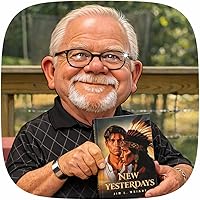
July 24, 2012This is my own book. I hope you'll read it and enjoy it as much as I enjoyed writing it for you.

October 12, 2012
The forced removal of the Cherokee Indians in 1838 from their ancestral homes in the South-Eastern parts of the USA has left a legacy of shame and bitterness, which stirs deep emotions even to this day.
But what if the Cherokee and Seminole Indians had forewarning of the white man’s plans for their future? How would they have reacted? What would have been the effect on the development of The United States?
Any rewrite of history is inevitably written in someone else’s blood. However, Jim Wright has provided a fascinating retelling of one of the most shameful episodes in America’s history.
This is a courageous, moral, controversial novel which should be read by anyone who has ever felt a twinge of discomfort over the white man’s treatment of the native peoples of North America. Certainly it is a book that I will not easily forget.
But what if the Cherokee and Seminole Indians had forewarning of the white man’s plans for their future? How would they have reacted? What would have been the effect on the development of The United States?
Any rewrite of history is inevitably written in someone else’s blood. However, Jim Wright has provided a fascinating retelling of one of the most shameful episodes in America’s history.
This is a courageous, moral, controversial novel which should be read by anyone who has ever felt a twinge of discomfort over the white man’s treatment of the native peoples of North America. Certainly it is a book that I will not easily forget.

September 22, 2012
Something you might want to buy for your older children or teenagers.
What an adventure. While this is a book for older children and young adults I have to say I thoroughly enjoyed it. Moving from an adventure in a spooky house back in time to the 1820’s when Jim is at first surprised to meet Dustu who becomes his friend and then Chief Tooantuh who are both Cherokee’s. Would the information Jim takes back with him about the Cherokee nation and their demise possibly change history? With a flavour of Cherokee history, a struggle with settlers I must leave you wondering what the future holds for Jim and his new friends. I could say so much more but really think you should read the book and enjoy!
What an adventure. While this is a book for older children and young adults I have to say I thoroughly enjoyed it. Moving from an adventure in a spooky house back in time to the 1820’s when Jim is at first surprised to meet Dustu who becomes his friend and then Chief Tooantuh who are both Cherokee’s. Would the information Jim takes back with him about the Cherokee nation and their demise possibly change history? With a flavour of Cherokee history, a struggle with settlers I must leave you wondering what the future holds for Jim and his new friends. I could say so much more but really think you should read the book and enjoy!

September 13, 2012
I really enjoyed this book. I love experimenting with different genres and themes because you never quite know what little gem you're going to find or get a taste for next. New Yesterdays didn't disappoint in this regard. I really didn't know what to expect but I was more than a little intrigued by the synopsis; A young boy travels back in time and is suddenly faced with the power to change the face of the future...to include his own.
This story is written beautifully with lots of facts that I found absolutely fascinating. I always used to read biographical works, always felt I should be learning something new from each new reading experience. One of the many great things about New Yesterdays is that I came away feeling like I'd gained an insight into the way of the Cherokee Indians, and what a beautiful, respectful and fascinating picture the story illustrates. The main characters were left for a while as the plot gained momentum and I missed their company but, what was fantastic, was that I easily recognised each one again when they returned and it was like they'd never been away! I do believe this is a shiny example of great characters.
I found New Yesterdays to be warming, entertaining and gripping and it even made me cry at one point! A very lovely read and I'm so glad I picked it up!
This story is written beautifully with lots of facts that I found absolutely fascinating. I always used to read biographical works, always felt I should be learning something new from each new reading experience. One of the many great things about New Yesterdays is that I came away feeling like I'd gained an insight into the way of the Cherokee Indians, and what a beautiful, respectful and fascinating picture the story illustrates. The main characters were left for a while as the plot gained momentum and I missed their company but, what was fantastic, was that I easily recognised each one again when they returned and it was like they'd never been away! I do believe this is a shiny example of great characters.
I found New Yesterdays to be warming, entertaining and gripping and it even made me cry at one point! A very lovely read and I'm so glad I picked it up!

January 29, 2013
'A Delight from Beginning to End'
Jim Wright's 'New Yesterdays' is a great read for YAs or for anyone that would like to be a YA again.
This time-travel/coming of age novel combines historical research with the rattling good yarn of a boy who discovers a mysterious portal in a 'haunted' house.
Written with charm through the eyes of a child, Mr Wright's first novel is a delight from beginning to end. Roll on the next book!
Jim Wright's 'New Yesterdays' is a great read for YAs or for anyone that would like to be a YA again.
This time-travel/coming of age novel combines historical research with the rattling good yarn of a boy who discovers a mysterious portal in a 'haunted' house.
Written with charm through the eyes of a child, Mr Wright's first novel is a delight from beginning to end. Roll on the next book!

August 16, 2025
This is an interesting and intriguing read, capturing the time in history when the fate of the American Indian was decided without their input, resulting in forced marches to designated reservations away from the ancestral lands and resulting in the deaths of thousands.
The author has put a spin on this by opening a portal to the past for a young boy eager to explore the land before his own grandparents farmed it. What he finds profoundly changes his world as he is warmly welcomed by the Cherokee’s including a boy his own age.
Despite his young age, he knows from his history lessons what would happen to those currently living happily on this land and with a great deal of courage, he chooses to share that knowledge with his friend and also the elders of the tribe. Little did he know that he would set in motion a period of defiance that would change the course of a nation.
As well as the plight of the American Indian, the author also touches upon another tragedy where those already on the land are summarily removed from it or enslaved. He introduces Seamus who fled the turmoil in Ireland for the freedom of the America’s and has been made welcome by the tribe to work the land next to them. Another example of those who explore and claim lands in the name of an empire to the detriment of those who have occupied them for thousands of years.
It is always a danger with time travel from the future, that imparting known facts about an era could dramatically change the course history then takes. And this story demonstrates that very clearly.
The characters are very engaging, the outcomes very believable and it did leave me pondering the fate of both the Indians engaged in their act of defiance and those hundreds of settlers on the receiving end of their anger; many of whom where escaping the harsh realities of their own lives. The real perpetrators of this injustice were hundreds miles away, safely in their governmental offices putting the lives of their own people in grave danger because of their greed. Something which despite the passing of centuries is still happening today.
I have no hesitation in recommending this thought provoking book.
The author has put a spin on this by opening a portal to the past for a young boy eager to explore the land before his own grandparents farmed it. What he finds profoundly changes his world as he is warmly welcomed by the Cherokee’s including a boy his own age.
Despite his young age, he knows from his history lessons what would happen to those currently living happily on this land and with a great deal of courage, he chooses to share that knowledge with his friend and also the elders of the tribe. Little did he know that he would set in motion a period of defiance that would change the course of a nation.
As well as the plight of the American Indian, the author also touches upon another tragedy where those already on the land are summarily removed from it or enslaved. He introduces Seamus who fled the turmoil in Ireland for the freedom of the America’s and has been made welcome by the tribe to work the land next to them. Another example of those who explore and claim lands in the name of an empire to the detriment of those who have occupied them for thousands of years.
It is always a danger with time travel from the future, that imparting known facts about an era could dramatically change the course history then takes. And this story demonstrates that very clearly.
The characters are very engaging, the outcomes very believable and it did leave me pondering the fate of both the Indians engaged in their act of defiance and those hundreds of settlers on the receiving end of their anger; many of whom where escaping the harsh realities of their own lives. The real perpetrators of this injustice were hundreds miles away, safely in their governmental offices putting the lives of their own people in grave danger because of their greed. Something which despite the passing of centuries is still happening today.
I have no hesitation in recommending this thought provoking book.

August 22, 2012
While exploring the old haunted house near his home, Jim stumbles upon a portal to the past. Stuck in the year 1828 for six months until the portal home reopens, Jim builds strong bonds of friendship with his new Cherokee friends. Realising that all he learnt in school about the history of the Cherokees in America, including the Great Removal and the Trail of Tears, would impact the lives of his friends, Jim is faced with the choice - to tell his new friends about their future and likely change the course of history, or to keep silent and let them face their fate?
When I first started reading New Yesterdays (as usual, without bothering to read the blurb) I thought it might turn out to be a horror story, seeing the amount of references to haunted houses and scary movies & stories. I was pleasantly surprised that it turned out to be a classic what-if book based on historical facts. Story-wise, it was a pleasant read, though at times the language shifted from an informal story-telling tone (when relating Jim’s story) to a more formal style (when dealing with the Cherokee war and councils).
A minor detractor to this book (I was reading the epub version - this probably won’t affect print/other versions) was that page numbering appeared haphazardly in between paragraphs. The title also appeared as “Ebook title” rather than the actual book title. More effort put into the formatting of the e-book version would probably have earned it at least another 1/2 a star!
*I received this copy for review purposes from Jim Wright.
When I first started reading New Yesterdays (as usual, without bothering to read the blurb) I thought it might turn out to be a horror story, seeing the amount of references to haunted houses and scary movies & stories. I was pleasantly surprised that it turned out to be a classic what-if book based on historical facts. Story-wise, it was a pleasant read, though at times the language shifted from an informal story-telling tone (when relating Jim’s story) to a more formal style (when dealing with the Cherokee war and councils).
A minor detractor to this book (I was reading the epub version - this probably won’t affect print/other versions) was that page numbering appeared haphazardly in between paragraphs. The title also appeared as “Ebook title” rather than the actual book title. More effort put into the formatting of the e-book version would probably have earned it at least another 1/2 a star!
*I received this copy for review purposes from Jim Wright.

December 29, 2012
Jim finds a time travel portal while exploring a creepy abandoned house. He’s transported from approximately 1960 to the early 1800’s. As he talks with the indigenous Indians, the portal closes and Jim is trapped. Jim makes friends with Dustu, an Indian boy his age. When they aren’t handling chores they explore the lands. Jim finds many landmarks that are familiar, but almost everything is different.
As their friendship grows, Jim grows troubled knowing that the Indians will be forced from their lands in a few short years. He struggles with his fear for his new friends and the implications of warning the Indians and how that will change history. Will he even exist if he tells the Indians of white man’s plans?
I loved New Yesterdays! It is fun for boys and girls that love time travel and history. Pick up a copy; you’ll be glad you did.
Acknowledgement of our PC era - If one were to really time travel, the Native Americans were called "Indians" at that time. I used "Indians" in my review to imitate the author's use, and the language of the era.
As their friendship grows, Jim grows troubled knowing that the Indians will be forced from their lands in a few short years. He struggles with his fear for his new friends and the implications of warning the Indians and how that will change history. Will he even exist if he tells the Indians of white man’s plans?
I loved New Yesterdays! It is fun for boys and girls that love time travel and history. Pick up a copy; you’ll be glad you did.
Acknowledgement of our PC era - If one were to really time travel, the Native Americans were called "Indians" at that time. I used "Indians" in my review to imitate the author's use, and the language of the era.

June 7, 2012
" an amazing tale full of adventures, mystery and emotions ,it also shows u that no matter how small or weak u are if u believe in you,r self u can change the world , and that what i loved about little Jim :) i enjoyed every minute i spent reading this story , and i want to thank the author Jim L wright for giving me the opportunity to read his piece of art ,thank u buddy :)
October 18, 2012
The forced removal of the Cherokee Indians in 1838 from their ancestral homes in the South-Eastern parts of the USA has left a legacy of shame and bitterness, which stirs deep emotions even to this day.
But what if the Cherokee and Seminole Indians had forewarning of the white man's plans for their future? How would they have reacted? What would have been the effect on the development of The United States?
Any rewrite of history is inevitably written in someone else's blood. However, Jim Wright has provided a fascinating retelling of one of the most shameful episodes in America's history.
This is a courageous, moral, controversial novel which should be read by anyone who has ever felt a twinge of discomfort over the white man's treatment of the native peoples of North America. Certainly it is a book that I will not easily forget.
But what if the Cherokee and Seminole Indians had forewarning of the white man's plans for their future? How would they have reacted? What would have been the effect on the development of The United States?
Any rewrite of history is inevitably written in someone else's blood. However, Jim Wright has provided a fascinating retelling of one of the most shameful episodes in America's history.
This is a courageous, moral, controversial novel which should be read by anyone who has ever felt a twinge of discomfort over the white man's treatment of the native peoples of North America. Certainly it is a book that I will not easily forget.
September 22, 2012
Something you might want to buy for your older children or teenagers.
What an adventure. While this is a book for older children and young adults I have to say I thoroughly enjoyed it. Moving from an adventure in a spooky house back in time to the 1820’s when Jim is at first surprised to meet Dustu who becomes his friend and then Chief Tooantuh who are both Cherokee’s. Would the information Jim takes back with him about the Cherokee nation and their demise possibly change history? With a flavour of Cherokee history, a struggle with settlers I must leave you wondering what the future holds for Jim and his new friends. I could say so much more but really think you should read the book and enjoy!
What an adventure. While this is a book for older children and young adults I have to say I thoroughly enjoyed it. Moving from an adventure in a spooky house back in time to the 1820’s when Jim is at first surprised to meet Dustu who becomes his friend and then Chief Tooantuh who are both Cherokee’s. Would the information Jim takes back with him about the Cherokee nation and their demise possibly change history? With a flavour of Cherokee history, a struggle with settlers I must leave you wondering what the future holds for Jim and his new friends. I could say so much more but really think you should read the book and enjoy!

September 14, 2025
There’s a small, stubborn kind of magic in stories that tie a single human heart to a whole people’s history. New Yesterdays does exactly that: it folds one red-headed boy into the wide, aching canvas of Cherokee life on the eve of catastrophe, and in the process it makes history feel unbearably immediate.
Jim L. Wright’s premise is a familiar one: a portal, a boy, a past that will not let him go. But he turns it into something quietly powerful. Jim (the boy) finds the portal in “The House,” and what begins as a thrill becomes a doorway to moral reckoning. The novel breathes with childhood curiosity and with the slow, sober weight of impending loss. The longer Jim stays, the more his friendships thicken into real human stakes; the longer we read, the more we feel the calendar tighten toward removal and rupture.
The book’s greatest gift is its treatment of historical trauma on a human scale. Wright doesn’t reduce the Cherokee to facts on a timeline; he populates the past with dinners by the fire, debates in council (“We must use the information from the boy and fight to keep what is ours”), and the small, stubborn rituals of daily life. That makes the looming threat of removal, the most horrific of historical facts, hit harder because you’ve learned to love the people in its path. Time travel here is not a gadget for spectacle but a moral complication. The portal’s rules are used thoughtfully. Jim’s dilemma is not only how to get home but whether to alter the past, and Wright lets the ethical fog thicken rather than resolving it with easy answers.
If you like historical fiction that refuses to reduce people to dates and statistics, New Yesterdays will catch and hold you. It’s a coming-of-age and a coming-to-grief at once; a small boy’s wonder becomes an adult reader’s wrenching empathy. Wright composes a novel that is both a door to adventure and a mirror to a dark chapter of American history.
Jim L. Wright’s premise is a familiar one: a portal, a boy, a past that will not let him go. But he turns it into something quietly powerful. Jim (the boy) finds the portal in “The House,” and what begins as a thrill becomes a doorway to moral reckoning. The novel breathes with childhood curiosity and with the slow, sober weight of impending loss. The longer Jim stays, the more his friendships thicken into real human stakes; the longer we read, the more we feel the calendar tighten toward removal and rupture.
The book’s greatest gift is its treatment of historical trauma on a human scale. Wright doesn’t reduce the Cherokee to facts on a timeline; he populates the past with dinners by the fire, debates in council (“We must use the information from the boy and fight to keep what is ours”), and the small, stubborn rituals of daily life. That makes the looming threat of removal, the most horrific of historical facts, hit harder because you’ve learned to love the people in its path. Time travel here is not a gadget for spectacle but a moral complication. The portal’s rules are used thoughtfully. Jim’s dilemma is not only how to get home but whether to alter the past, and Wright lets the ethical fog thicken rather than resolving it with easy answers.
If you like historical fiction that refuses to reduce people to dates and statistics, New Yesterdays will catch and hold you. It’s a coming-of-age and a coming-to-grief at once; a small boy’s wonder becomes an adult reader’s wrenching empathy. Wright composes a novel that is both a door to adventure and a mirror to a dark chapter of American history.

March 6, 2026
What a unique way to view history. I have great empathy for the Native Americans and their plight as the Europeans pushed their way into the new country, taking prime land and pushing the natives off. But this story gives us a glimpse into how they fought back and even won a few rounds. But as always, the treaties were broken
Still, told through the eyes of a young boy, Jim and a time travel adventure, it made the history come alive with emotion and color!
Jim found a portal that allowed him to travel back in time one hundred years. Then he got trapped in that time dimension and had to wait six months to return to his time. Only, when he did, he found things were not as he'd left them.
This story tells how Jim used the knowledge he could gain from the future to help the Indians survive in their time period. The story is entertaining, but also informative and historically accurate. I'm so glad I picked this book up as it is a most enjoyable read!
Still, told through the eyes of a young boy, Jim and a time travel adventure, it made the history come alive with emotion and color!
Jim found a portal that allowed him to travel back in time one hundred years. Then he got trapped in that time dimension and had to wait six months to return to his time. Only, when he did, he found things were not as he'd left them.
This story tells how Jim used the knowledge he could gain from the future to help the Indians survive in their time period. The story is entertaining, but also informative and historically accurate. I'm so glad I picked this book up as it is a most enjoyable read!
August 5, 2026
New Yesterdays is a fascinating blend of historical fiction and time travel. Jim L. Wright tells a heartfelt story of friendship, identity, and the resilience of the Cherokee and Seminole people. The "what if" premise is thought-provoking, and the historical setting makes for an engaging and memorable read. A great choice for fans of alternative history and adventure.

December 5, 2014
Nicely done tale of an alternate history for the Cherokee people, brought about by a boy who accidently steps through a doorway in time.
Well done, Mr. Wright.
Well done, Mr. Wright.

February 14, 2015
Something light-hearted and fun - good book for summer reading on the beach.
Displaying 1 - 16 of 16 reviews