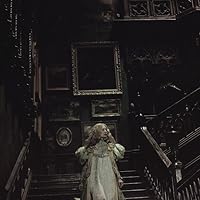
Agamemenon (450 B.C.) is the first play in a trilogy, Oresteia, by Aeschylus. Just saw a one hour condensed production of Oresteia so decided to read the trilogy. But this one might just be the best, all I’d need to get the basic point old Aeschylus makes about the futility of violent revenge for acts of violence which, as it turns out, has been a continual problem in human history, a lesson unlearned still. On the same night I also saw, performed by the same company, on the same stage, Hamlet, another revenge play, with a pretty similar plot!
“The ancient blinded vengeance and the wrong that amendeth wrong”--Chorus.
“Every wrong is justly punished; yet, as the world goes, every punishment becomes a new wrong, calling for fresh vengeance”--Chorus
In the play we meet Zeus, one who has both sinned and suffered and thereby grown wise. His gift to mankind is the ability through suffering to learn, but it seems to have been discarded by mankind like an ugly sweater.
The Greek Agamemnon is the victor of The Trojan War, but sometime in the process insults Achilles, who asks Zeus to rectify the situation by forcing Agamemnon to give up his own daughter, Iphigenîa, as a human sacrifice, which he does.
Though human sacrifices were not uncommon during these tims, the loss of her daughter not surprisingly enrages and grieves Clytemnestra, Agamemnon’s wife, so when he comes home after ten years, she plans to kill him. But not just her husband; when Agamemnon shows up he has “in tow” a “spolil of war,” former Trojan royal woman Cassandra, sister to the lovely Helen. She figured, hey, I have the axe out already, why not kill them both?
Women as “spoils of war” were also a common thing then, but Cassandra still knew this would not go down well with Clytemnestra, and she is right.
“There comes a time to a woman when fear dies”--Clytemnestra. As she also says,“the weight of years is intolerable,” and the always sexist and philandering Agamemnon has worn her down, in addition to the killing of their daughter and then the further insult of bringing home Cassandra, his new bedmate. You ask, how much can one woman take?! Kill the bastard, right?!
Cassandra, given by the gods the gift of a prophecy, knows she and Agamemnnon are going to die at the hands of Clytemnesra, but as she has also been later cursed by the gods to have no one believe her prophecises, no one believes it! The greatest and most human character of the whole play is Clytemnestra, the raging, grieving wronged woman, avenging these wrongs, and we are inclined to side with her, but Cassandra is also a terrific character here.
So, so surprise, Clytie murders the popular Greek King Agamemnon, in revenge for her daughter being murdered, and son, but the Chorus and Mourners are not happy about it. They see a cycle of violence perpetuating itself. But you decide if she did he right thing. In the production I saw, the audience for the play actually got to vote by putting slips of paper in a box and having them counted--we sided with her!
But an interesting twist happens that forces us to reconsider our defense of Clytemnestra: Aegisthus comes before Argos (the chorus, the mourners) to announce that he was responsible for the plot to kill Agamemnon, and that he is now going to marry Clytie and become King. The Chorus smells a diabolical plot, and they may have been right: while Agamemnon was gone, she took up with Aegisthus, Agamemnon’s cousin and foe (think of the killing of Claudius in Hamlet, in revenge), as her lover, so maybe she had yet another reason to kill her hubby. Clytie calls for an end to violence, but it is clear some people are not happy. (Though we do not know it from the end of this play, Aegisthus ruled for seven years before his death at the hands of Agamemnon's son Orestes. That happens in the next play of the trilogy, The Libation Bearers, but it is all really just one long endless parade of revenge in the name of justice. Ah, Hamlet, again!
This was to me a terrifically entertaining play, with some strong characters thats show up in other Greek drama. They really come alive (until, that is. . ). though the Chorus does go on a bit long at times, I thought. But I was fortunate enough last week in the same evening to see Hamlet and Oresteia, two revenge plays that raise the issue of whether it is meet and wise to commit acts of murder in response to murder.