

What do you think?
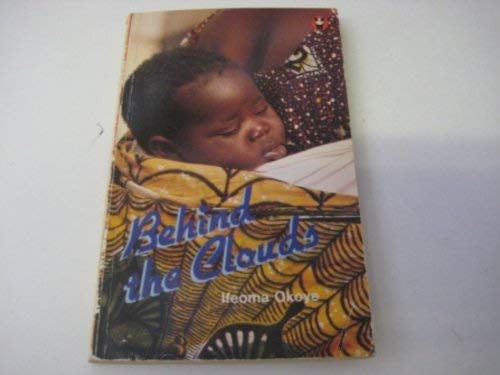
Behind the Clouds
From award-winning author, Ifeoma Okoye, Behind the Clouds is the emotional story a woman trying to build a family under the societal pressures of 1970s Nigeria.Ije has visited every reputable faith healer, doctor, and herbalist she can find yet her desire to become a mother is proving impossible to fulfill. While her mother-in-law believes the blame should rest solely on the wife, her husband remains unfailingly supportive. That is until one day Ife arrives home to find a pregnant woman sitting in her house. She says she is the mother of her husband's child and she's here to take her rightful place in Ife's home...Raw and immensely thought-provoking, Okoye boldly captures the painful experience of being labelled a 'barren' woman in 1970s Nigeria.
118 pages, Paperback
First published January 1, 1982
Ratings & Reviews
Friends & Following
Create a free account to discover what your friends think of this book!
Community Reviews
Displaying 1 - 20 of 20 reviews

January 15, 2021
The plight of African women...over the decades, centuries in Africa. Our outstanding writers have shown that it has always been pretty bad, horrendous many years ago. Both male and female writers agree on this, the men in patronising fashion, ready to praise compliant "virtuous" women who suffer and suffer, regarding themselves as chattels whose main purpose is just to bear children, especially male, otherwise they are great "failures" in life. The women writers find themselves acquaising along these lines though haplessly crying against such injustice. It is not so different in this early book written by one of Nigeria and Africa's top female writers.
The main female character here, Ije, is in a relationship where she has to endure a lot though her man, Dozie, is a relatively good man under the circumstances. But the fine qualities of the woman make her outstanding, and it is so painful when she proves to be "barren", though it is actually the fault of the man. Ije pulls out all the stops to make her man happy, though of course he would go on to betray her and bring another woman into their lives. It is so poignant when it gets to the stage where a close friend, Beatrice, strongly advises Ije to seek the help of "faith healer Apostle Joseph" who would unfailingly sleep with her and make her pregnant!
We are aghast when we read: "Ije...(my new baby) is Apostle Joseph 's". Ije was shocked. "You don't mean it!..." And Beatrice with the weight of society on her neck, responds: "I do and I don't regret my action. My infidelity has saved my marriage... at least I'll have a child who will look after me in old age. A childless wonan in our society does not realise the extent of her handicap until she grows old..."
Note that Ije does get to somewhat smile in the end, but in real life it seems unrealistic ...hence the plight of our women even now surely lingers on...

January 5, 2018
Simple and well-written, this story of the plight of a childless woman in Nigeria is as relevant now as it was in 1982 when it was written.

January 3, 2024
None of the women in this book made me proud 😭😭
But I could still understand their plight.
This was a reread
But I could still understand their plight.
This was a reread

June 6, 2024
Simply written. The book is a reminder that women have been facing the same injustice for years and our mothers and aunties have carried it and in some ways, transferred it to us. I liked how easy it was to read it, the characters were not so complex but one character that stood out was Ije's friend, Ugo, who even though was carefree and did not mind others saying about her, was still able to tell Ije remain in her marital home despite how choked Ije felt. Some complexity there that I liked.
In all, it is a harsh reminder in simple terms that the woman is always the first one who is looked at when there is no cry of a child in a married home, who is expected to bend over backwards to ensure a child is born, after all, who would take care of her in her old age.
In all, it is a harsh reminder in simple terms that the woman is always the first one who is looked at when there is no cry of a child in a married home, who is expected to bend over backwards to ensure a child is born, after all, who would take care of her in her old age.

August 8, 2026
The book itself was very well written, but let’s talk about the characters.
Ije was such an annoying character. Her and Dozie, honestly. My assessment of both characters would have been a lot more lenient if they were uneducated. But no, these were two educated, well travelled adults, and at no point did either of them think, “Maybe Dozie should also be tested for fertility issues?”
And who exactly were the quacks treating Ije for years? They could see that there was nothing wrong with her, yet they kept pumping her with medication? For YEARS? The frustration I felt reading some of these parts was actually something else.
And lastly, Grandma Apia. I have no words or good thoughts for that woman. None.
That said, I absolutely loved this book. I think it is a solid 4.5-star read: the writing, the storytelling, the themes, all of it.
But the characters and even parts of the plot were such a trigger. Particularly because the things explored in this book are not some distant, outdated reality. They still happen in 2026. Women are still blamed for infertility, still subjected to endless treatments without their partners being properly investigated, and still made to carry the burden of reproductive expectations almost entirely on their own.
So yes, I loved the book. But did the book stress me? Absolutely.
A very good read, and one that definitely gives you plenty to think and talk about long after you turn the last page. Weldone Ifeoma, looking forward to reading more of your works.
Ije was such an annoying character. Her and Dozie, honestly. My assessment of both characters would have been a lot more lenient if they were uneducated. But no, these were two educated, well travelled adults, and at no point did either of them think, “Maybe Dozie should also be tested for fertility issues?”
And who exactly were the quacks treating Ije for years? They could see that there was nothing wrong with her, yet they kept pumping her with medication? For YEARS? The frustration I felt reading some of these parts was actually something else.
And lastly, Grandma Apia. I have no words or good thoughts for that woman. None.
That said, I absolutely loved this book. I think it is a solid 4.5-star read: the writing, the storytelling, the themes, all of it.
But the characters and even parts of the plot were such a trigger. Particularly because the things explored in this book are not some distant, outdated reality. They still happen in 2026. Women are still blamed for infertility, still subjected to endless treatments without their partners being properly investigated, and still made to carry the burden of reproductive expectations almost entirely on their own.
So yes, I loved the book. But did the book stress me? Absolutely.
A very good read, and one that definitely gives you plenty to think and talk about long after you turn the last page. Weldone Ifeoma, looking forward to reading more of your works.
This entire review has been hidden because of spoilers.

October 29, 2024
“A childless woman in our society does not realise the extent of her handicap until she grows old.”
I read this book almost thirty years ago and it has never left my mind even with all the books I have read after. The story is a bit personal having grown up in the same culture and seen the horrors women go through in the face of infertility.
This plot follows the story of Ije and Dozie who have been trying for a baby after more than five years of marriage. What follows is best read than experienced.
This would be considered a novella by today’s standards. At less than 200 pages, it exposes the horrors of infertility in a society where the blame lies solely with the woman.
The writing is superb and just as timely. Nothing has changed from the setting of the book in the early 1980s.
This is a book I highly recommend.
I read this book almost thirty years ago and it has never left my mind even with all the books I have read after. The story is a bit personal having grown up in the same culture and seen the horrors women go through in the face of infertility.
This plot follows the story of Ije and Dozie who have been trying for a baby after more than five years of marriage. What follows is best read than experienced.
This would be considered a novella by today’s standards. At less than 200 pages, it exposes the horrors of infertility in a society where the blame lies solely with the woman.
The writing is superb and just as timely. Nothing has changed from the setting of the book in the early 1980s.
This is a book I highly recommend.
June 9, 2023
Throughout history, African women have faced the pervasive and damaging effects of racism. From colonialism to systemic discrimination, they have endured marginalization, limited opportunities, and stereotyping. Racism has undermined their rights, self-esteem, and access to resources, perpetuating inequality and denying them the full expression of their talents and potential.

September 2, 2021
Five years of marriege which out a son she become worries about the problem.
All the herbalist,doctors, spiritualist have try there best all in vain.
At last the problem was not hers it's from her husband
All the herbalist,doctors, spiritualist have try there best all in vain.
At last the problem was not hers it's from her husband
July 6, 2026
Interesting, shows what women go through in marriages without children.
The twist in this book is that her husband is the sterile one . Ije went through a lot to conceive thinking she is the problem.
The twist in this book is that her husband is the sterile one . Ije went through a lot to conceive thinking she is the problem.

September 1, 2019
I love the novel...
Read
July 5, 2020A very interesting novel
July 25, 2020
Far above average
March 9, 2021
A great book... I was touched and highly blessed.
August 23, 2021
Couldn't access the book
This entire review has been hidden because of spoilers.
Want to Read
October 18, 2022Great work

August 4, 2024
I’d say given the time this book was written, it is one of those books that aimed to address the problems with conception and how contrary to the belief that a woman is the cause of childlessness, it can as well be a man’s fault.
We see how the African society sees a wife as useless when she doesn’t produce children.
Infidelity is tackled here and we see how the blissful marriage between Ije and Dozie degenerated because of his quest for children.
The book talks about fake prophets and it’s just sad that fraudsters would use religion to rip off innocent people who have become desperate for children.
This book is in dire need of republishing as there were typographical errors even though it didn’t insubstantiate the core of the story being told.
It’s a nice book that tells the story of how unkind society can be to childless women. It’s a good read 👌🏼
Check out my review on YouTube here;
https://youtu.be/Q_zcL6SZZ3U?si=F0XGe...
We see how the African society sees a wife as useless when she doesn’t produce children.
Infidelity is tackled here and we see how the blissful marriage between Ije and Dozie degenerated because of his quest for children.
The book talks about fake prophets and it’s just sad that fraudsters would use religion to rip off innocent people who have become desperate for children.
This book is in dire need of republishing as there were typographical errors even though it didn’t insubstantiate the core of the story being told.
It’s a nice book that tells the story of how unkind society can be to childless women. It’s a good read 👌🏼
Check out my review on YouTube here;
https://youtu.be/Q_zcL6SZZ3U?si=F0XGe...
Read
July 12, 2017want to read
Read
September 1, 2021i can not read anything what the problem

October 7, 2022
Exceptional work from Ifeoma.
November 15, 2023
Read this book about 8 years ago. Still has that feeling every time i reread it
Displaying 1 - 20 of 20 reviews