Born in Philadelphia and raised in Florida, Ruth Belov Gross has lived in New York City ever since graduating from the University of Miami in 1950. Although her first job out of college was as an editorial assistant for a children's publishing house, Gross never planned to write for children herself. Instead she went on to a successful career as a medical writer, where she became adept at thorough and meticulous research and translating complex medical information into nontechnical language.
Such skills served her well when she wrote her first children's book, What Do Animals Eat?, in 1970, and though she initially assumed she would return to medical writing, she never did. “I was finally doing what I had always wanted to do — without knowing that it was what I had always wanted to do.”
Since then, Gross has written numerous books for children, specializing in nonfiction and re-tellings of traditional tales. She welcomes questions and comments from children, and often uses their input to make her work more thorough. When they are not working, Gross and her husband enjoy cooking, gardening, and vacationing in Vermont, where they have a tiny A-frame house in the woods.
If You Grew Up With George Washington Gross, R. B. & McCully, E. A. (1993). If You Grew Up With George Washington. New York, NY: Scholastic Inc. Reviewed By: Sarah Cherry Type of Reference- Biographical Reference Description: This title gives a good description of what life was like for the gentry’ class of Virginia in the 1740-1760’s. Students enjoy using this reference to compare their own life with the life of our first president. Content and Scope: This reference answers many questions about what you would learn in school, what you would wear, and what laws were established in the time of George Washington. This book also has great pictures. Accuracy, Authority, and Bias- The information in this book appears accurate. The author started writing children’s books in the 1970s and her first job was assistant editor in children’s publishing. She is known for writing nonfiction children’s books such as this biographical reference. Arrangement- The book flows nicely and is an easy read for elementary students. Relations to Similar Works: A similar work is If I Grew Up With Abraham Lincoln. Timeline and Permanence: This reference would not need to be replaced often. Cost: 6.99 Rationale for Selection: This reference is an easy read for younger students. Professional Reviewed: It is reviewed by School Library Journal.
I liked this book because it heads each section with a student question. Each question is then answered in the following pages. The great thing about the answers is that they are relevant to students lives today. This novel includes questions like what did George Washington do for fun? and then it provides answers like jumped rope, hung out with friends, rode horses--things that makes an important President relative to present day students.
This book is an informational with a little bit of biographical facts. It’s about the time when George Washington lived. The whole story is based on what would happen if “you” lived there at that time. For example it tells what they wore, what they ate, where they slept, if they had doctors, and much more. It’s a very good book for students to learn about our country back in that time period.
I especially liked that the author talks about how the rich, the poor and slaves lived in colonial times and not just George himself. It gives you a bigger picture of the culture at the time.
This book explains what it would be like if you grew up with George Washington. It has over 30 questions, so you can get an answer to a question you have.
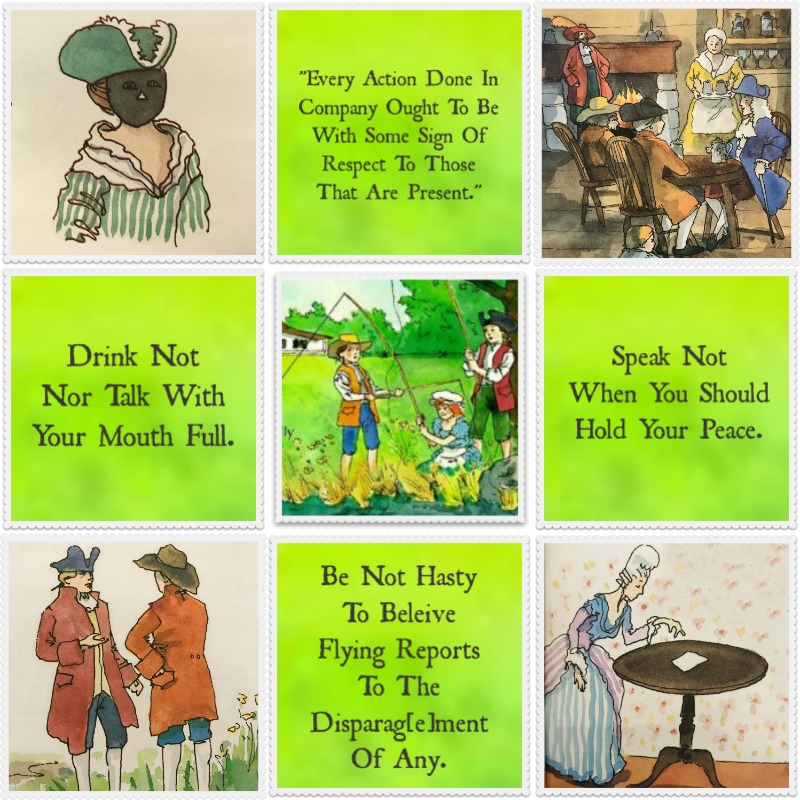
What King Of House Did George Washington Live In When He Was A Little Boy? Where Was The Cooking Done? What About The Bathroom? How Did People Light The House At Night? ( People made their own candles. Candles made from animal fat smelled bad and made a lot of smoke.) ( Pine Nots - They burned brightly, but also left a puddle of messy, sticky tar.) What Did Children Do To Have Fun? Did They Read books? How Did Grown Ups Have Fun? Where Did Visitors Sleep? Would You Go To School? What Kind Of School Did George Washington Go To? What Would You Learn In School? What If You Didn't Go To School? Why Didn't Girls Learn As Much As Boys? What Kind Of Food Would You Eat? Did Everyone Have Enough To Eat? Would You have Good Manners When You Ate? What Kind Of Clothes Would You Wear? (When they went outdoors,they often wore long gloves and a mask. That was the fashion too. They did not want their arms and face to get suntanned.) When a lady went to a fancy party or a ball, she stuck tiny bits of black silk on her face. The bits of silk were supposed to make her look more beautiful.) Where Would You keep Your Clothes? What Did Children Wear? Were There Any Indians? How Did people Get Around Virginia? Were There Places To Stay Overnight While You Were Traveling? ( Taverns were often dirty. The Food was often bad.) Could You Hear The News On TV Or Radio? How Did People Get Their Mail? ( When you had a letter to send, you'd take it to the nearest tacern and leave it on the table. If someone was going in the right direction, he would probably take your letter with him.) What Kind Of Money Did People Use In Virginia? ( Most Of The Time People Used Tobacco instead of money. You Could pay for everything with tobacco.) How Did People Carry Around Their Tobacco? ( All they needed was a special piece of paper that said the tobacco was in the warehouse.) Who Made The Laws For The Colonies? Did Everyone Vote? Did A Man Have To Be Rich To Own Land? (NO.) Did A Man Have To Be Rich To Get Elected? What Were Some Of The Laws In Virginia? Did They have Doctors When George Washington Was A Young Boy? What Happened When Your Kids Got Sick?
TRAVELED TO // Virginia MET ALONG THE WAY // George Washington
Actively Racist, do not recommend. Enslaved people treated as a one sentence afterthought. Extremely eurocentric and assuming whiteness even though Colonial America had people of many races and experiences.
Omitted entirely the fact that Washington and his father were enslavers. Spoke in dehumanizing ways about slaves - "their owners...", as though that is a real thing you can do to human beings and perfectly natural. Spreads the myth about Washington's false teeth, which were made of teeth from enslaved people, not wood.
Might be partially usable for the experiences of white colonists with extremely heavy editing and clarification but there are other resources that are less actively racist and full of myths, so why bother using this? It's bad morally and bad historically. Might be good for teaching critical thinking skills in how history is taught, and since I unfortunately own the book, I'll probably use it for that purpose in our homeschool and then throw it away rather than letting it continue to create harm in the world.
Despite its title, this book does not inform readers what it was like to grow up with George Washington. What it does address is what it would have been like to grow up in colonial Virginia. However, there are large gaps. The institution of slavery played a critical role in both George Washington’s life and the colony of Virginia. However, the references to enslaved people and the institution of slavery does not pass historical muster. There were more enslaved peoples owned by the Washingtons than people in George Washington’s family and George ‘inherited’ an enslaved person at the age of 11: none of this was mentioned in the book. The author also fails to offer any meaningful information on Indigenous peoples (referring to many different tribes as homogenous “Indians”). This book is outdated, insufficiently focused, and ought to be updated.
The illustrations of my edition were different than the edition goodreads has pictured, which look far more interesting. However, once finished, two of the three children to whom I read this gave it their highest ratings. We all learned some interesting things about what life was like in the time of George Washington’s childhood.
Interesting and informative, describing to children what life was like in George Washington's day, giving the children things to compare to their life today.