Jump to ratings and reviews
Rate this book

The Verb To Bird

Rate this book
"[A] delightfully literary and eclectic memoir about the manifold joys of birding…Cashwell is a storyteller. A very literate, observant, insightful storyteller."— The Bloomsbury Review "Reading this book was the next best thing to wandering in the woods with Peter Cashwell hoping to add a rufous-capped warbler to my life list. No, it was better—I could laugh out loud in delight as I turned the pages without fear of scaring the birds."—Katharine Weber, author of  The Music Lesson "An entertaining and witty meditation on birding."— Library Journal All around the world, birds are the subject of intense, even spiritual, fascination, but relatively few people see the word  bird  as a verb. Peter Cashwell is one who does, and with good He birds (because he can't help it), and he teaches grammar (because he's paid to). An English teacher by profession and an avid birder by inner calling, Cashwell has written a whimsical and critical book about his many obsessions—birds, birders, language, literature, parenting, pop culture, and the human race. Cashwell lovingly but irreverently explores the practice of birding, from choosing a field guide to luring vultures out of shrubbery, and gives his own eclectic travelogue of some of the nation's finest bird habitats. Part memoir, part natural history, part apology,  The Verb 'To Bird'  will enlighten and entertain anyone who's ever wandered around wet fields at the crack of dawn with dog-eared field guides crushed against the granola bars in their pockets. But you don't have to know the field marks of an indigo bunting to appreciate Cashwell's experiences with non-lending libraries, venomous insects, sports marketing, and animated Christmas specials. "Birders as well as all others interested in birds will enjoy this witty and informative meditation. Declaring himself a victim of birding compulsive disorder, Cashwell, an English teacher in Virginia, does an excellent job of describing his fascination with observing and listening to birds."— Publishers Weekly "Peter Cashwell possesses one of the rarest of all qualities in a nature an intelligent wit."—Robert Finch, co-editor of  The Norton Book of Nature Writing "A fine literary ramble and a good laugh to boot—no mean feat in a genre that perhaps takes itself to seriously."—John Hanson Mitchell, Editor of  Sanctuary , Journal of the Massachusetts Audubon Society "Writing with humor and gentle environmental rants, Cashwell does for his beloved birds what Bill Bryson did for the Appalachian Trail in his best-selling  A Walk in the Woods ."— Fredericksburg Free-Lance Star "[Cashwell] does not stint on the details that matter to birders, but it's his ability to translate the joy of the experience for the non-birder that extends the book's appeal beyond the Nature/Ornithology shelves."— The Charlotte Observer "Cashwell plays with the language as joyfully and skillfully as a musician coaxes melodies from his instrument."— Rocky Mount Telegram Birds first captured  Peter Cashwell 's attention when his mother hung an avian mobile over his crib. He was born in Raleigh, N.C., grew up in Chapel Hill, and graduated from the University of North Carolina, where he took every creative writing course permitted by the English department (and one that wasn't). Cashwell has worked at lots of different jobs—radio announcer, rock musician, comic-book critic, improv comedy accompanist. Now he teaches English and speech at Woodberry Forest School in the foothills of Virginia's Blue Ridge Mountains.

320 pages, Paperback

First published January 1, 2003

7 people are currently reading
82 people want to read

About the author

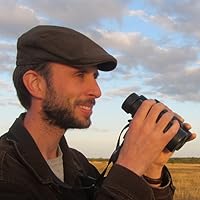
Peter Cashwell

4 books8 followers
Peter Cashwell grew up in Chapel Hill, North Carolina, where the first stories he wrote for school were about woodpeckers, cardinals, and peregrine falcons, and he saw no particular reason to stop. He studied English and creative writing at the University of North Carolina and went on to work as a record store clerk, radio announcer, and musical accompanist for an improv comedy group. Since then, he has published two books, THE VERB 'TO BIRD' and ALONG THOSE LINES, both available from Paul Dry Books, and a variety of shorter pieces for periodicals (including The New York Times, the Chicago Tribune, Living Bird, and The Comics Journal), anthologies (Literary Cash, Basketball in America), and websites (Audubon.org). His newest book, THE AMAZING Q (coming soon from Immortal Works) is his first book for younger readers. When he is not writing, he teaches English and history, plays the guitar and piano, and travels far and wide to see new birds. He and his wife, writer/librarian Kelly Dalton, live in Richmond, Virginia, with their dog, Ripley, and have two grown sons.

Ratings & Reviews

What do you think?
Rate this book

Friends & Following

Create a free account to discover what your friends think of this book!

Community Reviews

5 stars
34 (28%)
4 stars
51 (43%)
3 stars
25 (21%)
2 stars
5 (4%)
1 star
3 (2%)
Displaying 1 - 17 of 17 reviews
Profile Image for Cheryl.
13k reviews483 followers
June 12, 2017
I'm glad I read, very glad I didn't buy it. My complaints and praises are both trivial and mentioned by others in their reviews. So, on to the bookdarts:

"Angels are usually portrayed with the wings of birds, not bats, dragonflies, or moths...."
(Do any of you know why that is... something written in the Bible maybe?)

Ted Hughes' cycle of Crow poems.. would that be Crow: From the Life and Songs of the Crow? I'm adding that to my list, as Hughes is known to me from The Iron Giant and others.

I need to find E.B. White's essay "Mr. Forbush's Friends."

Another quote Cashwell uses is from Whitman's Specimen Days. I'm not sure about that one, and so will have to look it up.

(For that matter I need to find Edward Howe Forbush's A Natural History Of American Birds Of Eastern And Central North America or maybe his The Starling or The Domestic Cat....)

"Chinese Zen master Huang Po said, 'The foolish reject what they see, not what they think; the wise reject what they think, not what they see.'"

From the bibliography, I am also intrigued by:
Catesby's Birds of Colonial America
Another Field Guide to Little-Known and Seldom-Seen Birds of North America or others by the Sills
and of course Essays of E.B. White and Zen to Go.

Profile Image for Emily Kestrel.
1,195 reviews77 followers
July 26, 2016
I have two reactions to this book: as a reader and as a birder. Simply from a reader's point of view, I would say that this book--an account of the author's experiences looking for birds--is entertaining, well-written and occasionally quite humorous. (Also occasionally I felt he was trying too hard to be hip or clever.) I would definitely recommend this book to non-birders or casual bird-watchers, because I think it is one of those birding accounts that is accessible to the general public, which is no small feat. Some birding memoirs--not naming names--are such dry and relentless accounts of the author's dogged pursuit to add some rarity with a name like flop-winged snoozlebird, which only lives in one particular type of tree on one particular hill of an out of the way county, etc.--that even I--a truly avid birder--find my eyes glazing over after a while. Cashwell's book isn't like that. He keeps it fun for everyone.

But now for my reaction as a birder--well, I don't want to be a snob, but he doesn't really seem all that "avid" to me. For example:

1. He mentions looking for both ducks and sandpipers, and having trouble identifying them, without using a spotting scope. An avid birder has a spotting scope. No wonder "peeps" give him fits. You really need a scope to view them.
2. He doesn't recognize any bird songs, to the extent of not being able to tell an eastern and western meadowlark apart by song--when they sound entirely different.
3. His entire life list is 250 species and he despairs of finding more. To me, 250 species is a nice year list--and I am hardly a hard-core "big year" type. But then again, I have a spotting scope and can identify most birds in my area by song.

Does any of this matter? Only because he chooses to assume the voice of an expert on birding, and seems to be trying to impress the novice or non-birder with his expertise, and then so many things along the way ring false about that persona. And this comment should not discourage the casual or non-birding reader from reading the book, because I think it is, overall, quite enjoyable. I just would recommend it more to the general reader than to a fellow birder. Since I am currently in the beginning stages of writing my own birding memoir, my take-home lesson here is--don't try too hard to impress people with your knowledge, because there's always going to be someone who knows a lot more, and keep the "cute" cultural references to a minimum. Otherwise, this was quite a nice little book.
Profile Image for Chris.
7 reviews3 followers
May 19, 2015
There are, it seems, almost as many birdwatching memoirs being published nowadays as there are birders. Peter Cashwell’s is among the more original of them. There are no long lists of astonishing rarities, no thrilling tales of record-breaking antics. He’s not an ornithologist, or a tour guide on far-flung wildlife holidays, but an English teacher who fits birding in around work and family life. He is in fact – and no doubt he would freely admit this – a perfectly ordinary, somewhat hapless birder, and it is the very fact of this ordinariness that serves to get us closer to the heart of the matter.

And what exactly is a birder? As the title suggests, it is one who birds. That is to say, somebody who is simply and overwhelmingly delighted by birds, whose thoughts and attention stray to birds more often than they can say. To bird is to actively enter an almost child-like state of anticipation and hope, one in which anything can happen, and very occasionally does. Cashwell gets this philosophy across with an easy charm, and while parts of the book feel superfluous, there’s plenty here for even the uninitiated to enjoy.
Profile Image for Joseph.
301 reviews38 followers
July 30, 2014
Even if you don't care about birds (I don't), a very enjoyable memoir and musing on the joys of birding, the vagaries of weird states where the roads aren't straight and how states that have the cardinal as the state bird are lazy.
Profile Image for David Abrams.
Author 17 books249 followers
June 9, 2011
They’re everywhere. We’re surrounded by feathers, beaks, wingbeats, caws and chirps. If you’re a character in an Alfred Hitchcock movie, this could be rather troubling; but for the majority of us, birds are literally the background music in our daily lives. Birds are so common, we hardly know they’re there. You probably passed 150 birds on your way to work today and didn’t even give them a blink of thought.

For some people like Peter Cashwell, however, every bird is a cause for celebration and an excuse to pull off to the side of the road, grab the binoculars, and thumb frantically through Petersen’s Field Guide to Birds. Cashwell, a high school English teacher, has a particular hobby—actively pursuing birds to add to his “life list” of sightings. That’s why, in the pages of The Verb “To Bird,” you’ll find him walking along a Delaware shore in a howling wind in search of an American Avocet or enduring swarms of biting bugs in South Carolina to get a positive ID on a female Painted Bunting. Each new bird means a checkmark and a private whoop of joy.

That joy is contagious on every page of his book. Some of you may be thinking that a book on birding would be about as exciting as reading Hexnuts and the Paintings of Vermeer: a Critical Comparison, but I’m here to tell you that The Verb “To Bird” might just be the most stimulating thing you’ve read in a long time—it’s the literary equivalent of a caffeine-laced, sugar-jolted energy drink.

The book opens with an engaging argument on why the noun “bird” can also be used as a verb for the singular obsession with All Things Feathered. Through grammatical breakdown and reasonable persuasion, Cashwell shows how he and others like him bird like other people fish.

I don’t think it’s accurate, however, to say that people like me “bird-watch.” The term suggests that we lie around waiting for birds to appear, and that when they do, we sit passively and stare at them. In reality, those who bird pursue birds, observing them, memorizing their names, learning their field marks and calls, chasing them over hill and dale, recording their voices, netting and banding them, photographing them, and, most importantly, arguing about them with other birders. I doubt that clock-watchers act this way around clocks.


Cashwell peppers the book with self-deprecating humor (he knows he’s a member of a geeky clique), pop culture references and sly word play. He’s also an intelligent guide on our tour of the avian world, patiently explaining the differences between the Great Egret, the Snowy Egret and the Cattle Egret. He takes us on several weekend treks along the Eastern Shoreline, spreading his enthusiasm for the Winged Ones every step of the way.

At under six inches, the Carolina Wren will never be considered spectacular in the same way as a Whooping Crane, but its teakettle teakettle teakettle cry is astonishing in its volume, the knob of which, as Spinal Tap’s Nigel Tufnel would say, clearly goes to eleven.


Whether he’s describing the first folio of Audubon’s Birds of North America which weighed 56 pounds and was the size of a bathtowel because the painter-naturalist wanted the bird portraits to be life-size (“Coffee tables must have cowered in terror at the mere mention of Audubon’s name”) or whether he’s giving us an etymological history of how the Cardinal came to be named, the prose is always light and engaging, masterfully combining science, history, humor, and memoir.

This is one of those rare books I tore through in practically two sittings. As I neared the end, I so desperately did not want it to end. Cashwell’s book is infectious...like a good strain of bird flu.
Profile Image for Jim Tucker.
83 reviews
July 4, 2011
A fun read, bridging the gap (chasm) between the hard-core birder and the casual birder. Cashwell presents the folkwisdom of birding with humor and a large amount of interesting information. The reading is a bit plodding at times, but the reader can skim through those sections and find the next micro-burst of birding fun.
Profile Image for Sarah Tollok.
Author 6 books31 followers
June 29, 2022
First off you need to know that not only am I a nerd, I am a bird nerd. I like to watch them, identify them, and I even own 3 parakeets. Despite the poop, I do love them. So was I a natural fit as a reader of this book? Absolutely.

But Mr. Cashwell's book surprised me all the same. Not only does he know his birds, the writing was humorous, wistful, and philosophical. But then again, think of the subject matter. These winged creatures range from showy to subtle to downright drab, from delicate tiny hummingbirds that would barely register on a scale, to enormous condors that could carry away the family dog. They are ubiquitous enough for us to tune out any number of them overhead and in lawns during a commute to work, but then something rare can flash in the thickets on a hike and not only grab your attention but also take your breath away. There were moments like this for me when reading this book. I'm happy I read it, a wonderful addition to my life list.
361 reviews
May 29, 2020
You have to be a very dedicated (and have nothing else to do) to pick this book up and read it cover to cover. There where, berried here and there some interesting observations about particular birds. Other than that - well!
34 reviews
January 7, 2024
Delightful book. Funny to the point of LOL at times. Clever. Impressive info too. Perfect for anyone that enjoys amusing storytelling with artful wording, and of course likes birds or laughing at birders.
Profile Image for María Dabrowski.
21 reviews8 followers
April 6, 2024
3.7 stars. Made me laugh out loud quite a few times, sometimes waxed a little too poetic for my taste. I didn’t learn anything new about birds, but I enjoyed the book enough to keep reading through it. I’d enjoy birding with Peter.
Profile Image for Cassie Hanudel.
50 reviews1 follower
May 12, 2025
This guy gets the thrill! I really enjoyed his writing style and tales of birding. I found myself chuckling and nodding my head in understanding throughout the entire book. A must read for any avid birder.
Profile Image for Caran-marie.
99 reviews2 followers
July 23, 2012
Such a fun read! Found myself reading passages out loud to my husband who agrees with the author's wife's classification of birds- just for the language. The author writes with wit, description and a funny bone poked right at himself and other birders. His wife's classification system? "Duck and not a duck!"
Profile Image for David R..
958 reviews1 follower
April 28, 2014
Cashwell is a droll fellow whose prose flows naturally from his profession as an English teacher. But he has a good natural sense of storytelling that makes his various birding vignettes come alive. He's a bit too obsessed with his life list but the structure works well. A lot of fun especially for birders.
Profile Image for Kaethe.
6,572 reviews531 followers
March 14, 2017
The most brilliant book about birding ever. Funny enough to amuse even those of us who care nothing for birds, except eating them. The writer is a genius, as well as a personal friend. Recommended to fans of Bill Bryson
131 reviews1 follower
August 17, 2016
Nice easy read that gives an insight to a pasttime I knew nothing about. Ended up picking up a recommended backyard birding (that's a word apparently) book for our bird bath. Well written and organized.
Profile Image for Ann.
173 reviews1 follower
April 20, 2016
Entertaining for nonbirders. Insiteful for a look into twitcher culture.
1,718 reviews4 followers
Read
September 10, 2017
no birder should miss it...funny and familiar and full of birds.
Displaying 1 - 17 of 17 reviews

Can't find what you're looking for?

Get help and learn more about the design.