

What do you think?

Newcomb’s Wildflower Guide
Lawrence Newcomb's system of identification on wild flowers is based on natural structural features that are easily visible to the untrained eye and enables amateurs and experts to identify almost any wildflower quickly and accurately.
490 pages, Hardcover
Published April 1, 1977
Ratings & Reviews
Friends & Following
Create a free account to discover what your friends think of this book!
Community Reviews
Displaying 1 - 28 of 28 reviews

May 13, 2008
The best book I know of for identifying wildflowers of the northeast. The author devised a clever system for identification which requires the close observation of 5 or 6 characteristics of a plant then matching those characteristics to corresponding entries in the table of contents. Then typically all you have to do is turn to the pages and pick out the plant from the well-detailed drawings. I've used it to identify plants I didn't even knew had flowers, let alone were classified as wildflowers. One in particular I remember is wild peppergrass, which is everywhere here in Philadelphia. Through this book I also became familiar with a common weedy flower with a name I never tire of hearing: lesser daisy fleabane.
February 9, 2014
I am a field biologist and this is the one plant book I keep in my pocket at all times. The illustrations are great and the book has most of the common species one might encounter in the northeast. Any book of this size is going to be limited in detail because of the vast subject, but the scope of this book is perfect for the budding botanist.
It would benefit from a revision at this point since it is 25 years old. I'd also like to see a more weatherproof cover since this book is soo ideally suited to field work.
My copy is well worn from years of use, a testiment to its practicality, convenience and usefulness.
It would benefit from a revision at this point since it is 25 years old. I'd also like to see a more weatherproof cover since this book is soo ideally suited to field work.
My copy is well worn from years of use, a testiment to its practicality, convenience and usefulness.

March 30, 2012
It's a great flower guide, but Larry really needs to update it. Several scientific names have changed, and there are a few other errors.

October 7, 2008
For weeds, flowers & shrubs, this is one of the best ways to find out what the plant is. It works best if you know what the flower looks like - that's the starting point. If you don't, you often can still figure it out, but it takes longer, requires more lookups. There are some color prints, but mostly it is B&W sketches that are quite good. Descriptions are short but to the point.
I have used this in Maryland & Kentucky. It does contain a lot of invasives & transplants, but isn't completely comprehensive, of course. I use it only to identify the plant's common & Latin name. Other resources are needed to double check & get more in depth information. It's really just for identification.
I have used this in Maryland & Kentucky. It does contain a lot of invasives & transplants, but isn't completely comprehensive, of course. I use it only to identify the plant's common & Latin name. Other resources are needed to double check & get more in depth information. It's really just for identification.

Read
October 28, 2024This is a very good resource for the area but it definitely takes a while to get used to how to use it to actually identify plants.
July 27, 2011
great ID book for the field.

September 19, 2011
If you have a little knowledge of botanical vocabulary and the patience to learn the system, this is hands-down the best book for positively identifying wildflowers!
September 1, 2013
Best wildflower guide there is!

May 7, 2023
I got this book as a required text for a botany course I took and now I'm addicted to dichotomous keys. While it doesn't have every wildflower in the area (that tome would be pretty cumbersome to carry around), it is a great guide to many of the flowering plants I see in the woods and prairies around the Midwest.
Perfect for people looking for a reliable introduction to botany and a way to cross check their Seek app IDs.
Perfect for people looking for a reliable introduction to botany and a way to cross check their Seek app IDs.
December 10, 2024
A great field guide, more aimed at observers with some botanical background. Paired with the indispensable Peterson Wildflower Guide, you can identify a very high proportion of the plants you find in the wilds here in southern Ontario.
May 1, 2020
This is the book I use all the time for flower identification - easy to use, flower doesn't have to be in bloom. Great system for identifying flowers.
December 21, 2020
If you can learn how to use it, it is a phenomenal plant book. I wished there was one in Alaska that covered flowers in the same way.
April 25, 2021
Super disappointing. Really scientific and very few colored pictures

June 29, 2022
Great book to get and have on hand if you want to ID Wildflowers and shrubs.

October 8, 2023
Even though it is a little outdated, this is a good field guide for I.D.ing.

December 3, 2007
If you live in the Northeast and are interested in identifying wildflowers this book is a must have. Newcomb developed a system to allow identification of even the most stubbornly difficult wildflowers like asters and golden-rods. The only stipulation to using the fail safe system is you have to have a decent grasp of botanical anatomy. But even if you are not up on proper terminology the book gives you ample descriptions of plant and flower parts so with a little practice it becomes very easy to use. Almost all the plants are illustrated with line drawings. There are a few color plates. Do not buy this book if your are looking for pretty illustrations of wildflowers. This is purely an identification guide, the best for the Northeast.

May 21, 2012
When I picked up Newcomb's Wildflower Guide from the library, I didn't have a clue how to identify flowers using a book, and I was afraid I would be in over my head. I shouldn't have been worried: Newcomb's wildflower categorization is easy to pick up on, using readily understood visual cues like the number of petals on a flower, flower color, and leaf type. I was able to identify almost every flower I was trying to name, and I'm as amateur as it gets.
Using this guide is infinitely faster and less frustrating than trying to figure out flower names online, and the illustrations are very well-done and helpful. I do wish more illustrations had been in color, but the black-and-white drawings are still effective.
Using this guide is infinitely faster and less frustrating than trying to figure out flower names online, and the illustrations are very well-done and helpful. I do wish more illustrations had been in color, but the black-and-white drawings are still effective.

March 2, 2011
I like this one because you can sometimes find a plant even if it is not blooming. I alternate it with
 , which I find a bit easier as there the flowers are arranged by color. Newcomb's is slightly more of a bontanist's field guide.
, which I find a bit easier as there the flowers are arranged by color. Newcomb's is slightly more of a bontanist's field guide. August 28, 2020
Pretty good field guide if you are looking to have a basic flower book with a fairly comprehensive easyish key. It can be used to key to Genus but beyond that, it is lacking in a lot of species descriptions to get it down to species. It is really focused on the northeastern US. Over the years I've grown further and further from using as a reference because it doesn't cover my area. If I am completely unsure of the family and/or genus I will use its key to figure that out. That is its greatest strength.

January 24, 2013
Aside from the fact that my book had the cover glued on upside down, I really haven't found this book to be that helpful idetifying wildflowers because the illustrations are all line drawings. It works using the key by following the botanical details of the plant, but when you get down to the pictures it becomes too confusing.
February 5, 2014
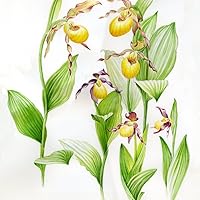
Very clear, detailed illustrations by Gordon Morrison; those were for me the highlight of the book.
The key takes some getting used to if you're only familiar with looking plants up by flower color, but it's more than manageable even for a beginner, and because it shows the habit of the entire plant, not just the flowers, it's very useful for the serious avocational botanist.
The key takes some getting used to if you're only familiar with looking plants up by flower color, but it's more than manageable even for a beginner, and because it shows the habit of the entire plant, not just the flowers, it's very useful for the serious avocational botanist.
January 2, 2015
This is the first field guide I've ever used. I first used it at age 12. Not only was it a fun experience to identify the oddities I had noticed before but never bothered to identify, the illustrations are gorgeous and fun to thumb through. While it was a great book for a budding botanist, from what I hear it's also a highly reputable source.

May 19, 2011
A great wildflower guide that I became really accustomed to using. I think this is much better than the Peterson Guide for wildflowers, but that might just be me. A helpful key that enables the average person (completely unfamiliar with flowers) to still use it and identify what they're looking at.

October 7, 2020
Good drawings. This guide organizes by type of flower then by type of leave. Depending on the time of year, this can make finding the target plant for identification more difficult, but isn't too bad if you understand how the book is laid out.

April 22, 2013
very good book

May 28, 2017
Absolutely the best wildflower ID book out there! I love taking a walk through the forest and bringing my Newcomb.

September 8, 2024
I held off buying this because it covers the northeast US and I'm in the desert. However, it's a great book for learning classification and identification of plants.

Read
May 15, 2018This book was recommended for use on a wildflower tour in the Great Smokey Mountain National Park. After a brief introduction by our guide, we were able to use the handbook in the field. It's mind-boggling to think about how Newcomb put together the information in a novice friendly format. Now that the trip is over, I look forward to using it in the future.
Displaying 1 - 28 of 28 reviews