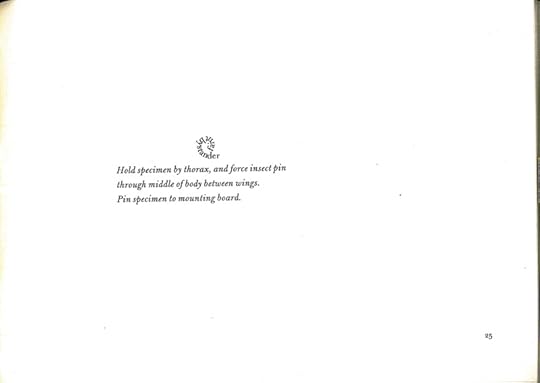
Wide slumber for lepidopterists is a poetic fantasia, a disorienting yet compelling dreamscape of butterflies and caterpillars and killing jars, where the waking mind’s prose transforms into the sleeper’s poetry. Each poem unfolds with precision, tracking the stages of sleep and pairing them with the life cycle of Lepidopterae. Insomnia is mirrored in the birth of the egg, narcolepsy in larval hatching. And when the caterpillar starts its final moult, dreams begin, weaving around us as tightly as a cocoon until we are somnambulant, a chrysalis ready to emerge as a moth.
Reading the act of sleep through pupae and moths seems incongruous, but from this unlikely premise comes a darkly erotic text that takes cues from the scientific fascination of Christopher Dewdney, the linguistic experimentation of Gertrude Stein and the aural environments of Björk to explore science, sexuality and language in equal parts.
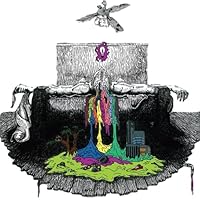
Wide slumber for lepidopterists contains luminous illustrations by artist and bookmaker Matt Ceolin, who has managed to capture the spirit of the poems with his beautiful and disturbing treated photographs of butterflies, moths and dessication.
a rawlings is a Canadian-Icelandic interdisciplinary artist whose books include Wide slumber for lepidopterists (Coach House Books, 2006), Gibber (online, 2012), o w n (CUE BOOKS, 2015), si tu (MaMa Multimedijalni Institut, 2017), and Sound of Mull (Laboratory for Aesthetics and Ecology, 2019).
The most stunning work of concrete/experimental poetry I’ve had the pleasure of reading. An obscure collection—but in the best way possible (much like taxidermy butterflies)
I picked up this book because it is beautiful. Put it in my hands. Marveled at the people who made it. The book’s dimensions are half a book, half the winged body on the cover: "a hoosh!" Like a sneeze. I never say bless you. I say wings waking up. When I picked up Wide Slumber for Lepidopterists because it was beautiful and found poems that looked like stars, I realized that my interest in visual and sound poetry was becoming more significant, and that if I was to keep writing poems I would need to keep seeing and hearing stars. If my poems can't be stars I want them to look or sound like stars, “story stars,” according to a. rawlings. On pages 69 through 71, she creates stars by depicting stars. Perhaps these starpoems are the “frantic”…“cannibalistic ow” moths “striking, over and over.” They are the incomprehensible shape of stars and the sounds depicting stars, which require The New Instrument (see Mathew Timmons’ The New Poetics), and which, in the case of both sound poetry and visual poetry, is unlike anything I “cervix”: the notes "mothlore," the words “semidanster,” the “slowblue flight” struggles against the “a ha” vocabulary resulting in the “ravening” body “wide and eyed.” “A hoosh a ha.” It’s a little Bosse de Nage. “So we dream the same.” “Do we dream the same.” “fl.sh.st.lu.”