Originally published in 1951 (with minor updates in 2002), the book covers the nature of God, the nature of man, the meaning of life, the nature of religion, the sources of Faith, the necessity of prayer, the duty of belief, the consequences of sin, the Commandments of God, the Holy Trinity, belief in Christ, the Redemption, the supremacy of the Pope, the Mystical Body of Christ, the Sacraments, the Mass, the priesthood, devotion to Mary and the Saints, what happens after death, the devotional life of a Catholic. Very interesting and very popular!
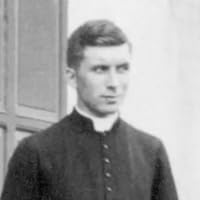
Fr. Francis J. Ripley was an English priest born in 1912 at Lancashire. He became a Jesuit novice in London after graduating from a local Catholic grammar school with honors. After being convinced that his vocation was not with this order, he was ordained in 1939 following his studies at the archdiocesan seminary of Upholland. There he earned first prize in dogmatic theology for three years in a row.
Father Ripley is the author of Terrible as an Army, The Diary of a Small Town Priest, Souls at Stake, Letters to Muriel, and This Is the Faith, his most famous work which was composed of a series of twice-weekly talks he had been giving for non-Catholics. These talks lead to hundreds of conversions over a period of several years.
In 1980, he was named a Canon of the Archdiocese of Liverpool. He served with the Catholic Missionary Society and Royal Air Force before his death on January 7, 1998.
This is probably the best catechism available, for both learning the truths of the faith and for learning about the faith. A must-have for an Christian's library.
A fantastic explanation of the entirety of the Catholic Faith. My only complaint would be the authors classification of Eastern Orthodoxy as a heresy due to the omission of the filioque. We all know that this was a western addition to the Creed and either way the issue has been more or less resolved between both east and west and the reader would be wise to ignore this small blurb towards the end.
While I can appreciate the intention of Thomas A. Nelson to "update" Canon Ripley's classic, the entire reason to reprint this 1951 catechism would be to exclude from it any of the incompatible beliefs and disciplines put forward by the Second Vatican Council. If you can put up with Nelson's parenthetical additions (which are not numerous, really) then this is an excellent pickup of what would be a hard to find original.
"if religion is not the basis of morality, what is?
Not utility - for man is not wholly subject to society, and the good of society is far from being his only and all-embracing end.
Not pleasure - for that would legalize immorality and crime.
Not the fact that virtue is its own reward - for often virtue walks in rags.
Not the inner sanction of conscience - for experience shows how easily indulgence in evil deadens conscience.
Not legal sanctions - for these cannot touch the inner motives and thoughts
Not public opinion - for it is often corrupt, praising evil men and blaming the good.
God alone can read the inmost secrets of minds and hearts; He alone can estimate every motive; He alone can adequately and justly punish or reward good and evil thoughts, words and deeds. A morality divorced from God, the Author of the moral law, cannot be sustained." (p. 19)
"If God revealed how He wants to be worshipped, it is the duty of men to accept that revelation and not to persist in worshipping Him in ways contrary to it." (p. 129)
"We see how closely we are related to Christ in the Mystical Body - more closely than we are related to our natural mothers, fathers, sisters or brothers. We are not merely members of the same family or society, but members of the same Body. We are related to Christ more closely than His own Mother Mary was related to Him, simply as His mother in the natural order. Further, we are related to one another in the same intimate way, as fellow cells in the same body. Our relationship with our own mothers in the natural order is less close than our relationship with one another in the Church." (p. 209)
"If the Catholic education of the child is not assured, Baptism is forbidden, even should the parents request it." (p. 232)
"Wisdom enables us to consider the eternal truths, to judge all things by them, to set a right value on salvation and the means to it and to relish the things of God." (p. 243)
(quoting St. Justin Martyr) "...if Hell does not exist, 'either there is no God, or if there is, He does not concern Himself with men, and virtue and vice have no meaning.'" (p. 384)
"It has been well said the the loss of the Beatific Vision fills the souls in Limbo with no more regret than a man experiences because he cannot have a weekend cottage on the moon. However nice a thing may be, if we know that it is beyond our capacity, was never due to us, and is quite impossible of attainment, we do not worry the least about it." (p. 408)
"No one has condemned the abuses of private property more than the Popes. Again and again, they have pointed out that the goods of the earth, which are meant by God to provide for the needs of all, and the control of them, have passed into the hands of a few, who thus control the entire stream of the life-blood of the human community. This has been allowed to happen because religion and morality have been excluded from all economic affairs, because immoral principles have dominated social life, because wealth has been abused and because the State has failed to take those actions necessary for the common good. Owners of property have in certain cases considered their rights to be absolute and incapable of restriction by any law, human or divine. Greed, avarice and dishonesty of every description have been rampant in financial, industrial and commercial life. Money has often been used as a weapon - without any regard to the needs of society." (p. 451)
"It must be remembered also that a man's work cannot be made the object of bargaining, like any other commodity or article. He is not mere muscle or physical strength, but a child of God, with a spiritual soul, an intellect and a supernatural destiny." (p. 453)
If you are a Catholic, or plan on becoming a Catholic, or would just like to know the Truth of what the Catholic Church teaches, without hyperbole, distortions, misinformation, slander, modernization, etc., etc., then I cannot recommend this book highly enough.
A concise, understandable and thorough explanation of the teaching of the Church founded by Our Lord Jesus Christ, with none of the watered-down explanations or wishy-washy interpretations one may come across today.
It explains the Catholics faith from a more traditional perspective in an easy to understand, but comprehensive way. Highly recommend to anyone that want to learn about it or just to refresh it.
This is the catechism that the priest at my parish instructed me to read shortly before my confirmation. I haven't read any other catechism to compare it to but I learned a lot from this book.
My mother-in-law bought a bunch of these to give out probably 10 years ago and I have read from it quite a bit over the years but I happened to listen to an episode of Mother Miriam Live a few years ago in which she talked about it and inspired me to read it cover to cover. It took a while but was worth it. It has some unpopular "old" teachings about things pertaining to marriage and things like the Limbo of Children that can be challenging to modern Catholics, of which I'm not excluding myself. The Church has some hard teachings - but to whom else shall I go?
This is the faith is a great resource for someone who wants an in depth overview of the Catholic faith. It stays general enough to not get bogged down in details but it touches on enough aspects to make it a very useful guide to someone wanting to learn more about Catholicism. As a convert this was really helpful to me and it helped me understand what the core of the religion are and what it really is all about. This book also helped answer a lot of the questions I was having and made my faith much stronger.
I admit that I skimmed some of this. Basic teachings of the Catholic Church pre-Vatican II. I found much to reflect on, but I can see why there was such a demand for change in the Church back in the 1960s. There are still quite a few people who wish to return to this kind of church. I am not one of them.
This was the catechism given to me by my parish and priest who taught me in the faith before baptizing, confirming, and giving me my first Holy Communion.