

What do you think?

Braddock-Black #3
Forbidden
FORBIDDEN
He was raised in the gilded lap of luxury: Etienne Martel, the magnificently virile Duc de Vec, notorious rake, expert sportsman --- and the most celebrated lover in all of Paris. But from the moment he saw the incomparable Daisy Black, he knew he would never desire another.
FORBIDDEN
She was born half a world away: Daisy Black, a proud Montana beauty, exotic and untamed --- and determined to fight for the rights of women in a land ruled by men. Yet the instant she felt the heat of de Vec's jungle-green gaze, she knew she was lost. Like some haunting promise of paradise he drew her in, fanning the flames of her desire until all she could think of was lying in his arms.
FORBIDDEN
Now caught up in a dance as old as time, Etienne and Daisy have eyes only for each other. But soon, they'll find their happiness threatened ... by a society rocked by their scandalous love ... by the woman Etienne calls wife.
He was raised in the gilded lap of luxury: Etienne Martel, the magnificently virile Duc de Vec, notorious rake, expert sportsman --- and the most celebrated lover in all of Paris. But from the moment he saw the incomparable Daisy Black, he knew he would never desire another.
FORBIDDEN
She was born half a world away: Daisy Black, a proud Montana beauty, exotic and untamed --- and determined to fight for the rights of women in a land ruled by men. Yet the instant she felt the heat of de Vec's jungle-green gaze, she knew she was lost. Like some haunting promise of paradise he drew her in, fanning the flames of her desire until all she could think of was lying in his arms.
FORBIDDEN
Now caught up in a dance as old as time, Etienne and Daisy have eyes only for each other. But soon, they'll find their happiness threatened ... by a society rocked by their scandalous love ... by the woman Etienne calls wife.
484 pages, Mass Market Paperback
First published August 1, 1991
About the author
Susan Johnson
262 books582 followersAnd it all began rather serendipitously. Long ago, as they say, in another time, when fast food hadn't reached our area and the only shopping was what the feed mill offered, I was reading a book that annoyed me .
My husband was lying beside me in bed, watching TV. Turning to him, I sort of petulantly said, "How the hell did this book get published?"
"If you think you're so smart," he replied, with one eye still on the TV, "why don't you write a book?"
So I did. And very badly.
I've since learned how to do, he said, she said, and a great variety of other adverb heavy, sometimes lengthy explanations of why my characters are saying what they're saying, along with finally coming to an understanding of what things like POV means. Point of View for you non-writers}.
Although, I still don't fully comprehend why it matters if you switch POV and I cavalierly disregard it as much as possible. So while my technical skills have hopefully improved, what hasn't changed is my great joy in writing. There's as much pleasure today in listening to my characters talk while I type as fast as I can, as there was the first time I put dialogue to paper--in long-hand, then, in my leather bound sketch-book.
My husband was lying beside me in bed, watching TV. Turning to him, I sort of petulantly said, "How the hell did this book get published?"
"If you think you're so smart," he replied, with one eye still on the TV, "why don't you write a book?"
So I did. And very badly.
I've since learned how to do, he said, she said, and a great variety of other adverb heavy, sometimes lengthy explanations of why my characters are saying what they're saying, along with finally coming to an understanding of what things like POV means. Point of View for you non-writers}.
Although, I still don't fully comprehend why it matters if you switch POV and I cavalierly disregard it as much as possible. So while my technical skills have hopefully improved, what hasn't changed is my great joy in writing. There's as much pleasure today in listening to my characters talk while I type as fast as I can, as there was the first time I put dialogue to paper--in long-hand, then, in my leather bound sketch-book.
Ratings & Reviews
Friends & Following
Create a free account to discover what your friends think of this book!
Community Reviews
Displaying 1 - 30 of 40 reviews

December 24, 2012
eBook LIVE: http://goo.gl/G4S9Qh One of the best HR series out there!

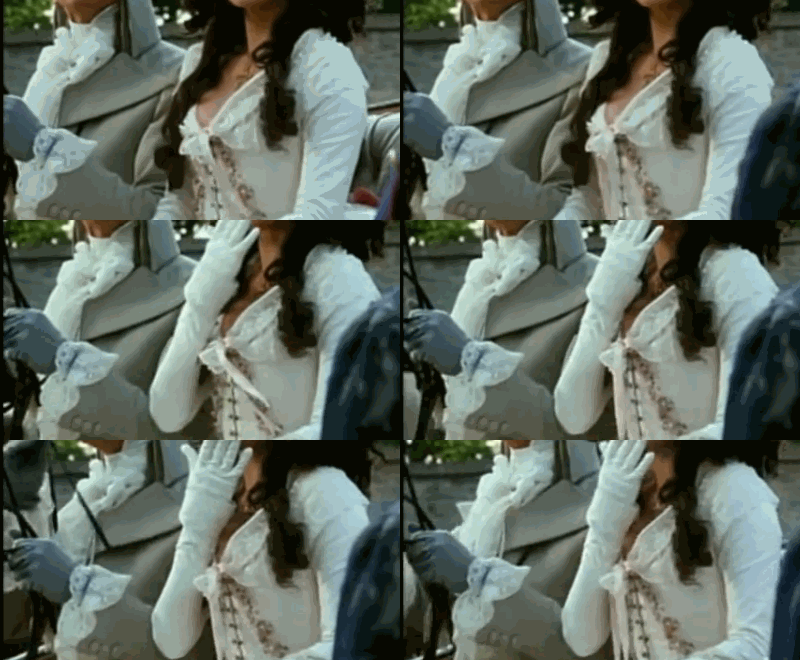
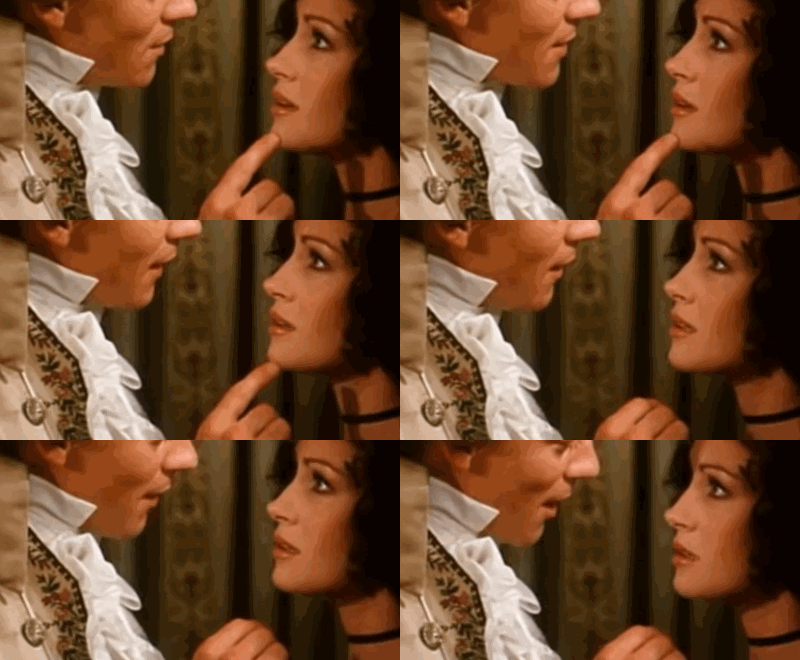
★★★★ 1/2! The Braddock-Black series, book 3 of 5. Continuing the family saga with Hazard’s daughter the fiercely independent Daisy and Etienne Martel, Duc de Vec, playboy extraordinaire!
The Braddock-Black family saga, started in book 1 with its matriarch Jon Hazard Black; an Absarokee Indian chief, Harvard educated attorney, rich and successful business man, land & mine owner, gorgeous and sexy playboy meeting the beyond rich heiress Blaze Braddock. Together they have amassed fortune and power, equally respected AND hated and so their story continues with the next generation.
Susan Johnson aka C.C. Gibbs has different publishers in the US and UK, hence the different titles and covers.
These are stand-alones, but most enjoyed if read in order:
Book 1: (Year 1865)
Blaze (US) / Burning Touch (UK)
Book 2: (Year 1889)
Silver Flame (US) / A Seductive Flame (UK)
Book 3: (Year 1891)
Forbidden (US) / Forbidden Pleasure (UK)
Book 4: (Year 1896)
Brazen (US) / Rapture (UK)
Book 5: (Year 1888)
Force of Nature (US only)
Etienne Martel, Duc de Vec: French/39 years/lord-blue blood-attorney-playboy/$$$/married/black hair/green eyes.
We first met Etienne Martel, Duc de Vec in Silver Flame (book 2). He is the most celebrated lover in all of Paris; A rich and successful attorney and beyond handsome, playboy (man whore). Plus he is very much married, though a marriage of convenience.
Daisy Black: Absarokee Indian/29 years/attorney/$$$$/black hair/black eyes.
Successful attorney Daisy Black is Jon Hazard Black’s illegitimate daughter (book 1) and Trey’s (book 2) older half-sister. She is smart, strong, fiercely independent and sexually liberated. She has travelled to Paris to represent Trey and Empress’ family legacy.
She encounters the enigmatic and charming Etienne, Duc de Vec and they have lust at first sight. Scorching sex (including sex toys) embarks them on a journey leading to a deep and profound love.
But it’s year 1891 and Etienne has a vindictive wife who is not prepared to give up her social; status. Money, power, status and much more are at stake. Strap on your seatbelt this is one roller-coaster ride you wouldn’t want to miss!
Another note-worthy and for my utterly charming characteristics about Etienne is his use of Majestic Plural (Royal we):
Unforgettable characters! Mind-blowing sex! Captivating storytelling. Susan Johnson at her best!
***
Hero rating: 5 stars
Heroine rating: 4 stars
Sex scenes rating: 5 stars
Sex scenes frequency: 4.5 stars
Storyline concept rating: 4 stars
Storytelling skills rating: 5 stars
Story ending rating: 5 stars
******************************
Overall rating: 4.5 stars
Would I recommend this series: Yes.
Would I re-read this series: Yes.
Would I read future books by this author: Yes.

Be sure to join CCGibbsFANS here on GR for the latest news:
https://www.goodreads.com/group/show/...
(Public group for members 18 years and older)
eBook LIVE: http://goo.gl/G4S9Qh One of the best HR series out there!


★★★★ 1/2! The Braddock-Black series, book 3 of 5. Continuing the family saga with Hazard’s daughter the fiercely independent Daisy and Etienne Martel, Duc de Vec, playboy extraordinaire!
US EDITION SERIES INFO & REVIEW
The Braddock-Black family saga, started in book 1 with its matriarch Jon Hazard Black; an Absarokee Indian chief, Harvard educated attorney, rich and successful business man, land & mine owner, gorgeous and sexy playboy meeting the beyond rich heiress Blaze Braddock. Together they have amassed fortune and power, equally respected AND hated and so their story continues with the next generation.
Susan Johnson aka C.C. Gibbs has different publishers in the US and UK, hence the different titles and covers.
These are stand-alones, but most enjoyed if read in order:
Book 1: (Year 1865)
Blaze (US) / Burning Touch (UK)
Book 2: (Year 1889)
Silver Flame (US) / A Seductive Flame (UK)
Book 3: (Year 1891)
Forbidden (US) / Forbidden Pleasure (UK)
Book 4: (Year 1896)
Brazen (US) / Rapture (UK)
Book 5: (Year 1888)
Force of Nature (US only)
Etienne Martel, Duc de Vec: French/39 years/lord-blue blood-attorney-playboy/$$$/married/black hair/green eyes.
We first met Etienne Martel, Duc de Vec in Silver Flame (book 2). He is the most celebrated lover in all of Paris; A rich and successful attorney and beyond handsome, playboy (man whore). Plus he is very much married, though a marriage of convenience.
Daisy Black: Absarokee Indian/29 years/attorney/$$$$/black hair/black eyes.
Successful attorney Daisy Black is Jon Hazard Black’s illegitimate daughter (book 1) and Trey’s (book 2) older half-sister. She is smart, strong, fiercely independent and sexually liberated. She has travelled to Paris to represent Trey and Empress’ family legacy.
“You Mademoiselle are hardly in a position to remonstrate. The entire world has no doubt been at your feet from the cradle.”
“Would you care to join them?” She was teasing but testing her powers too in a feminine display of vanity.”
She encounters the enigmatic and charming Etienne, Duc de Vec and they have lust at first sight. Scorching sex (including sex toys) embarks them on a journey leading to a deep and profound love.
“She was too perfect he thought, as she stood provocatively nude before him, too exotic, too tempting, too assured of her extravagant beauty. “Perhaps some other time,” his gaze having shuttered slightly, the familiar sardonic half-lidded gaze of the Duc de Vec once again regarding her…”
But it’s year 1891 and Etienne has a vindictive wife who is not prepared to give up her social; status. Money, power, status and much more are at stake. Strap on your seatbelt this is one roller-coaster ride you wouldn’t want to miss!
Another note-worthy and for my utterly charming characteristics about Etienne is his use of Majestic Plural (Royal we):
“Well, thank you, ma’am,” he said still breathing hard, his heated body sleek with sweat, his smile angelic. “We … try.”
Unforgettable characters! Mind-blowing sex! Captivating storytelling. Susan Johnson at her best!
***
Hero rating: 5 stars
Heroine rating: 4 stars
Sex scenes rating: 5 stars
Sex scenes frequency: 4.5 stars
Storyline concept rating: 4 stars
Storytelling skills rating: 5 stars
Story ending rating: 5 stars
******************************
Overall rating: 4.5 stars
Would I recommend this series: Yes.
Would I re-read this series: Yes.
Would I read future books by this author: Yes.

Be sure to join CCGibbsFANS here on GR for the latest news:
https://www.goodreads.com/group/show/...
(Public group for members 18 years and older)
eBook LIVE: http://goo.gl/G4S9Qh One of the best HR series out there!
January 29, 2014
★★★★ 1/2! The Braddock-Black series, book 3 of 5. Continuing the family saga with Hazard’s daughter the fiercely independent Daisy and Etienne Martel, Duc de Vec, playboy extraordinaire!
UK EDITION SERIES INFO & REVIEW
The Braddock-Black family saga, started in book 1 with its matriarch Jon Hazard Black; an Absarokee Indian chief, Harvard educated attorney, rich and successful business man, land & mine owner, gorgeous and sexy playboy meeting the beyond rich heiress Blaze Braddock. Together they have amassed fortune and power, equally respected AND hated and so their story continues with the next generation.
Susan Johnson aka C.C. Gibbs has different publishers in the US and UK, hence the different titles and covers.
These are stand-alones, but most enjoyed if read in order:
Book 1: (Year 1865)
Blaze (US) / Burning Touch (UK)
Book 2: (Year 1889)
Silver Flame (US) / A Seductive Flame (UK)
Book 3: (Year 1891)
Forbidden (US) / Forbidden Pleasure (UK)
Book 4: (Year 1896)
Brazen (US) / Rapture (UK)
Book 5: (Year 1888)
Force of Nature (US only)
Etienne Martel, Duc de Vec: French/39 years/lord-blue blood-attorney-playboy/$$$/married/black hair/green eyes.
We first met Etienne Martel, Duc de Vec in Silver Flame (book 2). He is the most celebrated lover in all of Paris; A rich and successful attorney and beyond handsome, playboy (man whore). Plus he is very much married, though a marriage of convenience.
Daisy Black: Absarokee Indian/29 years/attorney/$$$$/black hair/black eyes.
Successful attorney Daisy Black is Jon Hazard Black’s illegitimate daughter (book 1) and Trey’s (book 2) older half-sister. She is smart, strong, fiercely independent and sexually liberated. She has travelled to Paris to represent Trey and Empress’ family legacy.
“You Mademoiselle are hardly in a position to remonstrate. The entire world has no doubt been at your feet from the cradle.”
“Would you care to join them?” She was teasing but testing her powers too in a feminine display of vanity.”
She encounters the enigmatic and charming Etienne, Duc de Vec and they have lust at first sight. Scorching sex (including sex toys) embarks them on a journey leading to a deep and profound love.
“She was too perfect he thought, as she stood provocatively nude before him, too exotic, too tempting, too assured of her extravagant beauty. “Perhaps some other time,” his gaze having shuttered slightly, the familiar sardonic half-lidded gaze of the Duc de Vec once again regarding her…”
But it’s year 1891 and Etienne has a vindictive wife who is not prepared to give up her social; status. Money, power, status and much more are at stake. Strap on your seatbelt this is one roller-coaster ride you wouldn’t want to miss!
Another note-worthy and for my utterly charming characteristics about Etienne is his use of Majestic Plural (Royal we):
“Well, thank you, ma’am,” he said still breathing hard, his heated body sleek with sweat, his smile angelic. “We … try.”
Unforgettable characters! Mind-blowing sex! Captivating storytelling. Susan Johnson at her best!
***
Hero rating: 5 stars
Heroine rating: 4 stars
Sex scenes rating: 5 stars
Sex scenes frequency: 4.5 stars
Storyline concept rating: 4 stars
Storytelling skills rating: 5 stars
Story ending rating: 5 stars
******************************
Overall rating: 4.5 stars
Would I recommend this series: Yes.
Would I re-read this series: Yes.
Would I read future books by this author: Yes.
Be sure to join CCGibbsFANS here on GR for the latest news:
https://www.goodreads.com/group/show/...
(Public group for members 18 years and older)

August 12, 2021
3.5. RTC!
~
Susan Johnson is a romance writer I am trying again to see if I enjoy a book by her. I've read one book by her, and it left me unimpressed. However, I feel that with authors with a backlist of more than ten novels, I have to give their books at least one more try. I do this on an instinctive feeling, and it's certainly paid off in terms of me appreciating an author, "getting" the appeal of an author, and even finding a new keeper.
Forbidden is one of the more cheaper titles on Kindle, and ah this story is a mixed bag. So much I loved! But also some parts that dragged and felt dated.
Etienne is a French nobleman, a skilled lover, good with investments, obsessed with polo. He seems to symbolize the leisure class to people who don't know he's actually a very sad and lonely man trapped in a dynastic marriage. Etienne is also the hero archetype that is irresistible to other women. You know the type of hero where any and every female character will flirt or take a second look at him, and the heroine is observing his magnetic appeal.
Daisy Black, of the Absarokee People, the Crow People, is a female lawyer sent to Paris to help her stepmother with some will stuff. Daisy is a workaholic, committed to her family and to her people, and hasn't found a love that's made her forget her obligations, or her work.
While she is there, she is at a gathering where she meets Etienne. Both Etienne and Daisy don't really want to be there. The entire dialogue was so good, and their blase mannerisms worked so well. I loved Daisys's dramatic exit!
Etienne is now interested to pursue Daisy, due to her lack of interest. Daisy, on her end, is surprised by how she reacts to Etienne, even knowing he is a rake. They decide to go for the one night stand, and Etienne takes her to his private estate that he purchased for himself, after his wife barred the door to him after their twins were born.
I guess this was steamy for the time it was published, but I found the seduction scenes dated. All the blase mannerisms were contrived and embarrassing instead of sophisticated. That's my only note. Like, when Daisy swears or the whole thing with the ropes in bed. That being said, yes for horndog MCs but no to the execution.
It surprised me that at about 20% in, they admit they love each other. In order to be with each other, Etienne gets the push he needed to divorce his wife. And I lived for the divorce drama!
There is foreshadowing on how the chips will fall, but oof it gets dicey, and Johnson does make you feel like the HEA will come with sacrifice. I liked the obstacles that Johnson threw at them. They were from 2 different worlds, and Johnson nailed it by focusing on Etienne's optimism that comes from always having everything, and Daisy worried/sad that Etienne has to give up so much for her - that she does not want him to think that he has to sacrifice in order to be with her, but also that perhaps it's not going to work because they both have commitments to their own communities - how can one let go or balance it out?
These are real questions, and I admire Daisy for thinking about this. It never occurs to her that she will have to give up her career as a barrister or that she demands Etienne to move to Montana with her.
When Daisy's business is wrapped up in Paris, she decides to return while Etienne sorts out the divorce. Both feel weird about the parting. Daisy worries that Etienne is using his wife as an excuse and perhaps this is his way of letting her know the love affair is over. Daisy has real worries about what it means to fall for a womanizer. Etienne, meanwhile, worries that Daisy is also leaving him, and perhaps will find someone else, as she has a modern understanding of love and dating.
Overall, I enjoyed Forbidden, and although it is set around 1891, it has an Edwardian feel to it, at least in my imagination, with emigre Americans and continental Europeans.
~
Susan Johnson is a romance writer I am trying again to see if I enjoy a book by her. I've read one book by her, and it left me unimpressed. However, I feel that with authors with a backlist of more than ten novels, I have to give their books at least one more try. I do this on an instinctive feeling, and it's certainly paid off in terms of me appreciating an author, "getting" the appeal of an author, and even finding a new keeper.
Forbidden is one of the more cheaper titles on Kindle, and ah this story is a mixed bag. So much I loved! But also some parts that dragged and felt dated.
Etienne is a French nobleman, a skilled lover, good with investments, obsessed with polo. He seems to symbolize the leisure class to people who don't know he's actually a very sad and lonely man trapped in a dynastic marriage. Etienne is also the hero archetype that is irresistible to other women. You know the type of hero where any and every female character will flirt or take a second look at him, and the heroine is observing his magnetic appeal.
Daisy Black, of the Absarokee People, the Crow People, is a female lawyer sent to Paris to help her stepmother with some will stuff. Daisy is a workaholic, committed to her family and to her people, and hasn't found a love that's made her forget her obligations, or her work.
While she is there, she is at a gathering where she meets Etienne. Both Etienne and Daisy don't really want to be there. The entire dialogue was so good, and their blase mannerisms worked so well. I loved Daisys's dramatic exit!
Etienne is now interested to pursue Daisy, due to her lack of interest. Daisy, on her end, is surprised by how she reacts to Etienne, even knowing he is a rake. They decide to go for the one night stand, and Etienne takes her to his private estate that he purchased for himself, after his wife barred the door to him after their twins were born.
I guess this was steamy for the time it was published, but I found the seduction scenes dated. All the blase mannerisms were contrived and embarrassing instead of sophisticated. That's my only note. Like, when Daisy swears or the whole thing with the ropes in bed. That being said, yes for horndog MCs but no to the execution.
It surprised me that at about 20% in, they admit they love each other. In order to be with each other, Etienne gets the push he needed to divorce his wife. And I lived for the divorce drama!
There is foreshadowing on how the chips will fall, but oof it gets dicey, and Johnson does make you feel like the HEA will come with sacrifice. I liked the obstacles that Johnson threw at them. They were from 2 different worlds, and Johnson nailed it by focusing on Etienne's optimism that comes from always having everything, and Daisy worried/sad that Etienne has to give up so much for her - that she does not want him to think that he has to sacrifice in order to be with her, but also that perhaps it's not going to work because they both have commitments to their own communities - how can one let go or balance it out?
These are real questions, and I admire Daisy for thinking about this. It never occurs to her that she will have to give up her career as a barrister or that she demands Etienne to move to Montana with her.
When Daisy's business is wrapped up in Paris, she decides to return while Etienne sorts out the divorce. Both feel weird about the parting. Daisy worries that Etienne is using his wife as an excuse and perhaps this is his way of letting her know the love affair is over. Daisy has real worries about what it means to fall for a womanizer. Etienne, meanwhile, worries that Daisy is also leaving him, and perhaps will find someone else, as she has a modern understanding of love and dating.
Overall, I enjoyed Forbidden, and although it is set around 1891, it has an Edwardian feel to it, at least in my imagination, with emigre Americans and continental Europeans.

June 3, 2017
This had the advantage of being different. Sadly, that's the only advantage.
If you're in need of an adjective CC has a few to spare.
I've wanted to read this book for ages. It's an A read on AAR, but under the author's American (publishing market) name Susan Johnson and with the title Forbidden. For some reason she's CC Gibbs on the Blighty Kindle and the book is Forbidden Pleasures. And I was so happy that, in fact, I could get this book on Kindle because: Native American lady lawyer, Daisy, meets late 19th century French Duc for erotic romance fun. On paper: interesting and different. And that AAR review is glowing.
So, perhaps this was a case of elevated expectations.
This was just: a whole load of no.
It doesn't start off badly. The Duc's character is pretty clearly and explicitly set out, as is Daisy's. They clash when they first meet and I expected a dance towards a relationship, particularly, when we discover that the Duc is already married. Some things bugged (the language is old fashioned, that is to say: you can tell this is a 1990s romance, the Duc has a "carnal paroxysm" before "pouring into he the moist interior of the voluptuous woman") but there was definite potential there.
And then, by 20% the're together andthey're in love and Meant To Be Together Forever and it all goes so very, very wrong.
And, all the things that bugged came roaring to the fore because there was nothing about the book to distract from them.
First amongst them: the writing.
"His broad shoulders swayed with the racing speed, but he held her firm prisoner of his passion and need, filling her entirely, the undulating motion of the speeding carriage creating a dizzyingly pleasurable friction.
"She nodded, a shiver of uncontrollable desire vibrating through her body as he touched his fingertip to his mouth, licking away a drop of her essence."
"The Duc felt an answering rush of pleasure course through his senses. She was, he thought, a woman of captivatingly varied parts: more natural than a country lass; as sophisticated as a queen; immodestly capable of holding her own in a man's profession; as beautiful as the most treasured sunrise from his childhood - and seductive... as orchids drenched with jungle rain seduced the eye and lured one's sensibilities."
Do you hear that? Listen closely now. No? That's because I'm silently screaming. This woman doesn't exist, first of all. But second of all: seductive as orchids drenched with jungle rain. Like: what. Really, what? Do they seduce the eye? I mean, I've seen them in Sainsburys after they've given them a watering and I've got to say: not seductive. But then that wasn't 'jungle rain', so perhaps that's the difference. That ellipsis, incidentally, isn't me omitting text: that's the Duc taking a moment, thinking and then coming up with that description. So in addition to making me think Daisy is an insufferable paragon of perfection, this paragraph also makes me think the Duc is an idiot.
Look, I could go on and on with these examples and rant and rant, but we'll move on.
The characters. They lose all of their edges. In Daisy's case she almost literally does, Gibbs actually says it, "'Yours,' Daisy whispered on a small caught breath, giving up the very core of her independent, soul without through or regret." Well, there was regret this side of the Kindle, Daisy, let me tell you. In this context the references back to Daisy's Native American heritage felt rather, exploitative, I suppose. Sort of shoehorned in as a way to assert that she's different and interesting but without any organic integration of those parts of her heritage and without them really impacting her actual actions. The Duc goes overnight from unrepentant rake, bored by woman, to loved up paragon of virtue comparing Daisy's seductiveness to wet plants.
It is extremely boring to read all about a couple in love when the external factors damaging their relationship aren't engaging. And here they were bloody dull. I'm as much of a historian as the next person with a history degree, but the hierarchical, Christian nature of the French judiciary in the late 19th century and the difficulty therefore of obtaining a divorce is the very definition of dull. To compound matters, the force exploiting those difficulties, the Duc's wife, is horribly characterized as a villainess woman without any nuance and constantly set against the heroine's perfect womanhood. So this 'conflict' is not only dull, it's irritating.
What you're left with is two perfect people, who both lose their interesting characteristics when they fall for one another, having luxurious meals, in idyllic houses on the Seine, drinking fabulous wine and bathing in glowing sunlight amidst soft fields of glistening green grass before having amazing euphemism, adjective-filled sex and then moaning periodically about how they can't be together. And then they do the same thing over again. But perhaps in a different idyllic house.
Suffice to say, it doesn't work. And I couldn't stick it out. DNF at 60% (in my defence, the book is loooong). Perhaps it picks up at the end but I'd lost all interest in the characters. And I'd just have been hate reading to guffaw at some of the excessive language on display.
If you like old fashioned romance writing, you might enjoy this. For everyone else: step away from the book.
If you're in need of an adjective CC has a few to spare.
I've wanted to read this book for ages. It's an A read on AAR, but under the author's American (publishing market) name Susan Johnson and with the title Forbidden. For some reason she's CC Gibbs on the Blighty Kindle and the book is Forbidden Pleasures. And I was so happy that, in fact, I could get this book on Kindle because: Native American lady lawyer, Daisy, meets late 19th century French Duc for erotic romance fun. On paper: interesting and different. And that AAR review is glowing.
So, perhaps this was a case of elevated expectations.
This was just: a whole load of no.
It doesn't start off badly. The Duc's character is pretty clearly and explicitly set out, as is Daisy's. They clash when they first meet and I expected a dance towards a relationship, particularly, when we discover that the Duc is already married. Some things bugged (the language is old fashioned, that is to say: you can tell this is a 1990s romance, the Duc has a "carnal paroxysm" before "pouring into he the moist interior of the voluptuous woman") but there was definite potential there.
And then, by 20% the're together andthey're in love and Meant To Be Together Forever and it all goes so very, very wrong.
And, all the things that bugged came roaring to the fore because there was nothing about the book to distract from them.
First amongst them: the writing.
"His broad shoulders swayed with the racing speed, but he held her firm prisoner of his passion and need, filling her entirely, the undulating motion of the speeding carriage creating a dizzyingly pleasurable friction.
"She nodded, a shiver of uncontrollable desire vibrating through her body as he touched his fingertip to his mouth, licking away a drop of her essence."
"The Duc felt an answering rush of pleasure course through his senses. She was, he thought, a woman of captivatingly varied parts: more natural than a country lass; as sophisticated as a queen; immodestly capable of holding her own in a man's profession; as beautiful as the most treasured sunrise from his childhood - and seductive... as orchids drenched with jungle rain seduced the eye and lured one's sensibilities."
Do you hear that? Listen closely now. No? That's because I'm silently screaming. This woman doesn't exist, first of all. But second of all: seductive as orchids drenched with jungle rain. Like: what. Really, what? Do they seduce the eye? I mean, I've seen them in Sainsburys after they've given them a watering and I've got to say: not seductive. But then that wasn't 'jungle rain', so perhaps that's the difference. That ellipsis, incidentally, isn't me omitting text: that's the Duc taking a moment, thinking and then coming up with that description. So in addition to making me think Daisy is an insufferable paragon of perfection, this paragraph also makes me think the Duc is an idiot.
Look, I could go on and on with these examples and rant and rant, but we'll move on.
The characters. They lose all of their edges. In Daisy's case she almost literally does, Gibbs actually says it, "'Yours,' Daisy whispered on a small caught breath, giving up the very core of her independent, soul without through or regret." Well, there was regret this side of the Kindle, Daisy, let me tell you. In this context the references back to Daisy's Native American heritage felt rather, exploitative, I suppose. Sort of shoehorned in as a way to assert that she's different and interesting but without any organic integration of those parts of her heritage and without them really impacting her actual actions. The Duc goes overnight from unrepentant rake, bored by woman, to loved up paragon of virtue comparing Daisy's seductiveness to wet plants.
It is extremely boring to read all about a couple in love when the external factors damaging their relationship aren't engaging. And here they were bloody dull. I'm as much of a historian as the next person with a history degree, but the hierarchical, Christian nature of the French judiciary in the late 19th century and the difficulty therefore of obtaining a divorce is the very definition of dull. To compound matters, the force exploiting those difficulties, the Duc's wife, is horribly characterized as a villainess woman without any nuance and constantly set against the heroine's perfect womanhood. So this 'conflict' is not only dull, it's irritating.
What you're left with is two perfect people, who both lose their interesting characteristics when they fall for one another, having luxurious meals, in idyllic houses on the Seine, drinking fabulous wine and bathing in glowing sunlight amidst soft fields of glistening green grass before having amazing euphemism, adjective-filled sex and then moaning periodically about how they can't be together. And then they do the same thing over again. But perhaps in a different idyllic house.
Suffice to say, it doesn't work. And I couldn't stick it out. DNF at 60% (in my defence, the book is loooong). Perhaps it picks up at the end but I'd lost all interest in the characters. And I'd just have been hate reading to guffaw at some of the excessive language on display.
If you like old fashioned romance writing, you might enjoy this. For everyone else: step away from the book.

April 10, 2022
"Forbidden" is the story of Daisy and Etienne.
Ah finally. I have read and loved the first two books in this series for over a decade, and this has been in my TBR for longer. I am so glad I finally gave it a chance.
Our heroine is a lawyer, coming from a world of native Indians and struggling to make her name in a sexist world. Being Hazard's daughter, she has worked hard to find her path, until a request by Empress sends her to Paris. It is there she meets Duc, the infamous libertine, who is as known for his endless sexual exploits as he is for his charm. Initially trying to resist him, she soon gives into his charm and they embark on a wild affair. But he is married in name only, with a vengeful wife who refuses to divorce him. Will love conquer?
Now Susan Johnson is one of the best in writing historical eroticas. Wow the sex scenes were so explicit and well done. The characters were much in love, and unlike the previous books we did not have endless angst or heartbreak.
I enjoyed it.
Safe
4/5
Ah finally. I have read and loved the first two books in this series for over a decade, and this has been in my TBR for longer. I am so glad I finally gave it a chance.
Our heroine is a lawyer, coming from a world of native Indians and struggling to make her name in a sexist world. Being Hazard's daughter, she has worked hard to find her path, until a request by Empress sends her to Paris. It is there she meets Duc, the infamous libertine, who is as known for his endless sexual exploits as he is for his charm. Initially trying to resist him, she soon gives into his charm and they embark on a wild affair. But he is married in name only, with a vengeful wife who refuses to divorce him. Will love conquer?
Now Susan Johnson is one of the best in writing historical eroticas. Wow the sex scenes were so explicit and well done. The characters were much in love, and unlike the previous books we did not have endless angst or heartbreak.
I enjoyed it.
Safe
4/5

March 3, 2024
It isn't your typical historical romance, I'll give you that (Susan Johnson's books rarely are). I appreciate the amount of research that went into writing the book (it is astounding), but I do feel the story could be a bit shorter. The final quarter of the book was very tedious; I ended up skim-reading it. The love scenes are plentiful, but in today's context, not very explicit. It's worth reading when you're terribly bored with the current offerings of historical romance which somehow or rather feels terribly bland and samey.

September 5, 2012
Etienne Martel is the disreputable rake prototype. He is French, too handsome for his own good, titled, and rich enough to get away with almost anything. Daisy Black is both a wild beauty, and controlled intellectual. Being Native American is enough by itself to set tongues wagging in Parisian salons, but she is also one of the first female lawyers of her time. She is much too serious to care about the notorious Duc de Vec. Etienne finds dining in society boring, so was not in a great hurry to meet his friend’s American house guest. They loathed each other at first sight, but it sparked a chemistry destined to burn everything down before them.
The Good:
1. Susan Johnson's has been on many best historical romances of all time lists. This book is from the same series, and keeps the reputation intact.
2. This is both a classic bodice ripper with things a lot of contemporary readers find distasteful about the genre. Luckily I don't care about most of that. Etienne is that old school alpha-hole that first gave me a taste for this type of hero. He wants everything his way, and you feelings about it don't matter. It was interesting to watch his growth the further we go along.
3. Daisy was an interesting heroine. She had parts that fit the blue stocking mode, but also is an unparalleled beauty willing to satisfy all my fashion porn needs required of historicals.
4. Susan Johnson was one of the first mainstream authors to write really dirty. Decades later it feels right at home in a post Fifty Shades reading world.
5. The unexpected plot resolutions were excellent. It went places never seen before.
The Bad:
1. Etienne went over the line sometimes into forced seduction territory. Some readers might find it triggering.
2. Daisy was moody in her jealousy. It was frustrating at times.
3. I hate this cover, might be why it stayed on my shelf unread so many years.
Final Thoughts:
This began as a re-read, but the further in realized I'd never actually read it before. It has only been on a shelf in my home for over 20 years, go figure. I loved it.
The Good:
1. Susan Johnson's
has been on many best historical romances of all time lists. This book is from the same series, and keeps the reputation intact. 2. This is both a classic bodice ripper with things a lot of contemporary readers find distasteful about the genre. Luckily I don't care about most of that. Etienne is that old school alpha-hole that first gave me a taste for this type of hero. He wants everything his way, and you feelings about it don't matter. It was interesting to watch his growth the further we go along.
3. Daisy was an interesting heroine. She had parts that fit the blue stocking mode, but also is an unparalleled beauty willing to satisfy all my fashion porn needs required of historicals.
4. Susan Johnson was one of the first mainstream authors to write really dirty. Decades later it feels right at home in a post Fifty Shades reading world.
5. The unexpected plot resolutions were excellent. It went places never seen before.
The Bad:
1. Etienne went over the line sometimes into forced seduction territory. Some readers might find it triggering.
2. Daisy was moody in her jealousy. It was frustrating at times.
3.
I hate this cover, might be why it stayed on my shelf unread so many years.Final Thoughts:
This began as a re-read, but the further in realized I'd never actually read it before. It has only been on a shelf in my home for over 20 years, go figure. I loved it.

April 23, 2012
I read this book some years ago and decided I needed to read it again. Ms Johnson has a style of writing that sometimes make you want to smack her characters just to knock some sense into them. This book is no different. While I know that the aristocracy of Europe often married for alliances instead of love it is sad that so many were probably very miserable. My one real problem with this book is that Etienne was worldly enough to know that if he really wanted a divorce from his wife he would need some leverage. This book like all the others I have read by Ms. Johnson is lavish in its descriptions and lush in its love scenes. The dialogue can be a little abrupt at times but the main characters do love each other and come to enjoy that love. If you like you historical romance with a little more spice than normal you will probably enjoy this book.

July 13, 2011
Absolutely, hands-down one of her best written books. It's love, lust, fantasy, sensual characters with a true story line, not just right to the bedroom which has come to be with her latter written books. I wish Ms. Johnson would go back to her roots and write more books like this and the whole Braddock-Black series. They are masterpieces for the romantics!

April 13, 2011
A real keeper!

October 22, 2024
I was crying by the time the book ended. Magnificent storytelling by Susan Johnson. Daisy and Etienne’s love story is unparalleled.

April 30, 2009
Daisy and Etienne are an improbable couple--their lives, characters, heritage, upbringing, views--none seem to match. And yet Johnson makes the love affair between them convincing and sizzling.
Her intelligent reparté and delicious tension are certainly at their strongest in this novel, and the few weaknesses in her other books are all but invisible here. The heroine has as a truly believable depth, and while she eventually (of course) capitulates to Etienne, she says more than "No" and "I really shouldn't" to stave them off. Etienne actually agrees to discuss the realities of their relationship several times, instead of brushing off difficulties as Johnson's other male characters have a tendency to do.
That said, the plot is also much more believable than usual, but the reality and history do not intrude on the escapist nature of the book. Johnson also manages to find a rare balance between erotic and tender.
Book Details:
Title Forbidden (The Braddock-Black Series)
Author Forbidden
Reviewed By Purplycookie
Her intelligent reparté and delicious tension are certainly at their strongest in this novel, and the few weaknesses in her other books are all but invisible here. The heroine has as a truly believable depth, and while she eventually (of course) capitulates to Etienne, she says more than "No" and "I really shouldn't" to stave them off. Etienne actually agrees to discuss the realities of their relationship several times, instead of brushing off difficulties as Johnson's other male characters have a tendency to do.
That said, the plot is also much more believable than usual, but the reality and history do not intrude on the escapist nature of the book. Johnson also manages to find a rare balance between erotic and tender.
Book Details:
Title Forbidden (The Braddock-Black Series)
Author Forbidden
Reviewed By Purplycookie

July 27, 2012
11/14/13 Reading for the second time, I still loved it. So far, the Braddock-Black series has not disappointed. This is the third and I didn't expect it to be so well written.
9/24/12 Although I didn't expect to like this book, much less love it, I was haunted for several days with the depth of the love between Daisy and Etienne. Some books convey love in such palpable and intense emotions that it leaves the reader breathless. In the best tradition of a "romance" book, this one raises the level to intelligent and thoughtful rather than the typical "bodice ripper" story that the genre sometimes falls to. Unpredictably complicated and thoroughly enjoyable. I will be reading more of Susan Johnson as soon as I can.
9/24/12 Although I didn't expect to like this book, much less love it, I was haunted for several days with the depth of the love between Daisy and Etienne. Some books convey love in such palpable and intense emotions that it leaves the reader breathless. In the best tradition of a "romance" book, this one raises the level to intelligent and thoughtful rather than the typical "bodice ripper" story that the genre sometimes falls to. Unpredictably complicated and thoroughly enjoyable. I will be reading more of Susan Johnson as soon as I can.

September 8, 2010
One of Susan Johnson's better books before she went overboard on the smut. Not for sensitive readers, nor for the young. You've been warned.

November 28, 2011
Good Book. Kinda dragged along towards the end. And then there really wasnt an "ending".

September 1, 2018
A interesting book, but I continually struggled with the fact the the hero was married. It just didn't feel right.

November 19, 2022
Lord help me, but I'm living for this series.

February 22, 2012
The cover makes me feel like I'm not wearing my contacts.
Refreshing different story about a female Native American lawyer named Daisy Black who falls in love with a married French duke by the name of Etienne Martel. Having lived in a loveless marriage for the past 20 years, the hero falls in love with the heroine and is determined to hold on to the only woman he's ever loved. The biggest obstacle in their happiness is his married state and determined ex-wife.
So well written! Not particularly exciting plot-wise or villain-wise (although the angry pervert Isabelle is entertaining). I would have liked less reminders throughout the book of what a man-whore the hero was in the past. Daisy came off as kind of uptight at first and I was glad that she opened up and revealed her real personality to the hero once they became intimate.
Most of all, the story is so well-written and it's obvious the author did her research (hence the mile long of footnotes at the end).
Refreshing different story about a female Native American lawyer named Daisy Black who falls in love with a married French duke by the name of Etienne Martel. Having lived in a loveless marriage for the past 20 years, the hero falls in love with the heroine and is determined to hold on to the only woman he's ever loved. The biggest obstacle in their happiness is his married state and determined ex-wife.
So well written! Not particularly exciting plot-wise or villain-wise (although the angry pervert Isabelle is entertaining). I would have liked less reminders throughout the book of what a man-whore the hero was in the past. Daisy came off as kind of uptight at first and I was glad that she opened up and revealed her real personality to the hero once they became intimate.
Most of all, the story is so well-written and it's obvious the author did her research (hence the mile long of footnotes at the end).

July 14, 2015
I guess I am being bias... I just finish outlaw and silver flame and see a repeating storyline...
Quick affair - after a second thought we want more - separation - reunion - everything magically resolved - happy ending. It was a good book in itself, and I am being unfair. The storyline is good! Why mess with perfection right? Right?... But I just cannot give 5 stars...sorry
Quick affair - after a second thought we want more - separation - reunion - everything magically resolved - happy ending. It was a good book in itself, and I am being unfair. The storyline is good! Why mess with perfection right? Right?... But I just cannot give 5 stars...sorry

March 16, 2016
Прочетох книгата трудно. Защо казвам това? Защото на няколко пъти исках да се откажа от нея, но все пак я прочетох. За мен, този роман е скучен. Няма никакво действие в него, никаква интрига. В повечето страници перобладават описанията на сексуалните им преживявания. Общо - взето, по -голямата част от книгата заемат именно тези им моменти. Ами, това е книгата. Съжалявам, но не ми хареса!

April 18, 2011
A really enjoyable read with a very different setting/perspective from the usual historicals I tend to favor. Part of me wishes I'd started with the first book because a lot of the inter-familiar relationships went over my head.
January 26, 2008
Well, I hadn't read one of these in a long time. It's ok, if you can get beyond the love at first sight and decision to change a whole life-time of habits within a week... Not a keeper for me.

May 4, 2008
Book 2 in Braddock series. Great.

July 8, 2012
An amazing love story with quite a twist at the end. I was left wanting to know more about the characters.
May 5, 2015
He was a grandfather. /shakes head/

July 13, 2012
Typical Johnson smut....enjoyed it.

December 25, 2024
There's just something about some of the late 80's/early 90's romances - their scale, the sheer pulpy over dramatic-ness of them - that simply cannot be beat. And Susan Johnson's Forbidden is one of the best in this category.
This book is honestly a bit crazy - there's so much drama! but it's tempered by the genuine connections that she builds between her characters and the truly phenomenal way she has of setting the scene. The way she builds the worlds that her characters inhabit is spellbinding. Whether she's talking about the food, the clothing....the inner workings of the judiciary system in 19th century France...she is NOT skimping on the details. So many historical romances are really vague when it comes to the details of the environment, but Forbidden doesn't suffer from this at all.
Forbidden reminds me a lot of 'Lord of Scoundrels' (another 5 star for me) in the characterization of our hero and heroine. Both of them are proud, powerful, beautiful, people - and they know it. Reading their interactions is like watching two jaguars circle each other - it's absolutely delicious. Montana born Daisy Black is our heroine: Harvard educated, she is one of the first 50 female lawyers in America. She is also the daughter of Jon Hazard Black, the chief of the Absarokee Indian tribe which makes her Native American royalty. She grew up proud, independent, and self sufficient. She is whip smart, beautiful, and financially independent thanks to the immense wealth of her family. She heads to Paris to help settle a legal matter for her younger half brother Trey and his french wife, Empress, and this is where she meets our hero - Etienne Martel, the Duc de Vec.
Ahhhh Etienne. A rake of the finest order, to be sure! Stupidly wealthy, Etienne is a part of the rarest of the rarified class in France. He's the 1% of the 1%, basically. Outrageously handsome, diabolically smart (he is also an attorney), and the most celebrated lover in France, he's certainly a character to remember. He's also married, to a woman chosen for him who he doesn't love, like, or live with, but who is the mother of his grown children who he absolutely adores. Etienne and Daisy meet at a ball, and it's not so much 'love at first sight' as it is a Mexican standoff. These two people have an instant connection, an instant awareness of each other, but they're both proud, independent, and desperately unwilling to show their vulnerabilities to another - which creates this DELICIOUS push/pull, exacerbated by the fact that the legal matters Daisy is trying to accomplish will not be successful without Etienne's help, and the fact that Etienne's wife is not willing to give him a divorce - despite the fact that she can't stand Etienne whatsoever.
What I love most about this novel is how much Daisy and Etienne feel like fully realized actual people outside of their relationship with each other. So often in historical romance the couple is just not that interesting outside of the romance, and too often the heroines don't have much of a personality at all outside of 'being sweet' and 'loving to read'. Daisy is a 29 year old Harvard graduate and lawyer. She cares desperately about justice and helping to bring it to her people. She loves the wilderness of Montana and she loves her family. She is incredibly proud of her own impressive accomplishments and also her Absarokee heritage, and will not tolerate being looked down on or talked down to by anyone, but she's also a romantic who yearns for a true connection with someone who will value her and challenge her. She's such a fierce person!
And Etienne - 39 year old Etienne has his own fascinating history. He's not just a world class lover, he's an extremely learned man who is also an attorney, who has a passion for knowledge and who has been on scientific expeditions all over the world. He's a hedonist who loves pleasure - both giving and taking - and those very few who he lets into his inner life he loves fiercely, including his children. I love that both these characters are older (well...older for historical romance, anyway) and that they bring their own experiences, prejudices and fears to the table, which must all be worked through.
There is also what I think might have been considered a pretty shocking amount of steam for the time it was published - including sex toys!
The novel is truly trans continental. From the ballrooms of Paris to the countrysides and riverbanks of pastoral France, to the rugged landscapes of Montana, these two chase each other across the Atlantic and every time I re-read this book, I am just glad to be along for the ride!
A romance of truly epic proportions.
This book is honestly a bit crazy - there's so much drama! but it's tempered by the genuine connections that she builds between her characters and the truly phenomenal way she has of setting the scene. The way she builds the worlds that her characters inhabit is spellbinding. Whether she's talking about the food, the clothing....the inner workings of the judiciary system in 19th century France...she is NOT skimping on the details. So many historical romances are really vague when it comes to the details of the environment, but Forbidden doesn't suffer from this at all.
Forbidden reminds me a lot of 'Lord of Scoundrels' (another 5 star for me) in the characterization of our hero and heroine. Both of them are proud, powerful, beautiful, people - and they know it. Reading their interactions is like watching two jaguars circle each other - it's absolutely delicious. Montana born Daisy Black is our heroine: Harvard educated, she is one of the first 50 female lawyers in America. She is also the daughter of Jon Hazard Black, the chief of the Absarokee Indian tribe which makes her Native American royalty. She grew up proud, independent, and self sufficient. She is whip smart, beautiful, and financially independent thanks to the immense wealth of her family. She heads to Paris to help settle a legal matter for her younger half brother Trey and his french wife, Empress, and this is where she meets our hero - Etienne Martel, the Duc de Vec.
Ahhhh Etienne. A rake of the finest order, to be sure! Stupidly wealthy, Etienne is a part of the rarest of the rarified class in France. He's the 1% of the 1%, basically. Outrageously handsome, diabolically smart (he is also an attorney), and the most celebrated lover in France, he's certainly a character to remember. He's also married, to a woman chosen for him who he doesn't love, like, or live with, but who is the mother of his grown children who he absolutely adores. Etienne and Daisy meet at a ball, and it's not so much 'love at first sight' as it is a Mexican standoff. These two people have an instant connection, an instant awareness of each other, but they're both proud, independent, and desperately unwilling to show their vulnerabilities to another - which creates this DELICIOUS push/pull, exacerbated by the fact that the legal matters Daisy is trying to accomplish will not be successful without Etienne's help, and the fact that Etienne's wife is not willing to give him a divorce - despite the fact that she can't stand Etienne whatsoever.
What I love most about this novel is how much Daisy and Etienne feel like fully realized actual people outside of their relationship with each other. So often in historical romance the couple is just not that interesting outside of the romance, and too often the heroines don't have much of a personality at all outside of 'being sweet' and 'loving to read'. Daisy is a 29 year old Harvard graduate and lawyer. She cares desperately about justice and helping to bring it to her people. She loves the wilderness of Montana and she loves her family. She is incredibly proud of her own impressive accomplishments and also her Absarokee heritage, and will not tolerate being looked down on or talked down to by anyone, but she's also a romantic who yearns for a true connection with someone who will value her and challenge her. She's such a fierce person!
And Etienne - 39 year old Etienne has his own fascinating history. He's not just a world class lover, he's an extremely learned man who is also an attorney, who has a passion for knowledge and who has been on scientific expeditions all over the world. He's a hedonist who loves pleasure - both giving and taking - and those very few who he lets into his inner life he loves fiercely, including his children. I love that both these characters are older (well...older for historical romance, anyway) and that they bring their own experiences, prejudices and fears to the table, which must all be worked through.
There is also what I think might have been considered a pretty shocking amount of steam for the time it was published - including sex toys!
The novel is truly trans continental. From the ballrooms of Paris to the countrysides and riverbanks of pastoral France, to the rugged landscapes of Montana, these two chase each other across the Atlantic and every time I re-read this book, I am just glad to be along for the ride!
A romance of truly epic proportions.
June 15, 2021
Daisy (Hazards daughter) was in France to help her sister in law Empress claim her daughters inheritance. Daisy is American through and through and does not like anything to do with Europe. She goes anyway and meets Etienne - who is the most sort after gorgeous man on the continent. Unfortunately, he is married to a witch of a woman. They fall in love anyway but Daisy cannot deal with all the fawning women and Paris itself so she goes back home to Montana. I wasn't too happy with the end of this book as I felt it was just done with no real resolution but I am thinking that was a kindle edition issue. I don't recall this in the actual paperback. Ms Johnsons books are the best. So well written. I've read all her historical novels more than once and devour them. Have the paperbacks and now they are on my kindle because they are not to be missed.

July 13, 2024
I almost want a certificate of completion for reading this book. Boy, finishing this book was quite the chore. I found it super boring and so wordy. The only part that was interesting me was how the whole divorce drama was going to unfold. The rest was kind of insta-love blah.

August 2, 2026
Holly Molly! I was gagged, I was not prepared of how spicy this is. My mind completely went numb on what was happening hahaha. I quite enjoy this, the story was so, omg I don't know how to explain but I was gagging hahaha.
Displaying 1 - 30 of 40 reviews