

What do you think?

Bartimaeus #1
The Amulet of Samarkand
Nathaniel, si penyihir muda, diam - diam memanggil jin berusia 5.000 tahun bernama Bartimaeus. Tugas untuk Bartimaeus tidak gampang -- ia harus mencuri Amulet Samarkand yang berkekuatan dahsyat dari Simon Lovelace, master penyihir yang kejam dan ambisius.Bartimaeus dan Nathaniel pun terlibat dalam intrik sihir yang penuh darah, pemberontakan, dan pembunuhan.
512 pages, Paperback
First published September 30, 2003
About the author
Jonathan Stroud
57 books11.3k followersJonathan Anthony Stroud is an author of fantasy books, mainly for children and youths.
Stroud grew up in St Albans where he enjoyed reading books, drawing pictures, and writing stories. Between the ages seven and nine he was often ill, so he spent most of his days in the hospital or in his bed at home. To escape boredom he would occupy himself with books and stories. After he completed his studies of English literature at the University of York, he worked in London as an editor for the Walker Books store. He worked with different types of books there and this soon led to the writing of his own books. During the 1990s, he started publishing his own works and quickly gained success.
In May 1999, Stroud published his first children's novel, Buried Fire, which was the first of a line of fantasy/mythology children's books.
Among his most prominent works are the bestselling Bartimaeus Trilogy. A special feature of these novels compared to others of their genre is that Stroud examines the stereotypes and ethics of the magician class and the enslaved demons. This is done by examining the perspective of the sarcastic and slightly egomaniacal djinni Bartimaeus. The books in this series are The Amulet of Samarkand, The Golem's Eye, and Ptolemy's Gate, his first books to be published in the United States.
Stroud lives in St Albans, Hertfordshire, with his two children, Isabelle and Arthur, and his wife Gina, an illustrator of children's books.
Stroud grew up in St Albans where he enjoyed reading books, drawing pictures, and writing stories. Between the ages seven and nine he was often ill, so he spent most of his days in the hospital or in his bed at home. To escape boredom he would occupy himself with books and stories. After he completed his studies of English literature at the University of York, he worked in London as an editor for the Walker Books store. He worked with different types of books there and this soon led to the writing of his own books. During the 1990s, he started publishing his own works and quickly gained success.
In May 1999, Stroud published his first children's novel, Buried Fire, which was the first of a line of fantasy/mythology children's books.
Among his most prominent works are the bestselling Bartimaeus Trilogy. A special feature of these novels compared to others of their genre is that Stroud examines the stereotypes and ethics of the magician class and the enslaved demons. This is done by examining the perspective of the sarcastic and slightly egomaniacal djinni Bartimaeus. The books in this series are The Amulet of Samarkand, The Golem's Eye, and Ptolemy's Gate, his first books to be published in the United States.
Stroud lives in St Albans, Hertfordshire, with his two children, Isabelle and Arthur, and his wife Gina, an illustrator of children's books.
Ratings & Reviews
Friends & Following
Create a free account to discover what your friends think of this book!
Community Reviews
Displaying 1 - 30 of 6,510 reviews

August 2, 2013
(B) 72% | More than Satisfactory
Notes: An interesting premise and humorous to boot, but the story's flat, characters aren't very deep and the ending's weak.
Notes: An interesting premise and humorous to boot, but the story's flat, characters aren't very deep and the ending's weak.

March 3, 2018
If you want an ingenious hybrid of Riordan, Pratchett, and comedic fantasy in general, you now know where to go.
This has everything, extremely good writing, a fresh, new setting that still hasn´t been assimilated by mainstream, many ideas from classic mythology, an alternative history uchronia setting, and just loads of innuendos and jokes that are definitively aimed at adults and kids alike.
I know no other children's´, YA author, except of Rick Riordan, who writes so funny while perfectly aiming and bullseyeing at the adult reader market segment too, making it one of the best genre works I´ve read so far.
I am really into children's books, YA fantasy, it´s so easy to consume in between, so interesting to see how the same tropes and ideas are used in easier to understand contexts, how humor is executed, and how the characters perform in contrast to the adult comedic fantasy, etc. and what should I say, many of these works are much better than average, not bad, novels just for adults. Because kids and teens don´t like getting bored with bad writing, so everything has to be even more perfected than for older readers.
And, now comes the trigger, Stroud has written a Butcher Dresden files style series for kids called Lockwood & Co, I´ve just read the first amazing part of, that is lifting off with its ratings in spheres one might deem impossible.
Stroud is an amazing mixture of talent and epigenetics, writing and reading from a very young age on, then working as an editor for children's books, having built expertise with much reading and competence by writing many authors won´t achieve in their whole life. This mastering of the craft drips from every letter of his work.
Tropes show how literature is conceptualized and created and which mixture of elements makes works and genres unique:
https://tvtropes.org/pmwiki/pmwiki.ph...
This has everything, extremely good writing, a fresh, new setting that still hasn´t been assimilated by mainstream, many ideas from classic mythology, an alternative history uchronia setting, and just loads of innuendos and jokes that are definitively aimed at adults and kids alike.
I know no other children's´, YA author, except of Rick Riordan, who writes so funny while perfectly aiming and bullseyeing at the adult reader market segment too, making it one of the best genre works I´ve read so far.
I am really into children's books, YA fantasy, it´s so easy to consume in between, so interesting to see how the same tropes and ideas are used in easier to understand contexts, how humor is executed, and how the characters perform in contrast to the adult comedic fantasy, etc. and what should I say, many of these works are much better than average, not bad, novels just for adults. Because kids and teens don´t like getting bored with bad writing, so everything has to be even more perfected than for older readers.
And, now comes the trigger, Stroud has written a Butcher Dresden files style series for kids called Lockwood & Co, I´ve just read the first amazing part of, that is lifting off with its ratings in spheres one might deem impossible.
Stroud is an amazing mixture of talent and epigenetics, writing and reading from a very young age on, then working as an editor for children's books, having built expertise with much reading and competence by writing many authors won´t achieve in their whole life. This mastering of the craft drips from every letter of his work.
Tropes show how literature is conceptualized and created and which mixture of elements makes works and genres unique:
https://tvtropes.org/pmwiki/pmwiki.ph...
August 13, 2023
(B) 72% | More than Satisfactory
Notes: Too precious, wears, gets hard to care, its hero whines a lot, quite byzantine, excitement-lean, more filigree than plot.
*Check out progress updates for detailed commentary:
Notes: Too precious, wears, gets hard to care, its hero whines a lot, quite byzantine, excitement-lean, more filigree than plot.
*Check out progress updates for detailed commentary:

October 3, 2012
Within the first few sentences my heart sank. Oh no, I thought, fanciful purple prose attempting to set a magical aura about the opening scene.
"GOTCHA!" shouted Stroud.
Well played, sir, well played.
One thing The Amulet of Samarkand does not do is take itself too seriously. That was a relief. I had approached this with trepidation. I'd heard good things, but I wasn't in the mood for some heavy going in a kiddies' fantasy world with evil baddies, precocious sprites, etc. No, instead what you get with this book is a relaxed tone, a great sense of humor and a worthwhile adventure.
Normally I don't go in for pseudo sci-fi or fantasy that includes that 4th wall breaker: the sarcastic narrator with a modern sensibility and a "sassy" tongue, but this one works. It's humor, mostly derived from Bartimaeus the wisecracking cynical djinni summoned to do a boy's will, reminded me of P.G. Wodehouse, while its snide self-satisfaction was reminiscent of Harry Harrison's work, especially his character "Slippery Jim" of Stainless Steel Rat. It's good, self-referrential stuff like that that doesn't disturb the suspension of disbelief, at least not for me.
The action follows the aforementioned snide demon-like djinni and a petulant boy…yeah, not a lot to choose from there in the main character line. I mean, I don't require a white knight to side with as my story's hero, but rooting for a coupla dicks can be tough! Yet Stroud makes it work. By the end you're pulling for these two to "save the day." The lead up to that end by the way does drag a bit just before it breaks into the exciting climax. It's one of the book's few faults. Another would be how the pov flitters back and forth between the two main characters - at breakneck speed by the end - too much for my taste, but that's a minor, personal annoyance and doesn't really damage the story too much.
In the end, this is a 4 Star book that gets an extra star from me for pure enjoyment reasons!
"GOTCHA!" shouted Stroud.
Well played, sir, well played.
One thing The Amulet of Samarkand does not do is take itself too seriously. That was a relief. I had approached this with trepidation. I'd heard good things, but I wasn't in the mood for some heavy going in a kiddies' fantasy world with evil baddies, precocious sprites, etc. No, instead what you get with this book is a relaxed tone, a great sense of humor and a worthwhile adventure.
Normally I don't go in for pseudo sci-fi or fantasy that includes that 4th wall breaker: the sarcastic narrator with a modern sensibility and a "sassy" tongue, but this one works. It's humor, mostly derived from Bartimaeus the wisecracking cynical djinni summoned to do a boy's will, reminded me of P.G. Wodehouse, while its snide self-satisfaction was reminiscent of Harry Harrison's work, especially his character "Slippery Jim" of Stainless Steel Rat. It's good, self-referrential stuff like that that doesn't disturb the suspension of disbelief, at least not for me.
The action follows the aforementioned snide demon-like djinni and a petulant boy…yeah, not a lot to choose from there in the main character line. I mean, I don't require a white knight to side with as my story's hero, but rooting for a coupla dicks can be tough! Yet Stroud makes it work. By the end you're pulling for these two to "save the day." The lead up to that end by the way does drag a bit just before it breaks into the exciting climax. It's one of the book's few faults. Another would be how the pov flitters back and forth between the two main characters - at breakneck speed by the end - too much for my taste, but that's a minor, personal annoyance and doesn't really damage the story too much.
In the end, this is a 4 Star book that gets an extra star from me for pure enjoyment reasons!

May 3, 2008
If the quality of a book rested solely on its plot, this would be an excellent novel. The general plot is, of course, standard fantasy fare (save the world!) but its details and the world built to drive it is unique. Also, there appears to be a second plot running under the main one which will obviously be continued in the later books, and this plot seems much more promising.
Story-wise, this first installment in The Bartimaeus Trilogy is respectably good. However, the writing failed to appeal to me in many ways that, were they not already in my possession, I might not even bother with the next two books. Jonathan Stroud somehow manages to write with so much distance between the narrator(s) and the readers — even when he’s telling the story in first person through Bartimaeus. This is partly because Bartimaeus is vain and patronizing, but mostly because even the first-person narrative sounds like a third-person omniscient storyteller is telling it, only with “I’s”.
The gratuitous footnotes did not help. I’ve seen authors incorporate even the most long-winded of footnotes smoothly and sparingly that they don’t disrupt the narrative. This book has too much of them, however, and most of them were either useless or flat-out unamusing. It makes me wonder if Mr. Stroud let an editor touch his book (he is, after all, an editor himself). Some of the footnotes are entertaining, but halfway through the book I was so sick of Bartimaeus’ self-satisfied, conceited remarks that I wanted to scream every time I saw a superscript. A number of the useful footnotes could also have been incorporated into the normal narrative with a bit of rearrangement. It would have been easier to absorb, would have saved me from moving my eyes, and would have kept the book flowing smoothly.
To cap off the distant, flat narrative, and the distracting footnotes, Nathaniel and Bartimaeus are so remarkably unsympathetic, I felt none of the usual drive to finish a book as soon as possible because I really didn’t care much about what was going to happen to them. I like the flawed hero as much as the next (I’ve even written my share of really crrrrrrrrazy heroes) but no one in the book liked Nat and Barty (apart from two very one-dimensional characters) and they didn’t like anybody back — heck, they didn’t even like each other. This made them so isolated, it was nearly impossible to relate to them. Also, I don’t know how the author managed it, but his two heroes had such a bland relationship — even when fighting or hating each other.
In the end, I’m of two minds about recommending this book to anybody. The story is all right (nothing revolutionary, though interesting) but the humor falls flat, the prose is cold, and the characters are not very loveable.
Story-wise, this first installment in The Bartimaeus Trilogy is respectably good. However, the writing failed to appeal to me in many ways that, were they not already in my possession, I might not even bother with the next two books. Jonathan Stroud somehow manages to write with so much distance between the narrator(s) and the readers — even when he’s telling the story in first person through Bartimaeus. This is partly because Bartimaeus is vain and patronizing, but mostly because even the first-person narrative sounds like a third-person omniscient storyteller is telling it, only with “I’s”.
The gratuitous footnotes did not help. I’ve seen authors incorporate even the most long-winded of footnotes smoothly and sparingly that they don’t disrupt the narrative. This book has too much of them, however, and most of them were either useless or flat-out unamusing. It makes me wonder if Mr. Stroud let an editor touch his book (he is, after all, an editor himself). Some of the footnotes are entertaining, but halfway through the book I was so sick of Bartimaeus’ self-satisfied, conceited remarks that I wanted to scream every time I saw a superscript. A number of the useful footnotes could also have been incorporated into the normal narrative with a bit of rearrangement. It would have been easier to absorb, would have saved me from moving my eyes, and would have kept the book flowing smoothly.
To cap off the distant, flat narrative, and the distracting footnotes, Nathaniel and Bartimaeus are so remarkably unsympathetic, I felt none of the usual drive to finish a book as soon as possible because I really didn’t care much about what was going to happen to them. I like the flawed hero as much as the next (I’ve even written my share of really crrrrrrrrazy heroes) but no one in the book liked Nat and Barty (apart from two very one-dimensional characters) and they didn’t like anybody back — heck, they didn’t even like each other. This made them so isolated, it was nearly impossible to relate to them. Also, I don’t know how the author managed it, but his two heroes had such a bland relationship — even when fighting or hating each other.
In the end, I’m of two minds about recommending this book to anybody. The story is all right (nothing revolutionary, though interesting) but the humor falls flat, the prose is cold, and the characters are not very loveable.

November 26, 2022
A wonderful and thrilling urban fantasy with strong elements of eastern mythology and the supernatural. The narrative is mostly from the djinni's POV and I enjoyed that tremendously.
Jonathan Stroud's book contains superb writing, a gripping plot and characters coupled together with great fantasmic world-building.
A very good read all in all and I highly recommend the whole series for fans of Urban Fantasy.
2022 Read
Jonathan Stroud's book contains superb writing, a gripping plot and characters coupled together with great fantasmic world-building.
A very good read all in all and I highly recommend the whole series for fans of Urban Fantasy.
2022 Read

February 16, 2009
Such a wise-cracking djinn, such a tiny, jerkish upstart. You will absolutely devour this book. It's hilarious. Told from the very different viewpoints of Bartimaeus ( a smart-aleck djinn who has lived thousands of years and has nothing to show for it but an I rock you don't attitude) and Nathaniel (12 year old jerkwad apprentice whose lifelong dream is to be a huge im portant government official and have millions of obedient djinn slaves at his fingertips. Bartimaeus isn't making it easy for him) this book is a full of humor and helps us to know the true meaning of friendship a little better. Even if the friends sometimes hate each other for a while. This unlikeliest of pairs will do their best to undermine a conspiracy against the fat, lazy, corrupt government and share a few moments that will make you laugh out loud in the process.

January 28, 2023
The adventures of a young British wizard, but if Harry Potter were more ambitious and less patient with his bullies. But genie Bartimeus is of course the most interesting character. With his cynical ironical comments and 'I don't care about anyone' attitude and yet he's the main protagonist who saves the day. In general, the book is a nice page-turner with an original world-building and entertaining plot not matter readers age.

February 22, 2008
This is a difficult book to rate: It was very well-written, with an intriguing plot and engaging wit. That being said, I must admit that it was more frustrating than enjoyable for me.
The main problem was that I disliked both of the main characters: one is a wily demon (Bartimaeus), and the other is a 12-year-old kid who is way too smart for his own good (Nathaniel). I think you'd get a similar result if you paired C.S. Lewis's Screwtape with Rowling's Draco Malfoy. Don't get me wrong - I love "The Screwtape Letters," but with nothing enlightening to learn from the demon in question, and having to read a much longer book full of it, the negativism got old. As for Nathaniel... I know he had a miserable childhood and all, but he was whiny at the best of times; at the worst, he was downright treacherous. He used words like "conscience," "justice," and "honor," but it always felt like he was acting out of guilt, ambition, and revenge. I hoped he would change over the course of the book, but I was disappointed.
I also found Stroud's entire magical "universe" quite depressing - portraying all magicians as parasitic slave drivers who have very little magic of their own, and instead must prey on the powers of demonic magical beings from "the Other Place."
The main problem was that I disliked both of the main characters: one is a wily demon (Bartimaeus), and the other is a 12-year-old kid who is way too smart for his own good (Nathaniel). I think you'd get a similar result if you paired C.S. Lewis's Screwtape with Rowling's Draco Malfoy. Don't get me wrong - I love "The Screwtape Letters," but with nothing enlightening to learn from the demon in question, and having to read a much longer book full of it, the negativism got old. As for Nathaniel... I know he had a miserable childhood and all, but he was whiny at the best of times; at the worst, he was downright treacherous. He used words like "conscience," "justice," and "honor," but it always felt like he was acting out of guilt, ambition, and revenge. I hoped he would change over the course of the book, but I was disappointed.
I also found Stroud's entire magical "universe" quite depressing - portraying all magicians as parasitic slave drivers who have very little magic of their own, and instead must prey on the powers of demonic magical beings from "the Other Place."

May 27, 2020
Primo libro della trilogia di Bartimeus e piccolo capolavoro di spassosita'.
Londra, in un mondo parallelo al nostro in cui i maghi sono al governo, il giovane mago Nathaniel evoca un demone dal mondo degli spiriti.
Il libro scorre via velocemente grazie ad una narrazione intrigante e ben scritta. Il vero protagonista della storia è il demone Bartimeus di cui abbiamo il suo punto di vista in prima persona. Un vero spasso, divertente, irriverente, borioso, nemico dei maghi.
Il secondo protagonista con narrazione in terza persona è il piccolo mago di dodici anni che lo evoca e lo costringe ad un'impresa. Il ragazzino Nathaniel è qualcosa di inaspettato, vendicativo, altezzoso, mai simpatico. Cerca in tutti i modi di costringere il demone ad eseguire i suoi ordini mentre il demone Bartimeus cerca con ogni mezzo di obbedire a modo suo nell'attesa di un errore da parte del giovane mago e fuggire.
Narrazione simpatica e travolgente.
Londra, in un mondo parallelo al nostro in cui i maghi sono al governo, il giovane mago Nathaniel evoca un demone dal mondo degli spiriti.
Il libro scorre via velocemente grazie ad una narrazione intrigante e ben scritta. Il vero protagonista della storia è il demone Bartimeus di cui abbiamo il suo punto di vista in prima persona. Un vero spasso, divertente, irriverente, borioso, nemico dei maghi.
Il secondo protagonista con narrazione in terza persona è il piccolo mago di dodici anni che lo evoca e lo costringe ad un'impresa. Il ragazzino Nathaniel è qualcosa di inaspettato, vendicativo, altezzoso, mai simpatico. Cerca in tutti i modi di costringere il demone ad eseguire i suoi ordini mentre il demone Bartimeus cerca con ogni mezzo di obbedire a modo suo nell'attesa di un errore da parte del giovane mago e fuggire.
Narrazione simpatica e travolgente.

September 2, 2018
A delicious high speed flight of fancy!
At the tender age of six years, Nathaniel is taken from his parents and apprenticed as a learning magician to Arthur Underwood, a minor functionary in a dark and fantastical English government. This bleak London's parliamentarians and upper crust are members of a greedy, self-serving ruling class of magicians and everyone else is disparagingly referred to as a "commoner". When Nathaniel encounters Simon Lovelace, a brutal, ruthless magician whose ambition knows no limits, Lovelace chooses to openly display his terrifying power and publicly humiliates Nathaniel while Underwood stands meekly by doing nothing to defend his young charge who has barely begun to learn the rudiments of his magical craft. Angered beyond endurance, Nathaniel decides to secretly accelerate his own learning and begins to plot his revenge against Lovelace.
When he quietly masters one of the most difficult spells in a magician's repertoire, Nathaniel summons Bartimaeus, an ancient djinni (with a rather acerbic wit and a very dry sense of humour), and commands him to steal Lovelace's greatest treasure, The Amulet of Samarkand. Unaware that Lovelace was planning on putting the amulet to use in a treasonous coup to overthrow the government, Nathaniel finds himself trapped in a maelstrom of evil, espionage, murder and magical Royal Rumbles and is now pursued as the object of a merciless manhunt.
Much more than a mere Harry Potter wannabe knock-off, The Amulet of Samarkand treats us not only to a blazing quick page turner but also throws in a generous helping of more adult issues such as questioning the morality of class distinctions; the development of a resistance movement to a dictatorial government clearly interested in nothing more than the perpetuation of its own comfort and rule; and power lust, greed or altruism as motives for action.
Stroud's use of footnotes, far from being distracting is actually quite infectious. Bartimaeus, in the manner of a quietly comic George Burns, well aware of his own comedic skills, steps out of character and out of the story in the footnotes, to offer his own sotto voce observations and asides directly to the reading audience. Judiciously sprinkled throughout the novel, Stroud has kept their number and length at exactly the right level to ensure the high-speed plot is not dampened.
The happy ending of the story is not only wonderfully satisfying but open-ended enough that we know (nay, we hope) there is more to come! A couple of the mean dudes have simply vanished into hiding (you don't suppose they'll be back, do you?). Bartimaeus has been dismissed in a cloud of misty smoke and brimstone to his own spirit world and Nathaniel clearly begins to struggle with much more adult ideas of what must be done with his new found reputation, position and rapidly advancing skills and powers.
The Amulet of Samarkand is a delicious, fast-paced lightweight reading confection that can be recommended to readers of all ages. I'm off to find a copy of The Golem's Eye.
Paul Weiss
At the tender age of six years, Nathaniel is taken from his parents and apprenticed as a learning magician to Arthur Underwood, a minor functionary in a dark and fantastical English government. This bleak London's parliamentarians and upper crust are members of a greedy, self-serving ruling class of magicians and everyone else is disparagingly referred to as a "commoner". When Nathaniel encounters Simon Lovelace, a brutal, ruthless magician whose ambition knows no limits, Lovelace chooses to openly display his terrifying power and publicly humiliates Nathaniel while Underwood stands meekly by doing nothing to defend his young charge who has barely begun to learn the rudiments of his magical craft. Angered beyond endurance, Nathaniel decides to secretly accelerate his own learning and begins to plot his revenge against Lovelace.
When he quietly masters one of the most difficult spells in a magician's repertoire, Nathaniel summons Bartimaeus, an ancient djinni (with a rather acerbic wit and a very dry sense of humour), and commands him to steal Lovelace's greatest treasure, The Amulet of Samarkand. Unaware that Lovelace was planning on putting the amulet to use in a treasonous coup to overthrow the government, Nathaniel finds himself trapped in a maelstrom of evil, espionage, murder and magical Royal Rumbles and is now pursued as the object of a merciless manhunt.
Much more than a mere Harry Potter wannabe knock-off, The Amulet of Samarkand treats us not only to a blazing quick page turner but also throws in a generous helping of more adult issues such as questioning the morality of class distinctions; the development of a resistance movement to a dictatorial government clearly interested in nothing more than the perpetuation of its own comfort and rule; and power lust, greed or altruism as motives for action.
Stroud's use of footnotes, far from being distracting is actually quite infectious. Bartimaeus, in the manner of a quietly comic George Burns, well aware of his own comedic skills, steps out of character and out of the story in the footnotes, to offer his own sotto voce observations and asides directly to the reading audience. Judiciously sprinkled throughout the novel, Stroud has kept their number and length at exactly the right level to ensure the high-speed plot is not dampened.
The happy ending of the story is not only wonderfully satisfying but open-ended enough that we know (nay, we hope) there is more to come! A couple of the mean dudes have simply vanished into hiding (you don't suppose they'll be back, do you?). Bartimaeus has been dismissed in a cloud of misty smoke and brimstone to his own spirit world and Nathaniel clearly begins to struggle with much more adult ideas of what must be done with his new found reputation, position and rapidly advancing skills and powers.
The Amulet of Samarkand is a delicious, fast-paced lightweight reading confection that can be recommended to readers of all ages. I'm off to find a copy of The Golem's Eye.
Paul Weiss

May 25, 2015
A dark fantasy brimming with anti-heroes. 💙
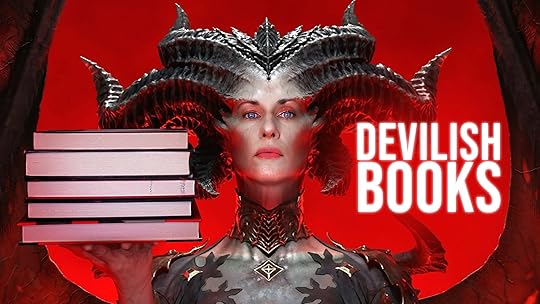
This book features in my Best Sci-fi & Fantasy Books video on BookTube at Hello, Bookworm.

Learn more about this book in a second BookTube video on my channel featuring books with Satan & demons .😈👇
The story takes place in a modern-day London with magic and wizards. Sounds familiar, I know, but stay with me...
Chapters oscillate between a young magician’s apprentice named Nathaniel, a very troubled boy intent on getting getting revenge against a famous wizard who humiliated him, and a mischievous djinni named Bartimaeus who's unhappy that Nathaniel summoned him as part of his wicked plans.
Of all the books I’ve read, this is my favorite story about anti-heroes. It's a tale of magical espionage, blackmail, betrayal, and murder that I've read/listened to multiple times.
Highly recommend in if you're in the mood for a dark fantasy The audiobook is superb!
This book features in my Best Sci-fi & Fantasy Books video on BookTube at Hello, Bookworm.
Learn more about this book in a second BookTube video on my channel featuring books with Satan & demons .😈👇
The story takes place in a modern-day London with magic and wizards. Sounds familiar, I know, but stay with me...
Chapters oscillate between a young magician’s apprentice named Nathaniel, a very troubled boy intent on getting getting revenge against a famous wizard who humiliated him, and a mischievous djinni named Bartimaeus who's unhappy that Nathaniel summoned him as part of his wicked plans.
Of all the books I’ve read, this is my favorite story about anti-heroes. It's a tale of magical espionage, blackmail, betrayal, and murder that I've read/listened to multiple times.
Highly recommend in if you're in the mood for a dark fantasy The audiobook is superb!

November 19, 2007
I really loved this book, the first of the Bartimaeus Trilogy.
It's tempting to compare the book to the Harry Potter series. Young boy. Magic. Sneaking around. Breaking the rules. Stern teachers. But the similarities really end there.
In Stroud's world, magicians have no power of their own - their power lies in the knowledge of how to summon (and enslave) spirits, like the djinni Bartimaeus, to do their will. These magicians are the proud, arrogant, entitled upperclass that pretty much oppress the commoners who work the city's factories and low-life jobs. They are bred for government, are not allowed to themselves breed, and thus take on apprentices instead to further the magical profession.
One of the book's protagonists, Nathaniel, is one such apprentice, to the ineffectual Mr. Underwood. And the book's 2nd protagonist is Nathaniel's djinni of choice. the book's namesake, the delightfully sarcastic, witty, and mischievous Bartimaeus.
There are a lot of fantastic things about this book. Bartimaeus' hilarious footnotes. The witty style of writing. The changes of style that accompany the change in POV from chapter to chapter. Characters that aren't just flat out good or bad, but rather a more mixed bag. "Real" people, in other words, motivated by ambition, or revenge, or greed.
Anyway, the book is good. And best of all, it's well written. I can't wait to read the rest of the trilogy.
It's tempting to compare the book to the Harry Potter series. Young boy. Magic. Sneaking around. Breaking the rules. Stern teachers. But the similarities really end there.
In Stroud's world, magicians have no power of their own - their power lies in the knowledge of how to summon (and enslave) spirits, like the djinni Bartimaeus, to do their will. These magicians are the proud, arrogant, entitled upperclass that pretty much oppress the commoners who work the city's factories and low-life jobs. They are bred for government, are not allowed to themselves breed, and thus take on apprentices instead to further the magical profession.
One of the book's protagonists, Nathaniel, is one such apprentice, to the ineffectual Mr. Underwood. And the book's 2nd protagonist is Nathaniel's djinni of choice. the book's namesake, the delightfully sarcastic, witty, and mischievous Bartimaeus.
There are a lot of fantastic things about this book. Bartimaeus' hilarious footnotes. The witty style of writing. The changes of style that accompany the change in POV from chapter to chapter. Characters that aren't just flat out good or bad, but rather a more mixed bag. "Real" people, in other words, motivated by ambition, or revenge, or greed.
Anyway, the book is good. And best of all, it's well written. I can't wait to read the rest of the trilogy.

April 20, 2023
Check out my Booktube channel at: The Obsessive Bookseller
[4.5/5 stars!] Hands-down this is my favorite middle-grade read since Mull’s Fablehaven series almost two decades ago!
I wish I’d taken the time to write this review right after finishing the book, but at the time I’d been so fired up about the series I dropped everything to pick up the rest of it immediately. The experience was so much fun and reminded me of how I felt as a kid discovering Harry Potter for the first time. While this may not land on quite the same scale (what can?), it’s still an nostalgia-evoking book with enough sophistication to make it accessible for adults.
The footnotes were everything.
I’ve heard people complaining of footnotes in other series, so I was a bit intimidated to start this one, but I can’t imagine the story being as good without them. A lot of the subtle adult humor takes place in the footnotes and they really allow the author to have fun with his characters and give us more depth than we would’ve gotten otherwise.
And speaking of the characters, they were completely delightful, even if not always likable. And the demons – omgsh the demons. They start out as these wildly interesting (and dangerous) enigmas that give you even more reason to keep reading. I also loved learning about summoning demons and watching one of the main characters struggle to get it right. The combination of the magic, world-buildings, and mystery plot made for one of the most enjoyable things I’ve read in ages. And that’s across ALL genres, not just middle-grade books.
Overall if you’re on the cusp of graduating from YA and Middle Grade stories (as I find myself a the ripe age of 37), this one will draw you completely back in and remind you why you keep up the hunt for the good ones. I can’t believe I let this sit unread on my shelves for so many years!
Recommendations: I loved this book so much, I’d recommend it to anyone who wants to capture the magic of reading as a kid again. It has enough adult elements to make it an ideal crossover series. Make sure to do a physical read, however - the footnotes are everything. The audio version includes the footnotes as part of the main narrative but they blend in too well, taking away half the fun of the series.
Thank you to my Patrons: Filipe, Dave, Katrin, Frank, Sonja, Staci, Kat, Melissa, Derek, Tonya, Betsy, Mike, and Jen! <3
Via The Obsessive Bookseller at www.NikiHawkes.com
Other books you might like:


[4.5/5 stars!] Hands-down this is my favorite middle-grade read since Mull’s Fablehaven series almost two decades ago!
I wish I’d taken the time to write this review right after finishing the book, but at the time I’d been so fired up about the series I dropped everything to pick up the rest of it immediately. The experience was so much fun and reminded me of how I felt as a kid discovering Harry Potter for the first time. While this may not land on quite the same scale (what can?), it’s still an nostalgia-evoking book with enough sophistication to make it accessible for adults.
The footnotes were everything.
I’ve heard people complaining of footnotes in other series, so I was a bit intimidated to start this one, but I can’t imagine the story being as good without them. A lot of the subtle adult humor takes place in the footnotes and they really allow the author to have fun with his characters and give us more depth than we would’ve gotten otherwise.
And speaking of the characters, they were completely delightful, even if not always likable. And the demons – omgsh the demons. They start out as these wildly interesting (and dangerous) enigmas that give you even more reason to keep reading. I also loved learning about summoning demons and watching one of the main characters struggle to get it right. The combination of the magic, world-buildings, and mystery plot made for one of the most enjoyable things I’ve read in ages. And that’s across ALL genres, not just middle-grade books.
Overall if you’re on the cusp of graduating from YA and Middle Grade stories (as I find myself a the ripe age of 37), this one will draw you completely back in and remind you why you keep up the hunt for the good ones. I can’t believe I let this sit unread on my shelves for so many years!
Recommendations: I loved this book so much, I’d recommend it to anyone who wants to capture the magic of reading as a kid again. It has enough adult elements to make it an ideal crossover series. Make sure to do a physical read, however - the footnotes are everything. The audio version includes the footnotes as part of the main narrative but they blend in too well, taking away half the fun of the series.
Thank you to my Patrons: Filipe, Dave, Katrin, Frank, Sonja, Staci, Kat, Melissa, Derek, Tonya, Betsy, Mike, and Jen! <3
Via The Obsessive Bookseller at www.NikiHawkes.com
Other books you might like:

September 23, 2011
I don't know who or what recommended this to me, but I loved it. It is hilarious, adventurous, fast-paced, and creative.
In modern England, all the politicians and noblemen are magicians, and everyone else is a commoner. The story begins with a young but gifted apprentice magician summoning a djinni (genie), Bartimaeus. He sends Bart. off to steal the Amulet of Samarkand. This sets in motion a chain reaction of events that are perilous and fantastical and ultimately build up to a big climax. Eventually you learn why Nathaniel wanted the Amulet stolen. By beginning with the theft, the story avoids a slow beginning. The story shifts point of view between Bart. (first person) and the boy Nathaniel (third person).
Bartimaeus is just hilarious, partly because of the British humor that is prevalent throughout the book. He has a big ego, he gets in trouble with his smart-Alec remarks, and he has great contempt for humans. The book on tape is narrated by Simon Jones (The Hitchhiker's Guide to the Galaxy mini-series narrator), who does a great job.
In modern England, all the politicians and noblemen are magicians, and everyone else is a commoner. The story begins with a young but gifted apprentice magician summoning a djinni (genie), Bartimaeus. He sends Bart. off to steal the Amulet of Samarkand. This sets in motion a chain reaction of events that are perilous and fantastical and ultimately build up to a big climax. Eventually you learn why Nathaniel wanted the Amulet stolen. By beginning with the theft, the story avoids a slow beginning. The story shifts point of view between Bart. (first person) and the boy Nathaniel (third person).
Bartimaeus is just hilarious, partly because of the British humor that is prevalent throughout the book. He has a big ego, he gets in trouble with his smart-Alec remarks, and he has great contempt for humans. The book on tape is narrated by Simon Jones (The Hitchhiker's Guide to the Galaxy mini-series narrator), who does a great job.

September 12, 2008
Like many people in the early 2000s who found themselves clasped in the claws of fierce Pottermania, I was fond of trolling the internet for Potter related stuff. Somewhere, on some website (probably Mugglenet), some industrious soul listed a bunch of books to read while waiting for the next book to come out. This series made the list. I added it to my Amazon wishlist pronto, because that’s how I kept track of books I wanted to read before Goodreads was a thing.
And then I didn’t actually read it for twelve years.
This turns out to have been a bad move on my part, because 1) It’s a very good book–well-written, imaginative, clever, and does things that kid fantasy didn’t do back then, and still doesn’t do much of now (more on this later); and 2) For as much as I enjoyed it as a thirty year old, I bet I would have loved it even more back then when I was closer to the target demographic.
On the other hand, I might be wrong about that last bit. I’m not sure how receptive I would have been to the idea of a “hero” like Nathaniel, who is clearly on the path to the Dark Side, or whatever.
So, Nathaniel is a young magician in training. The world he lives in, an alternate history Britain, is cruel and brutal. People with magical gifts are taken from their parents as children, fostered with strangers, and made to forget their own names. Once grown, these magicians are power-seekers. They rule the British Empire and subjugate practically anyone within reach. This includes “demons” like Bartimaeus. The real secret of magic is that humans only have magic by knowing how to capture and bind what they call “demons” (magical creatures like jinni, in reality) into magical slavery, and use those demons to perform magic.
The story actually begins as young Nathaniel, who has been treated poorly by not only his master, but other magicians as well. He sets out to take his revenge on a magician who humiliated him, and does so by summoning the jinn Bartimaeus. He tasks Bartimaeus with stealing an amulet in the magician’s possession, but when the amulet turns out to be stolen, and connected to murder, both of them are quickly in over their heads. The book is duel-narrated by a first person POV from Bartimaeus, and a third person POV from Nathaniel. Many of Nathaniel’s scenes are flashbacks, and make you feel badly for him, even as he’s learning to become just as awful as every other magician. Bartimaeus is the real voice of this book. He’s funny and glib and has no patience for human beings. It’s a refreshing point of view to take in a book like this, and has the effect of making us think more critically than we already were about what’s going on with Nathaniel and the world he’s a part of.
I’m really glad I finally read this book. It’s a fantasy that is exploring other aspects of life than the hero’s quest, getting the girl, defeating the Dark Lord. I don’t know when I will get to the second two books in the series, but I’m very much looking forward to it.
And then I didn’t actually read it for twelve years.
This turns out to have been a bad move on my part, because 1) It’s a very good book–well-written, imaginative, clever, and does things that kid fantasy didn’t do back then, and still doesn’t do much of now (more on this later); and 2) For as much as I enjoyed it as a thirty year old, I bet I would have loved it even more back then when I was closer to the target demographic.
On the other hand, I might be wrong about that last bit. I’m not sure how receptive I would have been to the idea of a “hero” like Nathaniel, who is clearly on the path to the Dark Side, or whatever.
So, Nathaniel is a young magician in training. The world he lives in, an alternate history Britain, is cruel and brutal. People with magical gifts are taken from their parents as children, fostered with strangers, and made to forget their own names. Once grown, these magicians are power-seekers. They rule the British Empire and subjugate practically anyone within reach. This includes “demons” like Bartimaeus. The real secret of magic is that humans only have magic by knowing how to capture and bind what they call “demons” (magical creatures like jinni, in reality) into magical slavery, and use those demons to perform magic.
The story actually begins as young Nathaniel, who has been treated poorly by not only his master, but other magicians as well. He sets out to take his revenge on a magician who humiliated him, and does so by summoning the jinn Bartimaeus. He tasks Bartimaeus with stealing an amulet in the magician’s possession, but when the amulet turns out to be stolen, and connected to murder, both of them are quickly in over their heads. The book is duel-narrated by a first person POV from Bartimaeus, and a third person POV from Nathaniel. Many of Nathaniel’s scenes are flashbacks, and make you feel badly for him, even as he’s learning to become just as awful as every other magician. Bartimaeus is the real voice of this book. He’s funny and glib and has no patience for human beings. It’s a refreshing point of view to take in a book like this, and has the effect of making us think more critically than we already were about what’s going on with Nathaniel and the world he’s a part of.
I’m really glad I finally read this book. It’s a fantasy that is exploring other aspects of life than the hero’s quest, getting the girl, defeating the Dark Lord. I don’t know when I will get to the second two books in the series, but I’m very much looking forward to it.

February 13, 2010
Maybe I'm feeling slightly defensive, but I honestly believe some of the best books written today are in the childrens/young adult section. Well, the Bartimaeus trilogy by Jonathan Stroud is a book that fits completely into the great books written for children. This is one of my favorite childrens book of all time, primarily because of the great characterization of its protagonist, Bartimaeus. Bartimaeus lives in a world where magicians gain their power not from magic, but rather controlling otherworld entities through words and symbols. Bartimaeus is a middle-ranking genie, not especially powerful, but smart enough to outdo alot of the other guys. he's also slightly evil... or so you'd think. he gets called up by an aspiring young apprentice intent on revenge. and adventure ensues. I would highly suggest reading the remaining two books in the series, as they just get better as they go along, and add depth to the first book. The whole series is inventive and entertaining, and a very good read.

April 9, 2012
This was a reread for me and a whole load of fun it is too! A young and talented magician gets himself in a whole bunch of trouble when he summons a 14th level demon to help in with a task. Bartimaeus, the demon called, is a hilarious character and the story is a rollicking read. Recommended for all ages!

October 21, 2016
Getting straight to the point. I absolutely loved The Amulet of Samarkand. This novel written by Jonathan Stroud was such a pleasant surprise. Don't you just love when that happens? You pick up a book from some author you have never heard off but before you know it, you're totally immersed in it and enjoying fully the reading experience. Yes, that's the best feeling in the world or just about. That was pretty much my experience with my first Jonathan Stroud novel, which also happens to be the first novel in Bartimaeus trilogy. Explaining what I like about this novel shouldn’t be difficult.
We’ll start with the plot. It is well developed and interesting enough on itself, but what makes it really shine is the narrative structure. The story is told from two perspective. One is a third person perspective which focuses on young Nathaniel, a magician apprentice. A very lonely boy, for magicians do not have children, they simply take apprentices (children of commoners and the parents seem not to have much saying in this).Nathaniel’s master cares nothing for him. Not surprisingly, this very intelligent boy can’t stand him but he likes his wife, whom he sees as a substitute mother of sort. That first part of the book was developed perfectly and I really felt for the boy- for most of the novel I quite worried about him even if I knew that it was highly unlikely for the protagonist to get killed. So, the plot is mostly focused on Nathaniel. The way the plot developed was something I quite liked. When another magician Lovelace offends Nathaniel, his mater doesn't stood up for him and Nathaniel is determined to take revenge. He does an unthinkable and summons a jinni on his own. It is an unheard of someone so young to attempt it, but Nathanial does it. Whom does he try to sum up? That brings us to our second narrative.
The other narrative is told in first person and it is, not surprisingly, more personal. It is Bartimaeus who gets to tell his story in his own words and that was a great call on part of a writer. He is a thousand-year-old jinni (let’s not call him a demon, he doesn’t like being called that). Bartimaeus makes us access the world of magic more easily. If the story wasn’t told from his point of view, it would demand a lot more explanations. You see, if it was told from a magician point of view, then all those explanations would seem tedious because they’re understood- and had it been told from a commoner point of view, there wouldn’t have been any story in this place for commoners have no idea what is going on in the world of magicians. With Bartimaeus storytelling, all the details and explanations are naturally woven into the story. Bartimaeus is very critical of the world of magicians. In this world, magicians don’t have power of their own, they bound demons (spirits) do work their magic for them. Naturally, such spirits don’t do it willing and they detest their masters. Had the story been told only from the third narrative, it would not be as nearly as fun and enjoyable.
There isn’t a single positive magician in this story. Nathaniel, the boy is too young to give us real insight into the history of this world (or to understand it for that matter). It is Bartimaeus and his anecdotes that lighten our way into the background of the story itself. He may not be the most reliant of narrators (he likes to portray himself in a good light) but among the corrupt politicians/magicians he seems almost an angel. All that despite lacking any human sense of morality, but I suppose it is precisely that makes him very convincing as an unworldly creature. He uses a lot of footnotes in his narrative, supposedly because it is the only way to allow us lowly humans to grasp his complicated operatus mondi (he doesn’t think too highly of us, does he!). Despite all this, I have just fallen in love with him. What a character! What a personality! His sense of humour is exceptional and very constant during the whole novel. He does have a very unique and recognizable sense of humour and kudos to author, not just for creating it but also for maintaining it in the narrative. The novel would be worth reading if it was only for Bartimaeus irony and wit.
The world building is exquisite. Jonathan created a highly credible magician world/society.
London is the base of the most powerful government in the world, one composed only of magicians. Basically, all magicians in it are preoccupied with power struggled. They’re terribly corrupted human beings. This hinted at in the beginning and it becomes more evident as the story progresses. All they care about is battle for power. One boy will get involved into fight. Nathaniel. I found Nathanial’s characters and nativity annoying at times, but considering his age that is nothing to be frown about. Is it any wonder that he wants to belong in this world? Such is the human nature. So, I his unquestioning of the state of things actually feels quite natural. I’m currently reading a sequel to this one and so far (page 100) so good. I’ll stop here because I don’t want to include any spoilers. If you want to see what happens next, you will have to read it yourself.
I must say that the fact this novel is considered a children's book surprised me because it is quite dark and gloomy in its atmosphere. It is more YA than book for kids. Power struggles and Machiavellian government are described in detail. Hence I would say that it is more appropriate for adolescents, young adults and adults. I know I said the same for the The Golden Compass / Norther Lights but such is my impression. There are no explicit descriptions of violence, but there is much violence and death. Better not to give it to some sensitive ten-year-old. Apart from that, I would really recommend it to everyone. It could be seen as an interesting interpretation of present day politics, couldn’t it? There are, for example, very clever references to terrorism as one of the mechanisms with which the government keeps its subject in fear. There is a lot of subtlety to be found in this novel. Despite this general feeling that The Amulet doesn’t take itself too seriously, there are a lot of serious topics in this one- if you want to read it that way. If not, you can just enjoy it for fun. Either way, it is a win-win situation.
We’ll start with the plot. It is well developed and interesting enough on itself, but what makes it really shine is the narrative structure. The story is told from two perspective. One is a third person perspective which focuses on young Nathaniel, a magician apprentice. A very lonely boy, for magicians do not have children, they simply take apprentices (children of commoners and the parents seem not to have much saying in this).Nathaniel’s master cares nothing for him. Not surprisingly, this very intelligent boy can’t stand him but he likes his wife, whom he sees as a substitute mother of sort. That first part of the book was developed perfectly and I really felt for the boy- for most of the novel I quite worried about him even if I knew that it was highly unlikely for the protagonist to get killed. So, the plot is mostly focused on Nathaniel. The way the plot developed was something I quite liked. When another magician Lovelace offends Nathaniel, his mater doesn't stood up for him and Nathaniel is determined to take revenge. He does an unthinkable and summons a jinni on his own. It is an unheard of someone so young to attempt it, but Nathanial does it. Whom does he try to sum up? That brings us to our second narrative.
The other narrative is told in first person and it is, not surprisingly, more personal. It is Bartimaeus who gets to tell his story in his own words and that was a great call on part of a writer. He is a thousand-year-old jinni (let’s not call him a demon, he doesn’t like being called that). Bartimaeus makes us access the world of magic more easily. If the story wasn’t told from his point of view, it would demand a lot more explanations. You see, if it was told from a magician point of view, then all those explanations would seem tedious because they’re understood- and had it been told from a commoner point of view, there wouldn’t have been any story in this place for commoners have no idea what is going on in the world of magicians. With Bartimaeus storytelling, all the details and explanations are naturally woven into the story. Bartimaeus is very critical of the world of magicians. In this world, magicians don’t have power of their own, they bound demons (spirits) do work their magic for them. Naturally, such spirits don’t do it willing and they detest their masters. Had the story been told only from the third narrative, it would not be as nearly as fun and enjoyable.
There isn’t a single positive magician in this story. Nathaniel, the boy is too young to give us real insight into the history of this world (or to understand it for that matter). It is Bartimaeus and his anecdotes that lighten our way into the background of the story itself. He may not be the most reliant of narrators (he likes to portray himself in a good light) but among the corrupt politicians/magicians he seems almost an angel. All that despite lacking any human sense of morality, but I suppose it is precisely that makes him very convincing as an unworldly creature. He uses a lot of footnotes in his narrative, supposedly because it is the only way to allow us lowly humans to grasp his complicated operatus mondi (he doesn’t think too highly of us, does he!). Despite all this, I have just fallen in love with him. What a character! What a personality! His sense of humour is exceptional and very constant during the whole novel. He does have a very unique and recognizable sense of humour and kudos to author, not just for creating it but also for maintaining it in the narrative. The novel would be worth reading if it was only for Bartimaeus irony and wit.
The world building is exquisite. Jonathan created a highly credible magician world/society.
London is the base of the most powerful government in the world, one composed only of magicians. Basically, all magicians in it are preoccupied with power struggled. They’re terribly corrupted human beings. This hinted at in the beginning and it becomes more evident as the story progresses. All they care about is battle for power. One boy will get involved into fight. Nathaniel. I found Nathanial’s characters and nativity annoying at times, but considering his age that is nothing to be frown about. Is it any wonder that he wants to belong in this world? Such is the human nature. So, I his unquestioning of the state of things actually feels quite natural. I’m currently reading a sequel to this one and so far (page 100) so good. I’ll stop here because I don’t want to include any spoilers. If you want to see what happens next, you will have to read it yourself.
I must say that the fact this novel is considered a children's book surprised me because it is quite dark and gloomy in its atmosphere. It is more YA than book for kids. Power struggles and Machiavellian government are described in detail. Hence I would say that it is more appropriate for adolescents, young adults and adults. I know I said the same for the The Golden Compass / Norther Lights but such is my impression. There are no explicit descriptions of violence, but there is much violence and death. Better not to give it to some sensitive ten-year-old. Apart from that, I would really recommend it to everyone. It could be seen as an interesting interpretation of present day politics, couldn’t it? There are, for example, very clever references to terrorism as one of the mechanisms with which the government keeps its subject in fear. There is a lot of subtlety to be found in this novel. Despite this general feeling that The Amulet doesn’t take itself too seriously, there are a lot of serious topics in this one- if you want to read it that way. If not, you can just enjoy it for fun. Either way, it is a win-win situation.

August 24, 2008
4.5 to 5.0 stars. A very fun read, with an intelligent, engaging magic system and a wonderful title character ... namely the Djinn Bartimaeus. This is one of my favorite YA fantasy series.

May 21, 2014
This book is very cleverly written, with two alternating strands of narration. One in the third person, tells the story mainly from the point of view of Nathaniel. The other strand gives us a different perspective on the characters and events but it is in the first person, from the point of view of the devious, superior and sarcastic otherworldly being Bartimaeus.
While it bears some resemblance to other narratives of the underdog sorceror's apprentice (Harry Potter leaps to mind), this is different. For while Bartimaeus is to a certain extent an unreliable narrator whose every utterance should not be taken at face value, he does pinpoint the sins, foibles and vanities of the human race and especially of the magical elite, whom he knows intimately from long experience. In this respect, he is similar to C.S. Lewis's demon Screwtape--although Bartimaeus would not care for that particular comparison.
The reader gets fascinating glimpses of Bartimaeus's past and somewhat troubling hints about Nathaniel's future. Presumably some of these questions will be elaborated on in the sequels and prequel.
While it bears some resemblance to other narratives of the underdog sorceror's apprentice (Harry Potter leaps to mind), this is different. For while Bartimaeus is to a certain extent an unreliable narrator whose every utterance should not be taken at face value, he does pinpoint the sins, foibles and vanities of the human race and especially of the magical elite, whom he knows intimately from long experience. In this respect, he is similar to C.S. Lewis's demon Screwtape--although Bartimaeus would not care for that particular comparison.
The reader gets fascinating glimpses of Bartimaeus's past and somewhat troubling hints about Nathaniel's future. Presumably some of these questions will be elaborated on in the sequels and prequel.

September 7, 2014
ساعت 5 و ربع صبح و من این کتاب رو برای بار دوم خوندم :)
شاید ریویو نوشتم شاید هم ننوشتم. ولی دوباره خوندن این کتاب برام لذت بخش بود. :)
ویرایش:
هومم دلم میخواد خیلی چیزا بگم ولی همه ی حرفام برای جلد سومه. که وقتی انشالله دو جلد بعدی رو هم دوباره خوندم تو ریویو جلد سوم میگم :دی
ولی شاید الان یه اشاره هایی بکنم :-"
خب راستش بعد از اینکه این کتاب رو دوباره خوندم به نظرم باید چیزی بین 4 و نیم و 5 میدادم به کتاب و نه 5 کامل. ولی چون درس خیلی بزرگی از این سه گانه گرفتم این موضوع رو نادیده میگیرم!
واسه من بعضی جاهاش خسته کننده می شد ولی چون کلا به این کتاب علاقه دارم چیز خاصی نبود این خستگی ها :)
چیزی که خیلی متعجبم کرد رفتار ناتانیل بعد از اتفاقی که آخر کتاب افتاد بود... خب من دو جلد بعدی رو یک سال بعد از خوندن جلد اول خوندم و خب بدیهیه که چیزی یادم نبود
ولی خب رفتارش... وقتی یه بچه تو دنیایی بزرگ میشه که همه ی جادوگرهاش جاه طلب هستن، از بچه ای که تازه جادوگری یاد گرفته چه انتظاری میشه داشت؟
ولی کاملاً مشخص بود ناتانیل فرق داره. شاید بگیم وقتی بزرگ بشه کلاً مثل اونا بشه، ولی روابطش با بارتیمیوس باعث شد چیزی از این وجدان (شاید) در وجود ناتانیل بمونه
ناتانیل رو کاملا درک میکردم و دلم می خواست بگیرم بغلش کنم. با رفتار اربابش واقعا مخالف بودم. به جای اینکه ناتانیل رو سرکوب کنه باید تشویقش میکرد. رفتاری که اون داشت هر بچه ای رو خورد میکرد
موقع دوباره خوندن کتاب بارها از خودم پرسیدم پس مگه بارتیمیوس قدرتمند نیست؟ چرا وقتی اسم ناتانیل رو میدونست کاری نکرد؟ نظری که من دارم اینه که این برمیگرده به روابظش با پتولمی. و خب ناتانیل هم اون موقع بچه بود خیلی بدی در حق بارتیمیوس نکرده بود و در مجموع بارتیمیوس علاقه ای نداشت که کار ناتانیل رو یک سره کنه (اینو تو خود کتاب بهش اشاره میکنه)
مزه پرونی های بارتیمیوس هم که عالی بود. مخصوصا پاورقی ها. نمیدونم ولی خیلی ها از پاورقی خوششون نمیاد و اینو نقطه ضعف داستان میدونن :/
این شبیه نقد کتاب نیست :-؟
اما اگه بخوام چیزی بگم اینه که کلا داستان رو دوست داشتم، و ترجمه هم که بسی عالی بود. واقعا دست آقای محمد قصاع درد نکنه
شاید ریویو نوشتم شاید هم ننوشتم. ولی دوباره خوندن این کتاب برام لذت بخش بود. :)
ویرایش:
هومم دلم میخواد خیلی چیزا بگم ولی همه ی حرفام برای جلد سومه. که وقتی انشالله دو جلد بعدی رو هم دوباره خوندم تو ریویو جلد سوم میگم :دی
ولی شاید الان یه اشاره هایی بکنم :-"
خب راستش بعد از اینکه این کتاب رو دوباره خوندم به نظرم باید چیزی بین 4 و نیم و 5 میدادم به کتاب و نه 5 کامل. ولی چون درس خیلی بزرگی از این سه گانه گرفتم این موضوع رو نادیده میگیرم!
واسه من بعضی جاهاش خسته کننده می شد ولی چون کلا به این کتاب علاقه دارم چیز خاصی نبود این خستگی ها :)
چیزی که خیلی متعجبم کرد رفتار ناتانیل بعد از اتفاقی که آخر کتاب افتاد بود... خب من دو جلد بعدی رو یک سال بعد از خوندن جلد اول خوندم و خب بدیهیه که چیزی یادم نبود
ولی خب رفتارش... وقتی یه بچه تو دنیایی بزرگ میشه که همه ی جادوگرهاش جاه طلب هستن، از بچه ای که تازه جادوگری یاد گرفته چه انتظاری میشه داشت؟
ولی کاملاً مشخص بود ناتانیل فرق داره. شاید بگیم وقتی بزرگ بشه کلاً مثل اونا بشه، ولی روابطش با بارتیمیوس باعث شد چیزی از این وجدان (شاید) در وجود ناتانیل بمونه
ناتانیل رو کاملا درک میکردم و دلم می خواست بگیرم بغلش کنم. با رفتار اربابش واقعا مخالف بودم. به جای اینکه ناتانیل رو سرکوب کنه باید تشویقش میکرد. رفتاری که اون داشت هر بچه ای رو خورد میکرد
موقع دوباره خوندن کتاب بارها از خودم پرسیدم پس مگه بارتیمیوس قدرتمند نیست؟ چرا وقتی اسم ناتانیل رو میدونست کاری نکرد؟ نظری که من دارم اینه که این برمیگرده به روابظش با پتولمی. و خب ناتانیل هم اون موقع بچه بود خیلی بدی در حق بارتیمیوس نکرده بود و در مجموع بارتیمیوس علاقه ای نداشت که کار ناتانیل رو یک سره کنه (اینو تو خود کتاب بهش اشاره میکنه)
مزه پرونی های بارتیمیوس هم که عالی بود. مخصوصا پاورقی ها. نمیدونم ولی خیلی ها از پاورقی خوششون نمیاد و اینو نقطه ضعف داستان میدونن :/
این شبیه نقد کتاب نیست :-؟
اما اگه بخوام چیزی بگم اینه که کلا داستان رو دوست داشتم، و ترجمه هم که بسی عالی بود. واقعا دست آقای محمد قصاع درد نکنه

July 23, 2015
Priča o dečaku iz Londona koji raste uz Gospodara koji ga ne podnosi ali je primoran da ga trpi. I dečak oće da postane moćan čarobnjak. Zvuči poznato :) Ali glavna razlika je u samoj magiji u odnosu na druge slične poriče pošto ovde nema bacanja čini u klasičnom smislu već se prizivaju magična bića koja bacaju čini za vas. Bića ima različitih klasa i snage itd. Sasvim fino smišljen sistem.
Sama priča je u suštini jednostavna ali je prošarana sa puno humora (naročito sarkastičnog) što čini sve zabavnijim tako da knjiga baš brzo proleti.
I neka vas ne brine ako se čini da je za mlađe naraštaje pošto i mi straiji možemo mirno da uživamo u ovome.
Preporuka a ja se uskoro vraćam ovom svetu :)
Sama priča je u suštini jednostavna ali je prošarana sa puno humora (naročito sarkastičnog) što čini sve zabavnijim tako da knjiga baš brzo proleti.
I neka vas ne brine ako se čini da je za mlađe naraštaje pošto i mi straiji možemo mirno da uživamo u ovome.
Preporuka a ja se uskoro vraćam ovom svetu :)

October 24, 2018
سه؟چهار؟ نمیدونم چند ستاره بدم خوبه!!!!
به نظرم نویسنده خیلی خلاقه که تونسته این همه شخصیت عجیب و غریب خلق کنه.
پاورقی ها یکم برای من خسته کننده بودن، مخصوصا اونایی که خیلی طولانی بودن :)) اما مثل اینکه نصف جذابیت کتاب برای طرفداراش به همین پاورقی هاس.
به نظرم نویسنده خیلی خلاقه که تونسته این همه شخصیت عجیب و غریب خلق کنه.
پاورقی ها یکم برای من خسته کننده بودن، مخصوصا اونایی که خیلی طولانی بودن :)) اما مثل اینکه نصف جذابیت کتاب برای طرفداراش به همین پاورقی هاس.

February 16, 2014
This is a hilarious, fast-paced book about a world where many state governments are ruled by magicians. Great Britain, for example, is governed by an elite group of magicians--many of whom are greedy, ambitious, and uncaring for other people. Magicians themselves have limited powers; most of their strength stems from their ability to summon powerful demons who are obligated to do their bidding.
At the age of six, Nathaniel is apprenticed to a mediocre, hypocritical, incompetent self-consumed magician, Arthur Underwood. Nathaniel is bright, ambitious, and rather impetuous and impatient. Behind his master's back, Nathaniel summons a rather powerful djinni named Bartimaeus, in order to seek revenge on a powerful magician. Bartimaeus has lived for millennia, and is well experienced in dealing with magicians and other demons. His witty, sardonic commentary on the tasks he is ordered to perform add a wonderfully humorous tone to the entire book. This is counterbalanced by Nathaniel's naiive, self-righteous beliefs.
I listened to this book as an audiobook. Simon Jones does an amazing reading, breathing a unique life to each character. When Jones reads Underwood's proclamations, the character's pomposity and determination to ignore his apprentice come ringing true. Don't read this book--listen to it!
At the age of six, Nathaniel is apprenticed to a mediocre, hypocritical, incompetent self-consumed magician, Arthur Underwood. Nathaniel is bright, ambitious, and rather impetuous and impatient. Behind his master's back, Nathaniel summons a rather powerful djinni named Bartimaeus, in order to seek revenge on a powerful magician. Bartimaeus has lived for millennia, and is well experienced in dealing with magicians and other demons. His witty, sardonic commentary on the tasks he is ordered to perform add a wonderfully humorous tone to the entire book. This is counterbalanced by Nathaniel's naiive, self-righteous beliefs.
I listened to this book as an audiobook. Simon Jones does an amazing reading, breathing a unique life to each character. When Jones reads Underwood's proclamations, the character's pomposity and determination to ignore his apprentice come ringing true. Don't read this book--listen to it!

August 19, 2012
What an awesome book to listen to on a very long car trip! The narrator was incredible. He was able to change up voices and input just the right amount of pomposity into Bartimeus' character to make him both believable and humorous. For those looking for a book in a similar vein to the Harry Potter series, this story of a young apprentice magician is a must read. I would recommend the audio version to children ages 9+. The parents in the car enjoyed the story, too.
This audio book was downloaded from audiobooksync.com as part of their Summer 2012 free audio book promotion.
See what other audio books made our Road Trip playlist and what we thought of them on Badass Book Reviews.
This audio book was downloaded from audiobooksync.com as part of their Summer 2012 free audio book promotion.
See what other audio books made our Road Trip playlist and what we thought of them on Badass Book Reviews.

March 20, 2018
راستش بارتیمیوس اونقد برام جذاب نبود. خود بارتیمیوس چرا، زبان طنزش و پاورقیهاش خیلی عالی بود. نویسنده مشخصاً خلاقه، از فکری که برای دنیای جادوگریش داشته تا همین طنز بارتیمیوس و شیوۀ راوی دردسرسازش. دو نوع روایت رو پابهپای هم پیش ببری کار راحتی نیست. از ارباب ناتانیل بدم میاومد. خیلی رومخ بود. کلاً عجیبه که دیگه مثل سابق از فانتزی اونقدرا لذت نمیبرم. از علمیتخیلیها چرا، یا ترسناکها یا مثلاً فانتزی حماسی. اما میدونم اگه راهنمایی یا دبیرستانی بودم اینو میخوندم، خیلی بیشتر لذت میبردم. برام ملالآور بود. برا خودمم عجیبه، فحشم ندین. :)) بارتیمیوس خیلی مجموعه پرطرفداریه، اما خیلی راغب نشدم بقیهشو بخونم. هرچند توی پایانبندی جلد اول، موفق بود.

April 18, 2020
For a book aimed at children there weren't barely any in this story. The novel was about a bunch of adults, doing adult stuff and a kid wanting to have his revenge on them. And his djinni making almost all the work.
I was hoping to find the greatness that I found in Stroud's other series, Lockwood and co. And the truth is, I didn't find it and I'm disappointed.
....Anyways, please go and readThe Screaming Staircase.
I was hoping to find the greatness that I found in Stroud's other series, Lockwood and co. And the truth is, I didn't find it and I'm disappointed.
....Anyways, please go and readThe Screaming Staircase.

October 3, 2012
The audiobook of this almost caused the demise of me and my family years ago as we were driving through Colorado to visit family out west. I laughed so hard at this that I nearly drove us off the highway. No, seriously. Stop laughing. It's not funny.
Okay, it is funny. But deadly.
Okay, it is funny. But deadly.

January 22, 2014
Well i do not usually compare any book with Harry potter but this one here just made me do so. It was an amazing read. Nearly everything about the book is just great.
Jonathan created a new magical world where magicians have no power of themselves. They use the spirits(imps, djinnis,afrits) to complete their every tasks through summoning and commanding them. They are arrogant, boastful, self-centered creatures(the magicians). Every magician is assigned to train an apprentice.
The main protagonist of the book Nathaniel is an apprentice. He is under the surveillance of a scrawny, not-so-powerful mr. Underwood. Soon he gets into enemity with Simon lovelace - a hedious magician thriving on want of power. And in process of seeking revenge he gets intertwined between far large conspiracy than he could ever imagine. so he summons a djinni to help himself.
Here comes the name Character Bartimaeus. Ah!! What a charecter. Surely the best that i've read in a long time. Funny, wicked, intelligent and of great power.
The thing that i am most impressed with is the writing style. Just brilliant!!! Specially in Bartimaeus's POV. The footnotes!! I dont remember the last time i've read such humorous and wicked footnotes!!!
The plot itself was great too, surely there is a second plot going underneath the first one that will surely to be continued in the next installment of the book. I am looking forward to reading the Golem's Eye pretty soon :)
Jonathan created a new magical world where magicians have no power of themselves. They use the spirits(imps, djinnis,afrits) to complete their every tasks through summoning and commanding them. They are arrogant, boastful, self-centered creatures(the magicians). Every magician is assigned to train an apprentice.
The main protagonist of the book Nathaniel is an apprentice. He is under the surveillance of a scrawny, not-so-powerful mr. Underwood. Soon he gets into enemity with Simon lovelace - a hedious magician thriving on want of power. And in process of seeking revenge he gets intertwined between far large conspiracy than he could ever imagine. so he summons a djinni to help himself.
Here comes the name Character Bartimaeus. Ah!! What a charecter. Surely the best that i've read in a long time. Funny, wicked, intelligent and of great power.
The thing that i am most impressed with is the writing style. Just brilliant!!! Specially in Bartimaeus's POV. The footnotes!! I dont remember the last time i've read such humorous and wicked footnotes!!!
The plot itself was great too, surely there is a second plot going underneath the first one that will surely to be continued in the next installment of the book. I am looking forward to reading the Golem's Eye pretty soon :)
Displaying 1 - 30 of 6,510 reviews