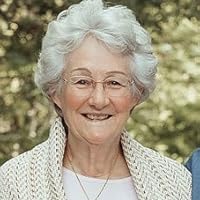
Daphne Athas moved to Chapel Hill as a teenager and graduated from the University of North Carolina in 1943. As a writing student, she worked with Betty Smith and Phillips Russell. In 1964, she joined the English department of the University of North Carolina to teach creative writing. Her best-known work is Entering Ephesus (1971), a coming-of-age novel set in an academic village (like Chapel Hill) where her characters are a mix of intellectuals, poor southerners, and Greek immigrants.
This slooow nearly 500-page book should be subtitled "The Neverending Story" because while I was reading it, it felt like it would never end. This is one of those novels that I read—to the very last page—so you don't have do.
The book is longwinded with lots of wordy and circuitous meanderings, but the biggest problem is that it is very heavy on philosophy and light on plot. Just when something seemingly happens, off we go on a philosophical diatribe on the meaning of life, and it could be anything from religion to betrayal to ambition to lust. It gets old fast.
Written by Daphne Athas and published in 1970, this is the story of the Bishops, a wealthy, almost aristocratic family who lived in a grand old house off the coast of Maine with 14 rooms and 49 windows. It faced the harbor with its back to the ocean. But it's the Great Depression, and by 1939 the parents, P.Q. and Clara can't fake it any longer. They have no money. A year ago, P.Q. headed south to find work and an affordable place to move his wife and three daughters, Irene, Urie, and Loco Poco. The four are summoned to the small Southern college town of Ephesus, which is largely based on Chapel Hill, North Carolina.
The only home they can afford is a termite-ridden shack that is so rundown and dilapidated it's a wonder it's still standing. The windows are cracked and there is no heat other than the fireplace. They are also the only white people in the neighborhood. P.Q. can't quite bring himself to work an actual job that makes money—that's beneath him—and so he starts a laundry business. Meanwhile, the girls start school—the elder two are in high school and the younger in elementary school—and have the usual troubles adjusting to a new place with new friends. One day, Urie meets a boy named Zebulon Vance Walley, and the two become fast friends.
That's pretty much the whole plot. Yawn. (Oh, it does get a lot better in the last 10 percent of the book, but that's a long time to wait!)
Most disturbing of all is the liberal use of the horrific "N" word, as well as overt and covert expressions of racism throughout the book. It's deplorable.
When it was published some 55 years ago, the novel received accolades, including TIME magazine's Ten Best Fiction List in 1971, as well as winning the Sir Walter Raleigh Award for Fiction in 1972. Maybe it just hasn't aged well?
I bought the novel in 2018 when it was on a deep-discount Kindle sale. I notice now that it's no longer for sale on Amazon for Kindle, and the paperback and hardcover editions are only sold used by a third party. Good riddance!
This is such an odd book. It was of interest to read that Daphne Athas was associated with Betty Smith, because my brain made the comparison with A Tree Grows in Brooklyn primarily due to the meandering path the novel takes. There's a sense of a life lived within a family, with events along the way, but the story lacks a strong arc?? But unlike my response to A Tree Grows in Brooklyn, So many passages evoke such a full rich moment in time. A classic., Athas' novel seems overwritten and weighed down by really strange choices.
Very descriptive in writing and old school language for the time and place. A bit of oddness of one's self coming of age, following the simplicity of everyday life.