‘It is close to nine years since the Narendra Modi-led BJP swept into power. A new era began in May 2014, or so we were told… But India is, in fact, facing a crisis. Our polity, society and economy are all broken. The signs are all around us.’
At a time when a compromised media and the ruling party’s digital army work 24/7 to overwhelm our public discourse with pro-establishment noise, Parakala Prabhakar is an unabashedly critical voice, determined to speak truth to power. In these essays written over almost three years—from 2020 to 2023—he looks closely at facts and data and analyses events and public statements to show why he fears for the future of our democracy, social harmony and economy.
In the Prime Minister’s Independence-Day speeches from 2014 to 2022, and the speeches of the RSS chief; in the unemployment and inequality statistics that the government supresses; in the partisan role of investigative agencies and the income tax department; in the new BJP’s ‘tiraskar’ or clear rejection of India’s Muslims as citizens and voters; in the mishandling of the COVID-19 pandemic—in these and many more developments, Parakala Prabhakar finds unmistakable evidence of religious majoritarianism, a creeping authoritarianism and serious economic mismanagement. And he shows us why silence and complacency are no longer an option for any citizen invested in the future of our Republic.
This no-holds-barred, urgent book helps us connect the dots and see the true picture of the‘New India’ being fashioned before our eyes.
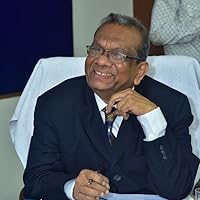
Parakala Prabhakar is an Indian political economist and social commentator. He served as Communications Advisor, held a cabinet rank position in Andhra Pradesh Government between July 2014 and June 2018. For several years he presented a current affairs discussion programme on television channels of Andhra Pradesh.
Parakala was born in a prominent Telugu Brahmin family in Narsapuram, Andhra Pradesh. His mother, Parakala Kalikamba was a Member of Legislative Assembly in Andhra Pradesh, while his father, Parakala Seshavatharam, was a long time Legislator and served in three successive Cabinets in the state of Andhra Pradesh in the 1970s and early 1980s.
Parakala completed his doctorate from the London School of Economics. He did his Master of Arts (M.A.) and Master of Philosophy (M.Phil.) from Jawaharlal Nehru University (JNU), New Delhi.
Prabhakar married Nirmala Sitharaman in 1986, who became the Minister of Finance and Corporate Affairs of the Government of India in Narendra Modi's cabinet, in 2019. They have a daughter.
Like Aakar Patel's chronicles of the Modi years, this too is a detailed exposition of the shenanigans of the last ten years, but what it says was more than overshadowed by the 'who' saying it - none other than the distinguished and credible spouse of the Union Finance Minister! That said (and he has been saying it for at least the last four years!), it is never a good idea to publish a collection of old blogs or newspaper articles as a book. They sound rather dated and hackneyed, though they may have been very topical or revelatory initially. This book does provide a very well-researched and documented argument in every case, of how the rot in practically every important sphere of our democracy has spread deep and wide. The sting though is in the tail. As he correctly sums up the situation, the crooked timber will not be easily repaired even if the regime changes, and that is cause for serious concern.
If you want to understand the duplicity and fraud that is being played out by the Modi regime in India, you need to read this book. Parakala Prabhakar, as a conscientious conscience keeper, commentator and public policy expert, diagnoses and deconstructs the diabolical agenda and actions of the Modi regime in a series of hard-hitting essays put together in this book. What he uncovers is really disturbing in more than one sense and makes us worried about the future of our Republic.
1990ம் ஆண்டு அரசியல் கோட்பாட்டாளர் Isaiah Berlin எழுதிய The Crooked Timber of Humanaty வெளியானது, அதன் முதல் கட்டுரை (The Pursuit of the Ideal) படிக்கும்போது சிந்தனை புலத்தில் பல திறப்புகளை ஏற்படுத்தும் தன்மை கொண்டது. 1996ம் ஆண்டு ஊடகர் பி. சாய்நாத் எழுதிய, இன்றைக்கும் கள ஊடகவியலாளர்களுக்குக் கையேடாகத் திகழும் ‘Everybody loves a good draught’ புத்தகம் வெளியானது. இந்தியா அரசியல் விடுதலை அடைந்து 50 ஆண்டு கடந்த பின்னரும் எப்படி பல்வேறு துறைகளில், வளர்ச்சி குறியீடுகளில் பின்தங்கி இருக்கிறது என்பதைத் தனிநபர்கள் படும் பாடுகள் மூலம் பதிவு செய்திருப்பார் சாய்நாத். இந்தியாவின் 50 ஆண்டுக் கால அரசியல் விடுதலையில் அரசு நிர்வாகம் அடித்தட்டு மக்களைக் கண்டுகொள்ளாமல் தவிர்த்திருப்பதை இந்நூலைக் கொண்டு புரிந்து கொள்ளலாம்.
நிர்வாக ரீதியிலான பின்னடைவுகளை உணர்ந்துகொள்ள சாய்நாத் புத்தகம் உச்சம் என்றால், சமீபத்தில் வெளியான The crooked timber of new india என்ற நூல் பாஜக அரசின் கடந்த 9 ஆண்டுக்கால கொடூரங்களைச் சிறு சிறு கட்டுரைகள் மூலமாக நமக்கு அளிக்கிறது. பாஜகவின் போலி வாக்குறுதிகளைத் தோலுரிக்கும் அதே வேளையில் 75 ஆண்டுக்கால சுதந்திர இந்தியாவில் ஜனநாயக விழுமியங்கள் நீர்த்துப்போயிருப்பதையும் மீள முடியாத நிலையை இந்தியா அடைந்திருப்பதையும் ஒரு எச்சரிக்கையாகவே இந்நூல் நமக்குக் கடத்துகிறது.
2014 முதல் பாஜக கைக்கொண்டிருக்கும் மக்கள் விரோத மதவாத அரசியலை அந்தந்த காலகட்டத்தில் எழுதப்பட்ட சிறு சிறு கட்டுரைகளின் தொகுப்பாக இந்நூல் அமைந்திருக்கிறது. வெறும் விமர்சனமாக அல்லாமல் எண்ணிக்கை தரவுகளோடும் பாஜக முன்வைத்த போலி வாக்குறுதிகளோடும் ஒப்பிட்டு இக்கட்டுரைகள் எழுதப்பட்டிருப்பது 2024 தேர்தலை எதிர்கொள்ளவும் நமக்கும் பயன்படக்கூடும்.
மோடி 2014ல் பேசிய உரையையும் 2022ல் பேசிய சுதந்திர தின உரையையும் ஒப்பிட்டு எழுதியுள்ள கட்டுரை கடந்த 9 ஆண்டுக் காலத்தில் மதவாதம், அரசியல் வெளியில் அடைந்திருக்கும் செல்வாக்கைத் தெரிவிக்கிறது. ஆர்.எஸ்.எஸ்ன் தேர்தல் பிரிவான பாஜகவின் அரசியல் என்பது நீண்ட நெடிய சமூக கட்டமைப்பின் விளைவு என்றே கொள்ளவேண்டும்.
1980 களின் பிற்பகுதியில் தெளிவாக இயங்க தொடங்கிய அடிப்படைவாத மத அரசியல் 30 ஆண்டுகள் கழித்து அடைந்திருக்கும் இடம் அவர்கள் தரப்புக்குப் பொறுத்திருந்து பெற்ற வெற்றி என்றாலும், அது இந்தியாவின் கூட்டாட்சிக்கும் மதச் சார்பின்மைக்கும் விடுக்கப்பட்ட சவால். இந்தியாவின் ஐடியா என்று இன்றளவும் நாம் அடைய முயன்று கொண்டிருக்கும் சிந்தனைக்கு நேர் மாறான ஒரு சித்தனையை பாஜக செயல்படுத்த துடித்து கொண்டிருக்கிறது.
கடந்தாண்டு வெளியாகி அதிக பிரதிகள் விற்பனையான அரசியலாளர் தேவனூரு மஹாதேவாவின் RSS – Its Depth and Breadth ஆர் எஸ் எஸ் பற்றித் தெரிவித்த விஷயங்களோடு இந்நூலின் சில கட்டுரைகளும் சமகாலத்தில் ஆர் எஸ் எஸ் பரவி இருக்கும் விதத்தைப் புரிந்துகொள்ள உதவுகிறது.
2019 ம் ஆண்டு இரண்டாவது முறையாக ஆட்சிக்கு வந்த பாஜக தனது திட்டங்களுக்குப் பெயர் வைப்பதில் தொடங்கி எல்லா விதமான செயல்பாடுகளிலும் சிறுபான்மையினருக்கு எதிரான அணுகுமுறையையே கைக்கொண்டு வருகிறது, 80:20 பார்முலா என்று யோகி ஆதித்யநாத் உபியில் பேசி ஒரு இஸ்லாமிய வேட்பாளர்களைக் கூட தேர்தலில் நிறுத்தாமல் ஆட்சி அமைத்ததை நாம் அறிவோம். இது போலவே கர்நாடகாவில் பள்ளி மாணவிகள் ஹிஜாப் அணிவதற்கு எதிராக அரசியல் செய்தது, மதமாற்றத் தடை சட்டத்தைக் கொண்டு வந்தது, ராமர் கோவில், காஷ்மீர் சிறப்பு அந்தஸ்து ரத்து என மக்கள் விரோத செயல்பாடுகளைக் கூறிக்கொண்டே இருக்கலாம்.
இந்துத்துவ தத்துவம் செயல்வடிவம் எடுக்கும்போது இஸ்லாமியர்களை எப்படி நடத்தும் என்பதற்கு பாஜகவின் மக்கள்தொகை அரசியல் ஒரு சான்று, பிற மதத்தவர்களை விட இஸ்லாமியர்கள் அதிக குழந்தைகள் பெற்றுக் கொள்கிறார்கள் என்ற தரம் தாழ்ந்த பொய்யைத் தொடர்ந்து பொது வெளியில் கூறி பிரச்சாரம் செய்து வருகிறது பாஜக. இந்த பொய்யைத் தரவுகளைக் கொண்டு முறியடிக்கிறார் இந்நூல் ஆசிரியர். முன்னாள் தேர்தல் ஆணையர் S. Y. Quraishi
இத்தலைப்பில் ஒரு நூலையே எழுதி இருக்கிறார் என்பது குறிப்பிடத்தக்கது.
உண்மைகளை எல்லாம் துளியும் மதிக்காமல், வெற்று பழம் பெருமைகளைக் கொண்டு மட்டும் ஒரு வெறுப்பு அடையாளத்தை பாஜக கட்டமைத்து அதன் மூலம் மக்களை ஒன்று திரட்டிக் கொண்டிருக்கும் இந்துத்துவ காலகட்டத்தில் நாம் வாழ்ந்து கொண்டிருக்கிறோம். ஆட்சியாளர்கள் வெளிப்படையாக எதையுமே மக்களுக்குச் சொல்ல அஞ்சுகிறார்கள்,கொரோனா மரணங்கள், தேர்தல் பத்திரங்கள், PM Cares நிதி, உள்ளிட்ட பல தரவுகள் நமக்குத் தெரிவிக்கப் படாமலே பாதுகாக்கப்பட்டு வருகிறது.
மக்களவையும், மாநிலங்களவையும் விவாதங்கள் இன்றி வெறும் சட்டத் திருத்தங்கள் மூலமும் வெளிநடப்புகள் மூலமுமே செயல்பட்டுக் கொண்டிருக்கிறது. எதிர்க்கட்சி ஆளும் மாநிலங்கள் அரசியல் ரீதியாகவும் பொருளாதார ரீதியாகவும் முடக்கப்பட்டு வருகின்றன. சமூக வலைத்தளம் கண்காணிப்புகள் மிகுந்த ஒருதலைபட்ச அமைப்பாக உருமாறியுள்ளது. அரசியலமைப்பால் ஏற்படுத்தப்பட்ட அமைப்புகள் அனைத்தும் ஆளும் வர்க்க கைப்பாவைகளாக மாறிப்போய் இருக்கிறார்கள். பத்திரிகைகள் அனைத்தும் பக்கச் சார்புடனும், ஒருதலைபட்சமாகவும் செயல்படுகின்றன, அதையும் மீறி கேள்வி எழுப்பினால் பத்திரிகை சுதந்திரம் பறிக்கப்பட்டு UAPA பாய்கிறது. மதவாதம், சாதியவாதம், அடிப்படைவாதம் அனைத்தும் தலைவிரித்தாடுகிறது.
நமது அரசியல் அமைப்பின் முகப்பில் எழுதியுள்ள அனைத்து சொற்களையும் பொருளற்றவையாகக் கடந்த 9 ஆண்டுக் கால பாஜக ஆட்சி உருமாற்றி இருக்கிறது. அவற்றில் பல முக்கியமான அம்சங்களை இந்நூல் விவாதிக்கிறது. ஆசிரியரின் முடிவுரையின் மீது எனக்கு சில முரண்பாடுகள் இருந்தாலும், அவற்றை விவாதிக்கும் நேரமிதுவல்ல என்பதை அடியேன் அறிவேன்.
Mathur Sathya இந்நூல் குறித்துத் தொடர்ந்து பேசி வருகிறார், இந்த வார இறுதியில் ரோஜா முத்தையா ஆராய்ச்சி நூலகத்தில் ஒரு கூட்டம் நூலாசிரியர் பங்கேற்பில் நடைபெறவிருக்கிறது, 2024 மக்களவை தேர்தலுக்கு நாடு தயாராகிக் கொண்டிருக்கிறது. இப்படியான வேளையில் இதுபோன்ற புத்தகங்களைப் படித்து பாஜக என்ற மக்கள் விரோத கட்சிக்கு எதிரான கருத்துக்களை மக்களிடம் கொண்டு செல்ல நாம் முற்பட வேண்டும்.
இந்திய ஒன்றிய நிதி அமைச்சரின் கணவராக இருந்துகொண்டு இது போன்ற புத்தகத்தை வெளியிடுவதே இந்நூலின் வெற்றி என்று சொல்லலாம். Parakala Prabhakarக்கு வாழ்த்தும் பாராட்டும்.
The author, apart from being the current Indian Finance Minister’s Husband, is a widely respected political economist, writer and social commentator. The book contains hard-hitting clear-headed essays from him about the state of the Indian Republic as on date and the performance of the Central Govt since 2014.
Many of the essays in this book are slightly edited versions of Mr. Prabhakar’s popular weekly YouTube show “Midweek Matters” which, strangely, was discontinued without notice! His other YouTube show “Pathana Kutuhalamu” was also popular wherein he reads short stories of famous Telugu writers. While his Telugu short story rendition is sweet with perfect diction, his midweek matters was quite an acerbic take on policies and politics of the present-day dispensation at the Centre. In times when any criticism of the government is not taken kindly, Mr. Prabhakar dares to talk truth to power. He relentlessly questions the mismatch between the promise and the performance with relevant data and clinical analysis. When the campaign slogans just remain slogans, Mr. Prabhakar decides to make the government accountable for its promised performance. He asserts that the incompetent government is afflicted with lackluster governance, mismanagement of economy, insensitive handling of COVID pandemic, systematic downgrading of institutions, questionable links with crony capitalists, grandiose self-proclamation of being a “Viswaguru” without even realizing that it can happen only when others accept you as one, encouraging an eco-system wherein hooliganism and hate speech in the name of hurt sentiments & religious beliefs go unpunished, and increasing sense of insecurity in the minorities. This he says deserves exposure. In all his essays his tone is gentle, his analysis cold, and his conclusions scathing.
That said, no event in history is an accident. Neither Modi’s coming to power is an accident nor his eventual departure from power. Each momentous incident has a historical process with latent undercurrents leading up to that incident. BJP coming to power with full majority is one such event. While Mr. Prabhakar recounts some proximate reasons, he is silent on the dynamic of the politics and policies of the earlier dispensations, especially those of Congress, resulting in the emergence of the BJP as a major political force. Congress may have its own explanations for its policies, but the fact remains that they were thrown out of power. It is obvious that people’s perceptions towards Congress have changed, and BJP successfully managed to nudge the voters to give them a chance.
To be frank Mr. Prabhakar’s essays attract some genuine questions. Most of the maladies he bemoans, to be fair, are not entirely of BJP making. Many of them are legacy issues afflicting the country irrespective of the government in power. Problems regarding governance, health care, education, malnutrition, inequality, poverty, corruption, nepotism, unemployment, and the economy are not new and are endemic to our country. Each government has succeeded or failed in various degrees to address these problems and people responded with their vote in an arguably imperfect electoral democracy.
Does this disqualify Mr. Prabhakar to question the government? Certainly not. BJP and its leadership should be called out when they try to hide behind the whataboutary for every one of their failures. Earlier governments were thrown out of power for precisely the same reasons and the BJP, claiming to be a party with difference, should be made accountable for their failures without taking recourse to the failures of past governments. Legitimately BJP can be questioned for the outcomes of the dozens of programs they initiated after having come to power in 2014. BJP never accounts, as rightly pointed out by Mr. Prabhakar, for the programs they stated and the promises they made as they know the outcomes are dismal. They refuse to provide information about any economic activity. In the same vein, he says that they conflate their government and its leader with the nation-state, and effectively brand anyone who questions the government’s performance as anti-national – a typical authoritarian ploy! Mr. Prabhakar doesn’t spare them for their incessant propaganda and for turning ordinary routine events of governance into a spectacle. They, he claims, thrive on optics and narratives publicized by their ever-active well-funded media cell.
Preempting criticism, Mr. Prabhakar barricades himself by declaring that his position is contrarian and he doesn’t want to fake an evenhanded treatment by showing a positive point for every negative one. While it may be his prerogative to take a position upfront to ward off whataboutary, it suffers from the possibility of his book getting branded as a screed without an objective assessment.
Honestly, India’s problems cannot entirely be solved by the government alone. As people we have many shortcomings, mostly attitudinal, needing reflection and reform. Till then we will be plodding along. BJP or Congress at the helm doesn’t make much of a difference.
"The Crooked Timber of New India," penned by Parakala Prabhakar, provides a poignant critique of India's evolving socio-political landscape under the leadership of Narendra Modi's BJP. With an unapologetically critical stance, the author examines the country's current crisis, analyzing facts and events that paint a disconcerting picture of India's democratic, social, and economic fabric.
Spanning nearly three years (2020-2023), this collection of essays delves into Independence Day speeches, government statistics, handling of the COVID-19 pandemic, and more. Prabhakar uncovers evidence of religious majoritarianism, creeping authoritarianism, and economic mismanagement, painting a vivid portrait of the "New India" that is being shaped before our eyes.
Prabhakar's writing is insightful and incisive. His arguments are meticulously supported by data, lending credibility to his assertions. His straightforward prose engages readers, making complex issues accessible.
The "characters" in this collection are not individuals but ideas and policies that shape India's current narrative. Prabhakar's examination of speeches by political leaders and economic indicators brings these ideas to life.
The essays are organized chronologically, charting the socio-political developments of India over the years. This structure enables readers to follow the progression of events and the author's evolving perspective.
Religious majoritarianism, authoritarianism, and economic challenges emerge as dominant themes. Prabhakar's key message is a call for citizens to wake from their complacency and actively engage in safeguarding the future of the Democratic Republic.
The author's candid critique is likely to evoke a mix of emotions, ranging from concern for the state of the nation to determination to effect change.
The book's strength lies in its well-researched content, which is supported by verifiable data. Prabhakar's fearless approach in highlighting uncomfortable truths is commendable.
While the essays are well-structured, readers seeking a counterbalancing perspective might feel the absence of diverse viewpoints.
"The Crooked Timber of New India" is a vital contribution to contemporary Indian political discourse. Prabhakar's unwavering analysis encourages readers to reflect on their role as citizens and contemplate the trajectory of the nation.
In a landscape where public discourse can be polarized, Parakala Prabhakar's book serves as a beacon of critical thought and inquiry. The author's meticulous analysis and impassioned arguments make "The Crooked Timber of New India" a must-read for anyone concerned about the future of the nation's democracy, society, and economy.
It is a riveting read purposefully written - I think - in a very accessible language. Prabhakar deconstructs fairly complex historical, social and political phenomena that have been analysed using theories & constructs in political science, without employing any of their jargons. Most of these are written in an oratorial-rhetorical fashion, but cautiously avoiding rancour/bitterness, of which there are clear undertones. The bitterness comes through out of a place of sincerity though, a place of feeling deeply disturbed by the general direction in which the political environment is shifting in the country and the very purposeful acts of commission, but more importantly omission that are chosen by the leading powers that be. That said, I hope more people who are not so convinced about this line of thinking may pick it up and question their uncritical devotion to what they feel is a "brave alternative choice to the Congress rule". Prabhakar makes a strong case for not automatically falling for "There is no alternative" option, because that is rightly not the argument for accepting something devious. The detailed unpacking and story-telling of COVID-19 handling, the deconstruction of the (lack of) macroeconomic ideology, and the disturbing empowerment of thugs and goons in the name of religion are all articulately covered and discussed. It's a book that is coming from a place of conscience....a pricked one.
Parakala Prabhakar has compiled hard facts that the Parivar will not accept. In today's post truth world, politicians don't need facts... they don't want them. How do we the people force the political class to face hard facts? Because it is now a class struggle of a new kind... between civil society and the political class.
Prabhakar was born into a couple from Andhra with liberal thoughts about society, a renaissance man, and angry young man from JNU. The parents are idealistic revolutionaries of by bygone era, sensitive to people's plight, living with tribals incognito, and suffering under English rule. You will see this angry young man coming to life across his essays examining the Indian economy with both a lens of empirical data and qualitative observations. A set of essays on nine years of Prime Minister Modi led government, will help people who are confused by spin doctors and conspiracy theorists, to have a perspective on Indian economy and egocratic government propaganda not distorted by compromised media, corrupt business houses, twits by sponsored sportspeople, and by western media. Is it for disoriented people only? No. It is for everyone who are interested in India, from migrant laborers to policymakers who are sensitive to people's issues. After reading the book, you may decide, like one of the actors in the book who is not prepared to trust their lives and livelihoods with this governance or still stoically accept and bet on politicians? You may not find answers, but you will have deep sense of finding problems that are plaguing India. You will be one of the characters or personalize with the author while reading. Quote “Anger and frustration coexist in me with hope;” This sentence summarizes what majority of us in India resigned to: the lack of governance and accountability for hundred years of crooked timber of India. It deals with important dimensions of Indian economy and social phenomena that are likely to have long term effect on the future of India. It starts with the philosophic moorings of Immanual Kant, who said that from the crooked timber of humanity, no straight thing can ever be made. India is uniquely qualified for this aphorism as it was decimated by a trading company with just thirty-five employees in a six-window office from Great Britain with three percent world GDP, from forty three percent of World GDP to that of subsistence economy ravaged by manufactured diseases and famines. What was the cause for this great decline? Why this great downfall? While historians examine this phenomenon from historical timelines, Prabhakar renaissance Man examines from a bottom-up approach, if I am allowed to say so. I am rereading the book and I started to read COVID-19: Governance and mothers (page 236). I urge the readers to start reading from here, as he and you will be able to relate your heart and mind (both qualitative and empirical analysis) There is lot of information on Covid vaccination and economics of pricing vaccines between state and union governments. The essay on India’s covid children demystifies data, such as there are thirty-three crore children and only ten percent of them are reached by online learning (if at all we call it learning). You will find the essay in Pandemic logbook, which will open new vistas (not the vistas that are constructed with colossal money) but on measuring the impact of pandemic on the health and economy. The communication about the vaccination and trust in Indian brands is too much being economical on truth. The epilogue written in March 2023 will supply an excellent anchor to what is described in other essays about acche din and amrit Kaal. There is an essay on our universities and bonsai universities (you should read the book to know about these universities) which are not even a semblance of institutes of enquiry, curiosity, and active debate. The sad state of universities that are yet to find a place in the best universities list is argued with necessary details. You will find excellent expositions of social media intermediaries in the essay on Egocracy: Digital Freedom and digital privacy. For those who are uninitiated with political discourse Egocracy referred here as not that derived from Marx and Freud. It is the word used by French centrist leader François Bayrou, authored the book “Abuse of Power.” He described France under Sarkozy as an “egocracy,” and referred to him as a “a blind monarch” and “a barbaric child,” who “believes himself all-powerful and imagines that the world starts with him and is in his hand.” Religion and religiosity examined with the help of PEW research reports. He analyses the impact of religion on segregation or to use another word social stratification. Being associated with opinion surveys; the author posited trends that are disturbing. The essay on debate of hijab vs saffron scarf points to the deep divide that may be difficult to address. For students of economics, a discussion on inequality with views from Piketty and Oxform’s inequality report provides scholarly inputs. Sample these: a new billionaire is created for every 26 hours in the world while wealth of 99% fallen deeply after Covid. Top ten richest men in US spend a million everyday (including Sundays) the wealth will last 441 years, with 21,600 deaths everyday associated with inequality! Indian poor have increased from fifty-nine million in 2020 to 134 million in just one year. Summary: This is a cavass that depicts Indian economic landscape with strokes of brush created by Midjourney ai with remarkable sense of responsibility towards its fellow human beings by a renaissance artist.
A must-read for anyone who can keep their minds as objective as possible in taking a look at the progress (or lack there of) of developmental metrics in India, under the current government. A much-needed voice against the popular and divisive narrative that has seeped deep into the society's psyche, at increasingly alarming rates, over the past decade.
First of all, there is nothing written about Niramala Seetharaman or the finance minister, for those who want to read the book for that. Also, it looked like a blind criticism of MODI in a very loose and unprofessional style of writing.
You might not agree with all the political ideologies of the author, but his insistence on looking at the hard facts to know the actual plight of our democracy cannot be ignored. This is definitely a book to be considered and read with a more-than-a-pinch of an open mind.
A wonderfully simple and factful analysis of the current state of affairs in India. A really bold and frank opinion from a person who all of us would expect to keep mum.
Pitifully low on insight. Very repetitive, no citations or references. Shoddy writing for blog, unacceptable for a book. Much rather read Aakar Patel's Price of the Modi Years.
Dr. Prakala Prabhakar delivered a brilliant , scathing critique of the current government ; he is also the husband of Finance Minister Nirmala Sitharaman ( I did not know until recently !!! )
I’ve struggled real hard to go through the first couple of essays in this book. Most of them are previously expanded and already written proses or themes discussed on his opinionated videos.
Some fantastic essays on why we ought to be more “secular” with disappointingly weak foundation. I don’t really think the author knows how the society among its lowest rungs of economic class operate. It’s easy and convenient for him to fit the secular agenda where he likes but that’s not exactly how most communities among Indians work. There’s a lot of religion penetrating the very soul and ethos of most Indians which for some reason he doesn’t wholly acknowledge.
Judging from the lack of proper policy making in his credentials, he sounds more like a run-of-the-mill critics of the current Government just because he doesn’t fit his narrative. Rest of the essays, mostly obtuse and hard to dismantle.
Looks like the author wanted to make a quick buck by trying to feature an “objective” contrarian who wasn’t already cancelled out because his wife holds a Cabinet Position under the Modi Govt.