Jump to ratings and reviews
Rate this book

For Beginners

Postmodernism for Beginners

Rate this book
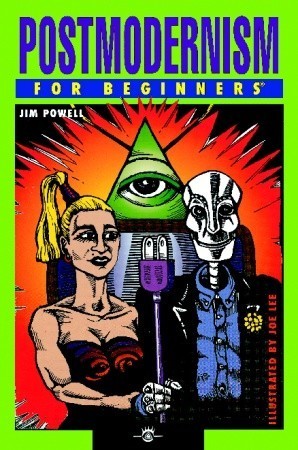
If you are like most people, you’re not sure what Postmodernism is. And if this were like most books on the subject, it probably wouldn’t tell you. Besides what a few grumpy critics claim, Postmodernism is not a bunch of meaningless intellectual mind games. On the contrary, it is a reaction to the most profound spiritual and philosophical crises of our time–the failure of the Enlightenment. Jim Powell takes the position that Postmodernism is a series of “maps” that help people find their way through a changing world. Postmodernism For Beginners features the thoughts of Foucault on power and knowledge, Jameson on mapping the postmodern, Baudrillard on the media, Harvey on time-space compression, Derrida on deconstruction and Deleuze and Guattari on rhizomes. The book also discusses postmodern artifacts such as Madonna, cyberpunk sci-fi, Buddhist ecology and teledildonics.

163 pages, Paperback

First published August 21, 2007

56 people are currently reading
535 people want to read

About the author

James N. Powell

14 books1,195 followers

~ New York Times

Most people think they use language to communicate. But language is insidious; it determines the way we think. Modern philosophers say we live in a universe limited by our language. Ludwig Wittgenstein even said we were ''bewitched.'' James Powell goes a little further. He examines the symbols of language the way a biologist examines cells. By inquiring into the nature of symbols themselves, he hopes to show the transcendental capacity of language not for mere communication but for ''communion.'' He assures us that the universe is a silent partner in a dialogue that goes on all the time and that throughout history certain images and techniques of meditation have led consciousness to break through the limitations of language.

Mr. Powell argues that we tend to underestimate the volatility of symbols. In world politics, we can easily see the danger of a breakdown in communication. When one world of meaning has no reality for the other, dialogue stops, sometimes violently. If the breakdown is taken as a failure in communication, in which each side sees the other as willfully irrational, the result is explosive. If, however, the failure is seen as a collision of symbol systems, each of which has absolute internal reality, then dialogue may be pursued with a different understanding. 'The Tao of Symbols is Mr. Powell's attempt to bring occupants of different worlds together (Buddhist and Moslem, scientist and sage) and to suggest the basis for a new kind of dialogue.


Some Suggestions for Interreligious Dialog


In addition to his published works, Jim Powell collaborated with Imogen Cunningham on a photographically illustrated translation of the verse of St. John of the Cross. James Powell: As a boy, James’s chores included keeping coyotes out of the chickens, riding fence, branding, milking, and harvesting. Since then, his jobs have changed quite a bit. He cut line for Smokey on many western wildfires–working winters surveying and building trails, while gradually awakening to Chumash and Vedic wisdom of fire ecology.

James has also taught meditation around the world, including to Michael Jackson's Neverland staff, Beach Boy Mike Love’s family, and Lithuanian-born archeologist Marija Gimbutas. The California meditation center he chaired for ten years provided ongoing instruction for over ten thousand Santa Barbarans. What’s more, he was Ayurvedic consultant to Deepak Chopra and Arianna Huffington at the Center for Perfect Health–which he co-founded–with Deepak's lectures drawing audiences of over 1,000. He collaborated with Group f/64 photographer Imogen Cunningham on a photographically interpreted book of his translations of the verse of Spanish mystic San Juan de la Cruz. The project was under consideration at various publishing houses when Imogen passed away.


Prologues to What Is Possible

1.

There was an ease of mind that was like being alone in a boat at sea,

A boat carried forward by waves resembling the bright backs of rowers,

Gripping their oars, as if they were sure of the way to their destination,

Bending over and pulling themselves erect on the wooden handles,

Wet with water and sparkling in the one-ness of their motion.


The boat was built of stones that had lost their weight and being

no longer heavy

Had left in them only a brilliance, of unaccustomed origin,

So that he that stood up in the boat leaning and looking before him

Did not pass like someone voyaging out of and beyond the familiar.

He belonged to the far-foreign departure of his vessel and was part of it,

Part of the speculum of fire on its

Ratings & Reviews

What do you think?
Rate this book

Friends & Following

Create a free account to discover what your friends think of this book!

Community Reviews

5 stars
131 (23%)
4 stars
212 (38%)
3 stars
152 (27%)
2 stars
42 (7%)
1 star
11 (2%)
Displaying 1 - 30 of 48 reviews
Profile Image for فؤاد.
1,125 reviews2,352 followers
March 27, 2017
چند وقت بود كه به دنبال كتاب مناسبى براى آشنايى مقدماتى با پست مدرنيسم مى گشتم، و از اون جايى كه پست مدرن ها شهرت بدی در مفهوم نوشتن دارن، مى خواستم تا حد ممكن از صفر شروع كنم و قدم قدم و با احتياط پيش برم. اين بود كه مدام كتاب هاى مقدماتى مختلف رو مى خوندم و مى ديدم نفهميدم و بر مى گشتم و از صفر شروع مى كردم با يه كتاب مقدماتى ديگه.

اين چرخه ى آزمون و خطا كم كم داشت حوصله م رو سر مى برد كه بالاخره به لطف بزرگوارى اين كتاب رو پيدا كردم. مقدمه ش در تعريف مدرنيسم و تفاوتش با پست مدرنيسم رو خوندم و براى اولين بار فهميدم مدرنيسم چيه، و همين باعث شد باقى كتاب رو با ولع بخونم.

كتاب در نيمه ى نخست در فصل هاى جداگانه به نظريه پردازهاى كليدى پست مدرن مى پردازه، و در نيمه ى دوم جنبه های مختلف دنياى پست مدرن کنونی رو بررسى مى كنه. و در همه ى اين بخش ها با زبانى روان، شناختى ابتدايى از كليت فضاها به دست ميده. بعد از خوندنش يه "آخيش" از سر آسودگى خيال گفتم! بالاخره فهميدم پست مدرن يعنى چى!

مى خوام بعد از اين كتاب راهنمایی مقدماتی بر پساساختارگرایی و پسامدرنیسم رو بخونم و قصد دارم سر فصل مربوط به هر نظريه پرداز، برگردم و اول فصل اون فرد رو از اين كتاب بخونم تا آماده بشم.

يه نكته ى نهايى: كاملاً معلومه كه مترجم يه فرد ميانسال مبادى آداب دانشگاهيه كه از فرهنگ امروزى (از اينترنت و فيلم و گیم و موسيقى راك و داستان هاى علمى تخيلى و...) سر در نمياره!! تا جايى كه كتاب به بحث هاى فلسفى و نظرى مى پرداخت ترجمه روان و خوب بود. اما همين كه شروع كرد به بررسى جنبه های دنياى جديد (مثل داستان هاى علمى تخيلى سايبرپانك و پادآرمانشهرى) يهو ترجمه پر شد از معادل هاى خنده دار براى كلمات انگليسى ساده اى كه نوجوان هاى امروز همه مى فهمن!
Profile Image for Miss Ravi.
Author 1 book1,166 followers
August 16, 2015
این کتاب یه ویژگی داره که می‌تونه همزمان مثبت یا منفی باشه. و اون بررسی همه‌ جانبه‌ی پست مدرنیزم و آثار ناشی از شکل‌گیری اونه در هنرهای مختلف و همچنین تاثیرات جامعه‌شناختی و بعضاً سیاسی این مکتب. و حتا می‌شه گفت جنبه جامعه‌شناختی رو به شکل مفصل‌تری نسبت به نقش پست مدرنیزم توی ادبیات بررسی می‌کنه. حالا این‌که کسی دنبال ویژگی‌های آثار ادبی‌ای باشه که در سبک پست مدرن نوشته شدن باید به جای خوندن مستقیمِ شاخصه‌های این مکتب توی آثار مختلف مطالب کتاب رو به ادبیات و قالب‌های ادبی تعمیم بده.
Profile Image for Coenraad.
807 reviews43 followers
February 23, 2014
Despite the cartoon nature of this book, the content is solid: quite philosophical, wide-ranging and in-depth. If the concept of postmodernism fascinates you, this text should answer your questions, but give you much more to think about than you may have thought possible. You cannot read this thoroughly in one session, and probably more than one read is necessary to digest all its ideas. But reading it is thoroughly worthwhile!

Die tekenprent-aanbieding mag 'n mens verlei om hierdie boek vlak te kyk, maar dit is allermins. Dit is trouens veel diepsinniger en veel meer filosofies as wat 'n mens sou dink. Dit verskaf 'n deeglike en omvattende inleiding tot die konsep van die postmodernisme, asook nogal gedetailleerde opsommings oor die bydraes van die belangrikste filosowe wat hierdie denkskool uitgebou het. Deur en deur die moeite werd, hoewel 'n mens dit nie in 'n middag kan deurlees nie; trouens, dit is ryk genoeg aan idees dat dit 'n paar keer gelees moet word om alles in te neem.
Profile Image for Heather.
526 reviews11 followers
September 21, 2010
As is to be expected, this book is not comprehensive, but it could serve as a great introduction to postmodernism, or, as was true in my case, as a nice refresher. One thing I will say is that while I like the concept of this book as a graphic novel, I don't really agree that it is one for the simple fact that the images do not really add additional information or insight to the text, rather they just support it. I would be more inclined to call this an illustrated book. This would be a great one for college students in the humanities, as it is thoroughly readable (unlike a lot of postmodern theory). Also, this book is one in a series. It is definitely worth checking out the other volumes (e.g., I just got the one on poststructuralism).
Profile Image for Matt.
466 reviews
June 10, 2009
You're not supposed to admit to reading this book. You're supposed to page through this in secret, with a flashlight under your covers, before going to a coffeehouse to casually flip through Derrida.

I am by no means going to pretend to understand Postmodernism. Nor will I pretend to understand the tenets of most of the individuals associated with Postmodern thought. But this book seems like a good summary. I respect the fact that it unashamedly attempts to plainly state ideas that generally scurry behind grammatical obfuscation. Though not in this book, John Searle has a great quote he took from Foucault when describing Derrida:
He writes so obscurely you can't tell what he's saying, that's the obscurantism part, and then when you criticize him, he can always say, "You didn't understand me; you're an idiot." That's the terrorism part.


It's nice to read a book, even in comic form, that genuinely tries to express the sometimes fascinating ideas lurking in the Postmodern movement. Read this book and you can probably even fake understanding Derrida for a couple minutes at the coffeehouse.

Don't worry if you run across someone who really knows what they're talking about. You can always smirk, turn back to your book and say "You clearly didn't understand me."

You may want to leave out the 'idiot' part.


Profile Image for Z.
14 reviews2 followers
August 18, 2016
As long as you can get past the shame of reading a book with "for beginners" in the title, this is a great entry-level book, but make no mistake, this is not Postmodernism for Dummies. It does a good job of conveying ideas in a way that is neither overly complicated, nor overly simplified. While far from comprehensive, it provides a good overview from simple to more complex concepts.
The content is mainly formatted as a series of questions and answers that makes the flow of material feel very natural. Although it is referred to as a "Documentary Comic Book," it is actually heavily illustrated. The book is full of interesting and aesthetically pleasing layouts. However, it does seem that is some cases design was chosen over readability, with hard to follow text flow and super narrow columns—in some cases fitting only 1–3 words per line.
11 reviews2 followers
August 12, 2013
This book is exactly what it promises to be: nothing less, nothing more. I wish it had assumed my IQ to be higher than it did, but it served as a good road map for postmodern philosophy. It contains errors (like using an image of the Pantheon to illustrate the Parthenon, for instance--unless that was a sly postmodern "joke") and could use a few more proof-readings. If you're new to postmodern theory, put your ego in your back pocket and read this book.
Profile Image for Paul Tardie.
17 reviews1 follower
October 21, 2020
This primer was just what I needed on the subject. It helped me figure out why I don't like Blade Runner and, most importantly, what the heck Postmodernism is. This page-turner has only made life richer for adding some perspective without having to commit to the full works of the writers mentioned and sifting out what to read next to further understand the concepts covered.
Profile Image for Michael.
20 reviews
November 21, 2009
I recall trying to read Lyotard in college and had an impossible time; now this primer, combined with the knowledge I've gained in the last 25 years, is making much more basic, introductory sense to me.
Profile Image for KRKO.
20 reviews
April 28, 2015
A great primer to postmodernist thought. Lots of ideas jammed into a small package. While it won't make the reader an expert on the subject, it is a great way to get introduced to the conversations around postmodernism.
Profile Image for Readius Maximus.
291 reviews6 followers
May 27, 2025
A book from Jonathan Pageau's book list. Almost didn't get it but glad I did. It's a deceptively quick and easy read but really understanding everything will take several reads or deeper reading on the various authors discussed.

When the author started talking about decentering, rhizome versus tree authority structures, carnival, mapmaking, and grand narratives I knew why Pageau has this on his list.

As with all things in the modern era they begin with Nietzsche who not only proclaimed the death of god but said the enlightenment values predicated on that idea are dead too. What makes Nietzsche interesting is he was aware of this and tried to place something in the center and create the conditions in which low grade grand narratives could be created (by the superman). He understood the void this created and tried to create a means of dealing with it. The postmodern's just dance in the void like the clownish carnival fans they are.

Modernism believed in reason and progress. Which provided the ground for different grand narratives to exist such as Communism and religion. After reading this part and Derrida's section on decentering it really made me think wokism is post modern totalitarianism and while a blend of all previous totalitarianism systems it is primarily Liberal. Which is probably why Derrida became such a hit in the US.

The author lays the ground work of all this and then begins introducing different authors to set out a map of the postmodern terrain.

Jean Francois Lyotard talks about narrative. A religious narrative like how Bumba vomited out the moon legitimizes itself while science is a little narrative that relies on bigger narratives to justify itself. The Enlightenment theories of both the French, with reason producing freedom, and the German theory of Hegel's knowledge are grand narratives. With the collapse of these narratives science becomes performative and tries to justify itself and it's power by conducting more and more studies. While this book was written in 1998 I think covid proved his point.

Fredrich Jameson talks about pastiche where we can't really do parody and satire because their isn't enough normalcy to mimic. All we can do is randomly switch between impersonating different people.

Jean Baudrillard is one of the main people he talks about. Everything is a simulacra or copy of the real. But not only that the simulacra becomes reality. Eventually it becomes hard to tell if Baudrillard is doing science fiction or if postmodernism is science fiction.

There's a section on modern and postmodern architecture. Since destroying the past would leave you with nothing postmoderns are left bringing the past back but subverting it in some way. Where moderns made things super simple and reduced to the most basic like making a glass box. This is a very rare case where I prefer the post moderns to the moderns.

Then come the structuralists who say everything is text based and thus open to infinite interpretation.

Foucault talks about the micropolitics of power and that power has to be confronted in local situations. He doesn't believe power is a huge monolithic state power.

Derrida is all about decentering. He believes we have no access to reality accept through concepts but that these concepts come in pairs such as left right and we tend to elevate one over the other and in doing so oppress the other. But neither one is really superior so which ever one is elevated needs to be subverted. "Deconstruction is a tactic of decentering". The disgusting thing about this and how the woke of adopted it is nothing can be in the center. Which means no one can have an identity. The identity becomes opposing all those who stand for something. Hence the puritan shrillness of the woke mob.

Tree vs rhizome as concepts of knowledge. The tree is concerned with beginnings and endings. Rhizomes are concerned with surface connections like the internet.

Postmodernism is essentially the fractured dreamlike reality where nothing is stable or solid, everything is moving and fake, there is no reality, everything is made.

Profile Image for Dylan.
Author 7 books16 followers
August 17, 2017
Quotes:

If the modern era had a central image—it was that of a kind of non-image—a Void—and if the era had a quotation that summed it all up, it was Irish poet William Butler Yeat's lines: Things fall apart; the center cannot hold; Mere anarchy is loosed upon the world.

Eliot's Wasteland experimented with a fragmented poetry full of literary, historical, and mythological tidbits from around the world—depicting a soul and a society in fragmentation and despair, seeking reintegration, a new center. Both Joyce and Eliot rejected the straightforward, and rational flow of the story or theme. They also rejected traditional character development, favoring instead a fragmented style. But this dislike of conventional character development and the celebration instead, of private, subjective experience added to the tendency of modernism's artists, assembled in small groups in Paris, Berlin, Rome, Vienna, London, New York, Chicago, Copenhagen, Munich, or Moscow, to view themselves as an exiled, alienated cultural elite.

The idea of a place in society for a kind of generalized critical intellect—in fact, the very idea of an intellectual—was a product of the Enlightenment.
Joined to this French political narrative of freedom is a German narrative: Hegel's philosophy of the Unity of all Knowledge. For Hegel, knowledge played an essential part in the gradual evolution of the human mind from ignorance to total being. /Both the French Enlightenment narrative and the German knowledge narrative are what Lyotard calls metanarratives or grand narratives, big stories, stories of mythic proportions—that claim to be able to account for, explain and subordinate all lesser, little, local narratives. Some other metanarratives are the philosophies of Marxism or the narrative of Christian salvation. Thus the narrative of a successful Mars expedition in which a rover lands on Mars to transmit images back to Earth is a little narrative that is part of the big story—the metanarrative—of the freedom, the liberation of humanity (French), and the attainment of a pure, self-conscious spirit—the Unity of all Knowledge (German).

The difference, for Lyotard, is that where traditional societies are under the spell of one dominant narrative, such as the myth of Bumba, Postmodern society is a society in which no one narrative—big or little—no one language game dominates. In Postmodern societies many micronarratives are jammed together. And this carnival of narratives replaces the monolithic presence of one metanarrative.

Jameson's biggest gripe about the Postmodern era is that it signals the end of a genuine awareness of history.

Just as Nietzsche once proclaimed the Death of God, Baudrillard's though declares the death of modernity, the death of the real, and the death of sex.

In another book, In the Shadow of the Silent Majorities, Baudrillard contends that what had been society has imploded into a hyperconformist body obsessed so much with spectacle that it would rather watch TV than take political action. It becomes electrified only by computer networks and electronic media—by which it is so polled, tested, and hyped by models that it has become inert and bored. But at the same time it is hyper, passive, resistant, demanding even more moonshots, rock spectaculars, mass entertainments—yet suspicious and skeptical, apathetic because it realizes that any attempt to change the system will simply be co-opted by the system for its own ends. / All this has signaled the death of the social.

Baudrillard's road trip, speeding past endless vistas of road signs, neon lights, empty desert landscapes, motels, reveals an America of surface glitter, vanishing into emptiness. In fact, the title of an important chapter is called "Vanishing Point," referring to the Death of Meaning, the Death of Reality, the Death of the Social, the Death of the Political, and the Death of Sexuality.

For Baudrillard this vision of America is the model for the rest of the world—the code for an emerging hyperreal and simulated supra-modern world. Because of this America is "the center of the world." And America is a desert—especially in its cities—a place where "real life" has vanished into a kind of glittering, empty non-culture. And this empty, dry, sterile, lunar desert of astral America, the desert of meaningful society, empty as a TV tuned to a dead channel.

"POSTmodernISM A Paracritical Bibliography" Ihab Hassan

Huge utopian modernist housing projects alienated the very inhabitants they were designed to house. These planned utopias turned into wastelands of graffiti, vandalism, and neglect. Thus in the late 1960s and early 1970s they were dynamited.

From the time of the enlightenment, France has been a kind of paradise for intellectuals, a place where philosophers and thinkers have been regarded as national treasures. Their books are snapped up as readily as the latest thriller, their disputes and divagations are written up in glossy, mass-media magazines, they appear on TV talk shows, they get good-looking lovers and good seats at restaurants. In exchange for these favors, they are expected to set a moral tone, to buck established values, and most important—to be avant garde. They rest secure in the knowledge that what they think today, the rest of France will be thinking tomorrow.

How could any writer, then, still write a realistic novel with a plot unfolding page after page in simple, step-by-step, chronological order?

Old myths about being human always go back to some idyllic time of wholeness and unity and innocence, like in the Garden of Eden. But the myth of the cyborg is never about wholes; it does not look nostalgically back to some unified origin. A cyborg is always a split, a hybrid identity, a cybernetic organism: a human-computer.

Cyberpunks, unlike hippies, are not against technology. They want to use technology as a means to resist the infringement on our individual freedoms by centralized techno-giants.

However, cyberpunk, like Baudrillard, has now ceased to be avant garde and is now merely hip.

Cyberpunk's cliches have solidified: with rebellious and tough-talking (youth/AI/rock cults) who offer the alternative, not of (community/socialism/traditional values/transcendent vision), but of supreme, life affirming hippness, going with the flow which now flows in the machine, against the specter of a world-subverting (AI/multinational corporate web/evil genius).

Profile Image for Geert.
56 reviews1 follower
February 1, 2020

* Samenvatting
* Kernwoorden postmodernisme:
* Heterogeniteit, fragmentatie
* Inclusion
* Chaos, toeval
* Innerlijke tegenstrijdigheden
* Geen universele waarheden, geen centrum
* Geen binary oppositions
* Deconstruction (van grand narratives, maar ook van de ego)
* Double coding (moderne vorm die met humor verwijst naar iets ouds)
* Relativeren, humor, ironie
* Oppervlakkigheid, surface
* Symbolen, simulacra en simulation die belangrijker zijn geworden dan het orgineel
* Proces, performance ipv eindresultaat
* Geen autoriteit/hierarchie; anarchie
* Absence (ipv presence)
* Ambivalentie
* Pulp fiction
* Pastiche
* Eclecticisme
* Afzetten tegen modernisme H1 20e eeuw (maakbaarheid, terug naar ideale vormen (kubussen, cilinders, functionaliteit, utopia, mathematisch, geometrisch). Als ik het goed zie gaat modernisme ook over experimenteren met stijlen en vormen, en zet postmodernisme zich daar niet tegen af (?).
* Denkers
* Jean-Francois Lyotard: er is geen grand narrative dat allesomvattende waarheid kan claimen.
* Jean Baudrillard: simulacra zijn zelf realiteit geworden, zonder al te veel met werkelijkheid te maken te hebben (death of reality)
* Charles Jencks: het draait om double coding: iets moderns dat met humor/ironie verwijst naar iets ouds.
* Jacques Derrida: deconstruction van patroon Westers denken: poneren binaire tegenstelling, 1 wordt dominant en marginaliseert de ander.
* Gilles Deleuze en Felix Guatari: we moeten stoppen te geloven in boomstructuren en wortels, en geloven in wortelstokstructuren: alles interconnected.

* All the world’s cultures, rituals, races, databanks, myths and musical motifs are intermixing (p. 3). No longer is there one morality or myth or ritual or dance or dream or philosophy or concept or self or god or culture or style of art that predominates (p. 4). Het is een carnaval van stijlen, ideeen, narratives en invloeden.
* De taal van postmodernisme is ingewikkeld (p. 6).
* Modernism is a blanket term for an explosion of new styles and trends in the arts in the first half of the 20th century. Things fell apart; idee van de Verlichting kon geen stand houden (via de ratio tot menselijke progressie komen en staat van vrijheid en geluk bereiken) (p. 8). Nietzsche biggest sceptic (p. 10). Fragmentation, chaos, geen centre meer (p. 12-13). Modernisme (in kunst en literatuur) probeert de post-Nietzschian “void” te vullen; door kunst die zichzelf centraal stelt en als zodanig onderzoekt (bv. kubisme), of literatuur die naar inner truth zoekt. Was increasingly difficult to understand. Daarna kwam High Modernism; peaked in 1922 met Ulysses van James Joyce.
* Postmodernisme zet zich af tegen/gaat beyond modernisme (p. 17 e.v.):
* Vorm vs. anti-vorm, purpose vs. play, design vs. chance, hierarchy vs. anarchy, art object/finished work vs. process/performance/happening, presence vs. absence, depth vs. surface.
* no center; play of chance, antiform, surface
* Painting/composing by chance; verf op canvas gooien of random straatgeluiden gebruiken in composities.
* Jean-Francois Lyotard (1924-1998).
* The visual, figure-making nature of the unconscious disrupts language, disrupts the national order of language. The Holocaust cannot be remembered, but also not forgotten.
* The Postmodern Condition: a report of knowledge (1974): hij voorspelt dat geen informatie overleeft die niet in computertaal kan worden vertaald.
* Zowel de Franse Verlichting (bevrijding van de mensheid) als de Duitse kennistheorie (Hegel; Unity of all Knowledge) zijn voor Lyotard “grand narratives” van mythische proporties die claimen in staat te zijn alle kleinere, lokale narratives te omvatten. Andere grand narratives zijn: marxisme, christendom.
* Na WO II houden deze 2 grand narratives geen stand meer. Vrijheid was nergens. Quantummechanica leert ons zaken die we niet kunnen bevatten met onze menselijke geest. Wetenschap kan ons niet leiden tot full freedom and absolute knowlegde. (p. 30)
* Fredric Jameson (1934)
* Waar Lyotard optimistisch was over heterogene, gefragmenteerde, innerlijk tegenstrijdige en ambivalente postmodernistische samenleving, is Jameson pessimistisch. Hij ziet het als laat-kapitalisme. Multinationals invading unconsious mind by advertising.
* Modernisme: schreeuw van Munch en schoenen van Van Gogh gaan over vervreemding, lack of identity, eenzaamheid, social fragmentation. Postmodernist city-dwellers live in exhilarating blur, a reality evaporating into mere images. Vgl. de oppervlakkigheid van Andy Warhols Diamon Dust shoes; no link to reality. TV images stripped from reality, oppervlakkig, simulacrum, kitsch, B movies, pulp fiction, advertising; wegvallen onderscheid High Culture en Low Culture.
* Postmodernity has exploded the subject, the ego. Mensen zoals Hemingway hadden een unified ego en identiteit, ook al was het een alienated one. In Postmoderne tijd is die weg. Dus wordt parodie lastig, en gaat men naar pastiche (amalgaam van fragmenten uit andere werken).
* Jean Baudrillard (1929-2007)
* Mensen kopen spullen niet slechts om natural needs te vervullen, maar om zich te onderscheiden en ergens bij te horen. Met een Mercedes koop je niet gewoon een auto om van A naar B te gaan, je koopt het image dat erbij hoort. Om tot een bepaald sociaal niveau te behoren, is het ook niet genoeg om 1 object te kopen; you have to buy into an entire system of objects. Social codes bepalen welke objecten dat zijn. Die codes zijn als grammatica; je hebt het nodig om elkaar te kunnen verstaan. (p. 46-47)
* Voor Plato was een simulacrum nog een false copy of the orginal. In Baudrillards view zijn simulacra zelf de realiteit geworden, zonder dat ze nog veel relatie met de realiteit hebben (p. 54-56). Baudrillard spreekt van de Death of the real (p. 59).
* Als er iets ergs gebeurt, bv een aanslag, dan staat de vraag "wie heeft het gedaan?" los van de werkelijkheid/de feiten. All the media responses and interpretations are already preprogrammed and all orbit, whirligiging, in absurd, perverse, nauseous circles, orbiting around the merest fact - according to established codes or models (p. 62).
* Hij ziet Amerika (en de wereld) als surface glitter vanashing into emptiness; death of meaning, death of reality, death of the social, death of the political, death of secuality (p. 67). We leven allemaal in een wereld van simulacra en simulation die doel op zichzelf zijn geworden (p. 68).
* Architecture
* Daar is postmodernisme begonnen (p. 72). Begon eerst met modernisme. Dat begon met de Bauhaus school, opgericht in Weimar, Duitsland in 1919; gebouwen moesten functioneel zijn. Zij ontwikkelden ook de International Style. Messiah van modernisme is Le Corbusier (1887-1965); is een alias, afgeleid van “raaf” (corbeau), die net als de raaf van Poe zegt: nevermore. Geen retro meer, of dikke tapijten etc. Terug naar rationele structuren waarmee de mens zijn eigen wereld kan creeren; platonische primaire figuren zoals pyramides, kubussen, cylinders etc; ideale vormen. Net als kubisme niet afgeleid door ornament, reducing creations to pure geomatric, mathematical, Platonic forms. Utopia. (p. 72-75) [Gaat allemaal een beetje uit van de maakbare samenleving gebaseerd op de ratio, waar Nazi-Duitsland arguably een exterme exponent van is]. Structuren faalden, zoals Oscar Niemeyers design van Brasilia als nieuwe hoofdstad van Brazilie.
* Charles Jencks begon hierop kritiek te leveren. Zijn boek uit 1977 is het eerste waar “postmodern” in de titel werd gebruikt. In the 1960s early roots started by group of English intellectuals (the Independence Group) making collages of American culture. Followed up by Andy Warhol. Volgens Jencks zijn mensen als James Joyce en John Cage late modernists of high modernists die creaties maakten die niemand meer begreep. Postmoderne architectuur is meer ambivalent; meerdere stijlen door elkaar. Het verleden wordt niet achter zich gelaten, maar gebruikt en geparodieerd. Oa dmv pastiche. Postmoderne architecten: Robert Venturi, Denise Scott Brown en Steven Izenour. Voor hen is Las Vegas een voorbeeld: chaotische en complexe mix, niet autoritair, probeert niet utopia te creeren, gaat vooral ook om fun, grote diversiteit.
* Er wordt veel gebruik gemaakt van double coding: modernistische methoden die verwijzen naar het verleden of iets lokaals (zoals modern AT&T gebouw dat tegelijkertijd een “grandfather clock” moet voorstellen).
* Jacques Derrida (1930-2004)(p. 96 ev)
* Kwam met het concept van deconstruction. Hij is een van de poststructuralists, samen met oa Gilles Deleuze en Michel Foucault. Volgens Derrida is het Westerse denken altijd gebasseerd op een centrum (een waarheid, een ideologie, christendom, etc). Het probleem is dat daardoor andere perspectieven genegeerd worden of gemarginaliseerd. Er wordt steeds een paar van binaire tegengestelden gevormd (blank/zwart, man/vrouw, natuur/cultuur etc, 1 vd 2 wordt als privilged aangemerkt, het spel van het systeem dat er ook andere manieren zijn om er tegenaan te kijken wordt gefixeerd/bevroren, en dan wordt de ander gemarginaliseerd.
* Deconstruction gaat er vanuit dat een tekst gelezen moet worden to subvert the central term, so that the marginalized term can become central. Zijn punt is dat het geen tegenstellingen zijn; ze zijn equally valid and true.
* Gilles Deleuze en Felix Guatari (p. 108 ev)
* Volgens hen moeten we stoppen te geloven in boomstructuren en wortels. Dat gaat terug op Plato die ervan uitging dat alles afstamt van ideale vormen. In werkelijkheid is er niet zo een centrum en is alles interconnected. Het is meer zoals een wortelstok (rhizome).
* Blade runner is postmodern. Replicants zijn simulacra van mensen. Wereld is een pastiche van stijlen en vormen. Advertising en labels are everywhere. Everthing is double coded. Verder: the main question of the movie is: what is the difference between a machine (a simulacrum) and a human being?
* Madonna is postmodern. She is all surface, put-on, dress-up, make-over, simulation. She knows that simulation and appearance mean more than substance and reality.
* Gary Snyder is een postmoderne dichter en mileuactivist, die het utopia dat veel andere mileuactivisten schetsen verwerpt (p. 147-148).
This entire review has been hidden because of spoilers.
Profile Image for far.
43 reviews5 followers
May 18, 2019
کتاب هایی که هویت داستانی ندارن و میخونمشون تا چیزی یاد بگیرم،به کثرت سرنوشت ناتمومی دارن!
اما این که این بار به خودم گفتم نیازی نیست تموم بشه فقط اون چیزی که در سطح درک و یادگیریه بردار،کمک کرد تا بدون عذاب وجدان کتابو ورق بزنم و هرجا به دردم میخورد یا منو به وجد می آورد بخونم.
کتاب ادبیات سختی نداره،به عبارتی حتی تلاش کرده روون و قابل فهم یه مفهوم سخت رو توضیح بده.
ولی خیلی هم ساده و سریع الدرک نیست!
بیست صفحه ای که مربوط به معماری بود برام خوشایند و قابل درک و راحت الفهم بود.
این که میدونستم لوکوربوزیه کیه و چه شکلیه و کارهاشو دیده بودم
این که با هوای معماری نفس کشیده بودم
باعث این راحت الخوانی شد.
شاید کسی که ادبیات،موسیقی یا... سررشتشه،بتونه با بخش های دیگه ارتباط بیشتری بگیره.
به هر حال کتاب خوبی بود
حالا وقتی اساتیدم از معماری مدرن و پست مدرن بگن،با درک بهشون گوش میدم!.
Profile Image for Molly.
115 reviews3 followers
January 23, 2011
I love the "For Beginners" series and think this is a particularly good one. I found the sections on Deconstruction, Deleuze and Guattari, "double coding", and cyborgs to be clearly written and useful to give students in the 12th-grade English class I teach. The introduction and (especially) the conclusion are slightly cheesy though, and according to the kids, "so '90s".
Profile Image for Aral.
54 reviews
July 16, 2011
weirdly histrionic right?

"a cyberpunk guy who wants to seduce some corporate secretary might soften her up by softening up her software (e.g., by altering the software in the corporate mainframe so that it appears to her boss—who monitors her key stroke rate—that she is typing twice as fast as she actually is)."

?
Profile Image for Don.
430 reviews22 followers
April 3, 2019
A much needed (for me) overview of post-modern philosophy. I’ve been wanting to understand why so much contemporary MFA schooled literature has become so fractured. The influences of this thinking have invaded everything. The book is elaborately and poorly illustrated with drawings in an underground comics esthetic which do more to detract than illuminate.
Profile Image for Dawn Hukai.
72 reviews
August 16, 2015
Well-written, and unlike many postmodern works, accessible, this documentary comic book provides a friendly starting point that emphasizes the ability of postmodernism to help us cope with a rapidly changing world.
Profile Image for Hajirah.
5 reviews1 follower
August 1, 2016
Wow!!

I thought I knew what postmodernism was, but this book helped me understand it in better detail and begin to grasp the essential concepts of Deconstruction, poststructualism, and, of course Postmodernism.
Loved it, wish I had found this sooner!
6 reviews3 followers
July 29, 2018
Powell manages to canter through and link the main themes of several of the most important postmodern thinkers in an entertaining and informative 'comic book' style. Not at all taxing considering the usually verbose and weighty subject matter, and I got through in one sitting.
Profile Image for J.Istsfor Manity.
418 reviews
June 14, 2020
Enjoyed the fist 3/4’s of this book and then it seemed to fizzle and read as something quite dated — at this point it is obviously (25 years later). But I really enjoyed the marriage of graphics and Q&A to “deconstruct” a dense field field of thought.
Profile Image for Yin Yin.
28 reviews6 followers
October 7, 2021
I'm surprised to find this book so entertaining and informative which got me think a lot and understand better of post-modernism from different angles. Definitely recommend it. Look forward to reading other books in the same series.
Profile Image for Randall.
Author 18 books64 followers
May 1, 2011
Now I get it! Thanks!
Profile Image for Jack Stratton.
Author 49 books38 followers
April 11, 2019
Horribly edited. Many names and titles were incorrect.
Profile Image for Nathan.
24 reviews
July 10, 2023
Interesting reading with fun illustrations, but very uneven. Starts strong, introducing postmodernism as a response to society's loss of faith in the Enlightenment ideals of liberty (freedom of expression and rejection of religious dogma) and scientific progress, including introducing Lyotard's "postmodernism = incredulity towards metanarratives". The claim is that loss of faith in the metanarratives of liberty and scientific progress came about due to the failure of communism and the scientic horrors of WWII, and supposedly because of the "failure of mathematics" (see rant at the end).

There is a very long section on Baudrillard, which introduces "semiotics" and "structuralism" without really defining them, and then focuses on "hyperreality" and "simulacra". My feeling about this section was that these are interesting ideas, but the book doesn't explain them very well.

Postmodern architecture is introduced, as a reaction to minimalist modern architecture. This was the most understandable part of the book ... probably because buildings are simpler than philosophy.

Poststructuralism is next, where we finally get a better idea what "structuralism" is. There's a very brief section on Foucault, which I found disappointing since he and Derrida were for me the most famous postmodern names before reading this book. The section on Derrida is longer and better, but the claim that "defining deconstruction goes against the idea of deconstruction" makes me cynical and supports the claims I'd heard that Derrida is intentionally obscure.

The final section of the book is a grab bag postmodern artifacts, and seemed hap-hazard. For example, they spend a few sentences on something called "teledildonics" -- remote controlled dildos -- presumably just so they can sensationally mention it on the back cover of the book. But I liked the discussion of postmodern movies, in particular Blue Velvet and Blade Runner.

Rant: the book completely fails any time something mathematical is mentioned, which makes me wonder how accurate all the other stuff is, which I'm unable to judge. I guess all these misunderstandings are cliches of psuedo intellectual social science, but IIRC all the following incorrect claims are made, in support of the claim that science and mathematics failed and delegitimized itself:

- Non-Euclidean geometry showed geometry was inconsistent

- Special relativity showed physics was inconsistent

- Quantum mechanics showed physics was inconsistent ("a particle in two places at the same time"!!!)

- Godel's incompleteness theorems showed logic was inconsistent

I read on Wikipedia that Lyotard later apologized for having totally misunderstood the science he criticized in his foundational postmodern treatise -- /The Postmodern Condition/, 1974 -- so perhaps the author is just repeating the misconceptions of Lyotard. But even then it's sloppy, and gives postmodernism a bad name. The question the book failed to answer for me was whether that bad name was deserved or not.

The illustrations are really fun, but I'm not sure they add much, and sometimes they're just wrong: the book mentions the optical illusion of the two faces in profile that can also be viewed as a candlestick in profile, but apparently the illustrator and editor weren't familiar with it, so the illustrator ended up adding a weird unrelated sketch of a person with a candle head :/ And the section on rhizomes vs trees gives a molecular diagram as an example of a tree, when it very much is not a tree ...
Profile Image for Sars Luebke.
25 reviews2 followers
October 30, 2024
I liked this book because it provided in plain-ish terms an overview of postmodern thought from philosophical and architectural perspectives. It focused largely on Baudrillard and a bit on Derrida and a large portion on cyberpunk.

I knocked of two stars because I felt like the ending was so abrupt that, for me, it nullified any profundity that the book had delivered over the course of a hundred or so odd pages. Also there were a handful of illustrations that, while I appreciated them for balancing out the headiness of postmodernism with the some fun, just disrupted the flow.

If you’re looking, as I was, for a overview of postmodern that explains today’s culture, I would recommend rather the first portion of The Identity Trap by Yascha Mounk.
Displaying 1 - 30 of 48 reviews

Can't find what you're looking for?

Get help and learn more about the design.