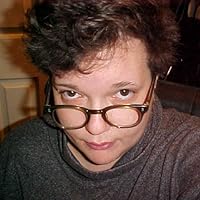
Patricia Highsmith (19 January 1921 – 4 February 1995) was an American novelist who is known mainly for her psychological crime thrillers which have led to more than two dozen film adaptations over the years.
She lived with her grandmother, mother and later step-father (her mother divorced her natural father six months before 'Patsy' was born and married Stanley Highsmith) in Fort Worth before moving with her parents to New York in 1927 but returned to live with her grandmother for a year in 1933. Returning to her parents in New York, she attended public schools in New York City and later graduated from Barnard College in 1942.
Shortly after graduation her short story "The Heroine" was published in the Harper's Bazaar magazine and it was selected as one of the 22 best stories that appeared in American magazines in 1945 and it won the O Henry award for short stories in 1946. She continued to write short stories, many of them comic book stories, and regularly earned herself a weekly $55 paycheck. During this period of her life she lived variously in New York and Mexico.
Her first suspense novel Strangers on a Train published in 1950 was an immediate success with public and critics alike. The novel has been adapted for the screen three times, most notably by Alfred Hitchcock in 1951.
In 1955 her anti-hero Tom Ripley appeared in the splendid The Talented Mr Ripley, a book that was awarded the Grand Prix de Litterature Policiere as the best foreign mystery novel translated into French in 1957. This book, too, has been the subject of a number of film versions. Ripley appeared again in Ripley Under Ground in 1970, in Ripley's Game in 1974, The Boy Who Followed Ripley in 1980, and in Ripley Under Water in 1991.
Along with her acclaimed series about Ripley, she wrote 22 novels and eight short story collections plus many other short stories, often macabre, satirical or tinged with black humour. She also wrote one novel, non-mystery, under the name Claire Morgan, plus a work of nonfiction Plotting and Writing Suspense Fiction and a co-written book of children's verse, Miranda the Panda Is on the Veranda.
She latterly lived in England and France and was more popular in England than in her native United States. Her novel Deep Water, 1957, was called by the Sunday Times one of the "most brilliant analyses of psychosis in America" and Julian Symons once wrote of her "Miss Highsmith is the writer who fuses character and plot most successfully ... the most important crime novelist at present in practice." In addition, Michael Dirda observed "Europeans honoured her as a psychological novelist, part of an existentialist tradition represented by her own favorite writers, in particular Dostoevsky, Conrad, Kafka, Gide, and Camus."
She died of leukemia in Locarno, Switzerland on 4 February 1995 and her last novel, Small g: A Summer Idyll, was published posthumously a month later. (Gerry Wolstenholme, July 2010).
Highsmith was an astute observer of relationships and tortured minds. In this book stories are easily transferable to interactions between humans, but the tales of murder in this collection are told from the perspective of animals who seek revenge on their assailants.
It's a very grim read.
I really should give this book a lot more stars, but I hated the way the book made me squirm.
Treze contos criminosos com uma particularidade: todos os assassinos são animais irracionais que matam os racionais porque lhes fazem perder a paciência. Aqui o que me incomodou não foi o acto de auto-defesa do bichinho mas a maldade do ser humano, quer para com os animais, quer para com o seu semelhante.
Seleccionei algumas obras de arte com os assassinos destes contos, acompanhados dos seus estimados humanos. Escondo a galeria porque são muitos e há, pelo menos, um que pode assustar.
Patricia Highsmith brings together in one collection thirteen tales of revenge, animal style.
This is a mixed bag of quality and entertainment that ranges from the brilliant to the mediocre, the witty to the dull and the obvious to the horrific. Stories about how humans mistreat animals and the understandable mixture of reactions from the animals; fear, instinct, self-defence, murder and straight forward standing up for their rights to be treated with dignity. We're not just talking about cats and dogs but camels and elephants too. Highsmith takes an animals perspective on everyday behaviour from the human beings who dominate them and largely achieves great things.
The stories can lazily be divided in to two categories, those from the animal point of view and those from the human but both ways she paints the human in a negative light. The most enjoyable of the stories are those that fall in to the first category however; the performing elephant who is mistreated one time too many, the goat with too much energy for its owners, the cat who is in love with its owner, the dog whose owner dies for example and that's ignoring stand out high point of the tale of the rat in Venice and the confessions of a New York cockroach who's going up in the world.
It's the other group that I had problems with, Highsmith doesn't reach the same heights when she describes events from the human observers point of view; in these the people are much more obviously horrible and the behaviour of the animals so much more obvious and bloody, essentially meaning if you've read one of them you've read all of them. Not an ideal characteristic for a short story collection and hence the award of only 3 stars.
If you're already a fan then this is a must-read, if you're new to this wonderful writer of literary suspense thrillers (amongst other things) then perhaps start with one of her more popular novels before diving in to this one.
I can't give a review of fair or decent length about Patricia Highsmith's Animal-Lover's Book of Beastly Murder as I couldn't get past the first story. "Chorus Girl's Absolutely Final Performance," the story of a circus elephant's lifetime and subsequent career, really did a number on me. Highsmith was known to be an animal lover, and this is obvious in "Chorus Girl." Her general cold, swift hand actually builds this elephant's vengeful soul to a boiling crescendo of justifiable rage. The end is tinged with a sentimentality that's uncharacteristic of Highsmith, but it works. This story was so powerful that I couldn't continue reading the other essays. It's the only Highsmith book I ever gave away. "Chorus Girl" broke my heart. And for that, I give it five stars.
started off slow (a buncha pieces at the beginning are 3rd-person-limited pov from an animal's perspective, which obscures human actions & motivations, not to the stories' benefit) but boy does it pick up. a fair amt of philosophical rawhide to chew on too: when if ever is an animal entitled to self-defense? does hatred lead inevitably to violence? (& can you really use an onion to repel a ferret attack?) my personal #1 might be "hamsters vs websters" (like a really bent cheever story or mad men ep re hamster infestation) tho if you're in it for the nasty jolts i'd recommend "the bravest rat in venice" for sheer amperage. zow
Another very satisfying book. Several delightful romps through well-deserved revenge taken, some purposely, some maybe not, by abused animals. Thinking about factory farming? Or depriving your camel so you can win a race? Secretly disposing of your new lover's cat? Not so fast, big guy. They're smarter than you think, and perhaps smarter than you are - as anyone who has loved an animal knows.
And human design? Geez, who knew we had so many vulnerable parts, so many easily accessible fail points? Really. Think about it. A well placed hamster bite...
Recommended for that card-carrying PETA member in your family, this macabre collection of stories tells tales of pets and service animals that are unjustly abused by humans who eventually get their comeuppance from the malevolent critters. The first story was touching, the second sounded familiar, and by the third tale I felt like I had read the same story over and over again, different animal but the same situation. It’s a fairly redundant book and unless you love reading about goats and ferrets getting even you’ll probably lose interest quickly.
Alla fine questo libro non faceva per me. Il mio cervello vuole crimini veri e non quelli commessi dagli animali. E poi come amante dei gatti non mi sono piaciuti quei gatti morti.
Poi come dicono altri forse le prime due massimo tre sono carine. Le altre sono ripetitive. 💤
The first thing I learned about Patricia Highsmith was that she was obsessed with snails, and this collection expands her repertoire with 13 different animals. No snails, but there is thankfully a good cockroach story (who doesn't love a good cockroach story?). The title is very accurate but to "Animal-Lovers" I'd add the further qualification of "People-Haters." Most of the stories are very dark. The first story kind of lets the book down: they aren't all the PETA-propaganda tale of a miserably abused animal righteously fighting back against human oppressors. The more common theme is animals' unknowable (possibly petty) motivations, instincts and capacity for destruction which is underestimated by humans. In some cases Highsmith shows how humans share the animalistic quality of pettiness, particularly in "The Bravest Rat in Venice" where the Mangonis live off the palace like rats themselves. The main difference between animals and humans is lack of moral/legal consequences. It makes you wonder what makes a "murder." There are stories like "Eddie and the Monkey Robberies" and "Harry: A Ferret" where a human explicitly covers for the animal (the latter case, unlike Ripley, involving a successful burial in the French woods)... but in large part they get to trot away and start new lives (or continue their old ones), with no hassle.
My favorite story is "The Bravest Rat in Venice," where Highsmith shows her skill for messing with the reader's sympathy. Even with a very simple writing style she blurs and hides who we're supposed to root for. The Mangonis are disgusting, but not egregiously disgusting, rather in a petty and common way (perhaps approaching poshlost'). The closest thing to a protagonist is a mean old rat, who you can't even feel bad for because he's living pretty much the best life a rat can. The Mangoni children torture the rat, but it's really no worse than he'd suffer on street or at the hands of any other animal. Yet there is a sense of triumph when the rat eats their baby's face! It's not the rat getting revenge, he just does it because it seems like the thing to do. But there is a sense of cold primitive justice - if the Mangonis want to live like animals, then it serves that they should be brutalized like animals.
Abordados desde la perspectiva típica del trabajo de Highsmith, "Crímenes bestiales" contiene relatos donde los protagonistas son, como su nombre puede dar a inferir, animales. Cabe la pena aclarar que en si, el volumen puede parecer un poco repetitivo, ya que casi siempre las situaciones presentadas arrojan el mismo final, aunque varíen los personajes y la forma de presentar el desarrollo de cada historia, sin embargo,debo aclarar que en lo particular, al ser un gran amante de los animales, no puedo dejar de ser parcial en mi veredicto... ¡me fascinó!
Aquí dejo de hablar como aficionado a la literatura y empiezo a hablar como aficionado a los animales: si bien es cierto que algunos cuentos son de una naturaleza muy triste, en casi todos Patricia logra dotar de credibilidad a sus protagonistas animales haciéndolos lo narradores de las historias. Logra dotar de inocencia a quienes de natural la tienen, de confusión a aquellos más salvajes, de primitiva inteligencia a los que han sido más "educados" etc. Los hace creíbles, no es como en las fábulas donde los animales son presentados con actitudes humanas, no, aquí los animales se comportan como animales y no hacen nada más que aquello que un animal puede hacer. Y con todo eso, la autora logra conjuntar una estupenda colección de relatos que sin duda harán las delicias de cualquier animalista.
Ojo, Spoilers: "La absolutamente última actuación de ", "La rata más valiente de Venecia" y "El caballo máquina" contienen algunas escenas de maltrato animal que pueden resultar perturbadoras para un animalista ordinario, pero cabe la pena aclarar que la autora no se regodea en los detalles más que lo absolutamente necesario, pasando de largo cuando puede. Hay que recordad que Highsmith era en si una ferviente amante de los Gatos.
Toda mi vida he sido muy sensible con los animales, me conmueve profundamente su nobleza y majestuosidad y me enoja, frustra y violente el maltrato que les dan algunos seres humanos; por ello, esta lectura me tocado profundamente, me ha sacado algunas lágrimas, me ha evocado el poema los motivos del lobo de Ruben Dario y lo he gozado tanto como lo he sufrido. Somos el peor depredador que hay y definitivamente no nos merecemos a los animales. All my life, I've been deeply sensitive to animals. I'm deeply moved by their nobility and majesty, and I'm angered, frustrated, and outraged by the mistreatment they receive from some humans. Therefore, this reading touched me deeply. It brought tears to my eyes. It evoked Ruben Dario's poem, The Wolf's Motifs, and I enjoyed it as much as I suffered. We are the worst predators there are, and we definitely don't deserve animals.
These stories of animals getting violent vengeance on cruel people were addictive, and gave me bad dreams. But they also gave me good stories to tell - I told everyone about the rat that ate the baby's nose. I absolutely felt sympathetic to that rat. And Ming, the kitty whose owner started dating a dude who was jealous of Ming? LOVED. But the cruelties that spurred the action were really upsetting, and make me happy to move on to something else.
Read because I love Highsmith - Strangers on a Train was incredible, and Talented Mr. Ripley and Suspension of Mercy were also great. She's brilliant and darkly funny and not to be trusted.
I've had this book for many, many years and I think it's the third time I've read it. I remember finding it quite boring in the past and, well, my opinion changed a bit but not too much. After a couple of stories it seems like you're reading the same thing over and over: animal likes gentle human acquaintance, gentle human is gone, bad human comes around and hurts animal, animal kills bad human. It's the same formula, only with some slight variations. It's an interesting idea, I give the author that, but I think keeping things shorter could have made it better.
Alfonso López Corral me recomendó este libro debido a un proyecto en el que trabajo. No sólo es inspiración sino una vara altisima, PH es una excelente cuentista. Todos las narraciones tienen un gran ritmo, son divertidos, con personajes que encuentran en sus mascotas, más sus una compañía, un secuaz. Hay por lo menos cinco cuentos memorables, lo cual es decir mucho. No sólo se ve su habilidad para la estructura sino una pericia narrativa para darles voz y personalidad a los animales sin que se vuelva una fábula, sino solo a través de actitudes, pensamientos y acciones.
Το περίμενα εντελώς διαφορετικό. Πολύ καλή αρχική ιδέα μα "παιδιάστικο" γράψιμο εκ μέρους της συγγραφέως χωρίς κανένα ενδιαφέρον. Θα απογειωνόταν αν έβαζε περισσότερο μυστήριο και μια στάλα υπερφυσικό. Άνοστο και άγευστο.
An atypical (and uneven) collection from Highsmith, but perhaps not surprising given that she preferred animals to people. Each story features a different creature, usually mistreated by humans in some way, exacting some kind of revenge. The characterizations of the animals are as deeply focused as the ones she writes for people. There's no sign of a furry Ripley here, but there are cockroaches, camels, pigs, hamsters, etc. with some strong—and sometimes gruesome—stories. A few real standouts, including a rat that has been terrorized by some children. His pain and torment are almost palpable. In a panic, he gets accidental vengeance in a way that is as awful as it is satisfying. Some stories almost border on weird tales, but overall, they are somewhat realistically told. Recommended for the Highsmith completist, but not one of her best.
El libro es reconfortante cuando los animales hacen justicia y luchan por ellos mismo o por sus amos. Me ha gustado que muchos de los conflictos de los relatos reflejan directamente situaciones sociales humanas, frutos de un sistema opresor. La diferencia se basa en que en el libro los animales liberan su frustracion y su ira, matando a las personas que les hicieron daño, cosa que nosotros, las personas, no podemos hacer ( o si?...👀). La autora parece ser una persona muy observadora, ya que ha dotado a las hitorietas de detalles que otro ojo no seria capaz de captar, lo que ha hecho la lectura más rica y colorida. Sin embargo, después de leer 7 relatos con el mismo final y más o menos la misma historia de abuso, se hace pesado leer el resto porque ya se sabe cómo van a transcurrir.
Desde que leí Carol, tengo a Highsmith en gran estima. Me parece una gran escritora. Crímenes bestiales es un conjunto de relatos con diversos animales como protagonistas. Y sin historias muy interesantes, truculentas y con mucho jugo. Pero he tenido dos problemas: primero, casi todas tratan sobre la relación de esos animales con los humanos. Que es muy interesante, pero no para que la mayoría de los relatos vayan sobre eso. Y segundo, relacionado con la anterior, todas esas historias presentan estructuras y lineas demasiado similares. Así que, aunque sea un buen libro, creo que mis pretensiones con el no se han cumplido.
Libro 📚 17/2026 Crímenes bestiales Autor ✍🏼: Patricia Highsmith Género: Ficción, animales, horror Calificación: ⭐️⭐️⭐️ 3.5
Mi muy retorcida mente disfruta de libros 📚 como estos donde los animales cobran venganza hacia los actos más estúpidos, hostiles, egoístas y perversos que los humanos han tenido hacia ellos y ahora en una especie de justicia divina reaccionan cobrando ese carnaval de injusticias.
Estos 13 cuentos de Patricia nos narra algunos cuentos sádicos , otros de horror y otros menos densos donde los animales no hacen más que defenderse de actitudes humanas abusivas que nunca debieron suceder.
Me gusta la obra de Highsmith en general. Estos cuentos son ordenados, de escritura limpia, tétricos y con giros en la trama que te impresionan. Acá los animales son seres vengativos que aprovechan la ocasión de defenderse y llevarlo al límite. Es una postura intermedia, ni son bestias salvajes ni dulces angelitos pacíficos, saben lo que están haciendo aunque estén dominados por el miedo. Mi favorito fué el del camello
Se lee rápido, cada historia es bastante interesante, aunque ya sepas como va a acabar. La más divertida es la de "Notas de una cucaracha respetable", increíble título e historia. Alguna otra se me ha hecho larga, pero no deja de ser un buen libro. Es la primera vez que leo historias donde los "criminales" son animales, al principio no me convencía, pero he visto que es una curiosa manera de hablar sobre el maltrato animal, tanto de animales domésticos como salvajes.
I picked this up because the nyt review of books mentioned how much Patricia Highsmith was a notorious people-hater, but she loved cats. People did not do well in any of these stories, but most, maybe all of the animals could be forgiven for rising up and against.
Se trata de unos 13 relatos cortos protagonizados por animales. Es literatura de suspense y tiene tintes de humor negro. Estas obras son una crítica social, ya que muestra al ser humano imponiéndose a los animales, además de ser deshumanizados; y dispone de un fuerte transfondo animalista.
Una lectura curiosa en la que los animales se revelan contra sus maltratadores. Cada capítulo es una historia corta donde conoces desde camellos y chivos, hasta hurones y gatos; la forma que tienen de ver el mundo y a las personas.