

What do you think?

Essential Fantastic Four
Essential Fantastic Four, Vol. 1
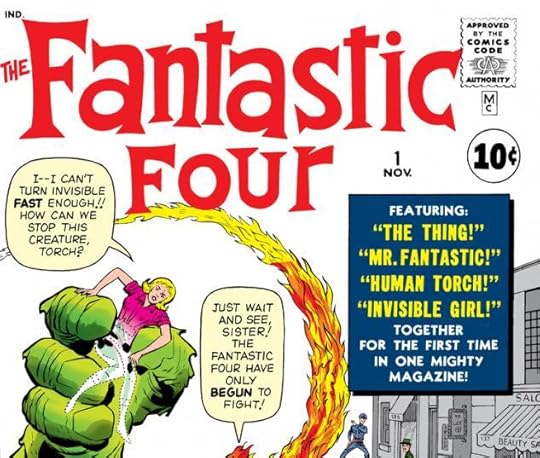
These early classic Stan Lee/Jack Kirby adventures of Marvel's First Family - The Invisible Girl, the Human Torch, the Thing, and Mr. Fantastic - defined the Marvel Age of Comics! Collects Fantastic Four #1-20 and Annual #1.
544 pages, Paperback
First published November 10, 1963
About the author
Stan Lee
7,595 books2,406 followersStan Lee (born Stanley Martin Lieber) was an American writer, editor, creator of comic book superheroes, and the former president and chairman of Marvel Comics.
With several artist co-creators, most notably Jack Kirby and Steve Ditko, he co-created Spider-Man, the Fantastic Four, Thor as a superhero, the X-Men, Iron Man, the Hulk, Daredevil, the Silver Surfer, Dr. Strange, Ant-Man and the Wasp, Scarlet Witch, The Inhumans, and many other characters, introducing complex, naturalistic characters and a thoroughly shared universe into superhero comic books. He subsequently led the expansion of Marvel Comics from a small division of a publishing house to a large multimedia corporation.
With several artist co-creators, most notably Jack Kirby and Steve Ditko, he co-created Spider-Man, the Fantastic Four, Thor as a superhero, the X-Men, Iron Man, the Hulk, Daredevil, the Silver Surfer, Dr. Strange, Ant-Man and the Wasp, Scarlet Witch, The Inhumans, and many other characters, introducing complex, naturalistic characters and a thoroughly shared universe into superhero comic books. He subsequently led the expansion of Marvel Comics from a small division of a publishing house to a large multimedia corporation.
Ratings & Reviews
Friends & Following
Create a free account to discover what your friends think of this book!
Community Reviews
Displaying 1 - 30 of 44 reviews

June 10, 2020
Can it get anymore classic than the first 21 issues of Stan Lee and Jack Kirby's Fantastic Four, and the birth of the modern Marvel Universe? Debuting the Fantastic Four, the Baxter Building, Dr Doom, Mole Man, the Skrulls, the Puppet Master, the Watcher, Mad Thinker, Red Ghost, Molecule Man, Hate Monger and more! Absolutely astounding creativity by Lee & Kirby, and to top it off they make the Fantastic Four a dysfunctional team! 6 out of 12, Three Stars. I read the Fantastic Four comic books #1 to #21. covered by this volume.
2014 read
2014 read
July 4, 2008
Here is the beginning of not just the Fantastic Four, but the marvel universe itself. Reading this you realize how much that is considered the building blocks of marvel showed up in these pages.
The stories are goofy, simplistic, corny, done in a single issue and throughly wonderful. There's a heavy science fiction slant to most of the stories, lots of aliens, funky science and wild inventions created by both the good and bad guys.
The slightly dysfunctional vibe is very strong, Reed has a much stronger personality than in later years when every writer treated him as the bland science guy. Occasionally using his 'dad voice' when Ben and Johnny act like knuckleheads. The Invisible Girl/Mr. Fantastic/ Namor love triangle gets more play than I remember and adds a weird sexual tension to a couple stories.
Ben Grimm is grumpy about being the Thing, but not as whiney as he'd get in later years.
My only complaints is Invisible girl is very much the damsel and isn't allowed to do much more than look cute, go shopping, get captured and about every five issues is allowed to save the day.
That and Human Torch is almost always in 'flame on!' mode. The guy is constantly on fire.
I love Jack Kirby's art, but this is one of the few Essential volumes that I miss the color. THe FF are colorful and larger than life and seem a bit off in black and white.
The stories are goofy, simplistic, corny, done in a single issue and throughly wonderful. There's a heavy science fiction slant to most of the stories, lots of aliens, funky science and wild inventions created by both the good and bad guys.
The slightly dysfunctional vibe is very strong, Reed has a much stronger personality than in later years when every writer treated him as the bland science guy. Occasionally using his 'dad voice' when Ben and Johnny act like knuckleheads. The Invisible Girl/Mr. Fantastic/ Namor love triangle gets more play than I remember and adds a weird sexual tension to a couple stories.
Ben Grimm is grumpy about being the Thing, but not as whiney as he'd get in later years.
My only complaints is Invisible girl is very much the damsel and isn't allowed to do much more than look cute, go shopping, get captured and about every five issues is allowed to save the day.
That and Human Torch is almost always in 'flame on!' mode. The guy is constantly on fire.
I love Jack Kirby's art, but this is one of the few Essential volumes that I miss the color. THe FF are colorful and larger than life and seem a bit off in black and white.


March 26, 2019
This collection of the Marvel superhero team is full of action-packed nostalgia that includes not just guest appearances by the Incredible Hulk and Ant-Man, but shows how superhero comics are still entertaining despite shifting times (Grade: A-).
July 28, 2010
Corny fun. It's so cool to realise how much modern day superhero fiction draws on these stories and ideas.
The fact that it's written in the 60s shows when you notice:
* References to "reds" and "commies"
* Sometimes they fly faster than light, with no reference to warp speed or hyperspace or anything that modern sci-fi requires now
* It demonstrates (apparently subconscious) sexism in society back then - one time Reed Richards goes to find the Invisible Girl because he needs some paperwork typed up!
The fact that it's written in the 60s shows when you notice:
* References to "reds" and "commies"
* Sometimes they fly faster than light, with no reference to warp speed or hyperspace or anything that modern sci-fi requires now
* It demonstrates (apparently subconscious) sexism in society back then - one time Reed Richards goes to find the Invisible Girl because he needs some paperwork typed up!
February 12, 2008
Presented in stunning black and white, this volume (and the entire series for that matter) was meant as a cheap affordable presentation and it reflects the frenetic unbridled narrative which the entire Marvel Universe was based and derived from. This is likely out-of-print now as the publisher has moved onto more profitable forms of publication.

October 24, 2012
This volume of the Fantastic Four is a must-read not only for fans of classic superheroes but for fans of classic science fiction. There's so much to love about this book and these characters as created by Stan Lee and Jack Kirby. This collection includes the first twenty monthly issues of Fantastic Four as well as Annual #1 and spans from November 1961 into 1963.
There's so much to love about this collection and these characters. Lets go ahead and break it down.
Concept: The Fantastic Four are often easily lumped in with Marvel's superheroes. This is somewhat apt because: a) they inhabit the same world and b).they've shared adventures with them. However, they're different.
The Fantastic Four are far more adventurers, explorers and guardians rather than crime fighters. They don't go out on patrol. If they stop a common bank robber, it's just because they're good guys and happen to be in the neighborhood, not because because that's their deal.
Their world is space travel, the microverse, alternate dimensions, and all that stuff that makes Sci Fi geeks giddy. You love Star Trek and Lost in Space, then the Fantastic Four are your people.
The Heroes: In a superhero world full of loners and alliances of conveniences, what Lee and Kirby managed to create in this pre-X-men, pre-Avengers world is a true family of heroes. Lee said that the Fantastic Four came out of a conversation with someone at DC on the golf course talking about the success of the Justice League. I've read a few early Justice League stories and (with all due respect), Lee and Kirby easily cleared that bar.
The characters are interesting as individuals. My favorite was Ben Grimm (the Thing.) While everyone else was quite happy with their new powers, he'd been left looking like a big brick monster even though he was the strongest person mortal in the Marvel Universe outside of the Hulk. He was understandably bitter and angry. At a couple points, he turned on his team mates. However, in a believable character arch, the Thing became more good natured and had a marked improvement with the introduction of girlfriend Alicia Masters in what remains one of the sweetest love stories in comics.
Mr. Fantastic is the responsible one and the one with the powers that allow the most creative uses and Jack Kirby's art work puts good use to that. Johnny Storm is the typical teenager and his clashes with the Thing (both light and serious) have been a hallmark of the series.
The one character that really did have some problems was Sue Storm. In early issues, she seemed to be in constant need of rescuing. In one issue with the Hulk, Reed Richards even suggested that her primary contribution was aesthetic.
This led to fan complaints and suggestions she wasn't contributing to the Fantastic Four and suggestion that she be thrown out. Lee and Kirby addressed this in typical fashion doing a letters column where the Fantastic Four responded to fan letters, including complaints about Sue in an actual comic book form. The criticism was portrayed as really hurting her feelings and her teammates stuck for her.
As much as superhero teammate support surely helped., Lee and Kirby worked to make the character tougher. In one issue, she delivers a key knockout blow to Dr. Doom where the others had failed. While other enhancements that would make it clear that Sue was an equal part of the team such as giving her a forecefield that could protect others in battle, Lee and Kriby actually made some nice moves.
There is some romantic tension in the story as well because while she was engaged to Reed prior to the accident, she is smitten by the Fantastic Four antagonist Sub-mariner and guest hero Ant Man. For those who grew up watching a married Sue and Reed, the marriage won't be until Fantastic Four Annual #3 which is in the third Essentials volume.
What's remarkable is that this group slowly gels and becomes a real family that works well together despite differences and cares about each other.
The Antagonists: The Antagonists were also fantastic. Lee and Kirby were smart. They knew when they found a good solid antagonist. Dr. Doom and Sub-mariner both worked and about half of the issues feature them. Two adventures each feature the Puppet Master and the Skrull race. The rest are classic sci-fi villains.
This book introduces Dr. Doom who is practically Marvel's universal super villain. While the Fantastic Four are his main rivals, he's also fought Spider-man, the X-men, and even the Hulk. He's the type of perfectly cast powerful and intelligent villain every hero needs.
The Sub-mariner works well here as a bit of an anti-hero. The undersea prince of the deep who first appeared in comics the month before Batman appeared in detective comics was re-introduced early on and makes war on the surface dwellers who he blames for the disappearance of his Atlantean kingdom. This makes the character compelling because he's not entirely evil. He has noble instincts, a code of honor, and even falls in love with Sue Storm and even makes a great sacrifice for her.
Artwork: Simply put, the artwork here was superb. I actually prefer these black and white additions, particularly when Kirby's doing the pencils. My favorite story in here is the Annual which includes an epic 40 page battle between the FF and Sub-mariner. It's simply wonderful and Kirby's artwork made it so.
Flaws: There are few flaws in the book other than the Sue problem. The epic annual included the first meeting between Spider-man and the Fantastic Four and Spidey acted poorly. Also in the same annual, Reed says the same line three times about Sub-mariner loving Sue as much as the Four do in his own way.
But that's a nitpicky point for a book that launched the Marvel Age of Comics reflects the best of early science fiction. This one is simply must-read.
There's so much to love about this collection and these characters. Lets go ahead and break it down.
Concept: The Fantastic Four are often easily lumped in with Marvel's superheroes. This is somewhat apt because: a) they inhabit the same world and b).they've shared adventures with them. However, they're different.
The Fantastic Four are far more adventurers, explorers and guardians rather than crime fighters. They don't go out on patrol. If they stop a common bank robber, it's just because they're good guys and happen to be in the neighborhood, not because because that's their deal.
Their world is space travel, the microverse, alternate dimensions, and all that stuff that makes Sci Fi geeks giddy. You love Star Trek and Lost in Space, then the Fantastic Four are your people.
The Heroes: In a superhero world full of loners and alliances of conveniences, what Lee and Kirby managed to create in this pre-X-men, pre-Avengers world is a true family of heroes. Lee said that the Fantastic Four came out of a conversation with someone at DC on the golf course talking about the success of the Justice League. I've read a few early Justice League stories and (with all due respect), Lee and Kirby easily cleared that bar.
The characters are interesting as individuals. My favorite was Ben Grimm (the Thing.) While everyone else was quite happy with their new powers, he'd been left looking like a big brick monster even though he was the strongest person mortal in the Marvel Universe outside of the Hulk. He was understandably bitter and angry. At a couple points, he turned on his team mates. However, in a believable character arch, the Thing became more good natured and had a marked improvement with the introduction of girlfriend Alicia Masters in what remains one of the sweetest love stories in comics.
Mr. Fantastic is the responsible one and the one with the powers that allow the most creative uses and Jack Kirby's art work puts good use to that. Johnny Storm is the typical teenager and his clashes with the Thing (both light and serious) have been a hallmark of the series.
The one character that really did have some problems was Sue Storm. In early issues, she seemed to be in constant need of rescuing. In one issue with the Hulk, Reed Richards even suggested that her primary contribution was aesthetic.
This led to fan complaints and suggestions she wasn't contributing to the Fantastic Four and suggestion that she be thrown out. Lee and Kirby addressed this in typical fashion doing a letters column where the Fantastic Four responded to fan letters, including complaints about Sue in an actual comic book form. The criticism was portrayed as really hurting her feelings and her teammates stuck for her.
As much as superhero teammate support surely helped., Lee and Kirby worked to make the character tougher. In one issue, she delivers a key knockout blow to Dr. Doom where the others had failed. While other enhancements that would make it clear that Sue was an equal part of the team such as giving her a forecefield that could protect others in battle, Lee and Kriby actually made some nice moves.
There is some romantic tension in the story as well because while she was engaged to Reed prior to the accident, she is smitten by the Fantastic Four antagonist Sub-mariner and guest hero Ant Man. For those who grew up watching a married Sue and Reed, the marriage won't be until Fantastic Four Annual #3 which is in the third Essentials volume.
What's remarkable is that this group slowly gels and becomes a real family that works well together despite differences and cares about each other.
The Antagonists: The Antagonists were also fantastic. Lee and Kirby were smart. They knew when they found a good solid antagonist. Dr. Doom and Sub-mariner both worked and about half of the issues feature them. Two adventures each feature the Puppet Master and the Skrull race. The rest are classic sci-fi villains.
This book introduces Dr. Doom who is practically Marvel's universal super villain. While the Fantastic Four are his main rivals, he's also fought Spider-man, the X-men, and even the Hulk. He's the type of perfectly cast powerful and intelligent villain every hero needs.
The Sub-mariner works well here as a bit of an anti-hero. The undersea prince of the deep who first appeared in comics the month before Batman appeared in detective comics was re-introduced early on and makes war on the surface dwellers who he blames for the disappearance of his Atlantean kingdom. This makes the character compelling because he's not entirely evil. He has noble instincts, a code of honor, and even falls in love with Sue Storm and even makes a great sacrifice for her.
Artwork: Simply put, the artwork here was superb. I actually prefer these black and white additions, particularly when Kirby's doing the pencils. My favorite story in here is the Annual which includes an epic 40 page battle between the FF and Sub-mariner. It's simply wonderful and Kirby's artwork made it so.
Flaws: There are few flaws in the book other than the Sue problem. The epic annual included the first meeting between Spider-man and the Fantastic Four and Spidey acted poorly. Also in the same annual, Reed says the same line three times about Sub-mariner loving Sue as much as the Four do in his own way.
But that's a nitpicky point for a book that launched the Marvel Age of Comics reflects the best of early science fiction. This one is simply must-read.

April 15, 2019
Some of Kirby's art is really cool. Some.
This has more text than some novels, and most of it is typical of Stan Lee...not that good. There are a few cool villains and a couple interesting stories, but mostly, it's everything that I thought comics were when I didn't read comics.
Not my thing, in spite of the good bits.
This has more text than some novels, and most of it is typical of Stan Lee...not that good. There are a few cool villains and a couple interesting stories, but mostly, it's everything that I thought comics were when I didn't read comics.
Not my thing, in spite of the good bits.

May 17, 2012
THE ESSENTIAL FANTASTIC FOUR, Volume 1 brings together the beginning of a legend in comics. Whatever you may feel about the dialogue or situations in these early stories, they are truly groundbreaking from a stereotypical comic book point of view. They are often stark-raving mad in the stories that are presented, but they are all truly memorable. The legend that became Marvel Comics started here, and the magic is pretty obvious. Dramatically over-the-top and desperately haunted, the members of the Fantastic Four remain my favorite characters in comics. Especially the Thing. So moody. So broody. So grotesque. So tortured. So 1960s. The Thing is the only comic book character who can ever get away with truly wearing nothing but underwear for decades without anyone noticing or caring very much.
The villains in volume one are just as brash as the stories presented here. The Mole Man. Doctor Doom. Kurgo. The Impossible Man. Rama-Tut. The Sub-Mariner. The Skrulls. The villains are ever bit as special as Mister Fantastic, the Invisible Girl, the Human Torch or the Thing could ever be. All dripping with questionable intent and motivations that readers could understand. All of this was the beginning of what Marvel Comics would define as possible and something expected of comic books and those who produced them. This was not just something different, but this was something incredibly fun to read and get lost in. When I was growing up, reading the Fantastic Four comic books in my older brother's collection was like being introduced to Shakespeare and being allowed to read the bard's plays to my heart's content. For me, the Fantastic Four defined superheroes in the Marvel Universe.
Granted some of the stories are downright silly while others are completely forgettable. It could be argued that some of the early stories should never have been produced. But seen through the eyes of my childhood, the real magic of what the ESSENTIAL FANTASTIC FOUR, Volume 1 offers something truly magical. The book is a reminder of simpler times when comics could be imaginative and entertaining without being so serious and dystopian to be relevant. That is enough for me to recommend this book to anyone who is interested in where the Fantastic Four came from, or what truly spawned the origins of Marvel Comics. Fun. Fabulous. In one word, fantastic.
The villains in volume one are just as brash as the stories presented here. The Mole Man. Doctor Doom. Kurgo. The Impossible Man. Rama-Tut. The Sub-Mariner. The Skrulls. The villains are ever bit as special as Mister Fantastic, the Invisible Girl, the Human Torch or the Thing could ever be. All dripping with questionable intent and motivations that readers could understand. All of this was the beginning of what Marvel Comics would define as possible and something expected of comic books and those who produced them. This was not just something different, but this was something incredibly fun to read and get lost in. When I was growing up, reading the Fantastic Four comic books in my older brother's collection was like being introduced to Shakespeare and being allowed to read the bard's plays to my heart's content. For me, the Fantastic Four defined superheroes in the Marvel Universe.
Granted some of the stories are downright silly while others are completely forgettable. It could be argued that some of the early stories should never have been produced. But seen through the eyes of my childhood, the real magic of what the ESSENTIAL FANTASTIC FOUR, Volume 1 offers something truly magical. The book is a reminder of simpler times when comics could be imaginative and entertaining without being so serious and dystopian to be relevant. That is enough for me to recommend this book to anyone who is interested in where the Fantastic Four came from, or what truly spawned the origins of Marvel Comics. Fun. Fabulous. In one word, fantastic.

June 1, 2023
Introducing the First Family:
Before the Avengers, before the X-Men, before Spider-Man, there was the Fantastic Four. The first heroes of the Marvel Universe as created by Stan Lee.
This book collects the first twenty issues of Fantastic Four plus the first annual, reprinted here in black and white. I intend to critique most of these Marvel Essential volumes, so let me state my opinion on the lack of color here and not mention it again. To be honest, most of the coloring in these 60s comics didn't look that great to me to begin with, so I kind of appreciate how its absence here allows me to focus on Kirby's pencils. Plus my earliest comics as a child were my dad's copies of Essential Spider-Man and Uncanny X-Men, so I have a bit of a bias.
Superhero comics were in a weird spot in the 60s. Following WWII, the breed had nearly gone extinct with practically every cape besides DC's big three ceasing publication. The rise of the Comics Code Authority and the book Seduction of the Innocent hadn't helped, putting a magnifying glass over the whole industry. DC to create a new pantheon of heroes at this point, the Justice League was well established, but to avoid the CCA's wrath most of their stories were staying safe and juvenile. No real challengers had come from other companies either, with most publishers outside of DC staying in the realms of comedy, romance, or western which went mostly unscathed.
At the company presently known as Atlas, Stan Lee was getting pretty bored with the current trajectory of his career and was preparing to leave comics forever. Before he put these plans into action though, he received an edict from his boss to create their own superhero team to compete with the JLA. Partnered with Captain America co-creator Jack Kirby, Lee decided to try his hand at one last book, doing in a way no one had before.
The self-professed "World's Greatest Comic Magazine" was of course a hit, but in these early years Lee-Kirby were a long way from perfecting the formula. The reading experience is rocky, and the characters are not yet what they will become. Ben "The Thing" Grimm is temperamental, violent, self-absorbed, and generally unlikeable for most of this volume. Sue is passive, mostly useless, constantly belittled, and calls herself "Invisible Girl." Reed and Johnny... actually aren't that far off from what they will become.
Most of the stories here aren't exactly the sagas Stan will make a name for himself writing only a few years hence. Tales about going back in time to raid pirate treasure or the Four being cast to play themselves in a Hollywood movie feel like they'd be more at home in DC comics from the same period.
As a modern reader, I simply can't ignore the rampant sexism. I know its from a different time, but its still distracting and off-putting. You'll find it in most of these early Essential collections, but I have to make a special point of it here with Sue. Considering the capable character she becomes in the future, it is awkward to see her sidelined by every character in the book. She also lacks her iconic forcefields in this era, and can only make herself invisible. Considering she doesn't have any particular skill or expertise in this volume, its hard to understand why she's a member of a "fighting team" at all. At one point, Reed defends her involvement to reader on the grounds that she "keeps up morale" and asks if we would similarly complain that Abe Lincoln's mom isn't important to history. I would remind Mister Fantastic that Mrs. Lincoln wasn't fighting on the frontlines.
From a historical perspective though, this volume is invaluable. You get the first appearances of Moleman, the Skrulls, Doctor Doom, Red Ghost and his Super-Apes, the Watcher, Molecule Man, and Rama-Tut who would one day be known as Kang the Conqueror. You get to witness the reinvention of Namor the Submariner from a Golden Age hero to a Silver Age antagonist. He and Doom take up an inordinate amount of space in this book, but most of their plots are decent to great. Also present are a few cross-overs that lay the foundation for later Marvel continuity, including the Incredible Hulk, Ant-Man, and an alternate version of the Four's duel with a certain Web Slinger in Amazing Spider-Man #1.
Overall I recommend this to anyone with an interest in the history of Marvel. Its rocky beginning, but Lee-Kirby will make the journey worth your while.
Before the Avengers, before the X-Men, before Spider-Man, there was the Fantastic Four. The first heroes of the Marvel Universe as created by Stan Lee.
This book collects the first twenty issues of Fantastic Four plus the first annual, reprinted here in black and white. I intend to critique most of these Marvel Essential volumes, so let me state my opinion on the lack of color here and not mention it again. To be honest, most of the coloring in these 60s comics didn't look that great to me to begin with, so I kind of appreciate how its absence here allows me to focus on Kirby's pencils. Plus my earliest comics as a child were my dad's copies of Essential Spider-Man and Uncanny X-Men, so I have a bit of a bias.
Superhero comics were in a weird spot in the 60s. Following WWII, the breed had nearly gone extinct with practically every cape besides DC's big three ceasing publication. The rise of the Comics Code Authority and the book Seduction of the Innocent hadn't helped, putting a magnifying glass over the whole industry. DC to create a new pantheon of heroes at this point, the Justice League was well established, but to avoid the CCA's wrath most of their stories were staying safe and juvenile. No real challengers had come from other companies either, with most publishers outside of DC staying in the realms of comedy, romance, or western which went mostly unscathed.
At the company presently known as Atlas, Stan Lee was getting pretty bored with the current trajectory of his career and was preparing to leave comics forever. Before he put these plans into action though, he received an edict from his boss to create their own superhero team to compete with the JLA. Partnered with Captain America co-creator Jack Kirby, Lee decided to try his hand at one last book, doing in a way no one had before.
The self-professed "World's Greatest Comic Magazine" was of course a hit, but in these early years Lee-Kirby were a long way from perfecting the formula. The reading experience is rocky, and the characters are not yet what they will become. Ben "The Thing" Grimm is temperamental, violent, self-absorbed, and generally unlikeable for most of this volume. Sue is passive, mostly useless, constantly belittled, and calls herself "Invisible Girl." Reed and Johnny... actually aren't that far off from what they will become.
Most of the stories here aren't exactly the sagas Stan will make a name for himself writing only a few years hence. Tales about going back in time to raid pirate treasure or the Four being cast to play themselves in a Hollywood movie feel like they'd be more at home in DC comics from the same period.
As a modern reader, I simply can't ignore the rampant sexism. I know its from a different time, but its still distracting and off-putting. You'll find it in most of these early Essential collections, but I have to make a special point of it here with Sue. Considering the capable character she becomes in the future, it is awkward to see her sidelined by every character in the book. She also lacks her iconic forcefields in this era, and can only make herself invisible. Considering she doesn't have any particular skill or expertise in this volume, its hard to understand why she's a member of a "fighting team" at all. At one point, Reed defends her involvement to reader on the grounds that she "keeps up morale" and asks if we would similarly complain that Abe Lincoln's mom isn't important to history. I would remind Mister Fantastic that Mrs. Lincoln wasn't fighting on the frontlines.
From a historical perspective though, this volume is invaluable. You get the first appearances of Moleman, the Skrulls, Doctor Doom, Red Ghost and his Super-Apes, the Watcher, Molecule Man, and Rama-Tut who would one day be known as Kang the Conqueror. You get to witness the reinvention of Namor the Submariner from a Golden Age hero to a Silver Age antagonist. He and Doom take up an inordinate amount of space in this book, but most of their plots are decent to great. Also present are a few cross-overs that lay the foundation for later Marvel continuity, including the Incredible Hulk, Ant-Man, and an alternate version of the Four's duel with a certain Web Slinger in Amazing Spider-Man #1.
Overall I recommend this to anyone with an interest in the history of Marvel. Its rocky beginning, but Lee-Kirby will make the journey worth your while.

January 16, 2019
Le primissime avventure dei Fantastici Quattro!
Trovo incredibile come ancora oggi siano godibili, e come nel giro di un paio di anni Lee & Kirby abbiano sviluppato i personaggi e messo così tante idee sulla carta. Certo, non tutte le storie sono memorabili, ma tra le prime 20 della serie regolare qui raccolte, oltre al primo annual, alcune restano da 5 stelle piene.
Certo, alcune sono abbastanza scarse per gli standard odierni, ma avendo avuto modo di visionare altri fumetti dei primissimi anni '60 posso dire che all'epoca non sfiguravano.
Tra i migliori numeri il 19, con l'esordio di Rama-Tut; il 13 con lo Spettro Rosso e le 3 super scimmie; la sequenza 4-5-6 con l'apparizione di Namor, del Dr. Doom e la loro prima incerta alleanza.
Mi piace vedere lo stile di Kirby evolvere, al netto dell'inchiostratore, e in questi albi il miglioramento è continuo. Dick Ayers in questi albi è stato certamente il suo migliore inchiostratore; le idee di Lee erano magnifiche e spesso potevano essere ricondotte a idee apparse su magazine di racconti di FS. Ma la sua interpretazione in chiave super eroica ed i dialoghi sono tutta opera sua.
4 stelle e mezza.
Trovo incredibile come ancora oggi siano godibili, e come nel giro di un paio di anni Lee & Kirby abbiano sviluppato i personaggi e messo così tante idee sulla carta. Certo, non tutte le storie sono memorabili, ma tra le prime 20 della serie regolare qui raccolte, oltre al primo annual, alcune restano da 5 stelle piene.
Certo, alcune sono abbastanza scarse per gli standard odierni, ma avendo avuto modo di visionare altri fumetti dei primissimi anni '60 posso dire che all'epoca non sfiguravano.
Tra i migliori numeri il 19, con l'esordio di Rama-Tut; il 13 con lo Spettro Rosso e le 3 super scimmie; la sequenza 4-5-6 con l'apparizione di Namor, del Dr. Doom e la loro prima incerta alleanza.
Mi piace vedere lo stile di Kirby evolvere, al netto dell'inchiostratore, e in questi albi il miglioramento è continuo. Dick Ayers in questi albi è stato certamente il suo migliore inchiostratore; le idee di Lee erano magnifiche e spesso potevano essere ricondotte a idee apparse su magazine di racconti di FS. Ma la sua interpretazione in chiave super eroica ed i dialoghi sono tutta opera sua.
4 stelle e mezza.
April 29, 2022
This is practically the bible of comics.
Lee and Kirby continued to astound me issue after issue, coming right out of the gate with such strong character voices and imaginative adventures. The early issues of this run practically lay the groundwork for the Marvel Universe as we know it today, which is no small feat considering the comic series has grown into a globe-sized blob of media and consumerism.
I also love that the human torch’s weakness is asbestos. it’s perfect because he’s made of fire, but he’s also made of man. double-whammy.
Lee and Kirby continued to astound me issue after issue, coming right out of the gate with such strong character voices and imaginative adventures. The early issues of this run practically lay the groundwork for the Marvel Universe as we know it today, which is no small feat considering the comic series has grown into a globe-sized blob of media and consumerism.
I also love that the human torch’s weakness is asbestos. it’s perfect because he’s made of fire, but he’s also made of man. double-whammy.

December 3, 2018
I have heard that Stan Lee and Jack Kirby’s first one hundred issues of the Fantastic Four are the best. The twenty plus issues in this volume do not disappoint! I was excited to read every page. The FF are more than just a team they are truly a bickering family. I love that all four squabble as they are saving the world. Lee and Kirby certainly had a good formula going when plotting and drawing the team. I can say that I enjoy the Fantastic Four more now than I did before reading this book.

August 27, 2023
The first ever Fantastic Four comics, and the start of the Marvel universe. Fun, pulp comics peopled with Jack Kirby's squat, wall-eyed figures - occasionally there are flashes of his really fun invention, the dinosaurs in space suits and Namor's underwater city, with knights on giant squid.
March 5, 2018
A bit repetitive...

May 22, 2019
Pretty good, especially in comparison to how I felt about ASM. 4/5.


December 24, 2021
Setelah rereading, ternyata baru menyadari banyak cameo karakter MCU di sini... wow!!

December 21, 2023
Great classic Kirby and Stan. Funny, snappy patter from Lee and all of the bulky Jack art you love.

August 14, 2014
Essential Fantastic Four Volume 1 collects the first 20 issues of The Fantastic Four, along with the first Annual, in one thick copy. All of the pages are black and white, so you aren't getting the full experience, but a cheaper (and easier to track down) version. These were written in the 60's so the plot lines run one issue and have little characterization. We do meet some of the more well known villains, such as Dr. Doom and The Sub-Mariner, which is cool, but we see them pop-up way too often. There are only 21 issues in this volume and we see these two guys in like six of the issues. It's not a big deal, because these are some of the big guys in the FF universe and we get to watch The Sub-Mariner's evolution from regular guy to leader of the underwater world. But, that isn't the only place with consistent repetition. The characters often repeat some of the exact same lines in multiple issues; not in an "I am establishing a catch-phrase" way, but as a testament to the area of comics we are dealing with. Each issue begins a new story and conveniently wraps it up at the end of the same issue. I understand that FF was still a fledgling title at this point, and they wanted to be able to have new readers start at any issue and not be lost, but it's like watching random episodes of Friends; there is very little mythology built and each issue can stand alone as a complete experience. The issues are fun most of the time, with some really ridiculous and/or cool villains and we get to see temperature of the times with the constant mentions of Communism and Sue Storm constantly being the weak link, fawning over The Sub-Mariner and just being so damn unhelpful until an opportunity arises for her to smack something out of the villain's hand arises (She even mentions how useless she is and of course the other three tell her "No, you totally helped us out that time you were invisible and no one noticed you" which is also her real life MO, being a totally background piece until they realize that she hasn't done anything yet this issue. I'm not sure if it's entirely the fault of the sexism in the 1960's or if they really didn't like Sue enough to give her anything useful to do). If you've read any of the older comics, you know what to expect style wise. If you haven't, they feel really hokey and often seem to insult your intelligence. However, comics weren't like they are now, with long sweeping story lines and cross-overs, slow burning sub plots and well established relationships. You could jump to the back and read Issue 20 and not have any real problems understanding what was happening. They are fun little pulp stories that are all basically the same, just cut and paste in a new villain. I wouldn't recommend sitting down one morning with the intention of plowing through Volume 1, as the stories just aren't exciting enough to hold your attention for the duration. I read a couple a day and even that grew boring half-way through. If you want to learn the background and history of the FF, I'd recommend the First Family story line instead, but if you want to start at the beginning and get it all form the start (including like three of the same blueprints for the FF's penthouse, Numerous Q&A's where the explain how their suits work, and being retold countless times the same damn things every issue) then this is the way to go. I'm glad I read it, even though it was rough, because I got to see the FF at the very beginning, before the story lines got all deep and twisted, but by the end I longed for the intricate, mythological stories I've grown used to in my short amount of time in the Comic Book World.

August 7, 2019
This comic book is so awesome!

August 11, 2020
Full disclosure: rather than reading this book, which is black and white reprints of issues 1 through 20 (and the first annual) of the original series, I read the corresponding issues in full color on the Marvel Unlimited app. As a comic book lover and collector, Marvel Unlimited might be the best (and most satisfying) money I spend on comics every month.
But here is where the Marvel Universe as we know it today truly begins. I love Marvel Comics with all my heart and soul, and the exploits of Marvel's First Family have always been a personal favorite. These stories presented here are a cut above anything else being printed at the time, mostly, I think, because good old Stan Lee knew that he had heavy competition from DC, which was making lots of money hand over fist with their recent publication of "The Justice League of America".
These stories introduce some of the best recurring villains to the team (Doctor Doom, The Puppet Master, The Mad Thinker and his Awesome Android, The Skrulls, etc) and lay the groundwork for the ongoing conflict with Namor, a conflict that will haunt the dynamics of the book for pretty much the remainder of its run. It's mostly world-building here, so none of the stories are perfect. Some of them are downright goofy (at one point, Doom uses magnets to pull Baxter Building from its foundation and into outer space!). But they do exhibit nicely some of the tropes that make this book so important to readers like me: Sue feels useless but usually saves the day, the inner arguing amongst the team, the reliance on teamwork to fulfill every mission, sometimes even admitting defeat. For Marvel's early days, this is as good as it gets, and I know from years of reading this comic religiously that it only gets better from here.
Worth mentioning here: Jack Kirby's stellar artwork, an impressive guest appearance by Ant-Man, and the first annual in which Namor must fight each member of the team one by one when he declares war on surface dwellers.
But here is where the Marvel Universe as we know it today truly begins. I love Marvel Comics with all my heart and soul, and the exploits of Marvel's First Family have always been a personal favorite. These stories presented here are a cut above anything else being printed at the time, mostly, I think, because good old Stan Lee knew that he had heavy competition from DC, which was making lots of money hand over fist with their recent publication of "The Justice League of America".
These stories introduce some of the best recurring villains to the team (Doctor Doom, The Puppet Master, The Mad Thinker and his Awesome Android, The Skrulls, etc) and lay the groundwork for the ongoing conflict with Namor, a conflict that will haunt the dynamics of the book for pretty much the remainder of its run. It's mostly world-building here, so none of the stories are perfect. Some of them are downright goofy (at one point, Doom uses magnets to pull Baxter Building from its foundation and into outer space!). But they do exhibit nicely some of the tropes that make this book so important to readers like me: Sue feels useless but usually saves the day, the inner arguing amongst the team, the reliance on teamwork to fulfill every mission, sometimes even admitting defeat. For Marvel's early days, this is as good as it gets, and I know from years of reading this comic religiously that it only gets better from here.
Worth mentioning here: Jack Kirby's stellar artwork, an impressive guest appearance by Ant-Man, and the first annual in which Namor must fight each member of the team one by one when he declares war on surface dwellers.
May 8, 2011
If you were to divide up the early (1961-1963) Marvel superhero comics into "major" and "minor" series, the FF would definitely land on the "major" side of the ledger. Shortly before reading this, I read the first volume of the Essential Thor, which unfortunately felt pretty minor. The Mighty Thor, God of Thunder, wielder of Mjolnir, one of the most powerful superheroes there is, spent a lot of issues wasting time with no-name thugs, random dictators or communists, or one-shot alien visitors.
Not so for the Fantastic Four. Nearly every foe they faced in these first 20 issues became classic, perennial villains. Not only do Doctor Doom and the Sub-Mariner (yes, generally as a villain) appear multiple times in these issues, but their characters develop and they get established as having links to the Fantastic Four. The Skrulls appear in the second issue and might have become simple one-issue aliens, but Lee and Kirby found a way to do more with them and bring them back in issue 18 with the Super-Skrull. Even the Puppet Master shows up more than once, and of course his daughter becomes the Thing's long-term girlfriend. I have to think that Stan Lee consciously assigned the best villains to what was something of a flagship series for the entire Marvel line of comics.
Of course, it's not like everything you know and love about the FF popped forth fully-formed in the first issue. The team didn't even get costumes until #3, the Thing was originally drawn more lumpy and less rocky, and Johnny Storm's first couple of appearances had him drawn more like a vaguely humanoid flame shape (like the Golden Age Human Torch was) instead of the familiar flaming man. Character-wise, the biggest problem early on was that Sue was under-powered --- she could turn invisible, but that was it; she doesn't gain her force-field power until a few issues into Essential FF Vol. 2. As a result she ends up getting captured or otherwise imperiled in many issues instead of seriously contributing.
These issues from the early years also require a lot more suspension of disbelief and rely on deus ex machina more than they did than in comics from several years down the road that were less raw. But this is good stuff, and you can see how it became popular and sparked a resurgence in the superhero genre and even the comics medium as a whole.
Not so for the Fantastic Four. Nearly every foe they faced in these first 20 issues became classic, perennial villains. Not only do Doctor Doom and the Sub-Mariner (yes, generally as a villain) appear multiple times in these issues, but their characters develop and they get established as having links to the Fantastic Four. The Skrulls appear in the second issue and might have become simple one-issue aliens, but Lee and Kirby found a way to do more with them and bring them back in issue 18 with the Super-Skrull. Even the Puppet Master shows up more than once, and of course his daughter becomes the Thing's long-term girlfriend. I have to think that Stan Lee consciously assigned the best villains to what was something of a flagship series for the entire Marvel line of comics.
Of course, it's not like everything you know and love about the FF popped forth fully-formed in the first issue. The team didn't even get costumes until #3, the Thing was originally drawn more lumpy and less rocky, and Johnny Storm's first couple of appearances had him drawn more like a vaguely humanoid flame shape (like the Golden Age Human Torch was) instead of the familiar flaming man. Character-wise, the biggest problem early on was that Sue was under-powered --- she could turn invisible, but that was it; she doesn't gain her force-field power until a few issues into Essential FF Vol. 2. As a result she ends up getting captured or otherwise imperiled in many issues instead of seriously contributing.
These issues from the early years also require a lot more suspension of disbelief and rely on deus ex machina more than they did than in comics from several years down the road that were less raw. But this is good stuff, and you can see how it became popular and sparked a resurgence in the superhero genre and even the comics medium as a whole.

November 13, 2011
Well, this is it ... THE Essential volume of the entire Marvel Essentials series, and one of the few books that really lives up to that name. In the beginning, there was Spider-Man, the Hulk, Ant-Man and ... The Fantastic Four. The FF were really the progenitors of Marvel's entry into the Silver Age of Comics, being a "rip-off" of the competition's Justice League of America. High sales on that title, got The Powers That Be at Marvel interesting in doing a super-hero book again. And the rest, as they say, is history.
This black-and-white reprint volume features the first 25 or so of those pioneering adventures. The FF slowly developed the family feel that would characterize the book for decades to come, with the friendly (and sometimes not-so-friendly) banter between them all. Unfortunately, the Invisible Girl is basically a kidnapping target in most of these stories, but starts to get her legs in the next volume of the series (when she starts being able to make force fields and becomes one of the most powerful people in New York City).
You've also got the epic villains here: The Mole Man, the Skrulls, the Red Ghost, the Molecule Man, the Puppet Master, the Impossible Man, the Super-Skrull, and of course, Doctor Doom. Marvel's popular Golden Age anti-hero, the Sub-Mariner, joins the modern Marvel Universe in issue #4. The Watcher makes his first appearance as well.
All of this, plus the incredible artwork of Jack Kirby. Chic Stone and Dick Ayers do most of the inks, but there's a gem of an issue with Steve Ditko applying finishes that has become one of my favorite art team-ups of all time.
Just go buy it. If you'd rather, pay the $250+ and get the color Marvel Masterworks of the same. This art stands up to black-and-white. And the stories stand up to time with a resiliency that's missing from modern comics.
This black-and-white reprint volume features the first 25 or so of those pioneering adventures. The FF slowly developed the family feel that would characterize the book for decades to come, with the friendly (and sometimes not-so-friendly) banter between them all. Unfortunately, the Invisible Girl is basically a kidnapping target in most of these stories, but starts to get her legs in the next volume of the series (when she starts being able to make force fields and becomes one of the most powerful people in New York City).
You've also got the epic villains here: The Mole Man, the Skrulls, the Red Ghost, the Molecule Man, the Puppet Master, the Impossible Man, the Super-Skrull, and of course, Doctor Doom. Marvel's popular Golden Age anti-hero, the Sub-Mariner, joins the modern Marvel Universe in issue #4. The Watcher makes his first appearance as well.
All of this, plus the incredible artwork of Jack Kirby. Chic Stone and Dick Ayers do most of the inks, but there's a gem of an issue with Steve Ditko applying finishes that has become one of my favorite art team-ups of all time.
Just go buy it. If you'd rather, pay the $250+ and get the color Marvel Masterworks of the same. This art stands up to black-and-white. And the stories stand up to time with a resiliency that's missing from modern comics.

March 6, 2013
Ursprünge
Ein weiterer großer Wurf aus der fast schon unheimlich produktiven Lee/Kirby-Maschinerie. Wahrscheinlich nach Superman, Batman und Spider-Man die bekanntesten und erfolgreichsten Superhelden werden hier geboren.
Was den enormen Charme und die Zeitlosigkeit dieser Comics ausmacht, ist die liebevolle Darstellung einer Familie, die so gar nicht recht miteinander auskommen will: Der Heißsporn (im wahrsten Sinne des Wortes) Johnny Storm alias Human Torch glüht regelrecht darauf, dem so unverwechselbar grantelnden Thing immer wieder eins auszuwischen. Reed Richards ist so besessen von seiner Technik und Forschung, dass er seine Freundin Sue Storm schlimm vernachlässigt, die aber auch alle Hände voll zu tun hat, die beiden Streithähne auseinanderzuhalten. In den seltenen Zeiten, in denen nicht gestritten wird, machen sie zusammen die schlimmsten Bösewichter der Marvelgeschichte fertig.
Thing ist einer der Charaktere mit dem höchsten Wiedererkennungswert aller Superhelden, und es ist einfach göttlich zu sehen, wie er immer wieder von Johnny, der Yancy Street Gang oder sonst wem in Bedrängnis gebracht wird. Das alles ist aber nicht schlimm, denn im Grunde haben sie sich doch alle lieb; die Zeit, in denen Superhelden düster und von Komplexen zerfressen sein müssen, ist noch weit entfernt.
Nicht abschrecken lassen von den etwas unrunden Zeichnungen in den ersten Ausgaben; Kirby entwickelt sich rasch weiter. Deshalb nur 4 Sterne, in den nächsten Essential Fantastic Four-Titeln werden diese immer ausgereifter, und bekommen dann auch meine 5 Sterne.
Perfekte Unterhaltung für alle Altersgruppen, nur die Spider-Man-Titel aus der Essentials-Reihe sind noch besser.
Ein weiterer großer Wurf aus der fast schon unheimlich produktiven Lee/Kirby-Maschinerie. Wahrscheinlich nach Superman, Batman und Spider-Man die bekanntesten und erfolgreichsten Superhelden werden hier geboren.
Was den enormen Charme und die Zeitlosigkeit dieser Comics ausmacht, ist die liebevolle Darstellung einer Familie, die so gar nicht recht miteinander auskommen will: Der Heißsporn (im wahrsten Sinne des Wortes) Johnny Storm alias Human Torch glüht regelrecht darauf, dem so unverwechselbar grantelnden Thing immer wieder eins auszuwischen. Reed Richards ist so besessen von seiner Technik und Forschung, dass er seine Freundin Sue Storm schlimm vernachlässigt, die aber auch alle Hände voll zu tun hat, die beiden Streithähne auseinanderzuhalten. In den seltenen Zeiten, in denen nicht gestritten wird, machen sie zusammen die schlimmsten Bösewichter der Marvelgeschichte fertig.
Thing ist einer der Charaktere mit dem höchsten Wiedererkennungswert aller Superhelden, und es ist einfach göttlich zu sehen, wie er immer wieder von Johnny, der Yancy Street Gang oder sonst wem in Bedrängnis gebracht wird. Das alles ist aber nicht schlimm, denn im Grunde haben sie sich doch alle lieb; die Zeit, in denen Superhelden düster und von Komplexen zerfressen sein müssen, ist noch weit entfernt.
Nicht abschrecken lassen von den etwas unrunden Zeichnungen in den ersten Ausgaben; Kirby entwickelt sich rasch weiter. Deshalb nur 4 Sterne, in den nächsten Essential Fantastic Four-Titeln werden diese immer ausgereifter, und bekommen dann auch meine 5 Sterne.
Perfekte Unterhaltung für alle Altersgruppen, nur die Spider-Man-Titel aus der Essentials-Reihe sind noch besser.

March 19, 2014
I liked this. I'm reading all of the early Marvel comic books, and quite frankly, there's a lot of problems with them.
In film, a general rule is to never say something if you can show it. I don't feel it's as cut-and-dry in comics, but it's fairly close. Stan Lee didn't start out like that. He narrates EVERYTHING. I don't need you to tell me Mr. Fantastic is stretching, I can see from the picture he's stretching. I hate, hate, hate the monologues that every character goes on if Lee feels the reader won't understand a plot point. It's not how people would think or much less speak out loud, and it feels as if he wants to narrate it, but doesn't have the guts to just narrate it, so he has a character say it instead.
I don't like the origins for many of the villains. Many are evil for the sake of being evil, and many powers are given to characters with very flimsy reasons. Stan Lee was the master of making weird crap up and providing wholly unconvincing reasons for their existence.
Now for the good stuff. It's really neat to see where comics started. I don't necessarily like how they started and more what they evolved into. Comics nowadays are merely a different medium to tell a story that includes both writing and visuals. It started out as pure pulp fiction that didn't really explore much plot-wise.
As far as the Fantastic Four goes, it really is one of the better Silver Age comic series. The only ones that really compare in depth of storytelling are Dr. Strange, Spider-Man, and Avengers.
While I have a lot of gripes about these early comics, they're still very fun to read, and it's great to read these characters starting at their origin.
In film, a general rule is to never say something if you can show it. I don't feel it's as cut-and-dry in comics, but it's fairly close. Stan Lee didn't start out like that. He narrates EVERYTHING. I don't need you to tell me Mr. Fantastic is stretching, I can see from the picture he's stretching. I hate, hate, hate the monologues that every character goes on if Lee feels the reader won't understand a plot point. It's not how people would think or much less speak out loud, and it feels as if he wants to narrate it, but doesn't have the guts to just narrate it, so he has a character say it instead.
I don't like the origins for many of the villains. Many are evil for the sake of being evil, and many powers are given to characters with very flimsy reasons. Stan Lee was the master of making weird crap up and providing wholly unconvincing reasons for their existence.
Now for the good stuff. It's really neat to see where comics started. I don't necessarily like how they started and more what they evolved into. Comics nowadays are merely a different medium to tell a story that includes both writing and visuals. It started out as pure pulp fiction that didn't really explore much plot-wise.
As far as the Fantastic Four goes, it really is one of the better Silver Age comic series. The only ones that really compare in depth of storytelling are Dr. Strange, Spider-Man, and Avengers.
While I have a lot of gripes about these early comics, they're still very fun to read, and it's great to read these characters starting at their origin.

January 30, 2015
I bought the first two volumes of essential fantastic four years ago when I was in middle school. I read them both in a matter of a week or two and hadn't touched them sense. Until now. The wonderful thing about these volumes is that they collect the monumental Stan Lee and Jack Kirby run. All together it's about 100 or so issues of greatness every "superhero" comic fan should own or at least have read.
Now here's the thing about the essentials; they're printed black and white on newspaper paper. It's all about volume here, you get about 30 issues a collection. The black and white means you lose some of the greatness of the comic but in my opinion its worth it.
So what about this collection right here? Well first off its great. Lee and Kirby creating the Fantastic Four, fresh ideas, fantastic fun. It's like time traveling into the past when reading them and I can't help but love that feeling. the reason it only gets three stars is mainly because of the inking. It's really rough in a lot if these issues. so rough it can get annoying to read. the black and white format makes this even worse. Aside from that though it's a must have if only to read in order to get to volume 2 and onward which are five star books.
EDIT: I've decided to give it four stars because I'm a sucker for 60s Marvel, and the issue with the first appearance of the Super Skrull still manages to get me pumped.
Now here's the thing about the essentials; they're printed black and white on newspaper paper. It's all about volume here, you get about 30 issues a collection. The black and white means you lose some of the greatness of the comic but in my opinion its worth it.
So what about this collection right here? Well first off its great. Lee and Kirby creating the Fantastic Four, fresh ideas, fantastic fun. It's like time traveling into the past when reading them and I can't help but love that feeling. the reason it only gets three stars is mainly because of the inking. It's really rough in a lot if these issues. so rough it can get annoying to read. the black and white format makes this even worse. Aside from that though it's a must have if only to read in order to get to volume 2 and onward which are five star books.
EDIT: I've decided to give it four stars because I'm a sucker for 60s Marvel, and the issue with the first appearance of the Super Skrull still manages to get me pumped.
May 15, 2013
Yeah, most of the stories are goofy, but these heroes are human, which was a slap in the face to the DC of the time. I had totally forgotten the shojoesque love triangle between Mr. Fantastic, Invisible Girl, and the Sub-Mariner. Instead of being scary and evil, Dr. Doom is more wacky and comedic in these early stories. He even busts in on Stan Lee and Jack Kirby while they're doing the FF comic! So meta! And why exactly does the Yancy Street Gang have it in for The Thing??? lol One of the other earlier relationships that gets introed in this first volume is the whole Beauty and the Beast relationship between the monstrous Ben and the blind Alicia. I was also shocked that Ben and Reed were WW2 veterans, which means that in the first issue, they are probably in their late 30s or early 40s....and the Torch is only 16! Who knows how old Sue is? She appears maybe in her mid to late 20s. Robbing the cradle Reed! lol

June 21, 2014
Holy Hannah! Reading too many of these 1960's, Stan Lee scripted comics can't be good for you. I mean, the amazingly astounding, life-threatening quantities of pseudo-science mumbo jumbo isotron, molecule ray stuff, mixed in with the gravest threats that humanity has ever faced, until the next issue, and then that cute Invisible Girl, Sue, and her lameass invisibility, creeping up on people power - when she's not mooning over every man who walks into her life or worrying about her wardrobe - all of this together, issue after issue, straining credibility, particularly concerning the amazing things that Human Torch can do with fire [who knew fire could create lifelike images? - Ed]... It's all a bit much! It's all good fun though! The most awe-inspiring, cataclysmic, wonderous fun in the whole world! Oh, did I mention the hyperbole?!

October 25, 2014
Definitely shows it's age: there are plenty of cold war references, over the top science, sexism and goofiness. But it has aged quite well and remains enjoyable even today and it is clearly far superior to most of the comics in the early 60's. The most radical element is how the FF feel like a family, bickering, having money troubles etc.
The best of the stories in this volume can be read even today, however the volume tends to recast the same rogues gallery over and over again (half the stories feature either Doctor Doom or Namor) making it hard to read it in one sitting.
Nevertheless, the Lee/Kirby Fantastic Four is a definite super hero classic.
The best of the stories in this volume can be read even today, however the volume tends to recast the same rogues gallery over and over again (half the stories feature either Doctor Doom or Namor) making it hard to read it in one sitting.
Nevertheless, the Lee/Kirby Fantastic Four is a definite super hero classic.
Displaying 1 - 30 of 44 reviews