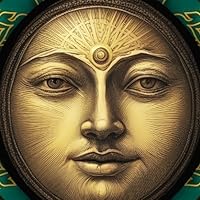
Presents a study of mythology based on the analysis of nonlinear form, the self's confrontation with its world, and the nature of mythic truth. Drawing on texts world-wide and on many theorists, including Cassirer, Eliade, Jung, Levi-Strauss, and Buber, the book develops a complex view of the relation between consciousness and culture.
WHY DID YOU READ THIS BOOK? This book was required reading for a class I took many years ago. I remember being deeply intrigued by it, but since I was taking about five courses, I was able to only enjoy it superficially.
WHAT DID YOU LIKE ABOUT THIS BOOK? The author, a former professor of mine, clearly states his thesis and remains consistent. I especially appreciate the repeated clear markers that point to the thesis since the subject matter itself is naturally oblique in many respects. I'm glad that I re-read this book because there was so much I missed before. I feel as if I have a far better appreciation for myth and mythology, even though myth is just a bunch of farce with the strangest of truths.
WHAT DID YOU DISLIKE ABOUT THIS BOOK? It's quite patriarchal; however, it was written in the late 80s, so it's to be expected.
DO YOU RECOMMEND THIS BOOK? Writers of fiction and would-be authors would benefit immensely from reading this book. Non-writers would also find some of the discussions about linear and non-linear thinking helpful in a self-improvement respect, if not a rewarding expanse of the mind.
Birenbaum suggests a different way of analyzing myths: Rather than analyzing them, we should experience them. The definition of "myth" he proposes is, "A myth is a symbol, in the form of a story, expressing (or producing) a confrontation between the limited perspective of the self and the unlimited context in which it enters." He draws upon the work of many studiers of myth before him, showing how their ideas often meld well with his. His writing at times is reminiscent of psychobabble, but that style is effective at conveying the emphatically non-analytical ideas he wants to communicate. I fault him for giving too much credence to Freud and for including an appendix on consciousness which only muddies the subject, but on the whole I recommend this book to anyone interested in mythology. The reader, however, should first have a fairly good familiarity with myths, especially Orpheus and Actaeon and Greek myth in general.
This was a book written by one of my English professors. I know I gave it 4 stars, and while it's a bit confusing, the ideas and theory he is making is pretty interesting. A bit of Joseph Campbell mixed in with guitar solos of Led Zeppelin. I kid. I'm pretty sure he's passed away by now, but he was a little elf of a man who used to read to us in Old English. I was the only undergraduate in his graduate class where this book was assigned a summer before. It really did make me think and understand literature and the role of the poet quite different. I remember he had to sell these copies out of his office, since he had so many unsold books. He's also the professor that nominated one of my papers for an award, which I received $1,500.