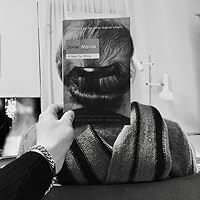
Grounded in deep and thoughtful awareness, this complex collection of poems combines history, sexuality, pop culture, and political experience with edgy, wry, often absurd humor and an underlying penchant for the macabre. Rachel Loden employs both strict and innovative forms in poetry that explores the post-Cold War unease that follows a century of harrowing conflicts. These contradictory elements flower in poems drawn from the ethereal world of pop myths and fairy tales that simultaneously unfold a reality full of absence and mystery. Speaking as intimately of the fall of the Soviet Union as they do of the cinematic crimes and misdemeanors of Woody Allen or the redemptive passion of Little Richard, their tone ranges from the furious to the elegiac, with a comic edge that borrows as much from the gallows as it does from the Borscht Belt. As rich in rhyme, music, and literary allusion as it is in multifaceted meaning, Hotel Imperium presents a surprising blend of sophistication, playfulness, and haunting truths.
I am usually disappointed by "political poetry," which can tend towards polemics and preachy, boring righteousness. It’s a hard act to pull off. So I was skeptical when I was first recommended Rachel Loden’s "Hotel Imperium." The person who recommended it was obviously drawn to Loden’s wit and linguistic dexterity, but I wondered if I would I enjoy a collection largely preoccupied with Richard Nixon and the Soviet Union.
But what Loden does in "Hotel Imperium" is reimagine an era (a long one), so that “things are more like they are now than they ever were before,” to steal the Dwight D. Eisenhower quote that launches the book.
Loden serves it up from her own point of view, and the result is unique. The poems have sparkle, and are both serious and entertaining despite taking on politics and history as major subjects. She handles the material playfully, and despite appearances (Nixon’s profile graces the cover), the poems reach beyond the political. She also takes on celebrity, sexuality and pop culture, money, power and revenge.
It’s a potent mix, and occasionally campy, in a good way. Alongside Nixon and his dog Checkers, you'll also find Liz Taylor, Woody Allen, Reagan, Dan Rather, Svetlana Stalin and Little Richard.
I have to mention here that I was young but fully conscious when Nixon resigned. I remember watching it all go down on tv, and my grandmother saying what a shame it was, how much he’d done for us in China! I don’t think my grandmother, dear as she was, would have enjoyed these poems, and if your political views are at all like hers you probably won’t either.
Among the political poems, my favorite is “Blues for the Evil Empire:”
"Consider the late Eurasian entity, how it lumbered into the groggy arms of history where it was
buried. Which is more than you can say for Lenin’s body, chilly like a mammoth
in an ice floe, if less hairy . . ."
Loden also has a field day with Hollywood types, and she also goes for pop culture’s jugular in poems like “The Gospel According to Clairol,” which begins –
"If I have but one life, let me live it As a blonde, knowing what I know, counting among my friends both Kennedys and diamonds."
Revenge, which clears the sinuses “like habanerno peppers,” figures big in the book. But it’s not reserved for history. One poem pokes fun at editors who semantically shirk their role in the rejection equation. The poem “We Are Sorry To Say” starts –
"that the decision has gone against these poems. It just up and went
against them, like an enormous rearing horse, a careening locomotive, and we
This chapbook was really 3 collections of poems about very different subjects, some of which I liked more than others - kept me interested throughout though!
“What I’m doing: entertaining Dust, the smell of dust In post offices and robot-driven Factories, dust which is lace And petit bourgeois memories; Word-slag, mortared Syllables, wafer-ash.”
Admittedly, I'm not a fan of endnotes (for this collection, that includes explanatory comments for 22 of the 44 poems), and I wasn't able to engage with the political in this volume as much as I hoped to... Generation gap? My own shortcomings in patience and attention?
I'd like to retry this book in six months or a year, in part for the poems like the one below.
From Hotel Imperium by Rachel Loden:
Reconstructed Face
Surely this face—generic, blank— betrays no terror. But her other face is lost and floating on the river, upturned like a lily in the air.
The police artist has slapped the flesh back on her, wants us to know her, makes her smile in that special way a reconstructed woman smiles
after she's found without her face on in a river, as though she tried but failed to save us from the trouble of her being there, our having to admit
that yes, we know her, smiling in the clay the way we know the face of our own mother, the reconstructed face that never fooled us, built as crudely as it was