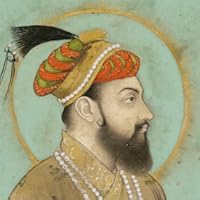
Epics of history are rare and The Peacock Throne is one of them. No royal lineage offers such a spectacle of high drama as the Mogul Dynasty of India which created the world`s most famous monument-the Taj Mahal. Not since Greek tragedy has there been so stark a revelation of the excesses of human incest, fratricide sons revolting continuously against fathers and the madness of uncontrolled aggression. These are the forces animating The Peacock Throne which brings India to both Eastern and Western readers as never before.
A close friend and colleague recommended that I read the 'The peacock throne' by Waldemar Hansen and also sent a short excerpt from the same. Waldemar Hansen was a Norwegian historian and a professor of history. In order to write this book,he made multiple trips to India over a period of 10 years and researched the subject for 5+ years. The outcome is a meticulously reconstructed history of the rise and fall of Mughal rule in India. The book's main focus is the reign of emperors Jahangir, Shah Jehan and Aurangazeb ( with many chapters devoted to the war of succession between Aurangazeb and his siblings ).History writing at its brilliant best - must read for all fans of this genre.
A great history book, which strikes a reasonably apt balance between the history and the historiography, and the writer tells you both what he knows and how/how/wherefrom he knows it. On the other hand, this book also delivers a surprisingly intense emotional experience like a novel-- the writer is an excellent storyteller who narrates the history with a personal touch that makes the characters truly come alive (some occasional forays into high melodrama but it's rarely distracting). Probably would also be a great read for lovers of ASoIaF/GoT/Wolf Hall style historical fiction.
Primary focus of the book is on succession wars fought during Mughal period. This is the third book I read which touches on character of Aurangzeb and it did a wonderful analysis of his intentions, motivations and personality. Totally loved it!
All I wanted was to learn a little something and hopefully be entertained. Thank you to the people who recommended this book for beginners in Mughal history.
Of course I learnt a lot, but the entertainment was the real surprise. This book is written like a novel. I felt for these people like they were characters in a story (which makes me question myself as I know they're real and their actions had real consequences, so how much sympathy do they deserve? You can't make it everyone else's problem just because your dad didn't love you). You can also feel the authors personality and his passion for the subject, so you can't help but be interested in something when someone shares it with you so enthusiastically.
The book focuses on Akbar, Jahangir, Shah Jahan, and his children, but the majority of the book is devoted to the war of succession. It seems that the author has an unfortunate interest in Aurangzeb, whose tyranny has to be given a psychoanalysis based on his childhood and familial relationships. I can't blame him. He really was quite terribly captivating. Every slight he faced, every insult, every time he managed a little victory in words, was very entertaining.
I see why people say the Mughals were on another level because the descriptions of excess were beyond anything I've been taught about european royalty. This excess was obviously going to create very big personalities who are terrible but brilliant. I couldn't help but feel something for these questionable individuals, even the monster who ruined it all for them. The most emotive parts of this book were the letters. Shah Jahan vs Aurangzeb before and after the war, Dara's entrities to his brother, Jahanara's attempts at peace so many times and what got me at the end, Aurangzeb's regretful final letters to his sons. Even at the end, though, he didn't really get what the problem was. I was kind of disgusted by these people who could kill their own siblings, but I see what world made them. I have to believe in the version of events where the son's grieve desperately for their fathers. Even when their fathers are the greatest source of consternation and fear in their lives, it would be destroying to see the end of the centre of their universes and for that father to be an almost divine King, it would be even more so. As terrible as the Mughals were to each other, they also seemed to have a large capacity for love. Their emotions and actions were taken to extremes.
It's quite clear to me that had Shah Jahan loved his sons better, the Mughals were still doomed to shine brightly but briefly. These transient nomads were bound to a short-lived glory.
Really took my time with this one, such a dense and rich piece of work. Not only does this book immerse you into this time period with elaborate descriptions of customs, architecture, geography, and the delicate system of coexistence among the melting pot of Mughal India, but you also get a single-threaded narrative decorated with poetry, pithy quotes, royal correspondence, and witty commentary from the author.
It's interesting that there are very few historical records that survived from this era, with the author oftentimes having access to just a few second-hand accounts describing a crucial event. Somehow, you still get a tangible, almost relatable portrait of all these legendary historical figures, and surprisingly, you can even sympathize with the horrible Aurangzeb.
Highlights: what I remember most, and perhaps what is the main focus of the novel, is the War of Succession among Shah Jahan's sons. Curse Aurangzeb! Dara Shikoh, with his brilliant vision of harmony between Hindus and Muslims - he would have saved us from the Brits...
The Mughals are the main characters, but it was also cool to learn about the Delhi Sultanates, the noble Rajputs, the pirate kingdom of Arakan (now Myanmar), Golconda - the last Shia Sultanate (centered around Hyderabad), the guerilla Marathis, the fierce Pashtuns, the conceited Persians, and even the deceptively amiable British.
Geographies too: the vast salt marshes of The Rann of Kutch (fun fact: also the site of a major battle during the India-Pakistan war of 1965), the Hindu Kush, the Deccan Plateau, the pestilent swamps of Bengal, the 5 great rivers of Punjab combining into the mighty Indus, the spiritual Ganges, and so on.
Architecture that I must see in person in my lifetime: Taj Mahal, Red Fort, Humayan's Tomb, Itmad-ud-Daula (the inspiration for the Taj Mahal), Bibi Ka Maqbara (Aurangzeb's copy-cat Taj Mahal), Buland Darwaza, Gwailor Fort, Shalimar Garden. One day...
Amazing read overall! I recommend this to anyone with even a passing interest in Indian history. Growing up, I was told near-legendary stories about the Mughals, especially different variations of Aurangzeb's usurpation, which is why I have always been so interested in this dynasty. I can finally say that my curiosity has been satiated :).
This is about one of the best historical (non fiction) accounts of the Great Moghuls. I bought the book accidentally from a local vendor outside the Taj Mahal as they were pestering me and of all trinklets offered this attracted me the most. I wrote a review of it in Amazon and the Author's doctor sent me an email (or somehow contacted me) and I called up the Author who was then in NY City. It was my last contact with the author some 25 years ago. For such a good work I have not been able to find any of his other writings.
Damn this took me forever. Learned a ton about early modern Indian and enjoyed the narrative style, but found the language to be pretty dated and unnecessarily academic.