

What do you think?
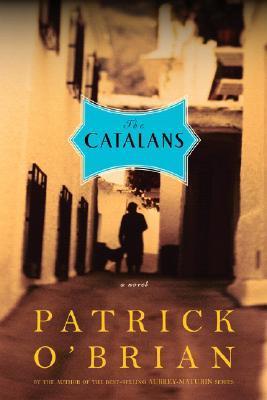
The Catalans
This novel is a powerful successor to Testimonies, Patrick O'Brian's first novel written for adults. It is set in that corner of France that became O'Brian's adopted home, where the long, dark wall of the Pyrenees runs headlong to meet the Mediterranean. Alain Roig returns to Saint-Féliu after years in the East and finds his family in crisis. His dour, middle-aged cousin Xavier, the mayor and most powerful citizen of the town, has fallen in love and plans to marry Madeleine, the young daughter of the local grocer. The Roig family property is threatened by this union, and Madeleine's relatives object on different grounds.
Xavier is a tragic figure, damned by what he perceives as a lack of feeling; Madeleine is to be his salvation. Unfortunately she does not return his affection, and, as the feasts and harvest festivals of Saint-Féliu are played out, she finds herself falling in love with Alain.
Xavier is a tragic figure, damned by what he perceives as a lack of feeling; Madeleine is to be his salvation. Unfortunately she does not return his affection, and, as the feasts and harvest festivals of Saint-Féliu are played out, she finds herself falling in love with Alain.
224 pages, Paperback
First published January 1, 1953
About the author
Patrick O'Brian
163 books2,518 followersPatrick O'Brian was an English novelist and translator whose reputation rests above all on the Aubrey-Maturin novels, a twenty-volume sequence set during the Napoleonic Wars. The books follow Captain Jack Aubrey of the Royal Navy and Stephen Maturin, his friend and ship's surgeon, whose Irish-Catalan background and scientific interests complement Aubrey's practical naval outlook. Beginning with Master and Commander, the series combines historical events with fictional adventures, preserving the outcome of real history while placing its protagonists within the action. O'Brian's command of period language, naval terminology, medical detail, and maritime practice gives the novels a convincing sense of nineteenth-century life, while their humor and the evolving relationship between Aubrey and Maturin provide their emotional center. The series became a long-form narrative in which professional duties and private lives develop continuously across successive voyages. O'Brian's literary career began remarkably early. Writing as Richard Patrick Russ, he published his first novel, Caesar: The Life Story of a Panda-Leopard, as a teenager, followed by animal stories collected in Beasts Royal. His novel Hussein: An Entertainment appeared in 1938 and received critical attention. After the Second World War, he adopted the name Patrick O'Brian and continued publishing fiction, including The Last Pool, Testimonies, and The Catalans. His early naval novels for younger readers, The Golden Ocean and The Unknown Shore, already contained elements that anticipated Aubrey and Maturin. He also became a translator from French, producing more than thirty English translations, including works by Simone de Beauvoir, Henri Charriere, and Jean Lacouture. His nonfiction included biographies of the naturalist Joseph Banks and the painter Pablo Picasso, whom he knew in Collioure, France. O'Brian lived in Wales after the war before moving with his wife Mary to Collioure in 1949. Their collaboration was important to his working life, with Mary assisting him in research and preparing his handwritten manuscripts for publication. O'Brian wrote by hand throughout his career and resisted modern writing technology. His literary breakthrough came unusually late. Although the Aubrey-Maturin books had a modest British following after their first appearance, their American revival in the early 1990s, led by W. W. Norton, brought sales and recognition. The novels eventually sold millions of copies and attracted devoted readers well beyond the age group normally associated with historical adventure fiction. O'Brian received the inaugural Heywood Hill Literary Prize in 1995, an honorary doctorate from Trinity College Dublin, and a CBE in 1997. His reputation was complicated when British media revealed details of his early identity and first marriage, matters he had kept private. Despite the controversy, his fiction remained central to his legacy. His unfinished twenty-first Aubrey-Maturin novel was published posthumously, preserving both handwritten pages and typescript. His manuscripts, notes, and research materials have since become part of major literary collections. His influence is also reflected in the continued readership of the novels and the 2003 film Master and Commander: The Far Side of the World, which drew primarily from The Far Side of the World while incorporating material from elsewhere in the series.
Ratings & Reviews
Friends & Following
Create a free account to discover what your friends think of this book!
Community Reviews
Displaying 1 - 30 of 44 reviews

July 1, 2010
Going to the Catalans and want to bring along a companionable novel to add depth to the charm of that region of Spain?...What's that? You've never heard of Catalan? Yeah, me neither, not until I started reading the works of Patrick O'Brian.
It seems this Irish author, mostly known for his Master & Commander series, spent a good part of his early life in the Catalan area, and so the place and its people come into play in his work.
Don't make the same mistake I made going into this. This is not a non-fiction about Catalan, as the title may seem to allude. I overlooked the "A Novel" part when I read it, not realizing it's a fictional novel about a small village of people; a humorous, colorful, tightly wrapped tale of a native son's return and his involvement in a minor, local scandal.
While not O'Brian's most brilliant work, it is very good nonetheless. The real gold is in the details. There are parts that read as well as any travel article. You feel immersed in the culture. The characters are as colorful as you could wish. The Catalans: A Novel is a real journey to a real place.
It seems this Irish author, mostly known for his Master & Commander series, spent a good part of his early life in the Catalan area, and so the place and its people come into play in his work.
Don't make the same mistake I made going into this. This is not a non-fiction about Catalan, as the title may seem to allude. I overlooked the "A Novel" part when I read it, not realizing it's a fictional novel about a small village of people; a humorous, colorful, tightly wrapped tale of a native son's return and his involvement in a minor, local scandal.
While not O'Brian's most brilliant work, it is very good nonetheless. The real gold is in the details. There are parts that read as well as any travel article. You feel immersed in the culture. The characters are as colorful as you could wish. The Catalans: A Novel is a real journey to a real place.
July 20, 2026
So I actually read a lovely hardcover with a painting on it (listed on GR as the audiobook).
3.5 stars
This was an odd experience. I was really looking forward to it for the subject matter (French Catalonia, post war) and hoped that such a well-known writer as O'Brian would write a summerworthy, engaging story, even if it wasn't his best.
To be honest, for the first 70% I strongly considered abandoning this. I am not a fan of the prescriptive style of creative writing teaching that results in so many similar books nowadays, but there's no doubt these "rules" were invented to stop this sort of thing happening. Which is nothing. I have never read a more glacially developed (or underdeveloped) story. The first chapter is the narrator thinking about a letter he got from his aunt about two people in his hometown. The second is backstory. The third is the narrator having a conversation with that same aunt about the letter. The fourth is the narrator having a conversation with one of the people involved in the letter, about its contents. Sadly, this is not a postmodern take on the nature of truth and subjectivity, it is just insanely repetitive. By chapter 5, when the narrator starts talking to another aunt, I thought I might cry.
Oh, there's also a love triangle, but we never get to know the woman except by hearsay. That is not a postmodern take on anything either. Outline this is not.
Anyway, 70% of the way in, the book suddenly delivered two superb chapters. I almost didn't know what to do with myself. They both described the local Catalan festivals in the coastal town of Cotlliure, but they also advanced the plot, added tension, and introduced a stream of modernism. Those two chapters were actually worth the price of admission for me. But I'm not sure I can really recommend this book unless you love folk festivals, Catalonia or the South of France. If you do, yes, push on!
3.5 stars
This was an odd experience. I was really looking forward to it for the subject matter (French Catalonia, post war) and hoped that such a well-known writer as O'Brian would write a summerworthy, engaging story, even if it wasn't his best.
To be honest, for the first 70% I strongly considered abandoning this. I am not a fan of the prescriptive style of creative writing teaching that results in so many similar books nowadays, but there's no doubt these "rules" were invented to stop this sort of thing happening. Which is nothing. I have never read a more glacially developed (or underdeveloped) story. The first chapter is the narrator thinking about a letter he got from his aunt about two people in his hometown. The second is backstory. The third is the narrator having a conversation with that same aunt about the letter. The fourth is the narrator having a conversation with one of the people involved in the letter, about its contents. Sadly, this is not a postmodern take on the nature of truth and subjectivity, it is just insanely repetitive. By chapter 5, when the narrator starts talking to another aunt, I thought I might cry.
Oh, there's also a love triangle, but we never get to know the woman except by hearsay. That is not a postmodern take on anything either. Outline this is not.
Anyway, 70% of the way in, the book suddenly delivered two superb chapters. I almost didn't know what to do with myself. They both described the local Catalan festivals in the coastal town of Cotlliure, but they also advanced the plot, added tension, and introduced a stream of modernism. Those two chapters were actually worth the price of admission for me. But I'm not sure I can really recommend this book unless you love folk festivals, Catalonia or the South of France. If you do, yes, push on!

May 4, 2009
I don't know if I loved this book so much because we had just spent time in Catalonia or not, but it was great. O'Brian does a beautiful job of weaving Catalan culture into a love story that has much higher stakes than your average romance. My dad is obssessed with this author and after having read this book I may dare to face one of his nautical tales. We'll see.

January 1, 2013
I found this to require a good deal of concentration but worth it. Not really about The Catalans, but about a family that lives in French Catalonia. Part mystery, part psychological exploration, part commentary on marriage. Quite a different animal to POB's sea-faring tales; shows a different facet to his writing - (and that he's a big softie!). I'll probably re-read it to get the most from it.

July 10, 2008
I was delighted to find another Patrick O'Brien novel. I listened to it actually as an audio book from the library.
And I'm always interested in that part of the world. Very descriptive with in-depth analysis on the characters involved. Good ending. All and all, very enjoyable.
And I'm always interested in that part of the world. Very descriptive with in-depth analysis on the characters involved. Good ending. All and all, very enjoyable.

May 28, 2026
The two main protagonists here are brothers, reunited after Alain returns to his home village in French Catalonia after years working as a researcher in Asia. His brother Xavier, the mayor and a lawyer, after decades of bitter loneliness, falls in love with a local woman who is also his secretary. The match meets strong family disapproval. Even the object of his affections seems indifferent.
It’s hard to understand why Patrick O’Brien wrote this thoroughly depressing book. During one chapter in which Xavier confesses his many miseries to his brother, I nearly gave it up. Xavier is not someone I would choose to spend time with. The main characters seem to see women through old school, somewhat misogynistic filters.
On the positive side, the descriptions of Catalan culture are rich and rewarding. I especially enjoyed reading scenes set during the vendage and the local autumn festival.
I gave the novel three stars largely for the writing, which is deft. However, I can’t recommend it except to lonely incels looking for reification.
It’s hard to understand why Patrick O’Brien wrote this thoroughly depressing book. During one chapter in which Xavier confesses his many miseries to his brother, I nearly gave it up. Xavier is not someone I would choose to spend time with. The main characters seem to see women through old school, somewhat misogynistic filters.
On the positive side, the descriptions of Catalan culture are rich and rewarding. I especially enjoyed reading scenes set during the vendage and the local autumn festival.
I gave the novel three stars largely for the writing, which is deft. However, I can’t recommend it except to lonely incels looking for reification.

June 27, 2017
There is some very good writing, mixed in with some experimental stuff. O’Brian gives us a richly detailed view into life in an old, tradition bound Catalan fishing villages and a lot of abstract discussion. Much of the writing is quite good, much of the plotting and story line, not so much. An attentive reader will know what has to happen very quickly, such that the almost solitary twist at the end is this books one surprise. I can recommend this book in general, especially for O’Brian fans or those not too interested in his more famous Sailing ship books. However my recommendation is tempered and cautionary. The book is very nearly violence free, coarse langue free and otherwise family friendly.
Patrick O’Brian’s The Catalans is considered his second adult novel. He had been writing for publication since his early teen years, and had a number of short stories to his credit. Both the book and its immediate predecessor Testimonies: A Novel were inspired by homes he had made for himself and his wife in the remote parts of Wales and in Catalans, an equally remote Catalan Village.
Also drawing from his own biography his main characters are remote unemotional mean, one of medical science, Alain, and his older relative the local mayor, lawyer and general power broker, and esthetic, Xavier.
Alain is a trained medical doctor, but is a research physician rather than a practitioner. This is a good thing as he is for all of his tact and sensitivity, remote and not very good with the human aspect of his world. When listening to music or confronted with any of the arts he is analytical and inclined to note specifics rather than visceral response. How remote he is, initially is emphasized by the need to for the family to recall him from the far ends of the orient where he practices his science.
He is needed back home because of the complex demands and linkages between family members and possible marriages between family members. Specifically, Xavier a major pillar of the community and holder of important family property has formed an unactable liaison with a much younger beautiful woman from the wrong family. She has been his office assistant for years, but he has only begun to notice her as he is handling her divorce. We are told that the two hare not lovers, but the rumors that they are and the possibility that they become wed is enough to panic Alain’s relatives.
In his role as the man to break up this misalliance, Alain is confronted with the complex emotions his older cousin is confronting. Via a long process he has determined that he is living a religious life, but already condemned to perdition because of his inability to feel genuine emotions. His had been a functional if not romantic marriage to a woman of poor health. He had attempted to and failed to bond with his son and with a dog. In his assistant, Madelaine, he had found a new thrill of emotions and hoped to logic his way into her heart. We learn all of this, but we cannot be sure that Alain has the details because he tend to go into a detached nearly asleep stupor in the face of this kind of soul baring.
We get a detailed history of, up through her failed marriage to her first love. Beyond this we get almost no sense of her as a person other than she has to be strong to withstand the constant pressures of her immediate family. All of them, come across as loutish, and nagging.
O’Biran is at his best talking about the traditions of his Villages. Its ancient fortress architecture, the and scents of the season. There is a moment when Alain and Xavier picnic and he notes that the soft grass is laced with fragrant oregano. His detailed description of the village’s annual, communal harvesting of the wine crop, the vendange. This chapter is the center of the book and contains its best writing. O’Brian grew his own grapes and participated in many of these harvests. The author’s passion for and respect for the people and traditions of the Catalan people is most clearly conveyed in this the almost hidden climatic center of the book.
There are several problem with this novel. Madelaine has no real active role or personality. She is in the story to be the center of attraction, not to be a real person. The narrative can be cluttered with various efforts to attempt experimental techniques. Characters can come with too much introduction only to have then disappear. The basic story arch is obvious from the beginning, but O’Brian does bring about a few plot twists. The way of love can be tortured and winding.
The Catalans is not a bad book. There are some fine lyrical passages, and some very fine character studies. There is also narrative clutter and a number of people we are supposed to care about, but are not that appealing. Alain is vague in his thinking and in his presence on the page. Xavier should be as powerfully portrayed to us as he is among his respectful villagers. He is not.
Still, this is O’Brian’s second ‘adult’ novel. We do get to see how he will mature as a writer. The reader may find themselves wondering about this place and the Catalan people. At just over 200 pages it is short and most of the writing is worth reading
Patrick O’Brian’s The Catalans is considered his second adult novel. He had been writing for publication since his early teen years, and had a number of short stories to his credit. Both the book and its immediate predecessor Testimonies: A Novel were inspired by homes he had made for himself and his wife in the remote parts of Wales and in Catalans, an equally remote Catalan Village.
Also drawing from his own biography his main characters are remote unemotional mean, one of medical science, Alain, and his older relative the local mayor, lawyer and general power broker, and esthetic, Xavier.
Alain is a trained medical doctor, but is a research physician rather than a practitioner. This is a good thing as he is for all of his tact and sensitivity, remote and not very good with the human aspect of his world. When listening to music or confronted with any of the arts he is analytical and inclined to note specifics rather than visceral response. How remote he is, initially is emphasized by the need to for the family to recall him from the far ends of the orient where he practices his science.
He is needed back home because of the complex demands and linkages between family members and possible marriages between family members. Specifically, Xavier a major pillar of the community and holder of important family property has formed an unactable liaison with a much younger beautiful woman from the wrong family. She has been his office assistant for years, but he has only begun to notice her as he is handling her divorce. We are told that the two hare not lovers, but the rumors that they are and the possibility that they become wed is enough to panic Alain’s relatives.
In his role as the man to break up this misalliance, Alain is confronted with the complex emotions his older cousin is confronting. Via a long process he has determined that he is living a religious life, but already condemned to perdition because of his inability to feel genuine emotions. His had been a functional if not romantic marriage to a woman of poor health. He had attempted to and failed to bond with his son and with a dog. In his assistant, Madelaine, he had found a new thrill of emotions and hoped to logic his way into her heart. We learn all of this, but we cannot be sure that Alain has the details because he tend to go into a detached nearly asleep stupor in the face of this kind of soul baring.
We get a detailed history of, up through her failed marriage to her first love. Beyond this we get almost no sense of her as a person other than she has to be strong to withstand the constant pressures of her immediate family. All of them, come across as loutish, and nagging.
O’Biran is at his best talking about the traditions of his Villages. Its ancient fortress architecture, the and scents of the season. There is a moment when Alain and Xavier picnic and he notes that the soft grass is laced with fragrant oregano. His detailed description of the village’s annual, communal harvesting of the wine crop, the vendange. This chapter is the center of the book and contains its best writing. O’Brian grew his own grapes and participated in many of these harvests. The author’s passion for and respect for the people and traditions of the Catalan people is most clearly conveyed in this the almost hidden climatic center of the book.
There are several problem with this novel. Madelaine has no real active role or personality. She is in the story to be the center of attraction, not to be a real person. The narrative can be cluttered with various efforts to attempt experimental techniques. Characters can come with too much introduction only to have then disappear. The basic story arch is obvious from the beginning, but O’Brian does bring about a few plot twists. The way of love can be tortured and winding.
The Catalans is not a bad book. There are some fine lyrical passages, and some very fine character studies. There is also narrative clutter and a number of people we are supposed to care about, but are not that appealing. Alain is vague in his thinking and in his presence on the page. Xavier should be as powerfully portrayed to us as he is among his respectful villagers. He is not.
Still, this is O’Brian’s second ‘adult’ novel. We do get to see how he will mature as a writer. The reader may find themselves wondering about this place and the Catalan people. At just over 200 pages it is short and most of the writing is worth reading

September 22, 2019
2.5 tried but could not read it through
May 18, 2015
After changing his name and re-creating much of his personal history, Patrick O'Brian moved to a village in southern France in a region called Catalonia, which spans parts of France and northern Spain. Among his earlier works as "Patrick O'Brian" is a short 1953 novel about a village in this region called The Catalans.
Alain Roig returns to his home village of Saint-Féliu after some time in the Far East to find his family in turmoil. His middle-aged and respectable cousin Xavier, who is also the mayor of Saint-Féliu, is engaged to Madeline, the young daughter of a local grocer. The Roig family feels its property and wealth at risk from this threatened intruder -- who knows what silly ideas a middle-aged man may indulge for his young and flighty new bride, and how much those ideas might cost? Madeline's family, for her part, is none too pleased with the match either given the age gap.
Alain learns that Xavier hopes Madeline will save him from what he sees as his own lack of feeling, but as he winds deeper into the situation he finds that he is falling in love with Madeline, and she with him as she really does not love Xavier.
O'Brian's trademark wit is a splendid feature of his better-known Aubrey-Maturin series, and here it helps solidify the vision of a small town invested in its own small concerns as the great issues of the world. It has its own national and cultural flavor, but Saint-Féliu is the same sleepy small town that can be found in every corner of the world, staging its own version of the same kinds of drama playing in them all.
The wit and tone are probably The Catalans' strongest feature. While O'Brian uses his characters to explore ideas about how often people seek to use others to find what they think they lack in themselves, the story itself is a little light to carry much weight in that area. Alain is clearly drawn, but Xavier and Madeline seem a little too much like stock characters added from the shelf and so the plot that rests on their triple base is unsteadier than it should be for best results.
Original available here.
Alain Roig returns to his home village of Saint-Féliu after some time in the Far East to find his family in turmoil. His middle-aged and respectable cousin Xavier, who is also the mayor of Saint-Féliu, is engaged to Madeline, the young daughter of a local grocer. The Roig family feels its property and wealth at risk from this threatened intruder -- who knows what silly ideas a middle-aged man may indulge for his young and flighty new bride, and how much those ideas might cost? Madeline's family, for her part, is none too pleased with the match either given the age gap.
Alain learns that Xavier hopes Madeline will save him from what he sees as his own lack of feeling, but as he winds deeper into the situation he finds that he is falling in love with Madeline, and she with him as she really does not love Xavier.
O'Brian's trademark wit is a splendid feature of his better-known Aubrey-Maturin series, and here it helps solidify the vision of a small town invested in its own small concerns as the great issues of the world. It has its own national and cultural flavor, but Saint-Féliu is the same sleepy small town that can be found in every corner of the world, staging its own version of the same kinds of drama playing in them all.
The wit and tone are probably The Catalans' strongest feature. While O'Brian uses his characters to explore ideas about how often people seek to use others to find what they think they lack in themselves, the story itself is a little light to carry much weight in that area. Alain is clearly drawn, but Xavier and Madeline seem a little too much like stock characters added from the shelf and so the plot that rests on their triple base is unsteadier than it should be for best results.
Original available here.

September 16, 2018
Patrick O'Brian is the author of Master and Commander series (the movie starred Russell Crowe). This book is no Master and Commander, except in the sense that the male character is tortured about what they should do.
Not a whole lot goes on in The Catalans except in the beginning and there it feels like an earthquake for the family at the centre. This family is very powerful and that public head of it, is uber powerful. That is why everyone in the town is concerned about his latest plan to marry a woman soooo much younger than him. We get the story from the point of view of a cousin, let's call him Dr. Cousin, because he is a physician. Dr. Cousin does not live in the town with the rest of his family, but who comes to the family ancestral home to settle some business. This matter of the marriage not the least of it.
O'Brian has taken a traditional story telling approach with The Catalans. He lays out the background and while it might seem like a luxury even for this masterful storyteller, all comes to fruition in that last half of the book. The reader knows exactly who is who and why this potential marriage is causing such havoc.
There is a wonderful scene where the family head is explaining himself that takes all night in the timeline of the story, but it is interesting to the reader because this is the first time we hear him speak. His name is Xavier. And I never felt so sorry for one man as I did for him upon hearing his story that involves his late wife and their only child.
The Catalans is an old-fashioned book and it moves slow, but is well worth the time just to see how this domestic tale plays out and to be a part of O'Brian's magic.
Fortunately.
Not a whole lot goes on in The Catalans except in the beginning and there it feels like an earthquake for the family at the centre. This family is very powerful and that public head of it, is uber powerful. That is why everyone in the town is concerned about his latest plan to marry a woman soooo much younger than him. We get the story from the point of view of a cousin, let's call him Dr. Cousin, because he is a physician. Dr. Cousin does not live in the town with the rest of his family, but who comes to the family ancestral home to settle some business. This matter of the marriage not the least of it.
O'Brian has taken a traditional story telling approach with The Catalans. He lays out the background and while it might seem like a luxury even for this masterful storyteller, all comes to fruition in that last half of the book. The reader knows exactly who is who and why this potential marriage is causing such havoc.
There is a wonderful scene where the family head is explaining himself that takes all night in the timeline of the story, but it is interesting to the reader because this is the first time we hear him speak. His name is Xavier. And I never felt so sorry for one man as I did for him upon hearing his story that involves his late wife and their only child.
The Catalans is an old-fashioned book and it moves slow, but is well worth the time just to see how this domestic tale plays out and to be a part of O'Brian's magic.
Fortunately.

September 27, 2009
At this second reading I have drastically changed my feelings about this short novel from those I had five years ago when I first read the work. The book is a discussion by O'Brian about the culture he found upon moving to a Catalan village in the South of France shortly after WWII. The story and the characters serve to tell us about that culture and some of the author's questions about human relationships and religion. The quality of the writing is still very good, but I find with this second time through that I really don't much like the culture or the characters or the story.
Rating 2009
This work gives you the beautifully crafted prose one expects from O'Brian. The story is appealing for the well-bred literate adult and I only rate it 4 stars, rather than 5, because it is a little too sedate for my tastes.
Rating 2009
This work gives you the beautifully crafted prose one expects from O'Brian. The story is appealing for the well-bred literate adult and I only rate it 4 stars, rather than 5, because it is a little too sedate for my tastes.

January 21, 2008
Patrick O'Brian writing about the French Catalonians he loved (and doesn't it just show). It's weird to read POB write something non-adventurous. Weird, but no less fun. Still not up to par with the later books, though, but exceedingly enjoyable.

March 5, 2013
I did not enjoy this book. I found it plodding and requiring a huge amount of concentration. The descriptive passages can take close to a chapter in length. Nonetheless, it does explore the human heart and its troubling states.

Read
September 13, 2011I love that this ended up to be a love story! I love love stories! Huzzah for happy endings!!!

March 26, 2025
Patrick O’Brian is just a great writer, no matter the subject.
January 13, 2020
Interesting, very early work of Patrick O'Brian here. It is slightly too long to be a novella but reads like one. A typical review of this book notes its well-rendered observations but declares it doesn't really hold together as a novel. I can't say I disagree. A long conversation and a day of grape harvesting (vendange) make up the bulk of the book; the plot itself, though it involves one very sharp turn, is almost non-existent and not obviously connected to at least one of the two scenes just mentioned.
But I very much enjoy the atmosphere of these early O'Brian efforts (that's the expert observations mentioned above). He was clearly a man who lived his surroundings fully and was able to translate that to the page. In doing so he sheds light on a corner of France that few of us know about (most people'd assume the book was set in Spain, as I initially did). Part of me wishes O'Brian stuck with this sort of writing (it was nearly all adventure tales from here on out, except for Richard Temple), but I'd never have heard of him if not for said tales, so I guess I can't complain.
But I very much enjoy the atmosphere of these early O'Brian efforts (that's the expert observations mentioned above). He was clearly a man who lived his surroundings fully and was able to translate that to the page. In doing so he sheds light on a corner of France that few of us know about (most people'd assume the book was set in Spain, as I initially did). Part of me wishes O'Brian stuck with this sort of writing (it was nearly all adventure tales from here on out, except for Richard Temple), but I'd never have heard of him if not for said tales, so I guess I can't complain.
June 14, 2021
3.4 stars out of 5 - I read a hardbound from the library over the past week or so. There are parts that are beyond excellent; but there are also parts that are very hard going despite flashes of brilliance - parts whose meaning is nearly impossible to follow. A clear foreshadowing of the contrasting character interaction mastery displayed later by the author in the best of his Aubrey/Maturin books - not surprisingly because this novel is about a love triangle involving the "captain" of a village and his doctor cousin.

September 13, 2024
The book is well written in terms of creating atmosphere and depicting emotions, but there is almost no plot. You could cut out the first 80% of the book and still retain all the action, if you could call it that. The author fills in the characters well on their own, but their relationship developments are mostly nonexistent.
Overall, I get the sense of an Edith Wharton novel that falls short of brilliance. It is a short novel, so the read reaches the finish line without much time lost, but it does not merit a second read.
Overall, I get the sense of an Edith Wharton novel that falls short of brilliance. It is a short novel, so the read reaches the finish line without much time lost, but it does not merit a second read.

May 30, 2019
The downside of the book is the plot is very predictable. Fortunately O'Brian is such a good writer he can make a predictable plot enjoyable.
By far the best parts of the book are where he describes the activities and traditions of the small town on the border between Spain and France where the story takes place. The book is well worth the read just for that.
By far the best parts of the book are where he describes the activities and traditions of the small town on the border between Spain and France where the story takes place. The book is well worth the read just for that.

April 11, 2025
Much Talk, Little Action
Hard to believe this is the same man who wrote the best-selling naval adventure series. I read this before a trip to Southwest France, including Catalonia. The writing is of a very high quality, but the deliberations and conversations wore me down eventually.
Xavier is a soul in torment; by the end, so was I.
Hard to believe this is the same man who wrote the best-selling naval adventure series. I read this before a trip to Southwest France, including Catalonia. The writing is of a very high quality, but the deliberations and conversations wore me down eventually.
Xavier is a soul in torment; by the end, so was I.

July 21, 2025
Loved it. O'Brian lowkey a favorite beloved author? Was enthralled with every page of this and agog at the ending and the whole ramping up of the ante. Need to work a vendage! (Except boy that's a lot of work). And must go to French catalan--next time!

September 1, 2019
It ain't Aubrey and Maturin. Sigh.
August 1, 2023
All atmosphere at the beginning, the plot picks up at the end, thankfully.
April 22, 2025
Some fascinating concepts explored through conservations. I got lost a couple of times, but a book I might come back to and refresh my review.
June 2, 2026
The vendange is the only thing that matters in this book
March 19, 2013
I read this book having spent some time in and around Collioure (which is where Patrick O'Brian lived) and along the Mediterranean coastal edge of the Pyrénées between France and Spain—so, where the story is set. And what attracted me to it initially was an interest in the identity of the place, where the Catalan flag flies both sides of the border; and the language, food and culture are definitely of 'The Catalans'; and also due to a curiosity about the attractions of the area to 20th century artists, including Matisse, Picasso, Dali and Mackintosh, up to and including the era of the novel's setting and O'Brian's residence there (O'Brian was a biographer of Picasso). So, I read it because of an interest in the surrounding background, rather than the subject of the storyline and was hoping for some insights into the uniqueness of the time and place, at the time of its writing—which was what the write-up on the book jacket seemed to promise.
In that I was a little disappointed, since the themes of the plot could as easily have been set in any provincial village almost anywhere in Europe, where social hierarchies and moral values from the 1920s (or before) had carried forward into the post WWII period. Yes, there is confirmation in the detail of the narrative of the story's actual location, though little that extends much beyond what is still self-evident in the landscape and character of its older architecture and surviving culture. I didn't feel the scenario was specifically Catalonian or that the telling of the tale depended greatly on O'Brian's observations of something unique, both of which I had expected.
That leaves an odd sort of romance involving mismatched relationships and an assortment of intense feelings among the protagonists, not necessarily for the right reasons—and none of whom seem especially likeable. The stuff of gossip and family feuds, with the beautiful Madeleine as a passive pawn for most of the plot; and an ending that made me momentarily think that the last page of the book had been torn out.
Readable, yes—will I be reading anything else by Patrick O'Brian any time soon; probably not, despite his reputation as a novelist.
In that I was a little disappointed, since the themes of the plot could as easily have been set in any provincial village almost anywhere in Europe, where social hierarchies and moral values from the 1920s (or before) had carried forward into the post WWII period. Yes, there is confirmation in the detail of the narrative of the story's actual location, though little that extends much beyond what is still self-evident in the landscape and character of its older architecture and surviving culture. I didn't feel the scenario was specifically Catalonian or that the telling of the tale depended greatly on O'Brian's observations of something unique, both of which I had expected.
That leaves an odd sort of romance involving mismatched relationships and an assortment of intense feelings among the protagonists, not necessarily for the right reasons—and none of whom seem especially likeable. The stuff of gossip and family feuds, with the beautiful Madeleine as a passive pawn for most of the plot; and an ending that made me momentarily think that the last page of the book had been torn out.
Readable, yes—will I be reading anything else by Patrick O'Brian any time soon; probably not, despite his reputation as a novelist.
February 7, 2017
The Catalans published in 1953 is a tribute to the Mediterranean village to which O’Brian moved in 1949. Like a anthropologist in the wild, O’Brian recorded the local culture and traditions as he discovered them. The rituals and gestures of the pickers during the grape harvest are noted with the same meticulous eye for detail as the intricate footwork of the sardane dancers.
Here the author is more at ease with descriptions of the patchwork of olive groves and vines than of the internal landscapes of his characters. Yet already in this early work Xavier and his cousin Alain, like Aubrey and Maturin much later, reveal varying facets of O’Brian’s own shape-shifting personality.

October 5, 2009
Another one of PO'B's early works, and significantly better holistically than Testimonies. I'm starting to notice a trend with his endings - as in there isn't one really. At some point, he just stops writing, which I suppose it better than writing long past the real end of the book, but it is a little bit startling and leave you flipping through the last pages a little forlornly.
I particularly liked some of the landscape descriptions in this work - there is a section where he describes the coming dawn while sitting in a courtyard that is truly exquisite. If you are a fan of landscape fiction, then this is a good one to read.
The characters are also on the whole better formed, but still nothing of the complexity and endearingness of his Aubrey/Maturin series. I really enjoyed getting this peek into what the author thought of as Catalan and gaining a small insight into some of the influences that might have gone into creating the Maturin of his later novels.
All in all, a reasonably good book with some excellent description.
I particularly liked some of the landscape descriptions in this work - there is a section where he describes the coming dawn while sitting in a courtyard that is truly exquisite. If you are a fan of landscape fiction, then this is a good one to read.
The characters are also on the whole better formed, but still nothing of the complexity and endearingness of his Aubrey/Maturin series. I really enjoyed getting this peek into what the author thought of as Catalan and gaining a small insight into some of the influences that might have gone into creating the Maturin of his later novels.
All in all, a reasonably good book with some excellent description.

August 27, 2015
I was curious to read The Catalans, one of O'Brian's early novels, because Stephen Maturin, the ship's doctor of the Aubrey-Maturin series, has a Catalan background. As it turns out, the main character, Alain Roig, shares a lot of Stephen's characteristics.
The book is short, with some very beautiful descriptive writing. It takes place in a small fishing town on the Mediterranean near the Spanish border, sometime, I think, between the wars. The author clearly has a great love for the region and its people. He lived in the city of Collioure for many years with his wife. With great economy, he manages to paint a detailed portrait of the area, its history and the families involved in the story. By the end, I found myself caring very much about what happened to Alain and Madeleine. The pace is slow, but it builds to a dark, heart-thumping finale.
The book is short, with some very beautiful descriptive writing. It takes place in a small fishing town on the Mediterranean near the Spanish border, sometime, I think, between the wars. The author clearly has a great love for the region and its people. He lived in the city of Collioure for many years with his wife. With great economy, he manages to paint a detailed portrait of the area, its history and the families involved in the story. By the end, I found myself caring very much about what happened to Alain and Madeleine. The pace is slow, but it builds to a dark, heart-thumping finale.
Displaying 1 - 30 of 44 reviews