The massacre of Cheyenne and Arapaho women and children by U.S. soldiers at Sand Creek in 1864 was a shameful episode in American history, and its battlefield was proposed as a National Historic Site in 1998 to pay homage to those innocent victims. Poet Simon Ortiz had honored those people seventeen years earlier in his own way. That book, from Sand Creek , is now back in print.
Originally published in a small-press edition, from Sand Creek makes a large statement about injustices done to Native peoples in the name of Manifest Destiny. It also makes poignant reference to the spread of that ambition in other parts of the world—notably in Vietnam—as Ortiz asks himself what it is to be an American, a U.S. citizen, and an Indian. Indian people have often felt they have had no part in history, Ortiz observes, and through his work he shows how they can come to terms with this feeling. He invites Indian people to examine the process they have experienced as victims, subjects, and expendable resources—and asks people of European heritage to consider the motives that drive their own history and create their own form of victimization.
Through the pages of this sobering work, Ortiz offers a new perspective on history and on America. Perhaps more important, he offers a breath of hope that our peoples might learn from each
This America has been a burden of steel and mad death, but, look now, there are flowers and new grass and a spring wind rising from Sand Creek.
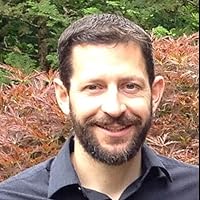
Simon J. Ortiz is a Puebloan writer of the Acoma Pueblo tribe, and one of the key figures in the second wave of what has been called the Native American Renaissance. He is one of the most respected and widely read Native American poets.
After a three-year stint in the U.S. military, Ortiz enrolled at the University of New Mexico. There, he discovered few ethnic voices within the American literature canon and began to pursue writing as a way to express the generally unheard Native American voice that was only beginning to emerge in the midst of political activism.
Two years later, in 1968, he received a fellowship for writing at the University of Iowa in the International Writers Program.
In 1988, he was appointed as tribal interpreter for Acoma Pueblo, and in 1989 he became First Lieutenant Governor for the pueblo. In 1982, he became a consulting editor of the Pueblo of Acoma Press.
Since 1968, Ortiz has taught creative writing and Native American literature at various institutions, including San Diego State, the Institute of American Indian Arts in Santa Fe, Navajo Community College, the College of Marin, the University of New Mexico, Sinte Gleska University, and the University of Toronto.
Ortiz is a recipient of the New Mexico Humanities Council Humanitarian Award, the National Endowment for the Arts Discovery Award, the Lila Wallace Reader's Digest Writer's Award, a National Endowment for the Arts Fellowship, and was an Honored Poet recognized at the 1981 White House Salute to Poetry.
In 1981, From Sand Creek: Rising In This Heart Which Is Our America, received the Pushcart Prize in poetry.
Ortiz received a Lifetime Achievement Award from the Returning the Gift Festival of Native Writers (the Wordcraft Circle of Native Writers and Storytellers) and the Native Writers' Circle of the Americas (1993)
In this cycle of poems, Simon J. Ortiz traces a personal journey from the senseless murder of over 160 Native Americans in the Sand Creek Massacre (the incident is among the more shameful aspects of American history. Colonel John Chivington mounted an unprovoked attack on a peaceful group of Native Americans, many of whom were women and children, and slaughtered most of them in a largely one-sided "battle") to his own feelings about being an American. If you've ever wanted a more detailed look at the complex ways in which Native Americans frame their own American citizenship, look no further. The poems in this book flip back and forth from the atrocities of the past to the difficulties of the present. The poems themselves have a near beatnik feel to them, with line spacing and word placement becoming a vital part of the poems. I found "From Sand Creek" a fascinating read as well as a call to search counter discourses of historical events in order to uncover all sides of a given story. The actions of the United States government in regard to the oppression of Native Americans is shameful, but the ability of Native Americans to still develop some form of patriotism, as evidenced in this book, is highly commendable.
This collection reminded me, conceptually, of Layli Long Soldier's WHEREAS, and formally, of Louise Glück's The Wild Irise, though readers would also be right to consider the Beatniks here. I bring in the Long Soldier, because this volume is thematically and conceptually structured as a response to a specific historical and state-sanctioned event, the Sand Creek massacre. Ortiz feels this history reverberating in his present, perhaps he felt it in his blood, in the bone marrow. Writing against this tense vision of the past, Ortiz follows a skeletal formal structure. Each poem is untitled, and some describe this as one long poem (for what it's worth, I don't think that's the best way for reader's to become oriented to the volume). Glück came to mind due to Ortiz' similar (prescient) economy of language, though the treatment of line breaking puts him in conversation with the beats. Each of pair of pages follows a formula with the first page stating a descriptive claim or observation and the second page presenting itself as a recognizable poem. For example, the page of one coupling reads, “Passing through, one gets caught into things; this time it was the Veterans Administration Hospital, Ft. Lyons, Colorado, 1974-75” (10). The second page begins, “Grief / memorizes this grass.” (11) doing a succinct job to emotionalize place. It's worth noting here, that Ortiz is a veteran, and observations related to the military abound.
In general, this collection revolves around the idea of fraught-Americanness, or the manner in which vulnerable populations continue to experience openness to state-sanctioned violence even after becoming associated with the state. One of the descriptive pages reads, “There was a trip we took once, and we all hid from the street’s eyes and townspeople; you wouldn’t believe we were this nation’s children” (12), showing the text’s investment in uneasy questions of positionality. Many of Ortiz' poems may be productively read with consideration for untreated PTSD on reservations. In that way, the collection might be welcomingly read alongside Leslie Marmon Silko's Ceremony. These poems continuously draw back around to questions of violence, and how it deforms the victim as well the wielder: “Violence / upon these, / especially the white / ones, ordinary men, / is vivid. // They just don’t know anymore. / That’s all. / They are soothed by it. / Their only comfort and safety.” (37). And later, with a mournful tone: “You can’t help but be American, not a citizen or a shadow but a patriot and warrior for land and people even when insignificant and lost.” (38), which feels especially aimed at the condition of Indigenous military service, a condition that might be compared with other demographics predatorily targeted by service benefit ads.
One of my favorite poems begins with the stanza, “Dreams / thinned / and split / can only produce / these bones.” (31) which feels like an enormous poetic claim, even abstracted away from the whole. Another highlighted passage reads: “Wild animals, wild rivers, / and wildness was not foreign / to them but they only heard / frantic warning whispers / of hungry starved European ghosts. / And they created new ghosts / as they needed them.” (77), which, as a whole, is a stunning treatment to racialized, cyclical mythmaking. Finally, the last pages from the volume leave a complicated message, with a final stanza reading: “It is the life he has submerged / into, a dream needing a name. / He has become the American, / vengeful and a wasteland / of fortunes, for now.” (93). Who, precisely, has become the American? The indigenous subject? The immigrant? Perhaps, the white settler, the WASP immigrant, the would-be 'original' immigrant, deluded by visions of a finally tamed landscape? "Vengeful and a wasteland," for the subject is nothing without their grounding landscape. The question can stay open-ended, but, reading Ortiz' coda (not printed here), perhaps the answer is all three. Its a complicated question, and one we're still discussing, forty years past publication.
I didn’t read the full book; I read of twelve poems within the book. I focused on mainly the poem with the first line “O Whitman” for my English class. It was very telling and very interesting to consume and interpret all the lines. I also listened to my peers as they read their poems and their interpretations. Overall, even though I haven’t read it all, I think it is a great work of literature representing Native Americans.
I read this poetry book by Simon from Acoma back in high school. My mom knew him. She found him beaten on the side of the road and nursed him back to health one time. Now I realize why. He has a strong voice that crushes the colonizer. Sand Creek is the site of the massacre of the Cheyenne.
ortiz just has this understated quality to his writing where every now and then you unexpectedly stumble across a banger of a line that leaps off the page to punch you in the gut. so beautiful and so devastating
I normally don't enjoy poetry very much, but I thoroughly enjoyed this collection. The writing, though beautiful, still manages to communicate the tragedy many of these poems talk about.
The text is structured like a journey, a native and non-native collection that goes through the social and environmental changes prior to and as a result of the Sand Creek massacre and America’s failure in Vietnam. The text is full of social criticisms and insight into both the Native American culture and American culture as a whole. The poetry is all sparsely laid out on the page, as if to show the appreciation of the language and the words, it is all free verse and sparse. The power that poetry can have on a reader is being used to Ortiz’s advantage by having words that stand alone, spaces and gaps, using enjambment and interrelating the poem to it’s corresponding page. Textually the book creates a cross-cultural encounter between the data on the left and the emotional context on the right. The simple and direct language of Ortiz’s poems reflects the storytelling traditions of Native Americans, each word is chosen specifically because it offers the reader something specific and purposeful. Through this novel Ortiz is managing to correlate factual sentences with poems that appeal to both the traditional values of Native American storytelling and modern free verse poetry.
Within the pages of "From Sand Creek," the reader is introduced to the contradictions inevitably faced by someone whose history is not acknowledged by the dominate narrative.
Simon Ortiz will not voluntarily submit to being another invisible Indian. He does this by sharing not only sharing the tragedy of the Sand Creek Massacre, but also his personal experiences fighting for a country, that severely restricts his role in society.
Why I picked it up: Academically, I’m very interested in Native American Literature, and From Sand Creek has always come highly recommended.
Why I finished it: Simon J. Ortiz sets out to address how to deal with history, as a person of Native American heritage, with this collection of poetry. His poems are so raw and painfully honest that no matter how difficult it was to read, I never had any intention of not finishing it.
Who I’d give it too: I’d give this to anyone that is interested in the history of marginalized people. Anyone interested in Native American literature or poetry in general would also benefit from this collection.
This book inspired me when I needed inspiration thirty years ago. Part of the title of my doctoral dissertation derives from the first poem. I wrote about the book in the introduction, especially the journey from an America of "steel and mad death" to a dream "rising in this heart which is our America". It remains one of the most important and significant books among the thousands that I have read over a lifetime.
I have read it many times. I have taught it in college classes. Part of it is deeply embedded in my memory.
Not an easy book in any sense. Ortiz juxtaposes narrative in historical style with minimalist free verse to tell the story and the legacy of the Sand Creek Massacre. He doesn't just want to tell you what happened, but to show you what happened and get you to think and feel about something that happened in a small place a long time ago still has effects that are alive today. I think he succeeds well. But i can't say i am going to memorize lines or pages from this, it's too hard to keep fresh.
Sand Creek was a real event, a bloody massacre written by Simon J. Ortiz. He writes in prose and poetry to tell the story through strong visual images of the victims that went through such a horrible event.
Was assigned to read this book as part of a Literature of the American Southwest class, and I'm glad I was. Ortiz's verses are painful for me to read as a Coloradan, but nonetheless important and poignant. A must-have in any modern poetry collection.
A masterful work of Native American poetry written as a tribute to the tragedy at Sand Creek where many Cheyennes and Arapahoes were massacred in 1864. Poignant and thought-provoking, this is a great introduction to Native American poetry.
Photographer and author Stephen Trimble recommended this as part of the Rocky Mountain Land Library's "A Reading List For the President Elect: A Western Primer for the Next Administration".
Not a bad book of poetry, interesting that Ortiz never once breaks the alternating-page structure of a sentence or two poetic preface with an ensuing single-page poem.
Favorite line: "Dreams are so important because they are lifelines and roadways, and nobody should ever self-righteously demean or misuse them." Beautiful prose.
I first read this ten years ago. It's one of the most profound works of American poetry that I've ever read. Haunting, but compelling. Daunting, yet healing.