A personal investigative journey into the so-called Chelan Falls Massacre of 1875.
Amid the current alarming rise in xenophobia, Ana Maria Spagna stumbled upon a one day in 1875, according to lore, on a high bluff over the Columbia River, a group of local Indigenous people murdered a large number of Chinese miners—perhaps as many as three hundred—and pushed their bodies over a cliff into the river. The little-known incident was dubbed the Chelan Falls Massacre. Despite having lived in the area for more than thirty years, Spagna had never before heard of this event. She set out to discover exactly what happened and why.
Consulting historians, archaeologists, Indigenous elders, and even a grave dowser, Spagna uncovers three possible versions of the Native people as perpetrators. White people as perpetrators. It didn't happen at all. Miners, a Merchant, and (Maybe) a Massacre replaces convenient narratives of the American West with nuance and complexity, revealing the danger in forgetting or remembering atrocities when history is murky and asking what allegiance to a place requires.
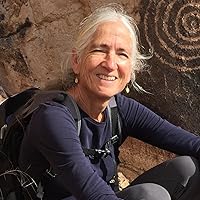
Ana Maria Spagna is the author of nine books including PUSHED: Miners, a Merchant and (Maybe) a Massacre forthcoming from Torrey House Press, UPLAKE: Restless Essays of Coming and Going and the poetry chapbook, MILE MARKER SIX, as well as THE LUCKIEST SCAR ON EARTH, a novel about Charlotte, a 14-year old snowboarder. Previous books include RECLAIMERS, stories of indigenous people reclaiming sacred land and water, the memoir/history TEST RIDE ON THE SUNNYLAND BUS: A Daughter’s Civil Rights Journey, winner of the River Teeth literary nonfiction prize, and two previous collections of essays, POTLUCK, finalist for the Washington State Book Award, and NOW GO HOME, a Seattle Times Best Book of 2004.
AMAZING book. Who doesn't need/want a more clear-eyed, honest account of history? I think we all deserve that. What was the Chelan Falls Massacre? A massacre without survivors, without a written record, without bones? That mystery is fascinating unto itself, but this gorgeous book is more than the story of one event—it is a re-telling of history that has been wildly incomplete, and by filling in some of the gaps, she helps us see place with renewed clarity and understanding. I will admit to knowing very little about the Chinese gold miners in the American West, though, like Spagna, I’ve lived here my entire life. This book helps right that wrong. As she writes, “If the dead can protect the living, we owe a debt to the dead, too: to re- imagine their lives, to recognize our kinship, to share stories.” Again and again, Spagna has proven herself to be one our country’s most thoughtful nonfiction writers, and this new book is no exception.
The book covers the topics of our day: xenophobia, the power of both story and silence, the silenced and unrepresented, language and storytelling. Please read it.
Fascinating, so well researched -- insistent that there are no easy answers, and no certain knowledge when one's goal is to be fully inclusive. Asks hard questions about whether it is ever possible to capture all perspectives. I learned so much about my "backyard" in WA state, and the important contributions of my neighbors that "standard" histories may overlook, or even actively try to erase, minimize, scrub from, or whitewash out of our communal story. Thank you for writing this, AMS!
My expectation of this book was an investigation, and I honestly felt like it was more of a diary. I did learn some interesting history of Chinese immigration in Washington, but I wish it had been more cohesive. The writing often felt scattered and it felt like the author was reaching to add a bunch of loosely connected points rather than dig into the actual narrative that the book is supposed to be about. The author puts forth a lot of theories that she directly acknowledges cannot be proven, which isn’t a very interesting premise to me. She spends a lot of time connecting the treatment of Chinese laborers in the 1800s to events of the 2020s, which felt like both a lecture and a departure from / device to enhance the plot. Overall, this felt like a lot of speculation and emotion from the author, and the emotion often felt cheap to me (since it was based on speculation). My expectation was clearly wrong, but I wouldn’t have liked the book even if I knew what it was going to deliver.
Spagna brings a storyteller's gifts to bear in unearthing the truth of a tragic event mostly forgotten ... if it happened at all. The specifics of who did what and when aren't even all that important; what is important is that, so typical to the "heroic" narrative of the West, the larger story relates to the treatment of a people most western mythmakers would prefer we forget, prefer we not engage with and rectify. Pushed is Spagna's heart-full effort in making certain this injustice will not be overlooked.
What powerful stories of forgotten people Ana Maria Spagna sheds light on in Pushed. After hearing the story of a (maybe) massacre in the late 1800s of up to 300 Chinese miners in the area she lived and loved, Spagna becomes a woman on a mission--to learn the truth of this history. Spagna takes us along on her journey, one that leads to different versions of the story and quite a few dead ends. Along the way we learn how history is shaped by those who tell it and how critical it is to learn and report about events and populations that have been misrepresented or erased.
A beautiful and heart-breaking book that looks at US history through the experiences of the disenfranchised, disregarded immigrants who contributed enormously to the growth of the country. These stories need to be told, and I think this book eloquently does that. It also gave me an intense desire to spend time exploring the beauty of the Pacific Northwest.
Pushed is a beautiful, gritty, clear-eyed book, one that refuses easy answers and status quo narratives. It breathes life into a complicated archive. It is a search for a true story amidst colonialism and xenophobia and racism. It is as much about the present—how we make sense of stories, of our sense of place, how we keep history alive—as it is about the past. Incredible.
This book should set the bar for other authors of local history. Ana Maria Spagna gives account of the work of tracking down and examining the stories, the facts, the setting and the time. She gathers and stirs the components, looking for logic, acknowledging bias, lies and exaggerations. As our world has always been “a melting pot”, much can be gained from the context and truths of this outstanding discussion of history and xenophobia.
I loved this glimpse into the history and life of the Pacific Northwest. Ana Maria Spagna weaves a complicated and engrossing story as she explores issues of colonialism and xenophobia in the American West. She’s a great guide, thoughtful and self-reflective, warm-hearted, open-hearted.