Over fifty million people suffer from some form of autoimmune disease-multiple sclerosis, arthritis, lupus, and other afflictions in which the body attacks itself-none of them with a lasting cure. Susan Quinn has investigated the worlds where new autoimmune drugs are being developed: the research labs, the drug-company boardrooms, and the clinics where patients become "subjects" in the search for new medicines and treatments. Her exciting story is one of real people: fiercely competing scientists, ambitious venture capitalists, and, above all, anxious, sick human beings. She takes the reader inside these otherwise closed worlds, into the lead investigator's diaries, the tense closed-door meetings with investors, and the hopeful or heart-rending encounters in doctor's offices. Hers is the archetypal story of all medical research: the roller-coaster trip from the lab bench to the medicine cabinet, in which only a very few new drugs and treatments survive. Susan Quinn, author of the acclaimed biography Marie Curie, catches the hopes, triumphs, and crushing failures, the greed and the idealism in these dramatic human trials.
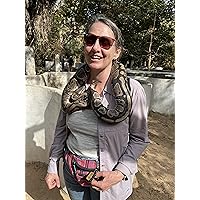
Susan Quinn grew up in Chillicothe, Ohio, and graduated from Oberlin College. She began her writing career as a newspaper reporter on a suburban daily outside of Cleveland, following two years as an apprentice actor at the Cleveland Playhouse. In 1967, she published her first book under the name Susan Jacobs: a nonfiction account of the making of a Broadway play called On Stage (Alfred A. Knopf). In 1972, after moving to Boston, she became a regular contributor to an alternative Cambridge weekly, The Real Paper, then a contributor and staff writer on Boston Magazine. In 1979, she won the Penney-Missouri magazine award for an investigative article for Boston Magazine on dangerous cargo transported through the city, and the Golden Hammer Award from the National Association of Home Builders for an investigative article on home inspections. She has written articles for many publications, including the New York Times Magazine, The Atlantic Monthly and Ms. Magazine. In 1987, she published her first biography, A Mind of Her Own; The Life of Karen Horney (Simon and Schuster, Addison-Wesley and Perseus) for which she received the Boston Globe's Laurence L. Winship Award.
For her next book, Marie Curie: A Life, she was the recipient of a Guggenheim Fellowship and a Rockefeller Foundation writing residency at Bellagio in Italy. A reviewer in Science magazine predicted that her book "is certain to be this generation's biography of Marie Curie.” Marie Curie was a finalist for the Los Angeles Times Book Award and was on the short list for the Fawcett Book Prize in England. It has been translated into eight languages, and was awarded the Elle Grand prix des lectrices in 1997.
In 2001, Quinn published Human Trials: Scientists, Investors and Patients in the Quest for a Cure. It was described as a “real-life thriller” by the New York Daily News. Human Trials was chosen by Library Journal as one of the best sci-tech books of 2001.
Susan Quinn has lectured all over the United States, and has spoken in France and Poland about her biography of Marie Curie. In 2000, the University of Wisconsin at Stout awarded her a Doctorate of Humane Letters.
Quinn has served as the Chair of PEN New England, a branch of the writers’ organization PEN International. She is an accomplished flutist, and continues to participate in chamber groups on a regular basis. Susan is married to a psychoanalyst, Daniel Jacobs and has two children and four grandchildren. She lives in Brookline, Massachusetts just outside of Boston.
This book was written in 2001 so not exactly current but still relevant. I got a bit bored in the middle and found I had a hard time getting on board with the idea of oral tolerance. But overall I think it emphasizes the long roller coaster ride that is drug development. It’s good to remember “Success in science is going from one failure to another without losing enthusiasm” which is the opening line of the last chapter of the book.
Written by the same person who wrote the biography of Marie Currie. I adore this person's style. She gives a lot of information, as well as a lot of human facts. She describes the people involved in a very endearing way - you feel you know them. This book describes the process in developing a medication for autoimmune diseases such as MS and arthritis. You get to know the main researcher who gets the idea for the medication, how a company is started to conduct trials and get the drug approved. You also get to know some of the patients. You really want the drug to work...